
The Panasonic SC-HTB100 is a no-nonsense, easy-to-use budget soundbar that offers a solid upgrade on typical TV audio. It’s a full-sized standalone soundbar available for as little as £79 (about $100 / AU$160) – placing it firmly in the super-cheap category. As a result, you can’t expect mind-blowing spatial audio or game-changing features – but you sure can hope for clean audio that elevates your viewing experiences. And luckily, you get just that. Reader, I want to get straight to the main event and talk audio quality. What you get from the Panasonic SC-HTB100 is quite impressive, with the standout positive here being vocal clarity.When tuning into The Boys on Amazon Prime, I found that vocals were often more clear-cut in the overall mix, rarely getting unpleasantly muddied with sounds in a similar frequency range. For instance, in one indoor scene, one of the lead characters, Annie, converses with an older male and I sensed that both voices were more forward, occupying a more defined pocket than my TV could provide on its own. In a hospital room, the acoustics of the room were pretty true-to-life when using the Panasonic SC-HTB100, especially the sound of speech echoing throughout the space. Higher-pitched voices also lost a touch of tinniness that I heard from TV audio, making for a more comfortable listening experience. (Image credit: Future) In terms of placement, you can’t expect the kind of pinpoint accuracy that some of the best soundbars offer, but the Panasonic SC-HTB100 performs decently anyway. For example, I threw on Top Gun: Maverick and during the intro – where Tom Cruise rides a Kawasaki motorcycle – there was a bit more width to the soundstage and there was a stronger replication of the bike’s movement with the Panasonic soundbar. Don’t expect truly three-dimensional sound from the Panasonic SC-HTB100, though. There’s no Dolby Atmos or DTS:X and it’s a 2.0 channel bar, meaning there’s no subwoofer or rear speakers. I would argue, however, that at this price point that is more than acceptable. In fact, budget options that attempt to sell Atmos often fall flat on the delivery side – the Majority Elias is just one example of an ultra-cheap soundbar that, despite offering Dolby Atmos, produced a limited impression of spatial audio and disappointing overall sound quality. My main complaint with audio here, though, is in the bass department. I totally understand that without a dedicated subwoofer, you can’t expect particularly impressive low-end power – especially coupled with an unexceptional total power output of 45W. However, bass is genuinely pretty thin and doesn’t feel like a massive upgrade on standalone TV audio. To Panasonic’s credit, it never claims to offer big, booming low-frequency sound, instead stating that the soundbar uses a bass reflex port to “subtly emphasize the deeper tones in movie soundtracks” – and ‘subtly’ is definitely the keyword. (Image credit: Future) Despite that, sound quality is still pretty good overall. And that goes for all three EQ modes – Movie, News and Music. I used Movie when tuning into The Boys and Top Gun: Maverick – but also with a whole bunch more. For instance, I tried watching Suzume on Netflix and higher-pitched female voices sounded pleasingly clear, even when music was playing alongside them in the background – music which didn’t sound at all tinny or distorted. Not bad for a budget soundbar. There’s not a lot to say about News mode, although I did check out Sky News and found reporters’ voices were well placed, rarely getting lumped in with feedback from outdoor surroundings or more subtle sounds in the studio environment.But maybe the sound mode I was least excited to test is Music. That’s because a significant portion of budget bars fall well short on audio quality when handling tracks that demand delicate weighting, replication of neat sonic details and strong performance across all frequencies. And sure, the Panasonic SC-HTB100 isn’t able to perform to a stunning standard, but it actually handled music with decent levels of clarity. I listened to As if Waltz by Geordie Greep and the wailing guitars sounded pretty authentic and clear. And although layered instruments weren’t elegantly separated or perfectly true to their intended sound, audio wasn’t too tinny, making for an adequate listening experience. You can, however, expect some distortion at higher volumes and you’ll get more joy from the best Bluetooth speakers if you want some leisurely wireless listening. (Image credit: Future) When listening to music, I was able to connect to the soundbar using Bluetooth 5.0 – a handy inclusion if you want a swift wireless music-playing solution. And there’s actually a good set of connectivity options here, including digital optical, USB, AUX and HDMI ARC. I predominantly used the latter and it worked well, allowing me to use my normal TV remote to adjust volume levels. And this was something I was pretty thankful for, because the included remote isn’t the best. I have no qualms with it looks- or design-wise, but the buttons aren’t always ultra-responsive. When I tried to crank volume up, there was sometimes a noticeable level of delay – which was a tad frustrating. But that isn’t my only issue with the Panasonic SC-HTB100’s design. I was pretty unimpressed with the display on the front of the soundbar. Rather than getting a full LED display to let you know which sound mode you’re using or the volume level, you’re instead met with a small LED light. This changes color depending on which sound mode you’re using, but you won’t know which is which unless you consult the oracle (included user guide). Another problem is the glossy, slightly plasticky outer casing. Reflections from the TV screen can appear on top of this material – quite a distracting issue when you’re focused on watching shows or playing video games. Otherwise, the soundbar is solid in terms of appearance. Again, it is a little plasticky, but it’s plenty slim enough, which made it easy to slide into my setup. So, overall this is a solid soundbar that will given you an audible, albeit non show-stopping improvement over TV audio. If you’ve acquired one of the best small TVs for instance – which often lack firepower and quality in the audio department – this could be a great pick. (Image credit: Future) Panasonic SC-HTB100 review: Price and release date £79 (about $100 / AU$160) Launched in 2021 The Panasonic SC-HTB100 was released in the UK in 2021, although it’s not sold in the US or Australian markets. But even though it’s not the newest, don’t let that put you off – it still has a decent amount to offer, especially if you want clearer vocals and Bluetooth connectivity. It’s available for £79, which puts it firmly in the budget category, even for a standalone 2.0 channel soundbar. Considering this is a full-size soundbar, as opposed to a mini one, this is a very good value product, especially if you want a low-cost, easy-to-use upgrade on TV audio. Panasonic SC-HTB100 review: Specs Swipe to scroll horizontally Dimensions 30 x 2.3 x 2.8 inches / 762 x 58 x 70mm Speaker channels 2.0 Connections HDMI ARC, digital optical, AUX, USB, Bluetooth 5.0 Dolby Atmos / DTS:X No / No Sub included No Rear speakers included No (Image credit: Future) Should I buy the Panasonic SC-HTB100? Swipe to scroll horizontally Attributes Notes Rating Features Decent sound modes, Bluetooth for linking devices, but no more. 3/5 Audio performance Vocals sound well-separated and crisp, bass may not impress too much. 4/5 Design Decent-looking but plastic shell can reflect screen, display a tad impractical. 3.5/5 Setup and usability Remote isn’t the most responsive but setup is super simple. 4/5 Value Clear vocals, good connectivity options, easy setup at a low price. 4.5/5 Buy it if… Don’t buy it if… Panasonic SC-HTB100: Also consider Swipe to scroll horizontally Header Cell – Column 0 Panasonic SC-HTB100 Amazon Fire TV Soundbar Ultimea Poseidon D50 Price £79 (about $100 / AU$160) $119.99 / £119.99 (about AU$180) $119.99 / £149.99 (about AU$180) Dimensions 30 x 2.3 x 2.8 inches / 762 x 58 x 70mm 24 x 3.5 x 2.6 inches / 610 x 90 x 65mm Soundbar: 15.7 x 2.8 x 3.5 inches / 400 x 70 x 90mm; Subwoofer: 6.1 x 9.6 x 8.5 inches / 155 x 244 x 215mm; Rear speakers: 5.3 x 2.8 x 3.5 inches / 135 x 70 x 90mm Speaker channels 2.0 2.0 5.1 Connections HDMI ARC, digital optical, AUX, USB, Bluetooth 5.0 HDMI ARC, digital optical, Bluetooth HDMI ARC, digital optical, AUX, USB, Bluetooth 5.3 Dolby Atmos / DTS:X No / No No / No No / No Sub included No No Yes Rear speakers included No No Yes Panasonic SC-HTB100 review: How I tested Tested for two weeks Connected to my Hisense U7K TV at home Predominantly used the HDMI ARC connectivity option I tested the Panasonic SC-HTB100 at home over the course of two weeks. I mainly used HDMI ARC when connecting the soundbar to my Hisense U7K TV. For testing, I watched a variety of TV shows, videos and movies – mainly using streaming services like Amazon Prime Video, Netflix and YouTube. I also played Final Fantasy VII: Rebirth on the Playstation 5 while using the soundbar to assess gaming performance. On top of that, I connected the Samsung Galaxy S24 FE to the Panasonic SC-HTB100 over Bluetooth and played music from the TechRadar testing playlist to judge the quality of Music mode. First reviewed: November 2024 Read more about how we test
Author: DA Gadgets
Voyager 2’s Historic Flyby of Uranus Exposes Rare Magnetic Distortion
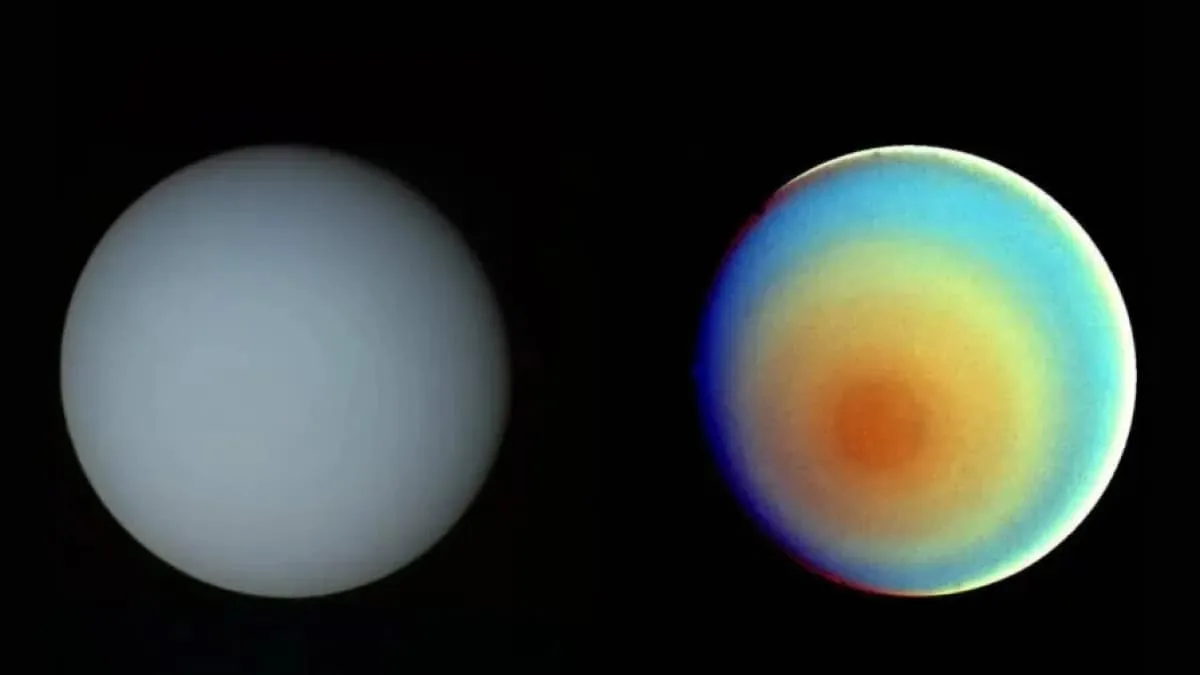

A recent analysis of 38-year-old data from NASA’s Voyager 2 spacecraft has provided fresh insights into the unique magnetosphere of Uranus, according to a study published on November 11 in Nature Astronomy. During Voyager 2’s 1986 flyby, Uranus’ magnetosphere was found to be unexpectedly distorted by a blast of solar wind. The findings suggest that the planet’s magnetic field behaves unlike any other in the solar system.
Findings Highlight Unusual Magnetic Structures
Jamie Jasinski, a planetary scientist at NASA’s Jet Propulsion Laboratory and California Institute of Technology, and lead author of the study, noted that Voyager 2’s timing happened to coincide with an intense solar wind event, a rare occurrence near Uranus. This compression of Uranus’s magnetosphere, seen only around 4% of the time, is thought to be responsible for the unique measurements Voyager captured. Had the spacecraft arrived even a week earlier, Jasinski observed, these conditions would likely have been different, possibly leading to alternative conclusions about Uranus’s magnetic characteristics.
Unlike Earth, Uranus exhibits a complex “open-closed” magnetic process, influenced by its extreme axial tilt. This tilt subjects Uranus to highly variable solar wind effects, resulting in a magnetosphere that opens and closes cyclically.
Implications for Future Uranus Exploration
The study’s conclusions go beyond Uranus itself, offering insights into the magnetic behaviours of its outermost moons, including Titania and Oberon. These moons, it turns out, lie within Uranus’s magnetosphere rather than outside it, making them candidates for investigations into subsurface oceans through magnetic field detection. As Jasinski highlighted, these conditions would simplify detecting any magnetic signatures that suggest liquid beneath the moons’ icy surfaces.
While Voyager 2 remains the only mission to visit Uranus, the study’s findings underscore a growing interest in exploring the ice giant in greater detail.
Namechain: The Next Major Project from the Creators of Ethereum Name Service, Explained


ENS Labs, the firm that launched the Ethereum Name Service (ENS) in 2017, are gearing up for their next major project. By late 2025, they plan to launch a layer-2 blockchain network called Namechain, built on the Ethereum blockchain. Namechain will leverage zero-knowledge rollup technology to improve transaction efficiency, reducing both costs and processing times. In the ENS domain ecosystem, simpler names like “xyz.eth” typically hold more value than complex ones like “asd1as.eth.”
As per a report, the launch of Namechain is aimed at streamlining blockchain identities, making them more straightforward and user-friendly. Not only will this layer 2 blockchain simplify the process for ENS registrations but the network is also expected to make the service more accessible for users.
This week, ENS Labs made an official announcement about Namechain. In a post on X from their handle @ensdomains, ENS stated, “By dramatically reducing costs, improving performance, and providing a familiar Ethereum developer experience, our hope is to unlock new opportunities for ENS and Ethereum.”
Announced live at #frENSday:microphone:
Namechain by @ensdomains , a purpose-built Layer 2 solution!
This is the next evolution in ENS and part of the larger ENSv2 direction. By dramatically reducing costs, improving performance, and providing a familiar Ethereum developer experience our… pic.twitter.com/bIwHa22vJL
— ens.eth (@ensdomains) November 11, 2024
ENS Labs has allocated an initial budget of $4 million (roughly Rs. 33 crore) in USDC stablecoin to support Namechain’s development, with funding provided by the ENS DAO, which oversees the ENS protocol. The full budget required for testing and deploying this Layer-2 network, however, has not yet been disclosed.
ENS Labs’ latest initiative follows the rising popularity of its Ethereum Name Service (ENS). ENS is a decentralised domain name protocol that simplifies complex Ethereum wallet addresses, transforming them into easy-to-read names like “ABC.eth,” making crypto transactions more accessible and user-friendly.
In July 2022, ENS tracker Dune Analytics reported that daily ENS registrations had spiked significantly, reaching over 50,000 new addresses that month. The same year, Nike’s Web3 arm called ‘RTFKT’ obtained ten ENS domains.
Notably, registrations of ENS domains recorded a drop of 22.9 percent in September this year, as per a report by CoinMarketCap. The report also notes that ENS is a crucial component of the Web3 ecosystem, with the total number of active domains now standing at over 1.9 million.
In October, Google completed the integration of ENS on its Search engine. This development is aimed at making it easier for people to search for any name based on the ENS domain, signified by ‘.eth’.
Affiliate links may be automatically generated – see our ethics statement for details.
Google’s Quick Share App Now Available for Snapdragon X Elite, Other ARM Devices Running Windows 11
Google has silently rolled out its Quick Share app for ARM-powered devices running Windows 11 or later. Although the app was previously available for Windows-based devices, it did not have support for the ARM architecture and thus, could not run on those devices without significant workarounds. But with its introduction, users can now easily send and receive photos, documents, and more data between nearby Android devices and Windows PCs including the new Snapdragon X Elite laptops.
QuickShare on ARM-Powered Devices
Google highlighted that the new Quick Share app for ARM devices running Windows 11 is available for manual download via the official Android website. Users will now be able to share photos, videos, documents, audio files, or entire folders between Android devices and Windows-based desktops and PCs.
They can choose whether to keep control over the device’s visibility to themselves or share it with a friend or everyone. All Quick Share transfers are claimed to have end-to-end encryption for protecting user privacy. The Mountain View-based tech giant says Quick Share already comes built-in on devices running Android 6 or later, and the app only needs to be downloaded on Windows.
Google says Quick Share is now available to users. The Android website’s FAQ section about the requirements for running the app confirms that ARM devices are now supported. However, tipster Mishaal Rahman claims that despite bringing support for ARM, Quick Share is still not ARM64-native and can only be run via emulation.
Notably, this development comes after Google rolled out a new update for Quick Share on the Windows platform last month that did not bundle any new features but brought bug fixes for several issues that plagued users in recent weeks, including those related to Wi-Fi LAN advertising, Wi-Fi Hotspot, Quick Share shortcut icon, system configuration preferences, and app crashing. The fixes were introduced with the Quick Share app version 1.0.2002.2 for Windows.
For the latest tech news and reviews, follow Gadgets 360 on X, Facebook, WhatsApp, Threads and Google News. For the latest videos on gadgets and tech, subscribe to our YouTube channel. If you want to know everything about top influencers, follow our in-house Who’sThat360 on Instagram and YouTube.

Related Stories
Ooh, big stretch! LG’s wearable display now boasts 50% elongation – the stretchiest screen yet

LG’s stretchy screen now boasts 50% elongation for… bodycon clothing? It can fold, bend and twist without damaging the display It’s the shape of things to come We’ve been following LG’s quest to make practical, stretchable displays for some time now. And a new report states that while Apple is also experimenting with the tech (as we discovered earlier this year, Apple has patented its own “Stretchable Display”) LG has beaten it, and flexible display rivals such as Samsung, to the punch. LG has announced a new stretchable display prototype, and it’s much more bendy than anything we’ve seen from the firm in the past: where previous prototypes could be stretched out by 20%, this prototype can achieve the kind of deformation that even the Fantastic Four’s Reed Richards might consider a bit of a stretch: it can expand by over 50%. What is a stretchable display for? LG’s stretchable display is designed to change shape according to what you want your device to do. It doesn’t just stretch; it can be twisted and folded too, all without damaging the screen. While the image above shows extreme examples, one application might be a tablet that rolls into a foldable phone, or a phone that becomes a wearable. There are even applications in clothing. LG’s concepts include smart displays attached to the uniforms of firefighters to provide real-time information to them and their team, although the announcement skips over the heat protection requirements such a display would require. The new display uses a micro-LED light source, an improved silicon substrate that’s also used in contact lenses, and a new wiring design. The result is a promised lifespan of 10,000 stretches without damaging the display. We’re still a long way from the commercialization of this technology. But it’s still enormously exciting; we’ve seen the future, and it’s stretchy. You might also like Sign up to be the first to know about unmissable Black Friday deals on top tech, plus get all your favorite TechRadar content.
Asif Ali’s Kishkindha Kaandam Reported to Stream on Disney+ Hotstar


Asif Ali and Aparna Balamurali’s thriller, Kishkindha Kaandam, directed by Dinjith Ayyathan, will soon be available on Disney+ Hotstar. Following its success in cinemas, where it ran for over two months, the movie is reported to release digitally in December. Although an official announcement from Disney+ Hotstar is pending, sources suggest the thriller might debut by the end of November.
As per a report by OTTPlay, the movie is set to release on November 19, 2024 on the popular OTT platform. The report highlights that the movie might be available in different langauges, including Malayalam, Hindi, Tamil, Telugu and Kannada. That said, there is no official confirmation about the release date of the Kishkindha Kaandam, so we suggest you take this leak with a pinch of salt. The release follows Disney+ Hotstar’s premiere of Ajayante Randam Moshanam, another Malayalam blockbuster, indicating the platform’s strong push for Malayalam content this season.
Official Trailer and Plot of Kishkindha Kaandam
Kishkindha Kaandam is crafted as a mystery-thriller, telling the story of a newly-wed woman who moves in with her father-in-law and husband. She soon finds herself in a web of mystery, trying to uncover the truth behind a child’s disappearance and a missing revolver, all while navigating the emotional complexities of her father-in-law’s deteriorating mental health. The narrative, penned by Bahul Ramesh, has resonated strongly with audiences who favour intense, character-driven plots.
Cast and Crew of Kishkindha Kaandam
The film stars Asif Ali and Aparna Balamurali, with Vijayaraghavan playing a significant role. The movie’s screenplay was developed by cinematographer Bahul Ramesh, adding a visual richness that complements the story’s emotional depth. Helmed by Dinjith Ayyathan, the team has aimed to deliver a suspenseful experience.
Reception of Kishkindha Kaandam
Released in theatres in September, Kishkindha Kaandam has been a box-office surprise, gaining popularity for its slow-burn approach to storytelling. The movie has been well-received, especially in Kerala. The movie has received an 8.6 / 10 on IMDb rating. The film’s lifetime box office collection 48.75 crores gross in India and 27.20 crores gross in the overseas market.
Samsung Galaxy Z Flip FE Tipped to Be Powered by Same Chipset as Galaxy S24 Series


Samsung Galaxy Z Flip FE is rumoured to launch next year, joining the South Korean technology conglomerate’s flagship foldable smartphone lineup as an affordable alternative to the Galaxy Z Flip series. Despite the rumour mill suggesting that it might cut down on some features in an attempt to be priced affordably, a tipster has revealed that the purported smartphone could be powered by the same Exynos processor as the flagship Galaxy S24 series.
Samsung Galaxy Z Flip FE Processor Leaks
In a post on X (formerly Twitter), tipster @Jukanlosreve suggests that a flagship processor could be used in the purported Samsung Galaxy Z Flip FE. It is said to be powered by the Exynos 2400 under the hood — the processor which currently powers the Galaxy S24 and Galaxy S24 Plus in select regions including India.
This development contradicts previous reports which suggested that the purported smartphone could feature toned-down internals to keep the costs as low as possible. It is speculated to hit the market in 2025 as a more affordable variant of the Galaxy Z Flip series’ clamshell-style foldable model.
According to Samsung, it is exploring “ways to lower entry barriers so that more customers can actually experience foldable products”. Thus, the rumours about the development of more affordable variants of the Galaxy Z Flip and Z Fold smartphones could hold some truth to them.
Meanwhile, the tipster also suggests that the Galaxy Z Flip 7 could get Exynos 2500 under the hood. Notably, Samsung’s current flagship foldable smartphone lineup is powered by the Snapdragon 8 Gen 3. This suggests that the South Korean company could make the shift from Qualcomm to its in-house fabricated chipsets in some regions. In addition to affordable versions of its foldables, Samsung is also tipped to be developing a Samsung Galaxy S25 Slim and an additional model in the Galaxy Z Fold 7 series.
iPhone 16 Plus Survives Durability Test, Shows Better Scratch Resistance Compared to Other Phones
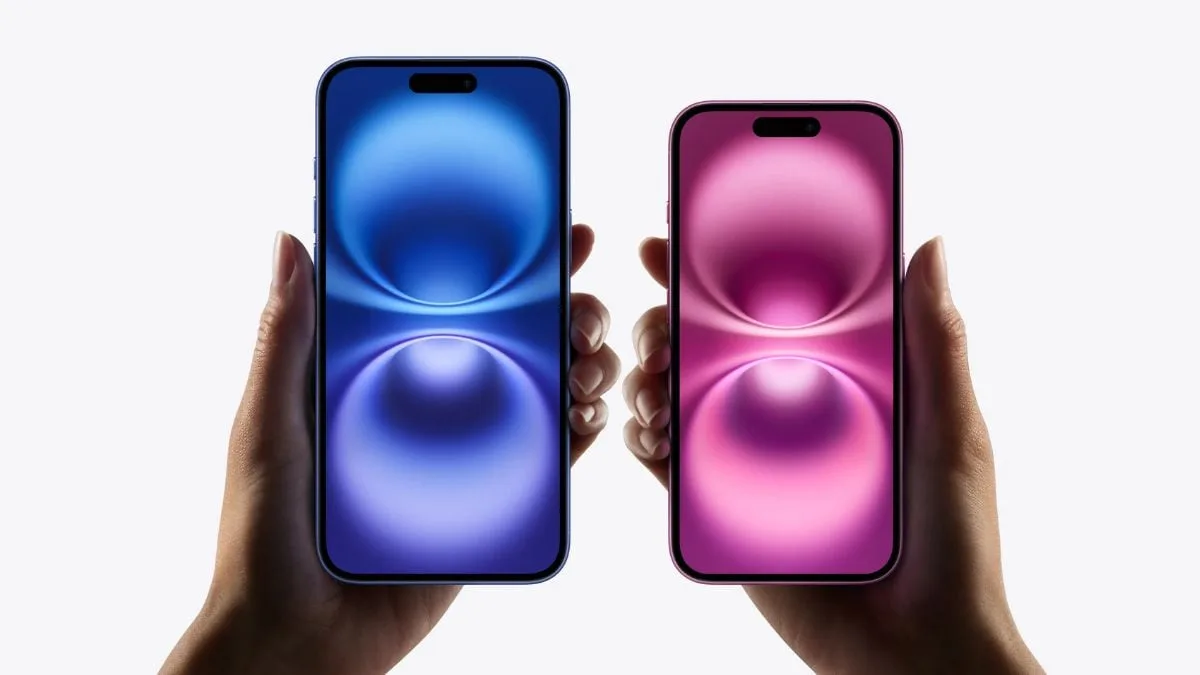

iPhone 16 series was launched in September comprising four models: iPhone 16, iPhone 16 Plus, iPhone 16 Pro, and iPhone 16 Pro Max. The Cupertino-based tech giant’s Plus model packages all of the same features as the base model but in a bigger, 6.7-inch form factor. Nearly two months after its debut, YouTube users have been testing the smartphone’s durability through various “scratch” tests and the handset appears to survive better compared to other devices in the market.
iPhone 16 Plus Durability Test
YouTuber Zack Nelson, popularly known by his channel name JerryRigEverything, has now tested the new iPhone 16 Plus for its durability in a recent YouTube video. The smartphone was tested for seven years worth of damage. As per his claims, the Plus model outperforms other smartphones, especially on the Mohs hardness scale.
During the scratch test, the iPhone 16 Plus appears to show very faint scratches at level six when scratched with a razor blade. Only at level seven do the deeper groves appear distinctly. This is in stark contrast to the Samsung Galaxy S24 Ultra which showed very prominent lines even at level six which could not be rubbed off. The YouTuber says Apple’s latest generation Ceramic Shield “still feels very smooth”.
However, that is not the case for the rest of the smartphone as its 85 percent recycled aluminium frame easily gets scratched. The side panels, including the power and volume buttons on the iPhone 16 Plus visibly get some damage with blade scratches.
When put to fire test, the smartphone’s display did not get a permanent burn mark and its Super Retina XDR display still appeared to work. The iPhone 16 Plus also survived the bend test, showing good structural strength without any visible cracks or fractures on its chassis. However, it should be noted that these tests are not a definitive indicator of the ability of these handsets to survive real-world damage and are just meant for reference purposes.
The YouTuber suggests that it might be even easier to repair than the Pro models courtesy of the new electrically de-bonding adherent at the back which loses its abilities when a current is passed through it. Meanwhile, the iPhone 16 Pro models still feature the traditional adhesive glue pull tabs.
Anker Nebula Mars 3 review: A powerful and truly portable projector
Anker Nebula Mars 3: two-minute review If you’ve been looking for a projector you can wow your friends with, the Anker Nebula Mars 3 might be the one. Despite looking like a monster-sized flashlight, the Nebula Mars 3 is a portable projector designed for use both on the go and at home. To that end, it has a built-in battery that lets it operate at full brightness for upwards of two hours, plus the Android TV smart TV platform for streaming and fairly beefy speakers, though they regrettably play in mono. It’s well constructed, and works effectively, letting you set it down and get up and running quickly. Where the Anker Nebula Mars 3 really impresses is its brightness, which knocks it out of the park compared to most other battery powered examples of the best portable projectors. It’s not enough to challenge daylight, but it’ll sizzle at night. At just over $1,000, it has competition, and you can also find 4K models around that price, though few have the portability on offer here. You can also get better color from triple-laser options like the LG CineBeam Q or JMGO N1S Pro, albeit at a lower brightness for the LG and no on-the-go use for the JMGO. If you’re planning to do most of your viewing at home, it’s probably worth getting a projector that skips the battery and puts more effort into picture quality. But if you want a robust all-in-one theater you can tote anywhere, the Anker Nebula Mars 3 is a commendable option. Anker Nebula Mars 3 review: price and release date Release date: July 2023 Price: $1,099 (around £850 / AU$1,645) The Anker Nebula Mars 3 launched in 2023 and is now readily available in the US for $1,099. It can occasionally be found for less, however, and was $50 off at the time of writing. The Nebula Mars 3 features a sliding lens door and is IPX3 water resistant (Image credit: Future) Anker Nebula Mars 3 review: Specs Swipe to scroll horizontally Screen sizes supported: 30-200 inches Brightness (specified): 1,000 lumens HDR support: NA Optical technology: LED DLP Smart TV: Android TV Connections: HDMI, USB-A, USB-C, 3.5mm audio out, DC power in Dimensions: 10.2 x 1.97 x 6.3 inches (H x W x D) Weight: 9.9 pounds The Nebula Mars 3’s rear-panel ports cover and flashlight feature (Image credit: Future) Anker Nebula Mars 3 review: design and features Built for portability and durability Convenient on-device controls Built-in speakers and Android TV operating system The Anker Nebula Mars 3 follows Anker’s Nebula series design language, bearing considerable resemblance to the Nebula Cosmos 4K SE projector. That said, there are considerable differences that make the Nebula Mars 3 stand out. This model is built for more of a rough-and-tumble, on-the-go lifestyle. It features a hardened case that can withstand half-meter drops and has IPX3 water resistance. The front has a sliding lens cover and the rear includes a rubber cover over the ports. A sizable, hard handle stretches across the top of the projector, extending from the front to the back. While it includes a remote control, the handle also has built-in controls for volume and navigation of the projector’s onboard operating system. Neither of these control options is quite perfect though, as the remote is fairly limited in what you can access with a single press and the built-in buttons lack many of the typical controls for navigating the projector’s Android TV smart TV interface. A key part of the portable nature of the Anker Nebula Mars 3 is its ability to operate outdoors. To that end, the projector integrates a beefy battery geared up to run for anywhere from 2 hours at full blast to 5 hours in a dimmer Eco mode. To help you keep track of power, the handle has a ring of lights that display battery level. The projector can also double as a Bluetooth speaker or a flashlight. A three-speaker built-in audio system resides near the front. It can pump out a good deal of sound, though only in mono and the dynamics are fairly weak. Meanwhile, an LED light bar sits along the rear, stretching out above a large exhaust vent and below the port cover. Since the Anker Nebula Mars 3 isn’t designed to have a permanent home, it has a small, adjustable stand underneath to help angle it up at projection surfaces wherever it’s ultimately set up. It also features a quick and effective system for automatically adjusting image focus, keystone, and framing. The projector’s Android TV 11 smart TV system is a little dated, but still effective as a streaming platform. Like many other projectors, though, it doesn’t get the Play Store version of Netflix, instead relying on a sideloaded version that offers a generally sub-par experience. If you’re off the grid and don’t have internet, the projector has a USB-A port and supports local media playback. To upgrade the audio experience, you can wire it up to external powered speakers using the AUX port or wirelessly pair it to a Bluetooth speaker. Design and features score: 4/5 The Android TV platform is used by the Nebula Mars 3 for streaming (Image credit: Future) Anker Nebula Mars 3 review: picture quality Good, but not exceptional picture Decent color and detail Enough battery power for a 2-hour-plus movie The Anker Nebula Mars 3 features an LED DLP projection system rated for 1,000 lumens and 1080p resolution. That’s about what should be expected from a projector sitting at around $1,000. Anker’s battery powered portable has a good-looking picture, but not an exceptional one. It isn’t the type of projector you’ll want if you’re viewing in a bright room, since its 1,000 lumens just aren’t enough to handle much ambient light. You might get by if you’re watching bright cartoons, but you really should be viewing with it in a dark space, and that extends to the outdoors as well. Controlling ambient lighting outdoors is even more difficult than indoors, and if you’re expecting a good viewing experience with lots of urban lighting present, you’ll be disappointed. That said, if you’re in a more rural area without much light pollution, the Anker Nebula Mars 3 should provide ample brightness after sunset. The color you’ll get from the Anker Nebula Mars 3 is decent, but no match for triple-laser portable projectors like the LG CineBeam Q. It doesn’t feel utterly lacking or poorly managed, and a show like Ru Paul’s Drag Race still had plenty of visual spark when I viewed it. Colors have modest vibrance, but just don’t get the same level of pop I’ve seen from HDR-capable projectors reaching toward 100% coverage of the UHDA-P3 color space. The same is true of its resolution. At a projected image size of around 65 inches, the projector’s 1080p image looks reasonably crisp, but go far above that and you will seeing more softness unless you sit further back. A larger image will also show an artifact of the projector’s DLP chip, which shows up as noticeable dithering (an effect like writhing small dots) when displaying dark colors over a large portion of the screen. The projector has a motion smoothing setting buried slightly in the settings menu under the label MEMC that is set to on by default. While it can smooth out certain motions, it creates all sorts of distracting effects, especially in action sequences like those in Gladiator. It’s worth turning off, which results in more natural motion. Many of the image trade-offs are a result of Anker needing to squeeze a battery in for the $1,099 price. And the battery makes it worth it. At full brightness, the Nebula Mars 3 was able to run for the entirety of a two-hour movie at 50% volume with a little over 20% charge to spare, which let it go for nearly 30 minutes longer. Annoyingly, if you’re nearing the end of your movie or show and the battery power starts to get low, your experience will be thoroughly interrupted by several low-battery warnings in a window that occupies a large portion of the display. Picture quality score: 3/5 A remote control is included, and there are also controls located on the projector’s handle (Image credit: Future) Anker Nebula Mars 3 review: value Great for portable use Brighter than other compact portables Better options for picture quality, but not portability The Anker Nebula Mars 3 is an interesting package. It’s not a great home theater projector for the money, as there are far more appealing options available in the same ballpark. But it’s an overall decent projector and a powerful portable one. The Nebula Mars 3 is quick to set up, and can run for hours at a time. It’s a knockout next to something like the Samsung The Freestyle 2nd Gen, which has a portable setup with an optional battery pack but isn’t nearly as bright. A competent projector you can bring anywhere and easily get up and running is something special, and the Anker Nebula Mars 3 nails the concept. It’s built to withstand surprises and has clever elements (like the lens cover and waterproofing) that let you easily grab it and go without worrying about a protective case. Value score: 4/5 The carrying handle control buttons (Image credit: Future) Swipe to scroll horizontally Anker Nebula Mars 3 Attributes Notes Rating Design and features The Anker Nebula Mars 3 has a projection system, Android TV, speakers, a built-in battery, and a light. That’s a lot to get in one package. 4/5 Picture quality & performance A decent projector, but far from a brilliant one. It doesn’t look killer at extra-large sizes, and the color saturation is modest. 3/5 Value Strikes a special value with its portability and is a serious threat against other portable options, with a big battery, loud speakers, robust design, and good brightness. 4/5 Should I buy the Anker Nebula Mars 3? (Image credit: Future) Buy it if… Don’t buy it if… Also consider… Swipe to scroll horizontally Comparison: portable projectors Header Cell – Column 0 Anker Nebula Mars 3 Samsung The Freestyle 2nd Gen LG CineBeam Q Xgimi Horizon Ultra Price: $1,099 $799 $1,299 $1,699 Screen sizes supported: 30 to 200 inches 30 to 100 inches 50 to 120 inches 40 to 200 inches Brightness (specified): 1,000 lumens 230 ANSI lumens 500 ANSI lumens 2,300 ISO lumens HDR support NA NA HDR10, HLG HDR10, HLG, Dolby Vision Optical technology: LED DLP LED DLP RGB laser DLP LED+laser DLP Smart TV: Android TV Tizen webOS Android TV Connections: 1x HDMI, 1x 3.5mm Micro-HDMI, USB-C (power) HDMI, USB type-C (display, power) 2 x HDMI (1 with eARC) (Image credit: Future) How I tested the Anker Nebula Mars 3 Tested at home in multiple, real-world viewing conditions Presented the display with a variety of media and formats I have tested numerous projectors and displays over the last half-decade I tested the Anker Nebula Mars 3 at home, in real-world conditions. This saw it faced with ambient light coming in from numerous windows, in-room lighting, as well as ambient noise that both the projector and speaker systems had to overcome. The projector was tested both against a bare, white wall and an Akia Screens CineWhite screen. It was presented with streamed content, both HDR and non-HDR. My testing evaluates the projector’s performance with respect to its price and competition from other models I and colleagues at TechRadar have tested. I have been testing projectors since 2021 and displays for even longer. First reviewed: November, 2024
TSMC to Suspend Production of Advanced AI Chips for China From November 11: Report

Taiwan Semiconductor Manufacturing Co (TSMC) has notified Chinese chip design companies that it is suspending production of their most advanced AI chips from Monday, the Financial Times reported, citing three people familiar with the matter.
TSMC, the world’s largest contract chipmaker, told Chinese customers it would no longer manufacture AI chips at advanced process nodes of 7 nanometres or smaller, FT said on Friday.
The U.S. has imposed a raft of measures aimed at restricting the shipment of advanced GPU chips – which enable AI – to China to hobble its artificial intelligence capabilities, which Washington fears could be used to develop bioweapons and launch large-scale cyberattacks.
Earlier this month, the U.S. imposed a $500,000 penalty on New York-based GlobalFoundries for shipping chips without authorization to an affiliate of blacklisted Chinese chipmaker SMIC.
Any future supplies of the advanced AI chips by TSMC to Chinese customers would be subject to an approval process likely to involve Washington, according to the FT report.
“TSMC does not comment on market rumour. TSMC is a law-abiding company and we are committed to complying with all applicable rules and regulations, including applicable export controls,” the company said.
The U.S. Department of Commerce did not immediately respond to a Reuters request for comment.
The move to restrict exports to China comes at a time when the U.S. Department of Commerce is investigating how a chip produced by the Taiwanese chipmaker ended up in a product made by China’s heavily sanctioned Huawei.
© Thomson Reuters 2024