Posted on

Itel S25, Itel S25 Ultra With 6.78-Inch AMOLED Screens, 50-Megapixel Rear Camera Launched: Price, Specifications

Itel S25 and Itel S25 Ultra were launched in the Philippines on Friday as the company’s latest midrange smartphones that bear a familiar name — Samsung is also expected to launch the flagship Galaxy S25 series in early 2025. The new phones from Itel are equipped with Unisoc processors and sport 6.78-inch AMOLED screens with an under-display fingerprint scanner. They are also equipped with a 50-megapixel rear camera and a 32-megapixel selfie camera. Both handsets are also expected to receive an update to Android 15.

Itel S25, Itel S25 Ultra Price and Availability

Itel S25 pricing reportedly starts at PHP 5,799 (roughly Rs. 8,400) for the base model with 8GB of RAM and 128GB of storage, while the Itel S25 Ultra begins at PHP 10,999 (roughly Rs. 15,900). Customers in the Philippines can pre-order the Itel S25 via Shopee, while the Itel S25 Ultra will be up for pre-orders on Sunday.

The standard model will be sold in Bromo Black, Mambo Mint, and Sahara Gleam colourways, while the Itel S25 Ultra will be available in Bromo Black, Komodo Ocean, and Meteor Titanium colour options.

Itel S25, Itel S25 Ultra Specifications

Both the Itel S25 and Itel S25 Ultra are dual SIM smartphones that run on Android 14. The company has equipped the standard model with a 6.78-inch AMOLED screen with a 120Hz refresh rate, while the Ultra variant has a curved AMOLED screen with the same size and refresh rate, along with Gorilla Glass 7i protection.

The company is yet to reveal details of the chipset powering the Itel S25, while the S25 Ultra is powered by a Unisoc T620 chipset, along with 8GB of LPDDR4X RAM and up to 512GB of UFS 2.2 storage. 

Both the Itel S25 and S25 Ultra are equipped with a 50-megapixel primary camera on the rear panel, while a 32-megapixel front-facing camera handles selfies and video calls.

Connectivity options on the Itel S25 and S25 Ultra include 4G LTE, Wi-Fi, Bluetooth, GPS and NFC, as well as a USB Type-C port. The Ultra model is also touted to feature an infrared transmitter to control various appliances.

Both handsets pack a 5,000mAh battery, but there’s no mention of support for fast charging. The Itel S25 has an IP54 rating for dust and splash resistance, while the Itel S25 Ultra has a slightly better IP64 rating. Both phones have an in-display fingerprint scanner for biometric authentication.

Posted on

Ola Electric’s Q2 Loss Narrows, Says Most Service Issues ‘Minor’

Ola Electric, India’s top e-scooter maker by market share, reported a narrower second-quarter loss on Friday helped by a jump in sales, and said the recent surge in service requests was largely for “minor issues.”

The Bengaluru-based company said its consolidated loss narrowed to 4.95 billion rupees ($58.7 million) in the July-September quarter from 5.24 billion rupees a year earlier.

Ola’s quarterly revenue jumped 39.1% to 12.14 billion rupees, helped by sales of mass models, or those priced below 100,000 rupees (about $1,186). It had not begun deliveries of these models last year.

Ola Electric delivered a total of 98,619 two-wheelers between July and September, 73.6% higher than last year. It sold 56,545 mass models.

Expenses grew by 21.8%, slower than the previous quarter’s 26.6% rise. Raw material costs, Ola’s biggest expense, rose 46.7% but were lower 18.2% sequentially.

Rising consumer complaints and regulatory scrutiny over allegations of poor service have cast a shadow on the SoftBank-backed e-scooter maker, following a stellar market debut in August.

“Not all service requests that come are complaints or issues with the product, many of them are regular check-ins or scheduled maintenance,” founder and chairperson Bhavish Aggarwal said on an analyst call on Friday.

“Two-thirds of it actually are just minor issues like loose parts or customers unfamiliar with the software used,” Aggarwal said.

Ola Electric’s shares have fallen 5.5% since listing on Aug. 9, while its dominance in the electric two-wheeler market has diminished in recent months.

“Over the second quarter, we had a bit of a capacity challenge in terms of service, our sales expanded faster than we had expanded our service network,” Aggarwal said.

Reuters last year visited 35 Ola centres in 10 Indian states and found many faced significant backlogs, with demand outstripping their workforce or their supply of spare parts.

© Thomson Reuters 2024

(This story has not been edited by NDTV staff and is auto-generated from a syndicated feed.)

Posted on

OLED vs Mini-LED: which TV type is best?

There’s no denying what the top dogs in the TV tech space are. OLED and mini-led represent the cream of the crop, with both screen types producing far better black levels, punchier contrast and more vivid colors than regular LED-lit LCD (liquid-crystal display) TVs. But which technology wins outright? In our OLED vs mini-LED guide below, we pit both forms of tech against each other, covering black levels, contrast, colors, motion handling, vulnerability to burn-in, and gaming performance. No matter which form of TV you decide is the right one for you, the best mini-LED TVs and the best OLED TVs offer the kind of top-tier picture quality regular LED TVs can’t get near. Now brace yourself for a big ol’ flatscreen TV scrap. (Image credit: Future) OLED explained OLED TVs have been around for over a decade, quickly becoming the most desirable screens in the industry after LG first broke into the market with the tech back in 2013. OLED (organic light-emitting diode) displays are famed for their perfect black levels, wide viewing angles, “infinite” contrast performance, and nimble, responsive motion handling. Unlike LED and mini-LED, OLED TVs don’t use a backlight. Instead, each pixel on an OLED screen can individually light and dim itself, which benefits contrast massively. Without the threat of the backlight blooming you get with LED (and mini-LED) displays, OLED TVs are brilliant for watching movies in a dark room. There are a few caveats, though. First of all, OLED TVs are generally more expensive than mini-LED TVs. They’re also more prone to screen burn-in (which we’ll get to shortly), while they’re not as bright as the best mini-LED TVs. Thankfully, the latter area is one where OLED has made real strides in recent years thanks to developments like QD-OLED, which uses a quantum dot layer on OLED screens to produce more accurate colors and brighter images, and micro lens array (MLA), which uses millions of convex lenses on the display panel to boost brightness (Image credit: Future) Mini-LED explained Mini-LED TVs have steadily grown in popularity over the past few years, and there’s an excellent reason for that. Not only do they normally offer far deeper black levels than traditional LED displays, but they also get brighter than most OLED TVs. Most mini-LED TV are usually cheaper than their OLED counterparts, too. Sign up to be the first to know about unmissable Black Friday deals on top tech, plus get all your favorite TechRadar content. The term mini-LED refers to the type of backlight that’s used to illuminate this TV tech’s LCD panel. The main difference between this sort of backlight and the ones you typically find in LCD-based displays is that the miniaturized design of the mini-LED light modules means vastly more LEDs can be deployed in the panel’s backlight. That means more uniform light distribution and increased screen brightness. Throw in superior local dimming solutions over what regular LED TVs typically can muster, and it means mini-LEDs produce significantly more convincing blacks that are less prone to screen artifacts like backlight blooming. (Image credit: Future) OLED vs mini-LED: black level performance Spoiler: OLED is going to win round one. OLED TVs have self-dimming pixels that can completely turn off during dark scenes, which allows for perfect, instantly convincing black levels. If you’ve only ever owned LCD screens and dealt with dark (but not dark enough) grays, the moment you first watch a movie or show at night in a dim room on an OLED TV will be a revelation. When it comes to black levels, there’s no beating OLED. With that said, mini-LED TVs are capable of delivering far deeper black levels than regular LED TVs. Because they have considerably more LED lights and dimming zones, the screens of mini-LED TVs are more evenly backlit than LCD TVs. This means they don’t suffer from the overly bright corners you can often find in many LED models. While mini-LEDs are still prone to blooming (an issue also known as the “halo effect” where brighter on-screen elements have a visible glow around them), it’s harder to spot than on LED TVs. Winner: OLED (Image credit: Future) OLED vs mini-LED: brightness Despite advancements over the last couple of years, the best OLED TVs still can’t get as bright as the finest mini-LED TVs. Traditional W-OLED panels have historically struggled to match mini-LEDs and even LED TVs, and if you’re in a bright room that gets a lot of light, watching an OLED TV in sunny conditions can prove to be an eye-straining challenge. By contrast, mini-LEDs get so bright, they can compete with daylight for daytime viewing. Many mini-LED TVs can comfortably reach peak brightness levels of around 1,500 nits, while high-end models like the premium Sony Bravia 9 can hit a gobsmacking 2,280 nits. OLED just can’t reach these levels. Many OLED TVs still can’t hit 1,000 nits, though the introduction of QD-OLED and MLA panels has seen significant recent improvements. The QD-OLED Samsung S95D can reach an ultra-impressive 1,868 nits (measured on a 10% HDR white window test pattern), while the LG G4 OLED with its MLA panel can hit 1,489 nits across the same 10% window. If your living room setup requires the brightest TV tech possible, mini-LED is the clear winner in this category. Winner: mini-LED (Image credit: Future) OLED vs mini-LED: contrast and color Contrast performance is directly tied to how good a television’s black levels are. As OLED TVs are self-illuminating, every pixel can be turned off to create perfect, true blacks, which means they remain the contrast kings. While mini-LEDs are capable of convincing black levels, they’re not as good as OLEDs due to their always-on backlight. Perceived contrast also tapers off when watched from wide viewing angles on mini-LEDs, leading to slightly washed-out images. This isn’t a problem with OLEDs. OLED also wins when it comes to color reproduction. Hues are generally more natural-looking on OLED TVs compared to their mini-LED equivalents. Once again, this is largely down to OLED tech’s pixel-by-pixel lighting. By comparison, colors can look slightly faded when viewed from an angle on mini-LEDs because of the backlighting required to illuminate the panel. Winner: OLED (Image credit: Future) OLED vs mini-LED: motion handling This is a tight one. OLED TVs tend to handle quick motion in action-packed movies and video games slightly better than mini-LEDs because they tend to have faster response times (though there’s often not much in it). When it comes to refresh rates, you can buy OLED and mini-LED TVs that support refresh rates up to 144Hz ( 240Hz in some cases with mini-LED). Again, there’s really not much to separate the technologies here, but OLED just edges the motion category. Winner: OLED OLED vs mini-LED: screen burn-in If OLED was Achilles, screen burn-in would be its heel. OLED TVs remain far more susceptible to this issue than mini-LEDs due to the organic materials their pixels use. Caused by leaving the same image on the screen for too long, burn-in is the temporary – and in extreme cases, permanent – discoloration of a TV’s pixels. While OLED TVs are less prone to burn-in than they were a few years ago thanks to features like automatic brightness limiting and pixel cleaning cycles, it’s an issue that continues to plague the tech. Be it a HUD in the best PS5 games or the taskbar in Windows 11, any static screen element is a potential enemy when using an OLED TV. And if you use an OLED TV as a monitor and sit close enough to the screen, the ghostly, immovable imprint of a burned-in logo is one of those things you can’t unsee. Mini-LEDs don’t suffer from burn-in because they don’t use organic materials in their pixels. Though burn-in is avoidable on OLED TVs through sensible viewing habits (setting your TV to turn off when idle for, say, two hours can prove a lifesaver), there’s no denying it’s an issue OLED displays can’t fully shake. Winner: mini-LED (Image credit: Future) OLED vs mini-LED: viewing angles Thanks to their self-emissive pixels, viewing angles on an OLED currently can’t be topped. No matter how acute the angle you’re watching an OLED display at, contrast and brightness will remain the same to your eye, regardless of where you’re sitting. Mini-LED TVs offer better viewing angles than LED ones, no question. Yet for most models, the presence of a backlight means colors and contrast can look a little washed out if you’re not sitting directly in front of a mini-LED screen. This is an easy win for OLED. Winner: OLED (Image credit: Future) OLED vs mini-LED: gaming Another close call. OLED TVs often have blistering response times, which make them ideal for first-person shooters like Call of Duty Black Ops 6, which demands quick reflexes. Mini-LEDs are usually very responsive, too, but OLED wins by a narrow margin when it comes to reducing input lag in the best Xbox Series X games. Where mini-LED wins over OLED revolves around burn-in. Playing a game for extended periods on an OLED TV can leave a screen vulnerable to permanent image retention, as many games have on-screen HUDs that never shift position. As mini-LEDs don’t use organic materials to construct their pixels, they’re less prone to burn-in, meaning you can play games on them for hours on end without having to sweat potential screen burn. Winner: tie (Image credit: Future) OLED vs mini-LED: screen uniformity This category is for the eagle-eyed, so probably shouldn’t be considered a make-or-break factor unless you’re cursed with super-obsessive peepers. Simply put, OLED TVs have the best screen uniformity because they don’t use a backlight. Though mini-LED TVs have deeper and more consistent black levels than LED TVs, you can spot an issue known as “dirty screen effect” on mini-LEDs, as even the best backlight local dimming is limited to “zones” of multiple LEDs rather than OLED’s per-pixel dimming. In real-world viewing, DSE manifests as blotches on the screen that stick out, looking noticeably uneven in fast panning shots while watching sports like ice hockey or soccer, or when playing video games. OLEDs aren’t blighted with dirty screen effect, so are ideally suited for sports fans and gamers. The only issue OLEDs can suffer from in terms of screen uniformity is vertical banding. This defect shows up in panning shots during dark scenes, appearing as faint vertical lines when dark gray surfaces appear on screen. Like dirty screen effect, you really need to be obsessive to pick out this issue. Winner: OLED (Image credit: Future) OLED vs mini-LED: Price Even though they’ve been on the market for more than a decade, OLEDs are still considered to be the highest-end, most premium models available. OLED TVs are more expensive to manufacture than mini-LEDs, which means they cost more to buy. Generally speaking, a good 65-inch OLED TV like the LG G4 will cost between $1,500-$2,000 depending on sales. Meanwhile, if you want one of the best 65-inch mini-LEDs, such as the Hisense U8N, you’re looking at a far more affordable $1,100 to $1,500, and even less with Prime Day and Black Friday TV deals. Winner: mini-LED (Image credit: Future) OLED vs mini-LED: which TV tech wins? Judged by pure picture quality, OLED beats mini-LED in most categories. It remains the finest type of TV money can currently buy, though the best mini-LED TVs have certainly closed the gap. It’s not quite a cut-and-dried win for OLED, though. For many folks looking to pick up a new TV, a good mini-LED set will be more than up for the job. With better black levels than LED displays, brighter images than OLED, and no burn-in worries, they’re easy to recommend to people on a mid-range budget. If money is no object and you’re lucky enough that you can afford the best of the best, OLED is still the ultimate TV technology, thanks to its perfect blacks, superb contrast, accurate colors, and unbeatable gaming performance. Winner: OLED You might also like…

Posted on

NASA’s X-59 Supersonic Jet Completes Initial Engine Tests, First Flight Approaching

NASA’s experimental X-59 Quiet SuperSonic Technology (Quesst) aircraft has reached a crucial testing milestone with its engine fired up for the first time. Since late October, engineers at Lockheed Martin’s Skunk Works facility in Palmdale, California, have been carrying out phased engine tests to evaluate the X-59’s performance and systems integration. These tests mark a significant step toward the aircraft’s initial flight, though an official date for this event has not been determined.

Engine Tests and Performance Evaluations

Engine tests began with low-speed operations, allowing engineers to inspect for leaks and verify that key systems, such as hydraulics and electrical components, function smoothly with the engine running. Once basic checks were complete, the X-59’s engine was powered up in full for an initial assessment. Jay Brandon, NASA’s X-59 chief engineer, explained that the tests served as a “warmup” to ensure the engine performed correctly and supported various critical aircraft systems.

The jet operates with a modified F414-GE-100 engine, a version of the F414 series used in the U.S. Navy’s Boeing F/A-18 Super Hornet. To predict the sound levels the X-59 might produce, NASA has used F/A-18 jets to simulate the aircraft’s unique sound profile, which is quieter than conventional sonic booms.

Design Features and Goals

The X-59 is designed to reach Mach 1.4, with a target altitude of 55,000 feet. Its long, streamlined nose — extending over 11 meters — is crafted to reduce sonic booms to a mild “thump” sound, instead of the disruptive noise traditionally associated with supersonic travel. With its shape, the X-59 could support regulatory shifts allowing quieter supersonic flights over populated areas.

In January 2024, NASA unveiled the X-59’s revolutionary cockpit design, which lacks a forward-facing window. To compensate, pilots rely on an “eXternal Vision System” that provides a forward view via a digital display, combining camera feeds with augmented reality. Pam Melroy, NASA Deputy Administrator, highlighted this technology as a means to overcome limitations in visibility due to the aircraft’s design.

Next Steps and Community Research

Upcoming testing phases will examine the aircraft’s responses to different simulated scenarios and include taxi tests to ensure smooth ground operation. Once airborne, the X-59 will fly over select U.S. cities to gauge public response to its quieter sound profile. Data gathered will support NASA’s goal of demonstrating viable, noise-minimised supersonic flight for potential future commercial applications.

Posted on

Black Holes Explosions Driven by Hawking Radiation May Unveil New Physics

Primordial black holes (PBHs), possibly formed shortly after the Big Bang, may be experiencing explosive events across the universe. A recent study led by theoretical physicists Dr Marco Calzà and Dr João G. Rosa from the University of Coimbra proposes that these eruptions, driven by Hawking radiation, could be detectable with the advanced sensitivity of future telescopes. Such events, if observed, could provide a deeper understanding of unexplored particles and uncover fundamental physics.

Understanding Primordial Black Holes

PBHs are thought to have emerged from high-density regions in the early universe, just fractions of a second post-Big Bang. Initially theorised in 1967 by scientists Yakov Zeldovich and Igor Novikov, these compact entities may have been as small as subatomic particles. Unlike their more massive counterparts, PBHs could have formed independently from stellar collapse, instead arising from energy fluctuations in the universe’s primordial “soup” of particles.

A major unanswered question is whether PBHs could account for dark matter, which constitutes 85% of all matter in the cosmos but remains undetected. Cosmological models lend support to the theory of PBHs, but direct observation has yet to confirm their existence.

The Role of Hawking Radiation

One defining feature of PBHs is their ability to emit Hawking radiation, a quantum process theorised by the late Stephen Hawking. This process suggests that black holes gradually lose mass by releasing radiation as virtual particle pairs arise near the event horizon. In larger black holes, this radiation is nearly undetectable, but smaller PBHs would emit a substantial amount, potentially revealing their presence to astronomers.

According to Dr. Calzà, lighter black holes could emit photons, electrons, and even neutrinos in detectable amounts. As they lose mass, PBHs would radiate more intensely, eventually leading to a powerful burst of radiation – an event that gamma-ray and neutrino detectors are actively monitoring.

Probing PBH Explosions for New Discoveries

In the study published in the Journal of High Energy Physics, Dr. Calzà and Dr. Rosa present methods to track the mass and spin of PBHs as they approach their final moments. Insights into a PBH’s spin could indicate the presence of new particles like axions, predicted by string theory. Dr. Rosa suggests that observing PBH explosions could reveal new physics by distinguishing particle models through the Hawking radiation spectrum.

Upcoming high-sensitivity telescopes may soon allow scientists to detect these cosmic events, shedding light on the elusive dark matter and broadening the understanding of our universe’s fundamental structure.

Posted on

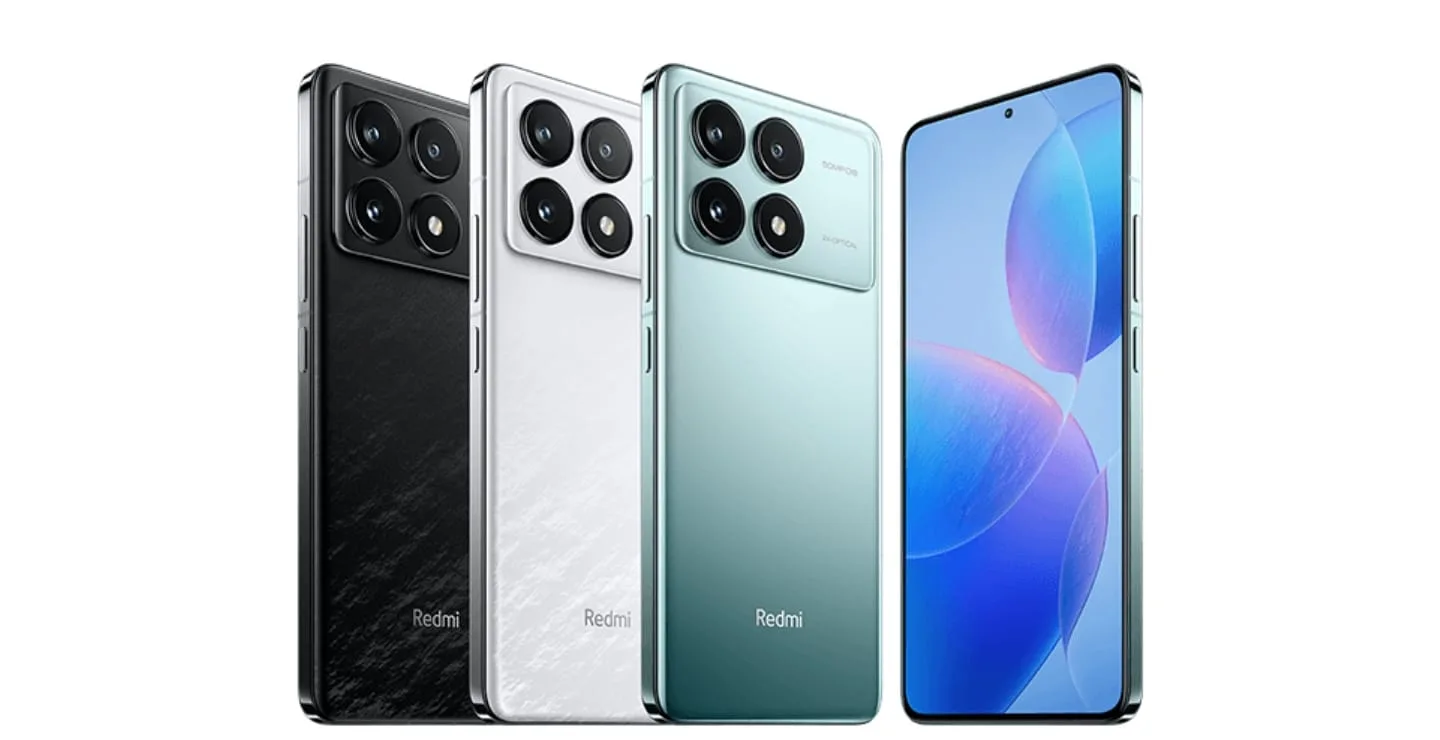
Redmi K80 Series Teased; Redmi K80 Pro Could Be Priced Lower Than OnePlus 13

Redmi K80 series launch is expected to happen soon. The Chinese company has yet to announce a launch date, but ahead of that, Redmi’s General Manager teased the upcoming lineup on the Web. The forthcoming series is confirmed to include the vanilla Redmi K80 and Redmi K80 Pro. They are expected to bring several performance-oriented upgrades over last year’s Redmi K70 and Redmi K70 Pro. The Redmi K80 Pro is rumoured to be powered by the Snapdragon 8 Elite SoC.

Redmi Brand’s General Manager Wang Teng Thomas on Weibo teased the arrival of the new Redmi K80 series. The series will comprise the vanilla Redmi K80 and Redmi K80 Pro. It was previously speculated to include a Redmi K80e model as well. The phones are confirmed to run on customised HyperOS 2 interface.

The upcoming lineup is teased to come with enhanced imaging, longer battery life, and better screens than their predecessors. It will have a different design from the previous models with a new texture and metal frame. The Weibo post also confirms a price hike for the Redmi K80 series. 

Redmi K80 Pro AnTuTu Score Revealed

The Redmi K80 Pro appears to have scored over 3 million points on the AnTuTu 10 platform. The other two unnamed phones next to the device scored 2,832,981 and 2,738,065 points.

Further, an image posted by the executive on Weibo indicates that the Redmi K80 Pro will have a higher configuration and price than competitor’s models. In the comment section, he clarifies that it will have a lower price than the OnePlus 13. The OnePlus 13 starts at CNY 4,499 (around Rs. 53,000). For comparison, the Redmi K70 Pro launched at CNY 3,299 (around Rs. 38,000). It could offer a higher configuration than the iQOO 13.

The Redmi K80 series is rumoured to debut later this month. Both models are expected to pack a 6.67-inch 2K resolution display with 120Hz refresh rate. They could come with IP68 dust and water resistance. The Redmi K80 is likely to run on Snapdragon 8 Gen SoC while the Redmi K80 Pro could get a Snapdragon 8 Elite under the hood.

Last year’s Redmi K70 was rebranded as the Poco F6 Pro for the global market. Therefore the Redmi K80 is anticipated to debut as Poco F7 Pro in the global market.

Posted on

Appudo Ippudo Eppudo OTT Release Reportedly Revealed: Here’s Everything You Need to Know

The Telugu-language action comedy Appudo Ippudo Eppudo is set to release in cinemas on November 8, 2024. Fans eager to catch the movie on streaming platforms can anticipate its arrival on OTT platform soon following its theatrical run.  Amazon Prime Video is now the official streaming partner for Appudo Ippudo Eppudo. That said, multiple reports suggest that the movie might be available on the streaming platform post its theatrical release. 

As per multiple reports circulating online, the Telugu-language movie will be available on Prime Video by December 2024. That said, there is no official confirmation on the same, so you can take this leak with a pinch of salt. We will update this space when we get more information on the OTT release date of Appudo Ippudo Eppudo.

Official Trailer and Plot of Appudo Ippudo Eppudo

Appudo Ippudo Eppudo introduces audiences to a man leading a carefree lifestyle in London, using relationships with women for financial gain. However, his life takes a serious turn when his choices lead to unexpected troubles. The plot follows his struggle to navigate these challenges and find a way out. Sudheer Verma has directed the film, showcasing a mix of action, drama, and comedy, elements that have intrigued audiences ahead of its release.

Cast and Crew of Appudo Ippudo Eppudo

Directed by Sudheer Verma and produced by B. V. S. N. Prasad under the banner of Sri Venkateswara Cine Chitra, the film features Nikhil Siddhartha in the lead role. Kannada actress Rukmini Vasanth and Divyansha Kaushik co-star, with Harsha Chemudu taking on a notable supporting role. This cast lineup promises an engaging dynamic in a story that blends humour with action-packed drama.

For the latest tech news and reviews, follow Gadgets 360 on X, Facebook, WhatsApp, Threads and Google News. For the latest videos on gadgets and tech, subscribe to our YouTube channel. If you want to know everything about top influencers, follow our in-house Who’sThat360 on Instagram and YouTube.

Apple Said to Consider Using Samsung’s Display Technology for More Affordable Version of Apple Vision Pro

Realme 14 Pro, Realme 14 Pro+ to Launch in India in January Next Year: Report

Posted on

Realme GT 6 Receiving Android 15-Based Realme UI 6.0 Early Access Beta in India

Realme revealed the release schedule of Android 15-based Realme UI 6.0 interface last month. Now, the Realme GT 6 is getting the company’s latest custom Android skin, albeit through the Realme UI 6.0 early access beta update in India. The latest interface brings fresh design with new animations, visuals, AI-based features, and numerous system-wide improvements. Realme opened the application for early access this week and it is accepting entries in batches. The brand said it has limited seats for the early access programme.

Realme GT 6 Gets Realme UI 6.0 Early Access Beta

As per a new post on Realme’s community page, the Android 15-based Realme UI 6.0 early access is currently open for Realme GT 6 users in India. Realme started accepting entries for early access on November 5. The brand hasn’t mentioned any deadline for the applications but users have to note that there are only limited slots available. Applications will be accepted in batches.

Interested Realme GT 6 users can participate in the Realme UI 6.0 early access program by heading to Settings > About device > Click on the realme UI 5.0 banner at the top > Click on the three dots in the top right corner > Beta program > Early Access > Apply Now and submit the required details.

It’s also worth mentioning that early access software often contains bugs that could hamper the user experience so the brand recommends not installing Early Access on primary phones. Also, it is advised to back up data to prevent data loss.

Those interested in trying the Realme UI 6.0 have to make sure that their Realme GT 6 has at least 60 percent battery and 15GB of storage available before installing the update. The smartphone should also run a stable version of Realme UI with build version RMX3851_14.0.1.614(EX01). Users can submit feedback in the logkit if they encounter bugs or have suggestions while using early access.

The Realme UI 6.0 offers a new design with revamped app icons, animated widgets, components and folders. Numerous system function icons are introduced in the latest build with advanced visual effects. It has a new live alert system, Split mode and revamped Quick Settings option. The interface has a new Charging limit feature that halts charging at 80 percent.

Posted on

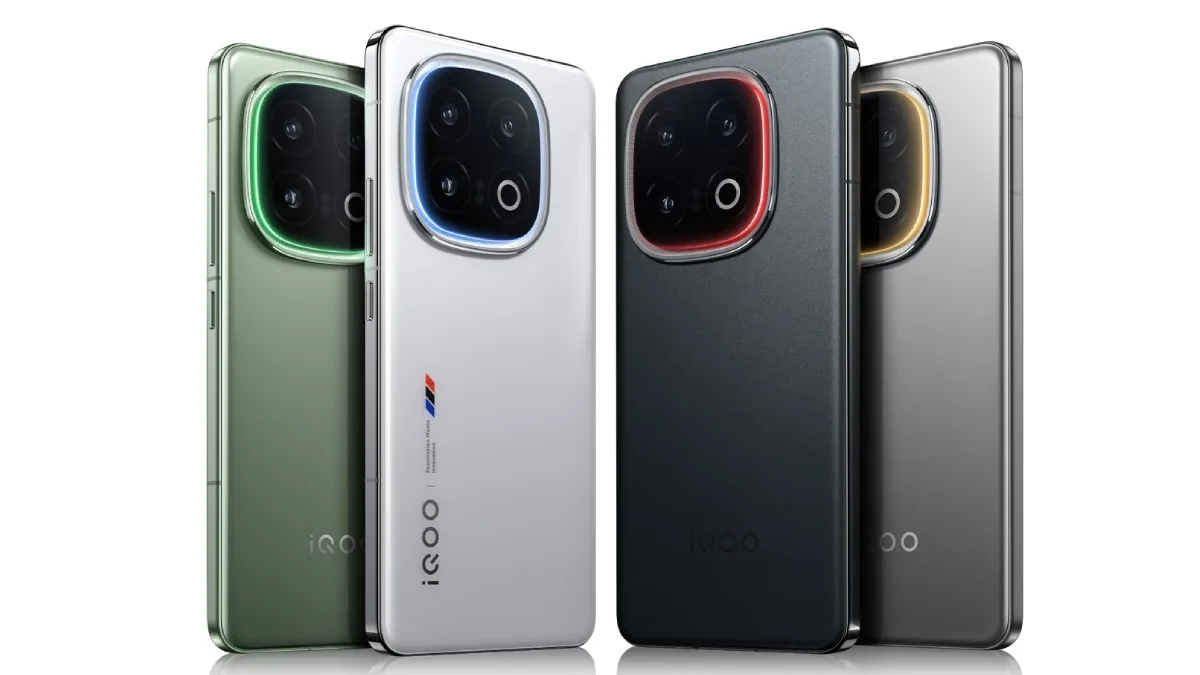
iQOO 13 India Launch Confirmed for December; Design, Display Details Teased

iQOO 13 is set to launch in India soon. The company has confirmed that the phone will carry Qualcomm’s latest octa-core Snapdragon 8 Elite chipset. It has teased the design of the handset alongside some display features. Now, iQOO has announced the launch timeline of the iQOO 13 in India. The phone was unveiled in China on October 30. The Indian version is expected to be similar to its Chinese counterpart in terms of design and key specifications.

iQOO 13 India Launch Timeline

The iQOO 13 will launch in India in December, the company confirmed in an X post. As part of the brand’s collaboration with BMW Motorsport, the phone will arrive in a Legend Edition with blue-black-red tricolour patterns. Notably, the preceding iQOO 12, which launched in India in December 2023, is available in a similar variant.

The India variant of the iQOO 13 will be available for purchase via the official iQOO e-store and Amazon. An Amazon microsite for the handset has also gone live. The phone is teased with the Halo light feature. The microsite reveals that it will get a 2K LTPO AMOLED display panel with a 144Hz refresh rate. It is confirmed to carry a Snapdragon 8 Elite SoC paired with a Q2 gaming chipset.

iQOO 13 Features

The iQOO 13 launched in China with a Snapdragon 8 Elite SoC, an in-house Q2 gaming chipset, up to 16GB of RAM, and up to 1TB of onboard storage. It ships with Android 15-based OriginOS 5. It is expected to arrive in India with a FuntouchOS 15 skin on top. The handset packs a 6,150mAh battery with 120W wired fast charging support.

iQOO 13 comes with a 6.82-inch 2K (1,440 x 3,168 pixels) BOE Q10 8T LTPO 2.0 OLED screen with up to 144Hz refresh rate and HDR support. For optics, the phone has a 50-megapixel triple rear camera unit, which includes a 50-megapixel telephoto camera, and a 50-megapixel ultra-wide shooter. The front-facing camera houses a 32-megapixel sensor. The handset is equipped with an IP68 and IP69-rated build as well as an in-display ultrasonic fingerprint sensor.

Affiliate links may be automatically generated – see our ethics statement for details.
Posted on

Two Black Holes With Unusual Behaviour Disrupt Traditional Theories About Their Formation

Astronomers are watching two unusual black holes, each presenting phenomena that challenge current understanding of these cosmic giants. One, a “serial killer” black hole, is about to devour its second star within five years, while the other, part of the newly discovered triple system V404 Cygni, has disrupted long-held theories of black hole formation.

The Black Hole “Serial Killer” Reaches for Another Star

Located 215 million light-years from Earth, this supermassive black hole first caught scientists’ attention five years ago with a bright flare. The flare came from a star that had drifted too close to it, sparking what astronomers call a tidal disruption event, or AT1910qix. Gravitational forces stretched and tore apart the star, leaving part of its remains around the black hole and launching the rest into space.

Led by Dr Matt Nicholl of Queen’s University Belfast, a team of astronomers has tracked this remnant disc over several years using high-powered telescopes such as the Chandra X-ray Observatory and the Hubble Space Telescope. Recently, another star has started passing through this disc every 48 hours, creating bright X-ray bursts with each collision. Dr Nicholl describes it as similar to a diver creating splashes in a pool each time they hit the water, with the star as the diver and the disc as the pool.

“What’s uncertain is what will ultimately happen to this star,” Dr Nicholl said. “It could be pulled into the black hole, or it may eventually disintegrate from these repeated impacts.”

A Rare Triple Black Hole System in Cygnus

Meanwhile, in the constellation Cygnus, a rare triple system is raising questions about black hole origins. Known as V404 Cygni, this system includes a nine-solar-mass black hole and two orbiting stars, one much farther away than astronomers had thought possible. Kevin Burdge, an MIT research fellow, notes that a supernova typically pushes any distant companions too far to remain gravitationally bound. But in this system, a distant star orbits at a staggering 300 billion miles.

In their Nature paper, Dr Burdge and his team proposed that this black hole may have formed without a supernova explosion, possibly “quietly” collapsing without ejecting its nearby companions. This hypothesis has sparked interest among scientists, as it hints at new black hole formation processes yet to be fully understood.

Daniel Holz, an astrophysicist at the University of Chicago, noted that while unlikely, nature often defies assumptions. This discovery could open a new chapter in black hole research.