Posted on

This cheap projector has a gimbal stand and smart auto adjustments so it’s easy to stream Netflix and Prime Video anywhere

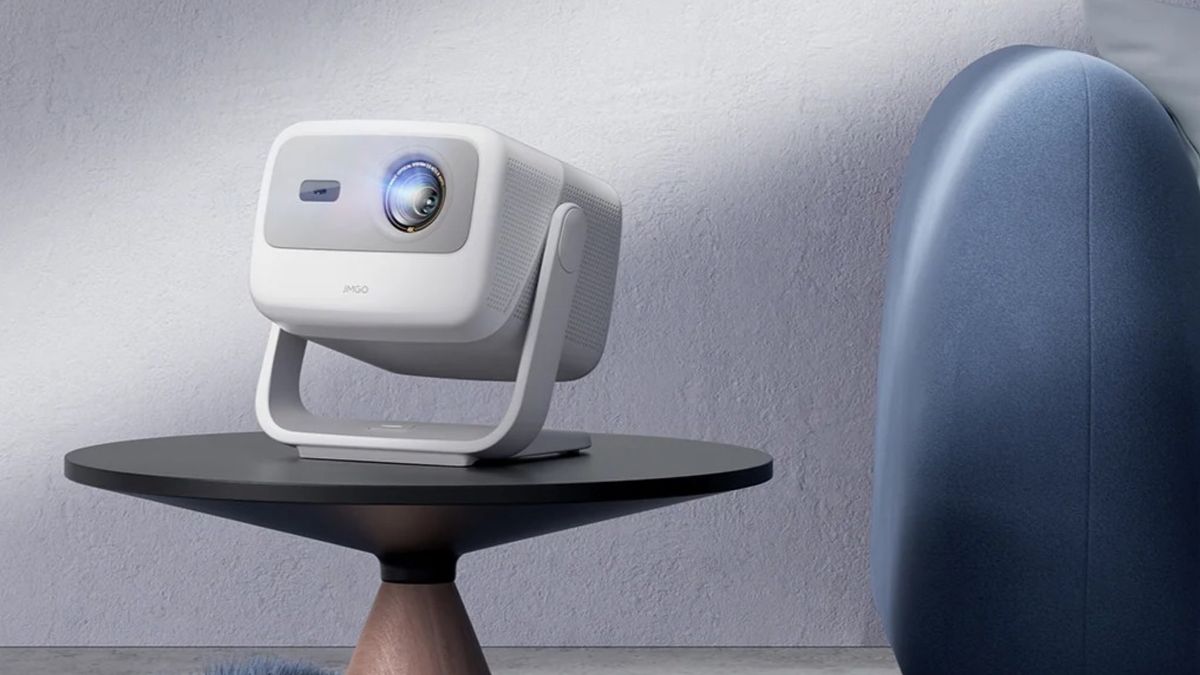
The Dangbei N2 mini is available now, priced at $179 / £159 )about AU$330) 1080p, 200 ISO Lumens, up to 120-inch display ‘AI’ auto picture adustments, 190º tilt for easy projection anywhere Dangbei’s new entry level LED projector, the Dangbei N2 mini, delivers 1080p HD and has native apps for Netflix, YouTube and Prime Video – plus a built-in gimbal and automatic picture adjustment tech (with the obligatory claim of ‘AI’ powers) that should make it easy to place it anywhere and get a well-aligned display. It’s also very keenly priced, with an introductory offer of $179 / £159 (about AU$330). That’s roughly 20% off the normal list price, and it’s less than half what you’d pay for our current best portable projector pick, the XGIMI MoGo 3 Pro. (Image credit: Dangbei) Dangbei N2 mini: key features The most obvious difference between the N2 mini and more expensive models is brightness: where the XGIMI is 450 ISO Lumens, the N2 mini is rated at 200 ISO Lumens, so this isn’t one for brightly lit spaces. But it’s exceptionally portable, weighing just 3.78 lb (1.72 kg), and it comes with a host of automatic features for easy setup and operation. There’s also a 6W speaker system with Dolby Audio support. You may like The recommended display size is 100 inches, but the N2 mini is capable of projecting from 40 to 120 inches. The integrated gimbal enables smooth and accurate positioning on floors, walls or ceilings and the power port is base-mounted to avoid interference. The optical system is sealed to keep dust out, which Dangbei says delivers 30% longer life – although it doesn’t say what that lifespan actually is. Bluetooth is 5.2 and the N2 mini has Wi-Fi 6. The N2 mini has nearly 300 apps to choose from, and the pre-installed Netflix, Prime Video and YouTube apps are all given their own buttons on the remote. The Dangbei N2 mini is available now. Sign up for breaking news, reviews, opinion, top tech deals, and more. You might also like

Posted on

I went deep with the LG G5 OLED TV, and these 5 viewing experiences show how awesome its picture is

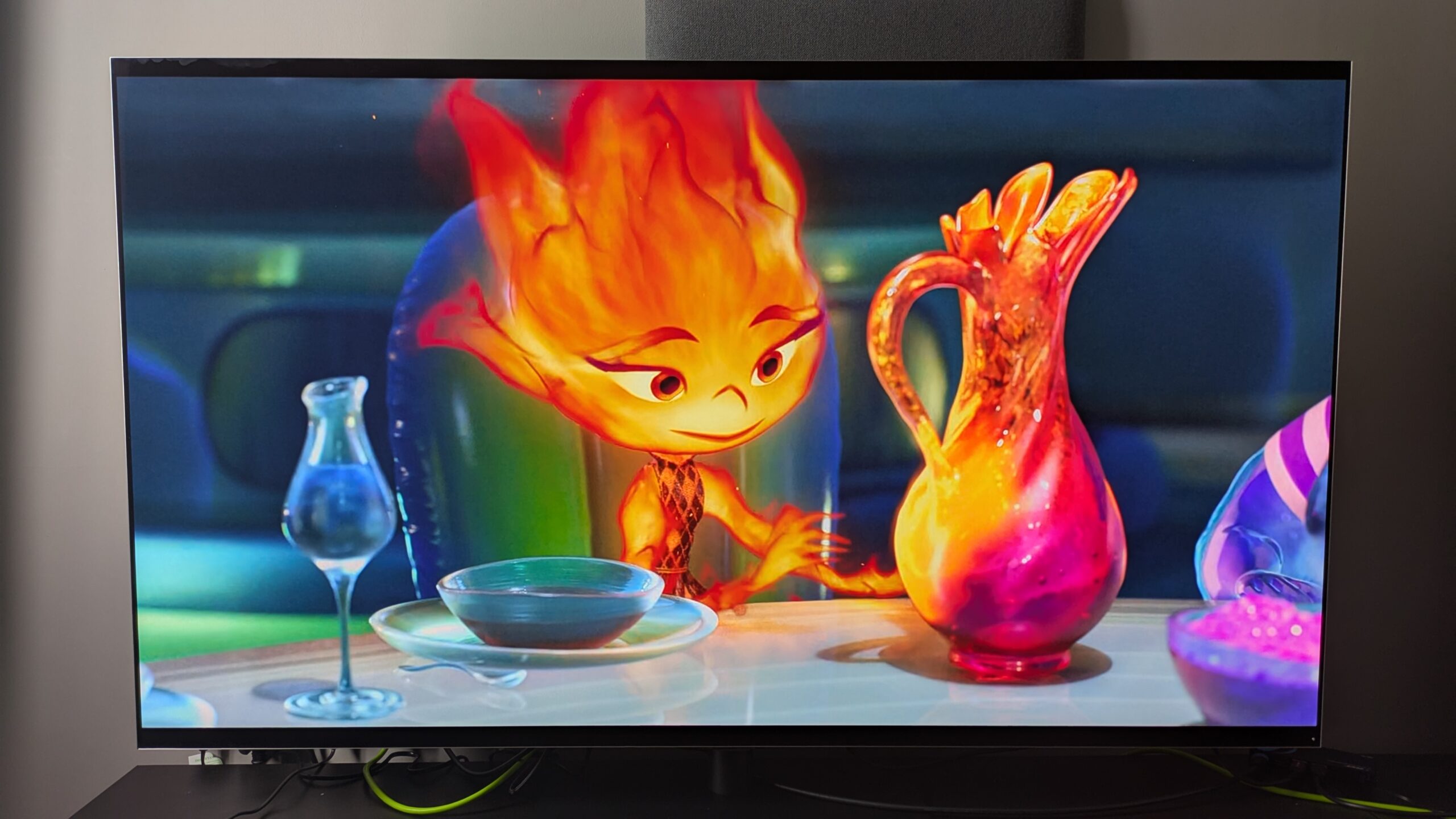
Our five-star LG G5 review reveals why this has been one of 2025’s most anticipated TVs. With a fresh, new display panel called Primary Tandem RGB OLED (also known as ‘four-stack’) it offers increased brightness and more dynamic color than its G4 predecessor, along with deep black levels that hold up in brighter viewing conditions. It’s fair to say I’ve been properly waiting to get my hands on the LG G5 for a while now. I first saw the LG G5 at an event at Dolby HQ in London, and seeing it next to its predecessor, the LG G4, the fullscreen brightness boost had me excited. It would be no easy task to follow in the footsteps of one of the best OLED TVs of 2024, the LG G4, but early impressions had me believing it could do it. Now, after sinking a load of time into the G5, I can confirm it’s an outstanding TV. If you’re thinking of buying one, you’re in for a treat. Below, I’ve made a list of four movies that I watched during my testing that showed off the G5’s potential to be one of the best TVs of 2025, and I also discuss how it handles sports. You may like The Batman (Image credit: Future) A regular reference disc I use for testing TVs, The Batman is a difficult movie for TVs to make look right. It was mastered at 400 nits (as opposed to the most common 1,000 nits for HDR) meaning it’s incredibly dim to start with. Not only that, but it’s a dark movie with a lot of low-light scenes that really test a TVs handling of black levels. Thankfully, handling the challenges of The Batman was a riddle that the G5 solved easily. Played on 4K Blu-ray with the TV in Dolby Vision Filmmaker Mode, black levels were deep and accurate, and shadow detail was excellent. Intricate details in clothing, such as Batman’s symbol on his suit, were clearly displayed even in the darkest scenes. Contrast was also superb, with a perfect balance between light and dark tones in high contrast shots, such as the opening crime scene. Here, light from lamps cut through the gloomy surroundings without sacrificing the accuracy of the dark tones. This movie really showed off just how nuanced the G5 is when handling moody tones. Wicked (Image credit: Future) A new addition to the 4K Blu-ray collection here at TechRadar, Wicked is an extremely colorful movie. Greens, pinks and blues are prominent throughout, and I’ve found green in particular can be a challenge to display accurately, especially on budget TVs. The G5’s color display was outstanding. Every color was not only vibrant with the right level of bright punch, but remained true-to-life in Dolby Vision Filmmaker Mode. The G5’s boosted brightness also came into play, and really added gloss to HDR highlights during Elphaba and Glinda’s first arrival into Emerald City. The G5’s contrast paid dividends here as well, adding depth and giving everything a realistic, almost 3D-like effect without making things look artificial. Oppenheimer (Image credit: Future) Much like The Batman, Oppenheimer is great for testing black levels and contrast. It’s also useful for its black-and-white scenes, which show how a TV can handle high contrast sequences while showing a range of gray tones in between. The G5 displayed fantastic contrast in HDR Filmmaker Mode (the 4K Blu-ray does not have Dolby Vision). Not only were the blacks deep and highlights bright, but a full range of gray tones was exhibited. Shadow detail was also solid, maintaining details in clothing, including in a scene when Oppenheimer tours the University with Admiral Strauss, which is often subjected to black crush (meaning the finest differences in deep blacks get lost into one blocky color). In the same sequence, the drawing room is a bright white. The detail of light shining through the windows can get lost here if TV aren’t able to tone map the brightness well, but the G5 delivers them perfectly. Elemental (Image credit: Future) Elemental is another colorful entry on this list, but one with the more dazzling, bright hues that are typical for Disney animation. The G5 demonstrated breath-taking colors during Elemental (once again in Dolby Vision Filmmaker Mode), particularly in scenes where Ember interacted with crystals or blew glass. The colors were as vivid as I’d hoped for, and HDR highlights were shimmering throughout – this really is a showpiece for the brightness backing the improved color range of the new panel. Textures such as flowing water, fanning flames and the skin of wind and earth creatures were highly detailed. And they all had a realistic sense of depth, thanks once again to the G5’s brilliant contrast. Sports (Image credit: Future) As I said earlier, a fullscreen brightness boost is one of the most exciting new elements of the G5 compared to its predecessor. This is extremely important when viewing sports, especially with something like football where a big vibrant green field and the crisp colors worn by the players are the key focal points. Watching an HD stream of an Arsenal v Real Madrid match-up with HDR on Prime Video, I opted for Standard picture mode over Sports due to the latter’s oversaturated and gaudy colors. In Standard, the G5 expertly displayed the players and pitch, showing accurate texture and colors. Its 4K upscaling was also effective, ensuring that textures on screen were clear and detailed. Crucially, the fullscreen brightness boost was there. That’s often a real weakness of the best OLED TVs, but the G5 had excellent fullscreen brightness, and even showed only minimal reflections from the overhead lights in our testing room, making them far less of a distraction. As expected, motion handling was good, with no motion adjustments needing to be made, though the Natural or User Control motion settings (with de-blur and de-judder set to 3) helped show sports at their best. You might also like

Posted on

I love LG’s new Magic Remote design for its OLED TVs – too bad only certain regions are getting it

It could be considered tremendously geeky to fuss over, or to even discuss, the remote control that comes with your TV. But a solid, well-designed remote is a key feature of the best TVs, and if you spend several hours every day watching, it’s something you’re getting plenty of hands-on time with. As someone who reviews TVs and other AV gear regularly, remote controls are something I pay close professional attention to. When I reviewed the Hisense U8N TV, I’m not ashamed to admit feeling a sense of delight when I held its solid, well-designed remote, which even featured a backlit keypad. It was a huge upgrade over the cheap, plasticky, and basic remote that came with the Hisense U8K that preceded it, and it added more value to an already high-value TV. You may like Conversely, I nearly shuddered when I saw the remote control that came with the Panasonic Z95A, the company’s 2024 flagship OLED TV, and one that marked the brand’s triumphant return to the US market. In my Panasonic Z95A review, I generously called it “disappointing given the Z95A’s otherwise premium build quality (and price!).” The Z95A’s remote was essentially the same one you’d get with any cheap Fire TV set you’d buy on Prime Day for a bargain price from Amazon, which supplied the Fire TV smart TV interface for Panasonic’s new 2024 TVs. The new-old hybrid AI Magic Remote (shown above) boasts a very different design than the fully re-designed AI Magic Remote (shown at top) (Image credit: Future) LG’s Magic Remote control is a long-standing feature of its TVs, including many of the best OLED TVs over the past decade. The Magic Remote differs from other TV remotes in that it has both a scroll wheel and a pointer wand control that lets you hover a cursor over items in the TV’s webOS smart interface and click on them to make a selection. The Magic Remote operates like a wireless computer mouse, and I’m sure that was a deliberate design choice back in the days when companies like LG were first adding a web browser and other computer-like features to their TVs, thinking people were going to eagerly use them for web-surfing and work. The Home Office Quick Card in webOS 25 provides strong evidence that LG still thinks people want to use their TV as an oversized computer monitor for work, which is something I can’t ever see myself doing. I’ve always found LG’s Magic Remote to be fine to work with, even if I’m not using it to actually do work on a TV. But it’s certainly a divisive design, even among longtime fans of LG OLED TVs. Fans such as TechRadar contributor Dave Meikelham, who said this of the Magic Remote: “The aging peripheral now possesses about as much sorcery as a drunk magician unsuccessfully trying to pull a rabbit out of a hat at a crestfallen child’s birthday party.” Magical thinking LG’s Home Office hub wants to help with your productivity (Image credit: Future) Part of the resistance to LG’s Magic Remote is a feeling that the cursor function is inaccurate, with the arrow whizzing randomly around the screen when you attempt to select an item on the smart interface or in a menu (the cursor’s speed can be adjusted in the TV’s setup menu, a setting critics may not have bothered to mess with). But another big part is that LG hadn’t updated the basic design in years, and worse, the remote had a cheap build quality that seems out of step with a premium, pricey TV. When I recently reviewed the LG G5, the brand’s flagship 2025 OLED, I was very happy to see that it came with a redesigned Magic Remote. Finally! This new AI Magic Remote version abandons the old shoehorn-like design for a more modern flat form factor with gently rounded corners and a streamlined keypad with a limited button count. Yes, the scroll wheel is still there, and as with the previous version, clicking on it will trigger the cursor control to use that function. But the new design appears to favor the more conventional navigation disc control option, which works perfectly well on the speedy, responsive webOS 25 smart interface. The new design also adds a few buttons that previously weren’t found on Magic Remotes, specifically Accessibility, Home Hub, and AI shortcut buttons. That last one also facilitates voice commands, which is clearly something LG now wants us to be using on its TVs. What’s missing in the new-look AI Magic Remote are number buttons and, crucially, an input select control, which is something I griped about in my G5 review. Yes, you could use voice commands to create a shortcut for selecting a specific input on the TV (which supports Google Home and LG’s own ThinQ smart home protocols), or you can, as I found myself doing, jump to the Home Hub and select an input from there. But I guess I’m old school that way: I want an input button on my TV remote control (and backlighting too, thanks). Regional realities In the absence of an input select button on the AI Magic Remote, a visit the Home Hub on LG TVs will let you switch between sources (Image credit: Future) Now that I’ve pumped up LG’s AI Magic Remote (for the most part), I need to step back and share that the new design isn’t available in all regions – the UK, for instance. Certain regions have legal requirements that prevent TV manufacturers from removing buttons such as a numbered keypad from remote controls, and for those regions, LG is retaining the same old Magic Remote design. The good news here – if you see it that way – is that this design is a new-old hybrid AI Magic Remote that includes the AI and Home Hub buttons. The bad news? The input select button has been removed from this one as well. I wish it didn’t have to be this way – there’s been a history of companies such as Samsung including two remotes in the box to get around these rules – but for those of use who get the stylish new remote, I think it’s a much-awaited step forward. You might also like…

Posted on

I reviewed the LG G5, and it’s bright enough to change my mind about OLED TVs

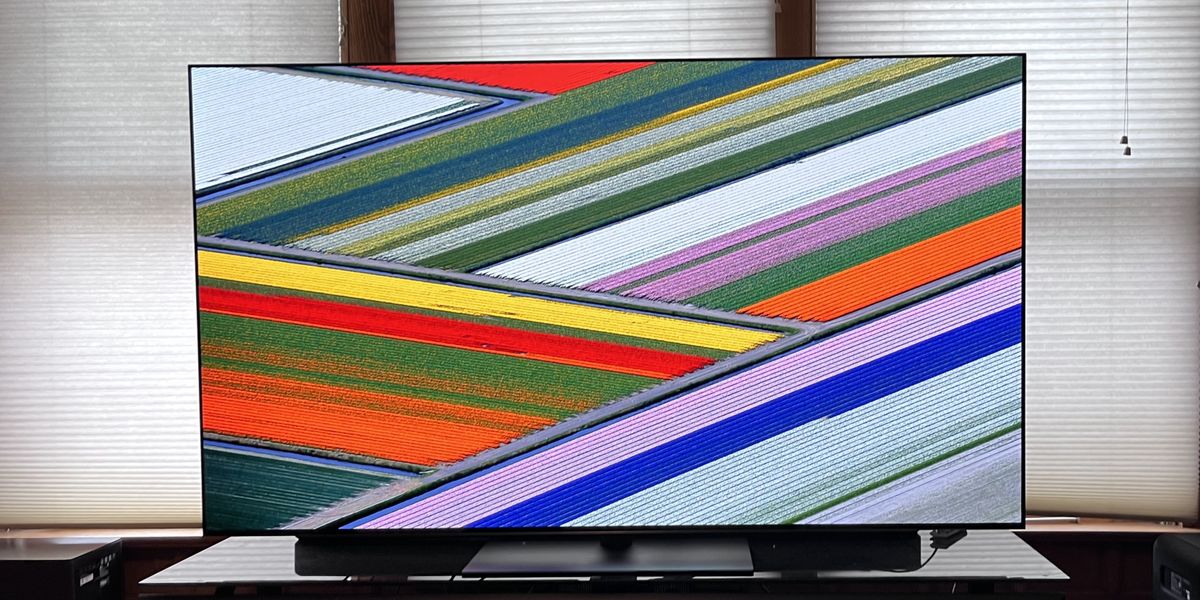
Why you can trust TechRadar We spend hours testing every product or service we review, so you can be sure you’re buying the best. Find out more about how we test. LG G5: Two-minute review The LG G5 is the company’s flagship TV for 2025, and it changes the game for OLED TV tech with a completely new panel design that delivers notably higher brightness than its LG G4 predecessor. I’ll get into the specifics of that in the Picture Quality section of this review, but what you need to know is that with its impressive, mini-LED TV-rivalling brightness, the G5 succeeds brilliantly in bringing the best OLED TVs out of the darkness as a viable option for daytime, bright room viewing. LG’s G4 relied on a micro lens array (MLA) layer to boost brightness over what conventional OLED TVs were capable of, but the new LG G5 incorporates a new Primary RGB Tandem structure OLED display panel. This uses individual red, green, and blue layers to produce light, and the resulting brightness is not only leaps and bounds better than what the G4 achieved with MLA, but it also yields improvements in color reproduction. You’d think that the G5’s revamped display panel would command a higher price, but the LG pricing is equivalent to its G4 predecessor. However, at $3,399 / £2,399 / AU$5,299 for the 65-inch model I tested, it’s still very much a premium TV. You may like Along with higher brightness and richer color, the LG G5 offers a range of features that make it a flexible option for viewing in a range of lighting conditions. These include a new, more effective anti-glare screen, and a Filmmaker Ambient Light Mode that uses the TV’s built-in light sensor to dynamically adjust brightness without sacrificing picture accuracy in the process. LG’s Alpha 11 AI processor Gen 2 is responsible for a range of AI picture and sound enhancements on the G5. These include AI Picture and Sound modes, voice recognition, and personalized content recommendations. LG’s webOS 25 smart TV interface has been tweaked with the ability to switch between customized home screen layouts that get triggered by the viewer’s voice, and there are now onscreen wizards to guide you through the process of setting up unique AI picture and sound presets to accompany your custom home screen. LG’s flagship G-series OLEDs are designed for wall-mounting, and the G5 has an Always Ready mode that lets the TV be used as a frame for displaying photos and art (now including images generated by AI with the TV’s assistance). But it’s also a highly capable gaming TV, with support for 4K 165Hz, Nvidia G-Sync, and AMD FreeSync Premium. The G5’s Quick Card gaming portal also provides over 500 titles plus Nvidia GeForce Now, Luna, and other apps, and Xbox Game Pass support should be added during the start of 2025. While the LG G5 has turned out to be a best-in-class OLED TV option for 2025, many people will be equally pleased with its step-down LG C5 model, which is already looking to be one of 2025’s best TVs. The C5 isn’t as bright as the G5, but you’ll save quite a bit by going with LG’s mid-range OLED . LG G5 review: Price and release date The LG G5 is the brightest OLED TV we’ve yet reviewed (Image credit: Future) Release date: April 2025 48-inch: £1,799 55-inch: $2,499 / £2,399 / AU$4,199 65-inch: $3,399 / £3,299 / AU$5,299 77-inch: $4,499 / £4,499 / AU$7,999 83-inch: $6,499 / £6,999 / AU$9,999 97-inch: $24,999 The LG G5 is widely available in 55- to 83-inch screen sizes. A 48-inch model is also available in the UK, and a 97-inch option in the US, though those models don’t use the same Primary RGB Tandem structure panel as the other sizes, and won’t be as bright. Prices for the G5 series are equivalent to last year’s LG G4 series, despite the inclusion of a new panel design, but are notably higher than the mid-range LG C5 series OLED TVs. LG G5 review: Specs Swipe to scroll horizontally Screen type: OLED Refresh rate: Up to 165Hz HDR support: Dolby Vision, HDR10, HLG Audio support: Dolby Atmos Smart TV: webOS 25 HDMI ports: 4 x HDMI 2.1 Built-in tuner: ATSC 1.0 (USA) LG G5 review: Benchmark results LG G5 review: Features The LG G5 has four HDMI 2.1 ports with 4K 165Hz support (Image credit: Future) Fourth-generation panel with Brightness Booster Ultimate Filmmaker Ambient Light Mode debuts here 4K 165Hz gaming support on PC A key feature of the LG G5 is a new fourth-generation OLED display panel with Primary RGB Tandem structure. In contrast to previous designs, which used two blue OLED layers plus a third layer with red, green, and yellow elements, the new panel uses individual red, green, and blue layers to produce light. This “four-stack” structure benefits from increased brightness and enhanced color purity due to the panel’s use of separate OLED layers for the primary colors. Unlike the previous LG G4, the G5 doesn’t rely on a micro lens array (MLA) layer with microscopic lens elements to boost brightness. LG refers to its new display panel tech as Brightness Booster Ultimate, and it’s accompanied by several other features to boost picture quality in a range of room lighting conditions. The first is an anti-reflective layer that LG says provides 30% higher glare resistance than last year’s G4. Another is Filmmaker Ambient Light Mode, which uses the TV’s built-in light sensor to map gamma and PQ (the HDR equivalent of gamma) based on room lighting conditions. The G5 also has Perfect Black certification, which confirms that a TV can display less than 0.24 nits in conditions of up to 500 lux. The G5’s Alpha 11 AI processor Gen 2 enables a range of AI-based picture and sound enhancements, including AI Picture and AI Sound modes. Picture and sound wizards guide you through setting up customized presets based on your response to a series of images and sound samples, and once completed, these can be automatically switched on for the specific users who created them based on voice recognition. That also goes for the layout of the TV’s webOS 25 Home Screen – if you customize the app selection in your user profile, it’ll switch to the layout you prefer when it detects your voice if you use the voice control system at all. The G5 also gets a gaming boost over last year’s G4, with 4K 165Hz support for PC gaming along with Nvidia G-Sync and AMD FreeSync Premium. LG’s Gaming Portal offers over 500 game titles, with support for both Xbox and Luna controllers and Xbox Game Pass (coming in the first half of 2025, according to LG). Usability features include AirPlay 2 and Chromecast built-in, along with hands-free voice control. The ThinQ screen in the webOS interface lets you configure devices to be controlled via Google Assistant, Amazon Alexa, Matter and Apple HomeKit, and there’s also a new, streamlined Magic Remote and more advanced AI Chatbot feature that can diagnose picture and sound issues. Features Score: 5/5 LG G5 review: Picture quality The G5’s picture looks bright and punchy even in well-lit rooms (Image credit: Future) Exceptional brightness for an OLED Anti-reflection layer in the screen Some issues with certain streaming formats The LG G5 holds the distinction of being the brightest OLED TV we’ve yet measured at TechRadar. Peak brightness on a 10% HDR white window pattern in Filmmaker Mode measured 2,268 nits, and it was 1,850 nits in Standard picture mode. Those numbers are what we typically expect to see from higher-end examples of the best mini-LED TVs, and they best the Samsung S95D – our previous brightest OLED TV champion – by a sizeable margin. The G5’s fullscreen HDR brightness measured 331 nits in Filmmaker Mode and 297 nits in Standard mode. That represents a boost over last year’s G4, which measured 257 in Filmmaker Mode, but it’s not the 40% fullscreen brightness boost that LG had previously cited for the G5. Measured in Vivid mode, the G5’s fullscreen brightness was 419 nits, a number closer to LG’s claim. The G5’s color gamut coverage measured 99.6% for UHDA-P3 and 81.3% for BT.2020 in Filmmaker Mode. Those results are better than what we measured on the G4, and they match the Samsung S95D’s UHDA-P3 coverage. The average Delta-E value (the margin of error between the test pattern source and what’s shown on-screen) for color accuracy was 1.2, which is excellent. (Any result under 3 is regarded as indistinguishable to the human eye.) Given the LG G5’s high brightness, there was no need to dim the lights to make the picture look good – contrast, color saturation, and shadow detail all held up nicely even with my room’s overhead lighting on. That’s certainly not something you can say about all OLED TVs, which typically lag behind their mini-LED counterparts when it comes to brightness. The new G5’s new “four stack” OLED panel offers enhanced color performance over last year’s G4 (Image credit: Future) Even with the comparatively subtle Filmmaker Mode active, The Pitt (streamed via Max), a TV show that mostly takes place in a brightly lit hospital emergency room, looked staggeringly bright on the G5. And darker shows such as Severance (on Apple TV+) could be watched in brighter room lighting conditions without losing black depth and shadow detail. That’s partially due to the TV’s anti-reflective layer, which manages to reduce screen glare without elevating black levels, but also its Filmmaker Mode Ambient Light setting, which uses the G5’s light sensor to adjust gamma (or PQ for programs with HDR) based on room lighting conditions. Viewing the season 2 final episode of Severance, a scene where Mark S and Helly R chat furtively in the Lumon office showed off all the LG G5’s best aspects. The background of the dark workspace was a deep, rich black, and the light from the data terminals bathed their faces with a striking blue and green glow. The refined shadow detail gave the picture a powerful sense of depth that, for me, really drove home the point of why you would spend top dollar for a premium OLED TV like the G5. An LG G5 review from our colleagues at What Hi-Fi? cited an issue with streamed Dolby Vision movies and shows, resulting in posterization and blocky picture artifacts when watching dark scenes. My G5 review sample showed the same posterization on at least one movie, Alien: Romulus (streamed via Apple TV), though it wasn’t an issue on other streamed dark Dolby Vision content I watched. What Hi-Fi? later reported that an LG software update scheduled for a late April release fixes this Dolby Vision glitch, and after installing a pre-released version of that update, the posterization on Alien: Romulus disappeared, though it created other picture quality issues when streaming from the G5’s Apple TV app, adding strange horizontal lines in some dark scenes. Without these problems, the TV would score five stars for picture quality. These problems are very situational, which means I’m still happy giving the TV an overall score that marks it as best-in-class. Once we’ve fully tested the wide release version of LG’s software update, we will update this review, and if these problems are removed as expected, I’ll update this section. The G5’s motion handling was impressive, with a reference clip from No Time to Die – in which James Bond traverses a rugged hillside cemetery as the camera pans along – showing only minimal judder and blur. This same scene can look downright wobbly on some TVs. Enabling the TV’s Cinematic Movement setting in the TruMotion menu effectively removed any residual motion artifacts without introducing a ‘soap opera’ effect. Sports also looked great – the NCAA basketball championship aired during my time testing the G5 – with fast motion looking solid and the TV’s bright, contrast-rich picture bringing out the vivid colors of the players’ uniforms. Picture quality score: 4.5/5 LG G5 review: Sound quality The G5’s 1-inch-thin frame is designed for a flush-mount against a wall and the TV comes with wall-mounting hardware (Image credit: Future) 4.2-channel speaker system Effective AI Sound Pro mode Sound Wizard for creating custom sound preset The LG G5’s built-in 4.2-channel speakers take things up a notch from the 2.2-channel array built into the LG C5. An AI Sound Pro mode provides a virtual 11.1.2-channel upmix that makes a clear difference in the spaciousness of soundtracks when watching movies, but it also thins out the bass. While Dolby Atmos is supported on the G5, DTS formats, disappointingly, are not. This is a step backwards from the G4, which had DTS support – though this won’t be a problem for people using an AV receivers, and some soundbar setups. Similar to the TV’s Picture Wizard, a Sound Wizard guides you through the process of creating a customized sound preset. This is entirely optional, and this preset doesn’t work when the TV is connected to a soundbar. A useful WOW Orchestra mode lets you combine the output of the TV’s speakers with the speakers of a compatible LG soundbar when used together, for a bigger overall soundstage. The movies and TV shows I watched on the G5 all sounded good, with clear dialogue and good spatial positioning of effects, especially with the AI Sound Pro mode active. The sound could also go fairly loud without coming across as strained. Even so, given how good the G5’s picture looks, it would be a shame not to pair it with one of the best Dolby Atmos soundbars or dedicated home theater speakers. Sound quality score: 4/5 LG G5 review: Design An aluminum pedestal may be an extra cost option for the G5 (Image credit: Future) Wall-mount hardware included Optional pedestal stand New, streamlined AI Magic Remote control The G5 comes with wall-mounting hardware at all screen sizes, and a pedestal stand is available as an optional extra in the US. In the UK, you can choose if you want the stand or the mount in some sizes. LG’s sturdy aluminum stand, which I used during my G5 review, allows for both an elevated height to accommodate a soundbar, or a lower height where the TV sits directly on the stand’s surface. G5 TVs are designed to be wall-mounted, with the thin, 1-inch panel aligning perfectly flat against a wall like a picture frame when you use the dedicated mount. The TV’s nearly non-existent bezel gives it an ‘all-picture’ look that adds to the art-like quality, and a connection panel located on the back with bottom and side-mounted ports, along with cable management hardware, lets you hook up sources without detracting from the neat look. Connections on the G5 include four HDMI 2.1 inputs, an RF antenna input, three USB ports and an Ethernet port. LG’s new AI Magic Remote for the G5 is more compact and streamlined than previous Magic Remotes, with a flat surface, a reduced button layout, and a smaller central scroll wheel. Unfortunately, not all regions get this new, mostly improved design, though it was included with my review sample in the US. The UK still gets a design with channel buttons, though it does include new AI keys. The new AI button provides quick Chatbot access, and there’s also a dedicated button to call up the TV’s ThinQ screen. I never really had a problem with the previous Magic Remote, but some users may prefer the more traditional design of this new version. Design score: 4.5/5 LG G5 review: Smart TV and menus LG’s webOS 25 interface has been enhanced with multiple viewer profiles and picture settings that can be activated by voice (Image credit: Future) webOS 25 smart interface Always Ready feature with ‘ambient mode’ option Quick Cards and Quick Menu for easy app and settings access The G5 uses LG’s webOS 25 interface, which is one of the best smart TV systems going. Like other smart TV interfaces, the top third is dedicated to a promotional banner (in this case, one mostly directing you to the LG Channels free ad-supported TV portal), alas, but below that is a Quick Cards section that provides hubs for Sports, Games, Music, Home and more. The Home Card hub provides information about connected wired and wireless sources, which can be accessed using the TV’s remote control. It also lets you connect to Google Home, Matter, and LG ThinQ smart devices, which can be controlled directly from the TV. The order of apps in the home screen’s middle section can be edited according to which ones you use most, and there’s also a Live TV option that shows a grid of both broadcast TV channels pulled in by the best indoor antennas and ones available on the LG Channels portal. An Always Ready feature that needs to be enabled in the General menu lets you display images (including from your personal photo library) when you’re not using the TV, including ones that can be generated using AI. When in Always Ready mode, the voice recognition and AirPlay/Chromecast remain active, so you don’t have to power it on to use those functions. A very useful webOS feature is the Quick Menu, which appears as a transparent overlay on the screen’s left side that lets you select between picture and sound modes, among other settings. You can also access the TV’s AI Chatbot from here, which can be used to guide you through the G5’s many settings and features. The TV’s AI Picture wizard can be useful for creating a preset that corresponds to your preferences, but I found that the one I dialed in was overly cool-looking for my preference, despite it theoretically following my preferences, and I stuck with Filmmaker Mode instead for most viewing. While I generally found navigating the TV’s menus to be easy, and was satisfied with the wide range of options for adjusting picture and sound, I found it annoying that the new, redesigned Magic Remote control lacks an input button for switching sources. It’s easy enough to do that by pressing the Home hub button on the remote and then navigating to a specific source, but input select is nonetheless a button that should be included on every TV remote. Smart TV & menus score: 5/5 LG G5 review: Gaming A Game Dashboard allows for easy gaming-related picture and sound adjustments (Image credit: Future) Four HDMI 2.1 ports 4K 165Hz, FreeSync Premium and Nvidia G-Sync 9.2ms input lag (Boost mode) LG TVs have fantastic gaming credentials, and the G5 continues in that tradition of the best gaming TVs. Its four HDMI ports support 4K 165Hz, FreeSync Premium and Nvidia G-Sync. Input lag measured in Game Optimizer mode with a Bodnar 4K input lag meter was 9.2ms in Boost mode, which is about as low as TVs get. The G5’s Game Card Gamung Hub offers over 500 games and apps, including Nvidia GeForce Now and Luna. (Xbox Game Pass support is coming in the first half of 2025, according to LG.) When in Game Optimizer mode, a Game Dashboard pop-menu provides quick access to a range of adjustments and presets, which can be selected without pausing the game you’re playing. The brightness level of the G5 is great here, again, because it means its good for playing in the day time without severe mirrored reflections distracting from what you’re trying to focus on. Gaming score: 5/5 LG G5 review: Value LG’s new, streamlined Magic Remote (Image credit: Future) Priced competitively with premium OLED competition Step-down LG C5 OLED also excellent Very good overall value At $3,399 / £3,299 / AU$5,299 for the 65-inch model I tested, the LG G5 is priced higher than another 2025 premium OLED, the Samsung S95F, which has a similarly high brightness as the G5 plus a Glare-Free 2.0 screen that’s even more effective at eliminating reflections in bright rooms. The G5 is also priced lower in the US than another 2025 premium OLED, the Sony Bravia 8 II, which will sell for $3,999 in a 65-inch screen size… however, in the UK, the Bravia 8 II is actually priced slightly lower than the 65-inch G5, just to mix things If you don’t require super-high brightness and want to save some money, the LG C5 ($2,699 / £2,699 at 65 inches) is an excellent choice. The C5’s peak brightness is roughly half of what we measured on the G5, but it’s full of features and its picture quality is still exceptional, especially when viewed in a light-controlled environment. Given its fantastic all-around performance, great features, and more affordable cost compared to some of its high-end OLED competition, the G5 earns high ratings for value. Value score: 4/5 Should I buy the LG G5? (Image credit: Future) Swipe to scroll horizontally LG G5 Attributes Notes Rating Features A great array of features make the G5 a flexible TV that can accommodate bright rooms 5/5 Picture quality Class-leading brightness for an OLED TV plus refined all-around picture quality 4.5/5 Sound quality Good dialogue clarity and effects positioning, along with a wide soundstage in AI Sound Pro mode, but bass is limited 4/5 Design Slim, wall-hugging design and smart new remote. The stand is optional, keep in mind 4.5/5 Smart TV and menus Useful Quick Cards and Quick menu features are enhanced by voice recognition, viewer personalization, and AI chatbot 5/5 Gaming 4K 165Hz and premium VRR support, along with low input lag and cloud gaming apps, make the G5 a complete gaming package 5/5 Value A good value for a flagship OLED TV in 2025, although LG’s mid-range C5 is arguably the better value in light controlled rooms 4/5 Buy it if… Don’t buy it if… LG G5 review: Also consider… Swipe to scroll horizontally Header Cell – Column 0 LG G5 Samsung S95F LG C5 Sony Bravia 9 Price (65-inch) $3.399 / £3,399 / AU$5,299 $3,299 $2,699 / £2,699 / AU$4,299 $2,999 / £2,999 Screen type OLED OLED OLED Mini-LED Refresh rate 165Hz 144Hz 144Hz 144Hz HDR support Dolby Vision/HDR10/HLG HDR10+/HDR10/HLG Dolby Vision/HDR10/HLG Dolby Vision/HDR10/HLG Smart TV webOS25 Tizen webOS25 Google TV HDMI ports 4 x HDMI 2.1 4 x HDMI 2.1 4 x HDMI 2.1 4 (2x HDMI 2.1) How I tested the LG G5 Measuring a 10% HDR white window pattern during testing (Image credit: Future) I spent about 20 hours in total measuring and evaluating Measurements were made using Calman color calibration software A full calibration was made before proceeding with subjective tests When I test TVs, I first spend a few days or even weeks using it for casual viewing to assess the out-of-box picture presets and get familiar with its smart TV menu and picture adjustments. I next select the most accurate preset (usually Filmmaker Mode, Movie or Cinema) and measure grayscale and color accuracy using Portrait Displays’ Calman color calibration software. The resulting measurements provide Delta-E values (the margin of error between the test pattern source and what’s shown on-screen) for each category, and allow for an assessment of the TV’s overall accuracy. Along with those tests, I make measurements of peak light output (recorded in nits) for both standard high-definition and 4K high dynamic range using 10% and 100% white window patterns. Coverage of DCI-P3 and BT.2020 color space is also measured, with the results providing a sense of how faithfully the TV can render the extended color range in ultra high-definition sources. For the LG G5, I used the Calman ISF workflow, along with the TV’s advanced picture menu settings, to calibrate the image for best accuracy. I also watched a range of reference scenes on 4K Blu-ray discs to assess the TV’s performance, along with shows streamed from Max, Netflix, and other services. You can read an in-depth overview of how we test TVs at TechRadar for more information.

Posted on

BenQ launches two new 4K projectors – one promises theater-grade image quality, and one brings AI processing to home projectors

180-inch screens from just 4 metres away; designed for up to 200 inches AI-powered optimization of compressed streaming video HDR-PRO with HDR10, HLG, and HDR10+ BenQ has announced two new 4K projectors as part of its Home Cinema Series: the premium W5850, which is designed for theater-grade large screens; and the W4100i, which promises cinema-grade visuals for home theater rooms to rival the best projectors. The 2,600 lumen W5 is “designed for the ultimate cinematic experience”. It’s capable of up to 200-inch screens with a shorter throw ratio of 1.0 to 1.6. That enables it to deliver a 180-inch display from just four meters away. The W4100i has a 3,200-lumen LED light source, Android TV and AI Cinema Calibration mode, which BenQ says ensures “cinema-grade visuals” from streaming content. You may like (Image credit: BenQ) BenQ Home Cinema Series: key features Each of the Home Cinema Series projectors meets key industry standards including 100% DCI-P3, and Delta E<3 (with high-end models such as the W5850 achieving Delta E<2). There’s BenQ’s own HDR-PRO technology, which enhances contrast through multi-stage processing – Global Contrast Enhancer, Local Contrast Enhancer, and Dynamic Black – and the tech supports HDR10, HLG, and HDR10+. There’s built in noise reduction to enhance compressed streaming content, and the latest version of BenQ’s AI Cinema Mode. This is a real-time image composition analyzer that dynamically adjusts HDR, color saturation and sharpness, significantly improving the appearance of the compressed video content from the major streaming services. AI processing is big among the best TVs, but hasn’t made an impact on projectors much yet – that’s clearly starting to change. Sign up for breaking news, reviews, opinion, top tech deals, and more. Connectivity includes HDMI 2.1, SPDIF and eARC with support Dolby Atmos and 7.1 surround sound. There’s also a low-latency Fast Mode that promises a fast 17.9ms response time for movies, sports, and games. We only have UK pricing so far, with the BenQ W4100i set for a £2,999 (about $3,890 / AU$6,225) price, while the W5850 is set to cost £4,599 (about $5,960 / AU$9,550). You might also like

Posted on

Is the YouTube TV app missing from your Roku? You’re not alone, here’s how to fix it

Some Roku owners have seen the YouTube TV app disappear from devices Resetting the device doesn’t work, but some have found alternative fixes Google and Roku have yet to respond to the reports YouTube TV has rapidly become one of the best streaming services for live TV, particularly if you’re looking to replace cable with a service that’s available on a multitude of streaming devices. Over the past day, however, Roku users have noticed that the YouTube TV app has strangely disappeared from their devices. Not only has the YouTube TV app gone missing, but some users have spotted that it’s not available to reinstall either. This had led owners of Roku streaming devices to head to Reddit to share their experiences with the issue, with some swarming Roku forums and also Google’s support page. One of the first outlets to bring the issue to light was 9to5Google, which stated that the cause of the issue is still unconfirmed. We’ve reached out to Google to find out if there’s any update and will update this story if we hear back. You may like YouTube TV not loading on Hisense/Roku 55R7G5 from r/youtubetv The most frustrating part of YouTube TV’s app disappearance is that it’s taken a lot of trial and error for users to fix – and as it stands, neither Roku nor Google has come forward to address the problem. Searching for the app in the installed list on your Roku device doesn’t seem to help, and neither does resetting the device. But luckily, there seems to be alternative ways that users have found. How to recover the YouTube TV app on Roku (Image credit: Roku) According to a Roku community moderator, this issue can be resolved by checking for any Roku OS updates that may need installing. Updating the latest OS version has helped many users restore the YouTube TV app. For those who have already downloaded the most recent version of Roku OS whose YouTube TV app is still missing, Android Police says that you can still use the standard YouTube app to access YouTube TV’s channels. When you open the left-hand menu, scroll down to the bottom and you’ll find an option for YouTube TV. Sign up for breaking news, reviews, opinion, top tech deals, and more. Over the past few months, YouTube has been teasing updates including two new features that allow users and creators to comment and interact with videos, and also a big Netflix update. It’s unclear whether this recent issue is related to YouTube TV’s possible upgrades, but we’ve asked Google for any insights and will update this story if we get a response. You might also like

Posted on

The LG C4 is the best OLED TV you can buy and it’s dropped to a record-low price at Amazon UK

Let me cut to the chase. You can pick up the LG C4 65-inch OLED TV at Amazon for only £1,135 (was £1,899). That’s one amazing price for one of the best TVs around. The best price requires you to apply the £215 voucher, but that’s as simple as checking the box underneath the price before adding it to your basket. This 2024 display boasts the latest OLED technology and takes pride of place as the most versatile display in our best TVs guide. This accolade is thanks to its impressive gaming capabilities, incredible picture quality, and intuitive smart TV platform. That means it covers all the bases in a way that few TVs do. Today’s best LG C4 OLED TV deal The LG C4 went straight into our best TV guide as the most versatile option right now. That’s how much we loved it. Building upon the LG C3 OLED, the C4 delivers a range of improvements over its predecessor, including better image quality, four HDMI 2.1 ports with 4K 120 Hz compatibility, and a new AI chip. What a lineup! This is everything you could ever want from a TV. All gamers need to do is plug in their games console, kick back, and enjoy buttery smooth graphics. And after a long gaming session, this TV has everything required to deliver your favourite TV shows and movies in top quality with impressive colours, contrast and lighting. Our reviewer sums up well how much of a bargain this TV is: “While it’s not LG’s priciest TV, the C4 is still a premium model with a premium design and features. You can buy mini-LED TVs with the same screen size for less than the LG C4, but the C4’s excellent picture quality and mid-range (for an OLED TV) price make it a very compelling choice.” If you want to compare this to other options, there are loads of TV deals available right now. If it’s OLED technology that you’re looking for, then we also have an OLED TV deals page. If you’re also interested in a soundbar, we have a number of soundbar deals to take a look at too.

Posted on

This 4K portable laser projector goes twice as bright, twice as big as LG’s equivalent, for the same price

JMGO N1S 4K is a new portable 4K laser projector 1,100 lumens, and up to 200 inches at a 1.2:1 throw ratio $1,299 / about £1,005 / AU$2,155 If you’re in the market for one of the best portable projectors, one of the most tempting models is the LG Cinebeam Q with its 120-inch, 4K projection and $1,299 / £1,299 / AU$2,499 price tag at launch (now largely available under £1,000/$1,000). But it’s just got some serious competition in the form of the similarly priced JMGO N1S 4K. Like the LG, it produces big images from a small footprint. But it’s capable of projecting 4K at up to 200 inches compared to the LG’s 120 inches. Okay, that’s not quite the double we mentioned in the headline, but it’s close enough – it’s a lot of inches for a compact beamer. (Image credit: JMGO) JMGO N1S 4K: key features and price This is a portable player measuring just 7.3 x 6.5 x 7.5 inches (18.5 x 16.5 x 19.1 cm), but there’s no battery so you’ll need to find somewhere to plug it in. Because it doesn’t need to worry about battery life, it’s impressively bright, putting out a claimed 1,100 ISO lumens – the LG Cinebeam Q, for comparison, is 500 ANSI lumens. You might notice there’s a difference there – ISO lumens versus ANSI lumens. But a rating in ISO lumens is generally brighter than ANSI lumens, so actually the difference appears (on paper) to be even wider than it first looks. The sound system is decent given the small size of the devices, cramming in 10W speakers and a small bass unit, and the N1S is compatible with both Dolby Audio and DTS-HD. You can adjust the projection angle up to 127 degrees using the stand that doubles as a handle, and there’s promised 110% coverage of BT.2020 color, a 1,600:1 full on/full off contrast ratio, and HDR10. There’s MEMC motion smoothing, an HDMI 2.1 port with eARC, and it runs Google TV with support for both Google Assistant and Google Cast. For gamers there’s 1080p 60Hz support with a reasonable 17ms input lag. Sign up for breaking news, reviews, opinion, top tech deals, and more. Officially the N1S 4K will retail at $1,299 in the US and €1,399 in the EU (roughly £1,006 / AU$2,155). But at the moment it’s being discounted heavily for US users with a price of just $999. It’s unclear whether that’s a permanent price adjustment or just a limited-time offer. You might also like

Posted on

‘OLED and LCD will die out’: A microLED expert explains how the superior TV tech will finally become affordable

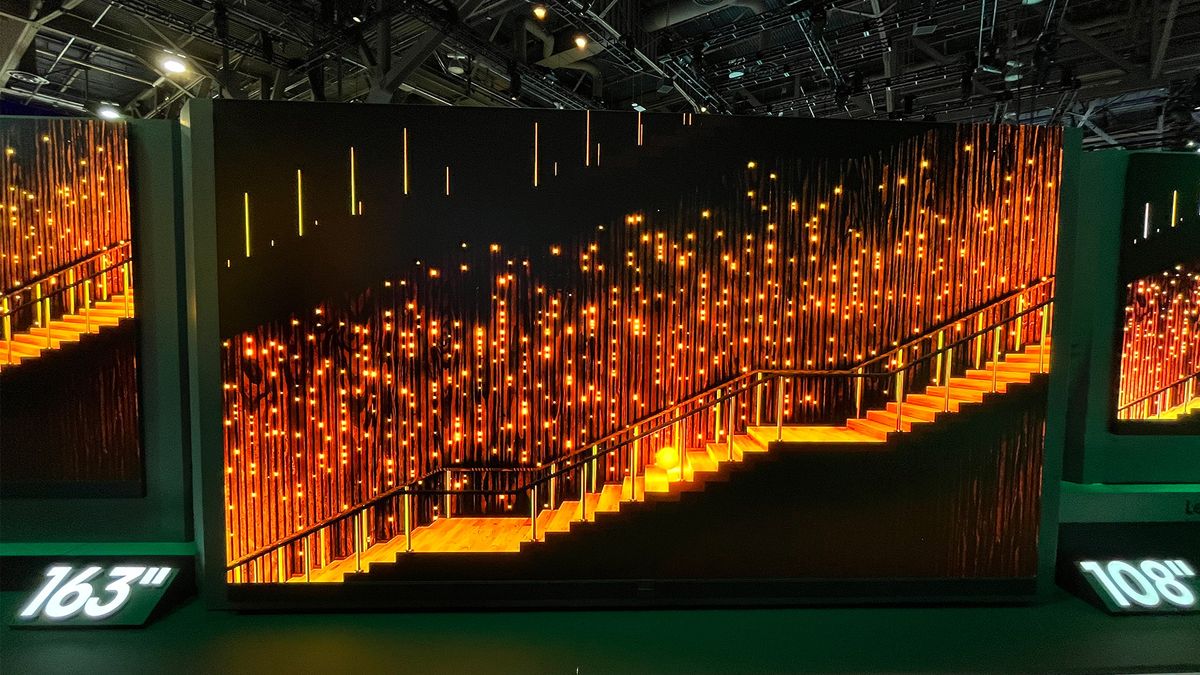
MicroLED has been heralded by manufacturers and premium brands as the ultimate display tech, combining OLED-equalling black levels with mini-LED-beating brightness. But, it’s not a tech that’s yet featured among the best TVs because micro-LED displays are still priced at $100,000 and above and are typically 100-plus inches in size, meaning there’s a very select audience. For years, we’ve waited for the arrival of more affordable microLED TVs, but it’s yet to happen. Then, Hisense, a brand known for its competitively priced, feature-packed TVs, surprised the TV world at CES 2025 by announcing microLED models. However, these were only in 136- and 163-inch sizes, with prices yet to be announced. Considering the Hisense 110UX, the brand’s top mini-LED TV, costs $15,000 / £19,999, we can expect these new microLED sets to once again be exceedingly expensive. But, what if there was a chance that the sought-after panel tech could become affordable and fit into smaller, standard-sized rooms? There may be a way, as I found out when talking to Dr. Reaz Chaji, Co-Founder and CEO of VueReal industries. Manufacturing breakthroughs VueReal believes its MicroSolid Printing could revolutionize microLED production, including for TVs (Image credit: VueReal) VueReal, based in Waterloo, Canada, is a manufacturing company focused on innovative micro technology solutions, including a MicroSolid Printing process that could revolutionize the way microLED is manufactured. Dr. Chaji got his start in OLED technology, creating a solution that would eventually be licensed to LG for use in its OLED TVs. But he felt OLED had limitations and was drawn to microLED technology. “That is why I was attracted to microLED, not just because of the microLED, but the potential it has beyond microLED”, he told me. Especially the idea of “multifunctional surfaces where microLED can be used” compared to OLED, which is “just for display”. However, microLED has a complicated, costly manufacturing process by default. Without getting too technical, microLED currently uses a process where microLEDs are fitted into tiles to create the large displays we’ve become accustomed to seeing. If these tiles were used for smaller displays, such as a 65-inch TV, the seams between the tiles would be visible, making for an unappealing display. At present, microLED is only used for very expensive and large premium TVs such as the C SEED N1 (pictured). (Image credit: Future) Dr. Chaji and his team have developed a new technique called MicroSolid Printing, where semiconductors, including microLEDs, can be put into cartridges and printed directly onto the corresponding display. Another advantage of these cartridges is that they’re built ahead of time, making inspection for defects easier. “Because we build the cartridge in advance, we can inspect for defects, uniformity, performance, and it can help us to improve the display performance significantly”, Dr. Chaji says. Sign up for breaking news, reviews, opinion, top tech deals, and more. In current LED, OLED and microLED production, if a defect is discovered, say on a piece of OLED glass, that entire surface will be disposed of, adding to the production costs. However, VueReal’s Quantum Vue display tech, which combines its MicroSolid Printing technique with Quantum patterning, provides a highly efficient, cost-effective way microLED displays can be created without as much waste, resulting in a greater yield of production-ready displays, according to Dr. Chaji. MicroLED: the death knell for OLED and LCD TVs? Could microLED be the end for OLED and LCD TVs? (Image credit: Future) The best OLED TVs are still among the most popular TVs on the market, thanks to the panel’s self-emitting pixels which deliver deeper black levels and more accurate color compared to standard LED TVs. The best mini-LED TVs offer higher brightness than OLED(although OLED is catching up), but Dr. Chaji believes that more affordable microLED will deliver deep blacks, accurate color, and high brightness. “OLED and LCD will die out. They won’t be able to do the functionality that the device needs”, Dr. Chaji says, calling microLED “a unique solution that is future proof”. Dr. Chaji admits there is still a challenge due to the wider ecosystem and production chain that adds to costs, but he believes that the challenges can be overcome and microLED production using VueReal’s MicroSolid Printing and Quantum Vue techniques will eventually be used for smaller displays. I asked if we could expect to see it on 65-inch TVs, and Dr. Chaji said, “Absolutely.” “With the process that we’ve developed, [our] MicroSolid Printing with our Quantum Vue technology, we can actually even not just [cater to] TV, but we can also go to monitors or tablets or laptop displays”, he said. When can we expect to see smaller microLED TVs? Admittedly, there’s no concrete time frame, but from my conversation with Dr. Chaji, it sounds like all the technology is there and the team at VueReal is sorting out the ecosystem challenge. If that happens, we can expect to see smaller, more affordable microLED TVs soon. You might also like

Posted on

I reviewed the Samsung QN900F: good enough to sway 8K cynics, and it’s not even Samsung’s most expensive 8K TV

Why you can trust TechRadar We spend hours testing every product or service we review, so you can be sure you’re buying the best. Find out more about how we test. Samsung QN900F: Two-minute review With native 8K content still pretty elusive (though no longer flat out unfindable), buying an 8K TV might not sound like it makes much sense. The new Samsung QN900F, though, builds spectacularly on the successes of 2024’s mind-alteringly brilliant Samsung QN900D 8K range to keep the 8K TV flag flying high. For starters, at £4,899/$4,299 for the 75-inch version of the Samsung QN900F we’re focusing on here, it’s relatively affordable by Samsung’s premium 8K TV standards. It also uses the remarkably effective glare-free screen found in the Samsung S95D OLED, one of the best TVs of 2024; carries no less than 256 neural networks to apply AI enhancements to smart features, picture quality and audio quality; and supports a comprehensive array of gaming features, including support for frame rates up to 165Hz. The QN900F’s latest (gen 9) Tizen smart system supports a typically huge range of streaming services, as well as offering AI-enhanced systems for finding content tailored to the viewing habits of different members of your household. Its powerful, cinematic multi-channel sound system ups the big screen’s immersive potential substantially, too. The star of the show, though, is undoubtedly its eye-popping pictures, which combine phenomenal brightness and ultra-vibrant colour with, crucially, a new level of upscaling for converting non-8K sources to the screen’s native 8K resolution. It’s this, in particular, that builds on 2024’s QN900D efforts in making our previous cynicism about 8K TVs a thing of the past. Samsung QN900F review: Prices and release date The QN900F’s 8K resolution and clean upscaling make pictures look detailed and lifelike (Image credit: Future) Release date: March 2025 65-inch: £3,599 / $3,299 / around AU$5,240 75-inch: £4,899 / $4,299 / around AU$6,825 85-inch: £6,899 / $5,499 / around AU$8,730 The QN900F is at the vanguard of an expansive swathe of TVs Samsung is bringing to market in March 2025. All three screen sizes of the QN900F should be available in the UK and US this month, with launch pricing for each model shown above. Samsung QN900F review: Specs Swipe to scroll horizontally Screen type: QLED with mini-LED Refresh rate: 165Hz HDR support: HDR10+, HDR10, HLG Audio support: Dolby Atmos, Eclipsa Audio Smart TV: Tizen 9.0 HDMI ports: 4 x HDMI 2.1 Built-in tuner: ATSC 3.0 (US) Samsung QN900F review: Benchmark results Samsung QN900F review: Features The QN900F has four HDMI 2.1 ports with 4K 165Hz support (Image credit: Future) 8K FALD VA panel with mini-LED HDR10, HLG and HDR10+ HDR support Gaming support up to 4K 165Hz with VRR While sales of 8K TVs might not have set the world on fire so far (in fact, Samsung is currently the only brand consistently sticking with them), the QN900F’s 7680×4320 native resolution is undoubtedly its main feature. After all, while true 8K sources are still scarce, Samsung’s upscaling processors can turn any video that comes the TV’s way into 8K, so if that processing is good enough, there’s still scope for the TV’s 8K resolution to count. Fitting an 8K pixel count into the screen massively reduces the pixel pitch of any resulting images, of course, potentially making for a denser, smoother, more realistic image, especially when you get to screen sizes of 75 inches and up. The 75QN900F fits its 8K resolution into a VA-type panel, which usually bodes well for contrast, and it lights all those tiny pixels using a mini-LED backlight system driven by 52×28 (1,446) local dimming zones. That’s a very high zone count for what is essentially Samsung’s entry-level 8K TV for 2025, raising hopes of an extreme contrast performance with minimal backlight clouding and haloing interference. At the other end of the contrast scale, measurements taken using the Calman Ultimate image testing and calibration software and Portrait Displays’ G1 signal generator and C6 HDR5000 colorimeter reveals peak brightness levels as high as 2,350 nits on a 10% HDR test window. That much brightness will surely test the local dimming system, but Samsung has risen to similar challenges before with aplomb. Potentially further boosting the 75QN900F’s contrast is its glare-free screen filter – something its predecessor lacked. This does an almost uncanny job of suppressing and rejecting reflections from your room. Colours are delivered by a Quantum Dot system capable of covering a measured 89.28% of the DCI-P3 colour spectrum used in most HDR mastering, and all aspects of the pictures are controlled by Samsung’s latest NQ8 AI Gen 2 processor. This processor should have a particularly strong impact on upscaling sub-8K content to the TV’s native 8K resolution, but also feeds into features such as a Real Depth Enhancer Pro system for creating a more three dimensional effect, auto HDR remastering for converting SDR to HDR, and an AI Motion Enhancer system. The processor also plays a part in delivering what Samsung claims should be much wider effective viewing angles than you would normally get with LED technology. The AI features extend to an AI Mode option you can call in for any of the TV’s presets, which analyses the incoming content and ambient room conditions in a bid to constantly optimise the picture and sound quality. The more puritanical AV fans out there won’t like the sound of this at all, of course – but it is all strictly optional. I’ll be looking at how well it works in the next section. Features Score: 5/5 Samsung QN900F review: Picture quality High resolution and high brightness combine with powerful contrast in the QN900F’s picture (Image credit: Future) High brightness and contrast Vibrant colours Excellent backlight control The QN900F improves so much over its 2024 equivalent model that it’s hard to believe it isn’t actually Samsung’s flagship TV for 2025. The step-up QN990F series is really going to have to go some to be better than this. The first thing that hits you like a lightning bolt is how bright the QN900F’s pictures are. This is especially true in the rather OTT Dynamic mode, but also hits home hard in the extremely watchable Standard preset. Even the Filmmaker Mode, though, which is designed to track the UHD Alliance’s preference for accuracy to industry mastering standards and minimal processing, retains a satisfyingly punchy look, with strong HDR highlighting to go with its generally more balanced and nuanced approach. The extreme brightness is especially effective with aggressively mastered HDR footage, but the screen also adapts itself pretty much perfectly to milder HDR fare. Nothing looks forced or strained. Even SDR footage converted to HDR by the HDR Remaster option enjoys an uptick in light and colour range without looking weird or unbalanced. At least as important as the QN900F’s impressive brightness, though, is the fact that it’s delivered without the backlight system exhibiting either heavy backlight blooming or any general greyness in dark scenes or dark picture areas. In fact, black levels are nothing short of outstanding for LCD technology, hitting essentially OLED-level black depths during fades to black, and maintaining a surprisingly inky and consistent (as in, cloud- and halo-free) look even with shots that combine lots of very bright and dark elements. Samsung has managed to accomplish the QN900F’s exceptional LED contrast, too, without pursuing its old habit of dimming down stand-out brightness elements to stop light blooms appearing around them. The level of backlight control achieved by the NQ8 AI Gen 2 processing is so sophisticated and granular that such overt local dimming activity just isn’t needed any more. Suppressing backlight blooming and greyness as well as the QN900F does hasn’t come completely string-free; there’s some minor crushing of shadow details in the Standard and Movie modes. But this is seldom serious enough to be distracting, and in any case it can be improved by just nudging up the TV’s Shadow Detail setting one or two points. The QN900F’s high brightness contributes to a gorgeously rich, satisfying colour performance, too. This is most vividly obvious in the Standard preset – so much so that I’d say most QN900F buyers will find this mode irresistible for most day-to-day viewing conditions. Especially as Samsung has clearly worked hard with its latest Standard preset to try and make it deliver much more immersive and consistent pictures than the mode typically has in the past. If you switch to a more mild, accurate preset such as Movie or Filmmaker Mode, you won’t get to ogle the most vivid extremes of the QN900F’s colour capabilities, but the wider colour range still plays its part in unlocking both more subtlety and more expressive shading than last year’s equivalent Filmmaker Mode offered. In other words, no matter what picture preset you like the best, the much more thoughtful colour and light management of the new panel and attendant processing engine means it will look equally fantastic in its own specific way. The QN900F’s thick, chamfered frame lends itself well to displaying art from the Samsung Art Store (Image credit: Future) While it’s telling that I’ve focused so far on picture attributes that don’t directly relate to its native 8K resolution, this doesn’t mean that resolution doesn’t still matter. It is now possible to find and play native 8K videos on Youtube, and while the quality of these can be variable to say the least (you have to watch out for videos that say they’re 8K in their titles when they actually aren’t, too), the good ones reveal to a wider audience at last what some of us lucky TV reviewer types have known for years: that true 8K looks absolutely spectacular. That’s partly because 8K looks incredibly sharp and detailed, as you might expect. But more because something about the extra density of the image somehow breaks down the usual sense that you’re watching a picture on a TV, leaving you feeling more as if you’re literally looking at reality. And that’s especially true when an 8K clip features some decent HDR encoding. Crucially, though, the QN900F not only looks better than 4K TVs with native 8K content. Samsung’s latest 8K upscaling efforts are the best they’ve ever been, managing to make 4K sources look sharper, more textured and more dense than they would in their native resolution, while simultaneously making the upscaled results look more natural and refined than they have been on previous Samsung 8K TVs. This is chiefly because, I think, the upscaling system has got even cleverer about detecting the difference between noise and actual picture information in a sub-8K source as it goes about figuring out how the millions (and millions) of pixels it needs to add to the picture should look. Even fairly grubby, compressed HD sources make the journey up to 8K on the QN900F without becoming artificial looking, or suffering with exaggerated source artefacts. SD is a stretch, unsurprisingly – though even here the results only look a bit soft rather than becoming flat out ugly or messy. Playing around with Samsung’s AI Mode yields some interesting results. Initially I found its picture optimization features a little over the top, causing some distracting processing side effects. Most notably slightly peaky skin tones, slightly forced bright highlights, and some processed-looking motion. Tweaking one or two picture settings to help ‘train’ the AI Mode, though, can help it quickly deliver much smarter results. Ultimately, I wouldn’t say I felt particularly compelled to use the AI Mode picture setting, not least because the TV does such a fantastic job even without the extra AI help. But it’s certainly good enough to at least be worth trying out. There are a couple of other niggles to report. Default motion settings with 24fps films in the otherwise stunningly watchable Standard mode are a bit of a blunt instrument, generating a few distracting side effects. You can address this problem yourself, though, by choosing a custom setting for the Picture Clarity set of options, and turning noise reduction off while setting the power of the motion and judder reduction elements to somewhere below five each. The second issue is that while colour saturations and contrast hold up well when viewing the TV from down its sides, the otherwise miraculously well-controlled backlight blooming suddenly starts to become noticeable. Most of the initial niggles with the QN900F prove ultimately fixable within its menus, though, and anything left is so puny against the picture’s overwhelming strengths that it’s barely worth mentioning, honestly. Picture quality score: 5/5 Samsung QN900F review: Sound quality The QN900F’s 4.2.2-channel built-in speakers convey a soundstage with impressive scale (Image credit: Future) 4.2.2 channel speaker array 70W of total audio power Excellent detail placement and soundstaging Samsung has backed up the QN900F’s stellar pictures with an excellent audio system. Particularly impressive is the scale of the soundstage it produces. Sounds are cast beyond the TV’s physical boundaries to left, right and even, to a more limited degree, upwards, getting a decent multi-channel effect from Dolby Atmos soundtracks that’s taken to another level, too, by Samsung’s Object Tracking Sound system. This system manages to place sound effects and vocals so that they actually seem to be coming from the correct part of the image – or the correct place just beyond the image’s edges, where appropriate. The OTS system manages to track the motion of multiple noisy objects in an action scene frame, too, so that soundtracks always appear busy and precise – and, as a result, more engaging and clear. The QN900F’s speakers deliver a decent amount of dynamic range too. Trebles at one end of the spectrum sound crisp and clean but also well-rounded rather than harsh or over-exposed, while bass reaches reasonably low while projecting powerfully enough to stop action scenes from sounding thin or one-dimensional. Some of the film world’s most extreme and sustained bass rumbles push the QN900F’s speakers right to their limit, so that low frequencies started to sound a little ‘stuck’ inside the TV. But the speakers always just stop short of succumbing to really distracting amounts of bass-induced crackling or distortion. The sound is powerful enough overall, too, to be able to shift up a few gears as action or horror sequences build towards a climax, without falling away when the going gets really tough. Dialogue is always clear and well contextualised, meanwhile – especially as Samsung’s AI-driven dialogue enhancement system is always ready to lend a vocal-boosting hand if a particular source or ambient noise in your room is making dialogue hard to pick up. The AI Mode, if you choose it, does a pretty effective job of expanding the scale of the soundstage. This can cost the sound a little bass heft at high volumes, but you can improve this considerably by tweaking the low frequency elements of the TV’s graphic equaliser. If I had to find a fault, the sound overall doesn’t have quite as much forward impact as you get with the very best sounding rival TVs, but overall the QN900F’s sound is a healthy improvement over many of Samsung’s other recent TVs. It’s worth adding that the QN900F supports Samsung’s Q-Symphony feature, where its speakers can join forces with those in a Samsung soundbar to deliver a larger, more detailed soundstage. Sound quality score: 4.5/5 Samsung QN900F review: Design The QN900F’s support feet can be set narrow or wide, and there are two different height adjustments (Image credit: Future) Chamfered screen frame Glare-free screen can look like a painting Multi-position feet The QN900F’s design is quite a change from previous equivalent models, switching from the usual barely-there screen bezel approach to an unusually wide, dark grey chamfered frame that looks more like something you’d find holding a painting rather than a cutting-edge TV screen. Which, actually, is exactly the impression Samsung wants the QN900F to give, as its at the heart of a campaign to expand the sort of design thinking that’s served Samsung so well with its The Serif and, especially, The Frame lifestyle TVs. Personally, I’m torn over the QN900F’s new look. When you’re watching TV on it, the frame’s width feels a touch too much, and the dark finish lacks the glamour of the gleaming, ultra-slim frames of previous equivalent 8K models. If you’re using the TV’s Ambient Mode abilities, though, where you can play a still photo, gentle video or digitised artwork on the screen as a screensaver, the painting-style frame looks great. Especially with the new matte glare-free screen completing the painting-like impression. The QN900F ships with a pair of rather spindly looking feet. These feet can, though, be attached in multiple ways: either set quite wide apart or close together, depending on how wide the furniture you’re putting the TV on is, and at two different height levels to potentially provide more space under the screen for a soundbar to sit. You can also wall mount the QN900F, of course, and the reasonably slender, tiered rear panel lends itself well to this. I can’t help but wonder, though, whether the performance of the bank of eight mid-range speakers built into the TV’s rear might be compromised if the drivers are pressed up against your wall. One last design point to mention is Samsung’s Art Store. Originally designed for Samsung’s lifestyle TVs, this service allows people who subscribe to it to choose from a library of thousands of digital and digitised artworks to use as screen savers in the TV’s Ambient Mode. Design score: 4/5 Samsung QN900F review: Smart TV and menus The QN900F’s Tizen 9.0 smart interface (Image credit: Future) Tizen 9.0 smart system Extensive voice control support Dedicated Gaming Hub menu The QN900F uses Samsung’s own Tizen platform to deliver its smart interface and services, which is mostly very good news. What was once a rather over-complicated interface with some questionable content prioritisation decisions has gradually morphed into a sophisticated and helpful interface, bolstered by the introduction of handy new shortcut options, one of the most intuitive and in-depth voice recognition systems in the TV world (including a far-field mic), and some really impressive AI-driven talents when it comes to both recommending content based on the viewing habits of different members of your household, and advanced content searching. New AI-driven features added to Tizen for its latest generation include an AI To Search feature that identifies which actors are in what you’re watching and does in-depth searches across all its available sources to find other films or TV shows those actors are in; a Live Translate feature that translates foreign language dramas with real-time subtitles; and a new Generative Wallpaper feature that can conjure up screensaver images to suit your described mood. The Tizen menu system now features an attractive and usefully organised home menu that becomes more useful over time as the QN900F learns your viewing habits. The home screen also provides a link to a dedicated Gaming Hub page, which I’ll go into more in the next section, while the app support includes pretty much every streaming service anyone could ever want. The only significant absentees in the UK are Freeview Play and Freely – but you can access the individual catch up services for all of the main UK’s key terrestrial broadcasters. The QN900F also features an ATSC 3.0 tuner for receiving Next-Gen digital TV broadcasts in the US. Smart TV & menus score: 4.5/5 Samsung QN900F review: Gaming Samsung includes its Solar Cell rechargeable remote control with the QN900F (Image credit: Future) Gaming Hub menu Game Bar menu with multiple gaming aids 4K 165Hz gaming support The QN900F is a beast of a gaming display that ticks all the feature boxes you could want from the best gaming TVs. All four of its HDMI ports can support high frame rate 4K gaming feeds. Those high frame rates can stretch to 165Hz this year (up from 144Hz in 2024) for anyone with a PC powerful enough to take advantage of that, and variable refresh rates are supported right up to this eye-catching new frame rate peak. The VRR support is available in the AMD FreeSync Premium format as well as the basic HDMI format, too. Gaming HDR is supported in the HDR10+ and HGiG approaches as well as basic HDR10, and low lag gaming modes are available for all those HDR options. This lag reduces to a fantastically low (especially considering the QN900F has to upscale graphics to the screen’s 8K resolution) 10ms with 60Hz sources with the TV’s Game mode in play. There are also options, though, to increase this lag slightly in return for mild motion smoothing processing with low frame rate titles that aren’t particularly dependent on fast reaction times. There are also sophisticated options for magnifying and even repositioning a game’s mini map, brightening dark picture areas without affecting bright areas to make enemies lurking in the shadows easier to see, and calling up an onscreen target reticle to give you an aiming edge over your rivals. Finding game sources is a doddle, too, as the Tizen interface provides a clearly labelled dedicating Gaming Hub, which brings together all your HDMI inputs that have gaming sources attached alongside every gaming streaming service Samsung TVs now have access to. The QN900F’s OTS audio system proves very useful for gaming thanks to the accuracy with which it places sound effects around the TV’s frame, and finally, best of all, graphics look fantastic on the QN900F’s screen. The TV’s brightness and colour punch are beautifully to the fore, backed up by more inky black levels and a breathtaking level of sharpness and detail that constantly reminds you this is an 8K TV. The high and variable frame rate support delivers all these pixels of gaming beauty with outstanding fluidity and responsiveness, too. There’s a touch more backlight blooming in Game mode than you get with video content, perhaps. But I only really noticed this in menus, where there can be bright text appearing against a dark backdrop; it seldom bothered me during game play. I know pro-grade gamers will always want to play fast-response games, at least, on a small monitor. But the vast majority of more casual gamers will struggle to go back to a small screen if they get to experience the gaming joys of the QN900F. Gaming score: 5/5 Samsung QN900F review: Value The QN900F’s thick frame bucks the trend of Samsung’s previous ultra-slim Neo QLED TVs (Image credit: Future) More expensive than 4K equivalent Upscaling of 4K and lower-res content adds value Substantially cheaper than flagship QN990F series The QN900F series isn’t cheap compared with even Samsung’s most premium 4K TVs. So you certainly can’t say that 8K doesn’t still attract a substantial premium, especially now that Samsung has ditched its previous, more affordable QN800 and QN700 8K ranges. There is at least a small amount of native 8K content available on YouTube now with which to unlock the full 8K capabilities of 8K TVs, though, and Samsung’s upscaling is now so good that even 4K footage consistently benefits from being translated into 8K. It’s also worth saying that the QN900F is substantially more affordable than Samsung’s flagship 8K TV for 2025, the QN990F series. Those models – which ship with external wireless connectivity, support ground-breakingly high frame rates and carry even more powerful sound systems – go for £4,999 / $5,499 for the 65-inch, £6,499 / $6,499 for the 75-inch, and £9,499 / $8,499 for the 85-inch. Value score: 4/5 Should I buy the Samsung QN900F? Dual bass drivers on the TV’s rear convey the “.1” subwoofer channel in Atmos soundtracks. (Image credit: Future) Swipe to scroll horizontally Samsung QN900F Attributes Notes Rating Features Aside from not supporting Dolby Vision HDR, it’s hard to see what else you could reasonably expect the QN900F to offer. Its smart, picture and sound features are premium all the way. 5/5 Picture quality The extreme brightness, contrast, colour, and sharpness of the QN900F’s pictures add up to a mesmerising experience – especially as they’re now so well controlled by Samsung’s latest processor. 5/5 Sound quality The large, detailed sound staging delivered by Samsung’s OTS speaker and processing system joins with plenty of power and a solid bass performance to deliver sound that’s as detailed as the TV’s pictures. 4.5/5 Design The new relatively chunky styling for the QN900Fs isn’t as sleek or futuristic as the slender look of their predecessors, but it definitely helps sell the ‘art frame’ look Samsung wants to convey. 4/5 Smart TV and menus Tizen 9 is a sophisticated and clever smart system with advanced AI learning/searching capabilities and a comprehensive app selection. 4.5/5 Gaming The sharpness, dynamism, vibrancy and fantastic responsiveness and smoothness of the QN900F make gaming so much fun it should be illegal. 5/5 Value While the QN900F range’s pricing still means you have to pay a premium for 8K resolution, the TV is good enough to make that premium feel worth it. And they’re substantially cheaper than their step-up QN990F siblings 4/5 Buy it if… Don’t buy it if… Samsung QN900F review: Also consider… Swipe to scroll horizontally Header Cell – Column 0 Samsung 75QN900F TCL 98Q9BK LG 77OLEDG4 Samsung 75QN900D Price £4,899 / $1,999 £2,399 £3,699 / $3,499 £4,299 /  $6,299  Screen type QLED with mini-LED QLED with mini-LED OLED QLED with mini-LED Refresh rate 165Hz 144Hz 144Hz 144Hz HDR support HDR10+/HDR10/HLG HDR10+HDR10, HLG, Dolby Vision, Dolby Vision IQ HDR10, HLG, Dolby Vision, Dolby Vision IQ HDR10+/HDR10+ adaptive/HDR10/HLG Smart TV Tizen 9.0 Google TV webOS 24 Tizen 8.0 HDMI ports 4x HDMI 2.1 4x HDMI 2.1 4x HDMI 2.1 4x HDMI 2.1 How I tested the Samsung QN900F Tested over 16 days Tested with 4K Blu-rays, multiple streaming platforms and resolutions, Freeview HD broadcasts, and HD Blu-rays Reviewed in both dark and light dedicated test room conditions, on its feet in both corner and flat wall positions Not least because we needed to test it out with our collection of native 8K test material and the small collection of 8K YouTube videos that are now available on top of all our usual 4K test sources. Those 4K sources, which included 4K Blu-rays and streams, needed to be scrutinised with the TV’s 8K upscaling in mind, too. As did the collection of varying quality HD and SD sources we cruelly also decided to push the QN900F hard with! The TV was tested in a variety of locations, including 10 days in a regular living room environment in both corner and mid-wall placement positions, and in a wide range of ambient light conditions, from total black out to all the curtains open on a bright sunny day. The majority of the really critical testing was done in a darkened room with 4K and HD Blu-rays, to ensure source and environmental consistency with our other tests. Finally, as ever we put the QN900F through a barrage of objective tests using Portrait Displays’ Calman Ultimate analysis software, G1 signal generator, and newly released C6 HDR5000 light meter. You can read an in-depth overview of how we test TVs at TechRadar for more information.