Posted on

Asteroid Apophis Could Experience Surface Changes Due to Earth’s Gravity During 2029 Flyby

In April 2029, asteroid Apophis will pass exceptionally close to Earth—at just 20,000 miles away, closer than many satellites. The encounter may trigger significant physical changes on the asteroid’s surface due to Earth’s gravitational pull, potentially causing landslides and tremors, according to a recent study. Apophis, a 340-meter, peanut-shaped asteroid named after the ancient Egyptian deity associated with chaos, is not expected to impact Earth. However, this flyby could offer scientists a unique opportunity to observe how gravitational forces affect small celestial bodies.

New Insights into Surface Alterations

The study, currently available on the arXiv preprint database, has been accepted for publication in The Planetary Science Journal. Asteroid scientist Ronald-Louis Ballouz from Johns Hopkins University Applied Physics Laboratory and his team conducted computational simulations of Apophis to predict the changes Earth’s gravity might induce. Ballouz notes that while meteoroids constantly weather asteroid surfaces in space, close planetary encounters can also alter an asteroid’s appearance. The gravitational pull from Earth is expected to disrupt Apophis’ surface by triggering tremors, lifting rocks, and creating visible patterns.

Predicted Surface Shifts and Landslides

The team’s models suggest that Apophis will experience surface tremors starting an hour before it reaches its closest approach to Earth, potentially dislodging boulders. Although Apophis’ own gravity is weak, this gravitational “shaking” could loft rocks briefly before they fall back, forming new surface features. Additionally, Apophis’ irregular rotation, or “tumbling,” might accelerate or slow down due to Earth’s gravitational influence. These shifts in tumbling could further destabilise rocks over time, potentially leading to gradual landslides that shape the asteroid’s surface over tens of thousands of years.

Future Observations with NASA’s OSIRIS-APEX Mission

Scientists hope to verify these findings when NASA’s OSIRIS-APEX spacecraft studies Apophis in 2029. Repurposed from its earlier mission to the asteroid Bennu, OSIRIS-APEX is set to examine Apophis’ chemical composition and surface features over an 18-month mission. This research could help solve longstanding questions about how gravitational encounters refresh asteroid surfaces, providing new insights into asteroid dynamics and planetary formation processes.

Posted on

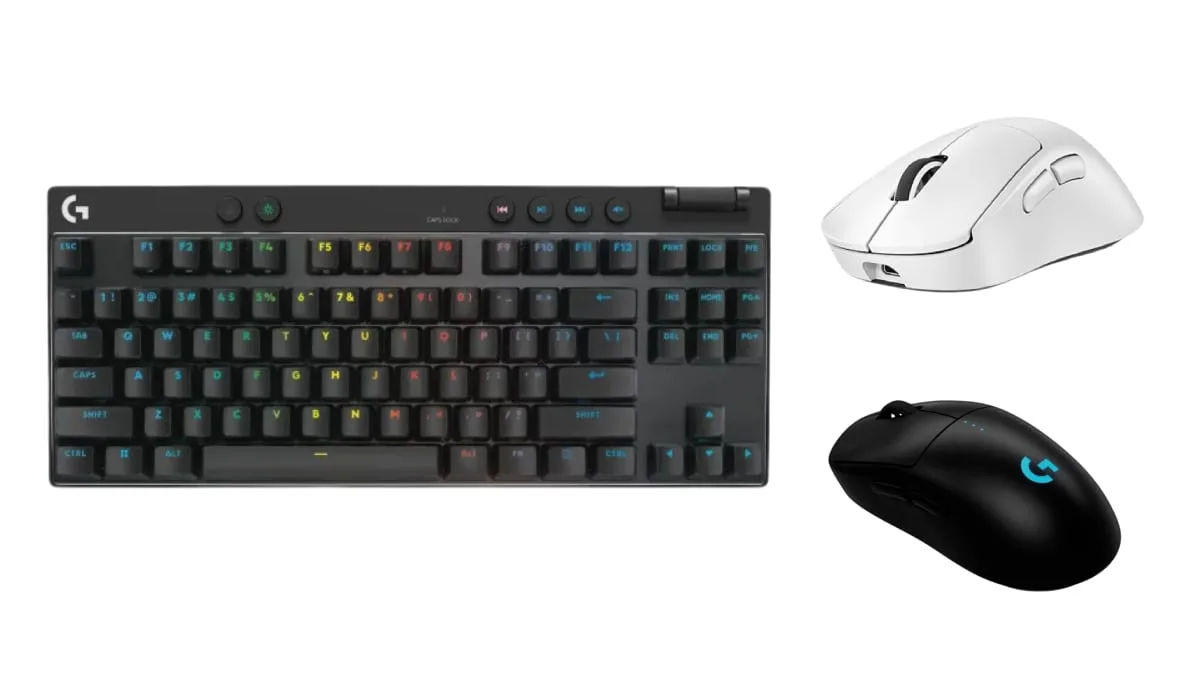
Logitech G Pro X Superlight 2 Dex, Pro 2 Lightspeed Gaming Mice and Pro X TKL Rapid Keyboard Launched in India

Logitech G has announced two new gaming mice and a gaming keyboard in India. They are the Logitech G Pro X Superlight 2 Dex, Pro 2 Lightspeed, and the Pro X TKL Rapid. The Pro X Superlight 2 Dex comes with an asymmetrical, right-handed design, while the Pro 2 Lightspeed mouse has an ambidextrous design. The Logitech G Pro X TKL Rapid is a magnetic analogue keyboard with adjustable actuation and rapid trigger. They are aimed at gamers and esports athletes.

Logitech G Pro X Superlight 2 Dex, Pro 2 Lightspeed, Pro X TKL Rapid Price in India

Logitech G Pro X Superlight 2 Dex gaming mouse price in India is set at Rs. 17,995, while the Pro 2 Lightspeed gaming mouse is priced at Rs. 13,995. They are offered in three colour options — black, pink, and white. They are available for purchase in the country via Amazon and other gaming retailers.

Meanwhile, the Logitech X TKL Rapid keyboard is marked at Rs. 18,995 and it will go on sale in December this year. It will be offered in black, pink, and white colourways as well.

Logitech G Pro X Superlight 2 Dex, Pro 2 Lightspeed, Pro X TKL Rapid Features

The Logitech G Pro X Superlight 2 Dex is a right-handed, asymmetrical gaming mouse with a Hero 2 sensor which offers an 8kHz polling rate and over 88G acceleration. It has 5 buttons and is claimed to offer a battery life of up to 95 hours on a single charge. It can be charged using a USB Type-C port. The mouse measures 125.8 x 67.7 x 43.9mm in size and weighs 60g.

On the other hand, the Logitech G Pro 2 Lightspeed, is a symmetric, ambidextrous mouse with customisable magnetic side buttons. This model carries a Hero 2 sensor, up to 8 optical responsive switches, and USB Type-C charging as well. The mouse supports customisable, dynamic RGB effects. It is said to offer a usage time of up to 60 hours with default light settings and up to 95 hours with the RGB lights off. It measures 125.0 x 63.5 x 40.0mm in size and weighs 80g.

Lastly, the Logitech G Pro X TKL Rapid is a magnetic analogue keyboard with a rapid trigger and adjustable actuation. It supports customisable, dynamic RGB effects, multi-point actions, and onboard memory. The keyboard has a dedicated Game Mode feature which, by default, temporarily disables the Windows key and allows users to customise certain keys that they can deactivate. It has a 1.8m detachable USB Type-A to USB Type-C cable. The keyboard measures 38 x 357 x 150mm in size.

Affiliate links may be automatically generated – see our ethics statement for details.
Posted on

Will DECT Devices Work In A Call Center? Yes, With Limits

Digital Enhanced Cordless Telecommunications (DECT) is a standard used for creating wireless voice communication systems. The most common examples of DECT devices include cordless phones and wireless headsets, though the technology is also used in devices like baby monitors and remote controls.

DECT communications are used in call centers, hospitals, job sites, and other workplaces where wired communication isn’t feasible. The reliability of DECT makes it a relevant player among competing wireless technologies like Bluetooth.

Let’s go through how DECT works, its advantages, disadvantages, and how it compares to using Bluetooth devices in a call center.

DECT systems and unique frequency

A DECT system typically has two components: a base station and a portable handset or headset. Base stations can be connected to a PBX or VoIP phone system as you would other types of phones.

Base stations are fixed in one location and connected to the telephone network. The major function of the base station is to establish and maintain communication between the headset and the network. You can think of them as mini cellular network towers that also function as a charging base. Meanwhile, the headset can be connected to a computer or desk phone through the base station.

Normally, you need to pair a DECT headset to a base station before it can be used. During pairing, a secret authentication key is shared and stored on both devices. Only paired headsets can have access to the DECT network. Unauthorized devices will be blocked if they attempt a connection.

When a headset is within range, it picks up the signal that’s continuously sent by the base station. This signal contains all of the information needed by the headset to connect with and send data through the base station. Multiple headsets, up to five or six depending on the model, can be paired with one base station.

During an active call, the DECT headset converts analog voice signals into digital data and transmits it to the receiving unit via the base station. In the case of inbound data, the base station receives the digital data and converts it back to its original analog state before sending it to the headset.

DECT is designed specifically for voice communication and works on its own frequency range, between 1.8GHz and 1.9GHz, so there’s no interference from other wireless technologies like Bluetooth and Wi-Fi.

DECT manages its available frequency with TDMA (Time Division Multiple Access). Multiple DECT devices can share the same frequency without overlapping because it’s divided into time slots — every call uses a different channel.

DECT can cover a range of approximately 50 meters inside buildings and up to 300 meters in open space. Similar to other wireless tech, its coverage area can be affected by thick walls and certain weather conditions.

Advantages of DECT in call centers

DECT may not be as popular as Wi-Fi and Bluetooth, but it still offers a few potentially useful benefits in a call center.

No interference with Wi-Fi

As I mentioned, DECT works on a specific frequency range, 1.8GHz to 1.9GHz, which is separate from Wi-Fi’s range of 2.4GHz and 5GHz.

This separation is beneficial in a call center because it makes DECT less susceptible to interference that can lead to voice distortions and dropped calls. The only possible sources of interference to a DECT headset are other DECT headsets, and there would have to be a lot of them in the same space before this can happen.

If there were only Wi-Fi headsets in a call center, there would be a lot of interference from the headsets themselves, as well as other devices sharing the same frequency like Bluetooth, internet routers, wireless mice, and even microwave ovens in the break room. Interference can lead to call agents hearing conversations from other agents, choppy audio, and dropped calls.

Secure communication

Calls need to be protected against eavesdropping. DECT provides highly secure voice communication using authentication and encryption to minimize the risk of unauthorized access during calls.

DECT uses the DECT Standard Authentication Algorithm (DSAA) that is only accessible to DECT manufacturers. DECT authentication begins with the base station sending a random “challenge” number to the headset. The headset uses the algorithm to generate a response calculated with the authentication key from the initial pairing and the challenge number.

The base station uses the same algorithm to generate its response. It then compares both responses to see if they match, and the call will be allowed to go through if so. Meanwhile, any intruder looking for a way into the system needs physical access to both devices because the authentication key is not transferred over the air.

The second layer of DECT security is encryption, for which it uses the DECT Standard Cipher (DSC). With it, voice data is scrambled before being transmitted to a receiver by using a cipher key that’s calculated during authentication. The receiver can decipher the data using the same key. Again, the cipher key is not transmitted with the data, as it’s stored on the devices instead.

Greater wireless coverage

DECT devices can work up to about 150 feet from a base station inside, and more than twice that when used outdoors.

Class 2 Bluetooth devices are limited to about a 30 feet range. The vast majority of Bluetooth devices are Class 2, like VoIP headsets commonly used in call centers.

Call quality

The basic expectation with DECT is that calls will be as clear and crisp as they would be over traditional copper wire phone lines. With Bluetooth, the call quality expectations are lower because the connection isn’t as stable as DECT.

Were you to invest in really high-quality Bluetooth equipment, you can get the call quality pretty close to DECT. Some people might not even notice the difference. But there’s always the chance of interference with a Bluetooth connection, and if you have a bunch of call center agents in the same room all using Bluetooth, the chances of interference go up.

Limitations of DECT in call centers

DECT provides a call center with both secure and high-quality voice transmissions, but there are some meaningful drawbacks that you should take into consideration.

More equipment to buy and maintain

DECT is a plug-and-play option that works really well for small offices, retail, job sites, and other workplaces where you’re never going to need more than a handful of phones.

A large call center requires a lot more equipment, which comes with significant costs. The costs of each piece depend on the brand and features they offer. DECT headsets, for example, can cost anywhere from $120 to $400 per unit, and base stations can cost up to $1,000 per unit.

When you opt for call center software, you really just have to buy headsets. Good ones aren’t cheap, but you don’t have to think about base stations, extra batteries, and chargers for DECT phones.

Call centers also need to dedicate additional resources when maintaining a large DECT network, which can be complex. First, you’ll need to find the right locations for the base stations to get the best coverage. There also needs to be seamless handovers when agents move within the call center to prevent dropped calls. This involves extensive network planning and mapping that you might not need with other options.

For example, Bluetooth softphones typically offer a more straightforward and cost-effective alternative. They require less equipment, as call agents can use their Bluetooth headsets with softphone applications on their existing computers and mobile phones. Also, due to familiarity, Bluetooth tends to be easier to integrate with existing equipment anyway.

Limited mobility

DECT provides wide wireless coverage but it requires all headsets to stay within the coverage range of a base station, meaning call agents are confined to the call center building. Furthermore, a DECT headset can’t be paired with multiple devices making it less ideal for call agents who work remotely.

Other wireless technologies like Wi-Fi and Bluetooth offer more flexibility for call agents who prefer to be mobile or work remotely. Wi-Fi devices can function anywhere there’s an available internet connection. Bluetooth devices can be connected to mobile phones, cars, computers, and so on.

DECT devices are also limited based on the type of data transmitted. It’s for voice communication and doesn’t support other forms of media — at least for now.

DECT vs Bluetooth in a call center

Bluetooth is a simpler and more convenient alternative to DECT. They both have their pros and cons, but ultimately, the decision to use either of them in a call center depends on your needs and priorities.

DECT is designed specifically for voice communication while Bluetooth can work with other forms of media. It provides more wireless range in a building, up to 50 meters, while Bluetooth covers between 10 to 30 meters. Also, Bluetooth shares its frequency band with several other wireless technologies and devices which can shorten its range significantly.

While DECT allows you to have many headsets in the same space and still maintain high-quality audio, Bluetooth is more susceptible to interference — which can lead to poor audio and dropped calls.

Bluetooth offers more mobility, since call agents can pair their headsets to their computers and mobile phones. DECT headsets must remain with the coverage of a base station, which is the only other device it can be paired with. Some of these headsets can connect to mobile phones, but it must be through the base station.

Expanding a DECT system can be more expensive than doing so with a Bluetooth system because of all the additional equipment needed. On the other hand, Bluetooth technology doesn’t provide any additional security.

Finally, DECT headsets use less power than Bluetooth devices, which means more talk time. Their isolated frequency also means it can provide higher-quality audio than Bluetooth headsets. Putting costs aside, DECT can be a better choice for busy, non-remote work environments like call centers.

Posted on

Honor X9c With Snapdragon 6 Gen 1 SoC, IP65M Rating Launched: Price, Specifications

Honor X9c was launched in Malaysia on Tuesday. The smartphone is powered by a Snapdragon 6 Gen 1 SoC paired with up to 12GB of RAM. It is backed by a 6,600mAh battery with 66W wired charging support. According to Honor, the phone comes with a 2m drop resistance as well as an IP65M rating for dust and 360-degree water resistance. The Honor X9c carries an OIS-backed 108-megapixel dual rear camera unit. The smartphone succeeds the Honor X9b, which was unveiled in India in February this year.

Honor X9c Price

Honor X9c price starts at MYR 1,499 (roughly Rs. 28,700) for the 12GB + 256GB option in Malaysia, while the 12GB + 512GB variant is priced at MYR 1,699 (roughly Rs. 32,500). It is listed on the global website with an 8GB + 256GB configuration as well, but pricing has not been revealed. The phone is offered in three colour options — Jade Cyan, Titanium Black, and Titanium Purple. It is available for pre-orders in Singapore via an online retail store.

Honor X9c Specifications, Features

The Honor X9c sports a 6.78-inch 1.5K (1,224 x 2,700 pixels) AMOLED display with 120Hz refresh rate, 4,000 nits typical brightness, and eye protection features. The phone is powered by a Snapdragon 6 Gen 1 chipset paired with an Adreno A710 GPU, up to 12GB of RAM, and up to 512GB of onboard storage. It ships with Android 14-based MagicOS 8.0.

For optics, the Honor X9c carries a 108-megapixel primary rear sensor with optical image stabilisation (OIS) alongside a 5-megapixel ultra-wide shooter. There’s a 16-megapixel sensor up front for selfies. According to the company, the handset is built to withstand up to a 2m drop. It also has an IP65M rating for dust and 360-degree water resistance. The M-rating, the company says, stands for “the ability to resist water exposure even while in motion.”

The Honor X9c is backed by a 6,600mAh battery with support for 66W wired fast charging. Connectivity options for the phone include dual 5G, 4G LTE, Wi-Fi, Bluetooth 5.1, OTG, GPS, and a USB Type-C port. The handset measures 162.8 x 75.5 x 7.98mm in size and weighs 189g.

For the latest tech news and reviews, follow Gadgets 360 on X, Facebook, WhatsApp, Threads and Google News. For the latest videos on gadgets and tech, subscribe to our YouTube channel. If you want to know everything about top influencers, follow our in-house Who’sThat360 on Instagram and YouTube.

Maruti Suzuki, Qualcomm Join Forces for Use of Snapdragon Elite Chips in Vehicles: Report

Posted on

The Apple TV 4K just got even more interesting for projectors in tvOS 18.2

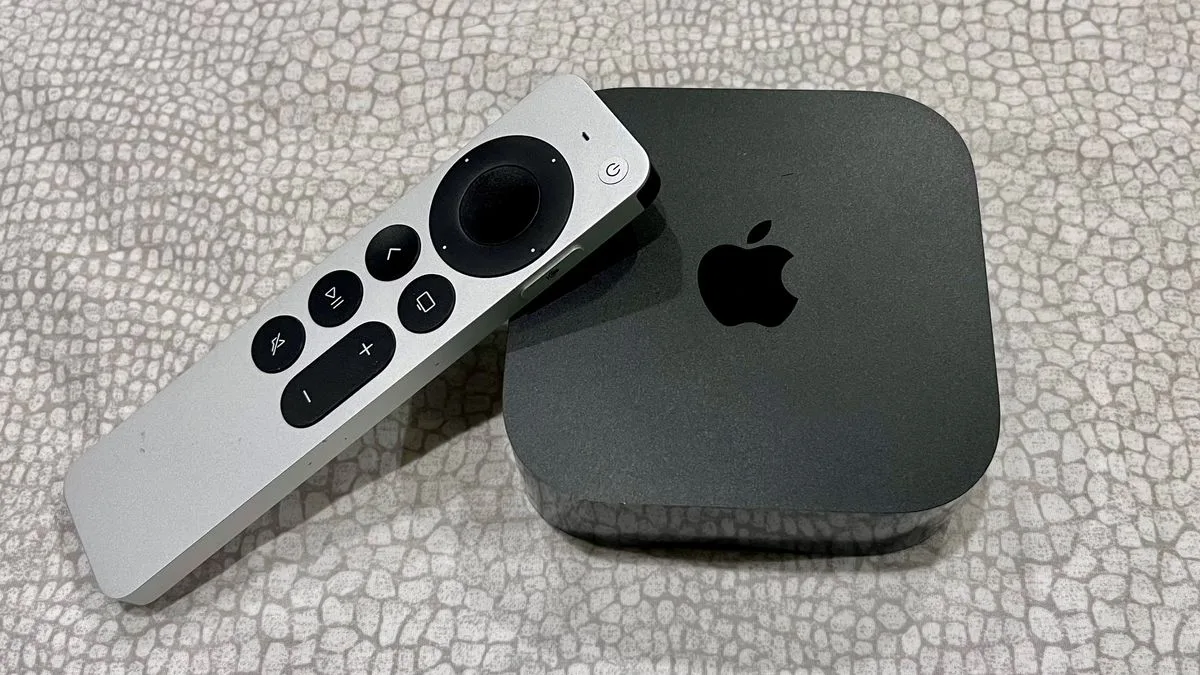
Projector improvements are still in beta Support for new aspect ratios including 21:9 Improved dialog and show information, too The latest version of Apple’s tvOS system for the Apple TV 4K introduces some new features that’ll be particularly useful for viewers with the best 4K projectors, or people who connect their Apple TV to widescreen monitors rather than TVs. In tvOS 18.2, Apple has added support for aspect ratios including 21:9. That’s not going to be relevant to most people viewing on TVs, which tend to be 16:9. But it’s great for ultrawide monitors and for projectors. What improvements does tvOS 18.2 deliver? The big draw here is the new aspect ratio support. The options are: Automatic 16:9 21:9 2.37:1 2.39:1 2.40:1 DCI 4K 32:9 In addition, the new beta improves Apple’s Enhance Dialog feature, turning on subtitles when you press the mute button, and there’s a redesigned Apple Fitness Plus app as well as improved support for using an iPhone as a FaceTime camera. The beta also includes InSight, a similar feature to Prime Video’s X-Ray that tells you who’s on screen and what music is playing. One feature that’s coming, but that hasn’t arrived yet, is new screensavers. The current crop are all very nice, but they’ve become rather familiar, and Apple is promising to bring screensavers from some of its hit shows on Apple TV Plus. We don’t yet know when those new screensavers will arrive, however. The improvements are currently in beta, which means they’re in final testing before release: if you don’t mind risking the odd bug or crash you can enrol your Apple TV 4K from the Software Updates part of its Settings menu, though we’d suggest just waiting for the finished version. The final release of tvOS 18.2 is currently scheduled for December 2024. Sign up to be the first to know about unmissable Black Friday deals on top tech, plus get all your favorite TechRadar content. You might also like

Posted on

India’s Gaganyaan Mission Postponed to 2026 as ISRO Focuses on Safety, Testing, and Astronaut Training

India has delayed its inaugural astronaut mission under the Gaganyaan programme to 2026, pushing the timeline a year beyond the original schedule. The decision, announced by S. Somanath, Chairman of the Indian Space Research Organisation (ISRO), reflects a commitment to safety in light of recent aerospace industry setbacks. According to Somanath, India’s first manned mission will be preceded by multiple uncrewed test flights, with the first trial scheduled to launch in December 2023. The series of tests will validate crucial systems needed for a successful crewed mission, making way for India to join the ranks of the United States, Russia, and China in independently sending astronauts into space.

Safety First: ISRO’s Cautious Approach

ISRO’s extensive testing procedures and the addition of a fourth uncrewed test flight were outlined by Somanath during a recent talk in New Delhi. He cited the Boeing Starliner’s technical difficulties as a reminder of the importance of rigorous safety checks. ISRO’s Gaganyaan mission, also known as H1, aims to carry one or two astronauts to low Earth orbit, roughly 400 kilometres above the planet. Somanath shared that to avoid any similar mishaps, ISRO has undertaken a systematic approach, testing complex technologies developed entirely in-house.

Preparing for the Final Crewed Launch

To support the mission, the ISRO has conducted a number of preparatory tests, including the evaluation of emergency escape mechanisms and recovery systems. The G1 flight, expected later this year, will see a humanoid robot named Vyomitra onboard to test re-entry, parachute deployment, and a controlled splashdown in the Bay of Bengal. Following G1, three more uncrewed flights will complete the testing phase.

An Ambitious Training Regime for Astronauts

The programme’s crew has been undergoing intensive training in both India and overseas. Shubhanshu Shukla, a test pilot from the Indian Air Force and one of the astronauts in training, is set to join a mission to the International Space Station, working with Axiom Space in Houston. With former NASA astronaut Peggy Whitson as mission commander, Shukla’s experience will include operations such as navigation and docking – critical skills for the Gaganyaan mission’s success.

Government Funding Boosts ISRO’s Gaganyaan Efforts

The Indian government has recently increased Gaganyaan’s budget, adding 111 billion rupees to the project to support the final testing and crew training phases. With all modules now moving to ISRO’s Sriharikota spaceport, India’s first crewed space flight is moving closer to realisation. This development reflects the government’s commitment to advancing India’s space capabilities and ensuring the mission is conducted with the highest safety standards.

Posted on

iQOO 12 Android 15-Based FuntouchOS 15 Update Reportedly Rolling Out for Global Users

iQOO 12 was unveiled in China in November 2023 with a Snapdragon 8 Gen 3 SoC and a dedicated Q1 gaming chipset. It runs on Android 14-based OriginOS 4 in China out-of-the-box. For global and Indian users, the phone ships with FuntouchOS 14 based on Android 14. In September this year, Vivo and iQOO smartphones started receiving the Android 15-based FuntouchOS 15 update. A report now suggests that the FuntouchOS 15 update for iQOO 12 has started rolling out to global users. The phone launched in India in December last year. 

iQOO 12 Android 15-Based FuntouchOS 15 Update

According to a GSMArena report, iQOO 12 users in select global markets have started receiving the FuntouchOS 15 update based on Android 15. The 2.5GB over-the-air (OTA) update carries the software version PD2307CF_EX_A_15.1.9.1.W20 and comes with the October security patch, the report states.  

iQOO 12 FuntouchOS 15 update changelog includes a priority scheduling algorithm and a rapid dynamic effect engine which reportedly helps allocate performance resources based on requirements, thus, increasing smoothness. It has a new Origin animation that “incorporates principles from human factors research and integrates the natural laws of the physical world into the dynamic effect design.”

The FuntouchOS 15 update for iQOO 12 global users is said to include several new static and immersive wallpapers. Local videos on the handset can be used as live wallpapers as well. The update introduces new clock widgets and reportedly allows users to keep large folders on the home screen. 

With the FuntouchOS 15 update, iQOO 12 users get an Ultra Game Mode with multiple quick setting options as well as an improved screenshot capture feature. The report adds that the Smart sidebar provides access to Google Lens for quick translations of on-screen content, while Notes offers additional text editing capabilities and the ability to export in Word format. The Settings section reportedly comes with better categorisation and hierarchies.

Among AI features, the FuntouchOS 15 update for iQOO 12 includes Live Transcribe, Circle to Search, and an AI erase tool which helps users get rid of unwanted things or people in their photos. The Albums app is also said to get AI-backed Cleanup suggestions to reduce storage issues. 

For gesture improvements, the global iQOO 12 users with FuntouchOS 15 can reportedly drag a split-screen to the middle of the screen to switch to a small window and drag a small window to the edge of an app to change to split-screen mode. The startup gestures for both split-screen and small window modes are said to have been improved. Users can swipe up from the bottom to the upper left or right corner to quickly enter split screen or small window mode with this update, according to the report.

Affiliate links may be automatically generated – see our ethics statement for details.
Posted on

Itel S25 Ultra Price in India, Design, Specifications Leaked; Tipped to Get Unisoc T620 SoC, 5,000mAh Battery

Itel S25 Ultra 4G is expected to go official soon as its pricing details, key specifications, and design have surfaced online through alleged marketing images. The leaked promotional materials suggest three colour options for the phone. The Itel S25 Ultra 4G is seen carrying a triple camera unit on the rear and a hole punch cutout on the display. It is said to feature a Unisoc T620 SoC under the hood, along with up to 8GB of RAM. The Itel S25 Ultra 4G is tipped to carry a 5,000mAh battery with 18W fast charging support.

Tipster Paras Guglani (@passionategeekz) posted alleged marketing materials and renders of the Itel S25 Ultra showing its specifications, and design. The tipster claims the 4G handset will be priced under Rs. 15,000 in India or around $160 (roughly Rs. 13,500) in other markets.

Renders show the Itel S25 Ultra in black, blue, and titanium colourways with a hole punch display design. It appears to have a triple rear camera unit arranged on the upper left corner of the handset. The arrangement of sensors is identical to the camera setup of the Samsung Galaxy S24 Ultra.

Itel S25 Ultra Specifications (Tipped)

As per the leak, the Itel S25 Ultra will have a 6.78-inch 3D curved AMOLED display with 120Hz refresh rate and 1,400nits peak brightness. It is tipped to run on Unisoc T620 chipset alongside up to 8GB RAM and 256GB storage. The onboard RAM could support expansion up to 16GB using unused storage. It is said to feature a 50-megapixel primary rear camera. For selfies and video chats, there might be a 32-megapixel front camera.

The Itel S25 Ultra is said to carry a 5,000mAh battery with 18W charging support. It could measure 6.9mm in thickness and 163 grams in weight.

Purported marketing images of the Itel S25 Ultra indicate an IP64-rated build. The phone could come with a 60-month fluency certificate as well.

For the latest tech news and reviews, follow Gadgets 360 on X, Facebook, WhatsApp, Threads and Google News. For the latest videos on gadgets and tech, subscribe to our YouTube channel. If you want to know everything about top influencers, follow our in-house Who’sThat360 on Instagram and YouTube.

Xiaomi 14 Android 15-Based HyperOS 1.1 Stable Update Reportedly Rolling Out to Users

Posted on

Upcoming Electric Scooters in India: Honda Activa EV, TVS Jupiter EV, and More

The electric two-wheelers segment is gaining quite a lot of traction this year. We have seen multiple brands launching their EV scooters in the country at different price points. That said, major bike makers are also eyeing this segment. We have brands like Honda, TVS, and Suzuki, reportedly working on EV vehicles that might launch in the first half of 2025. And with the Bharat Mobility Global Expo 2025 right around the corner, one might expected announcements of multiple electric scooters for the Indian market. That said, in this article, we will focusing majorly on three electric two-wheelers, which are also one of the most anticipated launches in the upcoming months. So, without further ado, let’s begin. 

Honda Activa EV 

Honda Motors is reportedly working to launch its first electric scooter for the Indian market in March 2025.

Specifications

Honda Activa EV could share similarities with Activa 110. The two-wheeler might sport two Honda Mobile Power Packs, which could be detachable and swappable. The scooter might also come loaded with an on-board fully digital touchscreen instrumental console, keyless start and stop feature. It is expected to have a range of 100+ km when fully charged.

Expected Price in India

The upcoming EV is expected to be priced somewhere around Rs 1 Lakh (ex-showroom). The scooter could be a direct competitor of Ola S1, TVS iQube and Ather 450. Honda Activa EV is expected to make its global debut at the Bharat Mobility Global Expo in January in New Delhi next year.

TVS Jupiter EV 

TVS is also reported to launch two eletric vehicles in India in the next six months. As per multiple reports, the brand might launch one electric vehicle for B2B market and another could be an electric version of its popular scooter, TVS Jupiter. 

Specifications

The Jupiter EV is anticipated to be a mass-market product which will be targeted to everyday commuters. The two-wheeler is expected to have a range of 70-80 km on a single charge.

Expected Price in India 

The scooter is expected to be priced below the Rs 1 Lakh mark (ex-showroom).

Suzuki Burgman EV 

As per Gaadiwaadi, the Japanese automobile maker’s first electric scooter could be none other than the Burgman EV. The scooter is expected to enter production in December 2024. Suzuki has also reportedly set a annual sales target of 25,000 units for Burgman EV.

Specifications

The two-wheeler is expected to get a fixed battery pack rather than the detachable battery which was claimed earlier in spy images. Not much is revealed about the two-wheeler at the moment.

Expected Price in India

Codenamed as XF091, the scooter is expected to make its debut at the Bharat Mobility Global Expo 2025 in January next year. Nothing is revealed about the price of the vehicle.

For the latest tech news and reviews, follow Gadgets 360 on X, Facebook, WhatsApp, Threads and Google News. For the latest videos on gadgets and tech, subscribe to our YouTube channel. If you want to know everything about top influencers, follow our in-house Who’sThat360 on Instagram and YouTube.

Top Reasons Why OxygenOS 15 Redefines Seamless User Experience

Xiaomi 15 Ultra Camera Details Surface Online; Tipped to Feature 50-Megapixel Main Sensor

Posted on

Xiaomi 15 Ultra Camera Details Surface Online; Tipped to Feature 50-Megapixel Main Sensor

Xiaomi 15 series with Snapdragon 8 Elite SoC was unveiled last month, however the Xiaomi 15 Ultra is expected to launch early next year as the third model in the series. Despite the potential launch being months away, details about the quad camera setup of the phone have surfaced on the Web. A new leak suggests that the Xiaomi 15 Ultra will have a 50-megapixel main sensor with larger focal length. This could enhance the low-light performance of the Ultra model.

Xiaomi 15 Ultra Camera Specifications Leaked 

According to a Weibo post by known tipster Digital Chat Station (translated from Chinese), the Xiaomi 15 Ultra will feature a 50-megapixel main sensor with a 23mm focal length and an f/1.6 aperture. The focal length of the primary sensor is said to be larger than Xiaomi 14 Ultra’s 8.7xmm. This is likely to improve the low-light performance of the phone. The tipster says the handset will have a “new customised hardware module”, this could be a remark about the custom designed main sensor.

Like the predecessor, the Xiaomi 15 Ultra is said to carry a 200-megapixel periscope sensor. This telephoto sensor is tipped to offer 4.3x optical zoom, a 100mm focal length, and an f/2.6 aperture. The tipster claims that the size of the periscope sensor has been cropped to 25.xmm focal length. It is said to offer two zoom options – 4.3x with a 1/1.5-inch image size, and 4.1x with a 1/1.4-inch sensor.

Besides the primary sensor and telephoto sensor, the camera unit of the Xiaomi 15 Ultra is expected to include a 50-megapixel Samsung ISOCELL JN5 sensor and a 50-megapixel periscope lens with 2x zoom. On the front, it could include a 32-megapixel selfie camera.

As per past leaks, the Xiaomi 15 Ultra will have a 6.7-inch 2K LTPO micro quad-curved display with 120Hz refresh rate. Like other Xiaomi 15 series siblings, it could be powered by the Snapdragon 8 Elite chipset. It is expected to run on HyperOS 2.0 based on Android 15. It may carry a 6,000mAh battery with 90W wired and 80W wireless charging support. It could boast a circular camera module. 

Affiliate links may be automatically generated – see our ethics statement for details.