
When the Sonos Arc Ultra soundbar and Sub 4 were finally unveiled, all eyes (or should that be, ears?) were focused on whether they sounded better than their predecessors, and by how much. As our full Sonos Arc Ultra review reveals, it’s “the best one-box Dolby Atmos soundbar for the price.” It’s not without its immediate flaws, namely maintaining a single HDMI input (yep, Sonos still refuses to offer HDMI passthrough) and there’s no support for DTS, although with the majority of spatial audio movie soundtracks being available in Dolby Atmos, this shouldn’t alienate too many potential customers. I wholeheartedly agree with the statements made by my colleague Matt Bolton in our full Arc Ultra review, but having spent some time with both the Arc Ultra and Sub 4 – which have temporarily replaced my Arc and Sub 3 at home for testing – I’ve discovered a few extra little features that, combined with the stellar sound output, have me reaching for my credit card to upgrade. The Sonos diet The Sonos Arc (top) is shorter and taller than the Sonos Arc Ultra (bottom). (Image credit: Future) When we first spied leaked photos of the Sonos Arc Ultra soundbar, it was tricky to determine if there was any change at all to the design compared to the Arc. In reality, there certainly isn’t much to separate them, and the Ultra is still unmistakably Sonos. The only difference is that the new soundbar is slightly longer but also – crucially for me – marginally shorter in height. Official dimensions are 87 x 1142 x 116 mm for the Arc and 75 x 1178 x 111 mm for the Arc Ultra. The biggest impact the Sonos diet has had for me is that the soundbar now doesn’t cut off the bottom of my LG G4 OLED. My previous Arc didn’t block the bottom of the screen massively, but I often found my eyes being drawn to it more than I would like. Now, with the Arc Ultra in its place, I can clearly see the bottom of the screen and I’ve found I’m immersed in the action on the screen a lot more, as the ‘floating screen’ effect of the G4 OLED is more prominent. Image 1 of 2 The Sonos Arc Ultra is shorter in depth, making it easier to accommodate on a TV unit.(Image credit: Future) The Sonos Arc is a little fatter in comparison.(Image credit: Future) The change in depth is also another bonus for me. The LG G4’s stand, plus the fact the TV naturally sits at a slight angle (I have the 77-inch version – the 65- and 55-inch models stand flat) meant there wasn’t an awful lot of space for my old Arc to sit on the approximately 40cm deep stand. While the Arc Ultra is ‘only’ six millimeters skinnier, it has made a huge difference on my media unit. Matte attack The Sonos Sub 4’s new matte finish makes it that little bit less noticeable in my room. (Image credit: Future) Another feature I’ve found to have a subtle but significant impact at home is the new matte finish of the Sub 4. When I first read about it before receiving the test unit Sonos sent me, I was unsure exactly what to expect. I was already quite enamored with the shinier finish of the Sub 3 and I do still think it looks like a premium product. But when I took the dust bag off the Sonos Sub 4, I let out an “oooh, that’s nice” response. The white matte finish perfectly matches the Era 300 speakers I have for surrounds, and I’m sure it would match a white Arc Ultra (I was sent the black version for this article). Image 1 of 2 The Sonos Sub 3 (left) has shinier, whiter finish that makes it stand out more in my room.(Image credit: Future) Sonos Sub 3 (left), Sonos Sub 4 (right).(Image credit: Future) But the surprising effect it had for me was how it blends in more with the white wall it’s placed against. It’s not a monumental change, but when you’re spending the money Sonos asks for the Sub 4, you’re going to want it to look as good as possible, and I think it’s stunning. As I’ve alluded earlier, I only get to test the Sub 4 – and the Ultra soundbar – for a limited time, and I’ll admittedly be fine going back to the Sub 3 when the new gear has to be returned. If you already own a Sonos sub, I’m not sure it’s worth upgrading just for the matte finish, but ultimately I’m pleased to see Sonos making the design change. And, as our review of the Arc Ultra states, most people may not feel the need to add a subwoofer at all, given how well the soundbar handles low frequencies. Speech-y clean The Sonos Arc Ultra (bottom) introduces a new Speech Enhancement feature that dramatically improves dialogue clarity. (Image credit: Future) OK, so this one is sort of sound related, but not entirely. Along with the new Sound Motion technology used in the woofer, the Sonos Arc Ultra has introduced a new Speech Enhancement feature to boost dialogue. It’s not a revolutionary update where soundbars are concerned – the Sony Bravia Theater Bar 8, for example, calls its version Voice Zoom – but it’s something I was excited to learn of, as I had previously thought the Arc sometimes struggled when it came to voice clarity. The Speech Enhancement feature is accessed within the Sonos app – which, for the record, I never really had an issue with during SonosAppGate, but can appreciate has now been vastly improved – and works on a scale of Low, Medium or High. You also have the option of turning it off. When in use, it really works, with dialogue coming through a lot clearer, with a much more obvious notion of a ‘center channel’. Its highest setting comes at the cost of other aspects of soundtracks being softened, such as bass levels, so I’ve personally found low or medium to be the better options, as the rest of a soundtrack remains as it should, just with vocals given a slight boost. To be honest, the Speech Enhancement feature is the biggest improvement over the Arc in my opinion, and genuinely worth the upgrade. Long-overdue Bluetooth A Bluetooth button can now be found on the rear panel of the Sonos Arc Ultra, for easy streaming from a range of devices. (Image credit: Future) Sonos and Bluetooth haven’t always had the most harmonious of relationships. The brand has traditionally been a Wi-Fi-only operator, until it introduced the Sonos Move as its first portable Bluetooth speaker. This was followed by the Roam and Sonos has since given Bluetooth support to its home-based speakers, including the Era 100 and Era 300. I’ve not always seen the need for Bluetooth in Sonos’ home gear – they’re constantly connected to Wi-Fi and music quality benefits when being streamed via AirPlay or directly from within the Sonos App – but at least Sonos is giving its speakers and soundbars the ability to receive a Bluetooth stream and share it with other compatible speakers. It is a multi-room speaker brand, after all. To make connectivity that much easier, Sonos has added a dedicated Bluetooth button on the rear of the Arc Ultra. It’s also possible to activate Bluetooth pairing from within the Sonos app. It’s a quick process, and you’ll have music streaming around your home in no time at all. Final credits If you already own a Sonos Arc, you may still be wondering if it’s worth upgrading to the Arc Ultra. As with almost everything, that depends on your use case. For myself, I spend a lot of time at home scouring the best streaming services for movies and TV shows to binge on. I also love good sound, and so naturally, I’m going to want the best that’s available to me. I would love a ‘proper’ speaker package and an AV receiver, but I just don’t have the space. Therefore, in my opinion, the Arc Ultra with Era 300 surround speakers and a Sub is the next best thing. The new Speech Enhancement feature is a huge step up, and fixes perhaps the biggest niggle I had with the original Arc. To me, it’s worth the upgrade, but to you, maybe not. As for the Sub, if you already have a Sub 3 or older, then I don’t think it’s worth moving up to the Sub 4. I didn’t notice much difference in the bass output. Sonos’ big slab o’ subwoofer has always been a top performer in my experience (and could realistically be too much in some rooms) and I have no complaints with the Sub 3’s performance. Do I prefer the new matte finish? Yes. Is it worth spending $799 / £799 / AU$1,299 just for that finish? No. If you currently own a full Sonos home theater setup but you want to make the overall soundfield bigger, wider and more powerful, than I’d recommend at least auditioning the Arc Ultra in your local hi-fi or electronics store. Even if you ultimately decide the improvements aren’t big enough to justify an upgrade, I guarantee you won’t be disappointed.
Author: DA Gadgets
Full Moon in November 2024: Beaver Moon is the Last Supermoon of the Year
The final supermoon of 2024, known as the Beaver Moon, will make its appearance on Friday, November 15. This full moon, which will reach its peak illumination at 4:29 PM EST, is anticipated by lunar enthusiasts as it marks the last supermoon event of the year. Visible as dawn approaches in Jakarta, this celestial event follows October’s Hunter’s Moon and concludes a sequence of four consecutive supermoons observed throughout 2024, according to NASA.
What is the Beaver Moon?
November’s full moon is traditionally called the Beaver Moon, a term that originates from Native American customs and was popularised by the Maine Farmer’s Almanac. This name is linked to the seasonal timing when beavers prepare their dens for winter or were historically hunted to ensure a supply of warm furs. In various regions, November’s full moon is also known as the Frost Moon or Snow Moon, reflecting the colder weather patterns typically seen in North America during this time.
When to See the Beaver Moon
The Beaver Moon will appear full to viewers for three days, from the early hours of 14 November to just before sunrise on November 17. This gives stargazers multiple opportunities to catch a glimpse of the bright, enlarged moon, which will be slightly closer to Earth than usual, enhancing its size and brightness compared to typical full moons. This phenomenon occurs when the moon reaches its closest orbital point, known as perigee, during a full phase, resulting in what is known as a supermoon.
Other Astronomical Highlights This Month
Apart from the Beaver Moon, November brings other notable astronomical events. On 16 November, Mercury will reach its greatest eastern elongation, making it ideal for evening observation. Additionally, the Leonid meteor shower is expected to peak from November 17 to 18, providing another highlight for skywatchers. Uranus will also be visible, reaching its closest point to Earth on November 17, according to Seasky.org, giving viewers a brighter and more accessible sighting.
For those interested in astronomy, November 15 offers a special chance to observe this year’s last supermoon before the seasonal Cold Moon arrives in December.
For the latest tech news and reviews, follow Gadgets 360 on X, Facebook, WhatsApp, Threads and Google News. For the latest videos on gadgets and tech, subscribe to our YouTube channel. If you want to know everything about top influencers, follow our in-house Who’sThat360 on Instagram and YouTube.

Kanguva OTT Release Date Reportedly Revealed: Here’s Everything You Need to Know
Tamil cinema fans are in for a treat as Kanguva, the latest film from popular actor Suriya, which made its theatrical debut on November 14. Directed by Siruthai Siva, this high-budget epic fantasy adventure marks Suriya’s return to the big screen after a two-year break. Featuring Suriya in a dual role and also introducing Bollywood actor Bobby Deol to Tamil cinema, Kanguva has garnered positive early reviews. Audiences and critics alike are celebrating the film’s action-packed narrative and captivating visuals. With a massive box-office opening, many are now eagerly awaiting Kanguva’s OTT release.
When and Where to Watch Kanguva
According to multiple reports circulating online, Prime Video might have acquired the OTT rights to Kanguva for Rs 100 crore. According to reports, Kanguva is said to be released on the streaming platform approximately eight weeks after its theatrical premiere. Viewers can expect the film to arrive on Prime Video by Pongal. The movie is also reported to be available in multiple languages, including Tamil, Telugu, Malayalam, Kannada, Hindi, English, Spanish and French.
Official Trailer and Plot of Kanguva
Kanguva takes audiences on an epic journey through time with a plot that intertwines ancient and modern-day events. Suriya plays a dual role, embodying both a tribal warrior from a millennium ago and a contemporary cop. The story explores how these characters are mysteriously linked in their quest to protect their people and bring justice. The trailer, released earlier this year, teased intense battle sequences, stunning visuals and captivating historical settings, which have all contributed to the film’s anticipation among fans.
Cast and Crew of Kanguva
The film stars Suriya in the lead role, with Bobby Deol playing the primary antagonist, marking his Tamil debut. Disha Patani joins the cast as the female lead, bringing added glamour to the film. Supporting cast members include Natarajan Subramaniam, K. S. Ravikumar, Yogi Babu, Redin Kingsley and more. The film is produced by K. E. Gnanavel Raja, V. Vamsi Krishna Reddy and Pramod Uppalapati under the banners of Studio Green and UV Creations. Devi Sri Prasad’s music and Vetri Palanisamy’s cinematography have both been noted for enhancing the film’s appeal.

- Release Date 14 November 2024
- Language Tamil
- Genre Action, Drama, Fantasy
- Cast
Suriya, Arathar, Venkaater, Mandaankar, Mukaatar, Perumanathar, Disha Patani, Bobby Deol, Yogi Babu, Redin Kingsley, Kovai Sarala, Anandaraj, Ravi Raghavendra, K. S. Ravikumar, B. S. Avinash, Jagapathi Babu, Natarajan Subramaniam
- Director
Siva
- Producer
K.E. Gnanavelraja, Vamsi Pramod
For the latest tech news and reviews, follow Gadgets 360 on X, Facebook, WhatsApp, Threads and Google News. For the latest videos on gadgets and tech, subscribe to our YouTube channel. If you want to know everything about top influencers, follow our in-house Who’sThat360 on Instagram and YouTube.
Vivo Y300 5G India Launch Date Announced; Rear Design, Colours Revealed


Vivo has confirmed the India launch date of Vivo Y300 5G. The Chinese smartphone brand has also shared the first look of its next Y series phone through social media handles and a dedicated landing page on its website. It is teased to be available in at least three colour options. The Vivo Y300 seems to have a dual rear camera unit. It will arrive as a successor to last year’s Vivo Y200. The handset could be a rebrand of the Vivo V40 Lite which was launched in select global markets in September.
Through its X handle, Vivo India announced that the Vivo Y300 5G will be unveiled in India on November 21. As per the post, the launch event will begin at 12pm. It is teased in black, green, and silver shades.
Vivo has created a dedicated landing page on its website for the Vivo Y300 5G giving us a glimpse of the design. It houses a vertical dual-camera setup at the rear. The arrangement of camera sensors and the LED flash are quite similar to the Vivo V40 Lite, which debuted earlier this year in Indonesia. Even the teased shades of the Vivo Y300 5G resemble the Dynamic Black and Titanium Silver colourways of the Vivo V40 Lite 5G.
Vivo V40 Lite 5G Price, Specifications
Vivo V40 Lite 5G was launched in Indonesia with a starting price tag of IDR 4,299,000 (roughly Rs. 23,700) for the 8GB + 256GB option. It has a 6.67-inch full-HD+ (1,080 x 2,400 pixels) AMOLED display with up to 120Hz refresh rate, a Snapdragon 4 Gen 2 SoC paired with up to 12GB of LPDDR4X RAM, and up to 512GB of UFS 2.2 onboard storage.
The handset has a dual rear camera unit, including a 50-megapixel Sony IMX882 primary sensor and an 8-megapixel ultrawide shooter. The Vivo V40 Lite 5G has a 32-megapixel front camera and houses a 5,000mAh battery with 80W wired fast charging support.
The Vivo Y300 5G is expected to have these exact specifications too when it goes official in India next week.
Affiliate links may be automatically generated – see our ethics statement for details.
Nothing OS 3.0 Open Beta 2 for Phone 2 and Phone 2a Rolling Out: What’s New
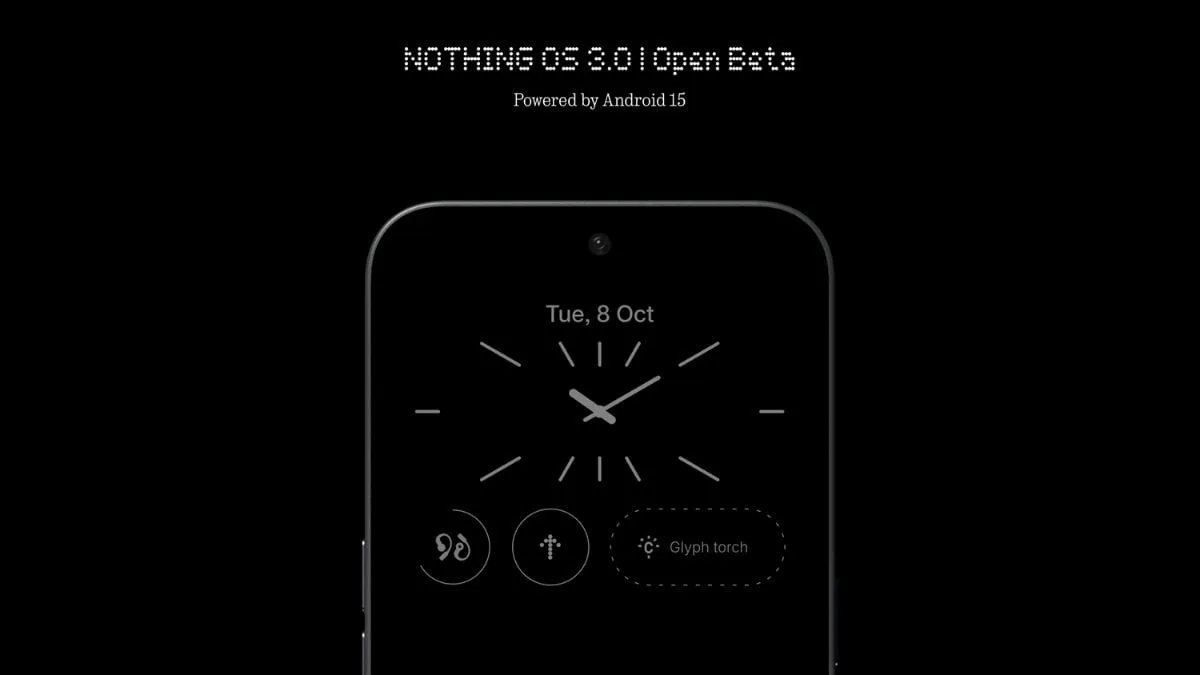

Nothing OS 3.0 Open Beta 2 is now available for Phone 2 and Phone 2a users, the company has announced. Users can experience the new Android 15-based operating system (OS) before its public rollout in December and try out more features such as shared widgets, smart drawer enhancements, refined animations, and camera improvements. This release builds upon the rollout of the Nothing OS 3.0 Open Beta 1 update that was introduced earlier this month.
Notably, the beta program was first launched in October with the Phone 2a and will be available for other devices, such as the CMF Phone 1, later this year.
Nothing OS 3.0 Open Beta 2 Features
In a community post, Nothing announced that the OS 3.0 Open Beta 2 update adds more features to the already expansive list of introductions with the first beta. This includes a Shared Widgets feature which lets users see another user’s widgets displayed on their home screen and interact with them through reactions. This feature is exclusive to interactions between Nothing smartphones. Animations for Quick Settings have been refined, including those for Bluetooth, tile resizing, swiping interactions, and tile transitions.
The Carl Pei-led company introduced a Smart Drawer powered by artificial intelligence (AI) with the Nothing OS 3.0 Open Beta 1 which can automatically arrange apps in separate category folders based on usage. The Open Beta 2 is said to bring enhanced accuracy to this feature, while also adding an auto-sort feature.
Nothing Phone 2 and Phone 2a users will also be able to take advantage of camera enhancements with the update. It is claimed to deliver improved stability when switching between camera modes, an upgraded HDR algorithm for better picture quality, an optimised portrait mode, and enhanced brightness when using the Ultra HDR Mode.
Nothing OS 3.0 Open Beta 2 brings other visual and performance updates. There is now an AI-powered selection and prioritisation of the frequently used apps, support for a refresh rate of up to 90 frames per second (fps) in PlayerUnknown’s Battlegrounds, an onboarding guide for first-time Pop-up view users, and other general bug fixes and performance improvements.
Your Google TV or Android TV may not get an update until Android 16… in 2026

Android TV and Google TV may be moving to a biannual update cycle TV OSes don’t need upgraded as frequently as phone OSes do Changes won’t affect bug fixing or security updates As we reported a few days ago, Google is making some changes to the hardware requirements for Google TV. But it’s also making another big change, and that could mean a much longer gap between TV software updates in the future. Google is reportedly moving to a two-year update schedule for Android TV and Google TV. We’ve seen that happen already, with Google skipping Android 13 for TV devices and moving from Android 12 to Android 14 instead. And now, Android Authority says that Android 15 is going to be skipped too. What’s happening with Google TV and Android TV updates? According to Android Authority’s source, Google privately announced a change to its software release plans at this year’s Android TV partner conference. The change means that instead of offering an Android 15 update to Google TV and Android TV sets, Google plans to sit that one out and wait for Android 16 instead. Android Authority has contacted Google to corroborate the story, but Google says that it has “nothing to share” right now. The reason for the change seems simple enough: Android is a smartphone-driven operating system, and that means it’s on a very intense upgrade schedule to meet the needs and demands of smartphone manufacturers and smartphone users. TV isn’t anywhere near as fast-moving, and there’s much less of a need for TVs to get operating system updates. And the version of Android for TVs is based on the Android Open Source Project, which tends not to have quite as many gee-whiz new features as Google’s own Android. What does that mean for you? Provided Google stays on top of bug fixes and security updates it shouldn’t make much difference; as with other releases in the past, most of the new features arriving in Android 15 are for phones, not TVs. And there may be an upside: better to have a slightly older but solid TV OS with its bugs fixed and its security issues squashed than to have a newer OS that introduces new things to fix. You might also like Sign up to be the first to know about unmissable Black Friday deals on top tech, plus get all your favorite TechRadar content.
NASA Astronaut Sunita Williams Refutes Health Concerns, Shares Fitness Routine from Space


NASA astronaut Sunita Williams has recently addressed speculations surrounding her health condition while on the International Space Station (ISS), discarding recent claims made by media outlets regarding her wellbeing. In response to reports that suggested she appeared “gaunt” due to an extended stay on the ISS, Williams clarified her status during a video interview on November 12, explaining that her weight has remained unchanged since her arrival in orbit.
Routine Exercise and Physical Adaptations
Williams, who commands Expedition 72 aboard the ISS, responded to health concerns publicly, indicating that any changes in her physical appearance are the result of rigorous exercise routines rather than health deterioration. Like all astronauts on extended missions, she has been following an intense workout regimen designed to counteract the muscle and bone density loss commonly associated with prolonged microgravity exposure. Williams stated that her routine includes running on a treadmill, riding an exercise bike and lifting weights. It is a form of exercise that has led to increased muscle mass, particularly in her thighs and glutes, while her overall weight remains consistent.
NASA’s Statement on Crew Health
NASA had previously denied the reports, emphasising that Williams and her fellow crew members, including NASA astronaut Butch Wilmore, are in good health. Williams and Wilmore, who arrived at the ISS on June 6 aboard Boeing’s Starliner capsule, were initially scheduled for a ten-day mission under the Crew Flight Test programme. Technical issues with Starliner’s thrusters led NASA to extend their stay on the ISS until early 2025, when they are expected to return with SpaceX’s Crew-9 mission astronauts.
Current ISS Crew Status
The current ISS team, led by Williams, includes three NASA astronauts and three Russian cosmonauts, all working collaboratively despite recent media scrutiny. Williams assured viewers that her health and morale remain robust as the crew carries out essential research and maintenance tasks on the orbiting laboratory showing NASA’s confidence in their well-being during extended missions.
Global Fossil CO2 Emissions Hit Record High in 2024: Here’s What You Need to Know


Global carbon emissions from fossil fuel combustion have reached an unprecedented peak in 2024, with the Global Carbon Project reporting a projected 37.4 billion tonnes of fossil CO2 emissions, a 0.8% increase from 2023. The report underscores an urgent call for emissions reduction as the world’s annual output of CO2 from fossil fuels and land-use changes collectively approaches 41.6 billion tonnes. Despite increased efforts to mitigate climate impacts, there are no clear signs of a peak in global fossil CO2 emissions, heightening the risk of surpassing critical climate thresholds.
Sector-Specific Emissions and Regional Insights
As per a report by University of Exeter, emissions from fossil fuels, including coal, oil, and gas, are anticipated to rise in 2024, accounting for 41 percent, 32 percent, and 21 percent of fossil CO2 emissions, respectively. Coal emissions are expected to increase by 0.2 percent, oil by 0.9 percent, and natural gas by 2.4 percent. On a regional level, China, responsible for 32 percent of global emissions, is projected to see a slight increase of 0.2 percent, while emissions in the United States are expected to fall by 0.6 percent.
The European Union’s emissions are forecasted to decrease by 3.8 percent, whereas India, contributing 8 percent of global emissions, is projected to experience a 4.6 percent rise. Emissions from aviation and shipping sectors are also set to increase by 7.8 percent this year, though they remain below pre-pandemic levels.
Carbon Budget and Climate Warnings
According to Professor Pierre Friedlingstein from the University of Exeter, who led the study, the absence of a peak in fossil CO2 emissions further reduces the remaining carbon budget needed to keep warming below the Paris Agreement’s 1.5-degree Celsius target. At the current emission rate, a 50 percent probability exists of surpassing this threshold within the next six years. Meanwhile, Professor Corinne Le Quéré of the University of East Anglia acknowledged ongoing efforts in renewable energy deployment and reduced deforestation but stressed that substantial emissions reductions are still essential.
Urgency for Accelerated Action
The report emphasises that while some nations demonstrate progress in emissions reduction, these efforts have not been sufficient to reverse the overall global trend. Dr Glen Peters from the CICERO Center for International Climate Research noted that global climate action remains “a collective challenge,” with gradual declines in emissions in certain regions counterbalanced by increases elsewhere.
OnePlus Ace 5 Launch Timeline Tipped; Said to Feature Snapdragon 8 Gen 3, 6.78-Inch Display
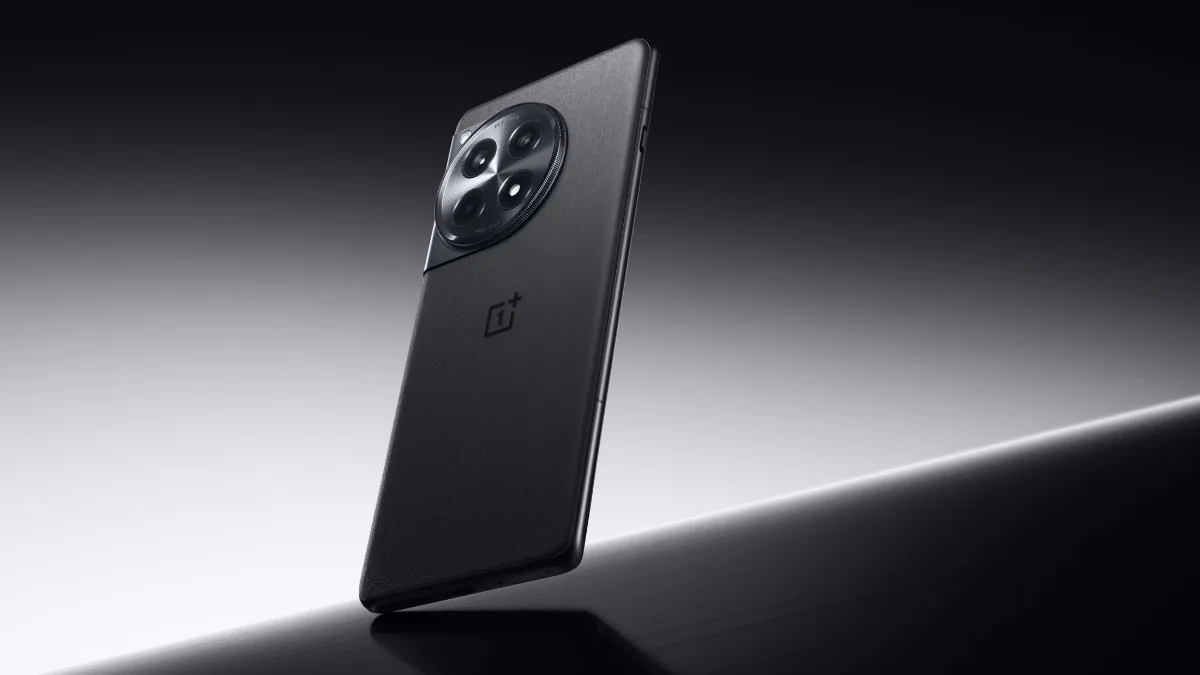

OnePlus Ace 5 and OnePlus Ace 5 Pro have been in the rumour mill for quite some time now. While the BBK-owned brand has yet to share details on the lineup, a new leak claims that the vanilla model will land in China next month. The OnePlus Ace 5 is tipped to get a 1.5K resolution display. It is said to run on Snapdragon 8 Gen 3 SoC chipset. The OnePlus Ace 5 is expected to arrive in markets outside China with the OnePlus 13R moniker.
Digital Chat Station (translated from Chinese) claims in a Weibo post that the OnePlus Ace 5 will be launched in China in December. This indicates that OnePlus 13R will be released in global markets including India as a rebranded version of the OnePlus Ace 5 in the coming months, presumably in January.
The OnePlus Ace 3 was unveiled in China in January. In global markets, the handset is available as the OnePlus 12R.
OnePlus Ace 5, OnePlus Ace 5 Pro Specifications (Expected)
Previous leaks suggested that the OnePlus Ace 5 will come with a 6.78-inch BOE X2 8T LTPO display with a 1.5K resolution. It is said to be equipped with a Snapdragon 8 Gen 3 chip. The handset could pack a triple rear camera setup headlined by a 50-megapixel main camera.
The OnePlus Ace 5 may feature a 16-megapixel selfie shooter. It is said to come with an alert slider and carry a 6,300mAh battery with 100W fast charging support.
The OnePlus Ace 5 Pro, on the other hand, is speculated to run on the new Snapdragon 8 Elite chipset. It is said to pack a 6,500mAh battery with 100W fast charging support. The Pro model could be exclusive to the Chinese market.
Affiliate links may be automatically generated – see our ethics statement for details.
Samsung Galaxy Ring Now Available in Qatar, Romania, UAE and More Markets
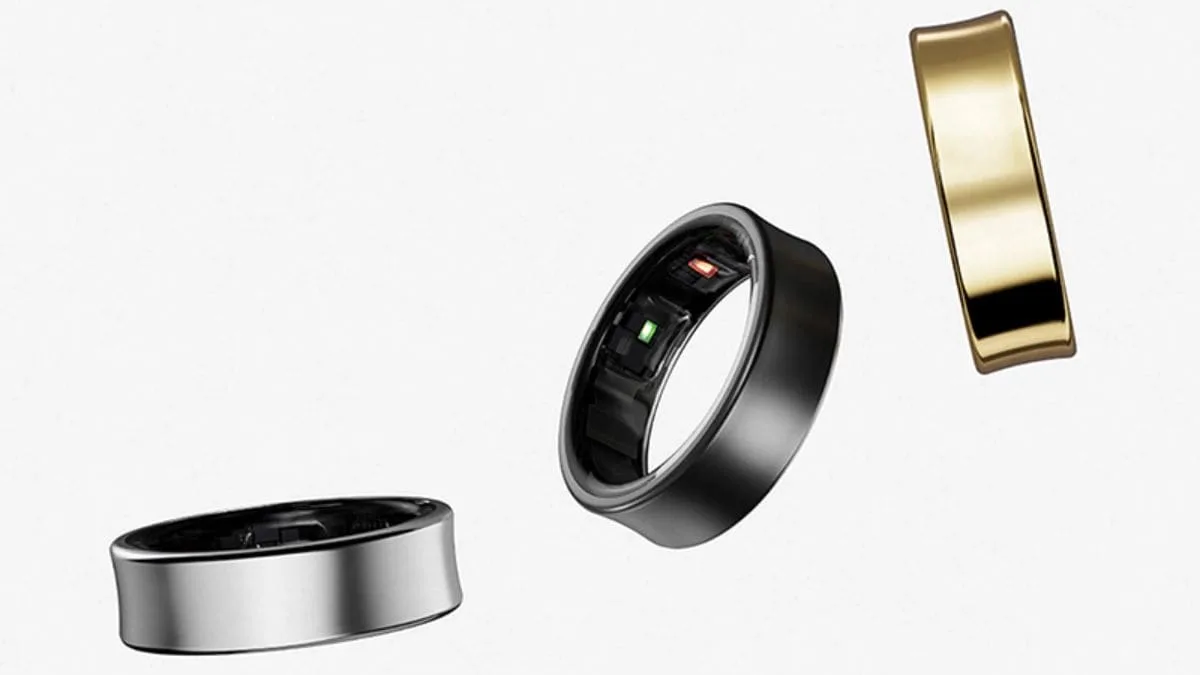

Samsung Galaxy Ring’s availability has been expanded to several Gulf countries and eastern European markets, the company announced on Tuesday. The smart wearable is available in a total of nine sizes, three finishes, and boasts features such as AI-powered health tracking and sleep monitoring courtesy of various sensors. It is claimed to deliver up to seven days of battery life on a single charge and runs on the Samsung Health platform.
Samsung Galaxy Ring Availability and Price
Samsung Galaxy Ring is now available in Bahrain, Bulgaria, Kuwait, Oman, Romania, Qatar, and the UAE. Its price in UAE starts at AED 1,499 (roughly Rs. 34,000). Meanwhile, it costs BGN 879 (roughly Rs. 40,000) in Bulgaria and RON 2,225 (roughly Rs. 40,000) in Romania.
The Galaxy Ring is available in nine sizes; from five to 13. Furthermore, it can be purchased in Titanium Black, Titanium Gold, and Titanium Silver finishes.
Samsung Galaxy Ring Features
Samsung Galaxy Ring comes equipped with a PPG (Photoplethysmography) sensor that enables the detection of irregular rhythms of the wearer’s heartbeat. It is part of a three-sensor system which also includes a temperature sensor and accelerometer. The wearable comes with Samsung’s proprietary Health AI features to track various health metrics.
Users can get their Sleep Score and snoring analysis, sleep metrics such as movement during sleep, sleep latency, and heart and respiratory rate. It also leverages Galaxy AI — the company’s suite of artificial intelligence (AI) features. With this, it provides a detailed health report including health metrics like Energy Score.
The base size five version weighs 2.3 grams and is 7.0mm wide, whereas size 13 weighs 3 grams. It is claimed to deliver up to seven days of battery life and comes with a clamshell design charging case with an LED indicator for viewing the battery status. The Samsung Galaxy Ring is rated IP68 against water and dust ingress and is advertised to withstand depths of up to 100 metres with its 10ATM rating.
Affiliate links may be automatically generated – see our ethics statement for details.