
Posted on

Can You Replicate a Key Phone System In the Cloud?

Key phones are traditional desk phones with a central unit and handset. Able to support up to 50 users, they’re often used by small to medium-sized offices. They have a dial pad and special buttons that let users route calls to other extensions or access features like hold or transfer.

A key phone system has been ideal for companies with employees who need to be reachable at their desk and behind the counter. These systems are easy to manage compared to a traditional PBX — and excel at the core competencies of a basic phone system.

But as equipment ages and more flexible, scalable, and cost-effective solutions hit the market, many businesses are upgrading their landline to VoIP (Voice over Internet Protocol).

Why it’s hard to let go of your existing system

For many businesses, this trusty technology has been the silent backbone of communication since before the internet became a regular part of our daily lives. Key phones made offices more efficient and productive with features like call transfer, hold, conference calling, direct inward dialing, and paging.

Key phone systems are generally easy to use, and more than anything, they’re familiar. Since most adults have used a key phone system at some point in their careers, there’s not a huge learning curve when you need to onboard new employees. With a quick explanation of how to access voicemail and what extension belongs to who, you can get most new hires up to speed by the end of their first day.

This makes it hard for a lot of businesses to let go of their old school key phone systems — even if they know that modern business phone services offer a ton more functionality.

In short, key phone systems once had all the advanced functions you’d expect from a business phone, and they were easy to use, with predictable costs and straightforward maintenance. These strengths made them a mainstay in business communications.

But now, after over 50 years of usage, this technology is slowly sunsetting. And businesses today should look at modernizing their phone systems sooner than later.

Using a VoIP gateway with a key phone system

A VoIP gateway or Analog Telephone Adapter (ATA) allows traditional phones to make calls over the internet. The ATA acts as a bridge between your old phone system and the internet.

Plug your regular phones into the ATA, connect the ATA to your internet router, and you are ready to start answering calls as before. ATAs support fax machines and multifunction printers, as well.

This is a budget-friendly way to modernize without replacing your phone system, minimizing disruption to employees. Typically, you can access basic VoIP features like voicemail-to-email and call forwarding while staying with familiar hardware.

This approach is ideal for businesses that want to gradually transition to cloud, phase out old equipment, or simply want to ride out their old phone system contract for a few more years.

Are all key phone systems compatible with an ATA?

Most key phones will work with an ATA, but not all.

If your phone says “analog” or connects with a standard phone line, it’s probably compatible.

If it’s labeled “IP” or “digital,” you may require  special adapters or need to take another approach entirely. Always check your system’s compatibility before investing in an ATA.

Challenges with moving to the cloud

Migrating to a cloud phone system comes with a lot more versatility for businesses and their employees — but it’s not without challenges. Here are some of the important issues you will have to address over the course of transitioning from a key phone system to the cloud:

  • Compatibility: Can your existing handsets work with a cloud system, or do you need to invest in new equipment? You may need to buy new handsets or softphones to use modern VoIP services.
  • Replicating functionality: Can you replicate features like DID and intercom in the cloud? Chances are you can, but be sure to choose a provider that supports the features your business relies on.
  • Soft key programming: Cloud systems often rely on “soft keys,” which are on-screen buttons that can change dynamically. You may need IT support to configure changes manually.
  • Training: This is a big one, as you may have employees who are resistant to change. Do you have the time and resources to teach your employees how to use these new cloud-based systems? You’ll need to train employees how to use new features like call parking in order to put callers on hold.

Any upgrade naturally presents challenges, but the key is to ask yourself whether the benefits outweigh the costs and whether now’s the right time to upgrade.

Benefits of replacing a key phone system before it fails

If your key phone system is still working, you may be hesitant to replace it. But there are risks to keeping an old system that doesn’t have an infinite lifespan — what if your phone system fails or your hardware becomes unsupported before you have a backup in place?

Today, most businesses use a hosted PBX, where the vendor manages all of the infrastructure and software — employees simply log into their account and make calls. It works perfectly whether they are in the office or working from an airport bar — the vendor secures the network, allows remote employees anytime access, and you never have to worry about the main office network being up 24/7 ever again.

VoIP phone systems are relatively inexpensive — most businesses save money switching by eliminating most hardware maintenance costs associated with traditional phone setups. It’s not an incredible savings, but it’s nice.

The real draw is the functionality you gain from connecting your phones to other business software. This enables advanced call administration, simple call recording, Interactive Voice Response (IVR), in-depth analytics, and potentially much more. Premium systems support CRM integration, which allows reps to pull up customer files, view previous conversations, order history, and more on a single dashboard.

Migrating to the cloud is a great way to future-proof your business phone system, as the software is continuously updated, patched, and improved. If you’re thinking about switching to a remote or hybrid setup, cloud-based phone systems can make the switch easy. Even if some employees are working from home and others are onsite, they’ll all have the same communication capabilities.

Yes, there are challenges with updating your systems to new technology — this is inevitable — the downsides of staying with you an old key phone system will probably get worse over time.

But by choosing to upgrade your key phone system to a cloud-based system, you get to navigate those challenges at your own pace rather than being forced into them later on.

Posted on

OnePlus 13, OnePlus 13R Global Launch Date Set for January 7

OnePlus 13 will soon be launched in global markets, including in India, and the company has now announced the date when its flagship handset will debut outside China. The smartphone maker has announced the global arrival of the OnePlus 13 series, this suggests that the lineup may include the OnePlus 13R, which is expected to be the succssor to the OnePlus 12R. This R variant is expected to be a remodelled version of the OnePlus Ace 5, which is expected to launch in China on December 26. The flagship OnePlus 13 was introduced in China in October.

OnePlus 13, OnePlus 13R Global Launch Date

The OnePlus 13 series will be unveiled globally on January 7, according to the company’s announcement. In India, the launch event livestream will begin at 9pm IST. OnePlus’ Winter Launch Event, appears to be a virtual event, as the announcement does not include a location. The term “series” suggests that more than one smartphone will be launched on the day. It is expected to comprise the OnePlus 13 and the rumoured OnePlus 13R.Oneplus 13 series launch oneplus inline OnePlus 13

The standard OnePlus 13 model has already been confirmed to be available in Arctic Dawn, Black Eclipse, and Midnight Ocean colour options. The availability of the handset in India via Amazon was also previously confirmed. The phone will ship with Android 15-based OxygenOS 15. It will offer support for several AI-based imaging and note-taking features.

OnePlus 13 Global Variant Specifications (Expected)

The global version of the OnePlus 13 is expected to be similar to the existing Chinese variant. It will likely sport a 6.82-inch Quad-HD+ LTPO AMOLED display with up to 120Hz refresh rate, a peak brightness level of 4,500 nits, and Dolby Vision. The phone could carry a Snapdragon 8 Elite SoC with up to 24GB of LPDDR5X RAM and up to 1TB of UFS 4.0 onboard storage. 

In the camera department, the OnePlus 13 Global variant could get a 50-megapixel main sensor, a 50-megapixel ultrawide shooter and another 50-megapixel sensor with periscope telephoto lens and 3x optical zoom. The front camera may include a 32-megapixel sensor. It will likely house a 6,000mAh battery with support for 100W wired and 50W wireless charging. 

Posted on

LG’s new wireless QNED 4K TV takes a page from the LG OLED TV playbook

LG has announced its 2025 QNED TV lineup in advance of CES 2025. QNED TVs will be available in 40 to 100-inch screen sizes. One model, the QNED9M, will support a True Wireless connection to LG’s Zero Connect box. (Image credit: Future) We’re covering all of the latest CES news from the show as it happens. Stick with us for the big stories on everything from 8K TVs and foldable displays to new phones, laptops, smart home gadgets, and the latest in AI. And don’t forget to follow us on TikTok for the latest from the CES show floor! LG announced its new QNED evo TV lineup today in advance of CES 2025. The new TVs will be available in sizes ranging from 40 to 100 inches, and use wireless 4K 144Hz transmission tech in the top models. LG is also going all in on AI for its QNED TVs, with AI enhancements for picture and sound and AI-based personalization features in the webOS 25 smart TV interface. The new TVs feature a new proprietary wide color gamut tech called Dynamic QNED Color Solution, which is a replacement for the quantum dots used in previous LG QNED models and has been certified for Color Volume by testing organization Intertek. The QNED9M model will also feature the company’s True Wireless 4K tech, a feature previously limited to the LG M-series OLED TVs. This uses a separate Zero Connect Box to send up to 4K 144Hz video and audio wirelessly to the TV, and do so without any picture quality compromises, according to LG. AI is now widely used in the best TVs, capabilities in the new TVs include AI Super Upscaling, AI Picture Pro and AI Sound Pro for automatic picture and sound optimization. A Dynamic Tone Mapping Pro feature fine-tunes HDR brightness on a scene-by-scene basis, and a new AI Magic Remote provides an AI button for assisted content searching based on a large language model. 2025 LG QNED TVs The LG QNED99 is the flagship 8K model for 2025 QNED99. It features a mini-LED backlight and LG’s Alpha a9 8K Gen7 processor. The LG QNED92 is the flagship 4K QNED model for 2025 and also features a mini-LED backlight. The QNED92 uses LG’s Alpha A8 AI Gen2 processor, the same one found in LG’s B-series OLED TVs. The LG QNED9M uses LG’s NanoCell backlight tech. It features the Alpha a9 4K Gen8 processor, the same one used in the LG C-series OLED, and has an Ultra Slim design, with a depth of 16.4mm. The QNED9M supports True Wireless 4K tech and has earned an AMD FreeSync Premium certification for gaming. Sign up for breaking news, reviews, opinion, top tech deals, and more. The LG QNED85 uses the same panel tech as the QNED9M but lacks wireless support. It will come in a new 100-inch size, following the trend of 98-inch and larger sets from brands like Hisense, TCL and Samsung. The QNED85 features the same Alpha a8 AI 4K Gen2 processor used in LG’s QNED90 and B-series OLED TVs. Finally, the LG QNED82, LG’s entry-level QNED model, has similar features as the QNED85 and the same Ultra Slim Design as the QNED9M. Pricing, specific screen sizes and availability for LG’s 2025 QNED TVs have not yet been announced.

Posted on

NASA’s InSight Mars Lander Captured with Dust Layers by Mars Reconnaissance Orbiter

NASA’s retired InSight Mars lander was recently spotted by the Mars Reconnaissance Orbiter (MRO) in an image taken on October 23, 2024, using its High-Resolution Imaging Science Experiment (HiRISE) camera. The image shows dust build-up on the lander’s solar panels, which now match the reddish-brown colour of the Martian surface. Reports suggest this observation continues to provide insights into the movement of dust and wind patterns on Mars.

InSight’s Mission and Retirement

The InSight lander, which touched down in November 2018, was central to detecting Marsquakes and studying the planet’s crust, mantle, and core. NASA officially ended the mission in December 2022 after the lander stopped communicating due to excessive dust accumulation on its solar panels. Engineers from NASA’s Jet Propulsion Laboratory (JPL) in California continued to monitor the lander for any signs of reactivation, hoping Martian winds might clear its panels. However, as per reports, no signals have been received, and listening operations will conclude by the end of this year.

Tracking Dust Movement

The new HiRISE images were captured to monitor how dust and wind alter the Martian surface over time. Ingrid Daubar, a science team member at Brown University, told sources that the images of InSight’s location offer crucial data on how dust accumulates and shifts. This information helps researchers understand the Martian dust cycle and wind dynamics, which are vital for future missions.

Surface Changes and Impact Studies

Dust movement not only impacts solar-powered missions but also helps scientists study surface ageing processes. Blast marks left by InSight’s landing thrusters, once dark and prominent in 2018, have faded significantly, indicating dust deposition over time. This phenomenon also aids researchers in estimating the age of craters and surface features, as dust gradually erodes their visibility.

Ongoing Role of Mars Reconnaissance Orbiter

The Mars Reconnaissance Orbiter continues to play a key role in observing Mars’ surface changes. It monitors both active missions, such as the Perseverance and Curiosity rovers, and inactive ones, including Spirit, Opportunity, and the Phoenix lander. Managed by JPL for NASA’s Science Mission Directorate, the orbiter’s HiRISE camera remains a vital tool for long-term studies of the Martian environment.

Posted on

Ursid Meteor Shower 2024: Dates, Viewing Tips, and Best Times

The last meteor shower of 2024, the Ursids, will peak during the night of December 21 to 22, coinciding with the winter solstice in the Northern Hemisphere. This annual event is expected to display around 10 meteors per hour at its peak, based on information from EarthSky.org. Although not as prolific as the Geminids earlier in December, the Ursids can still produce vibrant fireballs visible even under moonlit conditions, offering a striking experience for skywatchers.

The Ursid meteor shower will be active from December 17 to 26, with optimal viewing anticipated before dawn on December 22. The meteors originate from the debris of Comet 8P/Tuttle, a celestial body with a diameter of approximately 5 kilometres and an orbit around the sun lasting 13.6 years. The radiant point for the Ursids lies in the constellation Ursa Minor, also referred to as the Little Dipper, which remains visible throughout the night in the Northern Hemisphere.

How to Maximise Viewing Opportunities

The waning gibbous moon, which will be 52 percent to 62 percent illuminated on the night of December 21 to 22, may hinder visibility, reaching its highest position in the sky at about 6 a.m. local time. To improve chances of spotting meteors, viewing is advised around midnight when the moon is lower on the horizon. Observers are encouraged to find locations far from artificial light to enhance the experience.

Reports indicate that meteor showers like the Ursids are best observed with the unaided eye, as equipment such as binoculars or telescopes may restrict the field of view. Stargazers should also allow their eyes to adjust to the dark for optimal results.

For the latest tech news and reviews, follow Gadgets 360 on X, Facebook, WhatsApp, Threads and Google News. For the latest videos on gadgets and tech, subscribe to our YouTube channel. If you want to know everything about top influencers, follow our in-house Who’sThat360 on Instagram and YouTube.

YouTube Opens Its Health Content Shelves to Registered Health Professionals

Google Drive’s Document Scanner Updated With Auto Enhancement Feature on Android

Posted on

Vivo Y29 5G Design, Colour Options, Key Features Surface Online Ahead of Purported Launch

Vivo Y29 5G could be introduced in select markets soon. The company has not yet announced the moniker or the launch of the handset. A recent report has claimed that the phone could soon launch as a successor to the Vivo Y28 5G, which was unveiled in India in January. The report has shared the leaked design and colour options of the purported smartphone. It has listed the expected key features of the phone. Notably, the Vivo Y29 4G has reportedly been spotted on the EEC database, as well.

Vivo Y29 5G Design, Colour Options (Expected)

The Vivo Y29 5G is expected to launch soon as a mid-range offering, according to a 91Mobiles report citing tipster Sudhanshu Ambhore. The report shares what appears to be leaked marketing materials. It shows the expected design of the handset. It has a rectangular rear camera module placed in the top left corner of the panel. The island holds two camera sensors and an LED ring unit. 

vivo y29 5g 91mobiles inline 1 vivo y29 5g

Vivo Y29 5G leaked marketing material
Photo Credit: 91Mobiles

According to the leaked marketing images shared in the report, the Vivo Y29 5G is expected to come in three colour options — Diamond Black, Glacier Blue, and Titanium Gold.

Vivo Y29 5G Specifications (Expected)

The report added that the Vivo Y29 5G could be powered by a MediaTek Dimensity 6300 SoC. It is said to be offered in 4GB + 128GB, 6GB + 128GB, 8GB + 128GB, and 8GB + 256GB RAM and storage configurations. The 4GB + 128GB and 6GB + 128GB variants will be offered in Diamond Black and Glacier Blue shades, while the higher versions will be available in Diamond Black and Titanium Gold options.

The Vivo Y29 5G is expected to sport a 6.68-inch display. For optics, it will likely get a 50-megapixel primary sensor alongside a 0.08-megapixel QVGA secondary sensor and an 8-megapixel selfie shooter. The phone is expected to house a 5,500mAh battery with support for 44W wired fast charging. 

Connectivity option for the purported Vivo Y29 is said to include dual 5G (SA and NSA). It may come with an IP64 rating for dust and splash resistance as well as SGS certifications and military-grade shock resistance. It is expected to get an 8.1mm thin profile and weigh 198g.

Vivo Y28 5G Features, Price in India

The Vivo Y28 5G is backed by an octa-core 7nm MediaTek Dimensity 6020 chipset and a 5,000mAh battery with 15W charging support. It has a 6.56-inch HD+ screen, a 50-megapixel dual rear camera unit and an 8-megapixel front camera sensor. The phone comes with an IP54-rated build and starts in India at Rs. 13,999 for the 4GB + 128GB option.

Affiliate links may be automatically generated – see our ethics statement for details.
Posted on

Next-gen TV tech tipped for CES 2025 reveal as HDMI 2.2 gets itself connected

A new HDMI standard is coming to CES 2025 More bandwidth and faster refresh rates are promised Backwards compatible with your existing hardware With only a few weeks to go before CES 2025, the rumors are coming thick and fast. And the thickest, fastest rumor this week is that we’ll be treated to brand new TV tech in the form of HDMI 2.2, the latest version of the trusty AV standard. HDMI – High Definition Multimedia Interface – is one of the key connectivity standards for audio-visual devices. Chances are it’s what you use to connect your soundbar or AV receiver to your TV with, and it’s in your gaming consoles and other AV kit too. As ever, new versions promise improved features. So what can we expect this time around? What HDMI 2.2 means for you The current version of HDMI, HDMI 2.1b, was released in 2023. It was a big upgrade, with support for higher video resolutions of up to 10K, faster refresh rates of 120Hz, dynamic HDR and up to 48Gbps of data transfer bandwidth over appropriate cabling. HDMI 2.2 is expected to improve on that in several key areas. According to an email from the HDMI Licensing Administrator as reported by German publication ComputerBase, “The new specification, featuring next-generation HDMI technology and higher bandwidth, will enable a variety of higher resolutions and refresh rates and will be supported with a new HDMI cable.” There are no details as yet about what that higher bandwidth will be, or what the boosted resolutions and refresh rates will be. And it’s worth noting that the statement doesn’t specifically say HDMI 2.2, so name-wise this could turn out to be HDMI 2.1c. But HDMI 2.2 sounds more exciting and will sell more things, including a brand new kind of expensive cable, so the smart money’s on that. What does it mean for you? In the short term, nothing: HDMI 2.1 was launched in 2017 but took several years to become commonplace; the same is likely with HDMI 2.2. And the arrival of a newer version won’t change your existing home entertainment kit or make it obsolete, as the standard is backwards compatible. But over time we’ll see the newer standard make its way into graphics cards and high-end TVs, before filtering down into more affordable devices. Sign up for breaking news, reviews, opinion, top tech deals, and more. You might also like

Posted on

1,800-Year-Old Silver Amulet Found in Germany, Challenges Early Christian History

An ancient silver amulet, discovered in a third-century grave near Frankfurt, Germany, is being hailed as a groundbreaking find that reshapes perspectives on the spread of Christianity in the Roman Empire. According to a study published by the Leibniz Center for Archaeology (LEIZA) on December 11, the artefact, dated between AD 230 and 270, contains an 18-line Latin inscription and represents the earliest known evidence of Christianity north of the Alps.

The amulet, measuring 3.5 centimetres in length, was found with the remains of a man buried in a cemetery on Frankfurt’s outskirts. Researchers determined that the wafer-thin silver sheet inside the amulet was likely worn on a cord around the neck, as it was located beneath the deceased’s chin. Conservation efforts and analysis, which included high-resolution CT scanning to create a 3D model, revealed the inscription. Markus Scholz, a professor at the Goethe University Institute of Archaeological Sciences, deciphered the text.

Rare Insight into Early Christian Practices

The amulet features Christian phrases exclusively in Latin, marking it as unusual compared to similar artefacts, which often include Greek or Hebrew inscriptions. Dr Tine Rassalle, an independent biblical archaeologist, remarked to Live Science that such amulets were typically used in the eastern Mediterranean, making this western Roman discovery particularly rare.

The inscription invokes Saint Titus and Jesus Christ, while referencing Christian scripture such as Philippians. Researchers highlighted its significance, noting that phrases like “Holy, holy, holy!” appear earlier than previously believed.

Impact on Historical Understanding

The find suggests that Christianity had reached regions far beyond its early centres by the third century. Experts linked the amulet to the risks of practising Christianity under Roman rule, where persecution often forced secrecy. A similar discovery in Bulgaria, dated to the same period, reinforces this narrative.

Frankfurt Mayor Mike Josef stated that the artefact redefines local and regional Christian history, pushing back its timeline by several decades.

Posted on

Explore Chile’s Marble Caves: Turquoise Wonders Sculpted by Nature

Natural rock formations known as the Marble Caves are situated along the shores of General Carrera Lake in Chile’s Aysén Region. These caverns, accessible only by water, are famed for their ethereal blue interiors caused by light reflecting off glacial waters onto their mineral-rich walls. Geologists estimate that the caves began forming 10,000 to 15,000 years ago when retreating glaciers exposed the limestone to erosion from the lake’s waters.

Formation and Geological History

According to Francisco Hervé Allamand, a geology professor at Andrés Bello National University, who spoke to the BBC in 2019, the Marble Caves were initially composed of limestone, a sedimentary rock made of calcium carbonate. Over millions of years, the limestone transformed into marble under intense heat and pressure during tectonic shifts. Reportedly, the impurities trapped within the limestone created the rippling patterns of brown and yellow veins now visible on the walls.

The caves were hollowed out by the gradual dissolution of minerals in the rock by lake water. The smooth, undulating walls resemble scoops of ice cream, shaped by thousands of years of weathering.

Turquoise Waters and Visual Impact

The lake’s striking turquoise hue, which illuminates the caverns, is attributed to glacial silt, or “rock flour,” present in the water, as per reports. This sediment absorbs shorter wavelengths of light and reflects blues and greens, while longer wavelengths like red and yellow are absorbed. Despite its tropical appearance, the water remains icy cold due to its glacial origin.

Visiting the Marble Caves

The Marble Caves can only be accessed by boat or kayak, enabling visitors to navigate the winding passages carved into the marble. The Marble Caves stand as a testament to nature’s ability to create extraordinary formations over millennia through the slow process of erosion and transformation.

For the latest tech news and reviews, follow Gadgets 360 on X, Facebook, WhatsApp, Threads and Google News. For the latest videos on gadgets and tech, subscribe to our YouTube channel. If you want to know everything about top influencers, follow our in-house Who’sThat360 on Instagram and YouTube.

Space Junk Crisis: Experts Call for Immediate Action to Avoid Orbital Disaster

Ajay Devgn’s Singham Again Now Available for Rent on Prime Video

Posted on

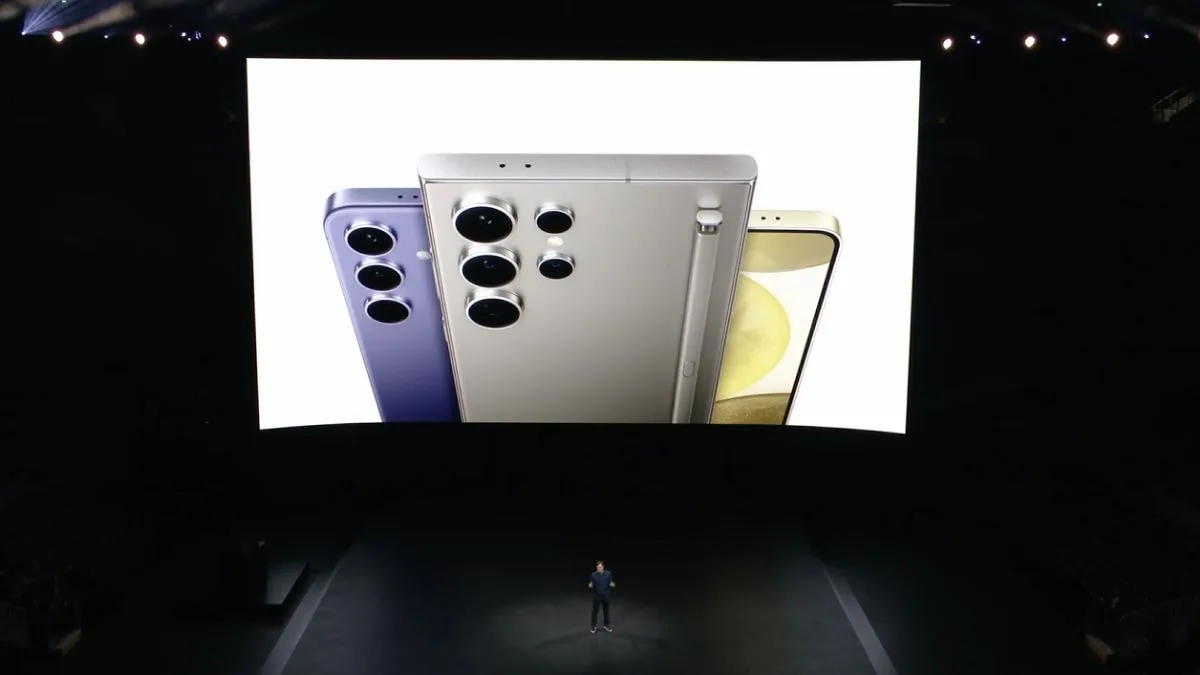
Samsung Galaxy Unpacked May Take Place on January 22; Galaxy S25 Series, Project Moohan Likely Announcements

Samsung Galaxy Unpacked 2025 will take place early next year, according to a tipster’s claims on social media. The annual event is speculated to bear witness to the launch of the purported Samsung Galaxy S25 series, which might follow past trends and comprise three models — the standard Galaxy S25, Galaxy S25+, and Galaxy S25 Ultra. Further, the South Korean technology conglomerate is also tipped to provide a glimpse at Project Moohan, its first extended reality (XR) headset.

Samsung Galaxy Unpacked 2025 Date and Expected Launches

In a post on X formerly Twitter), tipster Alvin (@sondesix) claimed Samsung will hold its Galaxy Unpacked 2025 event on January 22, 2025. The annual event is expected to kick off at 10 am PT (11:30 pm IST) at the company’s headquarters in San Jose, California.

This leak corroborates a previously reported timeline that suggested January 23 as the most likely date of the Galaxy Unpacked event. Notably, Samsung held its Unpacked event on January 17 this year when it took the wraps off the Galaxy S24 series.

As per the tipster, Samsung will launch its purported Galaxy S25 series, expected to be one of the standout announcements, at the event. The smartphone lineup is said to comprise Galaxy S25, Galaxy S25+ and the Galaxy S25 Ultra models.

Further, the South Korean company may provide a teaser for its XR headset that was announced last week. Dubbed Project Moohan, it is claimed to be equipped with state-of-the-art displays, passthrough capabilities, and support for multi-modal input.

Samsung Galaxy S25 Series Price (Expected)

As per previous leaks, the price of the base Samsung Galaxy S25 may start at $799 (roughly Rs. 67,000) for the 12GB+128GB variant. Meanwhile, the Galaxy S25+ is said to have 256GB storage as standard and its price may begin at $999 (roughly Rs. 84,000). The top-of-the-line Galaxy S25 Ultra is still speculated to have 12GB+256GB as its base configuration, which may cost $1,299 (roughly Rs. 1,10,000).