Posted on

I went deep with the LG G5 OLED TV, and these 5 viewing experiences show how awesome its picture is

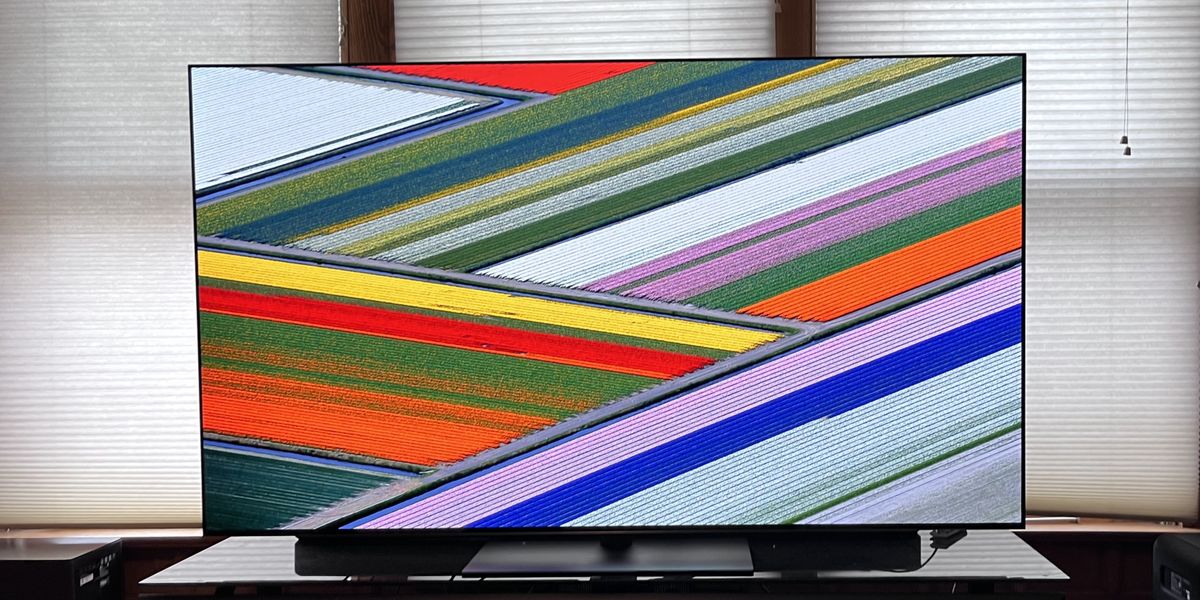
Our five-star LG G5 review reveals why this has been one of 2025’s most anticipated TVs. With a fresh, new display panel called Primary Tandem RGB OLED (also known as ‘four-stack’) it offers increased brightness and more dynamic color than its G4 predecessor, along with deep black levels that hold up in brighter viewing conditions. It’s fair to say I’ve been properly waiting to get my hands on the LG G5 for a while now. I first saw the LG G5 at an event at Dolby HQ in London, and seeing it next to its predecessor, the LG G4, the fullscreen brightness boost had me excited. It would be no easy task to follow in the footsteps of one of the best OLED TVs of 2024, the LG G4, but early impressions had me believing it could do it. Now, after sinking a load of time into the G5, I can confirm it’s an outstanding TV. If you’re thinking of buying one, you’re in for a treat. Below, I’ve made a list of four movies that I watched during my testing that showed off the G5’s potential to be one of the best TVs of 2025, and I also discuss how it handles sports. You may like The Batman (Image credit: Future) A regular reference disc I use for testing TVs, The Batman is a difficult movie for TVs to make look right. It was mastered at 400 nits (as opposed to the most common 1,000 nits for HDR) meaning it’s incredibly dim to start with. Not only that, but it’s a dark movie with a lot of low-light scenes that really test a TVs handling of black levels. Thankfully, handling the challenges of The Batman was a riddle that the G5 solved easily. Played on 4K Blu-ray with the TV in Dolby Vision Filmmaker Mode, black levels were deep and accurate, and shadow detail was excellent. Intricate details in clothing, such as Batman’s symbol on his suit, were clearly displayed even in the darkest scenes. Contrast was also superb, with a perfect balance between light and dark tones in high contrast shots, such as the opening crime scene. Here, light from lamps cut through the gloomy surroundings without sacrificing the accuracy of the dark tones. This movie really showed off just how nuanced the G5 is when handling moody tones. Wicked (Image credit: Future) A new addition to the 4K Blu-ray collection here at TechRadar, Wicked is an extremely colorful movie. Greens, pinks and blues are prominent throughout, and I’ve found green in particular can be a challenge to display accurately, especially on budget TVs. The G5’s color display was outstanding. Every color was not only vibrant with the right level of bright punch, but remained true-to-life in Dolby Vision Filmmaker Mode. The G5’s boosted brightness also came into play, and really added gloss to HDR highlights during Elphaba and Glinda’s first arrival into Emerald City. The G5’s contrast paid dividends here as well, adding depth and giving everything a realistic, almost 3D-like effect without making things look artificial. Oppenheimer (Image credit: Future) Much like The Batman, Oppenheimer is great for testing black levels and contrast. It’s also useful for its black-and-white scenes, which show how a TV can handle high contrast sequences while showing a range of gray tones in between. The G5 displayed fantastic contrast in HDR Filmmaker Mode (the 4K Blu-ray does not have Dolby Vision). Not only were the blacks deep and highlights bright, but a full range of gray tones was exhibited. Shadow detail was also solid, maintaining details in clothing, including in a scene when Oppenheimer tours the University with Admiral Strauss, which is often subjected to black crush (meaning the finest differences in deep blacks get lost into one blocky color). In the same sequence, the drawing room is a bright white. The detail of light shining through the windows can get lost here if TV aren’t able to tone map the brightness well, but the G5 delivers them perfectly. Elemental (Image credit: Future) Elemental is another colorful entry on this list, but one with the more dazzling, bright hues that are typical for Disney animation. The G5 demonstrated breath-taking colors during Elemental (once again in Dolby Vision Filmmaker Mode), particularly in scenes where Ember interacted with crystals or blew glass. The colors were as vivid as I’d hoped for, and HDR highlights were shimmering throughout – this really is a showpiece for the brightness backing the improved color range of the new panel. Textures such as flowing water, fanning flames and the skin of wind and earth creatures were highly detailed. And they all had a realistic sense of depth, thanks once again to the G5’s brilliant contrast. Sports (Image credit: Future) As I said earlier, a fullscreen brightness boost is one of the most exciting new elements of the G5 compared to its predecessor. This is extremely important when viewing sports, especially with something like football where a big vibrant green field and the crisp colors worn by the players are the key focal points. Watching an HD stream of an Arsenal v Real Madrid match-up with HDR on Prime Video, I opted for Standard picture mode over Sports due to the latter’s oversaturated and gaudy colors. In Standard, the G5 expertly displayed the players and pitch, showing accurate texture and colors. Its 4K upscaling was also effective, ensuring that textures on screen were clear and detailed. Crucially, the fullscreen brightness boost was there. That’s often a real weakness of the best OLED TVs, but the G5 had excellent fullscreen brightness, and even showed only minimal reflections from the overhead lights in our testing room, making them far less of a distraction. As expected, motion handling was good, with no motion adjustments needing to be made, though the Natural or User Control motion settings (with de-blur and de-judder set to 3) helped show sports at their best. You might also like

Posted on

How to Use LastPass Password Manager

LastPass’ history of data breaches makes it hard to recommend as a viable password manager in 2025. However, for those who wish to try LastPass, this article shows you how to set it up and maximize its available features.

How to set up and use LastPass

1. Choose a LastPass subscription

LastPass has two categories for its subscriptions: Single Users & Families and Business.

LastPass Single Users & Families plans.
LastPass Single Users & Families plans. Image: LastPass

For the Single Users & Families plans, you can select between Free, Premium, and Families. If you only need a basic password manager, LastPass Free allows for unlimited password storage and comes with a password generator.

However, with the free version, you miss out on important features such as advanced multifactor options, emergency access, and unlimited device access that are only offered with the Premium plan.

If you’re a group or a family that wants a centralized password management solution, LastPass Families may be better for you as it covers up to six users.

LastPass Business.
LastPass Business. Image: LastPass

Businesses can opt for either LastPass Teams or LastPass Business. Teams covers up to 50 users, while Business is tailored toward larger organizations. These two plans provide more business-centered features, such as shared folders and an administrative console.

Fortunately, LastPass offers generous free trials for both categories. In particular, LastPass Premium and Families has a 30-day trial, while LastPass Teams and Business has a 14-day trial.

I recommend going for one of these free trials, depending on your needs. The good news is that LastPass doesn’t require users to provide any payment information to access any of these free trials. For this article, I used LastPass Premium’s 30-day free trial.

To access one of the free trials, simply click the “Try” button below your subscription of choice.

2. Set up the web app and the browser extension

Upon selecting a plan, you’ll be redirected to create your LastPass account. Here, LastPass will ask you to provide an email address and your Master Password.

Creating a LastPass account.
Creating a LastPass account. Image: LastPass

In theory, your master password is going to be the only password you’ll have to create on your own. It’s also arguably your most important password, as it serves as the key that unlocks your vault, which contains all your other passwords and credentials. Thus, it’s crucial that you remember your master password.

After you’ve finished creating your account, LastPass will ask you to install its browser extension. This is the main way you’ll interact with the service. I use Google Chrome, so LastPass redirected me to the Chrome Web Store.

LastPass Chrome browser extension.
LastPass Chrome browser extension. Image: Google

Once you’ve installed the browser extension, you can access LastPass’ web vault application. Before you do this, I recommend you pin the LastPass extension to your browser’s toolbar for easy access.

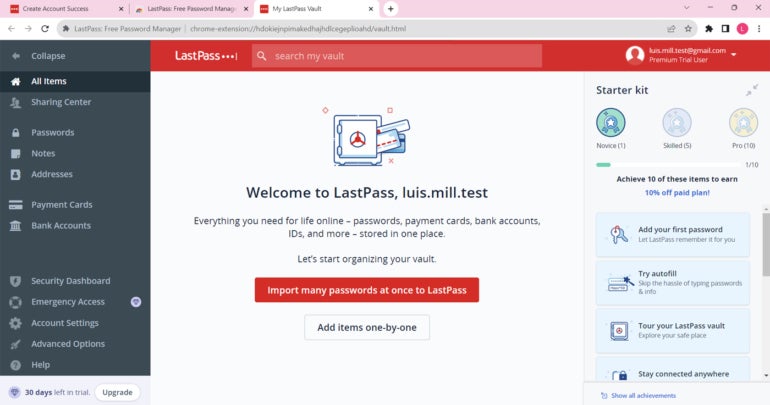
Now that you have the extension up and running, it’s time to access your LastPass web vault. To access it, go to the official LastPass website and click Log In. From there, enter your email and master password and you will be led to the LastPass web vault application.

LastPass web vault.
LastPass web vault. Image: Luis Millares

Your LastPass vault is where all your passwords, logins and other credentials will be stored.

3. Use LastPass

The main reason to use a password manager is to organize and secure your passwords. To illustrate how to do this, I’ve made a new account on LinkedIn.

On LinkedIn’s signup page, you will see that there’s a LastPass icon on the username and password fields.

Creating a LinkedIn account.
Creating a LinkedIn account. Image: Luis Millares

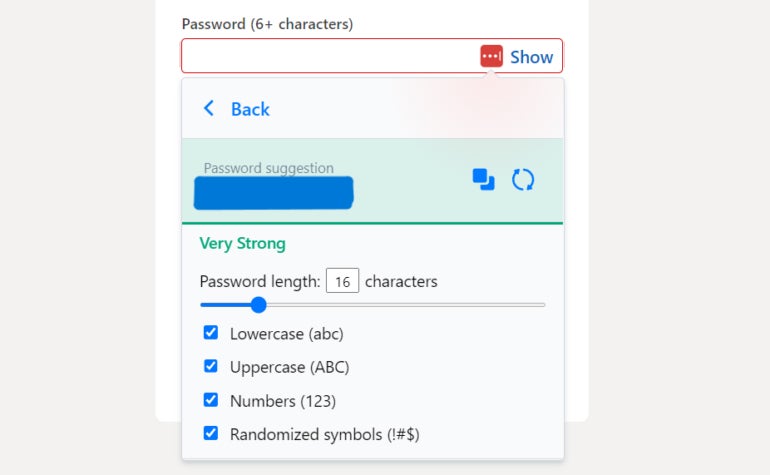
Clicking on the LastPass icon in the password field will bring up LastPass’ password generator. Here, LastPass automatically generates a random password for your new login.

LastPass password generator.
LastPass password generator. Image: Luis Millares

At default, LastPass will generate a 16-character password — which you can configure to have uppercase and lowercase letters, numbers, and symbols. LastPass allows you to create a password with as many as 99 characters. In this case, I selected the first suggestion from LastPass’ password generator.

Clicking on the generated password will prompt LastPass to ask you if you want to save the new login. Click “Add password,” and there you go — you’ve just created and saved your very first LastPass login.

LastPass saving new login.
LastPass saving new login. Image: Luis Millares

This login can now be found within your vault and LastPass will automatically be filled in the next time you’re on LinkedIn’s login page.

With that, we’ve just saved our very first login using LastPass!

SEE: IT Leader’s Guide to Cybersecurity Awareness Training (TechRepublic Premium)

LastPass frequently asked questions (FAQs)

Is LastPass no longer safe?

Due to its recent data breaches, I don’t consider LastPass a safe password manager to use in 2025. For context, LastPass was involved in two data breaches in 2022, where the threat actor gained unauthorized access to encrypted customer data.

While the password manager service has since implemented changes to bolster its security posture, there’s simply no reason to put your data at risk. This is especially true given there are other top-tier password managers that have not been hacked or involved in similar breaches.

Does LastPass have a free version?

Yes, LastPass has a free version but has limited features compared to its paid counterpart. On LastPass Free, you can only access your password vault while using one device type at a time. This means you can only view your passwords on a computer or a mobile device, not both at the same time.

You also don’t get LastPass’ One to Many Sharing feature (which allows login detail sharing with multiple people), encrypted file storage, advanced multi-factor authentication, and emergency access. All these features are available on any of LastPass’ paid plans.

Check out LastPass Free vs Premium, for a more in-depth comparison between the two.

How to add LastPass to Chrome?

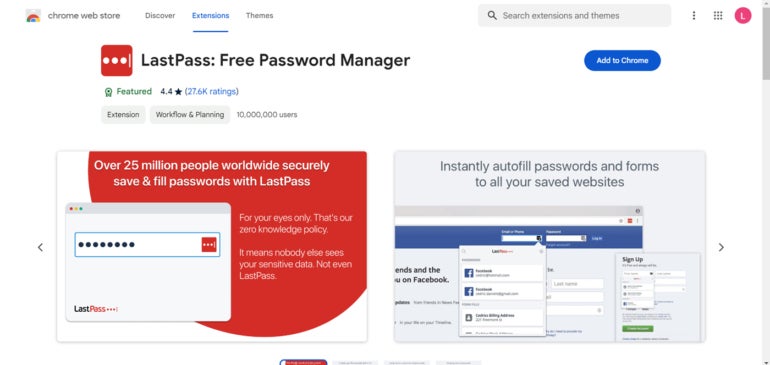
To add LastPass to Chrome, visit the Chrome Web Store, search for LastPass, and click on “Add to Chrome.”

From there, LastPass will provide you steps on how to install and integrate their service to your Chrome browser. You can also go to the LastPass Download page and download the browser extension from there.

What operating systems does LastPass support?

LastPass supports Windows, Mac, and Linux operating systems via their browser extensions. Specifically, it has browser extensions for Chrome, Safari, Firefox, Microsoft Edge, and Opera.

It also offers dedicated mobile apps for both iOS and Android.

What we think of LastPass

In our full review, LastPass received a rating of 3.4 out of 5 stars. We couldn’t recommend LastPass because of its 2022 data breaches, particularly since a password manager’s main purpose is to protect user data.

While its free version and wide range of multifactor authentication options are enticing, there are a number of LastPass alternatives that we feel are better investments for your money — and data.

If you want to learn more, read our full review of LastPass or check out our Keeper vs LastPass comparison.

This article was originally published in December 2023. It was updated by Luis Millares in March 2025.

Posted on

I love LG’s new Magic Remote design for its OLED TVs – too bad only certain regions are getting it

It could be considered tremendously geeky to fuss over, or to even discuss, the remote control that comes with your TV. But a solid, well-designed remote is a key feature of the best TVs, and if you spend several hours every day watching, it’s something you’re getting plenty of hands-on time with. As someone who reviews TVs and other AV gear regularly, remote controls are something I pay close professional attention to. When I reviewed the Hisense U8N TV, I’m not ashamed to admit feeling a sense of delight when I held its solid, well-designed remote, which even featured a backlit keypad. It was a huge upgrade over the cheap, plasticky, and basic remote that came with the Hisense U8K that preceded it, and it added more value to an already high-value TV. You may like Conversely, I nearly shuddered when I saw the remote control that came with the Panasonic Z95A, the company’s 2024 flagship OLED TV, and one that marked the brand’s triumphant return to the US market. In my Panasonic Z95A review, I generously called it “disappointing given the Z95A’s otherwise premium build quality (and price!).” The Z95A’s remote was essentially the same one you’d get with any cheap Fire TV set you’d buy on Prime Day for a bargain price from Amazon, which supplied the Fire TV smart TV interface for Panasonic’s new 2024 TVs. The new-old hybrid AI Magic Remote (shown above) boasts a very different design than the fully re-designed AI Magic Remote (shown at top) (Image credit: Future) LG’s Magic Remote control is a long-standing feature of its TVs, including many of the best OLED TVs over the past decade. The Magic Remote differs from other TV remotes in that it has both a scroll wheel and a pointer wand control that lets you hover a cursor over items in the TV’s webOS smart interface and click on them to make a selection. The Magic Remote operates like a wireless computer mouse, and I’m sure that was a deliberate design choice back in the days when companies like LG were first adding a web browser and other computer-like features to their TVs, thinking people were going to eagerly use them for web-surfing and work. The Home Office Quick Card in webOS 25 provides strong evidence that LG still thinks people want to use their TV as an oversized computer monitor for work, which is something I can’t ever see myself doing. I’ve always found LG’s Magic Remote to be fine to work with, even if I’m not using it to actually do work on a TV. But it’s certainly a divisive design, even among longtime fans of LG OLED TVs. Fans such as TechRadar contributor Dave Meikelham, who said this of the Magic Remote: “The aging peripheral now possesses about as much sorcery as a drunk magician unsuccessfully trying to pull a rabbit out of a hat at a crestfallen child’s birthday party.” Magical thinking LG’s Home Office hub wants to help with your productivity (Image credit: Future) Part of the resistance to LG’s Magic Remote is a feeling that the cursor function is inaccurate, with the arrow whizzing randomly around the screen when you attempt to select an item on the smart interface or in a menu (the cursor’s speed can be adjusted in the TV’s setup menu, a setting critics may not have bothered to mess with). But another big part is that LG hadn’t updated the basic design in years, and worse, the remote had a cheap build quality that seems out of step with a premium, pricey TV. When I recently reviewed the LG G5, the brand’s flagship 2025 OLED, I was very happy to see that it came with a redesigned Magic Remote. Finally! This new AI Magic Remote version abandons the old shoehorn-like design for a more modern flat form factor with gently rounded corners and a streamlined keypad with a limited button count. Yes, the scroll wheel is still there, and as with the previous version, clicking on it will trigger the cursor control to use that function. But the new design appears to favor the more conventional navigation disc control option, which works perfectly well on the speedy, responsive webOS 25 smart interface. The new design also adds a few buttons that previously weren’t found on Magic Remotes, specifically Accessibility, Home Hub, and AI shortcut buttons. That last one also facilitates voice commands, which is clearly something LG now wants us to be using on its TVs. What’s missing in the new-look AI Magic Remote are number buttons and, crucially, an input select control, which is something I griped about in my G5 review. Yes, you could use voice commands to create a shortcut for selecting a specific input on the TV (which supports Google Home and LG’s own ThinQ smart home protocols), or you can, as I found myself doing, jump to the Home Hub and select an input from there. But I guess I’m old school that way: I want an input button on my TV remote control (and backlighting too, thanks). Regional realities In the absence of an input select button on the AI Magic Remote, a visit the Home Hub on LG TVs will let you switch between sources (Image credit: Future) Now that I’ve pumped up LG’s AI Magic Remote (for the most part), I need to step back and share that the new design isn’t available in all regions – the UK, for instance. Certain regions have legal requirements that prevent TV manufacturers from removing buttons such as a numbered keypad from remote controls, and for those regions, LG is retaining the same old Magic Remote design. The good news here – if you see it that way – is that this design is a new-old hybrid AI Magic Remote that includes the AI and Home Hub buttons. The bad news? The input select button has been removed from this one as well. I wish it didn’t have to be this way – there’s been a history of companies such as Samsung including two remotes in the box to get around these rules – but for those of use who get the stylish new remote, I think it’s a much-awaited step forward. You might also like…

Posted on

I reviewed the LG G5, and it’s bright enough to change my mind about OLED TVs

Why you can trust TechRadar We spend hours testing every product or service we review, so you can be sure you’re buying the best. Find out more about how we test. LG G5: Two-minute review The LG G5 is the company’s flagship TV for 2025, and it changes the game for OLED TV tech with a completely new panel design that delivers notably higher brightness than its LG G4 predecessor. I’ll get into the specifics of that in the Picture Quality section of this review, but what you need to know is that with its impressive, mini-LED TV-rivalling brightness, the G5 succeeds brilliantly in bringing the best OLED TVs out of the darkness as a viable option for daytime, bright room viewing. LG’s G4 relied on a micro lens array (MLA) layer to boost brightness over what conventional OLED TVs were capable of, but the new LG G5 incorporates a new Primary RGB Tandem structure OLED display panel. This uses individual red, green, and blue layers to produce light, and the resulting brightness is not only leaps and bounds better than what the G4 achieved with MLA, but it also yields improvements in color reproduction. You’d think that the G5’s revamped display panel would command a higher price, but the LG pricing is equivalent to its G4 predecessor. However, at $3,399 / £2,399 / AU$5,299 for the 65-inch model I tested, it’s still very much a premium TV. You may like Along with higher brightness and richer color, the LG G5 offers a range of features that make it a flexible option for viewing in a range of lighting conditions. These include a new, more effective anti-glare screen, and a Filmmaker Ambient Light Mode that uses the TV’s built-in light sensor to dynamically adjust brightness without sacrificing picture accuracy in the process. LG’s Alpha 11 AI processor Gen 2 is responsible for a range of AI picture and sound enhancements on the G5. These include AI Picture and Sound modes, voice recognition, and personalized content recommendations. LG’s webOS 25 smart TV interface has been tweaked with the ability to switch between customized home screen layouts that get triggered by the viewer’s voice, and there are now onscreen wizards to guide you through the process of setting up unique AI picture and sound presets to accompany your custom home screen. LG’s flagship G-series OLEDs are designed for wall-mounting, and the G5 has an Always Ready mode that lets the TV be used as a frame for displaying photos and art (now including images generated by AI with the TV’s assistance). But it’s also a highly capable gaming TV, with support for 4K 165Hz, Nvidia G-Sync, and AMD FreeSync Premium. The G5’s Quick Card gaming portal also provides over 500 titles plus Nvidia GeForce Now, Luna, and other apps, and Xbox Game Pass support should be added during the start of 2025. While the LG G5 has turned out to be a best-in-class OLED TV option for 2025, many people will be equally pleased with its step-down LG C5 model, which is already looking to be one of 2025’s best TVs. The C5 isn’t as bright as the G5, but you’ll save quite a bit by going with LG’s mid-range OLED . LG G5 review: Price and release date The LG G5 is the brightest OLED TV we’ve yet reviewed (Image credit: Future) Release date: April 2025 48-inch: £1,799 55-inch: $2,499 / £2,399 / AU$4,199 65-inch: $3,399 / £3,299 / AU$5,299 77-inch: $4,499 / £4,499 / AU$7,999 83-inch: $6,499 / £6,999 / AU$9,999 97-inch: $24,999 The LG G5 is widely available in 55- to 83-inch screen sizes. A 48-inch model is also available in the UK, and a 97-inch option in the US, though those models don’t use the same Primary RGB Tandem structure panel as the other sizes, and won’t be as bright. Prices for the G5 series are equivalent to last year’s LG G4 series, despite the inclusion of a new panel design, but are notably higher than the mid-range LG C5 series OLED TVs. LG G5 review: Specs Swipe to scroll horizontally Screen type: OLED Refresh rate: Up to 165Hz HDR support: Dolby Vision, HDR10, HLG Audio support: Dolby Atmos Smart TV: webOS 25 HDMI ports: 4 x HDMI 2.1 Built-in tuner: ATSC 1.0 (USA) LG G5 review: Benchmark results LG G5 review: Features The LG G5 has four HDMI 2.1 ports with 4K 165Hz support (Image credit: Future) Fourth-generation panel with Brightness Booster Ultimate Filmmaker Ambient Light Mode debuts here 4K 165Hz gaming support on PC A key feature of the LG G5 is a new fourth-generation OLED display panel with Primary RGB Tandem structure. In contrast to previous designs, which used two blue OLED layers plus a third layer with red, green, and yellow elements, the new panel uses individual red, green, and blue layers to produce light. This “four-stack” structure benefits from increased brightness and enhanced color purity due to the panel’s use of separate OLED layers for the primary colors. Unlike the previous LG G4, the G5 doesn’t rely on a micro lens array (MLA) layer with microscopic lens elements to boost brightness. LG refers to its new display panel tech as Brightness Booster Ultimate, and it’s accompanied by several other features to boost picture quality in a range of room lighting conditions. The first is an anti-reflective layer that LG says provides 30% higher glare resistance than last year’s G4. Another is Filmmaker Ambient Light Mode, which uses the TV’s built-in light sensor to map gamma and PQ (the HDR equivalent of gamma) based on room lighting conditions. The G5 also has Perfect Black certification, which confirms that a TV can display less than 0.24 nits in conditions of up to 500 lux. The G5’s Alpha 11 AI processor Gen 2 enables a range of AI-based picture and sound enhancements, including AI Picture and AI Sound modes. Picture and sound wizards guide you through setting up customized presets based on your response to a series of images and sound samples, and once completed, these can be automatically switched on for the specific users who created them based on voice recognition. That also goes for the layout of the TV’s webOS 25 Home Screen – if you customize the app selection in your user profile, it’ll switch to the layout you prefer when it detects your voice if you use the voice control system at all. The G5 also gets a gaming boost over last year’s G4, with 4K 165Hz support for PC gaming along with Nvidia G-Sync and AMD FreeSync Premium. LG’s Gaming Portal offers over 500 game titles, with support for both Xbox and Luna controllers and Xbox Game Pass (coming in the first half of 2025, according to LG). Usability features include AirPlay 2 and Chromecast built-in, along with hands-free voice control. The ThinQ screen in the webOS interface lets you configure devices to be controlled via Google Assistant, Amazon Alexa, Matter and Apple HomeKit, and there’s also a new, streamlined Magic Remote and more advanced AI Chatbot feature that can diagnose picture and sound issues. Features Score: 5/5 LG G5 review: Picture quality The G5’s picture looks bright and punchy even in well-lit rooms (Image credit: Future) Exceptional brightness for an OLED Anti-reflection layer in the screen Some issues with certain streaming formats The LG G5 holds the distinction of being the brightest OLED TV we’ve yet measured at TechRadar. Peak brightness on a 10% HDR white window pattern in Filmmaker Mode measured 2,268 nits, and it was 1,850 nits in Standard picture mode. Those numbers are what we typically expect to see from higher-end examples of the best mini-LED TVs, and they best the Samsung S95D – our previous brightest OLED TV champion – by a sizeable margin. The G5’s fullscreen HDR brightness measured 331 nits in Filmmaker Mode and 297 nits in Standard mode. That represents a boost over last year’s G4, which measured 257 in Filmmaker Mode, but it’s not the 40% fullscreen brightness boost that LG had previously cited for the G5. Measured in Vivid mode, the G5’s fullscreen brightness was 419 nits, a number closer to LG’s claim. The G5’s color gamut coverage measured 99.6% for UHDA-P3 and 81.3% for BT.2020 in Filmmaker Mode. Those results are better than what we measured on the G4, and they match the Samsung S95D’s UHDA-P3 coverage. The average Delta-E value (the margin of error between the test pattern source and what’s shown on-screen) for color accuracy was 1.2, which is excellent. (Any result under 3 is regarded as indistinguishable to the human eye.) Given the LG G5’s high brightness, there was no need to dim the lights to make the picture look good – contrast, color saturation, and shadow detail all held up nicely even with my room’s overhead lighting on. That’s certainly not something you can say about all OLED TVs, which typically lag behind their mini-LED counterparts when it comes to brightness. The new G5’s new “four stack” OLED panel offers enhanced color performance over last year’s G4 (Image credit: Future) Even with the comparatively subtle Filmmaker Mode active, The Pitt (streamed via Max), a TV show that mostly takes place in a brightly lit hospital emergency room, looked staggeringly bright on the G5. And darker shows such as Severance (on Apple TV+) could be watched in brighter room lighting conditions without losing black depth and shadow detail. That’s partially due to the TV’s anti-reflective layer, which manages to reduce screen glare without elevating black levels, but also its Filmmaker Mode Ambient Light setting, which uses the G5’s light sensor to adjust gamma (or PQ for programs with HDR) based on room lighting conditions. Viewing the season 2 final episode of Severance, a scene where Mark S and Helly R chat furtively in the Lumon office showed off all the LG G5’s best aspects. The background of the dark workspace was a deep, rich black, and the light from the data terminals bathed their faces with a striking blue and green glow. The refined shadow detail gave the picture a powerful sense of depth that, for me, really drove home the point of why you would spend top dollar for a premium OLED TV like the G5. An LG G5 review from our colleagues at What Hi-Fi? cited an issue with streamed Dolby Vision movies and shows, resulting in posterization and blocky picture artifacts when watching dark scenes. My G5 review sample showed the same posterization on at least one movie, Alien: Romulus (streamed via Apple TV), though it wasn’t an issue on other streamed dark Dolby Vision content I watched. What Hi-Fi? later reported that an LG software update scheduled for a late April release fixes this Dolby Vision glitch, and after installing a pre-released version of that update, the posterization on Alien: Romulus disappeared, though it created other picture quality issues when streaming from the G5’s Apple TV app, adding strange horizontal lines in some dark scenes. Without these problems, the TV would score five stars for picture quality. These problems are very situational, which means I’m still happy giving the TV an overall score that marks it as best-in-class. Once we’ve fully tested the wide release version of LG’s software update, we will update this review, and if these problems are removed as expected, I’ll update this section. The G5’s motion handling was impressive, with a reference clip from No Time to Die – in which James Bond traverses a rugged hillside cemetery as the camera pans along – showing only minimal judder and blur. This same scene can look downright wobbly on some TVs. Enabling the TV’s Cinematic Movement setting in the TruMotion menu effectively removed any residual motion artifacts without introducing a ‘soap opera’ effect. Sports also looked great – the NCAA basketball championship aired during my time testing the G5 – with fast motion looking solid and the TV’s bright, contrast-rich picture bringing out the vivid colors of the players’ uniforms. Picture quality score: 4.5/5 LG G5 review: Sound quality The G5’s 1-inch-thin frame is designed for a flush-mount against a wall and the TV comes with wall-mounting hardware (Image credit: Future) 4.2-channel speaker system Effective AI Sound Pro mode Sound Wizard for creating custom sound preset The LG G5’s built-in 4.2-channel speakers take things up a notch from the 2.2-channel array built into the LG C5. An AI Sound Pro mode provides a virtual 11.1.2-channel upmix that makes a clear difference in the spaciousness of soundtracks when watching movies, but it also thins out the bass. While Dolby Atmos is supported on the G5, DTS formats, disappointingly, are not. This is a step backwards from the G4, which had DTS support – though this won’t be a problem for people using an AV receivers, and some soundbar setups. Similar to the TV’s Picture Wizard, a Sound Wizard guides you through the process of creating a customized sound preset. This is entirely optional, and this preset doesn’t work when the TV is connected to a soundbar. A useful WOW Orchestra mode lets you combine the output of the TV’s speakers with the speakers of a compatible LG soundbar when used together, for a bigger overall soundstage. The movies and TV shows I watched on the G5 all sounded good, with clear dialogue and good spatial positioning of effects, especially with the AI Sound Pro mode active. The sound could also go fairly loud without coming across as strained. Even so, given how good the G5’s picture looks, it would be a shame not to pair it with one of the best Dolby Atmos soundbars or dedicated home theater speakers. Sound quality score: 4/5 LG G5 review: Design An aluminum pedestal may be an extra cost option for the G5 (Image credit: Future) Wall-mount hardware included Optional pedestal stand New, streamlined AI Magic Remote control The G5 comes with wall-mounting hardware at all screen sizes, and a pedestal stand is available as an optional extra in the US. In the UK, you can choose if you want the stand or the mount in some sizes. LG’s sturdy aluminum stand, which I used during my G5 review, allows for both an elevated height to accommodate a soundbar, or a lower height where the TV sits directly on the stand’s surface. G5 TVs are designed to be wall-mounted, with the thin, 1-inch panel aligning perfectly flat against a wall like a picture frame when you use the dedicated mount. The TV’s nearly non-existent bezel gives it an ‘all-picture’ look that adds to the art-like quality, and a connection panel located on the back with bottom and side-mounted ports, along with cable management hardware, lets you hook up sources without detracting from the neat look. Connections on the G5 include four HDMI 2.1 inputs, an RF antenna input, three USB ports and an Ethernet port. LG’s new AI Magic Remote for the G5 is more compact and streamlined than previous Magic Remotes, with a flat surface, a reduced button layout, and a smaller central scroll wheel. Unfortunately, not all regions get this new, mostly improved design, though it was included with my review sample in the US. The UK still gets a design with channel buttons, though it does include new AI keys. The new AI button provides quick Chatbot access, and there’s also a dedicated button to call up the TV’s ThinQ screen. I never really had a problem with the previous Magic Remote, but some users may prefer the more traditional design of this new version. Design score: 4.5/5 LG G5 review: Smart TV and menus LG’s webOS 25 interface has been enhanced with multiple viewer profiles and picture settings that can be activated by voice (Image credit: Future) webOS 25 smart interface Always Ready feature with ‘ambient mode’ option Quick Cards and Quick Menu for easy app and settings access The G5 uses LG’s webOS 25 interface, which is one of the best smart TV systems going. Like other smart TV interfaces, the top third is dedicated to a promotional banner (in this case, one mostly directing you to the LG Channels free ad-supported TV portal), alas, but below that is a Quick Cards section that provides hubs for Sports, Games, Music, Home and more. The Home Card hub provides information about connected wired and wireless sources, which can be accessed using the TV’s remote control. It also lets you connect to Google Home, Matter, and LG ThinQ smart devices, which can be controlled directly from the TV. The order of apps in the home screen’s middle section can be edited according to which ones you use most, and there’s also a Live TV option that shows a grid of both broadcast TV channels pulled in by the best indoor antennas and ones available on the LG Channels portal. An Always Ready feature that needs to be enabled in the General menu lets you display images (including from your personal photo library) when you’re not using the TV, including ones that can be generated using AI. When in Always Ready mode, the voice recognition and AirPlay/Chromecast remain active, so you don’t have to power it on to use those functions. A very useful webOS feature is the Quick Menu, which appears as a transparent overlay on the screen’s left side that lets you select between picture and sound modes, among other settings. You can also access the TV’s AI Chatbot from here, which can be used to guide you through the G5’s many settings and features. The TV’s AI Picture wizard can be useful for creating a preset that corresponds to your preferences, but I found that the one I dialed in was overly cool-looking for my preference, despite it theoretically following my preferences, and I stuck with Filmmaker Mode instead for most viewing. While I generally found navigating the TV’s menus to be easy, and was satisfied with the wide range of options for adjusting picture and sound, I found it annoying that the new, redesigned Magic Remote control lacks an input button for switching sources. It’s easy enough to do that by pressing the Home hub button on the remote and then navigating to a specific source, but input select is nonetheless a button that should be included on every TV remote. Smart TV & menus score: 5/5 LG G5 review: Gaming A Game Dashboard allows for easy gaming-related picture and sound adjustments (Image credit: Future) Four HDMI 2.1 ports 4K 165Hz, FreeSync Premium and Nvidia G-Sync 9.2ms input lag (Boost mode) LG TVs have fantastic gaming credentials, and the G5 continues in that tradition of the best gaming TVs. Its four HDMI ports support 4K 165Hz, FreeSync Premium and Nvidia G-Sync. Input lag measured in Game Optimizer mode with a Bodnar 4K input lag meter was 9.2ms in Boost mode, which is about as low as TVs get. The G5’s Game Card Gamung Hub offers over 500 games and apps, including Nvidia GeForce Now and Luna. (Xbox Game Pass support is coming in the first half of 2025, according to LG.) When in Game Optimizer mode, a Game Dashboard pop-menu provides quick access to a range of adjustments and presets, which can be selected without pausing the game you’re playing. The brightness level of the G5 is great here, again, because it means its good for playing in the day time without severe mirrored reflections distracting from what you’re trying to focus on. Gaming score: 5/5 LG G5 review: Value LG’s new, streamlined Magic Remote (Image credit: Future) Priced competitively with premium OLED competition Step-down LG C5 OLED also excellent Very good overall value At $3,399 / £3,299 / AU$5,299 for the 65-inch model I tested, the LG G5 is priced higher than another 2025 premium OLED, the Samsung S95F, which has a similarly high brightness as the G5 plus a Glare-Free 2.0 screen that’s even more effective at eliminating reflections in bright rooms. The G5 is also priced lower in the US than another 2025 premium OLED, the Sony Bravia 8 II, which will sell for $3,999 in a 65-inch screen size… however, in the UK, the Bravia 8 II is actually priced slightly lower than the 65-inch G5, just to mix things If you don’t require super-high brightness and want to save some money, the LG C5 ($2,699 / £2,699 at 65 inches) is an excellent choice. The C5’s peak brightness is roughly half of what we measured on the G5, but it’s full of features and its picture quality is still exceptional, especially when viewed in a light-controlled environment. Given its fantastic all-around performance, great features, and more affordable cost compared to some of its high-end OLED competition, the G5 earns high ratings for value. Value score: 4/5 Should I buy the LG G5? (Image credit: Future) Swipe to scroll horizontally LG G5 Attributes Notes Rating Features A great array of features make the G5 a flexible TV that can accommodate bright rooms 5/5 Picture quality Class-leading brightness for an OLED TV plus refined all-around picture quality 4.5/5 Sound quality Good dialogue clarity and effects positioning, along with a wide soundstage in AI Sound Pro mode, but bass is limited 4/5 Design Slim, wall-hugging design and smart new remote. The stand is optional, keep in mind 4.5/5 Smart TV and menus Useful Quick Cards and Quick menu features are enhanced by voice recognition, viewer personalization, and AI chatbot 5/5 Gaming 4K 165Hz and premium VRR support, along with low input lag and cloud gaming apps, make the G5 a complete gaming package 5/5 Value A good value for a flagship OLED TV in 2025, although LG’s mid-range C5 is arguably the better value in light controlled rooms 4/5 Buy it if… Don’t buy it if… LG G5 review: Also consider… Swipe to scroll horizontally Header Cell – Column 0 LG G5 Samsung S95F LG C5 Sony Bravia 9 Price (65-inch) $3.399 / £3,399 / AU$5,299 $3,299 $2,699 / £2,699 / AU$4,299 $2,999 / £2,999 Screen type OLED OLED OLED Mini-LED Refresh rate 165Hz 144Hz 144Hz 144Hz HDR support Dolby Vision/HDR10/HLG HDR10+/HDR10/HLG Dolby Vision/HDR10/HLG Dolby Vision/HDR10/HLG Smart TV webOS25 Tizen webOS25 Google TV HDMI ports 4 x HDMI 2.1 4 x HDMI 2.1 4 x HDMI 2.1 4 (2x HDMI 2.1) How I tested the LG G5 Measuring a 10% HDR white window pattern during testing (Image credit: Future) I spent about 20 hours in total measuring and evaluating Measurements were made using Calman color calibration software A full calibration was made before proceeding with subjective tests When I test TVs, I first spend a few days or even weeks using it for casual viewing to assess the out-of-box picture presets and get familiar with its smart TV menu and picture adjustments. I next select the most accurate preset (usually Filmmaker Mode, Movie or Cinema) and measure grayscale and color accuracy using Portrait Displays’ Calman color calibration software. The resulting measurements provide Delta-E values (the margin of error between the test pattern source and what’s shown on-screen) for each category, and allow for an assessment of the TV’s overall accuracy. Along with those tests, I make measurements of peak light output (recorded in nits) for both standard high-definition and 4K high dynamic range using 10% and 100% white window patterns. Coverage of DCI-P3 and BT.2020 color space is also measured, with the results providing a sense of how faithfully the TV can render the extended color range in ultra high-definition sources. For the LG G5, I used the Calman ISF workflow, along with the TV’s advanced picture menu settings, to calibrate the image for best accuracy. I also watched a range of reference scenes on 4K Blu-ray discs to assess the TV’s performance, along with shows streamed from Max, Netflix, and other services. You can read an in-depth overview of how we test TVs at TechRadar for more information.

Posted on

iQOO Z10x First Impressions

iQOO’s Z9x was a bit competitive in terms of price but only stood out because of its battery life and fast charging capabilities. Its cameras were very basic, and the same can be said about its software, which was loaded to the brim with bloatware and pushed spammy notifications. Nearly a year later, we have a successor, and it’s called the iQOO Z10x. It seems like iQOO did its homework this time, as the Z10x appears prepared to tackle the competition.

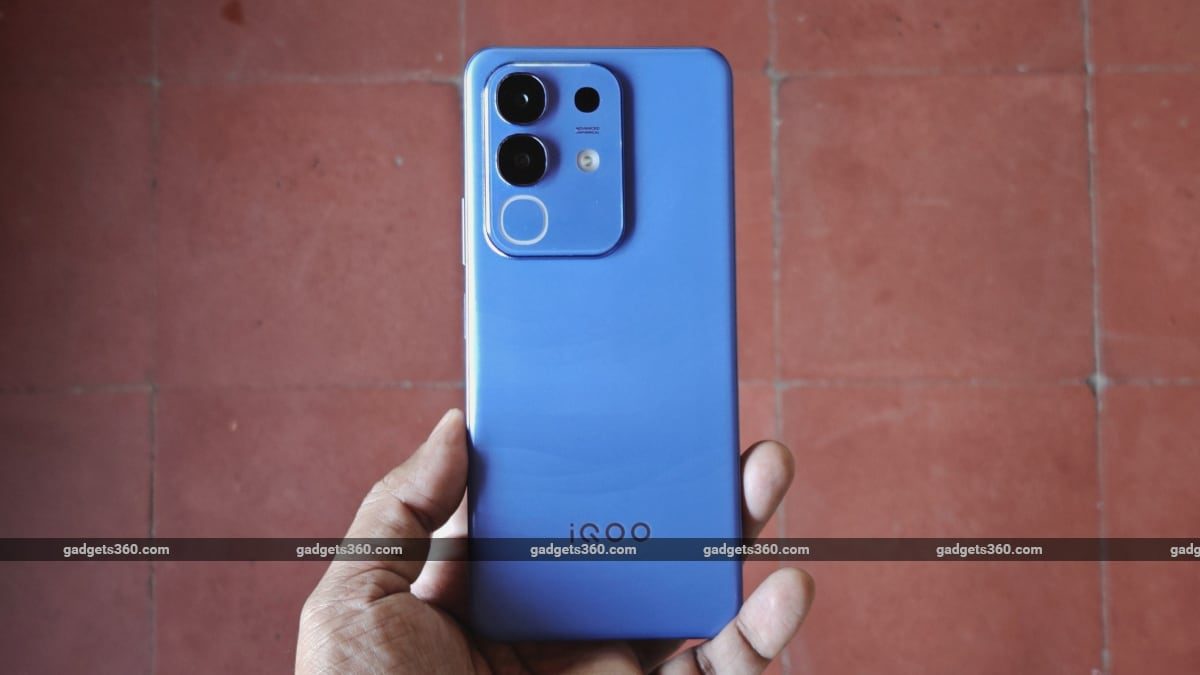
iqoo z10x design waves gadgets 360 iQOOZ10x iQOO

The rear panel is made of polycarbonate and has a matte finish, which does not pick up smudges and dust.

Out of the box, the iQOO Z10x’s design looks a lot better than the phone it replaces. Its mid-frame (also made of polycarbonate) has flat sides, but its rear panel has been given a curved treatment near the edges. We received the phone in its Ultramarine finish for review, which has a lavender-like colour. However, iQOO has added some detail in the form of a wave-like texture, which is visible when you twist the phone. I like that it’s subtle and not as flashy as the iQOO Neo 10R I recently reviewed.

iqoo z10x display gadgets 360 iQOOZ10x iQOO

Unlike the mid-range iQOO Z10, the iQOO Z10x retains its flat display panel.

While things have improved around the back, it’s not the same with the front. The LCD, albeit having the same 6.72-inch diagonal, FHD+ resolution and 120Hz refresh rate, has some thick borders. The borders are the thinnest on the sides (although not as thin as those on the iQOO Z9x) but are thicker at the top and the thickest at the bottom. It’s easy to conclude that iQOO has cut a few corners here, but more about this in our review.

The phone also retains its IP64 dust and water resistance rating from the iQOO Z9x. Given its chunky appearance and weight (204g), iQOO decided to omit the 3.5mm headphone jack, which was available on the previous model.

iqoo z10x cameras infrared gadgets 360 iQOOZ10x iQOO

The third smaller camera-like cutout is actually an IR blaster

The camera module appears abnormally complex, given that it only offers one user-accessible camera. It remains as basic as before, with a 50-megapixel (f/1.8 aperture) primary camera (with no OIS) and a 2-megapixel depth camera (for the Portrait camera mode). The selfie camera is also the same as before, and it is an 8-megapixel unit. I’m definitely not expecting a better performance in the photography department this year.

As for core hardware, there are a few upgrades. A newer MediaTek Dimensity 7300 processor offers a 2.5GHz maximum clock speed compared to the Qualcomm Snapdragon 6 Gen 1 SoC used in the previous model. The 7300’s GPU is also a lot faster compared to the GPU in the iQOO Z9x, so gaming performance should see some improvements.

iqoo z10x bloatware gadgets 360 iQOOZ10x iQOO

iQOO’s Z10x is powered by Vivo’s Funtouch OS 15, which is based on Android 15

Also new is a 6GB base RAM variant, an improvement over the basic 4GB RAM variant the iQOO Z9x offered. The iQOO Z10x is available in 6GB+128GB (Rs. 13,499), 8GB+128GB (Rs. 14,999) and 8GB+256GB (Rs. 16,499) variants. There’s support for several SA and NSA 5G brands and dual 5G standby. There’s no NFC, but you get Wi-Fi 6 and Bluetooth 5.4 connectivity.

iqoo z10x fingerprint reader power gadgets 360 iQOOZ10x iQOO

The iQOO Z10x’s fingerprint reader is embedded in its power button

The battery has grown from a 6,000mAh unit to a 6,500mAh unit. Given the more efficient TSMC chipset this time around, I can only expect the iQOO Z10x to perform even better than the iQOO Z9x. Charging remains the same as with the Z9x, which is 44W.

With many upgrades, we are expecting the iQOO Z10x to perform better in some areas compared to the iQOO Z9x we tested last year. We are not too confident about its camera prowess, which remains the same as before. Hopefully, iQOO has taken care of the annoying spammy notifications we experienced on the iQOO Z9x this time. If you are looking for a big battery budget smartphone that won’t break the bank, the iQOO Z10x might just be the right phone. But we recommend waiting for our detailed review before you pick one.

Posted on

Oppo Find X8 Ultra First Impressions

Another month and another Ultra model is here! Oppo’s latest salvo, the Find X8 Ultra, has been unveiled in China. As expected, the new Ultra is an upgrade over its predecessor in almost every department and a true flagship of 2025. But, if you’re reading this anywhere in India and getting excited, don’t be because this Ultra isn’t making its way to India. But I’m not surprised because the Find X7 Ultra did not make its way here. We got our hands on the phone a few days back, and here are our first impressions.

Oppo Find X8 Ultra: The Package

The Oppo Find X8 Ultra will be available in multiple RAM and storage variants in China. The price starts at CNY 6,499 (roughly Rs. 76,300) for the base (12GB + 256GB), CNY 6,999 (roughly Rs. 82,200) for the 16GB + 512GB model, and the top-of-the-line model costs CNY 7,999 (roughly Rs. 94,000). The sale starts next week on April 16 in China.

oppo find x8 ultra6 oppo-find-x8-ultra

It sports a peak brightness of 1600nits and a pixel density of 510PPI

Oppo claims that the Find X8 Ultra is the thinnest camera phone at 8.78mm thickness. To compare, the Find X7 Ultra, launched last year, measured 9.5mm, and the recently reviewed Xiaomi 15 Ultra (Review) measures 9.48mm.

The company also claims that the sleek profile has been possible with multiple internal optimisations like a redesigned motherboard and a new-gen silicon-carbon battery tech. Oppo also joins Apple’s club in introducing two new physical buttons on the Find X8 Ultra. There’s a Shortcut Button that can be customised for any function or tagged to an app, while the Quick Button can be used as a camera control.

Of course, cameras are the biggest highlight, and they are always part of Oppo’s Ultra line of smartphones.

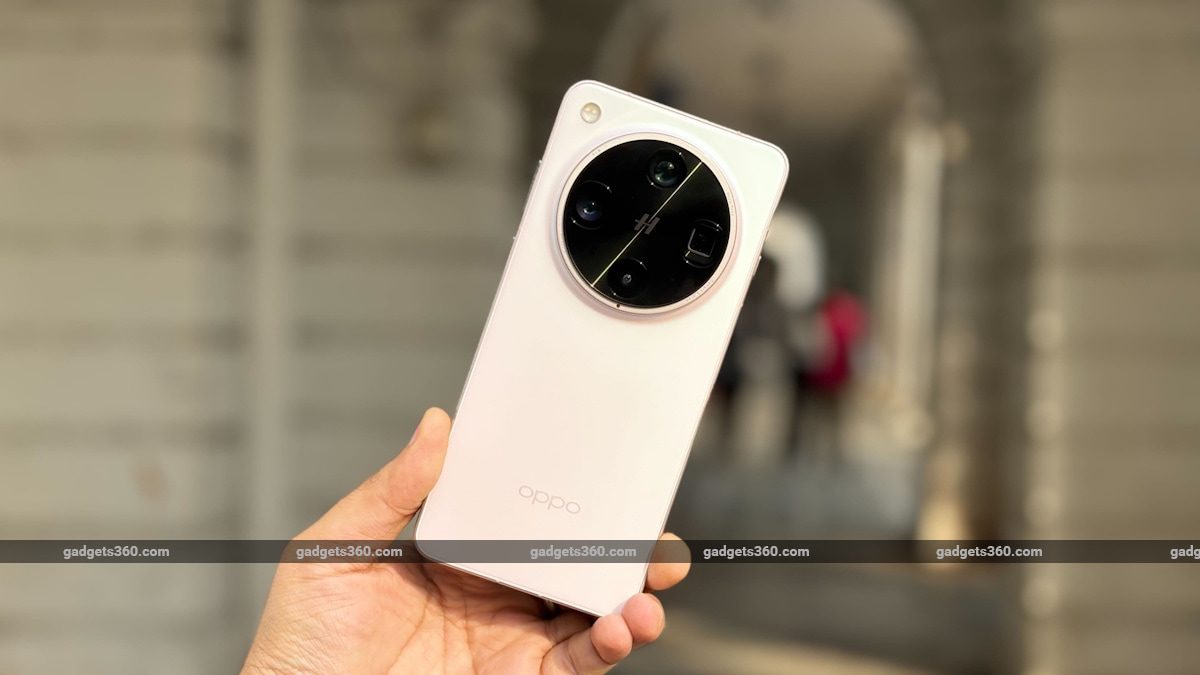
oppo find x8 ultra5 oppo-find-x8-ultra

It runs on ColorOS 15 based on Android 15

Oppo Find X8 Ultra: Initial Thoughts

Holding the Find X8 Ultra in your hand for the first time, and you will get a flagship smartphone feel right away. And, indeed, on paper, it is the best from Oppo yet. The company has launched the Ultra in Matte Black, Pure White, and Shell Pink colours. I got the Pink one, and the muted colour and matte surface enhance the overall look of the phone – pure elegance.

The 6.82-inch Quad HD+ AMOLED display is bright and crisp. The support for Dolby Vision enhances the multimedia experience. In the limited time I spent with the Find X8 Ultra, I loved reading or streaming videos on the display. But I will reserve my verdict on it till I get more time to test it.

oppo find x8 ultra2 oppo-find-x8-ultra

It sports a five-camera setup at the back that Oppo touts as the “Holy Trinity in your pocket”

Like some recent Oppo premium phones, the Find X8 Ultra also comes with the branding of Hasselblad, the legendary camera maker. Oppo (Hasselblad), Vivo (Zeis), and Xiaomi (Leica) – all three are tightly locked to their respective collaborations for cameras.

The Oppo Find X8 Ultra gets an all-new penta camera system featuring a 50-megapixel wide camera with a 1-inch Sony LYT-900 sensor, OIS, 10-bit HDR, f/1.8 aperture alongside a 50-megapixel ultra-wide camera with Samsung JN5 sensor, f/2.0 aperture. Another 50-megapixel Sony LYT700 sensor with 3X periscope telephoto camera, and the second telephoto camera – a 50-megapixel Sony LYT-600 with OIS, 120x digital zoom, and 6x periscope zoom. Lastly, a 2-megapixel colour sensor is used for a multispectral system. At the front, there’s a 32-megapixel Sony IMX809 sensor. On the video front, Oppo says that all four cameras at the back can shoot 4K 60fps Dolby Vision video, which is an impressive addition.

oppo find x8 ultra4 oppo-find-x8-ultra

The phone offers plenty of modes, including Hasselblad Portrait Mode

Talking about the quality of the images, the Find X8 Ultra is a capable smartphone, and the below samples are a great indicator. Plenty of details, accurate colours, and controlled noise are some of the highlights of the camera – this I could derive from the limited time I spent with the device as it has been with me only for a couple of days. But stay tuned for our full-fledged review to know what it gets in terms of camera upgrades over the Find X7 Ultra, which we said was a camera powerhouse in our review last year.

With the new Ultra launch, Oppo has also introduced Lumo, the next-gen image processing engine. The company talked about it during China’s unveiling and said that it is a major leap for smartphone photography, and the new image processing engine is aimed to improve clarity, speed, and colour accuracy. I will dive deeply into this in my review.


Oppo Find X8 Ultra camera samples (tap images to expand)

Boosting confidence in everyday usage are features like IP68 and IP69 ratings, and the company claimed the SGS five-star drop resistance certification – an interesting addition. The phone supports a 3D ultrasonic fingerprint scanner and is quick for daily use.

Like other big-shot flagships, the Find X8 Ultra also packs the Snapdragon 8 Elite chipset. And, in the limited time I spent with the Ultra, it seemed snappy. Of course, you can expect more in-depth details on the performance credentials in our review.

oppo find x8 ultra3 Oppo-Find-X8-Ultra

Oppo Find X8 Ultra packs a 6100mAh battery and supports 100W fast-charging

Oppo has also raised the bar for the battery department with its Ultra model. Compared to the competition, the Find X8 Ultra packs the biggest battery unit at 6100mAh battery and supports 100W SuperVOOC fast charging.

Overall, the Find X8 Ultra looks like a solid contender for the best camera phone of 2025 globally. Stay tuned to Gadgets 360 for an in-depth review of the Find X8 Ultra.

Posted on

BenQ launches two new 4K projectors – one promises theater-grade image quality, and one brings AI processing to home projectors

180-inch screens from just 4 metres away; designed for up to 200 inches AI-powered optimization of compressed streaming video HDR-PRO with HDR10, HLG, and HDR10+ BenQ has announced two new 4K projectors as part of its Home Cinema Series: the premium W5850, which is designed for theater-grade large screens; and the W4100i, which promises cinema-grade visuals for home theater rooms to rival the best projectors. The 2,600 lumen W5 is “designed for the ultimate cinematic experience”. It’s capable of up to 200-inch screens with a shorter throw ratio of 1.0 to 1.6. That enables it to deliver a 180-inch display from just four meters away. The W4100i has a 3,200-lumen LED light source, Android TV and AI Cinema Calibration mode, which BenQ says ensures “cinema-grade visuals” from streaming content. You may like (Image credit: BenQ) BenQ Home Cinema Series: key features Each of the Home Cinema Series projectors meets key industry standards including 100% DCI-P3, and Delta E<3 (with high-end models such as the W5850 achieving Delta E<2). There’s BenQ’s own HDR-PRO technology, which enhances contrast through multi-stage processing – Global Contrast Enhancer, Local Contrast Enhancer, and Dynamic Black – and the tech supports HDR10, HLG, and HDR10+. There’s built in noise reduction to enhance compressed streaming content, and the latest version of BenQ’s AI Cinema Mode. This is a real-time image composition analyzer that dynamically adjusts HDR, color saturation and sharpness, significantly improving the appearance of the compressed video content from the major streaming services. AI processing is big among the best TVs, but hasn’t made an impact on projectors much yet – that’s clearly starting to change. Sign up for breaking news, reviews, opinion, top tech deals, and more. Connectivity includes HDMI 2.1, SPDIF and eARC with support Dolby Atmos and 7.1 surround sound. There’s also a low-latency Fast Mode that promises a fast 17.9ms response time for movies, sports, and games. We only have UK pricing so far, with the BenQ W4100i set for a £2,999 (about $3,890 / AU$6,225) price, while the W5850 is set to cost £4,599 (about $5,960 / AU$9,550). You might also like

Posted on

Is the YouTube TV app missing from your Roku? You’re not alone, here’s how to fix it

Some Roku owners have seen the YouTube TV app disappear from devices Resetting the device doesn’t work, but some have found alternative fixes Google and Roku have yet to respond to the reports YouTube TV has rapidly become one of the best streaming services for live TV, particularly if you’re looking to replace cable with a service that’s available on a multitude of streaming devices. Over the past day, however, Roku users have noticed that the YouTube TV app has strangely disappeared from their devices. Not only has the YouTube TV app gone missing, but some users have spotted that it’s not available to reinstall either. This had led owners of Roku streaming devices to head to Reddit to share their experiences with the issue, with some swarming Roku forums and also Google’s support page. One of the first outlets to bring the issue to light was 9to5Google, which stated that the cause of the issue is still unconfirmed. We’ve reached out to Google to find out if there’s any update and will update this story if we hear back. You may like YouTube TV not loading on Hisense/Roku 55R7G5 from r/youtubetv The most frustrating part of YouTube TV’s app disappearance is that it’s taken a lot of trial and error for users to fix – and as it stands, neither Roku nor Google has come forward to address the problem. Searching for the app in the installed list on your Roku device doesn’t seem to help, and neither does resetting the device. But luckily, there seems to be alternative ways that users have found. How to recover the YouTube TV app on Roku (Image credit: Roku) According to a Roku community moderator, this issue can be resolved by checking for any Roku OS updates that may need installing. Updating the latest OS version has helped many users restore the YouTube TV app. For those who have already downloaded the most recent version of Roku OS whose YouTube TV app is still missing, Android Police says that you can still use the standard YouTube app to access YouTube TV’s channels. When you open the left-hand menu, scroll down to the bottom and you’ll find an option for YouTube TV. Sign up for breaking news, reviews, opinion, top tech deals, and more. Over the past few months, YouTube has been teasing updates including two new features that allow users and creators to comment and interact with videos, and also a big Netflix update. It’s unclear whether this recent issue is related to YouTube TV’s possible upgrades, but we’ve asked Google for any insights and will update this story if we get a response. You might also like

Posted on

Xiaomi 15 Ultra Review: The Super Leica Phone

The 15 Ultra, Xiaomi’s third-generation camera-focused smartphone, is a strong contender in the segment that appeals to camera enthusiasts in India. Premium smartphone consumers are spoilt for choice today, especially if there’s an inclination to get a phone that nails smartphone photography. In the long list of phones available today, including the Xiaomi 15 Ultra and Xiaomi 15, there are other options like Vivo X200 Pro, Vivo X200, Oppo Find X8, and Oppo Find X8 Pro.

If anyone had asked me about which camera-focused phone to buy almost five years ago, I would have recommended the iPhone or Samsung’s top-tier models to users. But that is no longer the case. That means the segment is expanding and is a win-win situation for consumers.

The new Xiaomi 15 Ultra continues the good work achieved by its predecessor – Xiaomi 14 Ultra – by being a very effective evolution (and if we take Xiaomi 13 Pro also into consideration). Xiaomi has done a great job by sticking to the winning formula and making sure there’s the Leica branding on it. That’s more than a winning badge of honour for a category focused on photography, and having the legendary camera maker logo is more than just reassuring.

So, if you are out in the market and want to buy a camera flagship smartphone, should you pick the Xiaomi 15 Ultra? Let me answer that in my review.

Xiaomi 15 Ultra Design: Mimics Classic Leica Camera

  • It comes in a single Silver Chrome colour
  • It weighs 229 grams and is on the heavier side
  • The 15 Ultra measures 9.48mm thick

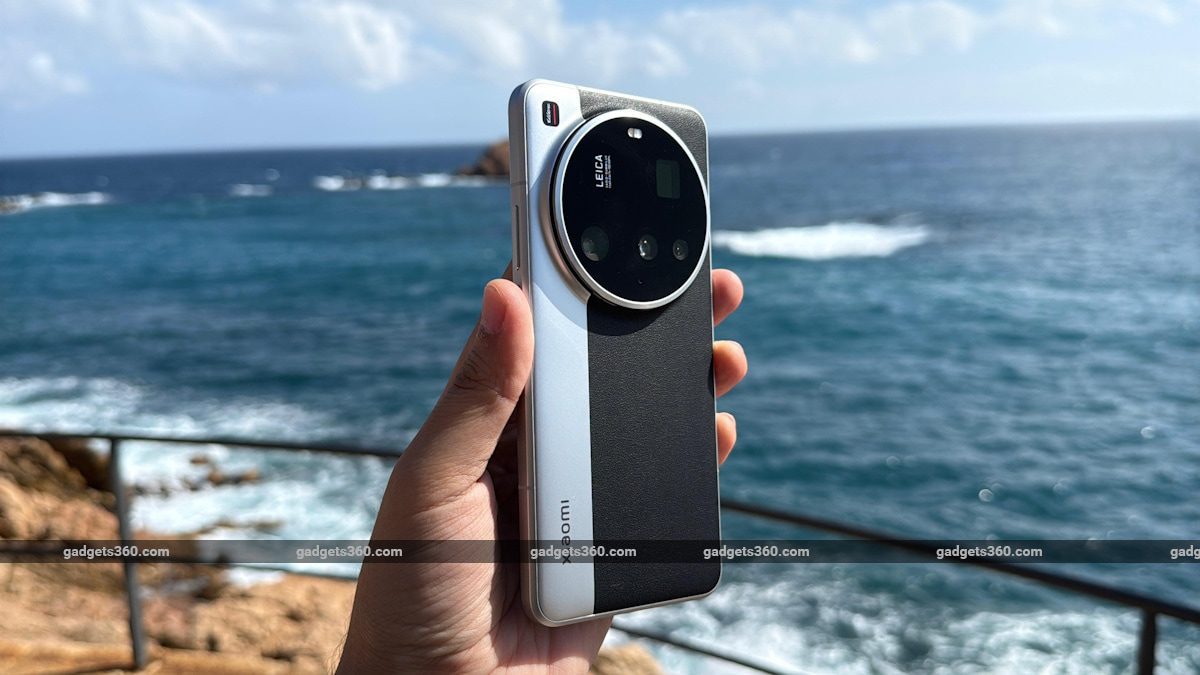
You don’t need to be an expert to tell that the Xiaomi 15 Ultra is aimed at camera enthusiasts. Iconic looks and legendary Leica rangefinder camera series-inspired aesthetics are on point, making the 15 Ultra stand out in the market. The rear sports an aerospace-grade glass fibre and PU leather combination, offering a premium and classic look. The unibody frame of the 15 Ultra feels solid and gives an excellent in-hand feel.

xiaomi 15 ultra gadgets360 review2 xiaomi-15-ultra

Xiaomi 14 Ultra (on the left) and Xiaomi 15 Ultra (on the right)

For someone who may be picking a camera-focused smartphone, the camera deco at the back of the 15 Ultra could be too much. The four cameras fit into a large circular camera module. At 229 grams, the Xiaomi 15 Ultra is on the heavier side, and it took me a few days to get familiar with the device and start using it more with just one hand. The aesthetics are excellent, and thanks to the rear design (PU leather + glass fibre combination), it works well for a one-hand grip.

For enhanced protection from accidental drops and daily wear and tear, Xiaomi has gone a notch above for the 15 Ultra and used the Xiaomi Guardian Structure, which utilises an aluminium frame, Corning Gorilla Glass 7i for the camera deco, and the Xiaomi Shield Glass 2.0 on the front.

xiaomi 15 ultra gadgets360 review3 xiaomi-15-ultra

Rear design comparison: Xiaomi 14 Ultra (on the left) and Xiaomi 15 Ultra (on the right)

The quad-curved display adds to the character of the device, and thin bezels make it ideal for multimedia consumption. The phone also gets an IP68 rating for dust and water ingress protection. While many users may start nitpicking Xiaomi for not adding an IP69 rating to the Ultra, I don’t see any point in this unless you really like to use your phone around water jets. Yes, it’s good to have on your spec sheet, but I don’t think you are missing a lot. Xiaomi 15 Ultra also switches to an ultrasonic fingerprint scanner from the optical we got on its predecessor.

One thing I absolutely love about the Xiaomi 15 Ultra is its attention to detail. The addition of the Ultra hallmark at the back (top left) adds to the appeal and makes the design impeccable for a camera enthusiast. 

Overall, the 15 Ultra is the purest camera phone for enthusiasts.

Photography Kit Legend Edition – How can we talk about the design and not bring up the exclusive Photography Kit for the 15 Ultra? The camera-inspired accessory adds more firepower to the already powerful Xiaomi 15 Ultra. The kit includes a detachable shutter button and thumb support, along with a 2000mAh battery pack that offers more juice while you’re busy snapping photos or videos. The kit also includes a grip case that enhances the overall look and feel of the phone. Then, there’s a customisation dial for adjusting EV, shutter, ISO and white balance, the zoom lever adds a new dimension to the overall zooming experience. The nice touch is a quick video button that instantly starts video recording and lets you customise aspect ratio, auto exposure, and more. The kit also enables a customisable UI style Fastshot mode for quick shots, and the entire package is IP54 rated (including the battery pack). While the kit definitely adds value to the entire proposition, I can’t deny that it makes the whole package kind of cool and makes the phone a head-turner in every way.

xiaomi 15 ultra gadgets360 review4 xiaomi 15 ultra

The phone comes in a Silver Chrome colour option and weighs 229 grams

Long story short, if you’re someone who really wants to unlock the beast photography mode on your 15 Ultra, then go for the kit.

Xiaomi 15 Ultra Display: Straight to the Top of the Class

  • Offers 3200nits peak brightness
  • Supports HDR10+ and Dolby Vision
  • Xiaomi Shield Glass 2.0 protection

The 15 Ultra retains the display from its predecessor, and it is among the best we have seen on a Xiaomi device yet. There’s one big addition, and that’s for peak brightness. From 14 Ultra’s 3000nits peak brightness, Xiaomi has bumped 15 Ultra to 3200nits. In real-world usage, you may not be able to tell the difference, but having a higher number for brightness is good. This helps Xiaomi beat most of the competition in the market, like Pixel 9 Pro XL (3000nits peak brightness), Samsung Galaxy S25 Ultra (2600nits), and even iPhone 16 Pro Max (2000nits). However, it stays behind Vivo X200 Pro (4500nits), Find X8 Pro (4500nits), and OnePlus 13 (4500nits).

xiaomi 15 ultra gadgets360 review5 xiaomi-15-ultra

It features a 6.73-inch LTPO display with a 1440×3200 pixels screen resolution

The display also features an adaptive 120Hz refresh rate that can go down to as low as 1Hz. The phone gets the rest of the bells and whistles one expects from a flagship-grade Android smartphone, including HDR10+ and Dolby Vision support. It also supports Widevine L1 so you can watch HDR content on popular OTT apps.

The 6.73-inch OLED display of the 15 Ultra serves as an excellent multimedia screen for your gaming, binge watching or Internet browsing. It also gets 1920Hz PWM dimming, DC dimming, and wet touch tech, which comes in handy while using the phone with sweaty hands. Apart from all these, the 15 Ultra also gets TUV Rheinland Low Blue Light and similar certifications to make your bedtime reading on your phone convenient. Overall, the 15 Ultra sports a brilliant display; you won’t be left demanding more.

xiaomi 15 ultra gadgets360 review7 xiaomi-15-ultra

The biggest highlight of the display is it supports 3200nits peak brightness

Xiaomi 15 Ultra Cameras: The Company’s North Star

  • 50-megapixel Leica 23mm primary camera (1-inch LYT-900 image sensor)
  • 200-megapixel ultra Leica telephoto with 100mm equivalent focal length
  • 50-megapixel 70mm Leica floating telephoto
  • 50-megapixel ultra-wide camera with 115-degree field of view
  • 32-megapixel in-display selfie camera

The 14 Ultra was a solid phone for photography last year, so the biggest doubt I had about the 15 Ultra was how it would surpass its predecessor. There are some additions to the 15 Ultra, like the new 200-megapixel telephoto sensor, that add muscle to the overall package, and mind you, none of the competitor devices have that sort of capability. You get 0.6x, 1x, 2x, 3x, and 4.3x zoom options on the camera app. However, there is one little downgrade: omitting the variable aperture on the 15 Ultra, but that isn’t a deal-breaker by any means.

So, let’s jump to the camera samples, starting with daylight SAMPLES. The Xiaomi 15 Ultra can click brilliant daylight photos with plenty of detail, accurate exposure and a wide dynamic range. The colour science of Leica is evident in the results and is simply too good for smartphone photography enthusiasts. The colours are natural and appear crisp. The skin tones are natural, too, and there’s barely noise in daylight photos.

xiaomi 15 ultra gadgets360 review8 xiaomi-15-ultra

The company is selling the Photography Kit Legend Edition separately for the Xiaomi 15 Ultra

Switching between 1x and 2x doesn’t spoil photo quality – an impressive feat. The samples captured using the 2x lens are equally remarkable.


Xiaomi 15 Ultra daylight camera samples (tap images to expand)

The portrait mode is a kind of USP of the Xiaomi Ultra devices, and 15 Ultra nails it. Portraits with people come out well, and depth estimation, subject isolation and natural blur are effortless.

Xiaomi 15 Ultra portrait camera sample (tap image to expand)

When it comes to zoom performance, the Xiaomi 15 Ultra will surely be among the top phones this year. I managed to click a ship in the ocean that was barely visible on the phone camera at 0.6x with the help of the long-range tele camera. When premium phones like the iPhone lost track of the subject beyond 25x zoom, the Xiaomi 15 Ultra impressed me with its strong zoom credentials. If you’re someone who clicks many zoom photos, just grab this one. The 3x zoom photos come out well with amazing colours, dynamic range, low noise, and details. The 4.3x telephoto is even better for portraits and gives you enough room to fit your subject in the frame. The results are below, and I was blown away by what the 15 Ultra can achieve with this terrific combination.

A ship in the ocean appears like a dot in 0.6x (tap image to expand)

The ship is visible with the name being readable, showing the 15 Ultra’s zooming capability

Xiaomi 15 Ultra zoom samples (tap images to expand)

The phone is also capable when it comes to close-up photos, and a 3x telephoto lens is used for that. Excellent close-up pictures with enough details and natural-looking shots with accurate colours.

Xiaomi 15 Ultra is also a capable smartphone for close-up shots (tap images to expand)

In this entire ensemble, the ultrawide camera on the 15 Ultra is the only one that could have been slightly better. Mind you, it is not a letdown and can reproduce some pleasant photos with excellent dynamic range. It’s just that when you compare ultrawide with the main camera, it slightly lacks overall quality.

Xiaomi 15 Ultra ultrawide samples (tap images to expand)

Of course, there are Leica photographic styles – Leica Authentic and Leica Vibrant – to spice up your portraits and take the upper hand on social media platforms.

Xiaomi 15 Ultra low-light samples (tap images to expand)

This is where it gets really interesting. The night photography on the Xiaomi 15 Ultra is fantastic. The phone is capable of capturing high levels of detail in low-light situations. During my testing, the 15 Ultra mostly maintained highlights, sharpness, shadows, and details and kept noise in check in low-light conditions. The phone was also capable of keeping fine textures in check.

Xiaomi 15 Ultra selfie sample (tap image to expand)

If there’s one department where I could really ask the Xiaomi team to improve in the camera department, it has to be a selfie shooter. It’s not bad, but it’s not remarkable too. For a phone made for smartphone photography enthusiasts, you expect more from every camera sensor. The front camera is capable during the daytime with no major issues with details, but in the low-light scenarios, it gets a bit unpredictable.

Of course, the camera phone is also built for videos. It supports 4K 60fps log video recording across all focal lengths and 4K 120fps cinematic slow motion video recording with both the main and periscope telephoto cameras. The video quality is top-notch, but how much would a content creator want to bring it into their daily workflow will depend on the ecosystem of devices for quicker video editing.

Overall, the Xiaomi 15 Ultra will be the camera smartphone to beat in 2025, and I’m guessing competition, including the likes of Oppo and Vivo, are already working on new Ultras. The 14 Ultra is already a capable smartphone for photography, but with the 15 Ultra, it’s been pushed to the extreme with two tele cameras. It’s the ultimate point-and-shoot smartphone for enthusiasts. If you want to raise the stakes, spend some more and grab the Photography Kit Legend Edition for the 15 Ultra that takes you to another level.

Xiaomi 15 Ultra Performance: Boringly Brilliant

  • Snapdragon 8 Elite Mobile Platform
  • 16GB + 512GB (single variant)
  • HyperOS 2.0 based on Android 15
  • 4 years of software support and 6 years of security updates promised

Xiaomi 15 Ultra is among a handful of devices launched this year with Qualcomm’s top-end Snapdragon 8 Elite platform. In everyday usage, there’s barely anything that this phone can’t handle, be it multitasking, streaming videos, photo editing on the go, video editing, gaming or anything else you can think of. For context, I tested the phone with almost 32 apps open in the background, and even when jumping between them, it didn’t stutter – absolutely top-tier performance – as expected.

The phone ships in a single RAM and ROM variant in India – 16GB and 512GB storage. However, Xiaomi sent me a 1TB variant, only available in China, for review. Talking about specifics, the 15 Ultra gets LPDDR5X and UFS 4.1 storage.

xiaomi 15 ultra gadgets360 review11 Xiaomi-15-ultra

In India, the phone is available in single RAM and storage trim – 16GB + 512GB

Talking about biometrics, the ultrasonic fingerprint sensor is quick compared to the one we saw on the 14 Ultra. There’s also face unlock, which works well, but I preferred the fingerprint sensor during the review for daily use. For people who love gaming, there’s a 3D Dual-Channel IceLoop system which helps cool down the phone. In my time with the device, I noticed that the 15 Ultra did heat up while running Google Maps for continuously 45 minutes or more, gaming for more than 40 minutes, and even while camera use for more than 25 minutes. But, it never became too challenging to handle, and of course, the cooling system kicked in quickly.

I tested the Xiaomi 15 Ultra with a suite of benchmarking apps, and as expected, the phone shines with impressive scores, which you can check below.

Benchmark Xiaomi 15 Ultra iPhone 16 Pro Max Samsung Galaxy S25 Ultra Google Pixel 9 Pro XL
Geekbench 6 Single 2,980 3,203 3,053 1,944
Geekbench 6 Multi 8,870 7,846 9,832 4,667
AnTuTu v10 25,19,481 15,87,059 21,23,303 10,67,971
PCMark Work 3.0 18,189 N/A 19,266 12,922
GFXB T-rex 120fps 59fps 120fps 120fps
GFXB Manhattan 3.1 306fps 59.7fps 115fps 105fps
GFXB Car Chas 120fps 59.4fps 94fps 55fps
3DM Slingshot Extreme OpenGL Maxed Out N/A Failed to run Failed to run
3DM Slingshot Maxed Out N/A Failed to run Failed to run
3DM Wild Life Maxed Out 8,942 Maxed Out 8,902
3DM Wild Life Unlimited Failed to run N/A 23,683 9,294

Calling on the 15 Ultra was clear, and I faced no issues with 5G connectivity with Airtel and Jio networks. I love typing on the 15 Ultra as it packs an excellent haptic motor that is amazing for typing, texting, and gaming.

The phone features stereo speakers and comes with Dolby Atmos support. The setup is the usual one, with one at the bottom firing down and another built into the earpiece. The speakers are loud and sufficient to fill a medium-sized room.

Moving to the software side of things, the Xiaomi 15 Ultra ships with Android 15-based HyperOS 2.0 out-of-the-box. Xiaomi promises 4 Android updates and 6 years of security updates for the 15 Ultra, which may not be as comprehensive as what Samsung and Google offer for their devices. But, keeping in mind the phone change cycle, anything above 3 years is good support from the company side.

xiaomi 15 ultra gadgets360 review12 Xiaomi-15-ultra

The new aerospace-grade glass fibre and PU leather back make a great rear design

The HyperOS 2 feels the same as HyperOS 1, albeit with some neat additions for overall optimisation and AI features. Now, you can check notifications and quick toggles on the control centre separately, like on iOS. You get plenty of customisation options for your home screen and lock screen.

Then, there’s a suite of Google features like Gemini Access and Circle to Search. For me, Circle to Search has been the coolest addition by Google lately and just makes things to search instead of typing it all. Xiaomi also bakes in plenty of AI features, namely AI writing, which provides proofreading and summarising your writing features; AI Gallery Editor, which offers image editing tools powered by AI; and AI speech recognition, which provides features like transcription and more. There are more features like Interpret Conversations with AI, AI Interpreter, and AI subtitles. It’s good to have a full-blown AI suite to help you be more productive.

But, the AI features in HyperOS 2 still need refinement. The AI-powered post-processing image editing tools like Object Remover lack polish, and I ended up with not-so-great edits. The same was true with some recorded conversations, and the speech recognition feature almost lost track of the recorded conversation and showed a random summary. This is not just Xiaomi but practically every other major OEM. Even Apple has failed to nail its much-hyped Apple Intelligence features. I hope 2025 is when AI features get advanced and do what they are expected to do with more finesse.

xiaomi 15 ultra gadgets360 review9 Xiaomi-15-ultra

The rear design of the 15 Ultra makes it stand out in the crowd

Xiaomi 15 Ultra Battery: Exceeds Expectations

  • 5410mAh Battery
  • 90W HyperCharge
  • Fully charges in less than an hour

The battery department is another one where there is a significant incremental update compared to the predecessor. The 15 Ultra packs a 5410mAh battery, which is way more than what we got on the 14 Ultra (5000mAh).

In our internal video loop test, the 15 Ultra ended up with impressive figures of over 20 hours of continuous video playback, thus putting it among the top devices we tested in 2025 and late 2024. The phone ships with a 90W adapter and is among a handful of devices that still get a charger in the box. It can fully charge (from 0 to 100 percent) within an hour, but the device gets heated up – a compromise you make to get additional charging speeds. It’s worth noting that the device comes with standard wired charging mode enabled by default, which usually means it will take more time to charge fully. For quicker charging, you must opt for “Top Speed.”

xiaomi 15 ultra gadgets360 review10 xiaomi-15-ultra

The phone comes with 90W fast-charging support that can charge the phone fully within an hour

In real-world usage, the bump in battery capacity gives the Xiaomi 15 Ultra some edge over competition devices like Pixel 9 Pro XL and the like. With heavy usage, which included significant camera app usage, the phone lasted over a day, included an hour of gaming, calls lasting about an hour, browsing, streaming, image editing on the go, Instagram, X, and other work-related apps open in the background at all times. During the review, I got over seven hours of screen-on time on the 15 Ultra, which is impressive.

Overall, the Xiaomi 15 Ultra exceeded my expectations in terms of battery output.

Xiaomi 15 Ultra Verdict

The Xiaomi 15 Ultra is a sensible camera phone that is done very, very well and will be a solid contender in next year’s best smartphone camera category at our NDTV Gadgets 360 Awards.

It is packed to the brim with features like Snapdragon 8 Elite that handles all performance needs efficiently, a fantastic camera setup tuned with legendary camera maker Leica, a large 5410mAh battery, 90W HyperCharge support, and much more. The idea of selling the Photography Kit Legend Edition separately is well-timed and should appeal to true Xiaomi fans and camera enthusiasts.

xiaomi 15 ultra gadgets360 review6 Xiaomi-15-ultra

Xiaomi 15 Ultra is also a great device for gaming and can handle games like BGMI, COD: Mobile at high graphics settings

The 15 Ultra is available at Rs. 109,999 on Amazon, Mi.com and through the company’s offline channel partners. The company is running some bank offers that can bring down the price of the smartphone to under a lakh, which makes it a sweet deal. Of course, if you are a pro and want to add the Photography Kit Legend Edition, add another Rs. 11,999. Overall, you get a solid smartphone camera built to last a few years at around Rs. 1,21,998 minus any offers.

Compared to some rivals, the Xiaomi 15 Ultra (plus Photography Kit Legend Edition) costs less than the Samsung Galaxy S25 Ultra (Review), which is available at Rs. 141,999 and iPhone 16 Pro Max (Review) available at as low as Rs. 137,900 on Amazon. There are some cheaper alternatives, like the Vivo X200 Pro (Review), available at Rs. 94,999, and the Find X8 Pro (Review), retailing at Rs. 99,999.

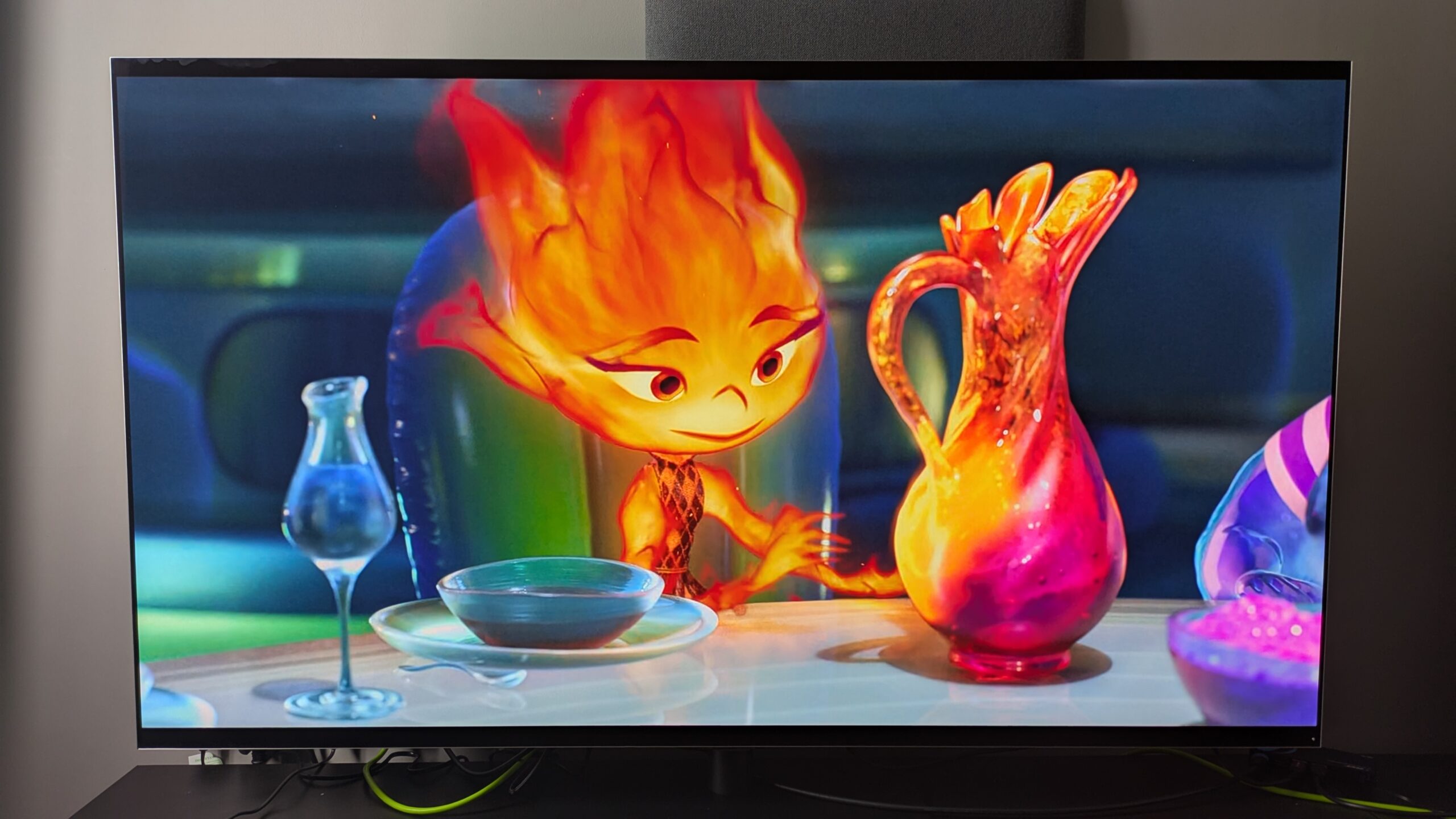
Posted on

The LG C4 is the best OLED TV you can buy and it’s dropped to a record-low price at Amazon UK

Let me cut to the chase. You can pick up the LG C4 65-inch OLED TV at Amazon for only £1,135 (was £1,899). That’s one amazing price for one of the best TVs around. The best price requires you to apply the £215 voucher, but that’s as simple as checking the box underneath the price before adding it to your basket. This 2024 display boasts the latest OLED technology and takes pride of place as the most versatile display in our best TVs guide. This accolade is thanks to its impressive gaming capabilities, incredible picture quality, and intuitive smart TV platform. That means it covers all the bases in a way that few TVs do. Today’s best LG C4 OLED TV deal The LG C4 went straight into our best TV guide as the most versatile option right now. That’s how much we loved it. Building upon the LG C3 OLED, the C4 delivers a range of improvements over its predecessor, including better image quality, four HDMI 2.1 ports with 4K 120 Hz compatibility, and a new AI chip. What a lineup! This is everything you could ever want from a TV. All gamers need to do is plug in their games console, kick back, and enjoy buttery smooth graphics. And after a long gaming session, this TV has everything required to deliver your favourite TV shows and movies in top quality with impressive colours, contrast and lighting. Our reviewer sums up well how much of a bargain this TV is: “While it’s not LG’s priciest TV, the C4 is still a premium model with a premium design and features. You can buy mini-LED TVs with the same screen size for less than the LG C4, but the C4’s excellent picture quality and mid-range (for an OLED TV) price make it a very compelling choice.” If you want to compare this to other options, there are loads of TV deals available right now. If it’s OLED technology that you’re looking for, then we also have an OLED TV deals page. If you’re also interested in a soundbar, we have a number of soundbar deals to take a look at too.