Posted on

Supermassive Black Hole Flashed Twice in a Rare Event, Scientists Explain the Reason

Astronomers recently observed a rare cosmic event where a supermassive black hole, located approximately 408 million light-years away, consumed one star from a binary system while the other narrowly escaped. This unusual phenomenon, known as a double-flash tidal disruption event (TDE), occurred in the galaxy WISEA J122045.05+493304.7. These powerful events, visible from billions of light-years away, typically involve a single flare, but the designated event ASASSN-22ci is notable for producing two flares, sparking interest in its origins and implications for black hole research.

A Unique Event Observed

According to a study published in the pre-print journal arXiv, ASASSN-22ci was first detected in February 2022, appearing as a typical TDE. However, a second flare was observed 720 days later, making it one of the few documented instances of repeated TDEs.

Researchers theorise this might have resulted from a process called Hills capture, where a supermassive black hole disrupts a binary star system. In such cases, one star is ejected at high velocity, while the other remains bound in an elongated orbit around the black hole, undergoing repeated tidal disruptions.

Investigating the Black Hole’s Activity

Data from ultraviolet and X-ray observations revealed the black hole responsible for ASASSN-22ci has an estimated mass of about three million times that of the sun. While the star involved in these flares likely has a mass similar to the Sun, it remains uncertain if it had a companion that escaped. Scientists believe the similarity between the two flares indicates that the same star might have been disrupted twice during its orbit.

Looking Ahead to 2026

Researchers predict a third flare could occur in early 2026 if the star survives another close encounter with the black hole. This anticipated event would provide astronomers with a rare opportunity to observe and study the earliest phases of a TDE in unprecedented detail, shedding light on the mechanics of black hole interactions with stars

Posted on

Antarctic Ice Sheet Melting May Intensify Volcanic Eruptions, Study Finds

The melting of Antarctic ice sheets could be leading to more intense volcanic eruptions, with significant implications for Earth’s geological systems. As ice sheets reduce in size, the massive weight they exert on the Earth’s crust diminishes, a process that impacts magma chambers beneath the surface. This pressure alteration may result in increased volcanic activity, particularly in regions like the West Antarctic Rift System, where over 100 volcanic centers are located.

Volcanic Activity Linked to Ice Loss

According to a study published in Geochemistry, Geophysics, Geosystems, the melting of ice sheets triggers a process known as isostatic rebound, which reduces the pressure on subsurface magma chambers. Researchers, including Allie Coonin, Ph.D. candidate at Brown University, modeled these changes over the past 150,000 years. The findings reveal that this pressure reduction not only accelerates magma chamber expansion but also hastens volatile expulsion, a critical step preceding eruptions.

Global Comparisons Confirm the Phenomenon

As reported by phys.org, evidence supporting this link was found in volcanic deposits from the Andes mountains in South America. Researchers identified a correlation between the melting Patagonian ice sheet during the Last Glacial Maximum and heightened activity in volcanoes such as Calbuco and Puyehue-Cordon Caulle. This suggests that similar mechanisms are at play in multiple regions globally.

Feedback Loops Pose Long-Term Risks

The interaction between melting ice and volcanic eruptions may create a feedback loop. Eruptions induced by ice loss can, in turn, accelerate melting, amplifying both processes. Scientists caution that even if anthropogenic climate change were halted immediately, the current effects of ice mass loss in regions like Antarctica would influence volcanic activity for thousands of years.

Understanding these connections is crucial for predicting future geological and environmental impacts. The study highlights the complex interplay between Earth’s ice sheets and its volcanic systems, underscoring the far-reaching consequences of climate-driven changes.

For the latest tech news and reviews, follow Gadgets 360 on X, Facebook, WhatsApp, Threads and Google News. For the latest videos on gadgets and tech, subscribe to our YouTube channel. If you want to know everything about top influencers, follow our in-house Who’sThat360 on Instagram and YouTube.

Gears of War, Hellblade 2 and More Xbox Games to Launch on PS5 in 2025: Report

Top Deals on Midrange Smartphones During Amazon Great Republic Day Sale

Posted on

Will Your Network Traffic Analysis Spot Today’s Threats?

Network traffic analysis (NTA) is the practice of monitoring and interpreting the data flowing across your network to ensure performance, reliability, and security. Companies rely on a mix of tools — ranging from packet sniffers and flow analysis software to advanced NDR systems — to gain visibility into their network’s behavior.

This guide explores the types of NTA solutions available, the key features that provide visibility and control over your network, and where related technologies like NDR tools fit into a modern, secure network strategy.

But first, I want to start with a few red flags that tell you network traffic is hiding performance bottlenecks, sophisticated cyber threats, or both. Relying on yesterday’s tools can mean missing critical warning signs.

Seven signs you should revamp network traffic analysis

Ideally, network traffic analysis (NTA) gives administrators a clear, real-time view of how data moves across their network. It helps them spot performance issues, track resource use, and identify potential security threats before they become serious problems.

When NTA tools and strategy leave critical blind spots, it will fail to detect performance issues, security threats, or unexpected traffic patterns that could disrupt operations.

Below are some warning signs and scenarios that warrant a review of your current approach and may indicate the need for strategic retooling of your network traffic analysis. Red flags include:

  1. Security incidents or suspicious activity: An uptick in network breaches, unauthorized access, or unusual traffic flows (e.g., data exfiltration attempts or DDoS attacks) indicates that your current strategy may not be adequately monitoring threats or alerting you in real-time.
  2. Unpredictable traffic spikes: If you notice unexpected increases in traffic, such as during off-hours or periods when there should be low activity, it could indicate an issue with how traffic is being managed or even malicious activity. If unpredictable spikes persist, re-evaluate your performance monitoring and threat detection tools to confirm they are giving you full visibility.
  3. Lack of visibility into specific traffic types: If your existing tools or strategy don’t provide clear insight into specific types of traffic — like VoIP, streaming, or encrypted data — it may be time to upgrade to a more sophisticated solution that offers deep packet inspection and greater granularity.
  4. Inconsistent reporting or alerts: If your current system isn’t providing consistent, actionable reports or timely alerts, it’s a sign the network traffic strategy might be outdated or improperly configured. Review your thresholds, detection rules, and alerting policies.
  5. Changes in network infrastructure or traffic demands: As network infrastructure evolves (e.g., shifting to cloud services, remote work, or increased IoT), it’s crucial to ensure that your NTA tools and approach are adapted to these changes, ensuring seamless traffic monitoring and management.
  6. Disconnected network data: If your NTA tools aren’t integrating well across various network segments or systems, it might be hard to get a full picture of network performance or security threats. A unified approach to traffic analysis may be required for better insight.
  7. Compliance or regulatory changes: If new compliance regulations or industry standards (such as GDPR or HIPAA) affect data protection and privacy, it may be necessary to review your NTA strategy to ensure it meets those requirements and avoids potential penalties.

There are other warning signs I haven’t captured here, and new zero-day exploits are emerging everyday.

Taking a proactive approach with NTA is a wise idea. Operating with less than full visibility into your network traffic is asking for trouble — both performance and security are at stake.

After all, once they have access to your network, it only takes two days for attackers to own your data.

What makes improving network traffic analysis so difficult?

As NTA technology evolves, it becomes increasingly powerful and capable of identifying sophisticated threats.

But these enhanced capabilities come with a major caveat: you need some really highly-paid IT resources in-house. The more advanced the tool, the higher the level of experience, expertise, and manpower required to effectively operate and manage it.

A basic network for a single office may be relatively straightforward to implement and monitor with minimal expertise. A large network with cutting-edge NTA platforms requires skilled security professionals who can interpret intricate data, respond to threats quickly, and fine-tune the system to adapt to new attack techniques and ransomware trends.

These factors make powerful NTA solutions more resource-intensive, demanding both skilled personnel and ongoing training to maintain their effectiveness. Organizations must consider not just the technological capabilities of an NTA solution but also the capacity of their team to manage and maximize its potential.

Types of network traffic analysis tools

Network traffic analysis tools are essential for monitoring and optimizing data flow across a network. They help identify bottlenecks, troubleshoot issues, and ensure efficient use of resources. The main categories of network traffic analysis tools are:

  • Packet sniffers: These tools capture and analyze raw network traffic at the packet level. Common tools, like Wireshark, provide deep insights into the types of data being transferred and help identify issues like packet loss or protocol mismatches.
  • Flow analysis tools: Tools such as SolarWinds and NetFlow Analyzer track flow data, which shows how traffic moves through a network in terms of sessions or connections. These tools focus on aggregate data, such as bandwidth usage, which helps in understanding overall network performance.
  • Network performance monitors: These tools, like PRTG Network Monitor, analyze both traffic and overall network health, including latency, throughput, and device status. They provide real-time monitoring and alerting features to track performance trends and detect anomalies.
  • Intrusion Detection Systems (IDS): These tools, such as Zeek and Snort, monitor traffic for signs of suspicious activity, such as unauthorized access or attacks. They focus on the security aspect of network traffic by analyzing patterns and behavior.

Many of the top tools for network traffic analysis combine multiple functionalities into a single platform. Some examples of “all-in-one” tools include SolarWinds NPM and PRTG Network Monitor, which provide comprehensive solutions for both monitoring and analyzing network traffic.

SEE: Check out this SolarWinds NPM review and this PRTG Network Monitor review to learn more about them. 

These platforms typically integrate packet sniffing, flow analysis, performance monitoring, and even security features into one interface, making them highly efficient for organizations that need a broad view of their network performance and security.

On the other end of the spectrum, you will be able to find some free tools that can do some of these jobs — albeit in a limited fashion with many upsells for their paid tool.

One last thing to note: You will still have to implement a separate Network Detection and Response (NDR) solution to effectively harden network security. The “all-in-one” NTA tools have limited NDR capabilities — most organizations use both to guard against Advanced Persistent Threat (APT) attacks.

Key network traffic analysis features

Focus on the features that will help you achieve the core goals of network traffic analysis: increasing visibility, optimizing performance, ensuring security, and maintaining operational efficiency.

These are five of the most important all-around features I think most people will be interested in. They are also features where depth varies from vendor to vendor.

1. Real-time monitoring and alerts

The ability to monitor network traffic in real time and receive alerts about unusual behavior or performance degradation is essential for proactive troubleshooting and immediate response.

Most NTA solutions offer real-time monitoring and alerts — a good solution minimizes alert fatigue by prioritizing actionable insights. Look for tools that provide context-aware alerts with relevant details and allow for customizable thresholds to suit your network’s unique needs.

Another way to reduce false alarms and endless alerts is using an NTA solution with alert correlation and grouping, which can consolidate related notifications. This can help your team stay focused on the right problems instead of being overwhelmed by redundant or low-priority alerts.

2. Automated traffic classification

Many NTA tools can perform basic traffic categorization, such as distinguishing between general data types like HTTP, DNS, or FTP. A more powerful automated traffic classification feature goes beyond basic categorization by offering granular identification of applications, protocols, and data types, ensuring precise resource allocation.

For example, advanced NTA tools can recognize and categorize specific applications, like identifying Microsoft Teams traffic versus general web browsing. This be critical for identifying where spikes in traffic originate, for example, and make it easier to prioritize discrete  resources and improve overall network performance.

3. Detailed reporting and historical data

The ability to generate detailed, customizable reports enables teams to track trends over time, identify recurring issues, and make data-driven decisions for capacity planning or resource allocation. Historical data is particularly valuable for diagnosing intermittent problems and conducting post-incident reviews, offering a clearer picture of what occurred and why.

4.  In-depth visibility and decryption

Don’t let encryption hide malicious activity. Choose an NTA solution that analyzes both encrypted and unencrypted traffic to uncover hidden threats within data tunnels. Also, look for capabilities that go beyond packet headers to analyze protocols, applications, and user behavior to provide detailed insight into network activity. Always pick an NTA that tracks lateral movement to expose adversaries moving through side channels and prevent threats from going undetected within your network.

5. Integration with other network management tools

Integration with other network management solutions, such as network performance monitoring (NPM) and Security Information and Event Management (SIEM) systems, is vital for creating a unified view of your network’s health.

If the goal is to increase visibility, don’t let network tools live in silos.

There are many additional capabilities, from advanced anomaly detection to customizable dashboards, that can help tailor the tool to your network’s unique needs. The key is not just in selecting the right features, but in using them effectively to gain actionable insights into your network’s performance and security.

At the end of the day, the most powerful tool is the expertise of the team using it.

The real value of your NTA solution lies in how well your professionals understand and leverage its features. As you move forward, trust that the combination of advanced technology and your team’s knowledge will provide the insights needed to stay ahead of evolving threats and optimize network performance with confidence.


Posted on

Poco F7 Pro, Poco F7 Ultra Reportedly Listed on Indonesia Telecom Site; Could Launch Soon

Poco F7 Pro and Poco F7 Ultra could be launched soon, as the handsets have reportedly appeared on a regulator’s website. Although the Xiaomi sub-brand is yet to announce a specific launch timeline, they have been listed on the Indonesia Telecom certification site revealing their model numbers. The Poco F7 Pro is expected to debut as a rebranded Redmi K80. It is likely to run on a Snapdragon 8 Gen 3 chipset, while the Poco F7 Ultra is said to be a rebranded Redmi K80 Pro, with a Snapdragon 8 Elite SoC.

MySmartPrice reports that the Poco F7 Pro and Poco F7 Ultra are now listed on the Indonesia Telecom certification website, bearing the model numbers 24117RK2CG and 24122RKC7G, respectively. The screenshots of the listing shared by the publication also reveal their alleged monikers. The ‘G’ suffix in the model number could refer to the global variant of the devices.

Poco F7 Pro, Poco F7 Ultra Specifications (Expected)

The specifications of the alleged Poco F7 Pro and Poco F7 Ultra are not known yet, but the former is said to be a rebranded version of the Redmi K80. Therefore, it is expected to come with a 6.67-inch OLED 2K display with 120Hz refresh rate, Snapdragon 8 Gen 3 SoC and a dual rear camera unit led by the 50-megapixel main sensor.

The Poco F7 Pro is likely to be offered with up to 16GB RAM and up to 1TB of storage. It could pack a 6,550mAh battery with support for 90W wired charging.

On the other hand, the Poco F7 Ultra is said to be a rebranded Redmi K80 Pro. If that turns out to be true, we can expect the phone to ship with a Snapdragon 8 Elite chipset, a 6.67-inch OLED 2K display, a 50-megapixel triple rear camera unit, a 20-megapixel selfie shooter and a 6,000mAh battery with support for 120W wired and 50W wireless charging.

The Redmi K80 series has been available in the Chinese market since November last year with a starting price tag of CNY 2,499 (roughly Rs. 29,000).

Affiliate links may be automatically generated – see our ethics statement for details.
Posted on

LG G5 OLED TV: everything we know about LG’s next-gen TV

The LG G5 has been officially revealed at CES 2025 as part of LG 2025 OLED TV lineup. As the successor to the LG G4, one of 2024’s best OLED TVs, the G5 has received several upgrades including higher brightness, new gaming features and more. There’s even been a surprising change regarding its panel. We were thoroughly impressed with the LG G5’s predecessor, the LG G4, which earned five out of five stars in our LG G4 review thanks to its spectacular picture quality, full suite of gaming features and impressive built-in sound. It was easily one of the best TVs released last year, so needless to say we have high hopes for the LG G5. Below, we look at everything we’ve had confirmed so far about the LG G5 and everything we still need to know. At the time of writing, we don’t have any confirmation on price or release date, but we’ll still be exploring this. LG G5 OLED TV: possible price and release date The LG G5 OLED TV on display at CES 2025 (Image credit: Future) At the time of writing, we don’t have any information on release dates or pricing for the LG G5 OLED TV. However, based on past trends, we can take an educated guess at what this information will be. When LG confirmed pricing for the LG G4 in February and April 2024 for the US and the UK respectively, we were disappointed at first as nearly every sized model of the G4 had increased compared to its predecessor, the LG G3. Pricing for the LG G4 at release was as follows: OLED55G4: $2,599 / £2,399 / AU$4,199 OLED65G4: $3,399 / £3,299 / AU$5,299 OLED77G4: $4,599 / £4,490 / AU$7,999 OLED83G4: $6,499 / £7,000 / AU$9,999 OLED97G4: $24,999 / £24,999 Our guesstimates on the G4 (before official pricing information was released) was that LG G4 would have a price increase due to inflation – and we were correct. Based on this, we’d assume that there will be a price increase for the LG G5 too. Thankfully, the G4 was only an average of $100 more per size than the G3 at release, so here’s hoping we’ll see the same for the LG G5. As for the G5’s new, smaller 48-inch model, this will be the cheapest of the range, but just how much cheaper than the 55-inch model it will be remains to be seen. Sign up for breaking news, reviews, opinion, top tech deals, and more. Based on previous years, we’re expecting the LG G5 to launch in March or April this year, as this has generally been when LG has released its TVs for the past several years. Again, we’ve only speculated on release dates and pricing above, so once we have official pricing and release dates, we’ll be sure to update this page. LG G5 OLED TV: Features The LG G5 OLED (picture here at CES 2025) introduces 165Hz refresh rate for PC gaming. (Image credit: Future) We do know that the LG G5 will be available in a wide range of sizes, including 55, 65, 77, 83 and 97-inch sizes as well as a new, smaller 48-inch model – the first time LG has released one of its flagship OLEDs in this size. There have been several upgrades and changes to the LG G5 compared to its predecessor the LG G4. The G5 introduces 4K 165Hz refresh rate support – perfect for PC gaming – as well as still supporting VRR (AMD FreeSync and Nvidia G-Sync included) as well as Dolby Vision gaming across four HDMI 2.1 ports, a feature list up there with the best gaming TVs. A quick note – the LG G5 will not support 165Hz and Dolby Vision at the same time. Another big upgrade to the G5 comes to its brightness levels. The G5 will feature Brighter Booster Ultimate, the same featured in the step-up LG M5, which LG says will make the G5’s peak brightness three times higher than the LG B5 (although we have no confirmation on how bright we can expect that to be, as of yet.) One of the most interesting brightness boosts however comes to its fullscreen brightness which, while not the flashiest upgrade, is important. LG says the G5 will have 40% higher fullscreen brightness than the LG G4. We measured the G4’s fullscreen brightness at 257 nits in Filmmaker Mode. Based on LG’s claim, we can expect the G5 to hit 350 nits fullscreen brightness – a significant upgrade that could make the G5 a better fit for brighter rooms. Interestingly however, the LG G5 will manage all of these brightness upgrades without the help of micro-lens-array (MLA) tech in its OLED panel, as LG has decided to abandon that particular brightness boosting tech in its 2025 rollout altogether. Instead, the company has opted for a new ‘four stack’ OLED panel that LG says, along with Brightness Booster Ultimate, will enable the G5 to hit its highest brightness yet. The LG G4 with webOS 24 on screen (Image credit: Future) Rather than introduce a new processor, as it has done in recent years, LG has upgraded the Alpha 11 AI processor featured in the G4 to the Alpha 11 AI Processor Gen 2 in the LG G5. It will come with similar AI features including AI Picture Wizard, which will now have personalized picture profiles for different users as well as Dynamic Tone Mapping Pro, plus AI Sound Wizard which will upscale sound to 11.1.2 channels (as it did in the G4). One of the biggest upgrades in the G5 will be the smart TV platform, which is heavily focused on AI, falling under the banner of ‘LG AI TV’. Some of the new AI features include AI Search, an advanced content search engine, AI Recommendation, which will make tailored recommendations to individual users (and it’ll change users based on your voice, if you make a voice request), and AI Concierge, which will make recommendation based on a user’s viewing history. Another AI feature being introduced is the LG AI Art feature. This is where users can generate artworks using AI, which are made by using credits (which are purchased separately). LG G5 OLED TV: Design The LG G4 (pictured) shipped with a stand in several sizes and region, but this will not be the case in 2025. (Image credit: Future) LG’s G-series OLEDs have been considered first and foremost a TV for wall mounting, which is why LG ships every G-series model with a bespoke, slim-fit wall-mount in the box. Up until the LG G4 in 2024, if you wanted a stand you had to purchase one separately at an extra cost. With the LG G4 however, certain models started shipping with a stand as well as the wall-mount, giving customers multiple design options. Unfortunately, LG has decided for 2025 that none of the LG G5 models will ship with a stand, harking back to the days of the LG G3 in 2023. An optional stand will be available again, for an additional charge. Ready for another change? LG’s Magic Remote. The long-standing supplied remote with most LG TVs is being replaced with LG’s AI Remote. A slimmer, trimmed-down design with an AI and Accessibility button will take center stage, with the numbered buttons removed in favor of these new buttons. The new AI remote will be shipped with LG TVs in the US, Korea and more but won’t be available in certain regions, including the UK, which will have to make do with the old Magic Remote for now. LG G5 OLED TV: everything we still need to know (Image credit: Future) While we’ve had confirmation of the LG G5’s new panel, upgraded processor, new features and sizes, there are still a few things that we need to know. Of course one of the key pieces of information we’re waiting for includes pricing and release dates, but we’re likely to get those in the coming weeks. LG has yet to confirm the G5’s built-in sound. The G4 came with a 4.2 speaker system, totaling 60W of power, as did its predecessor the LG G3. Could it be time for an upgrade in the LG G5, or will LG stick with this tried and tested formula? We found the G4’s sound to be pretty good overall, but still found buying one of the best soundbars the best way to go, as the G4 couldn’t quite match up to the likes of the Panasonic Z95A and Sony Bravia 8 – two of the best TVs for sound. You might also like…

Posted on

Fossils Reveal Evolution of Early Nervous Systems in Ecdysozoans

A discovery has shed light on the early evolution of nervous systems in ecdysozoan animals, a group that includes insects, nematodes, and priapulid worms. Fossil evidence from the early Cambrian Kuanchuanpu Formation has revealed details of the ventral nerve cord structure in ancient organisms, providing key insights into the evolutionary history of this critical component of the central nervous system. This discovery offers a glimpse into the nervous system architecture of one of the earliest known ecdysozoan lineages.

Revelations From Cambrian Fossils

According to a study titled Preservation and early evolution of scalidophoran ventral nerve cord published in Science Advances, scientists analysed fossils from Cambrian deposits, including those of Eopriapulites and Eokinorhynchus. As reported by phs.org, the findings suggest that the ancestors of scalidophorans, a subgroup of ecdysozoans, possessed a single ventral nerve cord. Researchers observed structures along the ventral side of these ancient organisms, resembling the ventral nerve cords of modern priapulid worms.

Dr. Deng Wang from Northwest University and Dr. Jean Vannier from Université de Lyon indicated to phys.org that these impressions represent early examples of the nervous system design seen in present-day ecdysozoans. This evidence supports the hypothesis that a single ventral nerve cord was the ancestral condition for this group.

Implications for Evolutionary Biology

The study has highlighted evolutionary connections between the structure of the ventral nerve cord and the segmentation of body plans in ecdysozoans. According to statement to phys.org by Dr. Chema Martin-Durán of Queen Mary University of London, the findings propose that the common ancestor of all ecdysozoans likely had a single ventral nerve cord. Changes leading to paired nerve cords, seen in arthropods and kinorhynchs, are believed to have evolved independently, reflecting adaptations to segmented body structures.

Dr. María Herranz from Rey Juan Carlos University suggested that the emergence of paired nerve cords may have enhanced locomotion and coordination in segmented animals during the Precambrian-Cambrian transition. These findings underscore the role of fossil studies in uncovering the complexities of early animal development.

For the latest tech news and reviews, follow Gadgets 360 on X, Facebook, WhatsApp, Threads and Google News. For the latest videos on gadgets and tech, subscribe to our YouTube channel. If you want to know everything about top influencers, follow our in-house Who’sThat360 on Instagram and YouTube.

Home Town OTT Release: Everything You Need to Know About Upcoming Telugu Web Series

Bachhala Malli OTT Release: Allari Naresh and Amritha Aiyer Film Now Streaming Online

Posted on

Samsung Retains Lead as Global Smartphone Shipments Grew 4 Percent YoY in 2024: Counterpoint Research

Smartphone shipments globally increased by four percent on a year-over-year basis in 2024, according to a report by a market research firm. Samsung claimed the top spot in market share, followed by Apple and Xiaomi. The report added that this is the first YoY market growth after “two consecutive years of annual declines.” The growth was chalked up to better consumer sentiment than in previous years due to macroeconomic improvements. Notably, global smartphone sales in 2023 were the lowest in a decade.

Samsung Galaxy S24 Series Models Outperformed Older Models in 2024

According to a Counterpoint Research report based on preliminary results from Counterpoint Research’s Market Pulse, global smartphone shipments grew 4 percent in 2024 over its 2023 numbers. Research Director Tarun Pathak said that 2024’s smartphone markets saw recovery and normalisation, “as macroeconomic pressures softened.”

The market started showing signs of recovery in the fourth quarter of 2023, according to Pathak, and it has continued to grow for five consecutive quarters. He added that almost all markets showed growth, led by Europe, China and Latin America.

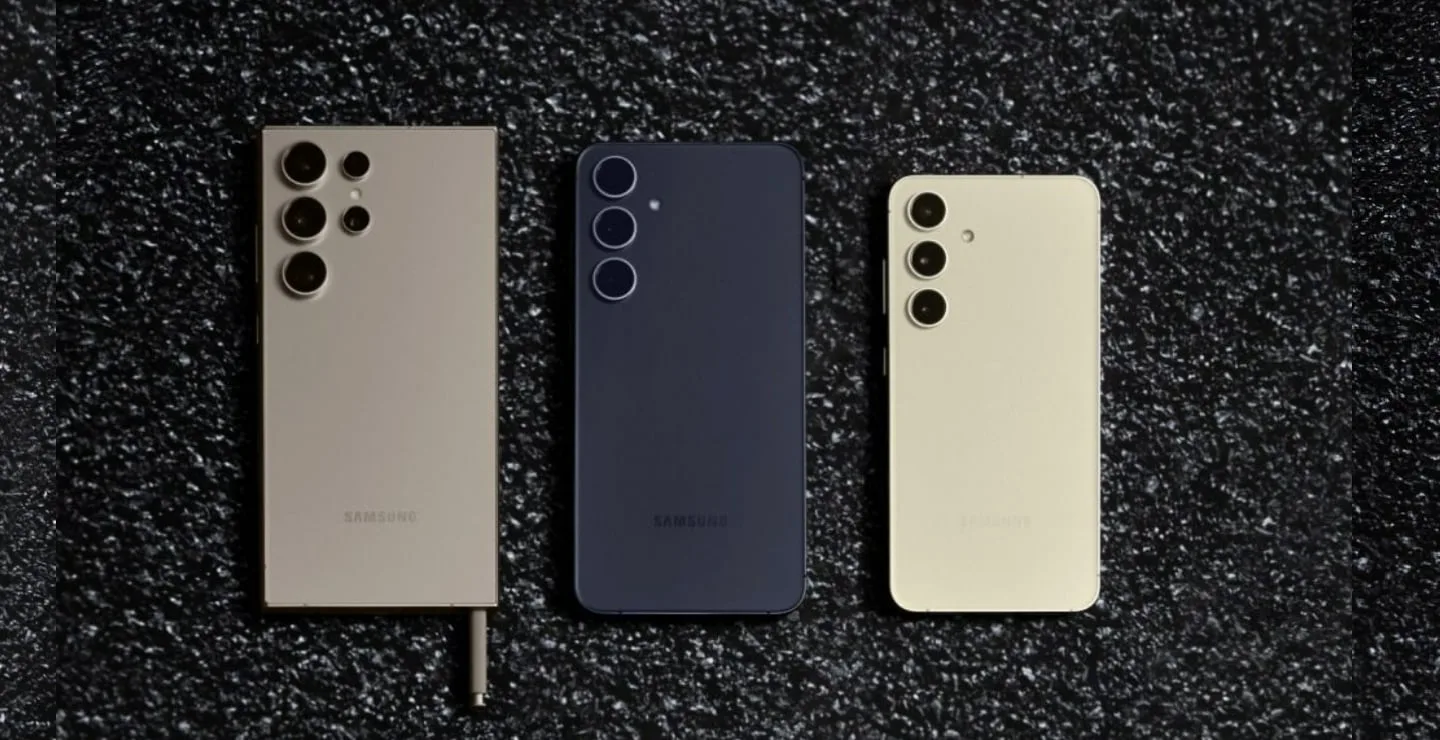
Samsung held the top spot with a 19 percent market share, led by “strong demand” for its Galaxy S24 series and A-series smartphones, according to the market research firm. The Galaxy S24 series models, positioned as the company’s first AI smartphones, outperformed older models and were “received especially well” in Western Europe and the USA.

Apple was in second place with an 18 percent market share. The iPhone 16 series received a mixed response, and it was partially “due to a lack of availability of Apple Intelligence at launch.” The company, however, continued to grow well in its “non-core markets like Latin America, Africa and Asia-Pacific-Others.” Senior Analyst at Counterpoint Research, Ivan Lam noted that in markets like China, demand for Apple’s Pro and Pro Max models is “ballooning.”

With a 14 percent market share, Xiaomi came in third, but it was the fastest-growing brand among the top five OEMs in 2024, which included Vivo and Oppo, with eight percent market share each.

Although the top five brands remained the same as 2023, they collectively lost some share to “aggressive competition from Huawei, Honor and Motorola, according to the research firm. The latter is claimed to be the fastest-growing OEM among all the top 10 brands of the year.

The report added that 2024 brought GenAI to premium smartphones and by 2028, nine out of ten smartphones priced above $250 (roughly Rs. 21,700) are expected to be GenAI-capable.

Smartphone volumes are unlikely to reach the peak levels seen in pre-COVID times, but in 2025, the revenue growth is expected to continue to outpace volume growth, with revenues growing 8 percent YoY, compared to 4 percent volume growth.

Posted on

Skull Found in Turkey Identified as 11-Year-Old Boy, Not Cleopatra’s Sister Arsinoë IV

A century-old mystery surrounding a skull discovered in Turkey has taken a surprising turn, with new evidence revealing that the remains belong to an 11-year-old boy, not Arsinoë IV, the half-sister of Cleopatra VII. The skull, unearthed in 1929 at the Octagon building in Ephesus, had long been speculated to be connected to Arsinoë, a historical figure who played a key role in the political struggles of ancient Egypt. The latest findings, based on advanced scientific analysis, have provided definitive answers about the identity of the remains.

Analysis Confirms Misidentification

According to a study published in Scientific Reports, the skull was reexamined using a combination of CT scans and DNA analysis. The investigation, led by Gerhard Weber, a professor of evolutionary anthropology at the University of Vienna, conclusively proved that the remains belonged to a male individual aged between 11 and 14 years. Radiocarbon dating placed the boy’s death within a period consistent with Arsinoë’s historical timeline, but his age and the presence of a Y chromosome in the remains confirmed he could not have been Cleopatra’s half-sister.

Physical Anomalies Suggest Genetic Disorder

As reported by Live Science, the study also revealed several physical anomalies in the skull, including an asymmetrical structure and an underdeveloped jaw. These features suggested the boy may have suffered from Treacher Collins syndrome, a rare genetic condition that affects facial development. One cranial suture, typically seen in older individuals, was prematurely fused, further complicating the analysis. Efforts to confirm the disorder through genetic testing were inconclusive due to limited DNA preservation.

Search for Arsinoë IV Continues

Despite the prominence of the Octagon building, the reasons behind this boy’s burial in such a significant location remain unknown. The study concluded that the remains were not those of Arsinoë IV, leaving the mystery of her final resting place unresolved.

For the latest tech news and reviews, follow Gadgets 360 on X, Facebook, WhatsApp, Threads and Google News. For the latest videos on gadgets and tech, subscribe to our YouTube channel. If you want to know everything about top influencers, follow our in-house Who’sThat360 on Instagram and YouTube.

NASA’s Solar Observatories Resume Data Operations After Flood Disruption

Home Town OTT Release: Everything You Need to Know About Upcoming Telugu Web Series

Posted on

JioFiber, Jio AirFiber Subscribers Get Two-Year YouTube Premium Access on Select Plans

Reliance Jio announced that some of its JioFiber and AirFiber subscribers will be able to access YouTube Premium services for two years at no additional cost. The offer is extended to JioFiber and AirFiber postpaid customers in the country, who are subscribed to select plans. Users will need to link their Google accounts to enjoy the benefits. YouTube Premium allows users access to ad-free content and offers support for background playback. It allows users to download content for offline watching, along with offline access to YouTube Music.

Reliance JioFiber, AirFiber Plans Eligible for Free YouTube Premium Access

Reliance Jio announced in an X post that it is providing 24 months of YouTube Premium to its JioFiber and Jio AirFiber postpaid customers, at no extra cost. It is available to select existing monthly, quarterly, semi-annual, and annual postpaid plan users.

Subscribers on the Rs. 888, Rs. 1,199, Rs. 1,499, Rs. 2,499, and Rs. 3,499 plans can avail of this offer. These JioFiber and Jio AirFiber postpaid plans offer speeds of 30Mbps, 100Mbps, 300Mbps, 500Mbps and 1Gbps, respectively.

All of these plans already offer unlimited data, free voice calling as well as access to Netflix Basic, Amazon Prime Lite, Disney+ Hotstar, Sony Liv, and Zee5.

How to Claim Free YouTube Premium Access on JioFiber, JioAirFiber

To claim the free YouTube Premium access, eligible JioFiber and Jio AirFiber postpaid users must log in to the MyJio app or visit Jio.com and click on the relevant banner. They will then need to link their Google account by logging in, and once the linking is successful, the YouTube Premium subscription will be activated at no extra cost. This subscription will remain valid for 24 months or two years from the date of activation.

Notably, the individual monthly plan for YouTube Premium is now priced at Rs. 149, while the student monthly plan and the family plan cost Rs. 89 and Rs. 299, respectively. The Premium subscription offers an ad-free viewing experience, allows users to download content for offline viewing, and offers them the option to play videos in the background while multitasking on their devices.

Catch the latest from the Consumer Electronics Show on Gadgets 360, at our CES 2025 hub.

Posted on

Mini-LED TVs will be more competitive than ever in 2025, and we’re all the winners

As CES 2025 draws to a close, there are a few key takeaways in the world of TVs including brighter OLEDs, like the LG G5, bigger screens, like Hisense’s mammoth 136-inch and 163-inch micro-LED TVs, as well as the introduction of new technologies like Samsung’s 8K TV with an RGB micro-LED backlight. One market, however, looks like it’ll be just as competitive if not more so than it did in 2025; and that’s mini-LED TVs. Some of the best TVs on the market are mini-LED TVs. Highlights from 2024 included the Samsung QN90D, Hisense U8N and the ground-breaking Sony Bravia 9, but there were so many more models that could count themselves among the best mini-LED TVs. 2025 looks set to be another big year for mini-LED TVs, with some exciting tech innovations introduced at CES. Mini-LED TVs from Samsung, Hisense, TCL and Panasonic have been confirmed – and Sony hasn’t even announced its sets yet! The state of mini-LED in 2025 The Samsung QN90F (pictured here at CES 2025) is likely to be one of the best mini-LED sets of 2025, if it’s anything like its predecessor. (Image credit: Future) Samsung revealed its 2025 mini-LED TV lineup and the most eye-catching news was the introduction of Glare Free tech to the Samsung QN90F and QN990F, its 2025 flagship 4K and 8K models. The reflection beating tech (which is a matte screen) was first introduced in 2024 on the Samsung S95D, one of the best OLED TVs on the planet. We were blown away by the effectiveness of the Glare Free tech on the S95D, so adding it to the QN90F – which we expect to have high brightness levels and great motion processing like its predecessor the QN90D – is likely to make it one of the best TVs for sport. This is one for sports fans to keep an eye on. One of the other major reveals at CES was the introduction of Hisense’s RGB mini-LED backlit TV, the 116-inch UX. Hisense says the new tech will provide bolder, more vibrant colors and 10,000 nits of peak brightness, while also being 10% more energy efficient. We saw the 116UX in person and its as vibrant as promised. This is likely to be a super-premium TV, with the 110-inch UXN with a standard mini-LED backlight retailing for a hefty $15,000 / £20,000 (roughly AU$24,000) so you can expect the 116UX to be even pricier, but its still an exciting new tech. TCL’s new and improved mini-LED backlight (pictured here at CES 2025) could improve picture quality for its TVs across the range. (Image credit: Future) TCL also revealed a new type of mini-LED backlight, which demonstrated more precise backlight control and higher brightness of up to a mind-blowing 50% increase in its 2025 mini-LED TV lineup, without compromising the image’s darker areas. Panasonic introduced the W95B in its 2025 TV lineup, while LG announced two mini-LED sets, the QNED99 and QNED92, into its 2025 QNED TV lineup. While these didn’t quite have the same headline-grabbing innovations as the sets above, they are still set to be packing with excellent gaming features and upgraded processors promising higher brightness once again and better contrast. These are just some of the mini-LED TV models we can expect in 2025. We’re waiting to hear about Sony’s 2025 lineup, which could include the successor to the brilliant Sony Bravia 9. The Bravia 9 is a mini-LED TV with OLED-rivaling contrast and black levels, so could Sony look to one-up it? We’re also still waiting to hear about Hisense’s latest ULED lineup, which follows on from last year’s Hisense U8N, U7N and U6N, and these along with TCL’s other sets are sure to make up the backbone of the mid-range and budget mini-LED sets in 2025. The battle rages on and we’re spoilt for choice Even 8K mini-LED TVs are getting innovations, as the Samsung QN990F (pictured here at CES 2025) has a wireless connection box and matte screen. (Image credit: Future) While these brands will be looking for mini-LED supremacy, we’re the real winners. These brands are looking to make their TVs faster, brighter, more colorful and detailed than ever before – and they’ll be looking to offer the best prices they can to tempt us into choosing a mini-LED over an OLED. Brands are starting to invest in bigger screens through their lineups too, with Hisense’s 116-inch UX, Samsung’s 115-inch QN90F and the TCL 98-inch QM6K just some of the larger mini-LED sets on offer. While these screens will exceed most people’s budgets, does this mean we could see a price drop on smaller sizes? Hisense is most likely to offer this, but we’ll be keeping an eye out on prices as they are revealed over the coming months. Plus, we can all still dream of a cinema sized screen and having the option is always going to get a thumbs-up from me. It’s also great to see so many tech innovations coming through for mini-LED TVs as well. A common problem for mini-LED TVs is backlight blooming (where light surrounds brighter objects on dark backgrounds, creating a halo effect) but if these new innovations can reduce this issue altogether, then that just means better TVs for us. Higher brightness, both peak and fullscreen, is always a theme in new mini-LED TVs. While the numbers are reaching eye-watering heights of 10,000 nits plus, it means more eye-catching pictures and less reflections for those of us with bright rooms. Yet another positive thanks to the spirit of competition. 2025 is shaping up to be the most hotly contested year for mini-LED TVs in years and I can’t wait to find out who’s going to come out on top. Thankfully for us, it looks like we’re going to be spoilt for choice. You might also like