
The ultra-thin “wallpaper TV” is coming back Zero Connect wireless technology as seen in the LG M5 The latest-gen OLED tech is included Way back in 2017, LG made a TV that was truly breathtaking – only to stop making it in 2020. But a new official image shows that it’s coming back, and it’s even better than before. The new TV is the LG W5, and it’s the successor to the TV officially called the LG W7 Signature Series but known to everybody as the Wallpaper TV. The W7 (pictured below) got its nickname because it was so thin you stuck it to the wall like wallpaper, albeit with magnets instead of wallpaper paste; all the electronics were in a separate soundbar. It wasn’t cheap – the biggest model was $19,996 (about £16,000 or AU$26,500) – but it was stunning. As we said in our LG Signature OLED W7 review, it was “thinner than we even thought possible”. And now it’s back, and it’s even smarter thanks to LG’s wireless tech. (Image credit: LG) What we know about the LG W5 OLED TV LG isn’t confirming or denying anything, but the new TV was entered for and won a CES Innovation Award this month – and as FlatpanelsHD spotted, there’s a whole page on the CES website about the W5. It says: “The 4K 77-inch W5 is the culmination of many years of LG technical knowhow. Less than ½” thick, it blends into your wall without visible AV wires. This is achieved without compromise, as the TV offers LG’s best OLED picture quality, featuring a brighter more colorful OLED display capable of gaming (up to 144Hz with VRR). It includes LG’s most advanced α11 AI Processor inside a Zero Connect Box that wireless sends your AV connections to the TV, eliminating clutter and freeing TV placement. The W5 is the perfect TV, offering the best of what is possible in a TV.” The big improvement over the previous model is that the new TV uses the same Zero Connect wireless box as the LG M5, making it even more like part of your home décor as well as making it very flexible: as we’ve previously said, the wireless box is suitable for gaming as well as home entertainment, and is more flexible than previous versions, because it can now be hidden in a cupboard without spoiling the wireless communication. Sign up for breaking news, reviews, opinion, top tech deals, and more. It’s hard to say why LG didn’t show the TV off at CES fully – perhaps there was a problem with its initial units, or perhaps the whole launch needs to be delayed. But I’m happy to see such an iconic design return, because this seems like the ideal use of LG’s wireless tech. No doubt it’ll be devastatingly expensive compared to the best OLED TVs – but it’ll probably be super-desirable anyway. You might also like
Author: DA Gadgets
Archaeologists Discover Ancient Artifacts in Iraq, Unlocking Secrets of Mesopotamia


Significant discoveries have been made at the ancient site of Kurd Qaburstan in Iraq, shedding light on Mesopotamian history. Artefacts including clay cuneiform tablets, a game board, and structural remains have been unearthed by a team led by Tiffany Earley-Spadoni, an associate professor of history at the University of Central Florida. The findings are believed to date back to the Middle Bronze Age, around 1800 BCE, and may provide fresh perspectives on the daily lives, literacy, and socio-political connections of the people from this ancient civilisation.
Insights from Recent Findings
According to the research conducted at Kurd Qaburstan, the clay tablets are the first of their kind to be discovered in the region. Preliminary analysis suggests they hold valuable information about the city’s residents and the historical events they faced, as reported by phys.org. Tiffany Earley-Spadoni, an associate professor of history at UCF, shared with phys.org that studying names, word choices and writing styles may offer an enhanced understanding of cultural identity and literacy in northern Mesopotamian cities.
The Middle Bronze Age in northern Iraq remains under-researched due to historical biases and limited prior excavations. The ongoing work aims to provide a narrative from the perspective of the city’s inhabitants, rather than relying on external accounts, as noted by the lead researcher.
Exploring a Forgotten Urban Center
Excavations at the site have uncovered monumental architecture, human remains, and evidence of destruction, hinting at significant historical events. A newly identified lower town palace, revealed through geophysical surveys, is being closely studied to determine its administrative significance. Artefacts found in the palace, including pottery and animal remains, suggest a more nuanced understanding of social and economic structures, with signs of private wealth and dietary diversity among the city’s population.
Future Research Potential
The site is hypothesised to be the ancient city of Qabra, a regional hub mentioned in Old Babylonian records. While definitive identification is ongoing, findings from the tablets and architectural remains bolster this theory. As reported by phys.org, researchers expect further analysis to uncover details about possible warfare and societal dynamics, potentially rewriting aspects of Mesopotamian history. Work at Kurd Qaburstan is set to continue in 2025, with hopes of revealing more historical secrets from this fascinating period.
Astronomers Discover Unusual X-Ray Oscillations From a Black Hole 100 Million Light-Years Away


A supermassive black hole in a galaxy located 100 million light-years away has drawn the attention of astronomers with its unusual behavior. Observations have revealed a steady increase in the frequency of X-ray flashes, starting at intervals of 18 minutes and accelerating to seven minutes over two years. This phenomenon, linked to the black hole named 1ES 1927+654, marks a significant discovery in the study of black hole activity.
Unprecedented Phenomenon Observed
According to the research shared at the 245th meeting of the American Astronomical Society in National Harbor, Maryland, the observed X-ray oscillations are believed to originate from a compact white dwarf orbiting close to the black hole’s event horizon. As reported by phys.org, researchers from the Massachusetts Institute of Technology (MIT) suggest that this white dwarf might be maintaining a precarious orbit near the black hole, which is approximately one million times the mass of the Sun. Megan Masterson, a physics graduate student at MIT and co-lead of the study, explained that such proximity to a black hole without falling in has not been observed before.
Insights into Black Hole Dynamics
The oscillations were detected using the European Space Agency’s XMM-Newton observatory, which measures X-ray emissions from extreme cosmic environments. The findings point to the possibility that the white dwarf’s gravitational waves, resulting from its orbit, could be detectable by future observatories, such as NASA’s Laser Interferometer Space Antenna (LISA). As reported by phys.org, Erin Kara, an associate professor of physics at MIT, highlighted that the white dwarf’s shedding of material into the black hole may be preventing it from crossing the event horizon.
Continued observations are expected to provide further understanding of the dynamics between black holes and nearby celestial objects. Researchers aim to monitor this unique system with advanced telescopes and gravitational wave detectors, promising new insights into the physics of the universe.
Oppo Smartphone With 6330mAh Battery Surfaces on TENAA; Speculated to Debut as Oppo A5
Oppo could be working on a new smartphone that could join the A5 Pro model that was launched last month. An unreleased Oppo handset was spotted on a Chinese certification website which hints towards its imminent launch in China. Although the official moniker remains unknown, it is believed to be the next generation Oppo A5. The listing also shows several key specifications of the purported phone and reveals its design. It may come with a 6.7-inch AMOLED screen and a 6,500mAh battery.
Oppo A5 TENAA Listing
First spotted by tipster Digital Chat Station (translated from Chinese) and shared on the Chinese social media platform Weibo, the purported Oppo phone has been listed on China’s TENAA website sporting the model number PKQ110 — it is speculated to arrive as the Oppo A5. The handset is allegedly equipped with a 6.7-inch (1,080×2,412 pixels) full HD+ AMOLED screen with an under-display fingerprint scanner for biometric authentication.

Purported Oppo A5 images on TENAA
Photo Credit: TENAA
The phone is said to have a dual rear camera unit housed in a circular camera module, comprising a 50-megapixel primary camera and a 2-megapixel secondary sensor. The front camera will likely use an 8-megapixel sensor for selfies and video calls.
The images of the purported Oppo A5 on TENAA show a phone in a bluish silver colourway with a flat display, rounded corners, and a centre-aligned circular rear camera module.
As per the listing, the Oppo A5 could be powered by a 2.2GHz octa-core processor which is speculated to be the Snapdragon 670. It is expected to be available in 8GB and 12GB RAM configurations, paired with 256GB and 512GB of inbuilt storage. The device may pack a 6,330mAh battery with support for 45W fast charging.
It is expected to join the Oppo A5 Pro which was launched in China in December and appears to sport a similar design. In terms of dimensions, it could measure 161.57 × 74.47 × 7.65mm and weigh 185g. It is listed to support Bluetooth and USB connectivity.
XGIMI MoGo 3 Pro review: a strong contender for the portable projector crown
XGIMI MoGo 3 Pro review: Two-minute review Chinese electronics brand XGIMI is on a continued mission to be the brand of choice when searching for a projector, hoping to lure you away from the likes of Samsung, BenQ or LG in the process. The MoGo 3 Pro, released alongside the much higher-end Aura 2 4K UST projector towards the end of 2024, certainly has a resumé to suggest it’s in with a fair shot of becoming one of the best portable projectors: full HD resolution, 450 ISO lumens brightness, Google TV and Netflix onboard and, of course, a portable design. And yes, I recognize XGIMI has diverted away from the design of the previous two MoGo projectors and has instead adopted something akin to Samsung’s The Freestyle projector. Admittedly, the new XGIMI MoGo 3 Pro’s new look does make it a lot more portable and it has added practical benefits. The cylindrical design allows the projector lens to remain covered up when it’s not in use and it can be tilted through a 130º angle. XGIMI claims this allows the projector to beam onto the ceiling but, in my use, I wasn’t able to do so without physically angling the whole projector unit itself. A full 180º of tilt would allow it to perform better in this regard, if that’s what you’re looking for in a projector. Images projected onto a wall using the XGIMI MoGo 3 Pro are of excellent quality, although you will want to dive into the picture settings to make some adjustments for the best results. Out of the box, images could look washed out and overexposed, but after diving into the albeit limited picture settings and making a few adjustments, I found that the projected images were able to deliver good color and contrast. I was impressed with its ability to combat some bright ambient light filtering into my testing room, too. Naturally, when the lights went down, the images projected onto my wall became much clearer. (Image credit: Future / Max Langridge) Because the MoGo 3 Pro is a portable projector it needs to rely on its built-in speakers for sound, which is where things get less positive. The XGIMI MoGo 3 Pro has 2 x 5W Harman Kardon speakers built in which, sadly, fail to deliver anywhere near a cinematic experience, despite XGIMI’s claims. Dolby Audio and Dolby Digital Plus are both supported formats, but it adds little to what is an overall unengaging sound. For casual viewing with friends, family or even by yourself, it can pass, but if you’re planning on movie nights when you’re away camping or on holiday, for example, then you’ll likely be disappointed. You can connect a Bluetooth speaker to help boost things on the audio front, and a Mini HDMI connection is onboard with ARC support, meaning you can connect a soundbar, for example, using a Mini HDMI-to-HDMI cable. But if you’ve taken the MoGo 3 Pro away on a camping trip, you’re unlikely to have access to a full-fat external audio system. The XGIMI MoGo 3 Pro also doesn’t have a built-in battery, which naturally can also affect its portability. If you know you’re going to want to take it somewhere where a power outlet won’t be accessible, then you can connect a USB-C power bank with a minimum power output of 65W, or you can buy the optional PowerBase stand, which not only raises the projector off the ground or a small table, but has its own built-in battery to keep it powered. XGIMI says the stand allows you to “continuously play a full-length movie without interruption,” although I found that would be the case only if said movie is 2.5 hours or less. The other disappointing aspect I found when using the XGIMI MoGo 3 Pro was that it could be slow in use. Volume adjustments using the remote control took a few seconds to register; navigating around the main home page regularly suffered from lag and I even found when trying to watch a particularly fast moving scene from The Incredibles on Disney+ that the projector just completely crashed. I should stress that this was an isolated incident that I couldn’t repeat with other fast-motion content such as sports. The XGIMI MoGo 3 Pro projector is, ultimately, a good option for anyone who wants big-screen thrills when on the go or perhaps as an option for a second bedroom at home in place of installing a TV. Keep in mind when comparing projectors, the 450 ISO lumens from the MoGo 3 Pro is about equivalent to 500 ANSI lumens. It does well against its main competition, Samsung’s The Freestyle projector, particularly when it comes to brightness. But, if your budget can stretch, you’ll find greater performance from the likes of the 4K RGB Laser equipped LG CineBeam Q. XGIMI MoGo 3 Pro review: Price & availability Launched on September 6, 2024 List price of $449 / £429 / AU$1,099 Optional accessories cost extra The XGIMI MoGo 3 Pro was announced and officially launched at IFA Berlin on September 6, 2024, alongside the Aura 2 4K UST projector. It’s available to buy now for $449 / £429 / AU$1,099 for the standalone projector. You can buy it bundled with the PowerBase stand for $499 / £499 / AU$1,199 You can also pick up an optional carry case for the MoGo 3 Pro projector, which is only available in green, for $69 / £59 / AU$99. The XGIMI MoGo 3 Pro portable projector’s list price is significantly less than the Samsung The Freestyle projector in the US, UK and Australia. However, Samsung’s projector does have greater HDR support, with HDR10+ available. The MoGo 3 Pro maxes out at ‘standard’ HDR10, although as we said in our Samsung The Freestyle projector review, “I didn’t see much of a picture quality difference when viewing in HDR from standard HD format”, so the MoGo 3 Pro’s lack of extended support isn’t necessarily a mark against it. XGIMI MoGo 3 Pro review: Specs Swipe to scroll horizontally Screen size support: 40 to 200 inches Brightness (specified) 450 ISO Lumens HDR support: HDR10 Optical technology: LED, DLP Smart TV: Google TV Connections: Micro-HDMI, USB-A, USB-C (power), Bluetooth 5.1 Dimensions: 8.1 x 3.7 x 3.7 inches / 204.9 x 95 x 95mm (H x W x D w/integrated stand) Weight: 2.42lbs / 1.1kg XGIMI MoGo 3 Pro review: Design & features (Image credit: Future / Max Langridge) Compact and lightweight Google TV interface Can double up as a Bluetooth speaker The XGIMI MoGo 3 Pro sports a cylindrical form factor and is finished in an anodized silver aluminum color. It’s lightweight at just over one kilogram, making it a breeze to not only move around your home, but to throw into a bag to take on the road with you. The main projector unit itself features an integrated stand, which also houses the built-in speaker system. When connected to power, the MoGo 3 Pro turns on as soon as you lift it up to separate it from its stand. You can then tilt it through 130º to project an image onto a wall or screen. Alternatively, when you lift the projector from its integrated stand to power it on, you can leave it in this position, where it will light up in one of three selectable colors. In this mode, you can use it as a nightlight or you can stream music to it via Bluetooth, and you can select an option that will see the light pulse – this is more of a flickering of the light rather than it moving in time with the music. (Image credit: Future / Max Langridge) A remote control comes supplied with the XGIMI MoGo 3 Pro and two AAA batteries to power it. The remote feels good to hold, although I wasn’t enamored with the layout of the buttons. I found it required a bit of a learning process: the home button is in the bottom right for example and I’m used to it being more central on the majority of other remote controls I’ve used. I also occasionally pressed the Google Assistant button when I actually wanted to select ‘settings’. The remote control isn’t backlit, which can make things even trickier. Fortunately, the volume button is in an obvious and hard-to-miss place at the bottom, although I found the projector took a short while to register whenever I wanted to turn the volume up. Alternatively, because the XGIMI MoGo 3 Pro uses the Google TV operating system, you’re able to use your phone as a remote control via the Google Home app. The single-chip DLP projector uses an LED light source, which XGIMI says is good for 25,000 hours of use. The company’s ISA 2.0 technology is onboard, which gives access to a number of especially useful setup tools, including automatic keystone correction, autofocus, obstacle avoidance, screen alignment and eye protection. Automatic screen adjustments are just a click away via a button on the remote control and you’re free to manually adjust settings further if you wish. I found autofocus to be the most successful of all the settings, while auto keystone correction delivered mixed results. The idea of this setting is that it will automatically realign the screen if you move the projector around. In most instances it worked fine, but I was occasionally forced to dive into the manual settings to get the screen aligned properly. Image 1 of 2 (Image credit: Future / Max Langridge) (Image credit: Future / Max Langridge) A small selection of accessories is available for the MoGo 3 Pro, including a PowerBase stand which has a built-in 20,000mAh battery for keeping the projector running when a power outlet isn’t accessible. XGIMI says it’s good for 2.5 hours of playback time when the projector’s brightness setting is set to Eco mode, which is just enough for movies such as Deadpool vs Wolverine, but too short for recent releases such as Wicked. When using the MoGo 3 Pro with just the PowerBase stand, the projector defaults to Eco mode. It can be changed, but it will impact battery life significantly. A carry case is also available to keep it better protected during transport and a Creative Optical Filter can be placed over the MoGo 3 Pro’s lens to project a much larger image onto a wall. It’s intended to be used with the XGIMI Wall app to project underwater seascapes or immersive starry night sky images. While the XGIMI MoGo 3 Pro features a Mini HDMI input for connecting to either an external sound system or a media streaming device, for the most part, you’ll likely be using the built-in apps to access content. In this regard, it’s good news as the MoGo 3 Pro uses Google TV, which provides access to a huge selection of apps and services. Perhaps most crucially, Netflix is supported. The ubiquitous streaming service doesn’t always play nicely with projector systems – a third-party app is required to access it on XGIMI’s own Aura 2 for example, which uses the Android TV OS instead – so it’s great to see it front and center here. In a similar vein to the Samsung Freestyle projector, the XGIMI MoGo 3 Pro uses the older Wi-Fi 5 standard, which is more than capable enough to handle streaming, and didn’t cause any issues during my use. (Image credit: Future / Max Langridge) As a predominantly streaming-focused projector, connections on the MoGo 3 Pro are limited to micro HDMI. It would have been great to have received a cable or adaptor in the box, but alas, you’ll need to buy one if you want to connect an external gaming console, Blu-ray player, or other HDMI source. The micro HDMI connection does support HDMI-ARC, which allows you to connect it to a soundbar or other audio system, but there isn’t a 3.5mm audio output. You can also stream music to the projector via Bluetooth, or from the projector to a Bluetooth speaker thanks to dual Bluetooth support. I connected the projector to a Beats Pill to test this feature and experienced no obvious signs of audio delay. Android users can stream wirelessly via Google Cast, and AirPlay is supported too. XGIMI says in the support menus that you need to download the MagiCast app from the Google Play Store, but I searched for it and had no luck. I eventually found another app called AirMirror that allowed me to mirror the screen of my iPhone and stream music via AirPlay. Design & features score: 4 / 5 XGIMI MoGo 3 Pro review: Picture & sound quality (Image credit: Future / Max Langridge) Decent brightness even in ambient light conditions Impressive picture quality after some adjustments Sound is poor unless you turn it up to maximum I went into my review of the XGIMI MoGo 3 Pro with limited expectations about the picture quality it would be able to produce, given its size and limited specs. I’d previously reviewed the XGIMI Aura 2 which produced a gorgeous and bright image, but this was expected since it has a 2300 ISO lumens rating. The MoGo 3 Pro’s 450 ISO lumens rating, therefore, suggested to me it would only really function at its best in the dark. The XGIMI MoGo 3 Pro supports the HDR10 HDR format, which did provide some benefit to contrast in movie scenes with dark and bright elements. The company claims the projector supports 90% of the DCI-P3 color gamut. With Game mode activated, XGIMI says the MoGo 3 Pro has input lag of ≈ 27ms with auto keystone correction turned off and ≈ 60ms with it turned on. I was pleasantly surprised to find that it held up well in a brighter room, with ambient sunlight coming in through a small opening. With the overhead lights turned on, it was totally unusable, but with just some sunlight creeping in, I was able to watch the projected image without too much fuss. You are able to project an image up to 200 inches in size, but XGIMI says that for best results you’ll want to stay within a boundary of 60 to 120 inches. For reference, the size of the image I was able to project onto my wall was around 80 inches, with the projector positioned around 200cm (80 inches) from the wall. XGIMI says the throw ratio of the MoGo 3 Pro is 1.2:1. There are slightly different picture presets depending on whether you’re watching HDR or SDR content. The majority of my testing used HDR content, which presented Standard, Sport and Game presets. I left it on Standard most of the time as I felt this offered the best overall picture. I was surprised to not find a ‘Movie’ picture preset, especially given the fact this will likely be the projector’s main use. (Image credit: Future / Max Langridge) There are also three different brightness settings hidden within the menus: Standard, Eco and Performance. Again, I left the standard option selected the majority of the time. Eco mode limits brightness to 40% to help prolong battery life, and in darker rooms is perfectly fine to watch. If you’re watching in a brighter room, however, it doesn’t do as good a job. Performance mode, meanwhile, introduces a blue tint to the image, which was a little peculiar… I was expecting this mode to ramp up the brightness further, but it seemed to have the opposite effect. When this mode is selected, the built-in cooling fan also gets turned up to 11 to the point where it’s clearly audible. It’s also worth noting that the performance brightness mode can only be enabled when the official power adapter is plugged directly into the projector unit. It won’t work with other power adapters or when connected to a power bank or the PowerBase stand. Enabling Performance brightness mode introduced a blue/green tint to the image. (Image credit: Future / Max Langridge) A stream of Alien: Romulus provided a good test of darker content for the MoGo 3 Pro and, considering its size, specs and price, I was pleased with the results when watching in a dimly lit room. It was able to unearth details in shadowy areas of a scene, while brighter areas such as lights had a satisfying pop. I switched over to Toy Story on Disney Plus for its color-rich palette and generally bright scenes. The various reds, yellows, greens and blues were prominent, although not quite as vibrant as I’ve seen on TVs and higher-specced projectors. Nevertheless, it was still an enjoyable watch. Seeing as though the XGIMI MoGo 3 Pro is designed to be taken out of the home with you, I set it up in my courtyard to see how it fared when being used outside. I will preface by saying I was projecting onto a dark grey wall, but it was also at night and so, despite the color of the wall coming through, I was still able to watch without trouble. I have no doubts that if you project onto a white wall, a sheet or even a portable projection screen, you will have no issues when watching movies on the road. (Image credit: Future / Max Langridge) I also watched my favorite clip from The Incredibles and came across an issue with a fast-moving scene about two-thirds into the movie. When Dash is running through the forest away from Syndrome’s goons, the projector seemed to just crash and stopped playing the movie. Pressing the home button returned me to the main home page, but the same thing happened again when I attempted to watch the scene again. I wasn’t able to replicate this again with any other content, so it could be a one-off, isolated incident or due to a bug that can be fixed via a future firmware update. The projector’s built-in speaker system is more difficult to be excited about. At full volume it does produce a spacious sound that will ultimately pass for whatever you’re watching. At lesser volumes however, it’s too quiet to do any real service and it lacks any real impact. Connecting a Bluetooth speaker is a fuss-free experience and can work wonders to boost the overall sound output, especially as I didn’t experience any signs of audio lag. Picture & sound quality score: 4 / 5 XGIMI MoGo 3 Pro review: Value Cheaper than its closest competitor Great features and performance Portable power options cost extra (Image credit: Future / Max Langridge) With a list price of $499 / £449 / AU$1,099, the MoGo 3 Pro offers enough to make it worth recommending. Its most obvious competitor, the Samsung The Freestyle, costs more in most markets yet has a similar specs list. Samsung’s offering doesn’t go quite as bright, but it does use the excellent Tizen operating system and it supports cloud gaming. Like the MoGo 3 Pro, there’s no built-in battery, but an optional base is available to make it truly portable. To this end, I think the XGIMI’s optional battery-powered base is the better choice as it’s also a tripod. Samsung’s option only raises the projector a few extra inches, so you may still need a table to put it on for optimal results. XGIMI’s MoGo 3 Pro also has the added benefit of keeping the lens protected when it’s not in use. You will need to consider spending extra on the PowerBase stand (which is more cost effective to buy as a bundle with the projector) or a power bank that meets the required criteria. If you can spend more and your only need for a portable projector is to use it in your garden, then almost any projector will do the job when plugged into an extension cord. Value score: 4 / 5 Should you buy the XGIMI MoGo 3 Pro? Swipe to scroll horizontally XGIMI MoGo 3 Pro Attributes Notes Rating Design & features Compact, lightweight, good connectivity and a feature-packed smart TV interface 4 / 5 Picture & sound quality Enough brightness to combat ambient light, which only improves in darker rooms. An external sound system is needed for a more cinematic experience 4 / 5 Value Justifies its price tag and undercuts its closest competitor 4 / 5 Buy it if… Don’t buy it if… Also consider Swipe to scroll horizontally Comparison: portable projectors Header Cell – Column 0 XGIMI MoGo 3 Pro Samsung The Freestyle 2nd Gen LG CineBeam Q Price: $449 / £429 / AU$1,099 $799 / £649 / AU$,1299 $1,299 / £1,299 / AU$2,499 Screen sizes supported: 40 to 200 inches 30 to 130 inches 50 to 120 inches Brightness (specified): 450 ISO lumens 230 ANSI lumens 500 ANSI lumens HDR support HDR10 HDR10+, HDR10, HLG HDR10, HLG Optical technology: LED, DLP LED, DLP RGB laser DLP Smart TV: Google TV Tizen webOS Connections: Micro-HDMI, USB type-A, USB-C (power) Micro-HDMI, USB-C (power) HDMI, USB-C (display, power) How I tested the Xgimi MoGo 3 Pro I used the projector in a range of light conditions Set it up inside and outside to test portability Watched a variety of dark and bright content I tested the XGIMI MoGo 3 Pro at home over a period of about a month so I could experience it during various daytime living conditions. This meant multiple light sources, be it natural daylight or overhead lightbulbs, came into my testing room, at which point I rated the picture to see how well it performed. The projector was tested against a white wall for the duration of my review, but also on a dark grey wall outside to assess its portable credentials. Both performed well and I could see noticeable differences before and after calibration. I used a variety of content, including HDR and SDR content from a variety of streaming services. My testing evaluates the projector’s performance against other reviews my colleagues at TechRadar have conducted. I have been writing about and reviewing displays for five years. Read more about how we test [First published January 2025]
Nintendo Switch 2 Will Reportedly Be Revealed This Week
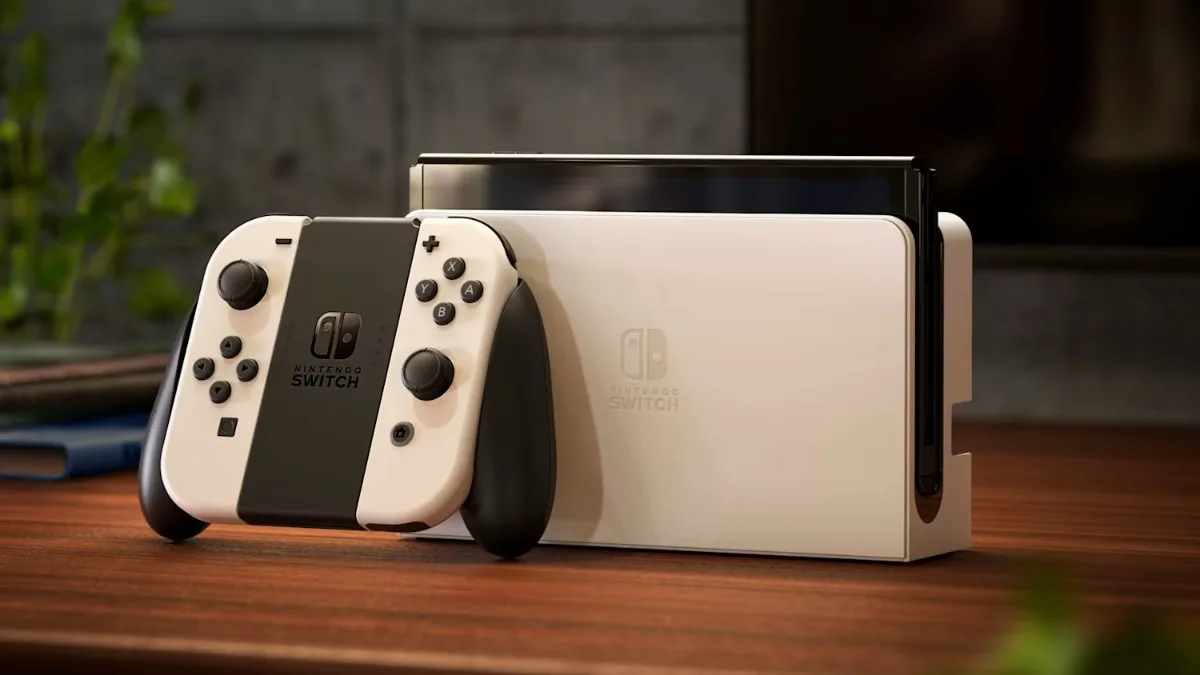

The successor to the Nintendo Switch will be revealed this week, an industry insider has claimed. Rumours and leaks about the Nintendo Switch 2 have intensified ahead of launch, with several sources claiming an official announcement on the hybrid console could be right around the corner. Nintendo is said to be ready to unveil the Switch 2 as soon as January 16.
Nintendo Switch 2 Reveal Imminent
The information comes from tipster Nate the Hate, known for industry scoops and accurate predictions about launches. In the latest edition of his podcast Monday, he claimed he had been told the Nintendo Switch 2 would be revealed on Thursday, January 16.
He also shared a few details about the possible reveal event, claiming he had partial knowledge of what one could expect from Nintendo. “What I’ve heard is that the reveal itself is going to focus almost exclusively on the console itself,” the tipster said. “There is not going to be any presence of games.”
Nate the Hate’s claims were backed by other publications, as well. The Verge’s Tom Warren said on X Monday that the Switch 2 would be revealed this week. A Eurogamer report, too, claimed that industry sources had pointed to a January 16 reveal for Nintendo’s next console.
Nintendo Switch 2 Leaks
The string of leaks — many of which have shed light on the expected design of the Switch 2, while some have shared its specifications and capabilities — in recent weeks suggest that Nintendo might be close to finally taking the covers off the successor to the phenomenally successful Switch.
In fact, at CES last week, Genki, a third-party peripheral maker, presented a mockup of the Nintendo Switch 2. Nintendo, meanwhile, has remained tightlipped amid the leaks, and has even sought to clamp down on them. In a statement to CNET last week, the company said the Genki mockup of the Switch 2 shown at CES was “unofficial” and was not provided to the seller by Nintendo.
On its part, Nintendo has only confirmed two things: first, that the successor to the Nintendo Switch will be announced before the end of March 2025; and second, the console will be backwards compatible with Nintendo Switch games.
Over the past few months, however, Switch 2 leaks have pointed towards design and hardware upgrades — magnetic Joy Cons with hall-effect joysticks, a more powerful dock, larger display and more. A report last month claimed the Switch 2 would be launched on March 28.
Asus NUC 14 Essential Mini PC With Intel Core N-Series CPUs Unveiled: See Features
Asus NUC 14 Essential was launched on Tuesday, equipped with Intel Core N-series processors. It is a compact, entry-level mini PC that is claimed to offer improved performance and power efficiency over existing models, thanks to updated CPUs. The company further claims that it has been put through “bake and humidity tests,” and “exceeds industry standards” for reliability and durability. It comes with support for up to three 4K displays via HDMI and DisplayPort ports. It also supports Wi-Fi 6E and Bluetooth 5.3 connectivity.
The company has yet to confirm the pricing and availability details of the Asus NUC 14 Essential. It also states that the specifications and availability will vary by region. The NUC 14 is expected to go on sale in select markets later this year.
Asus NUC 14 Essential Features, Specifications
The Asus NUC 14 Essential ships with Windows 11 64-bit, while the Kit version also supports Ubuntu 24.04 LTS 64-bit and RedHat Enterprise Linux 64-bit. It is available in the following processor options — Intel’s N150 and N250 CPU with 6W TDP, Core 3 N355 with 15W TDP as well as N97 CPU with 12W TDP. They have integrated chipsets and support for Intel Graphics, while the N97 CPU variant supports Intel UHD Graphics. The mini PC also has support for up to 16GB DDR5-4800 RAM.
Connectivity options for the Asus NUC 14 Essential mini PC include Wi-Fi 6E, Bluetooth 5.3 and a 2.5G LAN port. For audio, it gets a Realtek ALC3251 chipset, and for security, it features a fTPM or TPM 2.0 chip. It operates using a 65W power adapter which has a DC input of 19VDC and an output of 3.42A.
The Asus NUC 14 Essential is equipped with multiple ports, including two USB 3.2 Gen2 Type-C and four USB 3.2 Gen2 Type-A ports as well as one each of DisplayPort 1.4, USB 2.0 Type-A port, HDMI 2.1 (TMDS), 3.5mm headset jack, RJ45 LAN, DC-in and Kensington Lock ports. The mini PC measures 135x115x36mm in size and weighs 480g.
For the latest tech news and reviews, follow Gadgets 360 on X, Facebook, WhatsApp, Threads and Google News. For the latest videos on gadgets and tech, subscribe to our YouTube channel. If you want to know everything about top influencers, follow our in-house Who’sThat360 on Instagram and YouTube.

Samsung Galaxy S25 Series Sale Date in India Leaked; Colourways, Storage Options Tipped


Samsung Galaxy S25 series is expected to be unveiled on January 22. Samsung is set to hold its Galaxy Unpacked event on the day. The lineup will likely include the base Galaxy S25, the Galaxy S25+ and the Galaxy S25 Ultra variants. Over the past few weeks, several leaked details about the upcoming handsets have surfaced online. The phones are expected to get Qualcomm’s latest octa-core Snapdragon 8 Elite chipsets. Now, a tipster has suggested the possible India sale date for the smartphones’ and their colour and storage options.
Samsung Galaxy S25 Series India Sale Date (Expected)
Samsung opened pre-reservations for its upcoming Galaxy S series earlier this month. The lineup is expected to include the base, Plus and Ultra options of the Samsung Galaxy S25 series. Tipster
Ishan Agarwal (@ishanagarwal24) claimed in an X post Tuesday that the deliveries for pre-ordered Galaxy S25 series handsets are expected to start in India around February 3. Sales for all buyers are tipped to start on February 9.
Samsung Galaxy S25 Series Storage and Colour Options (Expected)
The tipster added that the base Samsung Galaxy S25 and Galaxy S25 Plus will be available in 256GB and 512GB storage options. These variants are expected to come in Blue Black, Coral Red, Mint, Navy or Icy Blue, Pink Gold and Silver Shadow colourways.
The top-of-the-line Galaxy S25 Ultra option, on the other hand, is tipped to arrive in 256GB, 512GB and 1TB storage variants. The tipster claims it will be offered in seven colour options, including Titanium Black, Titanium Grey, Titanium Jade Green, Titanium Jet Black, Titanium Pink Gold, Titanium Silver Blue, and Titanium White Silver.
The rumoured colourways include Samsung-exclusive shades and all Samsung Galaxy S25 series models are said to support 12GB of RAM. Recently leaked promotional images suggest that the base and Plus variants sport similar designs to their predecessors. However, the Ultra version of the upcoming generation is said to get a more rounded appearance against the boxy design of the preceding model.
Samsung S95F OLED TV: everything we know about Samsung’s elite new OLED
The Samsung S95F OLED TV has been officially revealed at CES 2025 as part of Samsung’s 2025 OLED TV lineup, serving as the flagship model. The successor to the Samsung S95D, our TV of the Year in 2024 and one of the best OLED TVs ever released, we’ve got high expectations for the S95F. The Samsung S95D revolutionized the OLED TV world with its OLED Glare Free anti-reflection tech (which mainly comprised the matte screen first featured in the Samsung Frame TV) that effectively eliminated reflections, OLED’s biggest nemesis. Other than this, the S95D also delivered hyper-detailed quality thanks to some clever AI processing, along with superb color, incredible accuracy and stunning contrast. It was also fully equipped for gaming, had a stunning design and even good built-in sound. So, the Samsung S95F has some mighty shoes to fill. Below, we explore all the details we’ve had confirmed about the S95F and the information we’re still waiting for. Samsung S95F OLED TV: Possible prices & release dates (Image credit: Future) We haven’t had any official pricing or release date information for the Samsung S95F yet, but we can take an educated guess on this info based on the S95F’s predecessor, the Samsung S95D. For a release date, we’d assume the S95F will release in March or April 2025. This has been the release date for Samsung’s flagship OLEDs, and all of its TVs for that matter, for the past few years so its likely that Samsung will aim for this for the S95F. As for pricing, we can only estimate what prices will be based on the S95D’s pricing. The S95D’s pricing was as follows at launch in March 2024: Sign up for breaking news, reviews, opinion, top tech deals, and more. 55-inch: $2,599 / £2,499 / AU$3,995 65-inch: $3,399 / £3,399 / AU$4,995 77-inch: $4,599 / £4,599 / AU$7,995 Given the upgraded OLED Glare Free 2.0 screen, other upgrades and taking inflation into account, we can assume the S95F will be priced higher than these prices, but by how much exactly we’ll have to wait until pricing info is released. There’s also a new 83-inch model arriving, a first for the Samsung flagship OLED range. This means we have no previous model to compare to. However, we can look at the LG G4 OLED TV, one of LG’s 2024 OLED TVs and a direct rival to the S95F’s predecessor, the S95D. The 83-inch LG G4 released at a price of $6,499 / £6,999 / AU$9,999, so we can assume that the S95F will be roughly around this price. Once we have official pricing and release date information, we’ll be sure to put it here. Samsung S95F: Features (Image credit: Future) The Samsung S95F will be available in sizes 55, 65, 77 and a new 83-inch size, although the 83-inch model will feature a W-OLED panel rather than the QD-OLED panel featuring in the other three sizes, but Samsung told TechRadar that this will hit the same performance specs as the other sizes. The headline feature of the S95F is OLED Glare Free 2.0, an upgrade on the OLED Glare Free tech first introduced in the Samsung S95F’s predecessor, the Samsung S95D. OLED Glare Free is a type of matte screen that nearly eliminates reflections caused by light sources, reducing them to a haze rather than a mirrored reflection that distracts the eyes. We praised OLED Glare Free on the S95D for its effectiveness, but did find it affected black levels by raising them to being more dark gray, particularly in Filmmaker Mode. Well, we’ve actually seen the S95F in person and its OLED Glare Free 2.0 seemingly fixes this issue (from the brief preview we had), displaying more accurate black levels and better shadow detail than the S95D, even under the harsh CES show lights. The S95F will feature the upgraded NQ4 AI Gen 3 AI processor, which will see its number of neural networks raised from the 20 in the Gen 2 chip, featured in the S95D, to 128. Samsung has also suggested a 30% increase in brightness over the S95D, and said that the S95F can hit 4,000 nits of peak HDR brightness very briefly across 3% of the screen. A more useful real-world stat is that Samsung says the TV should be able to hit 2,000 nits of brightness in a sustained 10% HDR window. The S95F also introduces 165Hz support, the same as the LG G5 OLED. It will support VRR including AMD FreeSync Premium Pro, ALLM and 4K, 144Hz across four HDMI 2.1 ports. Like its predecessor, the S95F has a lot of the gaming features we look for in the best gaming TVs, though there’s no Dolby Vision support. It will also feature a 4.2.2 channel built-in speaker array for sound, totaling 70W of power and with Object Tracking Sound+ (OTS+) and up-firing speakers for Dolby Atmos support. Samsung S95F: Design The Samsung S95F (pictured) seemingly shows better black levels than the S95D – at least in the preview we saw (Image credit: Future) We loved the Samsung S95D’s design in our review, praising not its only razor-slim depth and bezel-less screen, but also its ‘floating’ design where the stand is almost invisible when viewed straight on. Thankfully, the S95F retains this design, including the ‘floating’ look, so it’s sure to be one of the most physically appealing TVs. We’ve already discussed the OLED Glare Free tech, but the matte screen also adds to the premium design. It will still use a separate One Connect box for all connections, with power and visuals traveling to the TV over a single cable – it will not, however, have the wireless connections box used in The Frame Pro TV. Samsung S95F: what we still need to know (Image credit: Future) While we have learned a good amount about the Samsung S95F, there are still a couple of things we need to know. We need to know what kind of fullscreen brightness we can expect, but we’ll learn this through our own testing when get our hands on the S95F for our review. We’ve already mentioned it, but we still need to know pricing and a release date for the S95F’s varios sized models. Considering its new OLED Glare Free 2.0 tech (and inflation, naturally) the S95F will likely be slightly pricier than the S95D, which launched at a price of $3,399 / £3,399 / AU$4,995 for the 65-inch model we tested. We can’t wait to get our hands on the S95F to test it properly. The S95D was our top TV of 2024, so we have pretty high expectations of the S95F. Here’s hoping it exceeds them! You might also like…
Sankranthiki Vasthunnam OTT Release Reportedly Revealed: What You Need to Know
Sankranthiki Vasthunnam, directed by Anil Ravipudi, is set to release on January 14, 2025. The action comedy, which promises to cater to family audiences, features Venkatesh as the male lead with Meenakshi Choudhary and Aishwarya Rajesh as the female leads. Backed by producer Dil Raju, the movie has garnered significant attention due to its vibrant soundtrack composed by Bheems Ceciroleo. With brisk ticket sales reported, Sankranthiki Vasthunnam is poised to emerge as one of Venkatesh’s biggest openings to date.
When and Where to Watch Sankranthiki Vasthunnam
The theatrical release of Sankranthiki Vasthunnam on January 14 coincides with the Pongal festivities, creating excitement among audiences. Post its theatrical run, the film’s digital streaming rights have been acquired by ZEE5 as per reports. The satellite rights have also been secured by Zee Telugu and Zee Cinemalu channels. The OTT premiere is expected to take place by mid-February 2025, although the exact date is yet to be announced.
Official Trailer and Plot of Sankranthiki Vasthunnam
The trailer of Sankranthiki Vasthunnam introduces viewers to a blend of comedy and high-octane action. The story revolves around Venkatesh’s character navigating chaotic and humorous situations, driven by his dynamic interactions with the ensemble cast. The movie’s trailer hints at a vibrant narrative, showcasing its appeal to family audiences while delivering the trademark style of Anil Ravipudi.
Cast and Crew of Sankranthiki Vasthunnam
The films male lead is played by Venkatesh while joined by Meenakshi Choudhary and Aishwarya Rajesh playing the female leads. The film features an ensemble cast, including Naresh, Upendra Limaye, VTV Ganesh, Sai Kumar, and Srinivas Avasarala in supporting roles. Directed by Anil Ravipudi, the film is produced by Dil Raju under Sri Venkateswara Creations. The music, composed by Bheems Ceciroleo, has already gained traction with its catchy tracks.
Reception of Sankranthiki Vasthunnam
Though yet to release, the film is generating buzz for its festive timing and promising trailer. Positive early ticket sales indicate strong anticipation among fans.
For the latest tech news and reviews, follow Gadgets 360 on X, Facebook, WhatsApp, Threads and Google News. For the latest videos on gadgets and tech, subscribe to our YouTube channel. If you want to know everything about top influencers, follow our in-house Who’sThat360 on Instagram and YouTube.