Posted on

iPhone SE 4 Debut Speculated as Tim Cook Teases ‘Apple Launch’ Next Week

iPhone SE 4 appears to be just around the corner as Apple CEO Tim Cook confirmed that the company will be launching a new product on Wednesday, February 19. The launch is expected to introduce a single device instead of multiple devices. The confirmation comes just days after reports claimed that the Cupertino-based tech giant is planning to unveil the iPhone SE 4 next week. The iPhone maker is also speculated to introduce an entry-level iPad 11 (2025) and a new MacBook Air model powered by the M4 chipset. The CEO also teased a silver-coloured version of the company logo.

iPhone SE 4 Could Launch Next Week

In a post on X (formerly known as Twitter), Cook posted an image of the Apple logo in silver along with the caption, “Get ready to meet the newest member of the family.” No other details were shared by the CEO. However, Bloomberg’s Mark Gurman claimed earlier this week that the company will announce the iPhone SE 4 next week, which is what the teaser post might have been for.

At the moment, it is not confirmed whether the new device will be launched at an event or will just be notified via the company’s newsroom website. Usually, Apple shares event invites at least a week before the event, but Cook’s post appeared to be more of a teaser than an invite. However, a live stream of a pre-recorded video is still not out of the question.

iPhone SE 4 Leaked Specifications

The current iPhone SE (2022) arrived three years ago, therefore, a new iteration of the device has been heavily speculated. Multiple reports have suggested possible specifications for the upcoming iPhone SE 4. The smartphone is rumoured to resemble the iPhone 14 and could ditch the home button and Touch ID for a modern look with Face ID. It is also speculated to arrive with a USB Type-C port and support for Apple Intelligence features.

Apart from this, the iPhone SE 4 could also be powered by the A18 chipset and be paired with 8GB of RAM. The smartphone is also believed to be priced higher than its predecessor, which cost Rs. 43,900 for the base 64GB internal storage variant.

For the latest tech news and reviews, follow Gadgets 360 on X, Facebook, WhatsApp, Threads and Google News. For the latest videos on gadgets and tech, subscribe to our YouTube channel. If you want to know everything about top influencers, follow our in-house Who’sThat360 on Instagram and YouTube.

JioHotstar Streaming Platform Launched, Combines JioCinema and Disney+ Hotstar

Related Stories

Posted on

Your YouTube TV app could get much easier to use with these 2 new features

YouTube is now primarily watched on smart TVs in the US In a blog post, YouTube’s CEO laid out new features coming to the YouTube TV app this year They include new ways to comment and interact with videos, for both users and creators The YouTube TV app is set to get some key changes, with YouTube CEO Neal Mohan laying out the platform’s plans for 2025. In a new blog post, Mohan revealed how important YouTube’s TV app had become in a streaming landscape where most YouTube usage in the US is through smart TVs rather than over PC and mobile. The company is looking to capitalize on that screen-centric attention by rolling out some new interactivity and commentary features for creators and viewers alike. The first new feature is geared around “a second screen experience”, allowing you to “use your phone to interact with the video you’re watching on TV – for example, to leave a comment or make a purchase”. While it may defeat the point of watching YouTube on the big screen for some (the ability to not be on your phone), the change also speaks to how multi-screen households often work, with many of us scrolling at the same time as watching TV series and videos. Netflix is regularly accused of asking creators to make ‘second screen’ content that can be easily followed even if a user is splitting their attention between devices, and this kind of low-level interactivity could help YouTube capture both sides of that attention divide. The second feature is called ‘Watch With’, and is more about creators than viewers. Mohan says this “enables creators to provide live commentary and real-time reactions to games and events,” building on some tests around this feature during last year’s NFL coverage. YouTube TV is already experimenting with live commentary during NFL coverage on the platform. (Image credit: Photo by Luke Hales/Getty Images) What’s the issue? 2025 will mark YouTube’s 20th birthday, and the incredible journey it’s made from zoo videos to a massive video distribution empire. Sign up for breaking news, reviews, opinion, top tech deals, and more. The blog post notes how much has changed in that time, including the current dominance of smart TVs for YouTube usage, as well as its place as a leading source for podcasts in the US. It also runs through the growing prevalence of AI tools on the platform, whether for creating video backgrounds or even watching videos for you. Whether or not you think YouTube is, as Mohan says, “the epicenter of culture” – especially as YouTube is increasingly infiltrated by AI slop and deepfake content – there’s no denying its central place in our streaming habits, covering everything from online skits and sports events to played-on-loop children’s educational videos. Last year, CNBC reported that YouTube made up 10% of all viewing time on televisions, ahead of Netflix at 7.6%. And while I’m trying not to keep multiple screens in my eye-line at one time, YouTube may just make a good case for it. You might also like

Posted on

UCLA Unveils SPLITTER, a Tethered Jumping Robot for Space Exploration

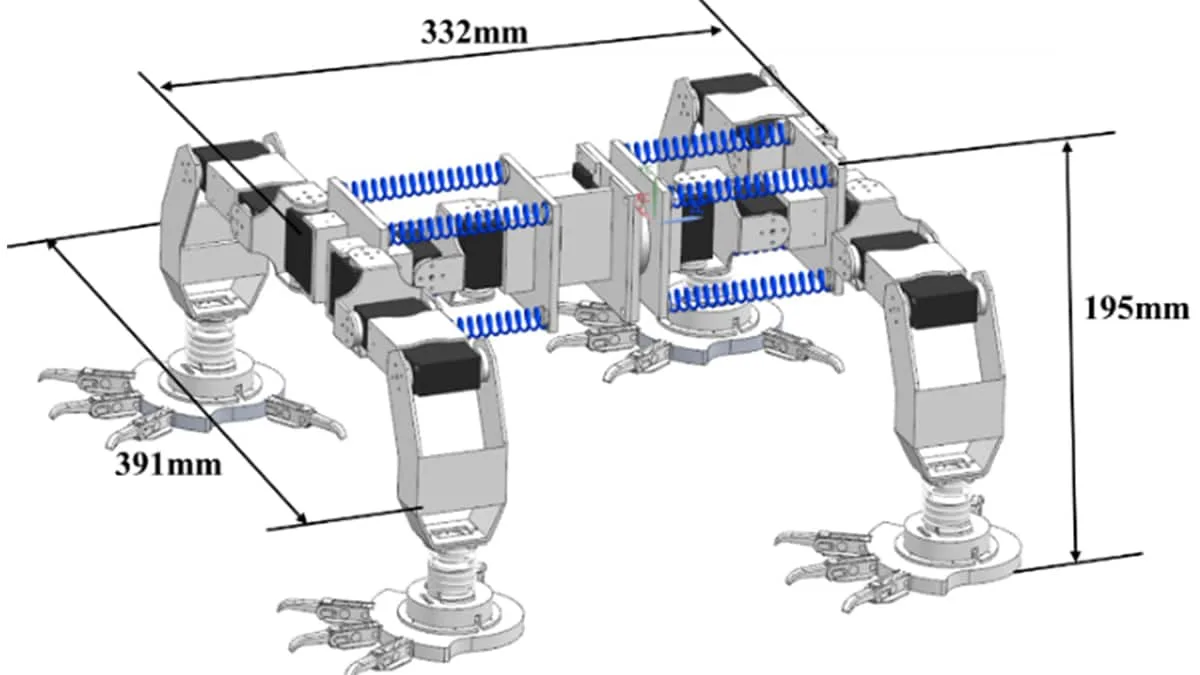
A new robotic system capable of planetary exploration through tethered jumping has been developed by researchers at the Robotics and Mechanisms Laboratory (RoMeLa) at the University of California, Los Angeles (UCLA). The robot, named SPLITTER (Space and Planetary Limbed Intelligent Tether Technology Exploration Robot), has been designed as a modular, multi-robot system composed of two quadrupedal robots connected by a tether. The system, expected to be presented at the IEEE Aerospace Conference (AeroConf) 2025, has been designed to navigate low-gravity environments such as the moon and asteroids. Reports indicate that the robotic system can perform successive jumps while collecting scientific data, providing an alternative to conventional planetary rovers and drones.

SPLITTER’s Design and Capabilities

According to the study published on the arXiv preprint server, SPLITTER consists of two Hemi-SPLITTER robots connected by a tether, forming a dumbbell-like structure. The tether enables mobility and stability during mid-air travel, eliminating the need for additional attitude control mechanisms such as gas thrusters or reaction wheels. The system has been designed to dynamically alter its inertia by adjusting limb positions and tether length, ensuring stability during flight. The development of SPLITTER was driven by the limitations of traditional planetary rovers, which are often slow and cumbersome, and the impracticality of drones due to the absence of atmospheric conditions on celestial bodies like the moon and asteroids.

Mechanism Behind SPLITTER’s Motion

Reports suggest that SPLITTER incorporates an inertial morphing mechanism based on a Model Predictive Controller (MPC) to regulate its orientation during mid-air movements. The concept is based on the Tennis Racket Theorem, also known as the Dzhanibekov effect, which describes how objects with asymmetric inertia undergo spontaneous rotational flips. Yusuke Tanaka, lead author of the study, told Tech Xplore that the technique allows aggressive stabilization of the robot’s mid-air flight through controlled inertia adjustments. It has been suggested that this method significantly enhances the efficiency of planetary exploration by ensuring stability without relying on external force mechanisms.

Potential Applications and Future Research

The research team has indicated that SPLITTER could be deployed in planetary exploration missions as a swarm of robots, allowing extensive and unstructured terrain to be efficiently traversed. The tether mechanism could also enable one unit to explore craters or caves while the other remains anchored, providing support. Dennis Hong, director of RoMeLa and principal investigator of the project, told Tech Xplore that ongoing research is focusing on improving the hardware, including new actuators and sensing mechanisms. Future studies are expected to further validate the inertial morphing mechanism through high-fidelity simulations, with the long-term goal of enhancing SPLITTER’s capabilities for real-world space applications.

For the latest tech news and reviews, follow Gadgets 360 on X, Facebook, WhatsApp, Threads and Google News. For the latest videos on gadgets and tech, subscribe to our YouTube channel. If you want to know everything about top influencers, follow our in-house Who’sThat360 on Instagram and YouTube.

Global Rocket Launches Reach Record High in 2024, With More Growth Expected in 2025

May 2024 Solar Storm Triggers Unusual Radiation Belts, Raising Space Safety Concerns

Posted on

Scientists Discover Two New Supernova Remnants in a Surprising Location

Two mysterious light sources detected on the outskirts of the Large Magellanic Cloud have been identified as previously unknown supernova remnants. The discovery was made using the European Space Agency’s X-ray observatory, XMM-Newton after observations revealed unexpected X-ray emissions. Supernova remnants are formed when massive stars explode, creating shock waves that ionise and compress surrounding interstellar matter. The detection of these remnants in an area where supernovae are rarely found has raised new questions about the distribution of ionised gas in this dwarf galaxy.

Identification of J0624-6948 and J0614-7251

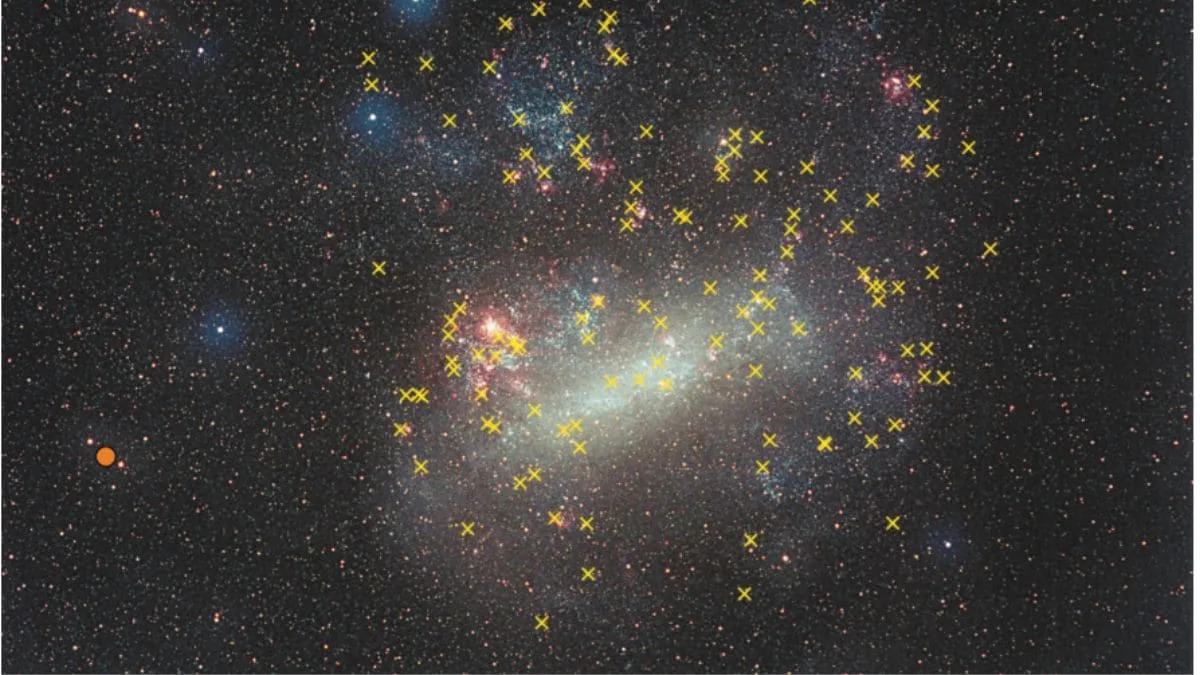
According to a study published in Astronomy & Astrophysics, the two supernova remnants, J0624-6948 and J0614-7251, were observed as distinct circular structures in visible-light imaging. The newly released images from ESA show these remnants in the lower-left portion of the Large Magellanic Cloud, with J0624-6948 appearing in orange and J0614-7251 in blue. As reported by space.com, previously identified supernova remnants in the galaxy were marked with yellow crosses. The study explains that for a supernova to leave behind a remnant, the explosion must occur in a region containing ionised gas, typically found in dense star-forming areas rather than in the outskirts of a galaxy. The brightness and size of the newly detected remnants align with other confirmed cases in the Large Magellanic Cloud.

Impact on Understanding of Galactic Structures

In an official statement ESA scientists noted that these findings suggest a higher concentration of ionised gas in the Large Magellanic Cloud than previously estimated. The research proposes that interactions between the Milky Way, the Small Magellanic Cloud, and the Large Magellanic Cloud could be influencing the movement and compression of interstellar material. It is suggested that gravitational forces between these galaxies may be altering gas distribution, leading to unexpected regions of star formation and supernova activity.

For the latest tech news and reviews, follow Gadgets 360 on X, Facebook, WhatsApp, Threads and Google News. For the latest videos on gadgets and tech, subscribe to our YouTube channel. If you want to know everything about top influencers, follow our in-house Who’sThat360 on Instagram and YouTube.

Bitcoin Falls to $95,000 as Altcoins Decline Amid Unchanged US Interest Rates

Global Rocket Launches Reach Record High in 2024, With More Growth Expected in 2025

Related Stories

Posted on

Snapdragon 6 Gen 4 Chipset With Enhancements for Gaming, Generative AI Unveiled

Snapdragon 6 Gen 4 chipset was unveiled by Qualcomm on Wednesday, with significant upgrades compared to the previous generation. The company’s newest mobile processor is aimed at offering enhanced capabilities and optimised performance for affordable smartphones. The mobile platform also becomes the first in the series to get support for generative artificial intelligence (AI) capabilities and Snapdragon Game Super Resolution’s gaming scene upscaling. The chip maker has also added enhancements to improve low-light photography, better wireless audio sharing via Bluetooth, and faster 5G connectivity across more networks.

Snapdragon 6 Gen 4 Chipset Unveiled

In a press release, the chip maker unveiled the Snapdragon 6 Gen 4 mobile platform. The chipset is the first in the series to be fabricated on the Taiwan Semiconductor Manufacturing Company’s (TSMC) 4nm process technology. In the past, Qualcomm has used a 4nm node from Samsung.

The processor also becomes the first in the series to get ARMv9-based CPU cores and features the Cortex-A720 as the prime core clocked at 2.3GHz. Additionally, there are three A720 performance cores with a clock speed of 2.2GHz, and four Cortex-A520 efficiency cores clocked at 2.3GHz. Notably, the mobile platform gets a Kyro series CPU, Adreno GPU, and the Qualcomm Hexagon neural processing unit (NPU) for AI inference.

Qualcomm’s Snapdragon 6 Gen 4 SoC is claimed to offer 11 percent higher CPU performance, 29 percent faster graphics rendering, and 12 percent improved power optimisation. Notably, the company did not share any details about the Adreno GPU.

Coming to features, the new chipset comes with the Qualcomm AI Engine which brings INT4 support for the first time in the series. It will allow faster AI processing for devices while optimising the models to fit the limited amount of RAM.

For cameras, the Snapdragon 6 Gen 4 processor sports triple 12-bit ISPs that will support sensors up to 200-megapixel. It will also support 4K HDR video recording at 30fps. Other supported formats include HDR10, HLG, and 10-bit HEIF.

Snapdragon 6 Gen 4 can support up to full-HD+ (1080+) resolution with up to 144Hz refresh rate. Qualcomm highlighted that the new chipset supports up to 16GB of LPDDR5 RAM with a speed of 3,200Mhz. It also offers UFS 3.1 support for storage. The 5G modem supports sub-6GHz and mmWave with downlink speeds of up to 2.9Gbps. The mobile platform also supports Wi-Fi 6E (802.11ax), Bluetooth 5.4 with aptX Adaptive, triple frequency positioning for GPS receivers, and USB Type-C 3.1 connectivity.

Realme, Oppo, and Honor are expected to announce smartphones with the Snapdragon 6 Gen 4 SoC in the coming months.

For the latest tech news and reviews, follow Gadgets 360 on X, Facebook, WhatsApp, Threads and Google News. For the latest videos on gadgets and tech, subscribe to our YouTube channel. If you want to know everything about top influencers, follow our in-house Who’sThat360 on Instagram and YouTube.

Senua’s Saga: Hellblade 2 Said to Arrive on PS5 Soon, Could Be Announced at State of Play

Galaxy F06 5G Is Samsung’s First Sub-Rs. 10,000 5G Smartphone and Packs Segment-First Features

Posted on

Eclipsa Audio, the new Dolby Atmos competitor, is coming to Google TV sets and LG TVs – but we’re still missing the most important news

Google and Samsung’s Atmos rival, Eclipsa, is coming to LG and Google TVs The 3D audio format will be baked into Android 16 too No support from any streaming services except YouTube so far There’s a new 3D audio format in town, but when will TV owners get to hear it? While informed listeners may know their way around Dolby Atmos, DTS:X or even the Auro-3D format coming to Nvidia Shield devices, Eclipsa is a new open-source 3D audio format developed by Google and Samsung. Imagined as a competitor to Dolby Atmos – much like how Samsung’s HDR10+ picture format rivals Dolby Vision – Eclipsa was formally unveiled at CES 2025 and confirmed to launch in all 2025 Samsung TVs and soundbars. Speaking to FlatpanelsHD, Google representatives confirmed that Eclipsa will be baked into the Android 16 operating system, meaning it will get support on Google TVs and other smart TV makers that use the Android OS, such as Hisense, TCL, Sony and Philips TV. Beyond that, the aim is to get Eclipsa Audio running on mobile devices and web browsers, alongside AV receivers. FlatpanelsHD also reports that support will come to webOS, used on LG TVs. But the question remains: where and how will anyone access Eclipsa-coded audio? YouTube should be the first main beneficiary of Eclipsa, but will creators use it? (Image credit: Shutterstock / Hamara) The waiting game Eclipsa is channel-based, meaning it ties sound sources to specific channels (like in a 2.0 stereo or 5.1 surround-sound setup) rather than individuating each sound source (as in the object-based Dolby Atmos format). However, Eclipsa supports ‘up to 28 input channels’ according to FlatpanelsHD, so there’s more than enough information to create a convincing 3D soundspace for home listening. While it trades a little flexibility, and specificity of location, it’s also somewhat easier to deploy and recreate consistently. Given Google’s involvement, Eclipsa Audio is being angled as a multipurpose 3D audio format that can roll out across its massive network of Android devices for any audio source, even humdrum YouTube videos, rather than focusing primarily on high-end entertainment output like movies, TV shows, music and games. YouTube creators will apparently be able to upload Eclipsa-coded content later in 2025. Sign up for breaking news, reviews, opinion, top tech deals, and more. In a blog post detailing the new format, Google says that “spatial audio technologies were first developed over 50 years ago, and playback has been available to consumers for over a decade, but creating spatial audio has been mostly limited to professionals in the movie or music industries. That’s why Google and Samsung are releasing Eclipsa Audio, an open source spatial audio format for everyone.” However, 3D audio formats generally have been pushed on high-end TV models and major TV streaming services, with interest driven by cinephiles/audiophiles eager to improve their home theater experience with more immersive sound. It’s not clear, either, whether YouTube creators will feel incentivised to start creating content in the new format en masse. As FlatpanelsHD notes, the Atmos-minded Netflix has yet to voice its support, despite its involvement with Google and Samsung in the Alliance for Open Media (AOM), and Google reps couldn’t comment on Apple’s plans for its tvOS or iOS platforms either. The notion of open-source 3D audio is very appealing, especially if it does improve the kind of everyday audio experienced through Android smartphones and tablets, or through the YouTube app. But it’s going to be hard to shout about Eclipsa until some major players in the field – and content creators on the ground – actually decide to get involved. A format on the best TVs and best soundbars does no good if there’s nothing to watch. You might also like

Posted on

May 2024 Solar Storm Triggers Unusual Radiation Belts, Raising Space Safety Concerns

A significant solar storm that occurred in May 2024 led to the formation of two temporary radiation belts around Earth, as confirmed by satellite data. The discovery was made when a dormant satellite resumed operations after months of inactivity. The storm, which was among the most intense geomagnetic disturbances since 1989, resulted in widespread auroral displays and introduced high-energy particles into the Earth’s magnetosphere. While such temporary belts have been documented before, scientists have found that one of the newly formed belts exhibited unique properties, with a composition different from previous observations. One of the belts has already dissipated, but the other remains intact, posing potential challenges for future space missions.

Temporary Radiation Belts Detected Following Intense Solar Activity

According to research published in the Journal of Geophysical Research: Space Physics, the Colorado Inner Radiation Belt Experiment (CIRBE) satellite identified the new radiation belts upon reactivation in June 2024. The spacecraft had gone silent due to a technical issue in April, missing the peak of the storm. Upon its return, data analysis revealed the existence of two additional belts situated between the pre-existing Van Allen radiation belts.

It was determined that while the first belt contained high-energy electrons, consistent with previous storm-induced radiation belts, the second belt displayed an unusual concentration of high-energy protons. This presence of protons was linked to the extreme nature of the solar storm, which had released significant bursts of charged particles into Earth’s magnetic field.

Extended Lifespan of the Newly Formed Belts

Temporary radiation belts generated by solar storms are known to persist for weeks before dispersing. However, as per the findings, the electron-dominated belt remained for three months, while the proton-rich belt is still present. David Sibeck, a heliophysicist at NASA’s Goddard Space Flight Center, stated in an interview with Space.com that these particles could stay trapped for an extended period, creating a lasting impact on Earth’s inner radiation environment.

The proton belt’s resilience is attributed to its location in a more stable region of Earth’s magnetic field, where external disturbances have less impact. In contrast, a subsequent solar storm in June 2024 caused a reduction in the electron belt, with further weakening observed in August. Despite this, the proton belt has remained largely unaffected.

Implications for Space Missions and Satellite Operations

The existence of these new radiation belts has raised concerns regarding the safety of satellites and crewed space missions. Charged particles at high energy levels can pose risks to electronic components and human health in space. Spacecraft passing through these regions, particularly those traveling to geostationary orbit or beyond, may require additional shielding to mitigate radiation exposure.

As reported, the presence of these belts could necessitate adjustments in launch plans for future missions. With prolonged radiation hazards, space agencies may need to factor in the evolving space weather conditions before deploying satellites or sending astronauts beyond Earth’s orbit.

Despite the CIRBE satellite’s crucial discovery, the same solar activity that led to the identification of the new radiation belts also caused the spacecraft’s eventual demise. The increased energy injected into the atmosphere resulted in greater drag, which led to CIRBE’s descent and disintegration in October 2024.

The impact of solar storms on Earth’s magnetosphere continues to be closely monitored, with scientists studying how these phenomena affect both planetary and technological systems.

Posted on

Vodafone Idea (Vi) 5G Roundup: Rollout Date, List of Available Cities, 5G Speeds, and More

Vodafone Idea (Vi) is all set to roll out its long-awaited 5G services in India. The telecom operator has finally announced that it will roll out 5G services in the country in the next few months, starting with major metropolitan cities like Delhi, Bangalore, and more. The latest move is set to bring the telecom operator back to competition with its bigger rivals, Reliance Jio and Bharti Airtel. So, if you are wondering when the operator will introduce its 5G services in the country, you have come to the right place. In this article, we will be talking in depth about the Vi 5G services, its rollout date, list of available cities, expected pricing, and more. So, without further ado, let’s get started. 

Vi 5G Rollout in India Details

Vodafone Idea (Vi), in its quarterly report for the third quarter of the financial year 2024-25, revealed that it is planning to roll out its 5G services in the country. The company has confirmed that it will begin the rollout of its 5G services in April 2025, though the exact date of the rollout is not known at the time of writing. “We are driving investments, and the velocity of capex deployment is set to accelerate in the coming quarters. Concurrently, the phased rollout of 5G services is underway, targeting key geographies,” said company CEO Akshaya Moondra in a statement.

Interestingly, in December 2024, the telecom operator rolled out its 5G services in 17 circles across India, though it was not part of the commercial rollout. The company clarified that it had rolled out the 5G connectivity as per the Minimum Rollout Obligation set by the Government. Finally, the brand has confirmed that it will begin the 5G rollout in the next few months. 

Vi 5G: List of Available Cities

Vi has revealed that it will be rolling out its 5G services in select cities across the country, with more to follow in the near future. As per the brand, the Vi 5G connectivity will be first available in Delhi, Chandigarh, Bengaluru, and Patna. The operator has not revealed any other cities in this phase. 

Vi 5G Speed

Although the exact 5G speed is yet to be out after commercial rollout, the brand has run several 5G trials in different locations, giving us some insight into the potential 5G speeds on the Vi network. To start with, in May 2022, the company achieved a top download speed of 5.92Gbps during the 5G trials in Pune, while it got 1.2Gbps of speed at MG Road Metro Station in Bengaluru. Similarly, the brand was able to achieve around 1Gbps of download speed in different trials that took place in multiple cities across the country. 

Vi 5G Spectrum

Vodafone Idea (VI) acquired 50 MHz spectrum in a 3,300 MHz band across 17 circles each for Rs 15,137.75 crore through auctions that were held in 2022. That said, it is reported that the telecom operator might use a mix of 3.5GHz (C-band) and 1,800MHz spectrum for its initial 5G rollouts. That said, we might get more information closer to the launch timelines. 

Vi 5G: Expected Prices of Plans

The brand has also revealed that it plans to introduce cheaper 5G plans than Jio and Airtel. The company has confirmed that the plans may be up to 15 percent cheaper at entry levels compared to other telcos, meaning that we might see another price war between the telecom operators once the Vi 5G network is rolled out. 

Posted on

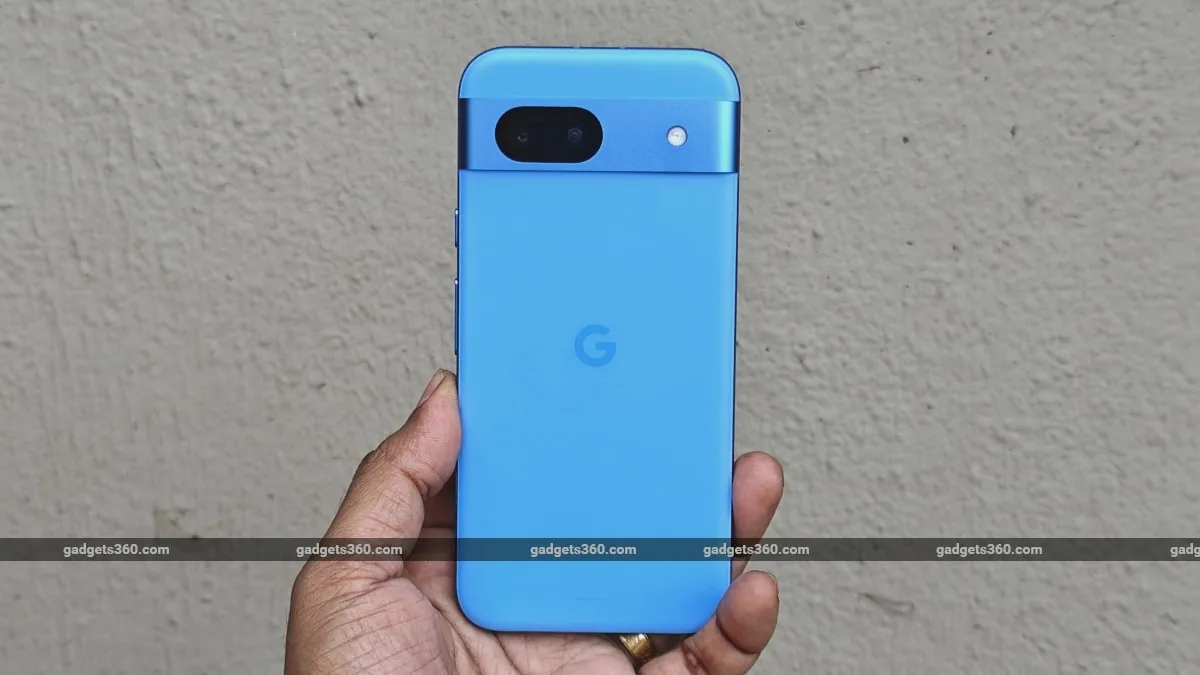
Google Pixel 9a Leaked Renders Suggest New Rear Camera Design, Four Colour Options

Google Pixel 9a is expected to arrive in the markets by next month. Over the past few weeks, several leaks and reports have hinted at key features of the handset. Recently, images of the official covers for the purported smartphone surfaced online. Now, renders of the phone itself have leaked, showing the complete design and expected colour options. The anticipated Google Pixel 9a, tipped to come with a Tensor G4 SoC, will succeed the Pixel 8a, which was unveiled in May 2024. 

Google Pixel 9a Leaked Renders

An Android Headlines report has shared leaked design renders of the anticipated Google Pixel 9a. The phone appears in four colour options including Iris, Obsidian, Peony and Porcelain. It is seen with a flat rear camera module, flush with the rear panel of the handset. This is a notable departure from the visor-like camera island on the preceding Pixel 8a.google pixel 9a android headlines inline pixel 9a

The Google Pixel 9a is said to measure 154 x 73 x 8.9mm in size. This is larger than the existing version and a bigger battery is claimed to be the reason behind the size upgrade. It is expected to house a 5,100mAh battery, the largest in a Pixel phone yet. The upcoming handset is tipped to maintain the 23W wired and 7.5W wireless charging support, the same as the Pixel 8a.

Previous reports have suggested that the Google Pixel 9a will likely get a Tensor G4 SoC alongside a Titan M2 security chip. Pre-orders for the handset are tipped to begin on March 19 and it is expected to go on sale on March 26. The price of the phone is said to start at $499 (roughly Rs. 42,000) for the 128GB storage option.

For optics, the Google Pixel 9a is expected to carry a 48-megapixel primary rear sensor alongside a 13-megapixel ultra-wide Sony IMX712 sensor. The front camera is expected to use a 13-megapixel sensor as well. The phone may come with an IP68 rating for dust and water resistance.

Posted on

This super-cheap Sony soundbar is one of the best budget options I’ve ever tested

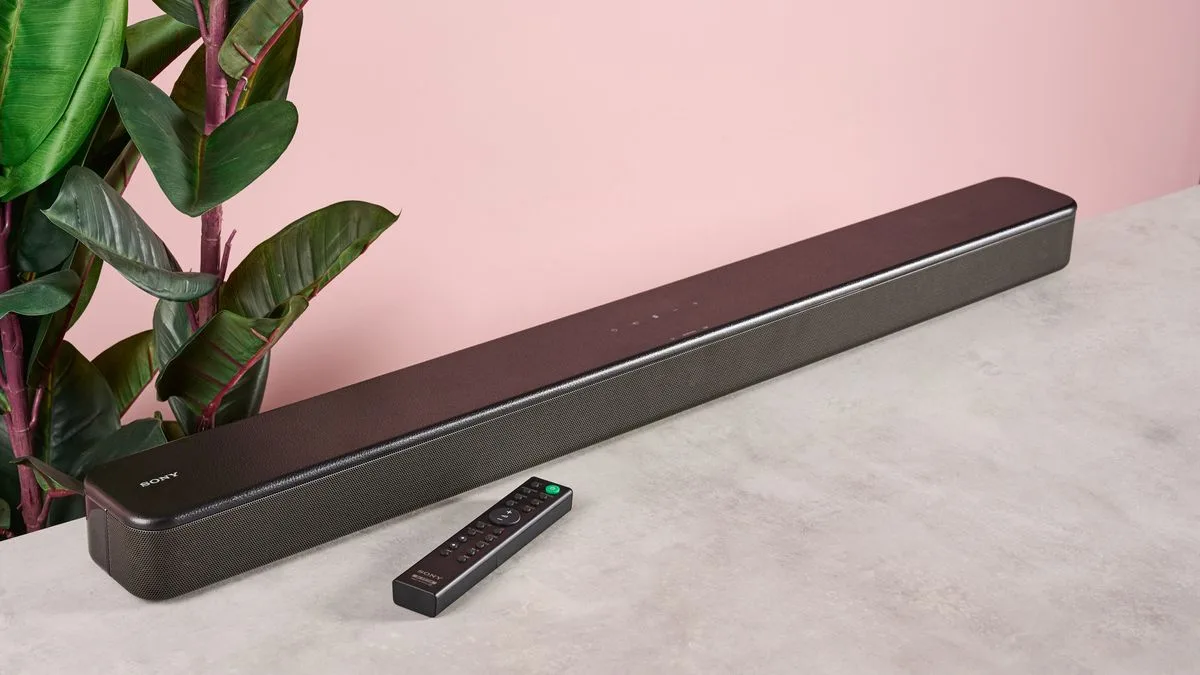
Sony HT-SF150 review If you’ve decided it’s time to upgrade your sub-par TV audio, but don’t want to lose your life savings, the Sony HT-SF150 could be your ideal low-budget solution. This super-slim 2.0 channel soundbar aims to supply “punchy bass without compromising detail and clarity”, simple connectivity and cinematic virtual surround sound – but does it get the job done? Well, let’s kick things off by talking about setup. It really doesn’t get much easier than this: simply connect your soundbar via HDMI ARC or digital optical, plug it into a power outlet and you’re away. I selected HDMI ARC mainly because it allows you to adjust the soundbar’s volume with a standard TV remote – pretty handy. After getting the Sony HT-SF150 all set up, I got straight into testing its audio capabilities. I’m happy to report that it fared very well for a soundbar that’s often available for less than its already cheap $129 / £99 / AU$194 list price. I didn’t encounter much tinniness or distortion, even at medium to high volumes – something I’ve experienced with a lot of cheap soundbars. Speaking of volume, this thing can get surprisingly loud, in part thanks to its 120W power output, which is considerably higher than what some of the best cheap soundbars offer. (Image credit: Future) Staying with sound, I was impressed by dialogue clarity when using the Sony HT-SF150. For instance, I watched the movie Smile on Netflix and, when two women were speaking in an isolated room, the vocals were super clear and each character’s tone sounded natural. When listening to a podcast, I could switch to Voice mode using the included remote, which really brings speech to the forefront and presents it in a crisp, clear-cut manner. In addition to Voice, there are Standard, Cinema, Music, Night and Auto Sound modes. That last mode tunes EQ depending on what content you’re consuming, though sometimes I still needed to do this manually. Another glowing aspect of this soundbar’s performance is the effectiveness of Sony’s S-Force Front Surround virtual processing, which endeavors to emulate “cinema-style surround sound.” That may be a bit of a stretch for a soundbar with no Dolby Atmos or DTS:X, let alone any sub or rear speakers, but, while watching The Boy and the Heron, I was struck by the soundbar’s ability to accurately map the heron’s flight as he soared across my screen and then towards me. You won’t get incredible verticality or room-filling expansiveness here, but the HT-SF150 certainly outclassed my TV’s efforts. (Image credit: Future) One area where a lot of standalone soundbars fall flat is bass output – it can be hard to muster a meaty boom without a dedicated subwoofer – especially in a budget model like this. And although the HT-SF150 won’t rock your world with mesmerizing low-end output, it still plates up decent bass. This model includes a built-in bass reflex speaker, which gives a leg up to deep tones and makes it ideal for movies or video games with dark or ambient scores. When playing Final Fantasy VII: Rebirth, I was met with impressive depth as the protagonist Cloud faced oversized mechanical monstrosities with thumping footsteps and ground-shaking attacks. I would’ve liked an option to raise bass levels manually to really enhance low-end output, but you won’t get that, unfortunately. In some places, this game includes speech from the main cast, chatter from background characters or enemies and music from its grandiose soundtrack. This exposed a slight weakness in the Sony HT-SF150 – it sometimes leans into a slightly muddied presentation. When there are several layers to balance out, you may experience some business in the mid-range. There’s no abrasiveness or harshness to endure, just a bit of bloating that can leave some details under wraps. (Image credit: Future) You’re probably not expecting perfectly separated, ultra-detailed audio, so for the most part, the HT-SF150 performs well in this department. But sound isn’t the only positive part of this model, I also loved its design. Really, this soundbar looks a lot more premium than many of its budget counterparts. It has a beautiful leather-like finish on top, classy onboard buttons, and an attractive wraparound speaker grille. The included remote is slim with well-sized button controls and a premium feel. Unfortunately, some features can only be triggered by repeatedly pressing certain buttons on the remote, which can be a bit confusing unless you consult the user manual. The only frustrating aspect of this soundbar’s design is its LED display. As with competitors like the Panasonic SC-HTB100, this thing just uses small lights to indicate volume and sound mode alterations or when it’s in Bluetooth mode. This works fine, but I do prefer a more visual display with letters and numbers – something you get with the Majority Elias, for instance. (Image credit: Future) Back to the positives, though. I found this soundbar to be pretty feature-rich given its price-point. For example, you can toggle Dolby Dynamic Range Control, which makes Dolby Digital audio easier to hear at lower volumes. There’s also multiplex broadcast sound and USB connectivity available. One key feature is the inclusion of Bluetooth 4.2, which enables you to connect your phone to the soundbar and play music. Musical performance wasn’t amazing over Bluetooth – breathy vocal details in I Want You by Moloko weren’t very audible and could sound a bit lost in the overall mix, even when listening in Music mode. However, the low-end kick in the bass-heavy Splash Mountain by Yung Gravy was commendable and the depth and rapid decay of the drum machine in Black Eye by Allie X also stuck out to me. This soundbar is up to the task if you just want to listen to some tunes in the background, but it won’t impress audiophiles or compete with some of the best soundbars. Overall, the Sony HT-SF150 is a very solid budget soundbar with a broad feature set, generally clear-cut dialogue, considerable power, and an elegant design. For the price, it’s fantastic value and while it’s not without its flaws sonically, it can be trusted to offer a leg up to some of the best small TVs and even some more premium models. So, this soundbar is definitely worth bearing in mind for those on a budget, but if you’re a little short on space, the mini Hisense HS214 is an awesome alternative. Those with a bit more cash may also want to consider one of the best Dolby Atmos soundbars for mind-blowingly good spatial sound. (Image credit: Future) Sony HT-SF150 review: Price and release date $129 / £99 / AU$194 Launched in 2018 The Sony HT-SF150 is available in the UK and has an RRP of £99. In the US and Australia, the model has a slightly different name – the Sony HT-S100F – and a list price of $129 / AU$194. But I bring great news…this soundbar is often available for a fair amount less. I’ve often seen it sell for less than $100 / £90 / AU$180, which makes it an incredibly low-priced option. It may not be the newest soundbar on the market, but it’s compatible with all modern TVs thanks to its use of HDMI and digital optical connectivity. Sony HT-SF150 review: Specs Swipe to scroll horizontally Dimensions 35.4 x 2.5 x 3.5 inches / 900 x 64 x 88mm Speaker channels 2.0 Connections HDMI, digital optical, USB, Bluetooth 4.2 Dolby Atmos / DTS:X No / No Sub included No Rear speakers included No (Image credit: Future) Should I buy the Sony HT-SF150? Swipe to scroll horizontally Attributes Notes Rating Features S-Force, great sound modes, no bass/treble adjustment or Atmos. 4/5 Audio performance Can get a little bloated but usually clear dialogue and decent bass, powerful too. 4/5 Design Premium-looking given its price, neat remote, small LED display can confuse. 4.5/5 Setup and usability Easy to set up with HDMI, plenty of ways to connect, some unorthodox controls. 4/5 Value Great price for the sound upgrade and build quality on offer. 4.5/5 Buy it if… Don’t buy it if… Sony HT-SF150 review: Also consider Swipe to scroll horizontally Row 0 – Cell 0 Sony HT-SF150 Hisense HS214 Amazon Fire TV Soundbar Price $129 / £99 / AU$194 $99 / £79 (about AU$160) $119.99 / £119.99 (about AU$180) Dimensions 35.4 x 2.5 x 3.5 inches / 900 x 64 x 88mm 25.6 x 3.7 x 2.3 inches / 650 x 95 x 58mm 24 x 3.5 x 2.6 inches / 610 x 90 x 65mm Speaker channels 2.0 2.1 2.0 Connections HDMI, digital optical, USB, Bluetooth 4.2 HDMI ARC, digital optical, AUX, USB, coaxial, Bluetooth 4.2 HDMI ARC, digital optical, Bluetooth Dolby Atmos / DTS:X No / No No / No No / No Sub included No No (but includes built-in woofer) No Rear speakers included No No No Sony HT-SF150 review: How I tested (Image credit: Future) Tested for one week Connected the soundbar to the Hisense U7K TV at home Used the HDMI ARC connectivity option For one week, I had the not-so-arduous task of testing the Sony HT-SF150. During this time, I used HDMI ARC to connect the soundbar to my Hisense U7K TV – which already has solid built-in audio. While testing, I viewed a variety of TV shows, videos and movies – mainly using streaming services like Amazon Prime Video, Netflix and YouTube. I also played Final Fantasy VII: Rebirth on the PS5 to assess the soundbar’s gaming capabilities. In addition, I connected the Samsung Galaxy S24 FE to the SF150 and trialed Bluetooth connectivity for playing music. I made sure to play tracks from the TechRadar testing playlist to judge the quality of the soundbar’s Music mode. First reviewed: February 2025 Read more about how we test