
Posted on

Powerbeats Pro 2 With Heart Rate Monitor, Up to 45 Hours Total Battery Life Launched in India

Beats launched the Powerbeats Pro 2 in India on Tuesday. The earphones are equipped with active noise cancellation (ANC) including transparency modes as well as features like personalised spatial audio with dynamic head tracking, and voice Isolation support. The case supports Qi wireless charging and gets a USB Type-C port. The earphones are claimed to offer up to 45 hours of battery life with the case. The earphones come with the Apple H2 chipset, a heart rate monitor, and offer an IPX4 rating.

Powerbeats Pro 2 Price in India, Availability

Powerbeats Pro 2 price in India is set at Rs. 29,900. They are currently available for purchase in the country via the official website and will go on sale via other channels starting February 13. They are offered in four colour options including Electric Orange, Hyper Purple, Jet Black, and Quick Sand.

Powerbeats Pro 2 Specifications, Features

The Powerbeats Pro 2 earphones are equipped with dual-element dynamic diaphragm transducers, which are claimed to offer high-quality sound. They support adaptive ANC including a transparency mode as well as adaptive EQ features. They come with support for spatial audio with dynamic head tracking technology. 

Powerbeats Pro 2 feature three mics on each earphone including a dedicated voice microphone. They are equipped with optical sensors for in-ear detection and heart-rate monitoring, along with an accelerometer and gyroscope.

The heart rate monitoring feature in the Powerbeats Pro 2 is said to help athletes track their performance in real-time. The company explains that it uses LED optical sensors that pulse over 100 times per second to measure blood flow and the data can then be shared with any compatible fitness apps instantly. At launch, it will work with apps like Runna, Nike Run Club, Open, Ladder, Slopes, and YaoYao in India.

Beats claims that the Powerbeats Pro 2 offer seamless pairing for both Apple and Android users with Bluetooth 5.3 connectivity. With Apple devices, they support one-touch pairing, automatic switching, Audio Sharing, hands-free Siri, and Find My. Meanwhile, Android users can access these features through the Beats App. Users can control music with on-ear buttons and a tactile volume rocker that’s available on the earbuds. You can also get hands-free Siri access with a ‘Hey Sir’ or ‘Siri’ command.

The Powerbeats Pro 2 are backed by Apple’s H2 chip and are claimed to provide up to 10 hours of playback time, and a total of 45 hours with the charging case. A quick five-minute charge is said to offer up to 90 minutes of playback time. The case supports Qi wireless charging, has a USB Type-C port, and is said to be 33 percent smaller than the predecessor. 

Beats offers five ear tips in the box, from XS to XL. Each earphone weighs 8.7g, while the case weighs 69g. The earphones come with an IPX4 rating for splash resistance. 

Posted on

Motorola Razr+ 2025 Design, Key Features Leaked; May Arrive as Razr 60 Ultra in Select Markets

Motorola Razr+ 2025 may launch soon. The company has yet to officially confirm the clamshell foldable but details about it have surfaced online. A report has shared leaked design renders of the handset as well as some expected key features like battery and display sizes. The phone is tipped to launch as the Motorola Razr 60 Ultra in select markets. It is expected to succeed the Razr 50 Ultra, which was launched in India in July 2024 with a Snapdragon 8s Gen 3 SoC.

Motorola Razr+ 2025 Design, Features (Expected)

The Motorola Razr+ 2025 carries the codename “Orion,” according to a report by Android Headlines. The report added that the phone is expected to launch “very, very soon” but did not specify a timeline. Notably, the Razr 2024 series was launched in June of that year. In countries outside the US, the phone may launch with the moniker Motorola Razr 60 Ultra.

motorola razr plus 2025 android headlines inline  Motorola Razr 2025

Motorola Razr+ 2025 seen in with faux leather stitched back panel
Photo Credit: Android Headlines

Design-wise, the Motorola Razr+ 2025 appears in a dark green shade and appears to have a faux leather stitched rear panel. It has glossy rails, which could be aluminium. The cover screen and dual cameras appear largely similar to the predecessor. 

Motorola is expected to offer a 6.9-inch main display on the Moto Razr+ 2025, similar to the preceding handset. It will likely be powered by a Snapdragon 8 Elite SoC. However, the report was unable to specify if this would be the octa-core or a 7-core version. 

The Motorola Razr+ 2025 is expected to support 12GB of RAM and 256GB of onboard storage. It will likely house a 4,000mAh battery, similar to the existing handset. The report added that the smartphone could sport a wide and a telephoto lens.

The Motorola Razr 50 Ultra sports a 4-inch LTPO pOLED panel cover panel. It is powered by a Snapdragon 8s Gen 3 chipset, paired with up to 12GB of LPDDR5X RAM and 512GB UFS 4.0 storage. For optics, it has a 50-megapixel primary sensor alongside a 50-megapixel telephoto shooter with 2x optical zoom at the back and a 32-megapixel front camera sensor. The handset comes with support for 45W wired, 15W wireless and 5W reverse charging support.

For the latest tech news and reviews, follow Gadgets 360 on X, Facebook, WhatsApp, Threads and Google News. For the latest videos on gadgets and tech, subscribe to our YouTube channel. If you want to know everything about top influencers, follow our in-house Who’sThat360 on Instagram and YouTube.

OnePlus 13R Receives AI Live Translation and Camera Upgrades With Latest Update

Posted on

Vivo T4x 5G India Launch Timeline, Price Range, Colour Options, Battery Size Leaked

Vivo T4x 5G was previously spotted on the Bureau of Indian Standards (BIS) website, suggesting its imminent launch in the country. Now, a report has shared the expected launch timeline and hinted at some of its key features. The possible price range, colour options, and likely design elements have also been tipped. The Vivo T4x 5G is said to succeed the Vivo T3x 5G, which was launched in the country in April 2024 with a Snapdragon 6 Gen 1 SoC.

Vivo T4x 5G India Launch Timeline, Price Range, Key Features (Expected)

The Vivo T4x 5G will likely launch in India in March 2025, according to a MySmartPrice report. An exact date has not yet been suggested. The report added that the purported handset is expected to be priced within Rs. 15,000, similar to the preceding model. 

According to the report, the Vivo T4x 5G could pack a 6,500mAh battery, which is said to be the largest in its segment. The existing Vivo T3x 5G carries a 6,000mAh battery. The report added that the phone will likely be offered in India in Pronto Purple and Marine Blue colourways.

The design of the Vivo T4x 5G is expected to include a Dynamic Light feature, which lights up differently to indicate different notifications. No other details about the handset have been suggested yet but we can expect to learn more over the next few days. 

Notably, the price of the Vivo T3x 5G was slashed earlier this year. It is available at Rs. 12,499, Rs. 13,999 and Rs. 15,499 for the 4GB + 128GB, 6GB + 128GB, and 8GB + 128GB, respectively. The phone launched at Rs. 13,499, Rs. 14,999, and Rs. 16,499 for the 4GB, 6GB and 8GB variants, respectively. The handset is offered in Crimson Bliss, Celestial Green, and Sapphire Blue colour options.

Affiliate links may be automatically generated – see our ethics statement for details.
Posted on

New cheaper blue OLED material breakthrough could be great news for OLED TVs – and every other device

Researchers have discovered a new host material for blue OLED pixels Tests showed a big jump in power efficiency The breakthrough could mean cheaper production Good news for anyone hankering for a cheaper OLED TV: a new scientific breakthrough could pave the way for cheaper, more efficient OLED displays in our smart TVs, phones, tablets, and pretty much everywhere else – though the impact could be largest on TVs. Researchers at the University of Cambridge and University of Manchester have reportedly discovered a new ‘oxadiazine’ host material for creating high-efficiency, lower-cost, blue OLED pixels (via OLED-info). Blue OLED pixels are the white (blue?) whale of TV panel development, proving much more difficult to produce with the same light-emitting efficiency as their red and green counterparts, with more risk of instability and a short shelf-life. As the abstract from the scientific paper says: “Energy-efficient and deep-blue organic light-emitting diode (OLED) with long operating stability remains a key challenge to enable a disruptive change in OLED display and lighting technology.” However, it looks like headway is being made. The paper shows the molecular design of the new material, with 21% improvements in power efficiency and excellent “thermal stability” for use in blue OLED pixels. And while all OLED devices use blue pixels, the reason that’s especially good for TVs is that even the latest and greatest TV tech requires multiple layers of blue pixels, so that’s where the biggest effects may be felt. The Panasonic Z95B features LG Display’s new four-stack OLED panel. (Image credit: Future) The future of OLED There’s been a big push in recent years towards developing ‘phosphor OLED’ panels with greater power efficiency and higher brightness This means that a TV screen can deploy fewer layers of blue pixels for the same brightness output as existing screens. Sign up for breaking news, reviews, opinion, top tech deals, and more. LG’s latest ‘four-stack’ Primary RGB Tandem OLED panel (used in the LG G5 and Panasonic Z95B), for example, uses more blue layers than red or green. QD-OLED, as used in the Samsung S95F, relies heavily on blue light coming through a layer of quantum dots, so also requires several layers of blue pixels. So any method for reducing the complexity or cost of blue pixels is going to be very welcome. While phosphor OLED has proved difficult to manufacture so far, these kinds of breakthroughs show that headway is being made in blue options overall. A laboratory breakthrough like this will take time to impact mass panel production, of course, but it does bode well for the development of OLED in the coming years, and the hope for cheaper, more accessible OLED TVs that offer excellent picture quality for longer. While OLED TV prices have fallen in recent years, they’ve largely stalled around the $1,000 mark, and manufacturers and consumers alike have been waiting for something to break the deadlock. Hopefully, that future isn’t too far off. You might also like

Posted on

NASA, General Atomics Test Nuclear Fuel for Faster Mars Missions

Efforts to develop nuclear thermal propulsion (NTP) for future space missions have taken a significant step forward. General Atomics Electromagnetic Systems (GA-EMS), in collaboration with NASA, has conducted tests on nuclear reactor fuel designed for space travel. The trials, held at NASA’s Marshall Space Flight Center in Alabama, assessed the fuel’s ability to withstand extreme conditions that would be encountered during deep space missions. The successful results could accelerate plans for faster, more efficient space travel, reducing transit times for crewed missions to Mars.

Successful Testing at NASA’s Marshall Space Flight Center

As reported by space.com, according to the tests conducted at NASA’s facility, the reactor fuel was subjected to six thermal cycles using hot hydrogen, rapidly heating it to 2326.6 degree Celsius. The objective was to evaluate the fuel’s resilience under extreme temperature fluctuations and exposure to hot hydrogen gas, conditions necessary for nuclear thermal propulsion. GA-EMS President Scott Forney stated in a company release that the fuel demonstrated the ability to endure these conditions, reinforcing confidence in its potential for safe and reliable space propulsion.

First-of-Its-Kind Testing of Nuclear Fuel

GA-EMS Vice President of Nuclear Technologies and Materials, Christina Back, highlighted the uniqueness of these tests in the company release. The company was reported to be the first to utilise the compact fuel element environmental test (CFEET) facility at NASA’s Marshall Space Flight Center for such trials. Fuel performance was tested at temperatures reaching 2,727 degree Celsius, with findings indicating a significant efficiency boost over conventional propulsion systems.

Potential Impact on Space Exploration

As per sources, NASA has prioritised the development of nuclear propulsion due to its potential to significantly reduce travel time to Mars. Shorter missions could lower the risks associated with long-duration spaceflight, including radiation exposure and the need for extensive life-support resources. In 2023, NASA and the Defense Advanced Research Projects Agency (DARPA) announced joint efforts to develop an NTP system, with a planned demonstration by 2027. The latest advancements in nuclear propulsion technology could play a crucial role in achieving that goal, bringing human missions to Mars closer to reality.

Posted on

Samsung Galaxy S26 Series May Use Exynos SoCs as Foundry Achieves More Than 30 Percent Yield: Report

Samsung just launched it’s Galaxy S25 series with all three models going on sale in India. The smartphones are priced from Rs. 80,999 and offer Qualcomm’s latest Snapdragon 8 Elite processors in all markets. This was a noticeable shift from the Galaxy S24 series, which went with Samsung’s own Exynos 2400 SoC last year for all models except for its flagship Galaxy S24 Ultra. However, Samsung may reportedly switch back to its Exynos chips for its next-gen Galaxy S26 series.

A report by the Korean publication The Bell has pointed out that Samsung Electronics has witnessed success with its Exynos 2600 SoC yield. The Exynos 2600 SoC’s current success stems from its 30 percent yield, outperforming the Exynos 2500 SoC, which was never released. While achieving a 30 percent success rate is a big deal, we did see a similar report last year with the Exynos 2500 SoC, but as things panned out, Samsung clearly wasn’t in a position to roll them out with the Galaxy S25 series this year, opting for Qualcomm’s chipset instead.

The source points out that the chip division is now planning for mass production in the fourth quarter of this year. However, this is provided Samsung can achieve a 60 percent success rate (or yield) with for its 2nm chipset. A 60 percent yield is usually the requirement before a chipset can enter mass production.

The report also goes on to clarify that Samsung Electonics’ failure to deliver a better yield was the reason why Samsung opted for Qualcomm’s chipset in its latest Galaxy S25 series this year. Samsung had switched over to using its own Exynos 2400 SoC with its Galaxy S24 and Galaxy S24 Plus models last year.

As per the latest reports, Samsung’s Galaxy S26 series is set to debut around the same time its Galaxy S25 series was announced this year. Among the many upgrades, Samsung is said to finally switch to newer silicon carbon batteries, better cameras and even an under-display camera for its Galaxy S26 Ultra model.

Posted on

LG C5: everything we know so far about LG’s mid-range OLED TV

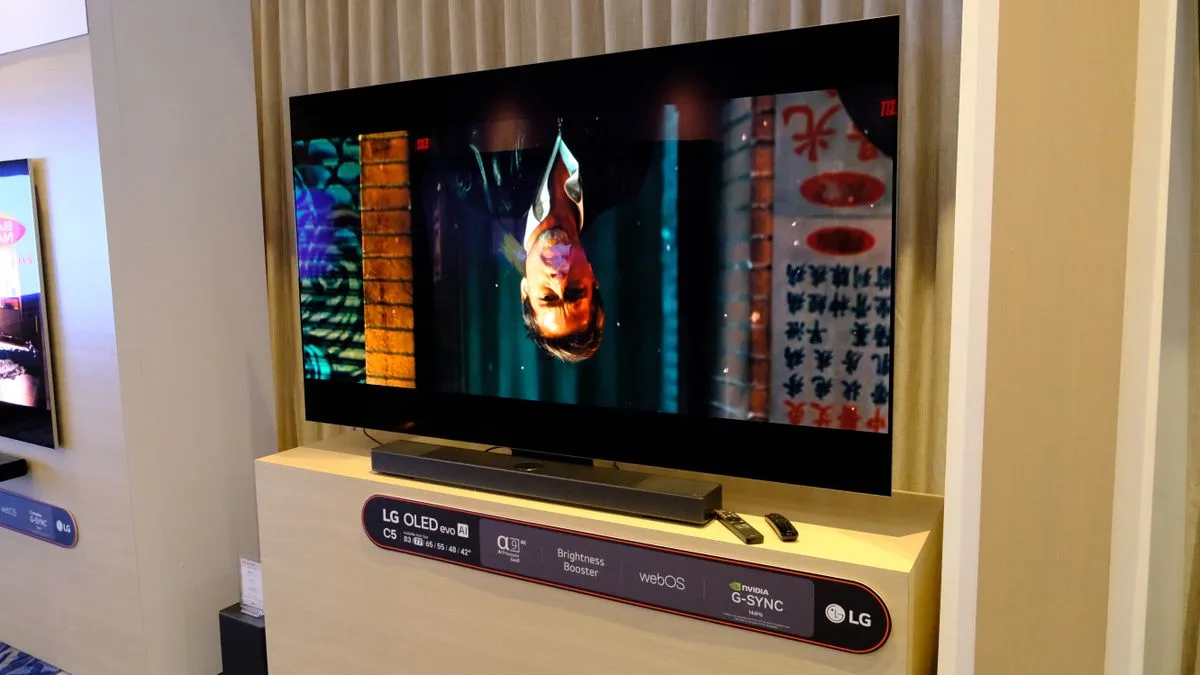
The LG C5 was revealed in January at CES 2025 as part of LG’s 2025 OLED TV lineup. While we still don’t have all the info on the C5, from what we’ve been told it looks like there will be minimal changes from its predecessor, the LG C4. These changes include higher brightness, improved processing and the latest iteration of LG’s smart TV platform, webOS 25. We were impressed with the LG C4 in 2024, thanks to its stunning contrast, stacked list of features and wide range of sizes. It was a noticeable step-up over the LG C3 from 2023 and the C4 earned its place among the best OLED TVs. We’ve seen the C5 in person and at first glance, it looked nice and bright, but not very different from the C4. This was only a brief preview at CES 2025, so we’ll wait to properly test it before we make our final judgment. Below, we look at what’s been confirmed so far about the C5 and everything we still need to know. At the time of writing, we’ve yet to have pricing and official release dates confirmed. LG C5 OLED TV: Prices and release date We don’t have pricing for the LG C5, but we can guess based on the launch pricing of the LG C4 (pictured) (Image credit: Future) At the time of writing, we don’t have official pricing or release dates for the LG C5, but we can speculate based on the same information for the C5’s predecessor, the LG C4. When the C4 was released in March 2024, it had a slight price increase over the LG C3 on every model size in the range. Pricing for the LG C4 at release was as follows: OLED83C4: $5,399 / £5,999 / AU$7,999 OLED77C4: $3,699 / £3,799 / AU$5,999 OLED65C4: $2,699 / £2,699 / AU$4,299 OLED55C4: $1,999 / £1,899 / AU$3,299 OLED48C4 $1,599 / £1,499 / AU$2,499 OLED42C4: $1,499 / £1,399 / AU$2,199 We guessed that the LG C4 would have a price increase due to inflation over the LG C3 before official pricing was confirmed, and were correct, with all C4 models priced roughly $200 higher than the same sizes in the C3 series. Sign up for breaking news, reviews, opinion, top tech deals, and more. We expect a price increase over the C4 series for all C5 sizes, once again due to inflation. Based on previous years, we anticipate that the C5 will launch in March or April 2025, as this is when LG has traditionally launched its new TVs. Again we’re only speculating on the pricing and release dates above based on previous models. Once we have official pricing and release dates, we’ll be sure to update this section. LG C5 OLED TV: Features The LG C5 (pictured) appears to have higher brightness and new AI features, but not many more upgrades over its predecessor (Image credit: Future) The LG C5 will be available in its usual range of sizes: 42, 48, 55, 65, 77 and 83 inches. As far as upgrades go, there haven’t been many confirmed changes over the LG C4. Firstly, we know that the C5 will continue to use an OLED Evo panel and not a micro lens array panel (MLA) as many hoped for (although MLA has been dropped from the LG G5 and LG M5 OLEDs in favor of a new four-stack OLED panel). For this reason, we won’t expect any drastic changes in brightness. While no official brightness specs have been confirmed, the Philips OLED810, its mid-range 2025 OLED, has been confirmed to have a 15% brightness increase from 1,300 nits (in the OLED809) to 1,500 nits for the OLED810. Considering it uses the same panel as the LG C5, we can assume that the C5 will have a similar brightness increase over the LG C4. When we measured the C4, peak brightness on a 10% white HDR window pattern was 1,065 nits in Filmmaker Mode. If the 15% increase is correct, we can guess that the C5 will hit about 1,225 nits peak brightness. Of course, we haven’t officially measured the C5 yet; this is just speculation. The C5 will also use the Alpha A9 AI Processor Gen8, which will provide AI features and support the latest version of LG’s smart TV platform, webOS 25. Several new AI enhancements arrive with webOS 25, including AI Search (AI content search engine), AI Concierge (a feature that recommends content based on viewing history) and a more advanced version of the AI Chatbot first featured in webOS 24. There’s also the ability to create custom profiles for multiple users that will provide tailored recommendations and picture settings. The LG C5 should have the same gaming features as the LG C4 (pictured), and that’s not a bad thing (Image credit: Future) Unlike the LG G5, which now supports 165Hz, the new C5 isn’t getting any gaming upgrades. Even so, the LG C4 is one of the best gaming TVs, and its gaming features that will carry over to the LG C5 include four HDMI 2.1 ports with 4K 144Hz, Dolby Vision gaming, VRR (AMD FreeSync and Nvidia G-Sync), HGiG and ALLM support. LG C5 OLED TV: what we still need to know We’re still waiting on specs for the LG C5’s built-in speaker system (Image credit: Future) We are still waiting on confirmation of specs for the C5’s built-in speakers. The C4 came with a 2.2-channel Dolby Atmos system and while it’s likely the C5 will have the same, audio is an area where LG could make another upgrade. Could a built-in subwoofer be included? Any upgrades would be welcome. The C4’s speakers “did the job” as we said in our review, but we recommended it be paired with one of the best soundbars. You might also like

Posted on

How to Set BSNL Caller Tune Online Using Different Methods

BSNL caller tune services let you personalise your calls by replacing the standard ringtone with a song or message of your choice. Setting a caller tune is simple whether you want to express yourself through music or share a cheerful greeting. BSNL offers various options to activate, manage or deactivate caller tunes, catering to diverse user preferences. There are different ways through which you can easily set a new ringtone on your BSNL number, including using the official app, sending an SMS, dialling specific numbers, or exploring the BSNL Tunes website. This guide details all these steps and the benefits of using BSNL Tunes.

Set BSNL Caller Tune Via BSNL Caller Tune Number

One of the simplest methods to set a caller tune is by dialling the BSNL Caller Tune number.

  1. From your BSNL mobile, dial 56700 or 56789.
  2. Follow IVR Instructions
  3. Select a song from the available options.
  4. Confirm your choice to set the selected song as your caller tune.

This method is straightforward and allows you to choose from a variety of songs.

Set BSNL Caller Tune Via BSNL Tunes Website

BSNL provides an online platform where users can browse and set caller tunes.

  1. Go to the BSNL Tunes website.
  2. If you’re a new user, register with your BSNL number; existing users can log in directly.
  3. Use the search bar to find your favourite song or browse through categories.
  4. Click on “Set Tune” next to your chosen song.
  5. Enter your mobile number and confirm via the OTP sent to your device.

This online method offers a user-friendly interface to select caller tunes conveniently.

Set BSNL Caller Tune Via BSNL Tunes App

For smartphone users, the My BSNL Tunes app provides an intuitive way to manage caller tunes.

  1. Install the My BSNL Tunes app from the Play Store.
  2. Enter your BSNL number and authenticate using the OTP received.
  3. Browse through the vast library or search for specific songs.
  4. Tap on your desired song and select “Set For All Callers” to activate it.

The app provides a comprehensive library and an easy-to-navigate interface for setting caller tunes.

Set BSNL Caller Tune Via USSD Codes

USSD codes offer a quick way to set caller tunes without internet access.

  1. From your BSNL mobile, dial *567#.
  2. Choose your preferred language by entering the corresponding number.
  3. Navigate through the menu to select a song category.
  4. Pick your desired song from the list.
  5. Confirm your selection to set it as your caller tune.

This method is efficient and doesn’t require an internet connection.

Set BSNL Caller Tune Via SMS

Setting a caller tune via SMS is straightforward.

  1. Send BT ACT to 56700 to set the default BSNL tune.
  2. To set a particular song, send BT [Song Code] to 56700.
  3. To find a song code, send the first three words of the song (e.g., “Search Tum Hi”) to 56799.

This method is simple and effective, especially if you know the song code.

How To Deactivate BSNL Caller Tune

If you wish to remove your caller tune, follow these steps:

  1. Via SMS: Send UNSUB to 56700 or 56799.
  2. Via USSD: Dial *567# and follow the prompts to deactivate the service.

Deactivating the caller tune service is hassle-free and can be done at any time.

Benefits of Using BSNL Caller Tune

Utilising BSNL’s caller tune service offers several advantages:

Personalisation: Greet your callers with music or messages that reflect your personality.
Variety: Access a vast library of songs across different genres and languages.
Easy Management: Multiple platforms (app, website, USSD, SMS) to set, change, or deactivate tunes.
Promotions: Occasional offers may provide free or discounted caller tune services.
Enhancing your caller’s experience with a tune of your choice adds a personal touch to your calls.

FAQs

Can we change the BSNL caller tune?

Yes, you can change your BSNL caller tune at any time using the methods mentioned above, such as the My BSNL Tunes app, USSD codes, or the BSNL Tunes website.

Can we set a caller tune for a specific number?

Yes, BSNL allows users to set personalised caller tunes for specific contacts. This feature enables you to assign different tunes to different callers, making their calling experience unique. To set a caller tune for a specific number using the My BSNL Tunes app:

  1. Launch the My BSNL Tunes app on your smartphone.
  2. Go to the ‘Settings’ section within the app.
  3. Choose the option to set personalised caller tunes.
  4. Select the desired song and assign it to the specific contact from your phonebook.

This personalised touch ensures that your special callers hear a tune chosen just for them.

What are the charges for BSNL Tunes?

BSNL’s caller tune service is available for a subscription fee of Rs. 30 per month. Additionally, changing the song or renewing it incurs a charge of Rs. 12 per song, with each song having a validity of 30 days. It’s advisable to check with BSNL’s official sources or customer service for the most current pricing details.

Posted on

How to Set Jio Caller Tune Online Using Different Methods

Jio caller tunes let you personalise your calls with a song or message instead of the standard ringtone. Whether you prefer using the MyJio app, JioSaavn, SMS, IVR, or copying another user’s tune, there are multiple ways to activate, manage, and deactivate JioTunes. This guide provides step-by-step instructions on setting up Jio caller tunes using different methods …
Posted on

Haywire Now Streaming on Lionsgate Play: Cast, Plot Details, and More

Gina Carano made her mark in Hollywood with Haywire, an adrenaline-fueled action thriller directed by Steven Soderbergh. Known for her background in MMA, Carano brought authenticity to the film’s intense fight sequences, performing her own stunts without the use of wires or CGI enhancements. Haywire blends espionage, betrayal, and high-octane combat, featuring a star-studded cast that adds depth to the gripping storyline.

When and Where to Watch ‘Haywire’

The action-packed thriller Haywire, directed by Steven Soderbergh, had its theatrical release on January 20, 2012, in the United States. Haywire is now officially streaming on Lionsgate Play from February 7, 2025.

Official Trailer and Plot of ‘Haywire’

The trailer of Haywire introduced audiences to Gina Carano’s character, Mallory Kane, a highly skilled black ops operative betrayed by her own employers. The film follows Mallory as she unravels a conspiracy while being pursued by assassins. The narrative begins in a diner where she fends off an attack and takes a civilian hostage to aid her escape. Flashbacks reveal that her mission in Barcelona led to her being framed for murder. As she navigates through a series of betrayals, Mallory seeks revenge against those who set her up. The story culminates in a final confrontation where she uncovers the full extent of the conspiracy.

Cast and Crew of ‘Haywire’

The film boasts a high-profile cast, with Gina Carano making her feature film debut as Mallory Kane. Michael Fassbender plays MI6 agent Paul, while Ewan McGregor takes on the role of Kenneth, Mallory’s employer. The ensemble also includes Channing Tatum as Aaron, Michael Douglas as CIA agent Alex Coblenz, Antonio Banderas as Rodrigo, and Bill Paxton as John Kane. The screenplay was penned by Lem Dobbs, with cinematography handled by Peter Andrews and editing by Mary Ann Bernard. David Holmes composed the film’s score, adding to its gripping intensity.

Reception of ‘Haywire’

The film received a largely positive critical response. At the box office, Haywire grossed $34.5 million worldwide against a $23 million budget. While not a blockbuster hit, its grounded action sequences and Carano’s fight choreography were highlighted as standout elements. It has an IMDb rating of 5.8 / 10.

For the latest tech news and reviews, follow Gadgets 360 on X, Facebook, WhatsApp, Threads and Google News. For the latest videos on gadgets and tech, subscribe to our YouTube channel. If you want to know everything about top influencers, follow our in-house Who’sThat360 on Instagram and YouTube.

35 Chinna Vishayam Illa OTT Release Date: When and Where to Watch it Online?

Invincible Season 3 Now Streaming on Prime Video: Everything You Need to Know