Posted on

Atmos Space Cargo’s Phoenix Capsule Set for First Orbital Test on SpaceX Mission

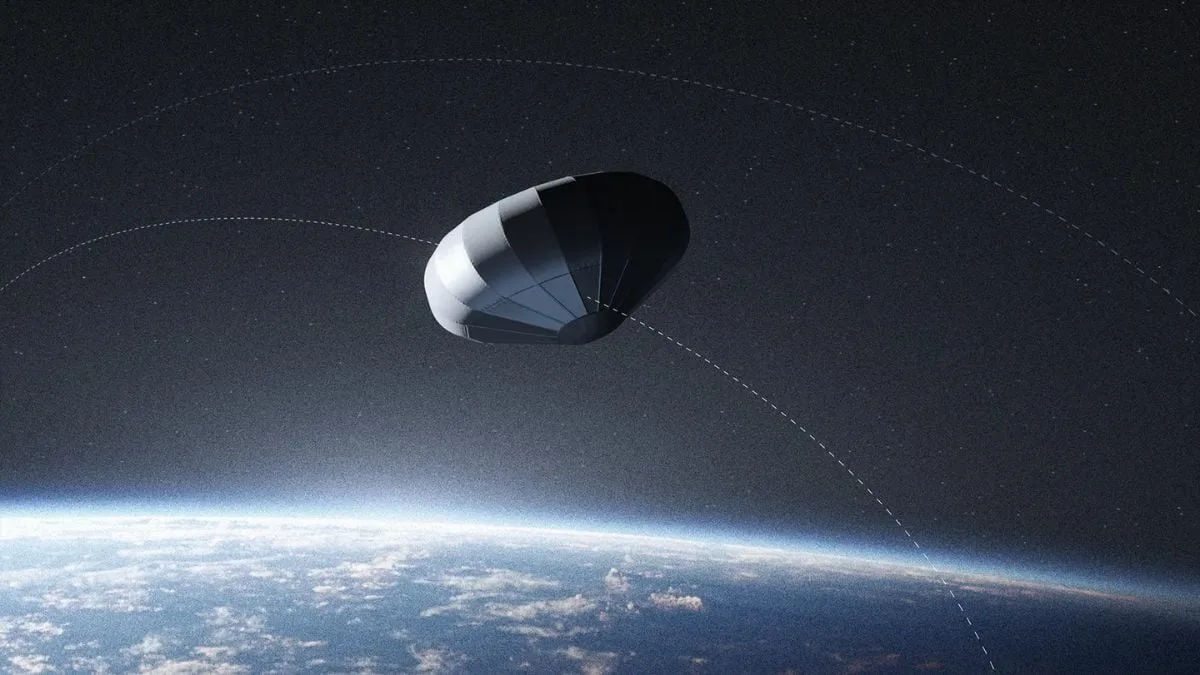
A cargo-return technology developed by Germany-based Atmos Space Cargo is set to undergo its first in-space test with an upcoming SpaceX mission. The company’s Phoenix capsule will be launched aboard the Bandwagon 3 rideshare mission, scheduled for no earlier than April. The capsule has been designed to facilitate the safe return of high-value materials from orbit, particularly benefiting the biomedical sector. The test mission aims to gather crucial data on the capsule’s subsystems, onboard payloads, and reentry performance.

Mission Objectives and Scientific Payloads

According to reports, the Phoenix capsule will carry four payloads, including a radiation detector from the German Aerospace Center (DLR) and a bioreactor from UK-based Frontier Space. The mission’s primary goals include testing Phoenix’s performance in orbit, evaluating data from customer experiments, and deploying its proprietary inflatable atmospheric decelerator (IAD) for reentry stabilisation. This technology, acting as both a heat shield and parachute, is intended to enable a controlled descent back to Earth.

Challenges in Returning Space Cargo

Industry experts highlight that while the cost and complexity of launching experiments into space have been reduced, bringing them back to Earth remains a challenge due to high costs, long turnaround times, and technical difficulties. Atmos Space Cargo has positioned Phoenix as a cost-effective and reliable solution for returning biomedical samples, microgravity-manufactured materials, and other sensitive payloads.

Future Prospects and Industry Impact

Despite expectations that Phoenix will not survive its debut mission, the collected data will contribute to future improvements. Larger iterations of the capsule are planned to carry heavier payloads, including potential returns of rocket stages. Advisory board member and former NASA Deputy Administrator Lori Garver has stated that advancements in reusable and affordable cargo return technology are critical for the future of orbital space operations. The initiative aligns with broader efforts to enhance accessibility to in-space manufacturing and research.

Posted on

Amazon’s Android TV update hints at new Fire TV devices – maybe at the next-gen AI Alexa event soon

New documentation suggests we’ll see Fire TV devices run on Android 14 That’s despite claims Amazon was moving Fire TV to a new platform A big product launch is planned for February 26 Amazon appears to be working on some new Fire TV Sticks that run on Android 14, and we could get our first good look at them before the month is out. Eagle-eyed reporters for AFTVNews spotted the mention of new hardware on one of Amazon’s developer pages, titled ‘Developing for Amazon Fire TV Devices Running Android 14’. The page opens by saying that “Android 14-based Fire TV is based on API level 34. The following sections explain some of [the] important changes that you should consider when you build apps for Android 14-based Fire TV.” There are no specific models listed, but the term ‘Android 14’ reappears on another Fire OS page, and with a big Amazon product launch only a few weeks away, we’re curious about whether a new Fire TV lineup is about to appear. We don’t yet have any Fire TV devices running on Android 14 – the version of Google’s ubiquitous operating system that launched in 2023 – and it looked like Amazon was keen to start shifting its streaming hardware onto the new Linux-based VegaOS, which runs on the latest versions of the Echo Spot and Echo Show. However, the documentation suggests that Amazon’s Fire TV streaming sticks and smart TV collaborations could still run on a version of the Android platform, and with no current devices running it, it seems likely that new ones are coming. The last Fire TV Stick was the HD model launched in 2024, and we wouldn’t be surprised to see some updates to older Fire TV hardware for the coming year. Sign up for breaking news, reviews, opinion, top tech deals, and more. (Image credit: Getty Images) You, me, and Alexa The big launch event is on February 26, and is expected to showcase a next-generation, AI-powered iteration of the Alexa smart assistant – which could well be integrated into any new-for-2025 Fire TV hardware. This new Alexa should be better at understanding natural speech, and handling multiple contextual prompts in sequence – allowing for a more streamlined, conversational interaction – and even act as an AI agent to perform tasks on your behalf. These kinds of AI enhancements are still in public beta for the most part, and you may find yourself paying $5-10 dollars per month for the privilege of testing these not-yet-perfect features out. But it shows that Amazon is stepping up to the AI plate and making sure it’s part of this new frontier in smart assistants. Given how ubiquitous Alexa is across the best smart home devices, it’s something we should all take notice of. Here’s hoping the new Fire TV brings back our ability to hide apps on the homepage, though… You might also like…

Posted on

Earthquake Swarm Near Santorini Triggers Emergency Response from Greek Authorities

Greek authorities have responded to an intensifying earthquake swarm near Santorini by closing schools and deploying emergency teams. The tremors, which began last week, have been growing in frequency and magnitude, raising concerns over potential stronger quakes in the region. While experts have ruled out immediate volcanic activity, the situation remains unpredictable due to the swarm’s unusual characteristics. The most powerful tremor recorded so far was a magnitude 5 earthquake, striking approximately 34 kilometres northeast of Santorini. The event occurred at 2:27 p.m. local time, as per the University of Athens’ earthquake monitoring system.

Seismic Activity Driven by Faults, Not Volcanic Unrest

According to reports, the ongoing tremors are attributed to fault movement rather than volcanic activity. Santorini, positioned on the Aegean Sea’s tectonic boundary, sits on the exposed section of a submerged volcano known as the Santorini caldera. David Pyle, Professor of Earth Sciences at the University of Oxford, told Live Science that the quakes are likely caused by fault lines shifting rather than magma activity. He described the swarm as unusual, highlighting the challenge of predicting future developments due to its underwater location.

Historical Earthquake Swarms and Regional Tectonics

The Aegean region experiences significant seismic activity due to the African plate moving beneath the Eurasian plate. Similar earthquake swarms have been recorded in the past, including a 2011-2012 event linked to magma movement beneath Santorini. However, the current swarm appears more extensive and is concentrated outside the Santorini caldera. Most tremors have been recorded between the underwater Kolumbo volcano and Anydros Island.

Kolumbo, last erupting in 1650, previously triggered a tsunami that affected nearby islands. While researchers remain uncertain about a direct link between current tectonic activity and potential volcanic unrest, ongoing monitoring continues to assess the evolving situation.

For the latest tech news and reviews, follow Gadgets 360 on X, Facebook, WhatsApp, Threads and Google News. For the latest videos on gadgets and tech, subscribe to our YouTube channel. If you want to know everything about top influencers, follow our in-house Who’sThat360 on Instagram and YouTube.

NASA’s Juno Detects Io’s Most Powerful Volcanic Eruption Yet

Dark OTT Release: Telugu Mystery Thriller Starring Jiiva and Priya Bhavani Shankar Now Streaming Online

Related Stories

Posted on

Microplastics Found in Human Brain Tissue, Study Shows Rising Levels

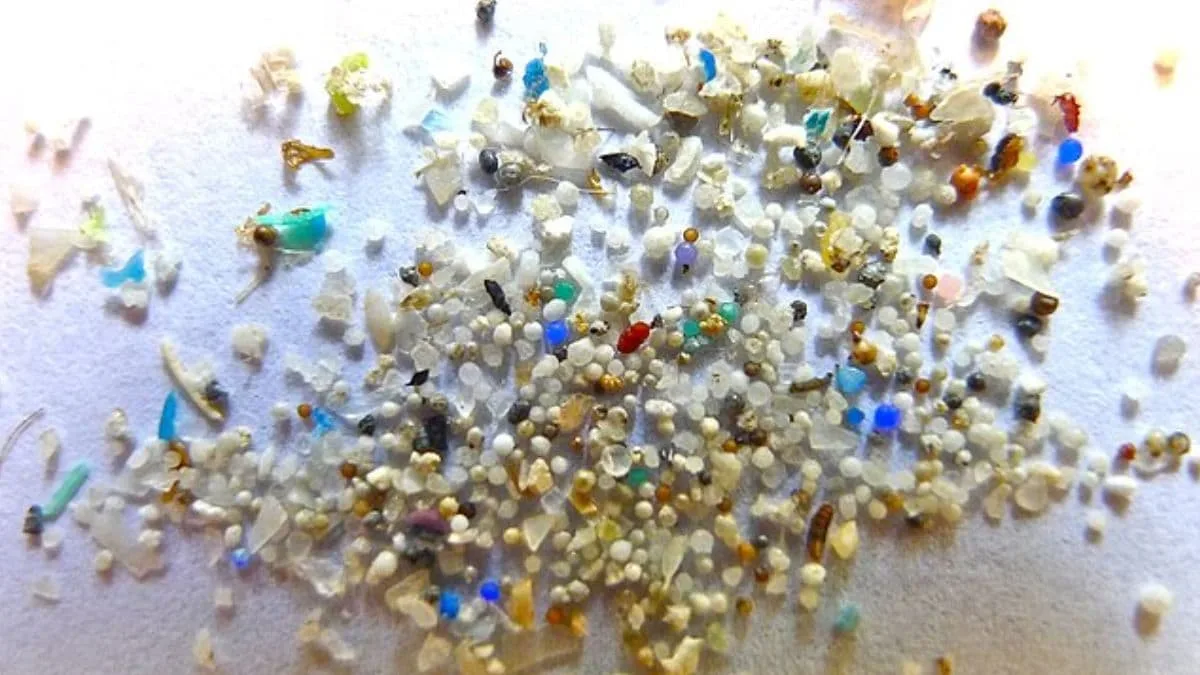
Tiny plastic particles have been found in human brain tissue, raising concerns over their impact on health. Scientists have detected a significant increase in microplastics and nanoplastics (MNPs) in the brain over the past decades. The particles, commonly present in air, water, and food, have now been identified within human tissue, challenging previous assumptions about the brain’s protective barriers. Researchers are working to understand the long-term consequences of this plastic infiltration.

Rising Plastic Levels in Brain Tissue

According to the study published in Nature Medicine, 91 brain samples collected from individuals who died between 1997 and 2024 were analysed. Reports indicate a 50 percent increase in MNP concentrations from 2016 to 2024, with median levels rising from 3,345 micrograms per gram to 4,917 micrograms per gram. Andrew West, a neuroscientist at Duke University, told Science News that the sheer quantity of plastic detected was unexpected, stating that he didn’t believe it until he saw all the data.

Unexpected Particle Shapes and Sources

Findings suggest that the plastic particles are not uniform. Many were thin, sharp fragments rather than the engineered beads often studied in labs. Richard Thompson, a microplastic pollution expert at the University of Plymouth, told Science News that these plastics originate from everyday products such as grocery bags and bottles. Polystyrene, frequently used in medical and food industries, was found in lower amounts compared to polyethylene.

Higher MNP levels were found in the brains of 12 individuals diagnosed with dementia, but researchers have not confirmed a direct causal link. Some scientists speculate that neurological changes associated with dementia may increase plastic accumulation. Phoebe Stapleton, a toxicologist at Rutgers University, told Nature Medicine that further research is required to understand the biological impact, stating, that the next steps will be to understand what they are doing in the brain and how the body responds to them.

Posted on

Oppo Find N5 Teaser Shows Minimal Display Crease Ahead of Anticipated Launch

Oppo executives have teased the upcoming Find N5 ahead of its launch later this month. Earlier teasers highlighted the device’s ultra-thin profile, positioning it as the thinnest book-style foldable on the market. Now, a senior company official has showcased the handset’s minimal screen creasing. Meanwhile, the company has opened pre-reservations for the Oppo Find N5 and the Watch X2. The anticipated foldable is claimed to offer an IPX9 rating for water resistance and will arrive in a white colourway.

Oppo Find N5 Teased With Minimal Crease

Oppo Chief Product Officer Pete Lau shared images of the upcoming Oppo Find N5 in an unfolded via an X post. It is seen being compared against an unnamed handset, which is also a book-style foldable, and could be the Samsung Galaxy Z Fold 6. In comparison, the Find N5 appears with minimal display creasing.

The images also reveal the position of the selfie camera on the Oppo Find N5. A hole-punch slot to hold the front camera sensor is seen on the upper right corner of the inner display. The speaker grilles, a mic slot and a USB Type-C port are visible on the bottom edge as well. 

Oppo Find N5 Launch, Features

Oppo has confirmed that the Find N5 will launch in China in the third week of February. Pre-reservations for the handset are already open in the country. It will arrive in a white colourway and is said to meet the IPX9 rating for water resistance. The phone is confirmed to support 50W wireless charging.

The upcoming Oppo Find N5 is tipped to have a 4.2mm thin profile when unfolded. When folded, it is likely to measure around 9.2mm in thickness. The handset is expected to sport a 6.85-inch LTPO display with a 2K resolution as well as a Hasselblad-backed triple rear camera unit. The phone may come with a Snapdragon 8 Elite SoC and a 6,000mAh battery with 80W wired fast charging support. It is also likely to offer satellite connectivity support.

Posted on

The Nvidia Shield lives! A new update adds a Dolby Atmos competitor, and a load of other fixes

Nvidia Shield’s latest update, v9.2, adds a new 3D audio format The support comes two years after Nvidia first voiced plans to do so However, there’s no sign of a new Shield TV model A new update to the Nvidia Shield TV streaming box has arrived, with software version 9.2 now rolling out to Shield TV devices with a host of new fixes and changes, reminding us that the ageing streamer may still have some life in it yet. The flashiest change is the addition of Auro-3D, a three-dimensional audio format in the vein of Dolby Atmos or DTS:X. Nvidia voiced its intention to support Auro-3D back in 2023, but it’s taken around two years to finally get here. Developed by Denon, Auro-3D works in a similar way to other three-dimensional formats, configured for a sense of height and surround sound immersion alongside traditional horizontal speaker arrangements. You’ll need a minimum 9.1 channel speaker setup to get the full experience, mind. The format isn’t widely supported compared to Dolby Atmos, which you’ll find on the best streaming services such as Netflix, but it’s still a contender making its way to devices, Blu-rays and other platforms – and for those with a suitable home theater system, you’ll likely want to check it out for yourself. (Image credit: Nvidia) Other changes for version 9.2 include added parental controls in French, increased security measures for 4K DRM playback, and a long list of bug fixes for video and audio playback, app launching, and smart assistant integration issues. The patch notes mention that the update will remove your Shield TV from Google Home integration, too, so make sure you reconfigure your setup if that’s something that affects you. Will there be more Shield TV hardware to come? It’s an interesting time for Nvidia’s TV streaming box. The Shield TV range first launched in 2015, with the latest Shield TV and Shield TV Pro models releasing in 2019, meaning the current hardware is getting a little long in the tooth – especially given it still runs on Android 11 rather than the latest Android 12 OS. Sign up for breaking news, reviews, opinion, top tech deals, and more. As we wrote in 2024, though, the Shield TV is still an excellent streaming box, even if its updates are now few and far between. It’s a capable 4K HDR streamer for any smart TV, with countless Android apps and services, including the jam-packed GeForce Now streaming service with access to over 1,800 games. But with plenty of other streaming devices to choose from, games consoles that double as streaming boxes, and reports that Valve may be looking at creating a Shield TV competitor, and it’s hard to see how long Nvidia’s box can hold on without releasing a new hardware iteration in the near future. I can at least assure you that Matt Hanson, our Managing Editor for Computing and TR’s foremost Shield fanatic, brings it up with Nvidia literally every time he speaks to the folks there, which has been pretty damn regularly recently – so when Nvidia finally breaks and promises a new one to shut him up, you’ll know who to thank. You might also like

Posted on

Researchers Discover DeepSeek Has Links to Chinese Telecom Firm Banned in US: Report

DeepSeek source code reportedly contains evidence that links the popular artificial intelligence (AI) chatbot with a Chinese telecommunication provider that was banned in the US. According to a report, a cybersecurity firm has uncovered code that could be used to send data entered on DeepSeek’s web client to China Mobile. The code reportedly relates to the account creation and login process on the Chinese AI chatbot platform. While it could not be confirmed that DeepSeek is indeed sending data, the researchers were also not able to rule out the possibility.

DeepSeek Code Links Chatbot to China Mobile

The Associated Press (AP) reported that DeepSeek contains code that could potentially send user login information to China Mobile. The publication claimed that it received a report about the code from the Canada-based cybersecurity firm Feroot Security. Multiple independent experts reportedly verified these claims.

Notably, China Mobile was banned from operating in the US in 2019 after the government raised national security concerns due to the link between the telecom operator and the Chinese government. Additionally, in 2021, the US government also put sanctions on Americans investing in the company after finding evidence of its links with the Chinese military.

The report did not reveal details about the alleged code that links DeepSeek’s chatbot with the telecom operator. However, it discovered the presence of code that enables the AI firm to send login information as well as queries directly to China Mobile’s servers.

The cybersecurity firm also highlighted that the exposed code shows a connection that could be far more nefarious than that of TikTok, which was briefly banned for a few hours in the US, before it was reinstated.

“The implications of this are significantly larger because personal and proprietary information could be exposed. It’s like TikTok but at a much grander scale and with more precision. It’s not just sharing entertainment videos. It’s sharing queries and information that could include highly personal and sensitive business information,” Ivan Tsarynny, CEO of Feroot told AP.

Notably, the researchers have not analysed the mobile app of DeepSeek, which could also contain similar code. The iOS app of DeepSeek recently topped the App Store’s “Top free apps” chart in the US overtaking OpenAI.

Posted on

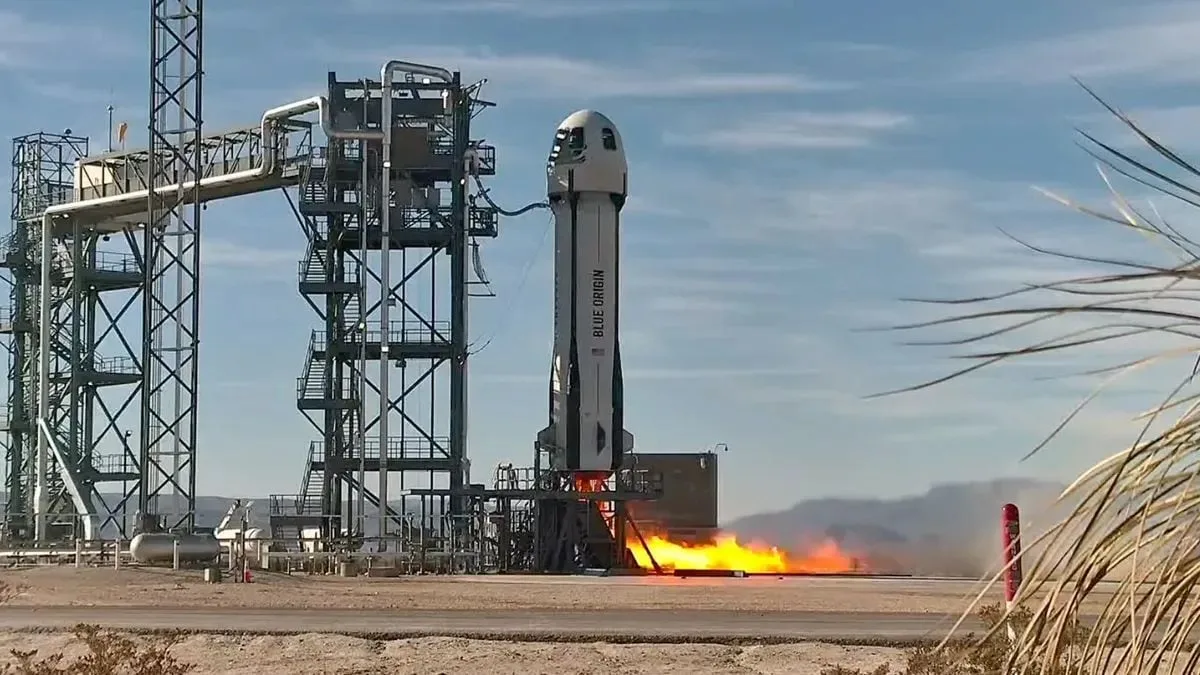
Blue Origin’s New Shepard NS-29 Conducts First Lunar Gravity Simulation

A significant milestone in suborbital spaceflight was achieved by Blue Origin with the launch of its uncrewed NS-29 mission. The New Shepard rocket lifted off from the company’s West Texas facility on February 4 at 11 a.m. EST, following a week-long delay caused by adverse weather conditions and a technical issue in the rocket’s avionics system. The booster and capsule both returned to Earth successfully, though one of the capsule’s three parachutes did not fully deploy. Blue Origin stated during the live broadcast that the capsule was engineered to land safely with fewer than three parachutes.

Lunar Gravity Simulated for Research Payloads

According to reports, the NS-29 mission introduced a lunar gravity simulation for the first time using the New Shepard vehicle. The capsule achieved this by rotating approximately 11 times per minute for a duration of two minutes, a manoeuvre facilitated by its reaction-control thrusters. The mission carried 30 research payloads, with 29 focused on lunar-related technologies. Blue Origin outlined six key research areas, including in-situ resource utilisation, dust mitigation, advanced habitation systems, sensors and instrumentation, small spacecraft technologies, and entry, descent, and landing systems.

NASA-Supported Research Aboard the Flight

More than half of the payloads were backed by NASA’s Flight Opportunities Program. The U.S. space agency is engaged in efforts to establish a long-term human presence on and around the Moon through the Artemis programme. A NASA experiment named the Electrostatic Dust Lofting project examined how lunar dust becomes electrically charged and lifted under ultraviolet light exposure. Another NASA-supported study, the Lunar-g Combustion Investigation, explored fire behaviour under the Moon’s gravity conditions to enhance safety measures for future lunar habitats.

Future Applications of Gravity Simulation

In an X(formerly Twitter) post, Blue Origin Chief Executive Officer Dave Limp stated that this capability provides NASA and other lunar technology developers with a cost-effective method to conduct research. He added that New Shepard’s gravity simulation could be adapted for Mars and other celestial bodies, expanding its potential for future space exploration research.

Posted on

Samsung Galaxy S25 Series to Soon Be Available on BigBasket With 10-Minute Delivery

Samsung Galaxy S25 series debuted at the Galaxy Unpacked 2025 event on January 22 and is scheduled to go on sale in India starting February 7. In addition to its availability on e-commerce platforms, the smartphones are also being offered by BigBasket, a hyperlocal delivery platform. The quick commerce app has commenced showing teasers of at least two of Samsung’s flagship models, the Galaxy S25 and the Galaxy S25 Ultra, enabling buyers to get the handsets delivered to their home in 10 minutes upon the commencement of the sale. Additionally, they will also be able to avail of bank offers provided by BigBasket.

Samsung Galaxy S25 Series on BigBasket

Even though the availability of the Samsung Galaxy S25 series is yet to be officially announced by BigBasket, teasers have started appearing on the app. The base Galaxy S25 with 12GB of RAM and 256GB of onboard storage is listed at Rs. 80,990, which is the official MRP of the device. Meanwhile, the Galaxy S25 Ultra with 12GB+512GB configuration is priced at Rs. 1,29,999 on the quick commerce app.

BigBasket is offering instant bank discounts of Rs. 8,000 on the Ultra model and Rs. 10,000 on the standard Galaxy S25. Additionally, buyers can avail of a no-cost EMI offer for a period of nine months on the Tata Digital-owned platform. These offers are valid on transactions carried out with HDFC Bank credit cards. The deliveries will commence February 7 onwards.

This is not the first time that BigBasket has introduced 10-minute deliveries of flagship smartphones. In September, it partnered with Croma Electronics (also owned by the Tata Group) to deliver the iPhone 16 and iPhone 16 Plus to customers in Bengaluru, Delhi NCR, and Mumbai.

Samsung Galaxy S25 Series Price in India

The 12GB RAM+256GB storage variant of the Samsung Galaxy S25 is priced at Rs. 80,999, while the 12GB RAM+512GB storage variant costs Rs. 92,999. Meanwhile, the Galaxy S25+’s 256GB variant is priced at Rs. 99,999, while the 512GB variant is priced at Rs. 1,11,999.

Samsung’s top-of-the-line flagship, the Galaxy S25 Ultra, is priced at Rs. 1,29,999 and Rs. 1,41,999 for the 256GB and 512GB variants, respectively. The 1TB variant of the handset costs Rs. 1,65,999.

Posted on

The leaked Sonos streaming box could be a huge hit for custom home theaters, if it adds 2 key missing features from the current line-up

The big features of Sonos’ upcoming streaming box have leaked, and they sound pretty damn great, actually. The key elements are that it will have multiple HDMI passthrough ports and will act as an HDMI switch, that it will have a comprehensive range of streaming services in a unified interface, and that it will be able to send wireless audio to Sonos speakers in home theater configurations that don’t involve a soundbar at all (or can still include one, but also wirelessly). The downsides are that the software is being developed by an ad-tech company (and Sonos has a rocky reputation around software over the last year), and that it’s predicted to cost $200-$400, which is a lot if you’re looking at a living-room setup, since you then need to add all those speakers, and probably stands for the speakers, and all that jazz. But there’s a very interesting potential use case where the price downside really goes away, and the new speaker system could come into its own even more: custom home theater installs. Not everyone realizes that Sonos is actually a significant name in the world of in-wall speakers and in-ceiling speakers. These aren’t wireless, alas, but they’re designed to work seamlessly with the Sonos Amp, which knows exactly how to drive them for peak output, and can drive six speakers (three pairs) per Amp box. In the past, their use for home theater has been limited to Sonos regular Amp options: they can act as stereo TV front speakers only, or rear TV speakers when paired with a soundbar. But if the new streaming box enables more flexible speaker configurations, and can work with Sonos’ in-wall speakers connected to multiple Sonos Amps, things could get interesting. The Sonos Amp could be a secret weapon for the streaming box. Imagine one of the best projectors (which probably won’t have its own streaming tech built in) connected to a Sonos streaming box, which wirelessly sends audio out to two Sonos Amps. One is powering four in-ceiling speakers and a pair of front left and right in-wall speakers; the other is powering a pair of side in-wall speakers and a pair of rear ones. Hopefully the streaming box could also wirelessly connect to a pair (at least!) of Sonos Subs at the same time. That would be quite the Dolby Atmos setup. Is this superior to connecting an AV receiver to a load of in-wall speakers? Perhaps not, but the installation might be easier if you only need to run cabling a shorter distance to a nearby box, rather than all the way to wherever your AV receiver is. And you have the ease of use of Sonos’ TruePlay tuning, which works excellently to get everything calibrated for your room. To be clear, this is all speculation on my part – the original leaks about the ability to use speakers for wireless home theater sound said that Sonos is still evaluating exactly which options to include, and we don’t know what configurations will be available. But if Sonos makes the Sonos Amp part of the system, the Sonos streaming box could be popular for installations, where price is way less sensitive a topic than most living-room setups. But what about DTS? However, there’s something else that might put home theater enthusiasts off this whole project, and that’s Sonos’ on-going rejection of the DTS sound format. The only real competitor to Dolby (sorry Eclipsa Audio, call me when you’re supported by some actual movies!) is a big deal to home theater enthusiasts, because it’s the format of choice for so many 4K Blu-rays, and it’s also now featured on the Disney Plus streaming service. If you’ve gone to the effort of outfitting a projector and all these in-wall speakers, are you going to risk hearing the Oppenheimer soundtrack in anything less than full-power, maximum-impact DTS-HD? No, of course not, you’re not a barbarian. My Sonos Arc Ultra soundbar review would have scored it higher if it supported DTS; when it’s so common among the competition, it’s so frustrating that it’s missing. And it lacking from that soundbar worries me that it’s not coming to the streamer either. I’m worried that the Sonos streaming box could end up falling into a valley between the two different sets of people who might love it: living-room users might be put off by the price; home theater users might be put off by the lack of DTS support. Fortunately, everything we know so far is based on leaks. Perhaps the price will be a bargain in the end, perhaps it’ll support DTS and every wireless configuration known to humankind, perhaps it’ll be a total dud. I’m hoping Sonos will realize its potential for custom installs, at the very least. You might also like…