Posted on

7,000-Year-Old Arrow Poison Found in South Africa, Shows Ancient Hunting Skills

A 7,000-year-old femur bone belonging to an antelope, discovered in a South African cave, has revealed the earliest confirmed use of a multi-component arrow poison. Three modified bone arrowheads were found embedded within the marrow cavity, and a recent scientific analysis has identified a mixture of plant-based toxins. This discovery provides new insight into the pharmacological knowledge and hunting practices of early humans, highlighting the complexity of their technological advancements and understanding of toxic substances.

Scientific Analysis of the Poisonous Compound

According to the reports published in The Conversation, Justin Bradfield, Associate professor at University of Johannesburg along with other researchers examined the femur using micro-CT imaging. The sediment-like substance inside the marrow cavity was found to be foreign matter rather than natural deposits. Chemical analysis confirmed the presence of digitoxin and strophanthidin, toxic cardiac glycosides that disrupt heart function. Ricinoleic acid, a derivative of ricin, was also detected, suggesting the use of multiple plant sources to create a potent poison.

Implications for Ancient Trade and Knowledge Systems

As per the research, the plants containing these toxic compounds are not naturally found near Kruger Cave, where the femur was originally discovered. No remains of these plants have been identified in previous archaeobotanical studies of the region. This suggests that early humans either travelled long distances to acquire these materials or engaged in an organised trade network for toxic plant ingredients. Such findings highlight the extensive knowledge early societies had regarding medicinal and toxic plants and their application in hunting strategies.

Historical Context of Poison Use in Hunting

Previous evidence of poison use dates back approximately 60,000 years, coinciding with the development of projectile hunting technology in Africa. While chemical verification of such early poison use remains unconfirmed, the newly analysed femur provides the first concrete proof of a deliberately mixed poison for arrows. The application of plant-based toxins to hunting weapons marks a significant evolutionary step in the efficiency of ancient hunting techniques, demonstrating a sophisticated level of planning and knowledge transfer among early human groups.

For the latest tech news and reviews, follow Gadgets 360 on X, Facebook, WhatsApp, Threads and Google News. For the latest videos on gadgets and tech, subscribe to our YouTube channel. If you want to know everything about top influencers, follow our in-house Who’sThat360 on Instagram and YouTube.

February 2025 Planet Parade: How to See Five Planets Align in the Sky

Lenskart Phonic Smart Glasses With Bluetooth Audio, Voice Assistant Support Launched in India: Price, Specifications

Posted on

Google’s Quick Share Feature Updated With Ability to Continue Transfers Without Direct Connection

Google’s Quick Share tool has been updated with a feature that allows users to initiate uninterrupted file transfers. The feature was previously exclusive to Samsung Galaxy smartphones, and lets a phone transfer a file to another handset, even when the direct connection is lost. These uninterrupted file transfers need mobile data or a Wi-Fi connection to complete, and are considerably slower than a direct connection between two phones. Google recently updated Quick Share with a new QR code feature that makes it easier to share files with strangers.

Google Brings Uninterrupted File Transfers to Quick Share

The changelog for the latest Google Play Services v25.04 update (via Android Police) includes an improvement to phone connectivity. The company states that users will be able to continue Quick Share transfers even if the direct connection between both devices is lost, “over Wi-Fi or mobile data”.

Once the latest version of Play Services rolls out to Android smartphones over the coming weeks, users will be able to complete file transfers using their handset’s 4G or 5G connection, or over a Wi-Fi network. Previously, Quick Share transfers would fail if the direct connection between the sender and receiver’s phone was interrupted.

The ability to transfer files without relying on a direct connection was previously available on Samsung Galaxy smartphones — these handsets would also rely on cellular or Wi-Fi connections to finish file transfers. Apple also allows users to AirDrop files to others over a cellular connection via a ‘Use Mobile Data’ option when the devices are no longer in range.

It’s worth noting that all file transfers over cellular connections will rely on the telecom operator’s data allowance, and could result in inflated charges. As a result, users might actually want to disable the feature, or allow uninterrupted transfers to take place over Wi-Fi networks.

A few weeks ago, Google introduced a new QR code feature to initiate Quick Share transfers with other Android smartphones. The feature makes it easy for an Android user to share a file with another device, using a QR code to initiate a connection. This feature is also rolling out to supported Android devices, and should be available to all users in the near future.

For the latest tech news and reviews, follow Gadgets 360 on X, Facebook, WhatsApp, Threads and Google News. For the latest videos on gadgets and tech, subscribe to our YouTube channel. If you want to know everything about top influencers, follow our in-house Who’sThat360 on Instagram and YouTube.

Samsung Galaxy S25 Ultra’s S Pen Costs as Much as the Previous One, Despite Downgrades

Related Stories

Posted on

Realme GT 7 Pro Racing Edition Confirmed to Launch in February; Appears on Geekbench

Realme GT 7 Pro was unveiled in China in November 2024. The company is now gearing up to introduce a Racing Edition of the handset in the country with enhanced performance and gaming experience. A Realme smartphone, expected to be the upcoming GT 7 Pro variant, has appeared on a popular benchmarking website. It was previously spotted on China’s 3C and TENAA databases. The company has yet to confirm if the Realme GT 7 Pro Racing Edition will launch in India, like the standard version.

Realme GT 7 Pro Racing Edition China Launch

A Weibo post from the company confirmed that the Realme GT 7 Pro Racing Edition will launch in China in February this year. The exact launch date has yet to be announced. No other details about the handset have been revealed.realme gt7 pro realme inline Realme GT 7 Pro Racing Edition

A Weibo post from Realme Vice President Xu Qi Chase suggested that the company is working on a flagship handset with improved performance, increased battery life, and enhanced gaming experience as well as “a better quality-price ratio.” This is expected to be the Realme GT 7 Pro Racing Edition which will likely be targeted at young gamers. 

A smartphone with the model number Realme RMX5090, expected to be the Realme GT 7 Pro Racing Edition, has appeared on Geekbench. It is said to get a Snapdragon 8 Elite chipset paired with 16GB of RAM. The handset is expected to run on Android 15 out-of-the-box. The phone scored 2,904 and 8,976 points on the single and multi-core tests, respectively.

Previously, the Realme RMX5090 handset was spotted on China’s 3C and TENAA certification site. The handset is said to have a 6.78-inch display with a 1.5K resolution and an octa-core chipset. For optics, the phone may come with a 50-megapixel main sensor alongside an 8-megapixel ultrawide camera and a 16-megapixel selfie shooter.

The Realme GT 7 Pro Racing Edition may arrive in 8GB, 12GB, 16GB, and 24GB RAM options, paired with 128GB, 256GB, 512GB, and 1TB of onboard storage variants. It will likely house a 6,310mAh-rated battery, which could be a cell with a 6,500mAh typical value. The handset may support 120W fast charging.

Affiliate links may be automatically generated – see our ethics statement for details.
Posted on

New info about Sonos’ streaming box sounds like a dream product, apart from the 2 horrendous flaws

Major new information about Sonos’ much-rumored set-top streaming box has leaked via The Verge, and as a long-time Sonos user, I was borderline salivating at the promised features here – it sounds like the device I’d be dreaming of when thinking what I’d want a Sonos streaming box to be. In fact, it started sounding too good to be true, and then you get to the pricing and a reminder about the software behind it, and it starts falling apart. Let’s start with the great stuff. The box is said to be a small black square when seen from above, slightly thicker than a deck of cards – so quite similar to the Apple TV 4K. It will apparently connect to your TV, and will act as a wireless streaming hub for the best Sonos speakers, meaning that your lovely Sonos Arc Ultra soundbar wouldn’t have to be connected to your TV via a cable. We’re moving towards the era of wireless soundbars, and I’ve said before that if Sonos can’t find a way to make its soundbars go wireless with big-brand TVs, it’s doomed. But, wireless soundbar connectivity is the least interesting part of it. Apparently, Sonos will enable users to do what they’ve dreamed of for ages and have multiple wireless Sonos speakers in a separate surround configuration, with no soundbar required. The report says that Sonos is finalizing which speakers will be compatible, but basically the idea is that you could have a Sonos Era 300 to the left and right of your TV providing left and right channels as well as Dolby Atmos upfiring channels and you could have the same behind you for a 4.0.4 configuration, as an example. Add a Sonos Sub, and you’ve got meaty bass; hopefully, you could add something like a Sonos Ray as a center channel, too, because I’m not especially into these ‘virtual’ center configurations, such as the Sony Bravia Home Theater Quad offers when used with a non-Sony TV. The ability to use Sonos speakers as left and right channels is something that the hardcore users on the r/sonos subreddit ask for basically daily and Sonos has always gently resisted in response. But it sounds like we’re moving in that direction, and I would love for this to be as flexible as possible. Get ready fellas, your time to really shine is coming. (Image credit: Future) The streaming box, apparently codenamed Pinewood, is also said to offer multiple HDMI ports, which will pass video through to the TV so it acts as an HDMI switch. I love this idea as someone whose TV has only two HDMI 2.1 ports, and one of them is the HDMI eARC port, meaning that a soundbar is eating up my precious 4K 120Hz space. Sign up for breaking news, reviews, opinion, top tech deals, and more. It’s such a clever way for this to stand out over the Apple TV 4K (2022) or Google TV Streamer and it is a genuinely useful and unique feature. You’ll get more HDMI ports by using this product, not losing one; it’s a great value proposition and solves real problems. The final dream offering is one that I’m far more skeptical about as a claim. Supposedly, the streaming interface will offer a truly unified search, recommendations, and control interface drawn from all the best streaming services, including Netflix. Netflix is a real prickly customer to work with in this regard. It doesn’t allow something like Apple’s TV app to pull in shows you’ve been watching and let you pick them back up because it doesn’t want you to use another app as your ‘home base.’ It doesn’t like its shows to appear in universal search tools. What it wants is for you to go to Netflix for everything, where it can recommend 100% Netflix shows and movies. Could Sonos be the company that finally persuades Netflix to play nice and not be the sole center of your streaming universe? It doesn’t feel likely, but it’s possible… for reasons that bring us to the first of the big flaws of this whole affair. Premium with Ads According to The Verge’s article, the streaming box has a “beautiful” interface design, but the whole thing has been developed with an ad-tech firm. So maybe Sonos has gotten Netflix on board for its fancy interface because it’s prepared to give the streamer better data about your habits, and Netflix will compromise in exchange for making more money by showing people better ads. That’s just speculation on my part, but something would have to change things for Netflix, and the whole ad element really weighs heavily over the whole project. If the Sonos interface is full of ads, or people feel like it’s hoovering up all their data, we’ve said before that the whole streaming box endeavor feels doomed – and while that was before we knew about the promised authentic wireless surround sound and the HDMI switching, it was also when we thought the price would be $150-$200. Now, let’s get to the real problem: the rumored price of $200-$400. This is a category where Apple – Apple! – keeps its offering under $150. And if the software is indeed designed around ads, a super-premium price just isn’t going to be accepted. The likes of Google TV and Amazon Fire TV are also designed around ads. Still, the devices they’re on are generally very inexpensive, so you actually feel like the ads are subsidizing you getting something for a great value. If the Sonos streaming box comes anywhere near the $400 mark, it will be for a niche audience only when it could be something far more popular. To be fair, adding a load of HDMI ports obviously adds expense and complexity, and apparently, Sonos will include cutting-edge Wi-Fi 7 for the best performance. And I also have to note that the price of four $449 Sonos Era 300 speakers with a $400 streaming box would be $2,200, which is the exact same price as the Sony Bravia Theater Quad, which would be a direct equivalent. So it’s not out of line compared to a like-for-like product at all. But it means that only the wealthier hardcore are going to be interested when otherwise, this could be so good for so many people. Here’s hoping that Sonos will bring the dream side of things that I want and will find a way to keep the price realistic – because if it can make things work, the best soundbars might be on notice from a Sonos streamer and surround combo. You might also like…

Posted on

Compact Neutrino Detector Successfully Identifies Antineutrinos at Nuclear Reactor

A compact neutrino detector has successfully identified antineutrinos at a nuclear power plant, marking a significant advancement in particle physics. Unlike conventional detectors that require massive infrastructure, this device weighs less than three kilograms. Despite its size, it effectively detected antineutrinos emitted from a nuclear reactor in Leibstadt, Switzerland. The experiment, which lasted 119 days, involved a detector composed of germanium crystals. Around 400 antineutrinos were recorded, aligning with theoretical predictions. Scientists believe this achievement could lead to improved testing of physics theories and potential applications in nuclear monitoring.

Study Findings and Expert Insights

According to a study submitted to arXiv on January 9, the experiment relied on a specific interaction where neutrinos and antineutrinos scatter off atomic nuclear. This phenomenon, which was first observed in 2017, enables smaller detectors to function effectively. Kate Scholberg, a neutrino physicist at Duke University, told Science News that the accomplishment is significant, as researchers have attempted similar feats for decades. She highlighted the simplicity of the interaction, comparing it to a gentle push rather than a complex nuclear reaction.

Christian Buck, a physicist at the Max Planck Institute for Nuclear Physics and co-author of the study, told Science News that this development opens a new avenue in neutrino physics. He noted that the interaction’s clean nature could help identify undiscovered particles or unexpected magnetic properties in neutrinos.

Potential Applications and Challenges

Physicists suggest that such detectors could play a role in monitoring nuclear reactors. The ability to detect antineutrinos could provide insights into reactor activity, including plutonium production, which has implications for nuclear security. However, challenges remain. Jonathan Link, a neutrino physicist at Virginia Tech, told Science News that while the technique is promising, it is still a difficult approach. The detector, despite its small size, requires shielding to eliminate background noise, limiting its portability.

This experiment also helps clarify past findings. In 2022, a similar claim of reactor antineutrinos scattering off nuclei was made, but inconsistencies with established theories led to controversy. Buck stated that the new study rules out the validity of those earlier results. With ongoing research, the field continues to evolve, potentially leading to further discoveries in particle physics.

Posted on

Xiaomi 15 Ultra Spotted on Geekbench AI With Snapdragon 8 Elite SoC and 16GB RAM

Xiaomi 14 Ultra was announced in February last year during Mobile World Congress (MWC) and its successor, the Xiaomi 15 Ultra is likely to be unveiled around the same time this year. While Xiaomi remains tight-lipped about the arrival of the new 15 series phone, the handset appears to have been listed on the Geekbench AI benchmark platform. The listing indicates that the phone will run on the Snapdragon 8 Elite processor and could offer up to 16GB of RAM.

Xiaomi 15 Ultra on Geekbench AI Database

The unannounced XIoami 15 Ultra with model number 25010PN30G surfaced on the Geekbench AI database on February 3. It scored 635 points in single-precision test, 630 in the half-precision test and 1,455 quantised test. The model that appeared on Geekbench runs on Android 15. 

The Geekbench AI listing confirms that the phone will have an octa-core Snapdragon 8 Elite processor with a base frequency of 3.53Ghz and a peak frequency of 4.32Ghz. The model has 16GB of RAM. 

Xiaomi 15 Ultra Specifications (Expected)

Like the Xiaomi 15 and Xiaomi 15 Pro, the upcoming Xiaomi 15 Ultra is expected to run on Android 15-based HyperOS 2.0. It is likely to offer satellite connectivity and feature a 2K quad-curved display. It is rumoured to come with 90W wired charging and also support wireless charging. It could pack a 50-megapixel triple rear camera unit with a 1-inch main sensor with f/1.63 aperture and a 200-megapixel large-aperture periscope telephoto shooter. 

The Xiaomi 15 Ultra will be reportedly available in black, white, and silver shades. It is said to be launched in 16GB RAM + 512GB storage configuration and colour have IP68 and IP69 ratings.

Affiliate links may be automatically generated – see our ethics statement for details.

For the latest tech news and reviews, follow Gadgets 360 on X, Facebook, WhatsApp, Threads and Google News. For the latest videos on gadgets and tech, subscribe to our YouTube channel. If you want to know everything about top influencers, follow our in-house Who’sThat360 on Instagram and YouTube.

Vivo V50 Specifications, Design Revealed Ahead of Launch: To Pack a 6,000mAh Battery

EA Reveals Pre-Alpha Gameplay From Next Battlefield, Announces Community Testing Program

Related Stories

Posted on

iPhone 15 Becomes the Best-Selling Smartphone of 2024, Samsung Also on the List With 3 Models: Canalys

Apple dominated the list of the original equipment manufacturers (OEMs) with the most smartphones shipped in 2024, according to claims by a market research firm. The Cupertino-based technology giant had as many as seven iPhone models in the top 10 best-selling smartphones of 2024 list, with its new flagship iPhone 16 Pro Max also becoming a runaway success, even though it only debuted in September 2024. Meanwhile, Samsung just about managed to earn its place in the top five rankings courtesy of the Galaxy A15.

Notably, Apple had also secured the top spot in Q4 2024 with a 23 percent market share, driven by its latest iPhone 16 series.

Best-Selling Smartphones of 2024

A report by market analysis firm Canalys reveals that the global smartphone market grew by 7 percent year-on-year (YoY) in 2024, reaching 1.22 billion units. This is said to be the first recovery after two consecutive years of decline in smartphone shipments. Apple retained its crown as the company with the most smartphone shipments in the year from 2023, even though iPhone shipments declined by 1 percent to 225.9 million units.

Samsung’s smartphone shipments also saw a 1 percent decline to 222.9 million units in 2024 and it finished just beneath Apple. Xiaomi continued its strong growth, finishing third on the list, registering a 15 percent growth to 168.6 million units. Transsion Holdings, which owns brands like Tecno, Infinix, and Itel, ranked fourth, while Oppo (including OnePlus) rounded off the top five.

While iPhone 15 topped the charts of the best-selling smartphones of 2024, Apple’s iPhone 16 Pro Max and iPhone 15 Pro Max ranked second and third, respectively. Meanwhile, the Galaxy A15 was the only other phone in the top five rankings, earning the fourth place, and the iPhone 16 Pro completed the top five list. Interestingly, no other brand apart from Apple and Samsung had a device in the top 10 best-selling list. It was dominated by Apple with seven iPhone models, followed by Samsung’s three offerings, although only one was a flagship device; Galaxy S24 Ultra. The entire list of the top 10 best-selling smartphones is as follows:

  1. iPhone 15
  2. iPhone 16 Pro Max
  3. iPhone 15 Pro Max
  4. Samsung Galaxy A15
  5. iPhone 16 Pro
  6. iPhone 15 Pro
  7. iPhone 16
  8. Samsung Galaxy A15 5G
  9. Samsung Galaxy S24 Ultra
  10. iPhone 13

As per the market research firm, 2025 brings complexities both globally and regionally. Growth is said to have slowed down as several markets reach a point of saturation. Thus, vendors may have to find the correct balance between short-term performance, inventory management and long-term investments to succeed.

Posted on

If you let me near your TV, I will immediately adjust these 5 settings

As I’m writing this, I’m many miles away from my beloved LG G3 OLED TV. The reason? I’m staying at my cousin’s house while my apartment gets some work done on it. Y’know the first thing I did to his Sony Bravia KD-65XH505 when I was left alone with it? Tinker the hell out of its picture settings. Shameful, I know. But c’mon, he clearly hadn’t tweaked a slider since unboxing his Bravia back when he picked it up in 2020. I suspect most people are like my cuz when they buy a new TV. They plug it in, sign into some of the best streaming services and they’re done. Oh sure, they’ll flirt with the volume and press the power button a few times a day, but that’s probably all she wrote when it comes to their TV tinkering. Not me, though. As an AV obsessive, I rigorously tweak a plethora of picture settings after buying one of the best TVs. Below, you can find out the five settings I’d immediately either fiddle with or flat out turn off if I ever got my grubby mitts on your precious TV’s remote. I’ll turn off motion smoothing Sony’s Motionflow setup menu (Image credit: Future) Make no mistake: motion smoothing is the tool of the Devil. It’s a hideous feature that should be eliminated from every TV. As someone who suffers from crippling arachnophobia, I’d rather share my bed with a dozen tarantulas than turn on any form of motion smoothing. LG calls it TrueMotion, Sony Motionflow, while Samsung tries to woo your peepers with its Auto Motion Plus settings. Whatever these manufacturers call it, motion smoothing needs to get in the bin… then said bin needs to be promptly booted into the sea. Technically, motion smoothing can help making quick panning shots in some of the best Netflix movies look that little slicker, true. But the trade-off simply isn’t worth it. Sign up for breaking news, reviews, opinion, top tech deals, and more. Some of the best TVs have judder and blur reduction sliders that are almost acceptable at their lowest settings. Almost. Yet if you fully embrace maxed out motion smoothing, you’ll be instantly hit by the dreaded ‘soap opera effect’ – a galling visual experience that can make even the most cinematic silver screen masterpieces look like an episode of Beverly Hills, 90210.Artificially smoothing out frames, it’s a feature that gives me night terrors of watching that dreadful 48 frames per second version of The Hobbit: An Unexpected Journey. Let me within 20 feet of your TV, and motion smoothing will immediately go bye-bye. Noise reduction will be nixed Noise reduction presets on TVs can end up eliminating picture detail (Image credit: Future) By default, most TVs will have noise reduction turned to Auto. Put me in the same room as your pride and joy, and that setting is getting switched off pronto. While noise cancelling can help reduce picture noise in older movies that were shot on traditional celluloid reels, the advent of digital filmmaking means most modern movies look very clean. How does this relate to noise cancelling on your TV? Unless you disable it, you’re going to lose key picture details in your favourite movies. There’s also a good chance on-screen motion will look blurrier if you engage this feature, too. So yeah, get this setting cancelled permanently. Sharpness settings on TVs can actually add noise to pictures (Image credit: Future) The only time I ever consider upping the picture sharpening settings on my LG G3 OLED is if I’m playing my Nintendo Switch OLED in Docked Mode, and even then it’s a reluctant decision. Sharpening the picture of a sub-1080p image on a giant 77-inch screen is one thing. Upping the sharpness of an already pin-sharp, utterly pristine 4K image while playing the best PC games is utterly unforgivable, though. If you’re watching the best 4K movies on Blu-ray or playing the best PS5 games on a 4K TV, slide that sharpening setting to zero. Otherwise, you’re just going to create unnecessary, artificial picture information. Say so long to sharpening Make your peace with my Vivid Mode obsession Filmmaker Mode is usually the most accurate picture preset on TVs, but it’s your TV, so you do you (Image credit: Future) Yes, yes. I’m a monster. Ever since I can remember, I’ve skipped straight past Standard Mode on the ludicrous number of OLED TVs I’ve owned down the years and instead opted for Vivid/Vibrant – depending on what the manufacturer calls it. Turns out, my eyes really like what many TV experts would consider an oversaturated picture. Judge me all you want. Vibrant/Vivid Mode is just my jam when it comes to picture presets. My corneas have been basking in the over-exaggerated colours and squint-inducing contrast for so long now, I simply can’t go back. If you’re watching one of the best Disney Plus movies and want to honour the true look of how a director intended their film to be experienced, you really should go for Filmmaker Mode. Colours are often warmer and more accurate with this preset, while post-processing will be disabled in order to preserve the director’s artistic vision. Many Hollywood helmers have given their endorsement to this preset and it’s increasingly easy to find. LG, Panasonic, Philips, Vizio and Hisense all have TVs on the market with a variation of this mode, and there’s now even a Dolby Vision Filmmaker mode for movies with Dolby Vision HDR. If you want the most accurate hues and don’t want to make Spielberg and Scorsese angrily shake their fists at the clouds, Filmmaker Mode is the way to go when watching movies. So once again, don’t let me within a country mile of your television, because I’ll kick Filmmaker to the curb to make my TV pop in the most unnatural way possible via Vivid Mode. Hey, don’t preset shame me. I’ll pummel your Power Saving settings Lights sensors and Eco mode settings typically end up darkening pictures and are unfortunately turned on by default on new TVs (Image credit: Future) This last one might not be good for your electricity bill, but your eyes will thank me. Eco modes and ambient light sensors may save you precious pennies, but they’ll massively diminish your viewing experience. What’s the point in owning one of the best OLED TVs – that can now almost get ‘QLED bright’ thanks to quantum dot and Micro Lens Array (MLA) tech – then obliterating said brightness by opting for energy saving settings? If you have sensitive eyes, I can understand wanting to dim your TV in a darkened room at night. Otherwise, say no to Power Saving Mode and make it up to the planet by recycling your rear end off. You might also like…

Posted on

Demon City OTT Release Date: When and Where to Watch Oni Goroshi Live-Action Adaptation Online?

Toma Ikuta is set to star in the highly anticipated live-action adaptation of Masamichi Kawabe’s manga “Oni Goroshi.” Titled Demon City, the film will begin streaming on February 27. A recently released trailer and key art provide a glimpse into the intense action and dark themes of the film. Directed and written by Seiji Tanaka, known for Melancholic, the film explores a gripping tale of vengeance, set against the backdrop of a crime-ridden city. Accompanying the film’s dramatic tone is a musical score by renowned guitarist Tomoyasu Hotei.

When and Where to Watch Demon City

The film will be available for streaming exclusively on Netflix starting February 27. Audiences worldwide can experience the intense storyline and high-stakes action from the comfort of their homes.

Official Trailer and Plot of Demon City

The trailer highlights Toma Ikuta’s performance as Shuhei Sakata, a hitman who embarks on a path of revenge following the brutal murder of his wife and daughter by the masked criminal group Kimen-gumi. The narrative unfolds in the city of Shinjo, where Sakata, after surviving a gunshot to the head and awakening from a coma twelve years later, finds himself once again targeted by the same organization. As he fights back, he uncovers a deeper truth that alters his mission. The key art features Sakata holding an axe, embodying his transformation into a relentless force of retribution.

Cast and Crew of Demon City

Toma Ikuta leads an ensemble cast that includes Masahiro Higashide, Mio Tanaka, Matsuya Onoe, Masanobu Takashima, Ami Touma, Taro Suruga, Mai Kiryu, Naoto Takenaka, and Takuma Otoo. The film is produced by Netflix in collaboration with Amuse and Digital Frontier. Cinematography is handled by Kohei Kato, while action direction is led by Takashi Tanimoto. Yoshihiro Sato serves as the executive producer.

For the latest tech news and reviews, follow Gadgets 360 on X, Facebook, WhatsApp, Threads and Google News. For the latest videos on gadgets and tech, subscribe to our YouTube channel. If you want to know everything about top influencers, follow our in-house Who’sThat360 on Instagram and YouTube.

Boult Drift Max Smartwatch With Bluetooth Calling Support, IP68 Rating Launched in India

YouTube Expands Communities With Moderation Tools and New Features for Creators

Posted on

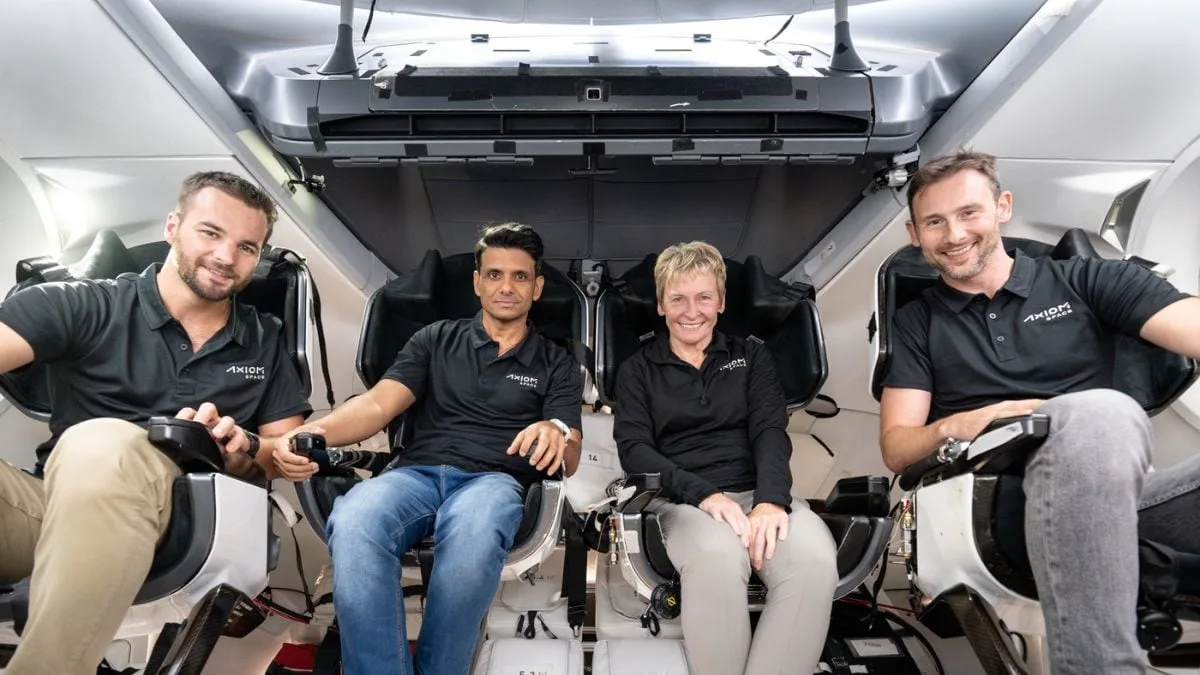
NASA Finalises Crew for Axiom Space’s Fourth Private Astronaut Mission in 2025

NASA and its international collaborators have finalised the crew for Axiom Space’s fourth private astronaut mission, set to launch aboard a SpaceX Dragon spacecraft no earlier than spring 2025. The mission, departing from NASA’s Kennedy Space Center in Florida, will see four astronauts spending up to 14 days aboard the International Space Station (ISS). The crew includes former NASA astronaut and Axiom Space’s director of human spaceflight Peggy Whitson as commander, ISRO astronaut Shubhanshu Shukla as pilot, and mission specialists Sławosz Uznański-Wiśniewski from the European Space Agency (ESA) and Tibor Kapu from Hungary.

Private Astronaut Missions Expand Space Access

According to NASA’s International Space Station Program Manager Dana Weigel, private astronaut missions are contributing to advancements in low Earth orbit operations. Weigel said that these missions are helping pave the way for commercial space activities while increasing accessibility to microgravity research. This mission will mark the first time an ISRO astronaut will board the ISS as part of a joint effort between NASA and the Indian space agency. It will also be the first ISS stay for astronauts from Poland and Hungary.

Axiom Space’s Growing Role in Private Spaceflight

As reported, Axiom Space has been steadily expanding its private spaceflight program since its inaugural mission in April 2022. Each mission has varied in duration, with the most recent, Axiom Mission 3, remaining docked at the ISS for 18 days in January 2024. Whitson, who also commanded Axiom Mission 2 in May 2023, highlighted the significance of international partnerships in commercial spaceflight, stating that each mission brings new opportunities for participating nations.

Future of Low Earth Orbit Operations

NASA’s long-term objective involves fostering a sustainable commercial space economy, allowing the agency to focus resources on deep space exploration. The ISS continues to serve as a key testing ground for space research and technology, supporting both government-led and private-sector initiatives.