Posted on

Poco F7 Global Variant Reportedly Spotted on EEC Certification Site, Expected to Launch Soon

Poco F7 has been the subject of numerous rumours in recent weeks, alongside the speculated Poco F7 Pro and Poco F7 Ultra variants. Earlier reports suggested that the higher-end Pro and Ultra models are unlikely to launch in India. However, a “special edition” variant is expected to debut alongside the standard model in the country. Now, the global version of the Poco F7 has reportedly been listed on a certification site, hinting at its imminent availability in Europe.

Poco F7 Global Variant EEC Listing 

The Poco F7 with the model number 25053PC47G was spotted on the European Economic Community (EEC) database, according to a report by The Tech Outlook. It appears with the notification number KZ0000009843 and the listing suggests the certification will be valid till December 31, 2034, the report added.

The ‘G’ in the model number indicates that this is the global variant of the purported Poco F7. The EEC listing also suggests that the phone will be available in European markets. However, it does not reveal any other specifications or features of the handset. 

Earlier reports have claimed that the vanilla Poco F7 could launch with similar features as the Redmi Turbo 4, which was unveiled in China in January. The handset could be powered by a MediaTek Dimensity 8400-Ultra SoC and ship with Android 15-based HyperOS 2.0. It is expected to sport a 6.67-inch 1.5K OLED display with Corning Gorilla Glass 7i protection and Dolby Vision support.

For optics, the Poco F7 could be equipped with a 50-megapixel primary rear sensor, an 8-megapixel ultrawide camera, and a 20-megapixel selfie camera. For security, the handset could carry an in-display fingerprint sensor. It may be backed by a 6,550mAh battery with support for 90W wired fast charging. 

Notably, the Poco F7 Ultra has been tipped to be “exclusive to global sectors.” The Pro variant is expected to launch in select global markets alongside the base Poco F7. 

Posted on

I spent a month testing the 11.4.6-channel Nakamichi Dragon, and it’s a Dolby Atmos soundbar on steroids

Nakamichi Dragon: Two minute review The Nakamichi Dragon is an 11.4.6-channel soundbar system that pushes the outer limits of what a soundbar is capable of. It’s more akin to an AV receiver in its design, features, and execution. Using it, I was frequently reminded of AV receivers by everything from the system’s heavily buttoned remote control to its extensive, detailed setup menu. The Dragon is not aimed at someone interested in simple plug-and-play sound (though it does provide basic setup options and is easy to get up and running) but rather users who like to dig in and painstakingly tweak settings. At $2,999.99 (around £2,400 / AU$4,750), the Nakamichi Dragon costs double what you’ll pay even for the best Dolby Atmos soundbars on the market such as the Samsung HW-Q990D. That’s quite a lot to pay for a soundbar system, and it takes you into an AV receiver and separate speakers package price territory. But an important Dragon advantage is that it’s a wireless system, though one with the high channel count you’d get from a receiver-based home theater audio rig. The Dragon isn’t as feature-packed as expected given its relatively lofty price. There’s processing onboard for Dolby Atmos and the Pro version of DTS:X, and there are four HDMI 2.1 ports (one with eARC) that support 4K 120Hz and Dolby Vision pass-through. The system comes with a full-scale remote control that provides quick access to a wide array of audio adjustments and it has Bluetooth aptX HD for wireless music streaming. There’s no AirPlay or Chromecast support for streaming over Wi-Fi, and the system’s control app is primarily used for system setup. Automatic setup and room EQ features, either the more basic ones you get in premium soundbars like the Sonos Arc Ultra, or advanced ones such as Audyssey or Dirac Live in AV receivers, are also nowhere to be found. Basic setup of the Dragon soundbar system is surprisingly easy, however. The Dragon system’s sound does its name justice. It can go incredibly loud and the dual subwoofers, each with two 8-inch opposing drivers, provide deep-reaching and very full-sounding bass. Having two subwoofers also helps to even out bass performance, which compensates to a degree for the lack of room EQ processing. (Two subs are provided with the system configuration I tested, but it supports up to four subs.) With six up-firing Atmos height drivers between the soundbar and the surround speakers, which also provide both side and rear surround channel driver arrays, the level of immersion provided by the Dragon system surpasses any other soundbar system I’ve heard. Not all is perfect with the Dragon’s sound, however: it can come across as aggressive and treble-forward with some content, favoring clarity and presence over subtlety. But if your main thing is action movies or gaming, there’s not too much here to complain about. At 58.1 x 7.7 x 4.4 inches, the Dragon system’s soundbar is fairly huge – it just about fit my TV stand, which is designed to support TVs up to 75 inches. The soundbar’s stainless steel enclosure is superior to the plastic ones you get on budget models, and the system’s design strikes a nice balance between function and style. A large front panel LED display can be customized to show the names of sources (Blu-ray, Xbox, etc.) and it can also provide visual feedback beyond basic source and volume settings when you hit the Info button on the remote control. Paying $3,000 for a soundbar system might sound a bit outrageous, but the Nakamichi Dragon is no ordinary soundbar system. It delivers a level of performance that’s more like what you get from a traditional AV receiver-based home theater system from a big honkin’ soundbar with wireless subwoofers and surround speakers. If that all sounds appealing to you, you’ll find the Dragon to be a good value. At 58.1 inches wide, the Dragon requires a substantial TV stand for support (Image credit: Future) Nakamichi Dragon review: Price & release date Released in October 2023 $2,999.99 (around £2,400 / AU$4,750) The Nakamichi Dragon soundbar system with two dual-opposing eight-inch subwoofers is listed at $3,999.99, but sells for $2,999.99. It is available in the US on Amazon, and can be purchased and shipped internationally through B&H Photo Video. Along with the base configuration reviewed here, the Dragon can also be purchased in configurations with two 12-inch subwoofers ($4,199) or four 12-inch subwoofers ($7,199). Dragon pricing is high compared to other premium soundbar systems such as the Samsung HW-Q990D and LG S95TR, both of which have a lower overall channel count and lower rated power. Nakamichi Dragon review: Specs Swipe to scroll horizontally Dimensions (W x H x D) Soundbar: 58.1 x 4.4 x 7.7 inches (1476 x 112 x 196mm) Speaker channels 11.4.6 Connections: 4x HDMI 2.1 (1 w/eARC), optical digital audio input and output, 3.5mm Aux input and output, Bluetooth aptX HD Dolby Atmos/DTS:X Yes/Yes Sub included Yes (2) Rear speakers included Yes Features 4K 120Hz and Dolby Vision HDMI pass-through The Dragon soundbar and surround speakers use matching 1.5-inch Air Motion tweeters. (Image credit: Future) Nakamichi Dragon review: Features 11.4.6-channel Dolby Atmos and DTS:X Four HDMI 2.1 ports with 4K 120Hz and Dolby Vision pass-through Bluetooth aptX HD wireless streaming The Nakamichi Dragon combines a sizeable 58.1 x 7.7 x 4.4-inch main soundbar unit (1476 x 112 x 196mm) featuring a stainless steel enclosure with two wireless subwoofers and wireless rear surround speakers. The soundbar provides processing for Dolby Atmos and DTS:X Pro and features four HDMI 2.1 ports with 4K 120Hz and Dolby Vision pass-through along with optical digital audio and 3.5mm aux inputs and outputs. There’s no onboard Wi-Fi for streaming, but the Dragon soundbar does support Bluetooth aptX HD for streaming music. The soundbar’s speaker array consists of three 1.5-inch “Air Motion” folded ribbon-type tweeters, each flanked by a pair of 3-inch mid-range drivers for the left, center, and right channels. Two pairs of 3-inch height speakers are arrayed on the soundbar’s top surface, with the pairs angled at 10 and 20 degrees, respectively, to evenly distribute Atmos height effects from the front toward the back of the room. Along with these, 3-inch drivers are located on the soundbar’s side panels for an enhanced surround sound effect. Nakamichi’s tall, tower-like dual-opposing wireless subwoofers each house a pair of eight-inch drivers inside a ported cabinet. The system’s Omni-Motion Reference wireless surround speakers each contain side and rear surround speaker arrays consisting of a 1.5-inch Air Motion tweeter and three-inch mid-bass driver, with a three-inch height speaker mounted on top. A PerfectHeight adjustment on the Omni-Motion Reference’s top surface lets you rotate the height speaker up 180 degrees to optimize height effects for your specific room layout and installation. Unlike other premium soundbars on the market from brands like Samsung, LG, and Sonos, the Dragon has no automated setup or room EQ features. The system’s dual subwoofer configuration does help to evenly distribute bass in your room and compensate for room modes, however, and the extensive sound level and delay adjustments allow for a precise manual setup. Features score: 3.5 / 5 The Dragon’s dual subwoofers are fairly tall, but can be tucked unobtrusively into the corners of a room. (Image credit: Future) Nakamichi Dragon review: Performance Powerful, immersive sound Deep, impactful bass Overly aggressive sound with some content The Dragon system sounded good out of the box but strongly benefitted from a manual calibration in the Advanced Sound Setup menu. Once that was done, I cracked open a new 4K Blu-ray disc of the recent Twisters remake that I had bought specifically for this test. On the Dragon system, the sound of violent tornadoes ripping through space in the Twisters soundtrack was potently rendered, providing an almost unnerving sense of being directly inside the path of destruction. Vehicles propelled through the air and crashing to earth had a powerful impact, so much so that I found myself dialing back the bass adjustment – conveniently located right next to the volume button on the system’s remote control. On Top Gun: Maverick, another movie that I regularly use to test soundbars, the sounds of jets in the first training scene early in the movie had a strong trajectory as they swooped from the front to the back of the room, and there was impressive verticality to the sound as they crisscrossed overhead. The drums and bass in The Who’s Won’t Get Fooled Again that plays in this scene came through with equal power, with Roger Daltrey’s yawps soaring along with the jets on the soundtrack. Dolby Atmos music streamed from Apple Music on my Apple TV 4K sounded equally vivid and exciting on the system, especially tracks like Kraftwerk’s Nummern / Computerwelt. This track sounded almost endlessly wide and immersive, showcasing the benefits of six separate height speakers for delivering Atmos mixes. The low-end on this track was powerful and deep but also well-integrated with the rest of the mix, the system’s dual subwoofers working together to energize my room with bass. With more subtle-sounding fare – Severance season 2 on Apple TV Plus, for instance – dialogue was very clear, and that was the case with most shows and movies I watched. As part of my initial setup, I selected the system’s Movie (Movie 1) sound preset (Music, Game, and Night modes are also available) and also dialed back the treble to the minimum setting. That’s because the Dragon system, while it has a considerable roar, can sound aggressive and even a bit harsh with some content. I’ve listened with multiple speakers that use the same Air Motion-type tweeter that’s found in Nakamichi’s system and those generally had a much more laid-back quality to the treble. This tells me that the Dragon was voiced to have a bold, even in-your-face sound that befits its name. Performance score: 4 / 5 The Dragon soundbar’s rear input ports include 4 HDMI 2.1 ports (1 w/ eARC) (Image credit: Future) Nakamichi Dragon review: Design Large soundbar and subwoofers Soundbar height may block the TV image Solid overall build quality At 58.1 x 7.7 x 4.4 inches, the Dragon’s design is anything but subtle. This is a big soundbar, and its 4.4-inch height means the top edge will definitely obscure the screen bottom of some TVs. At 32 pounds (14.5kg), it’s also a heavy one – not surprising given its stainless steel enclosure. Nakamichi sells optional floor stands for the Dragon, which will allow it to be used with wall-mounted TVs and projectors. Aside from being massive, the Dragon soundbar has an appealing design, with top panel controls that light up when touched, angled front corners, and exposed Air Motion tweeters poking through the metal mesh front. The same design chops carry over to the Omni-Motion Reference wireless surround speakers, which also get optional stands. Nakamichi’s wireless subwoofers have a plainer, more utilitarian look, but their tall form factor lets them tuck fairly unobtrusively into the corners of a room. The Dragon soundbar’s front-panel alphanumeric LED display is a feature I fully expect to see in a soundbar at this price. While it’s welcome, I would have liked an option to dim the display or to shut it off entirely with the remote when viewing, which is a feature you get on some AV receivers. Design score: 4.5 / 5 The Dragon surround speakers have matching tweeter-woofer arrays on either side to deliver rear and side surround channel, and there’s an upward-firing driver on top for Atmos height channels. (Image credit: Future) Nakamichi Dragon review: Setup & usability Easy wireless speaker setup Extensive manual sound adjustments Alphanumeric front panel LED display The basic setup of the Dragon system was incredibly easy. After positioning the soundbar on my TV stand, where it occupied nearly the stand’s full width with an inch to spare on each side, I located the subwoofers in the front corners of my room and the surround speakers at either side of my sofa. After plugging all speakers in, they made an automatic wireless connection to the soundbar, with a blue LED indicating that the system was up and running. After connecting my sources to the soundbar’s HDMI inputs, and my TV to the HDMI eARC port, I renamed the inputs in the setup menu so they would show up on the front panel display as “Blu-ray disc player, Xbox One X console, and Apple TV 4K.” I next made a Bluetooth link to my phone for music streaming by pressing the Bluetooth button on the remote control, which put the Dragon into wireless pairing mode. So much for the easy part – the next part of the setup was much more laborious. Nakamichi gives you an easy out by providing Small, Medium, and Large room options. (Guidance on which option is best for your particular room is provided in the detailed and well-organized PDF owner’s manual.) Sound with the Small option selected – the closest match for my room – was good out of the box, but for my test, I wanted to go through the full manual setup to see what difference it would make. Pulling out my tape measure and trusty old Radio Shack SPL meter, I manually entered the listening distance for each channel and also ran the pink noise output to adjust the sound level. With 11.2.6 total channels for the Dragon system I tested, we’re talking a lot of speakers to adjust! The effort was completely worth it, though, since sound clarity and bass evenness received an immediate boost. Nakamichi’s remote control is large, has an aluminum faceplate, and is packed with buttons to access a wide range of fine adjustments for things like individual speaker channel levels, including height and subwoofer channels. There’s also a Dragon control app that gives you many of the same adjustments. The only thing I didn’t like about the remote is that the keypad doesn’t have the same backlighting feature typically found in AV receiver remote controls offering the same level of granular adjustments. Another gripe I had with the Dragon was the setup menu, which requires you to jump out of any program you’re watching to make adjustments other than the ones with dedicated keypad controls on the remote. My annoyance with this was mainly during my initial setup and early use, however. Once I had dialed in my preferred settings for movies/TV and music, those adjustments could be stored in the two available Favorite Settings buttons on the remote for easy recall. Setup & usability score: 3.5 / 5 The Dragon’s full featured remote provides instant access to many adjustments for tweaking the system’s sound on the fly. (Image credit: Future) Nakamichi Dragon review: Value Unique value proposition Other premium soundbars available for much less Approaching AV receiver-based system price range The Nakamichi Dragon occupies a unique space in the home theater audio world, combining many of the functions of an AV receiver in a high channel-count soundbar plus wireless surround speakers and subwoofers package. At $3,000, you’re getting a lot for your money here, and there’s really nothing out there that parallels it. While not as elaborate or high-impact as the Dragon, other premium soundbar systems can provide a similarly satisfying and immersive home theater audio experience. For around $1,500, you can get the Samsung HW-Q990D, an 11.1.4-channel system that also has multiple HDMI inputs with 4K 120Hz passthrough. And for under $1,000, there’s the LG S95TR, a 9.1.5-channel system. Both of these soundbars support Dolby Atmos and DTS:X, and they offer unique audio processing features designed to work with Samsung and LG TVs. Another option is the Sony Bravia Theater Quad (around $2,200). This 4.1.4-channel wireless speaker system offers audio processing features designed specifically to work with Sony TVs, but it can also be used with any TV or projector setup. It’s a more compact and elegant alternative to soundbar-based systems, and with Sony’s 360 Spatial Sound Mapping at work, it doesn’t skimp out on audio immersion. Finally, the Dragon’s $3,000 price is a threshold where you should also consider an AV receiver-based system. You can buy a 9.2-channel receiver such as the Onkyo TX-RZ50 for as little as $999, and then the sky is the limit when it comes to which speakers you add to your setup. The advantage to this option is that receivers offer extensive switching and control options, and they also provide automatic setup and room correction processing solutions such as Audyssey and Dirac Live. But going the AV receiver route means running wires – lots of them – plus a more complicated setup. Value score: 3.5 / 5 The Dragon soundbar’s top-panel control buttons (Image credit: Future) Should I buy the Nakamichi Dragon? Swipe to scroll horizontally Section Notes Score Features Wireless Dolby Atmos and DTS:X and 4K 120Hz pass-through but no auto-setup or Wi-Fi for music streaming 3.5 / 5 Performance Powerful and dynamic with vivid height effects on Atmos soundtracks, though sound can be too aggressive with some content 4 / 5 Design Solid, substantial build quality for a soundbar system and above-average looks 4.5 / 5 Setup & usability As long as you don’t mind making adjustments to an 11.4.6-channel system manually, everything you need is supplied 3.5 / 5 Value A unique value proposition occupying a middle ground between premium soundbars and AV receiver-plus-speakers-based systems 3.5 / 5 Buy it if… Don’t buy it if… Nakamichi Dragon review: Also consider How I tested the Nakamichi Dragon The Nakamichi Dragon with its two subs in my home. (Image credit: Future) Tested for over a month Served as my main system at home 4K Blu-ray discs, TV streaming apps, and Apple Music used as sources The Nakamichi Dragon arrives in a shipping container about the size of a coffin, so expect to enlist help when lifting it into your home. Once unboxed, I set it up in my near-3,000 cubic foot home theater room and connected TV, Apple TV 4K, Xbox Series X, and 4K Blu-ray sources via HDMI. For music testing, I listened to Dolby Atmos music streamed on the Apple Music app by the Apple TV 4K. I listened with the system for over a month, using it as my main system for casual TV watching, movies, and music. I performed an in-depth audio calibration, measuring the distance between all speaker channels and my listening seat, and then inputting that data in the Dragon’s setup menus. This also involved adjusting the sound level for each channel with pink noise generated by the soundbar that was measured with a sound pressure level (SPL) meter. I have 20-plus years of experience reviewing home theater speaker systems and components, including soundbar systems. Prior to testing the Dragon, I used Sony Bravia Theater Quad wireless speakers as my main home theater audio system, and before that an AV receiver-based 5.1.4-channel speaker system, so I have a good understanding of where the Nakamichi Dragon sits among its wireless and wired speaker competition.

Posted on

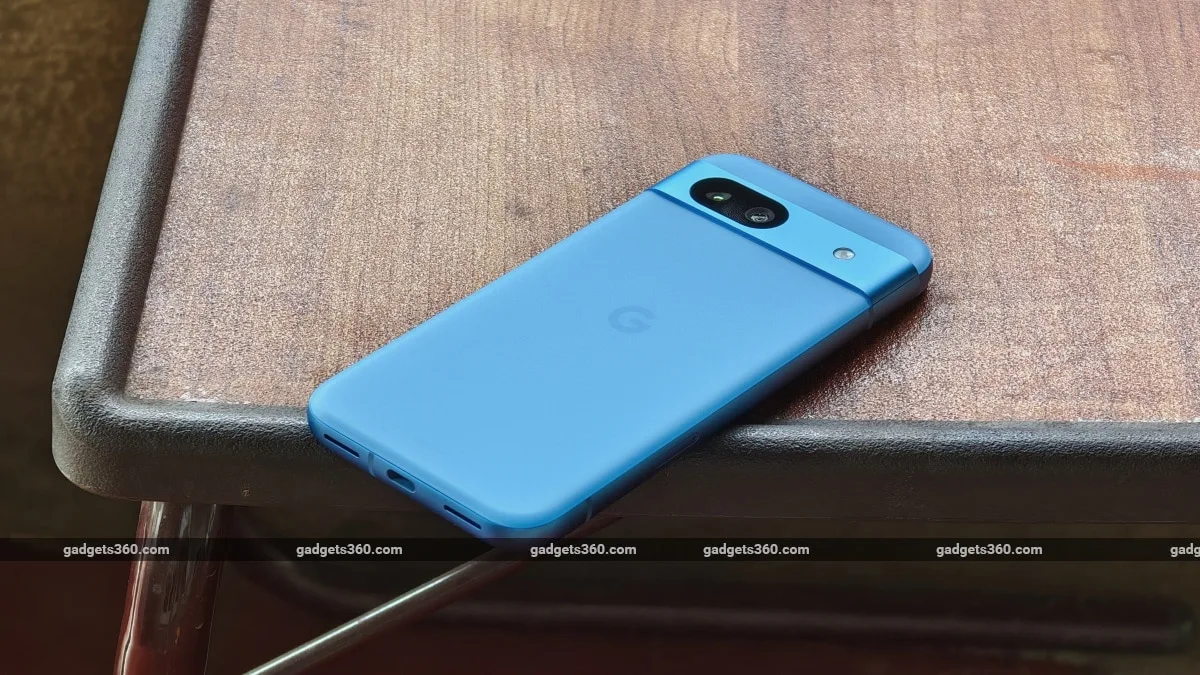
Google Pixel 9a Spotted on EMVCo Certification Site; Model Number, Android Version Revealed

Google Pixel 9a has been spotted on another certification website, in a sign that its debut could be right around the corner. The company is said to be planning the launch of a midrange smartphone equipped with its Tensor G4 chip. We can also expect the Pixel 9a to run on Android 15 out-of-the-box — it might debut before the arrival of Android 16, which is scheduled to release by the end of Q2 2025. The successor to the Pixel 8a is also expected to pack a 5,100mAh battery.

Google Pixel 9a Model Number, Android Version (Expected)

The upcoming Google Pixel 9a was spotted on the EMVCo certification website (via 91Mobiles) and the listing reveals that the handset bears the model number GTF7P. The name of the handset is not mentioned in the document, which was published on the consortium’s website on January 31.

Google’s upcoming Pixel 9a will run on Android 15 out-of-the-box, according to the listing. Previous reports suggest that the company will launch the smartphone in March, which could make this the first year that the handset is being launched before the search giant’s Google I/O event in May.

Google Pixel 9a Specifications (Expected)

The specifications of the Pixel 9a were leaked in December 2024, and the upcoming midrange smartphone is expected to sport a 6.3-inch Actua display, with 2,700nits peak brightness and Gorilla Glass 3 protection. The smartphone is likely to run on a Tensor G4 chip from Google, along with 8GB of RAM and 256GB of inbuilt storage. It is also said to have an IP68 rating for dust and water resistance.

Google will also reportedly equip the upcoming Pixel 9a with a 48-megapixel primary camera and a 13-megapixel ultrawide camera, while the phone could feature a 13-megapixel ultrawide camera, like its predecessor. The handset is expected to feature a 5,100mAh battery, with 23W (wired) and 7.5W (wireless) charging. It is also likely to feature an in-display fingerprint scanner.

Affiliate links may be automatically generated – see our ethics statement for details.
Posted on

Budget 2025: Tech in Focus With Framework for GCCs, New ‘Fund of Funds’ for startups, CoE for AI

New and emerging technologies were in focus in the Union Budget, as Finance Minister Nirmala Sitharaman announced a national framework for Global Capability Centres (GCCs), Rs 500-crore Centre of Excellence in AI for education, and said a deep tech ‘Fund of Funds’ will be explored to catalyse the next generation startups.

A new Fund of Funds, with expanded scope and a fresh contribution of additional Rs 10,000 crore is also on anvil.

A national framework will be formulated as guidance to states for promoting Global Capability Centres in emerging Tier-2 cities. This will suggest measures for enhancing availability of talent and infrastructure, building byelaw reforms, and mechanisms for collaboration with industry.

“I had announced three Centres of Excellence in Artificial Intelligence for agriculture, health, and sustainable cities in 2023. Now a Centre of Excellence in Artificial Intelligence for education will be set up with a total outlay of Rs 500 crore,” Sitharaman said.

Startups have a reason for cheer also as a new ‘Fund of Funds’ with expanded scope and a fresh contribution of additional Rs 10,000 crore will be set up.

“The Alternate Investment Funds (AIFs) for startups have received commitments of more than Rs 91,000 crore. These are supported by the Fund of Funds set up with a government contribution of Rs 10,000 crore. Now, a new fund of funds, with expanded scope and a fresh contribution of another Rs 10,000 crore will be set up,” she said.

Gaja Capital Managing Partner Gopal Jain said the introduction of a new Fund of Funds for AIFs, and a Center of Excellence for AI in Education are all “promising steps” toward fostering a knowledge-driven economy.

To improve access to capital, the credit guarantee cover will be enhanced for startups, from Rs 10 crore to 20 crore, with the guarantee fee being moderated to 1 per cent for loans in 27 focus sectors key for Atmanirbhar Bharat.

Bruce Keith, Co-founder CEO, InvestorAi believes that the announcement on deep tech funds, while details are awaited, needs to be viewed through the ‘DeepSeek’ lens of what can be done with relatively small amounts of capital when provided to agile and creative teams.

“We expect the venture capital ecosystem to bring velocity and momentum into funding these enterprises,” Keith said.

It is pertinent to mention here that the India GCC landscape has been progressing over the past five years and the total number of such centres have risen to over 1,700 in FY24 with over 2,975 centres.

Jaspreet Singh, Partner and GCC Industry Leader, Grant Thornton Bharat said that the Budget’s focus on expanding talent availability and infrastructure in Tier-2 cities marks a significant step in strengthening India’s Global Capability Centre ecosystem.

“By unlocking access to a wider talent pool, including professionals who prefer to stay in their hometowns, this initiative will enhance workforce stability and retention. Improved infrastructure will further enable seamless operations, making Tier-2 cities attractive destinations for high-value global work,” Singh said.

As GCCs evolve into strategic hubs for innovation and technology, the expansion will drive inclusive growth, reduce regional disparities, and position India as a global leader in digital and business services, Singh said and noted that a well-distributed GCC network will ensure long-term resilience, scalability, and global competitiveness.

“The creation of the Deep Tech Fund of Funds will empower India’s deep-tech entrepreneurship, and fuel India’s global competitiveness in the AI race. With access to capital being a persistent challenge, the policy measures will increasing credit guarantee coverage for startups from Rs. 10 crore to Rs. 20 crore, enhancing access to capital,” said Prabhu Ram, VP – Industry Research Group (IRG), CyberMedia Research.

“India currently has the smallest talent demand-supply gap and is on track to achieve a skilled talent surplus by 2030. The expansion of IITs and the establishment of AI Centers of Excellence (CoEs) will strengthen India’s talent pool in emerging technologies, particularly AI. The PM Research Fellowship Scheme will also support innovation by offering 10,000 fellowships over the next five years at prestigious institutions like IITs, NITs, and IISc,” he added.

Posted on

WhatsApp Says Spyware Company Paragon Targeted Users in Two Dozen Countries

An official with Meta Platforms’ popular WhatsApp chat service said Israeli spyware company Paragon Solutions had targeted scores of its users, including journalists and members of civil society.

The official said on Friday that WhatsApp had sent Paragon a cease-and-desist letter following the hack. In a statement, WhatsApp said the company “will continue to protect people’s ability to communicate privately.”

Paragon declined to comment.

The WhatsApp official told Reuters it had detected an effort to hack approximately 90 users.

The official declined to say who, specifically, was targeted. But he said those targeted were based in more than two dozen countries, including several people in Europe. He said WhatsApp users were sent malicious electronic documents that required no user interaction to compromise their targets, a so-called zero-click hack that is considered particularly stealthy.

The official said WhatsApp had since disrupted the hacking effort and was referring targets to Canadian internet watchdog group Citizen Lab. The official declined to discuss how it determined that Paragon was responsible for the hack. He said law enforcement and industry partners had been informed, but declined to give details.

The FBI did not immediately return a message seeking comment.

Citizen Lab researcher John Scott-Railton said the discovery of Paragon spyware targeting WhatsApp users “is a reminder that mercenary spyware continues to proliferate and as it does, so we continue to see familiar patterns of problematic use.”

Spyware merchants such as Paragon sell high-end surveillance software to government clients and typically pitch their services as critical to fighting crime and protecting national security.

But such spy tools have repeatedly been discovered on the phones of journalists, activists, opposition politicians, and at least 50 U.S. officials, raising concerns over the unchecked proliferation of the technology.

Paragon – which was reportedly acquired by Florida-based investment group AE Industrial Partners last month – has tried to position itself publicly as one of the industry’s more responsible players.

Its website advertises “ethically based tools, teams, and insights to disrupt intractable threats,” and media reports citing people familiar with the company say Paragon only sells to governments in stable democratic countries.

Natalia Krapiva, senior tech-legal counsel at the advocacy group Access Now, said Paragon had the reputation of being a better spyware company, “but WhatsApp’s recent revelations suggest otherwise.”

“This is not just a question of some bad apples — these types of abuses (are) a feature of the commercial spyware industry.”

AE did not immediately return a message seeking comment.

© Thomson Reuters 2025

Posted on

I tested a 24-inch Roku TV, and the slick smart TV software is its killer feature

RCA Roku 24-inch HD TV: review If you’re looking for a small smart TV for your kitchen or bedroom, the RCA Roku 24-inch HD TV will likely slot into your space with ease. This model harnesses Roku’s Smart TV interface, meaning you’ll get access to all the big streaming platforms – think Netflix, Amazon Prime Video and Disney Plus – as well as apps like YouTube and on-demand services including BBC iPlayer and ITVX. It has a £125 RRP, which is undoubtedly on the cheaper side of things, but still, it’s worth asking: is the RCA Roku 24-inch HD TV worth the money? Well, first of all, I have to hand it to RCA and Roku – this TV is nice and easy to set up. It comes with two plastic feet that are simple to screw on, as well as two AAA batteries for the included remote – something that’s not always a given (ridiculous, I know). After firing the TV up, you have to update its software and sign in using a Roku account on your phone, but this doesn’t take too long and enables you to pre-install any extra apps you want – pretty handy. It’s worth noting, though, that you can download apps at any point using the Roku Store, which is a basic, although easy-to-use, digital storefront. It’s also nice and responsive – as is the Roku user interface more generally. Scrolling through menus isn’t perfectly sharp, but it doesn’t feel frustratingly laggy or slow. I would say, however, that the Roku interface is visually unappealing. It looks outdated and uses a pretty rudimentary-looking menu on startup. This isn’t a dealbreaker, but the best small TVs usually have a sleeker, more modern interface in my experience. (Image credit: Future) But although a neat interface is nice to have, you’re probably more interested in how good this TV looks. First of all, it’s worth breaking down what ‘HD’ really means here. This TV has a resolution of 720p, so you won’t be able to enjoy full HD (1080p) or 4K content. As a result, this set isn’t really primed for a lot of modern video content and if you want to get the best out of platforms like Amazon Prime Video or formats like Blu-ray, for instance, you’ll likely be left wanting more. With that out of the way, I’d argue that picture quality can be described as adequate. When watching Spider-Man: Homecoming, I skipped forward to a fight scene between the eponymous hero and a gang of bank robbers. The picture was decently clear and motion was totally passable. Spidey’s acrobatics weren’t overly judder-y as he flung across the screen, but the colour of his suit didn’t look particularly accurate. There was a bit too much warmth, leaving the reds and blues appearing slightly less contrasted than I’d like. This TV, like many LED models, also struggles a fair bit with black levels and dark details. When watching the admittedly very dingy The Batman, details on the title character’s suit were quite challenging to make out and facial features were a little blurred. Elements like sweat droplets, lines on faces and stitching on clothing weren’t very defined and given that much of the film takes place in the shadows, the result was a fairly muddy overall picture. (Image credit: Future) But again, you really can’t expect too much in terms of picture quality here due to the RCA Roku HD TV’s technical restrictions. To give this model its due, the vast majority of video content was clear enough for me to enjoy on-screen action. Studio Ghibli’s excellent The Boy and the Heron may not have been replicated with top-tier colour accuracy, but the display was quite vibrant in Standard mode without looking oversaturated or artificial. This TV also won’t wow you with amazing brightness, but it’s OK for its size, with peak brightness on a 10% window test pattern coming in at 177 nits and 167 nits in Standard and Movie mode respectively. If you’re not quite happy with how the picture looks, however, rest assured that there are plenty of ways to customise it. There are expert settings, such as dynamic contrast and colour temperature adjustment, as well as the typical picture modes, including: Roku Smart Picture (which auto-selects the best mode based on what you’re watching); Film; Low-Power; Sports; Standard and Vivid. (Image credit: Future) Similarly, there are different sound modes, such as Music, Speech and Theatre. I used the latter for much of my testing to get the most cinematic sound possible. Having said that, you’re not going to get great sound out of this TV, no matter what setting you choose. For instance, I watched the movie Smile and although the dialogue was clear enough during a conversation between two characters, it sounded pretty harsh at higher volumes. During one horror-filled scene, imposing bass is meant to heighten tensions. And sure, bass was audible, but it was no more than that, leaving quite an underwhelming impression. That’s largely to be expected from a tiny 24-inch model, though, and I’d recommend investing in one of the best soundbars if you’re looking to take audio to the next level for movie nights. (Image credit: Future) Another area that won’t impress is gaming performance. Once more, this is down to the technical limitations of the RCA Roku HD TV. When gaming on the Xbox Series X, motion and picture were once again fine, but no better. Of course, you won’t be able to access current-gen features like 4K, 120fps gameplay, but if you just want a functional display for your favourite titles, this TV will get the job done. You can plug your games console into one of the three HDMI ports situated on the reverse side of the RCA Roku HD TV. Personally, I was very pleased to see that there were three HDMI slots here – that’s pretty generous for a TV of this size and price. One can be used for ARC if you’d like to connect up a soundbar too, which is another big positive. Beyond this, the TV’s design and build quality is pretty unimpressive, though. It’s very plasticky – almost toy-like in its construction – and it’s on the bulkier side for a modern TV. I will say, however, that I liked the included remote, which has a textured finish and all the useful shortcuts for streaming services and the like. All in all, the RCA Roku 24-inch HD TV does what it says on the tin. It’s a very basic smart TV with totally functional, although unimpressive, performance across the board. You’re going to get flawed, albeit passable picture and sound quality, a basic design and little in the way of fancy features. But if you want a cheap, easy-to-use small TV for watching broadcast TV or streaming, this will provide just that. If you have a bit more room, however, there are superior options in terms of value – you can get a 1080p resolution, better colour accuracy and HDR for less than £150 with TVs like the 32-inch Toshiba 32LF2F53DB. (Image credit: Future) RCA Roku 24-inch HD TV review: price & release date £125 RRP Available now The RCA Roku 24-inch HD TV, also known as the RK24HF1, has a RRP of £125 and is available right now in the UK. It’s worth noting, however, that this model can often be found for a considerable chunk less. I’ve seen this TV go for less than £110 in the past and at the time of writing, Amazon are selling it for less than £120, so keep your eye out for discounts. Of course, this places the RCA Roku 24-inch HD TV firmly in the budget category, meaning it faces tough competition from the likes of JVC, TCL and Toshiba. If you’d like to weigh your options before pulling the trigger on a purchase, why not check out some strong alternatives in the ‘Also Consider’ section of this review. RCA Roku 24-inch HD TV review: Specs Swipe to scroll horizontally Screen type LED Refresh rate 60Hz HDR No Audio Dolby Audio Smart TV Roku HDMI ports 3x, including 1x ARC Should I buy the RCA Roku 24-inch HD TV? Swipe to scroll horizontally Attributes Notes Rating Features Offering three HDMI ports is welcome, includes solid picture and sound settings too. 4/5 Picture quality Decently bright display but lacks detail and crispness due to technical limitations. 2.5/5 Sound quality Narrow audio with thin bass but dialogue is usually clear enough. 2.5/5 Design Very plasticky build, slightly chunky, but remote is pretty neat. 2/5 Smart TV & menus Roku TV platform isn’t pretty but it’s responsive and easy-to-use. 3.5/5 Gaming No next-gen features or anything but performance is passable. 2.5/5 Value Better options exist in the 32-inch category for a tad more but this is still a cheap TV. 3/5 Buy it if… Don’t buy it if… RCA Roku 24-inch HD TV review: Also consider Swipe to scroll horizontally Header Cell – Column 0 RCA Roku 24-inch HD TV TCL 32S5400 LG 32LQ6300 Price £125 £179 £249 Screen type LED LED LED Refresh rate 60Hz 60Hz 50/60Hz HDR No HDR10, HLG HDR10, HLG Smart TV Roku Android TV webOS 22 HDMI ports 3x, including 1x ARC 2x HDMI 1.4 2x HDMI 1.4 How I tested the RCA Roku 24-inch HD TV (Image credit: Future) Tested at Future Labs TV testing room in various lighting conditions Measurements taken using Portrait Displays’ Calman software Tested with a variety of video content I used a variety of sources and apps to test picture quality on the RCA Roku 24-inch. I predominantly watched content via streaming services like Netflix and YouTube, ensuring I tested out the various picture and sound modes along the way. I also played on the Xbox Series X to cover gaming performance. When watching the TV, I selected video content that would expose its specific strengths and weaknesses of the TV. For instance, I tuned into The Batman to judge aspects such as colour fidelity, contrast and black-levels. But I also watched Smile and Sky News to assess competence in the audio department. Lastly, I took measurements with the help of Portrait Displays’ Calman calibration software. I measured peak brightness on a 10% window and 100% window, recorded the Delta-E values (which demonstrate the margin of error between the test pattern and what is displayed) for colour accuracy, grayscale and gamma. For all tests, I used the Murideo Six 8K test pattern generator. You can read all about how we test TVs at that link. First reviewed: January 2025 Read more about how we test

Posted on

Ocean Warming Rate Quadruples Over Four Decades, Accelerating Climate Change

The pace of ocean warming has intensified significantly over the past four decades, with recent data highlighting a quadrupling of heat absorption rates. This shift points to an acceleration in climate change, as oceans act as the planet’s primary heat sink. Researchers warn that if fossil fuel dependency continues, warming is expected to increase at an even faster rate in the coming decades. The implications of this trend extend beyond rising sea levels, influencing extreme weather patterns and global food security.

Research Highlights Escalating Ocean Temperatures

According to a study published in Environmental Research Letters, ocean surface temperatures have been rising at an increasing rate. The research reveals that while the rate of warming stood at 0.06 degrees Celsius per decade in the 1980s, it has now escalated to 0.27 degrees Celsius per decade. Projections indicate that a similar acceleration will occur in the next 20 years, with the situation worsening if emissions remain unchecked.

Climate Change Driving Earth’s Energy Imbalance

Findings suggest that Earth’s energy imbalance—where the planet absorbs more energy than it emits—has doubled in the past two decades. Greenhouse gases such as carbon dioxide and methane are trapping heat in the atmosphere, leading to warming oceans. Study lead author Christopher Merchant, Professor of Ocean and Earth Observation at the University of Reading, told Live Science that this trend suggests climate change is advancing at a faster pace than previously anticipated.

Impacts on Weather, Sea Levels, and Food Security

Rising ocean temperatures contribute to sea level rise, extreme weather, and agricultural disruptions. The reduction in cloud cover, alongside declining ice and snow levels, is increasing heat absorption. Researchers caution that without substantial reductions in fossil fuel use, the planet will experience even more severe climate consequences.

For the latest tech news and reviews, follow Gadgets 360 on X, Facebook, WhatsApp, Threads and Google News. For the latest videos on gadgets and tech, subscribe to our YouTube channel. If you want to know everything about top influencers, follow our in-house Who’sThat360 on Instagram and YouTube.

New Study Uses Math to Decode Creativity and Idea Formation

Xiaomi 15 Ultra Colour Options, RAM and Storage Configuration Tipped

Related Stories

Posted on

New Study Uses Math to Decode Creativity and Idea Formation

A new research study has examined the mathematical principles governing creativity and innovation, shedding light on how novel ideas emerge. By analysing data across different domains, researchers have identified patterns that could refine the understanding of how individuals and societies generate new concepts. The study investigates two types of novelty—discovering an entirely new element and forming unique combinations of existing elements. The findings could be crucial in fields such as science, literature, and technology, where innovation plays a vital role in advancement.

Mathematical Framework for Creativity

According to the study published in Nature Communications, researchers introduced a framework to model how new ideas emerge. Led by Professor Vito Latora from Queen Mary University of London, the team focused on higher-order novelties—combinations of familiar elements that create something new. Speaking to Phys.org, Prof. Latora stated that the study is part of a broader effort to understand the mechanisms underlying creativity, aiming to identify factors that contribute to the success of ideas, products, and technologies.

A mathematical model called Edge-Reinforced Random Walk with Triggering (ERRWT) was developed to simulate how people discover and combine elements. Unlike traditional random walks, which assume equal probability for each step, ERRWT strengthens frequently used connections and triggers new links when novel combinations occur. This process mirrors real-world discovery, where repeated exposure to certain elements increases the likelihood of making new associations.

Analysing Patterns Across Domains

The research team applied the ERRWT model to three distinct datasets—music listening habits from Last.fm, literary texts from Project Gutenberg, and scientific publications from Semantic Scholar. The findings revealed that while individuals might have similar rates of discovering new elements, the sequences in which they arrange them differ significantly.

For music listeners, certain users developed unique listening patterns despite discovering the same number of new songs. In literature, writers frequently created new word pairings rather than introducing entirely new words. Scientific papers, particularly titles, demonstrated a higher tendency for novel word combinations compared to narrative texts.

Predicting Innovation with Heaps’ Law

The study also highlighted that the process of novelty creation follows Heaps’ law, a power-law relationship describing how new elements and combinations emerge over time. By applying this principle, researchers could predict different rates of innovation across disciplines. The results indicated that while some fields prioritise the discovery of individual elements, others focus on recombining existing ones in unique ways.

Implications for Future Research

The findings suggest that understanding how creative processes unfold could help refine strategies for fostering innovation. Prof. Latora noted that studying novelty creation is essential for identifying factors that contribute to the rise and decline of trends, products, and ideas. Future research aims to expand the model by incorporating a social component, which could provide insights into how external influences shape creative developments.

Posted on

Unusual White Streaks in Northern Lights Raise Questions About Atmospheric Phenomenon

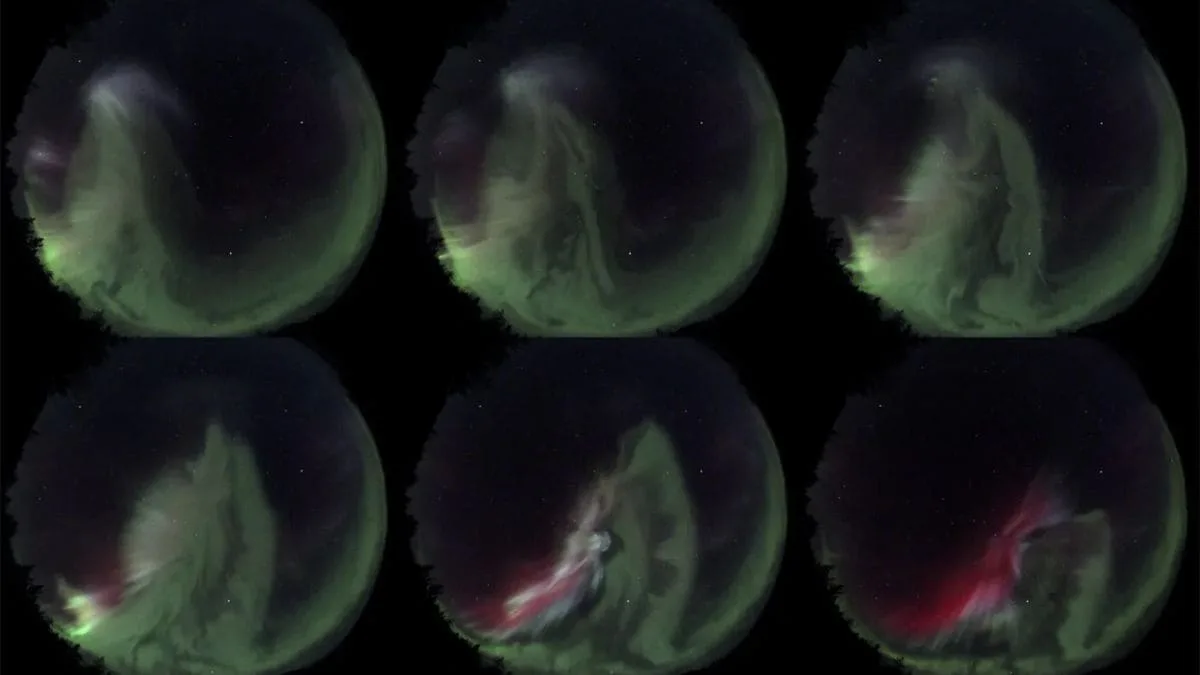
Pale white streaks have been observed weaving through the northern lights, presenting a new atmospheric puzzle. These eerie glows have been captured alongside traditional red and green auroras, but experts suggest they are not auroras themselves. Instead, they may share similarities with the purplish phenomenon known as Strong Thermal Emission Velocity Enhancement (STEVE). Scientists remain uncertain about what causes these white lights to form in specific regions. The discovery has prompted further investigation into the underlying mechanisms of these unexplained emissions.

White Glows Identified in TREx Mission Data

According to research published in Nature Communications, the white streaks were first identified by scientists at the University of Calgary using the Transition Region Explorer (TREx) mission. TREx, a network of low-light cameras monitoring Earth’s near-space environment, captured full-colour images that revealed these unexpected formations. Unlike other auroral imagers, which focus on specific wavelengths of red and green light, TREx detected broad-spectrum emissions.

Emma Spanswick, a space physicist at the University of Calgary, recalled, while talking to Science News, noticing an unusual grey-white patch in 2023 while reviewing auroral images. A thorough search of past TREx data uncovered 30 instances of these white-laced auroras in Saskatchewan from 2019 to 2023. Some of the formations extended for hundreds of kilometres, appearing either alongside existing auroras or in regions where colourful displays had faded.

Spectral analysis confirmed that these white lights result from continuum emissions, where light is emitted across multiple wavelengths. This distinguishes them from traditional auroras, which arise when charged particles excite atmospheric atoms, producing specific colours. The emission pattern closely resembles that of STEVE, a fast-moving plasma band that creates purplish streaks in the sky.

Speaking to Science News, Claire Gasque, a space physicist at the University of California, Berkeley, noted that while the patchy nature of these white lights differs from the structured arc of STEVE, they may share similar origins. Researchers are now focused on identifying the forces responsible for heating atmospheric particles to create these glows. The precise cause of the phenomenon remains unknown, leaving scientists with more questions about the complexities of auroral activity.

Posted on

Honor Pad X9a Allegedly Spotted on TDRA Website, Launch Could Be Imminent

Honor unveiled its Honor Pad X8a tablet with Snapdragon 680 SoC and 8,300mAh battery in India in September last year. The Chinese tech brand appears to be gearing up to release the Honor Pad X9a as a successor to last year’s model. While details for the Honor Pad X9a are yet to be revealed formally, the tablet has purportedly been spotted on the Telecommunications and Digital Government Regulatory Authority (TDRA) website. The listing indicates the Wi-Fi-only variant of the tablet and suggests that a launch could be imminent.

The unannounced Honor Pad X9a is said to have appeared (via GizmoChina) on the TDRA website with model number ELN2-W29. The Wi-Fi-only variant of the tablet reportedly passed through the certification platform. Besides the name and model number, the listing doesn’t include any other details about the upcoming Honor tablet.

Honor is likely to bring the Pad X9a with upgrades over the Honor Pad X8a. The latter arrived in India in September last year with a price tag of Rs. 12,999 for the sole 4GB RAM + 128GB storage option. It is offered in a Space Grey shade.

Honor Pad X8a Specifications

The Honor Pad X8a runs on Android 14-based MagicOS 8.0 and has an 11-inch full-HD (1,200×1,920 pixels) screen with a 90Hz refresh rate, and 4,000 nits of peak brightness level. The screen has low blue light certification and flicker-free certifications from TÜV Rheinland. It runs on a 6nm octa-core Snapdragon 680 chipset with 4GB of RAM and 128GB of onboard storage. It carries a 5-megapixel rear camera and a 5-megapixel selfie shooter. It includes a quad-speaker unit backed by Hi-Res Audio certifications.

Honor has packed an 8,300mAh battery in the Honor Pad X8a. It supports split screen feature and offers connectivity features like Wi-Fi, Bluetooth, OTG and more.

For the latest tech news and reviews, follow Gadgets 360 on X, Facebook, WhatsApp, Threads and Google News. For the latest videos on gadgets and tech, subscribe to our YouTube channel. If you want to know everything about top influencers, follow our in-house Who’sThat360 on Instagram and YouTube.

Samsung to Bring Galaxy S25 Ultra’s Motion Photo, Other Camera Features to Older Galaxy Models: Report

5 Things to Know About Apple’s Performance in India From CEO Tim Cook’s Q4 Results Call