Posted on

Patent Suggests Nintendo Working on DLSS-Style AI Upscaling Technology Ahead of Nintendo Switch 2 Launch

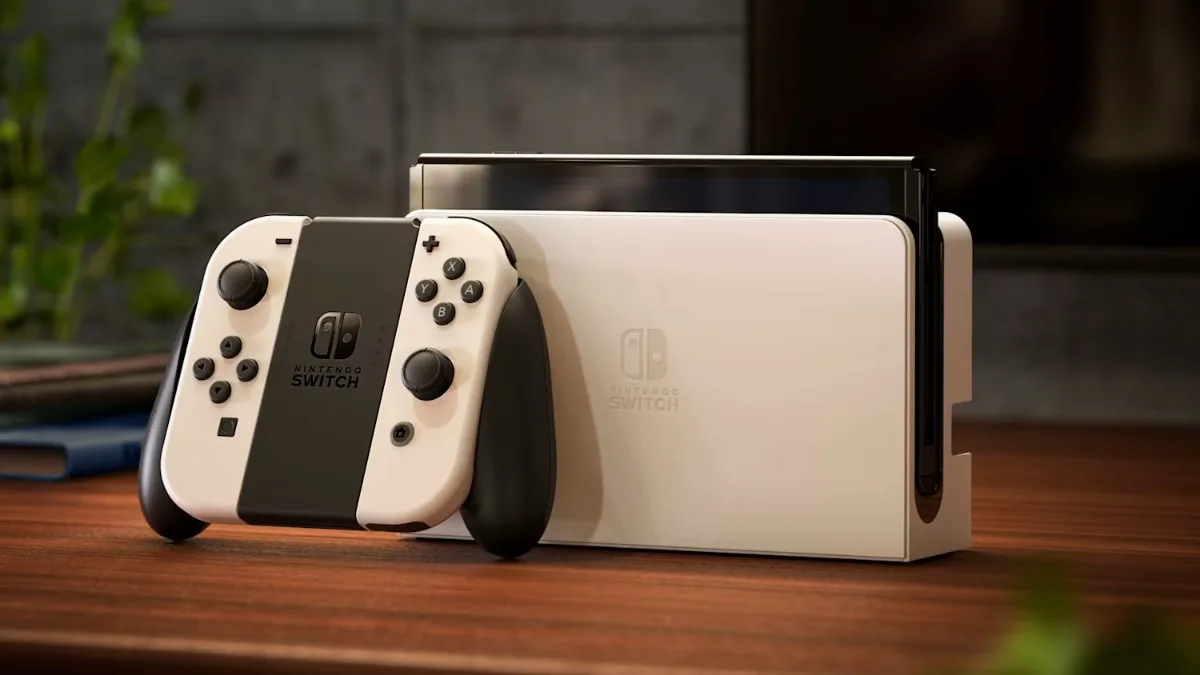
A patent filed by Nintendo in the United States in July 2023 suggests the company has been working on an image upscaling technology, similar to Nvidia’s DLSS. The US patent, published Tuesday, details a computer technology for “converting images through the use of trained neural network,” where a source image is enhanced with contextual data. Nintendo’s patent suggests the successor to the Nintendo Switch could come with AI upscaling technology, resulting in better image quality in games. The Nintendo Switch 2 has previously been rumoured to support a DLSS-style upscaling feature.

Nintendo Patent for AI Upscaling Feature

The patent, as spotted by VGC, says the technology will utilise machine learning techniques to up-convert images from one resolution to a higher resolution.

“A source image is divided into blocks and context data is added to each pixel block. The context blocks are split into channels and each channel from the same context block is added to the same activation matrix. The action matrix is then executed against a trained neural network to produce a changed activation matrix. The changed activation matrix is then used to generate a converted image,” the abstract of the patent reads.

Nvidia’s DLSS (deep learning super sampling) utilises AI upscaling technology to improve image quality in video games, producing better image resolution and higher framerates. Most modern PC games support upscaling techniques like Nvidia’s DLSS, AMD’s FSR and Intel’s XeSS for better performance on older hardware.

AI upscaling technology is also making its way to gaming consoles. The recently launched PlayStation 5 Pro comes with PlayStation Spectral Super Resolution (PSSR), Sony’s new AI upscaling feature that uses machine learning-based technology to add more detail to the image.

The timing of the patent suggests Nintendo could be readying its own AI upscaling feature for the Nintendo Switch 2, set to launch this year. Previous reports, too, have claimed that the Switch 2 will utilise a DLSS-style technology to improve performance.

The Nintendo Switch 2 will launch before the end of March, Nintendo has said. The company has also confirmed the hybrid console will be backwards compatible with Switch games. A recent report claimed the Switch 2 would launch on March 28.

Posted on

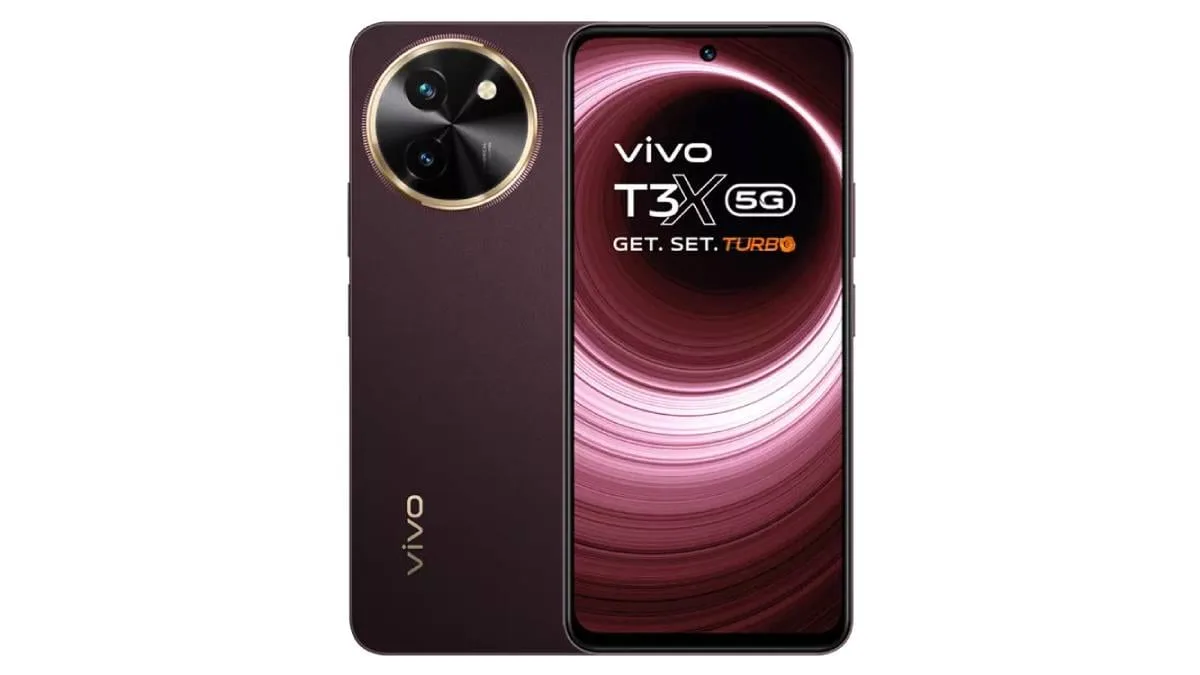
Vivo T3x 5G Price in India Slashed by Rs. 1,000: Here’s How Much It Costs Now

Vivo T3x 5G price in India has been slashed by Rs. 1,000. The Vivo T series smartphone was launched in April last year with a Snapdragon 6 Gen 1 SoC under the hood. It has a 6.72-inch full-HD display and houses a 6,000mAh battery with support for 44W fast charging. Besides the price drop, customers can avail of bank discounts on Flipkart to further bring the price down.

Vivo T3x 5G Price in India (Revised)

In a press release on Thursday, Vivo announced that the T3x 5G will be available at a new price of Rs. 12,499 for the 4GB RAM + 128GB storage variant. The 6GB + 128GB, and 8GB + 128GB models are priced at Rs. 13,999 and Rs. 15,499 respectively. The 4GB, 6GB and 8GB variants were earlier priced at Rs. 13,499, Rs. 14,999, and Rs. 16,499, respectively. It is offered in Crimson Bliss, Celestial Green, and Sapphire Blue shades 

The Vivo T3x 5G is up for purchase through Vivo India e-store, Flipkart, and retail stores. Customers buying the handset through Flipkart can avail Rs. 1,500 off on all credit and debit card transactions. No-cost EMI options start at Rs. 4,167 per month.

Vivo T3x 5G specifications

The Vivo T3x 5G runs Funtouch OS 14 based on Android 14 and has a 6.72-inch full-HD (1,080×2,408 pixels) LCD display with 1,000 nits of peak brightness and 120Hz refresh rate. It has a 4nm-based Snapdragon 6 Gen 1 chipset under the hood, paired with up to 8GB of LPDDR4X RAM, and 128GB UFS 2.2 storage. The RAM can be expanded virtually up to 8GB. The onboard storage supports expansion via microSD card up to 1TB.

For optics, the Vivo T3x 5G has a dual rear camera setup, comprising a 50-megapixel primary sensor and a 2-megapixel sensor. For selfies and video chats, it has a 1.8-megapixel front camera. It comes with a side-mounted fingerprint sensor and has IP64 dust and water resistance. The Vivo T3x 5G houses a 6,000mAh battery with 44W fast charging support.

Posted on

Yes, Analog Phones Work Just Fine Over a VoIP Gateway

Thinking about switching to Voice over Internet Protocol (VoIP) so you can make calls over the internet instead of landlines? With a VoIP gateway you won’t have to replace your existing phones, fax machines, or other equipment.

This saves money on new hardware and avoids the hassle of retraining employees who are comfortable with the current phone setup. Any modern business phone service is going to have a range of gateways available to help companies make the transition to the cloud.

A VoIP gateway acts as a bridge, allowing older analog devices — or even an entire office of them — to connect seamlessly to cloud-based communication systems. By converting traditional analog signals into digital packets, a VoIP gateway enables your legacy devices to work with the internet-based systems powering today’s communications.

In this guide, we’ll explore how VoIP gateways work, the different types available, and practical tips for ensuring optimal performance and security. Whether you’re transitioning one device or an entire office, we’ll cover everything you need to know to make the process smooth and effective.

Does every analog phone work with VoIP gateways?

I wanted to speak to this quickly before we get into the weeds about VoIP gateways, because there is a little more nuance than I could fit into the headline.

Now, I’ve never personally encountered an analog phone that didn’t work with a VoIP gateway — but I know that they exist.

Typically, these non-compatible phones are specialty models that require specific voltage levels or use fancy signaling that’s not supported by the VoIP gateway. You may also run into proprietary digital phones designed for specific PBX systems that don’t work without special hardware or adapters.

To avoid problems, confirm that your VoIP gateway supports the specific devices you plan to use. I would double check if you have any older or specialized equipment, like DECT devices, for example.

In general, though, most analog phones equipment should work just fine with a VoIP gateway. After all, the technology is really not that complicated.

A VoIP gateway converts signal to packets

As long as you know the basics of computer networking, this should all be pretty straightforward.

Think of a VoIP gateway as a bridge between different types of networks that allows organizations to integrate legacy telephony equipment with modern VoIP phone services.

Analog equipment was designed to send signals over the PSTN (Public Switched Telephone Network). The signal sent by these phones and fax machines doesn’t transmit over an IP network like the internet — it just won’t work at all — unless you have a VoIP gateway.

A VoIP gateway converts analog voice signals from traditional phone systems into digital data packets that can travel over an IP network. A VoIP gateway takes the voice from a phone, digitizes it, and sends it as packets over the internet or private network to the destination.

On the receiving end, it converts the digital data back into an analog signal for the recipient’s phone, enabling seamless communication. This two-way conversion process allows different types of communication systems — old and new — to work together efficiently.

VoIP gateway example

Consider a hotel that wants to lower costs with a VoIP phone system, but doesn’t want to have to buy new phones for every room. The VoIP gateway allows the hotel’s existing phones to connect to the hotel’s cloud phone system by converting the analog signals into digital data that can be sent over the internet.

This setup also opens the door to add useful VoIP features such as easier call routing, better voicemail options, and enhanced customer service, all without the need for a major overhaul of the hotel’s phone infrastructure.

Types of VoIP Gateways

There are a few different types of VoIP gateways that range from analog telephone adapters (ATAs) that support a single device and solutions designed to work for busy offices with hundreds of devices.

Single-port VoIP gateways are compact devices that connect one analog device, such as a fax machine or phone, to a VoIP network. These are ideal for small businesses or home offices with minimal communication needs, supporting a moderate number of concurrent calls, typically 10-30 depending on the device. They offer a cost-effective way to integrate analog equipment into a modern VoIP system without overhauling existing infrastructure.

For larger or busier environments, enterprise-grade VoIP gateways are designed to handle high call volumes and complex networks, such as in call centers or large offices. These devices are scalable and support both inbound and outbound communication, with advanced features like centralized control, CRM integration, and omnichannel support for voice, fax, and even video.

FXS (Foreign Exchange Station) gateways are used to connect multiple analog devices, such as phones and fax machines, to a VoIP network. They support multiple VoIP and fax codecs to ensure clear communication. and are a good option for businesses with multiple analog devices that need to transition to VoIP without replacing all hardware.

Fax-ATA (Analog Telephone Adapter) gateways are a specialized type of gateway designed for businesses that still rely on fax machines. These devices convert analog fax signals into digital data that can be transmitted over a VoIP network. Ideal for industries like healthcare or legal services, where faxing remains a key method of communication.

Session Border Controllers (SBCs) are used in conjunction with VoIP gateways to enhance security and ensure quality. SBCs monitor and manage traffic between networks, protecting against threats like fraud and VoIP Denial of Service (DoS) attacks, while also ensuring seamless communication between different VoIP systems. They are especially crucial in large-scale deployments or when connecting to external networks like the PSTN, ensuring smooth and secure VoIP operations.

Tips for using a VoIP gateway

1. Match VoIP codecs to business needs

VoIP codec selection directly affects both audio quality and bandwidth usage. Select one that fits your network’s capacity and the quality of calls you expect. G.729 offers low bandwidth usage while maintaining decent sound quality, ideal for networks with limited capacity. On the other hand, G.711 delivers high-quality sound but uses more bandwidth.

There’s not too much to think about here, but I wrote a whole post about choosing the right VoIP codec because it is important.

You can usually configure VoIP codecs in the settings of your VoIP gateway, PBX system, or individual IP phones. Depending on the system, you can set different codecs for different devices, users, or call types based on factors like bandwidth and call quality requirements.

2. Use a VoIP-friendly router

Not all routers are built to handle VoIP traffic effectively. Make sure your router supports Quality of Service (QoS) to prioritize voice traffic over data and other applications. VoIP routers handle voice data more efficiently and provide better stability for high-quality calls.

If your current router doesn’t support these features, consider upgrading to one designed specifically for VoIP use. It will be simpler to set up, perform better, and in the event something goes wrong, a good router will probably make finding and fixing common VoIP issues a lot easier.

3. Ensure reliable internet connectivity

A fast, stable internet connection is essential for VoIP. Run a free VoIP speed test if you are unsure about whether or not your connection can support all the new lines your gateway will enable.

Once it’s up, you will need to implement QOS settings to prioritize voice traffic and avoid disruptions from other high-bandwidth activities like video streaming or large downloads, especially during peak hours. Consider running VoIP on a VLAN as another way to separate voice traffic from the rest of the network. These are two important ways to optimize your VoIP network that ensure that real-time communications like VoIP get the steady connection they need.

4. Secure your gateway against threats

Both traditional and cloud phone systems are targeted by cybercriminals every day. There are always new forms of VoIP fraud, and these attacks that cost businesses millions of dollars every year. You should make yourself as unattractive a target for hackers as possible by following basic network security best practices, such as:

  • Change default passwords and usernames: Always change default login credentials on your VoIP gateway and devices to unique, strong passwords to avoid common security risks.
  • Update and patch regularly: Ensure that your VoIP gateway and connected devices are running the latest firmware and software updates to protect against security vulnerabilities.
  • Limit access to the VoIP gateway: Restrict access to the VoIP gateway’s administrative interface by allowing only trusted IP addresses or through a secure VPN to prevent unauthorized remote access.
  • Monitor for fraudulent calls: Set up alert systems to detect unusual call patterns, such as international calls or long-duration calls, which may indicate potential VoIP fraud.

5. Be proactive about network monitoring

Use network monitoring tools to track key metrics like latency, bandwidth usage, and packet loss. Persistent high latency or packet loss could signal hardware malfunctions, improper codec settings, or interference from other network traffic.

Watch for warning signs like frequent dropped calls, audio delays (latency), or choppy sound caused by jitter. If you notice unexplained call disruptions or poor quality despite a strong internet connection, it may be time to inspect your VoIP gateway’s configuration, firmware, or even its physical condition.

6. Avoid using Wi-Fi for VoIP

While wireless technology has done magnificent things for telephony, its instability and unpredictability pose challenges for VoIP calls. Wi-Fi technology increases the chances of network communication and VoIP quality issues like latency, network jitter, and packet loss.

These factors can significantly impact the clarity and reliability of voice calls, making Wi-Fi less ideal for VoIP gateways.

Encourage employees to use wired Ethernet connections whenever possible. Ethernet provides a stable and consistent connection, reducing the risk of call disruptions. Wired setups are especially beneficial in offices where high call quality is a priority, as they eliminate the variability associated with wireless networks.

When wired connections aren’t feasible, focus on optimizing wireless setups. Equip employees with high-quality Bluetooth VoIP headsets and ensure they have access to a strong, stable Wi-Fi signal.

Tools like Wi-Fi extenders or mesh networks can help minimize interference and improve call reliability, making wireless solutions a viable alternative in certain situations.

Posted on

Apple’s Upcoming iPhone SE 4 Will Reportedly Be Called the iPhone 16E

iPhone SE 4 is expected to be revealed in the first quarter of this year. There have been numerous rumours about the design and specifications of the fourth-generation iPhone SE in the last few months. Ahead of anything concrete, a new leak now suggests the handset will use a different name when launched. The new name indicates that Apple may consider the new iPhone SE as an extension of the iPhone 16 lineup. It is expected to run the A18 chipset with support for Apple Intelligence features.

Tipster Majin Bu on X claimed that Apple’s upcoming iPhone SE will be called the iPhone 16E. This name ties in with the naming of the iPhone 16, iPhone 16 PlusiPhone 16 Pro, and iPhone 16 Pro Max models launched in September.

This isn’t the first time that the iPhone 16E name has surfaced on the Web. A Weibo post by tipster Fixed Focus Digital (translated from Chinese) from back in December suggested a potential name change for the next SE phone to ‘iPhone 16e’.

The tipster has also shared alleged case renders of the iPhone SE 4 or iPhone 16E. The case suggests a cutout for the camera unit at the top left corner of the rear panel. Its design is expected to be based on the iPhone 14.

iPhone SE 4: Rumoured Specifications, Pricing

The iPhone SE 4 aka iPhone 16E is expected to go official this year, presumably in March. Apple is likely to use the same processor featured in the entry-level iPhone 16 in the upcoming model. This would enable Apple Intelligence features in the new phone. It is said to pack 8GB of RAM and feature a 6.06-inch (1,170×2,532 pixels) LTPS OLED screen with a peak brightness of 800nits. The phone could offer Face ID support and pack a 3,279mAh battery. It is said to come with a single 48-megapixel rear camera like the latest iPhone 16.

The next-generation iPhone SE is said to be priced at less than $500 (roughly Rs. 42,000). In South Korea, it is likely to cost more than KRW 8,00,000 (roughly Rs. 46,000).

Affiliate links may be automatically generated – see our ethics statement for details.
Posted on

LG G5 OLED TV: what we want to see

The LG G4 OLED TV has established itself as one of 2024’s best OLED TVs, blending cutting-edge picture quality with a sleek, wall-mountable design. Powered by LG’s advanced Alpha 11 processor and second-gen Micro Lens Array (MLA) tech, the G4 delivers exceptional brightness, vivid colours, and stunning HDR performance. Its features cater to a wide audience with robust gaming capabilities like 4K at 144Hz, Variable Refresh Rate (VRR), and low input lag. But, while the LG G4 is really strong, there is room for improvement, and today we’ll be looking at all of the potential options LG has to upgrade when it releases the LG G5 sometime in 2025. (Image credit: Future) For example, the addition of virtual 11.1.2 surround sound through AI Sound Pro is commendable but falls short of delivering a fully immersive audio experience. Moreover, while webOS provides easy access to apps and streaming services, its ad placements and limited customisability detract from its premium appeal. The upcoming LG G5 OLED TV has the potential to elevate the series further by addressing these limitations while introducing cutting-edge features. We expect enhancements in brightness, HDR support, and gaming capabilities, and deeper integration of AI could be a game-changer. Let’s dive into our wish list for the LG G5 OLED TV in 2025. (Image credit: Future) LG G5 OLED TV: Enhanced picture quality and gaming While the LG G4 OLED already impresses with its MLA tech and exceptional HDR performance, the LG G5 OLED could take brightness and HDR capabilities to the next level. Sign up for breaking news, reviews, opinion, top tech deals, and more. The G4 already delivers outstanding peak brightness, and the G5 could further enhance localised brightness and improved processing power. Adding HDR10+ support would broaden compatibility with more HDR content, complementing Dolby Vision, and AI brightness optimisation could intelligently adjust to ambient lighting and content type. Gamers will expect even more from the G5, building on the G4’s strong gaming features like 4K at 120Hz for consoles and 144Hz support for PCs. The addition of 240Hz support could future-proof the G5 and enhanced “Game Optimiser” modes would help tailor the TV for different genres, such as RPGs or FPS games. To cater to the growing cloud gaming market, LG could integrate expanded support for platforms like Xbox Cloud Gaming, which would make the G5 a compelling choice for gamers looking for a seamless, high-performance experience. (Image credit: Future) LG G5 OLED TV: AI and UI The G4’s Alpha 11 processor offers significant AI enhancements over older TVs, but the G5 could push these capabilities even further, including smarter, more personalised settings for picture and sound based on user preferences and types of content. AI-powered real-time upscaling for older or low-resolution content would also ensure sharper visuals and better clarity, eliminating the need for manual adjustments, and AI-driven motion smoothing could refine fast-action scenes without introducing the “soap opera” effect. The G5’s webOS UI could benefit from deeper AI integration to make navigation more intuitive and personalised. Predictive algorithms could surface frequently used apps or settings, and voice commands powered by advanced AI could improve accuracy and context understanding. For example, users could ask for specific genres of content, and the TV could recommend options across streaming platforms. Additionally, AI could improve energy efficiency by learning a user’s behaviour and then optimising power consumption, including automatically dimming or turning off unused features during idle periods. (Image credit: Future) LG G5 OLED TV: Upgraded audio, design, and sustainability The G4’s audio performance is solid but falls short of a fully immersive experience, and the G5 could address this by integrating a more robust onboard speaker system. On top of that, AI-powered audio tuning could further enhance this experience by analysing room acoustics and adjusting sound profiles for clearer dialogue and balanced bass. In terms of design, the G5 could expand customisation options to suit diverse home setups, like more versatile stand designs. A height-adjustable option for soundbar integration or a rotating stand for vertical content would be welcome. Improved cable management systems that seamlessly route wires would add to its practicality, too. Sustainability is becoming an increasingly important factor for TV buyers, and the G5 could set a benchmark with eco-friendly innovations. Incorporating recyclable materials, reducing packaging waste, and introducing advanced energy-saving features would cater to environmentally conscious consumers. You might also like…

Posted on

Top Series and Movies to Watch on Apple TV+ for Free This Weekend

Apple TV+ will be available for free streaming from January 4 to January 5, 2025, giving viewers a chance to explore its critically acclaimed library of movies and series at no cost. Known for its emphasis on high-quality, original content, Apple TV+ has gained recognition for its limited but excellent catalog. This weekend provides a perfect opportunity for new viewers to experience the platform’s standout films and shows. Here are the top five movies and series you should binge-watch, with details about their release dates, genres, casts, and compelling plots.

Ted Lasso

  • Genre: Comedy, Drama, Sports
  • Cast: Jason Sudeikis, Hannah Waddingham, Brett Goldstein, Juno Temple

Ted Lasso follows the story of an optimistic American football coach, played by Jason Sudeikis, who is hired to manage a struggling English soccer team despite having no experience with the sport. What begins as a cynical ploy by the team’s owner soon transforms into a heartwarming tale of perseverance, friendship, and personal growth. The show is celebrated for its sharp humor, heartfelt moments, and lovable characters. Over three seasons, Ted Lasso explores themes of mental health, teamwork, and resilience, making it a must-watch feel-good series for viewers of all ages.

Severance

  • Genre: Sci-Fi, Thriller
  • Cast: Adam Scott, Patricia Clarkson, John Turturro, Christopher Walken

Severance is a mind-bending thriller that imagines a world where employees at Lumon Industries undergo a procedure to separate their work and personal memories. Adam Scott plays Mark, a team leader who begins to question the ethics of the procedure as strange events unfold. The show masterfully blends corporate satire with psychological suspense, creating an unsettling yet captivating atmosphere. With its high production value and stellar cast, Severance has been hailed as one of the most innovative shows of recent years.

Greyhound

  • Genre: War, Action, Drama
  • Cast: Tom Hanks, Stephen Graham, Rob Morgan, Elisabeth Shue

Greyhound is an intense World War II drama following U.S. Navy Captain Ernest Krause (Tom Hanks) as he leads a convoy of Allied ships across the Atlantic, facing relentless attacks by German U-boats. The film offers a gripping portrayal of naval warfare, emphasizing strategy, courage, and leadership under pressure. With tight pacing and breathtaking visuals, Greyhound immerses viewers in the harrowing realities of wartime decision-making. Based on true events, the movie has been praised for its authenticity and Hanks’ compelling performance.

For All Mankind

  • Genre: Sci-Fi, Alternate History
  • Cast: Joel Kinnaman, Michael Dorman, Sarah Jones, Shantel VanSanten

What if the Soviet Union had landed on the moon before the United States? This alternate history series explores a world where the space race never ended. For All Mankind reimagines key historical moments, focusing on the astronauts, engineers, and their families as they navigate personal and professional challenges. The series delves into themes of ambition, sacrifice, and technological innovation, offering a fascinating blend of drama and speculative fiction. With four seasons available, this epic tale provides plenty of material for a weekend binge.

Shrinking

  • Genre: Comedy, Drama
  • Cast: Jason Segel, Harrison Ford, Jessica Williams

Shrinking is a heartfelt comedy-drama about a grieving therapist, Jimmy (Jason Segel), who starts breaking professional boundaries by giving brutally honest advice to his patients. Harrison Ford co-stars as his mentor, bringing humor and wisdom to the narrative. The series explores themes of loss, healing, and human connection, offering both laughs and poignant moments. Its relatable characters and witty dialogue make it a standout series.

This free weekend on Apple TV+ offers a unique opportunity to dive into the platform’s top-tier content. With a mix of heartwarming dramas, thrilling series, and action-packed movies, there’s something for everyone to enjoy. Don’t miss the chance to explore these cinematic and storytelling gems!

Posted on

New mini-LED and OLED TVs were brighter than ever in 2024 – but how bright do they need to be?

How bright is your TV screen? And can you answer that, beyond “yes, I can see the moving pictures”? Brightness is crucial for a good viewing experience on the best TVs. It ensures visibility, illuminating detail and infusing colors with depth and vibrancy, and you’ll need a decently bright screen to counteract ambient light for daytime viewing or a brightly-lit room in your home. But while the impact of brightness is very tangible – my eyes! – it can be hard to quantify for everyday shoppers. What is a nit (the most common unit of measurement for TV brightness), or a lumen for that matter? And is 2,000 nits really that much better than, say, 500? A nit is defined as the amount of light that a single candle emits in a square meter – roughly the size of a 40-inch TV – and is usually measured in terms of ‘peak brightness’, or the maximum light within a certain area, rather than the average brightness across a TV screen. For every thousand nits, you get the equivalent of one thousand candles, and so on. TVs tend to get incremental improvements each year, but there’s no doubt that 2024 was the brightest year for TVs yet. One of the best mini-LED TVs, the TCL QM851G, has a peak brightness of over 3,500 nits – double that of most screens in that list – while the new Hisense U8N and TCL C855 are both close to hitting 3,000 nits despite being sub-$1,000 TVs. (More entry-level Mini LEDs, such as the Hisense U7N, might be around 1,000 nits.) A mini-LED screen, which features a dedicated backlight with countless minute diodes, has a natural brightness advantage over OLED, a self-emissive display technology that’s better for putting brightness where it’s needed (lighting up individual pixels) than delivering a high number of nits – the reason why OLEDs faced years of criticism for being ‘too dim’ for the average home. But OLED TVs have also made incredible brightness gains over recent years. Not too long ago, it was unusual for an OLED screen to hit 1,000 nits, and now, it’s a regular occurrence. But what difference do these heightened brightness figures really make? Sign up for breaking news, reviews, opinion, top tech deals, and more. Nit-picking The Samsung S95D, TechRadar’s best TV of 2024 pick, is the brightest OLED model we’ve yet tested (Image credit: Future) As we’ve said, brightness aids visibility, helping to ensure on-screen images are clearly illuminated, and that you can make out plenty of detail. It’s also crucial for color; just as colors fade into a vague gray in darkness, so too does increased brightness allow colors to stand out more clearly from each other. HDR content, which calibrates your TV’s brightness output to improve tonal contrast, also requires a decent level of nits (1,000) to work as intended. However, brightness can be a red herring without proper brightness control. You can have plenty of nits, but if your TV can’t precisely allocate that light where it’s needed, without bleeding into other pixels, the extra light can flatten contrast instead of increasing it. One of OLED’s great strengths is its ability to switch pixels entirely off, meaning that bright areas of the screen are contrasted by a true black rather than a half-lit gray. I’ve had an OLED TV – the LG C1 – for the past three years, without any of the latest brightness enhancements that LG has been cooing ever since its release (its peak brightness is around 750 nits). While it’s not ideal for daytime viewing – even indirect light from my living room window tends to ruin the image – it’s still an incredible screen for the way I largely use it, for an evening film in a dimly lit room. Notably, our pick of the best TV in 2024 is the Samsung S95D, an OLED model that achieves a maximum 1,868 nits peak brightness. While it’s not the brightest screen this year, it’s still the most impressive. And Sony managed to chip away at OLED’s supremacy in 2024 with the introduction of the Sony Bravia 9, a mini-LED model that uses the company’s new XR Backlight Master Drive with High Peak Luminance tech to deliver both high peak brightness and deep, well-defined blacks. A brighter future for TVs The Sony Bravia 9 TV uses advanced backlighting tech to eliminate typical mini-LED picture artifacts such as blooming and off-axis contrast fade (Image credit: Future) While 2024 was the best year for TV brightness yet, that crown is inevitably going to 2025 when it comes. Universal Display, a developer and manufacturer of OLED, has figured out how to make more power-efficient displays, which could reduce manufacturing costs at the same time as increasing brightness – counteracting how expensive high-end, high-brightness OLED TVs can be. This innovation works by increasing the power efficiency of blue pixels specifically, which have proved harder to optimise compared to their red or green counterparts. This means that a TV screen can deploy fewer layers of blue pixels for the same brightness output as existing screens. Less layering, less cost, more light – and we may start seeing gains from this technology as soon as next year. TCL also has plans to bring out a 2025 mini-LED TV – an update to this year’s QM851G – reportedly with a 6,500-nit brightness that’s approaching direct daylight and would knock even our brightest 2024 screens to the curb. Of course, brightness isn’t everything for a new TV: you also need to consider its processor, resolution, audio, format support, smart platform, and naturally the price you’re getting all that for. And there are benefits to a TV with a limited light output, especially when excess blue light is known to impact sleep quality. But for sheer impact, and the improvement of contrast on our TV screens, the steady march of brightness is something to be celebrated. You might also like…

Posted on

Astronomers Uncover New Details of CIZA0107 Galaxy Cluster Merger with VLA

An international team of astronomers has studied a nearby galaxy cluster merger, offering new insights into the processes of galactic collisions. Observations of CIZA J0107.7+5408, a post-core passage binary cluster merger, were carried out using the Very Large Array (VLA). These findings have shed light on the intricate dynamics of merging galaxy clusters, which are key to understanding phenomena such as cosmic ray acceleration, the properties of dark matter, and the behavior of matter under extreme conditions.

Complex Dynamics of CIZA J0107.7+5408

According to the study published on the preprint server arXiv, CIZA J0107.7+5408 (CIZA0107) is located at a redshift of approximately 0.1 and consists of two subclusters with optical density peaks offset from their X-ray emission peaks. Led by Emma Schwartzmann of the U.S. Naval Research Laboratory, the research aimed to image the diffuse radio emission in this system, constrain its integrated spectrum, and analyze the spectral index distribution.

The team utilized observations between 240–470 MHz and 2.0–4.0 GHz. The analysis confirmed the disturbed nature of the cluster, which features a merger axis in the northeast-southwest direction. Diffuse radio emission spanning about 1.6 million light-years was detected in each subcluster. Additionally, regions of ultra-steep spectral emission were identified northwest and southeast of the southwestern subcluster’s radio emission peak.

Spectral and Structural Findings

The research highlighted that both subclusters exhibit a spectral index of around -1.3. Ultra-steep spectral slopes of approximately -2.2 and -2.9 were recorded in the northwestern and southeastern regions, respectively. A sharp radio edge associated with the southwestern subcluster was observed at 340 MHz but was absent at 3.0 GHz, where emission extended beyond the X-ray shock front.

The study suggested that CIZA0107 may host a double halo structure or that the observed emission originates from relics projected onto the cluster’s central regions. These findings enhance understanding of galaxy cluster mergers and their role in cosmic evolution

Posted on

Samsung Galaxy Watch 8 Classic, Galaxy Z Flip FE Allegedly Spotted in GSMA Database

Samsung unveiled the Galaxy Watch 7 and the Galaxy Watch Ultra at the Galaxy Unpacked event in July without the Pro and Classic variants. The watches were launched alongside the Galaxy Z Fold 6 and Galaxy Z Flip 6. The South Korean tech giant seems to be working on a new Classic smartwatch. The alleged Galaxy Watch 8 Classic model was spotted on the GSMA database. The upcoming model is likely to come with a rotating bezel. Additionally, a Fan Edition Galaxy Z Flip smartphone has also passed through the GSMA database. The new Samsung devices are expected to go official in the second half of 2025.

Online publication Smartprix reportedly found a listing for a Galaxy Watch 8 Classic model in the GSMA IMEI database with model number SM-L505U. This model number roughly aligns with the numbering convention of Samsung’s Galaxy Watch 7 and Galaxy Ultra models. The publication has shared screenshot of the alleged listing with the moniker of the wearable.

Samsung launched the Galaxy Watch 7 series earlier this year skipping the Classic or Pro editions. Instead, the brand released the Galaxy Watch 7 in two sizes alongside the new Galaxy Watch Ultra. Previous Classic smartwatches from the brand have included a physical rotating bezel.

Samsung Galaxy Z Flip FE Could Be in the Works

Additionally, the same publication also spotted the Galaxy Z Flip FE on the GSMA database with the model number SM-F761B. The suffix B in the model number is said to represent the international version of the phone.

The fan edition model is likely to debut as a budget-friendly foldable phone alongside the Galaxy Z Fold 7 and Galaxy Z Flip 7 next year. It is expected to run on Samsung’s in-house Exynos 2500 series chipset.

Samsung’s existing foldable lineup runs on Snapdragon mobile platforms. The latest Galaxy Z Fold 6 and Galaxy Z Flip 6 have a Snapdragon 8 Gen 3 Mobile Platform for Galaxy under the hood.

Posted on

iPhone 17 Standard Models Once Again Tipped to Get High Refresh Rate Displays

Apple’s iPhone 16 series has been in stores for three months, yet rumours about next year’s iPhone 17 lineup are brewing. A new leak from China suggests that all models in the 2025 iPhone lineup will feature high refresh rate displays. If this turns out to be true, the iPhone 17 family will be the first to pack advanced ProMotion technology across the entire lineup. Apple equipped the iPhone 16 and iPhone 16 Plus with 60Hz refresh rate displays with only the Pro models featuring 120Hz refresh rate displays.

Prominent tipster Digital Chat Station (translated from Chinese) on Weibo claimed that the standard version of the iPhone 17 series is likely to have a high refresh rate display. This indicates that Apple will unveil the iPhone 17 and iPhone 17 Slim (or Air) with a 120Hz screen for the first time next year.

Rumours of 120Hz ProMotion for all iPhone 17 models are not new. Earlier this year, Ross Young of Display Supply Chain Consultants stated that all Pro and non-Pro models in the lineup will boast 120Hz ProMotion displays. A report by ETNews, citing industry sources, in November reported that the entire iPhone 17 lineup will feature LTPO screens sourced from Samsung and LG.

The Cupertino-based company introduces hardware updates in the Pro models and then adds them to the regular versions in subsequent years. Meanwhile, most Android OEMs have been selling smartphones with 120Hz displays for years.

Apple has used 120Hz screens, branded as ProMotion displays, on its Pro iPhone models since 2021. This automatically adjusts the screen refresh rate and offers responsive app animations and scrolling, improving user experience. Adaption of the ProMotion display on the iPhone 17 and the rumoured iPhone 17 Slim is expected to narrow the gap between the standard and the Pro iPhone models.

Currently, the refresh rate on the iPhone 16 and iPhone 16 Plus are capped at 60Hz, while the iPhone 16 Pro and iPhone 16 Pro Max support 120Hz refresh rate (ProMotion).

Affiliate links may be automatically generated – see our ethics statement for details.