Posted on

Infinix Note 50 Pro+ Live Images, Price Leaked; Said to Launch Globally on March 20

Infinix Note 50 Pro+ is said to see a global launch this week, according to a report. The handset’s complete design is seen in leaked live images. The Infinix Note 50 Pro+ 5G was unveiled in Indonesia earlier this month alongside the Note 50 and Note 50 Pro. As per the new report, the phone will offer an “ArmorAlloy” build, a 50-megapixel periscope camera with 100x zoom, audio tuning by JBL, and One Tap Infinix AI. The phone will reportedly be launched at the Infinix AI∞ Beta event alongside the company’s purported true wireless stereo (TWS) earbuds and a smart ring on March 20.

Infinix Note 50 Pro+ Design, Features

The folks over at GSMArena got their hands on live images of the Infinix Note 50 Pro+ 5G. The phone’s octagonal rear camera module is said to be inspired by “power and precision of high-end car intakes, the light play of diamond cutting, and Harry Winston jewellery”. As per the report, the phone offers a 50-megapixel periscope sensor with 100x zoom capability. 

In terms of design, the Infinix Note 50 Pro+ is said to have an “ArmorAlloy” build with a flat frame. It is said to undergo the same HyperCasting manufacturing process as the Note 50 Pro 4G. The phone’s right spine houses the power button while the volume rockers are placed on the left side.

The bottom of the handset houses the SIM tray, USB Type-C port for charging, and a “Sound by JBL” logo which confirms its audio tuning. Its opposite side is seen with the secondary microphone, an infrared (IR) blaster, and another speaker grille. Another standout feature of the Infinix handset will be a One-Tap Infinix AI which is said to simplify tasks and increase productivity.

The report suggests that the Infinix Note 50 Pro+ will be priced below $500 (roughly Rs. 43,400) in global markets. Notably, this variant was unveiled in Indonesia earlier this month although the company did not reveal its pricing at the time of launch.

For the latest tech news and reviews, follow Gadgets 360 on X, Facebook, WhatsApp, Threads and Google News. For the latest videos on gadgets and tech, subscribe to our YouTube channel. If you want to know everything about top influencers, follow our in-house Who’sThat360 on Instagram and YouTube.

Samsung Galaxy S25 Edge India Launch Anticipated as Handset Reportedly Surfaces on BIS Website

Jio Offering Free 90-Day JioHotstar Subscription, JioAirFiber Trial With Select Plans Ahead of IPL

Posted on

SpaceX Crew-10 Launches to ISS, Relieving Stranded NASA Starliner Crew

SpaceX has launched the Crew-10 mission from NASA’s Kennedy Space Center, sending four astronauts to the ISS. The team will replace Crew-9 members, two of whom have been stranded since June due to Boeing’s Starliner delays. The Falcon 9 rocket lifted off successfully on March 14, and Crew-10 is expected to dock with the ISS in about 28 hours. The six-month mission…
Posted on

The new LG OLED TV feature I’m most excited about is Filmmaker Mode with Ambient Light Compensation – here’s why

LG recently launched its 2025 LG OLED TV lineup, with new LG G5, LG M5, and LG C5 series models that feature everything from expanded wireless connectivity to an innovative four-stack OLED panel said to deliver a 33% peak and 40% fullscreen brightness increase over 2024’s LG G4 OLED. We’ve seen the new G5 in action, and its brightness boost is very real. LG has also introduced a slew of new AI-driven features to optimize picture quality based on movie and TV show genres, create custom picture and sound presets based on your interaction with a Wizard, and automatically switch between homescreen profiles (complete with custom picture and sound settings) when the TV detects a specific user’s voice. LG has clearly gone all-in on AI personalization for its new webOS 25 smart TV interface, but the feature I’m most excited about, and one that I hope to see in more of the best TVs, is decidedly less flashy: Filmmaker Mode with Ambient Light Compensation. You may like Filmmaker Mode: What is it? LG is a longtime supporter of Filmmaker Mode, a picture preset standard created by the UHD Alliance, an industry group consisting of TV manufacturers, film and television studios, content distributors and tech companies. Filmmaker Mode aims to present movies and TV shows exactly as the director approved them during post-production, something that’s done by eliminating picture enhancements such as motion smoothing and applying accurate color settings (rather than brighter ‘vivid’ settings). While the intent behind Filmmaker Mode is understandable, in reality, most people don’t watch movies in darkened rooms like those used for post-production, and they may find that selecting Filmmaker Mode on their TV makes pictures look flat and lifeless when viewing in a less-than-dungeon-like environment. Filmmaker Mode evolved Fortunately, LG hasn’t left Filmmaker Mode fully alone since it was first released back in 2019. It received a major update in 2024 when the company released new OLED TVs with Dolby Vision Filmmaker Mode, which applied the benefits of Filmmaker Mode – primarily the elimination of motion processing – to programs with Dolby Vision high dynamic range. Sign up for breaking news, reviews, opinion, top tech deals, and more. Now, for its 2025 OLED lineup, LG has introduced Filmmaker Mode with Ambient Light Compensation. Like Dolby Vision Filmmaker Mode, the new preset was developed with the UHD Alliance, and it addresses the twin evils of motion smoothing and inaccurate color reproduction while adapting pictures for a range of room lighting situations. Accessible in the TV’s advanced picture settings menu, Filmmaker Mode with Ambient Light Compensation uses its built-in light sensor to monitor the level of room lighting and adjust picture gamma accordingly. That means deep blacks and shadows get boosted to reveal details that would otherwise be obscured in a brighter viewing environment, while mid-tones and highlights take on a more dynamic and punchy look – all without sacrificing picture accuracy. Out of the darkness The LG G4 (shown above at left) is capable of retaining good black depth in bright, challenging environments. The new G5 will have similar capabilities, plus a claimed 30% higher reflection resistance. (Image credit: Future) LG OLED TVs such as the G4 already do a good job maintaining black levels in brighter environments – something I confirmed when I compared premium Samsung and LG OLED TVs side-by-side. And the new LG G5 OLED will not only have a brighter picture than its predecessor, but its screen will have 30% higher reflection resistance, according to the company. Both those factors will make the G5 a better overall performer, and when combined with the new Filmmaker Mode with Ambient Light Compensation, also a more flexible and living room-friendly TV, one that allows for daytime viewing of both sports and movies. I recently had a chance to view the new G5 in action in a bright room, and its handling of dark movie scenes in that environment was impressive, with shadows looking detailed and deep, and highlights maintaining a sufficient level of pop. The new version of Filmmaker Mode was clearly doing its job, and it was a big improvement on the Filmmaker Mode of old. Filmmaker Mode was a great idea for its time, but TVs have become brighter and people no longer necessarily want to watch movies and TV shows in the dark. The Martin Scorcese-approved picture preset needed to evolve to keep pace with these changes, and Filmmaker Mode with Ambient Light Compensation appears to be the ticket. It will take more hands-on experience with the G5 to gauge just how good it is at handling a range of viewing environments, but my initial takeaway from LG’s demo is that the new Filmmaker Mode has what it takes to bring movie viewing out of the darkness. You might also like…

Posted on

Samsung Galaxy S25 Edge India Launch Anticipated as Handset Reportedly Surfaces on BIS Website

Samsung Galaxy S25 Edge has been spotted on the Bureau of Indian Standards (BIS) website, in an indication that the smartphone will be launched in the country soon. The slimmest model in the Galaxy S25 series of smartphones was first teased at the company’s Galaxy Unpacked event in January, while Samsung showed off the handset at the recently concluded Mobile World Congress (MWC 2025). The Galaxy S25 Edge is expected to arrive with a Snapdragon 8 Elite chip, just like the other three models that have already launched.

Samsung Galaxy S25 Edge Model Number Seen on BIS

A listing (via Xpertpick) on the BIS website is believed to be the Indian variant of the purported Samsung Galaxy S25 Edge. While Samsung has yet to announce regional availability for the Galaxy S25 Edge, the appearance of the handset on the Indian regulator’s website is an indicator that it might launch in India soon. Gadgets 360 was able to confirm the presence of the listing on the BIS website.

The purported Samsung Galaxy S25 Edge listing on the BIS website
Photo Credit: Screenshot/ BIS

According to recent reports, the Samsung Galaxy S25 Edge is expected to launch in global markets on April 16, and could go on sale a month later. It is said to be available in select markets, and could be priced around $999 (roughly Rs. 86,900).

Samsung Galaxy S25 Edge Specifications

The purported battery of the upcoming Samsung Galaxy S25 Edge was recently spotted on the UK Demko website, giving us a look at its specifications. The handset is expected to pack a 3,900mAh battery. Another listing on China’s 3C website indicates the phone will support 25W charging, like the base Galaxy S25 model.

Previous reports also suggest that the Galaxy S25 Edge will be powered by a custom Snapdragon 8 Elite for Galaxy chip from Qualcomm, along with 12GB of RAM. It is expected to run on One UI 7, which is based on Android 15, and offer support for Galaxy AI features.

Thanks to the showcase at MWC 2025, we know that the phone will be equipped with a dual rear camera setup. It could feature a 200-megapixel primary camera and a 12-megapixel ultrawide camera. The smartphone is expected to sport a 6.65-inch display, and it is expected to be the slimmest model in the Galaxy S25 lineup, with a thickness of 5.84mm. 

It’s worth taking these details with a grain of salt, as none of these specifications have been confirmed by Samsung. However, if the claims about their imminent debut next month are accurate, we can expect to learn more about these smartphones in the coming days or weeks.

Posted on

Apple’s Siri Chief Said to Acknowledge AI Delays, Promise Fixes

Apple Inc.’s top executive overseeing its Siri virtual assistant told staff that delays to key features have been ugly and embarrassing, and a decision to publicly promote the technology before it was ready made matters worse.

Robby Walker, who serves as a senior director at Apple, delivered the stark comments during an all-hands meeting for the Siri division, saying that the team was facing a bad period. Walker also said that it’s unclear when the enhancements will actually launch, according to people with knowledge of the matter, who asked not to be identified because the gathering was private.

The frank discussion shows the extent of Apple’s crisis in the field of artificial intelligence, where it’s struggling to catch up with peers. Siri — less advanced than rival systems — has become a symbol of Apple’s AI challenges. And the company’s woes boiled over last week, when it acknowledged publicly that critical features would be delayed indefinitely.

During the all-hands gathering, Walker suggested that employees on his team may be feeling angry, disappointed, burned out and embarrassed after the features were postponed. The company had been racing to get the technology ready for this spring, but now the features aren’t expected until next year at the earliest, people familiar with the matter have said.

Still, he praised the team for developing “incredibly impressive” features and vowed to deliver an industry-leading virtual assistant to consumers.

Apple shares had fallen 16% this year through Thursday’s close, part of a broader stock rout that has walloped tech companies. The stock rebounded Friday, but pared gains during the afternoon. Apple was up 1.4% at $212.58 as of 2:18 p.m. in New York.

On Feb. 14, Bloomberg News reported that Apple was struggling with bugs and engineering problems on its planned artificial intelligence tools for Siri. At the time, the company postponed the release from April to May, aiming to include the features in its iOS 18.5 operating system. Now it’s looking to add them as an update as early as the iOS 19 software cycle next year.

A spokesperson for Cupertino, California-based Apple declined to comment on the meeting, which was put on the schedule last week.

The features — unveiled last June at Apple’s Worldwide Developers Conference — are fundamental to making Siri a more effective personal assistant. The technology will allow the software to tap into users’ personal data to better respond to queries. Siri, which was first introduced in 2011, also will be able to more precisely control apps and analyze content that’s on a user’s screen.

But when Apple demonstrated the features at WWDC using a video mock-up, it only had a barely working prototype, Bloomberg has reported. Walker told staff in the meeting that the delays were especially “ugly” because Apple had already showed off the features publicly. “This was not one of these situations where we get to show people our plan after it’s done,” he said. “We showed people before.”

“To make matters worse,” Walker said, Apple’s marketing communications department wanted to promote the enhancements. Despite not being ready, the capabilities were included in a series of marketing campaigns and TV commercials starting last year.

Apple touted the features as a key selling point of the iPhone 16 line, which otherwise lacked major changes. And it’s part of a broader AI push called Apple Intelligence.

Walker also raised doubts about even meeting the current release expectations. Though Apple is aiming for iOS 19, it “doesn’t mean that we’re shipping then,” Walker said. The company has several more priorities in development, and trade-offs will need to be made, he said.

“We have other commitments across Apple to other projects,” Walker said, citing new software and hardware initiatives. “We want to keep our commitments to those, and we understand those are now potentially more timeline-urgent than the features that have been deferred.” He said decisions on timing will be made on a “case-by-case basis” as work progresses on products planned for next year.

“Customers are not expecting only these new features but they also want a more fully rounded-out Siri,” he said. “We’re going to ship these features and more as soon as they are ready.”

Walker said that there is “intense personal accountability” about this effort shared by his boss John Giannandrea, the head of AI at Apple, as well as software chief Craig Federighi and other executives.

As of Friday, Apple doesn’t plan to immediately fire any top executives over the AI crisis, according to people with knowledge of the matter. That decision could theoretically change at any time. In any case, the company is poised to make management adjustments. It has discussed moving more senior executives under Giannandrea to assist with a turnaround effort. Already, the company tapped longtime executive Kim Vorrath — seen as a project fixer — to assist the group.

Walker said the decision to delay the features was made because of quality issues and that the company has found the technology only works properly up to two-thirds to 80% of the time — which is to say it doesn’t work every one out of three times. He said the group “can make more progress to get those percentages up, so that users get something they can really count on.”

In recent weeks, Federighi voiced concerns to other senior executives that the features weren’t working as advertised, ultimately prompting the decision to delay, Bloomberg reported. Issues with Apple Intelligence were clear from the start, with the company postponing the first batch of features last year and providing vague timelines during its launch event.

Walker defended his Siri group, telling them that they should be proud. Employees poured their “hearts and souls into this thing,” he said. “I saw so many people giving everything they had in order to make this happen and to make incredible progress together.”

But Apple wants to maintain a high bar and only deliver the features when they’re polished, he said. “These are not quite ready to go to the general public, even though our competitors might have launched them in this state or worse.”

Walker compared the endeavor to an attempt to swim to Hawaii. “We swam hundreds of miles — we set a Guinness Book for World Records for swimming distance — but we still didn’t swim to Hawaii,” he said. “And we were being jumped on, not for the amazing swimming that we did, but the fact that we didn’t get to the destination.”

He showed examples during the meeting of the technology working: It was able to locate his driver’s license number on command and find specific photos of a child. He also demonstrated how the technology could precisely manipulate apps via voice control. It embedded content in an email, added recipients and made other changes.

Walker told staff that they should “feel really proud of innovative work” done to develop the personal search feature, despite saying it doesn’t always work sufficiently.

Still, the company has met other goals for Siri. That includes bringing a Type-to-Siri interface to iOS 18, as well as adding Apple product knowledge to the platform and an improved understanding of customers. It’s planning to offer Apple Intelligence in several new languages next month and is working overtime to enable the features for China as part of partnerships with Alibaba Group Holding Ltd. and Baidu Inc.

Walker said that some staffers may feel “relieved” over the delays. “If you were using these features in the build, you were probably wondering: Are these ready? How do I feel about shipping these to our customers? Is this the right choice?”

He added that some employees “might be feeling embarrassed.”

“You might have co-workers or friends or family asking you what happened, and it doesn’t feel good,” Walker said. “It’s very reasonable to feel all these things.” He said others are feeling burnout and that his team will be entitled to time away to recharge to get ready for “plenty of hard work ahead.”

The executive said he didn’t want things to get worse before they got better, saying that special attention will need to be paid to the integration of existing features into iOS 19.

Walker ended the meeting upbeat, saying that Apple will “ship the world’s greatest virtual assistant.”

But there’s still a long road ahead. The delayed Siri features are just the first step toward modernizing the software. Apple has been planning upgrades for 2027 that will make Siri more conversational, letting it better compete with other AI chatbots, Bloomberg has reported.

This will require a new infrastructure. “There’s much we will be keeping and there are meaningful things we will be changing,” Walker said.

The team has “learned a lot together,” he said. “We’ll make the adjustments that we need to have a better outcome going forward.”

© 2025 Bloomberg L.P.

(This story has not been edited by NDTV staff and is auto-generated from a syndicated feed.)

Posted on

Tamil Nadu to Subsidise E-Scooter Purchases by Some Gig Workers

India’s southern state of Tamil Nadu will offer a subsidy of Rs. 20,000 to select gig workers to buy e-scooters, a minister said on Friday, as more young people sign up with online platforms to deliver food and groceries.

Gig workers, or those outside traditional employer-employee relationships, are set to play a key role in the world’s fifth-biggest economy, spurred partly by high unemployment after COVID-19 pandemic curbs fuelled growth in the sector.

Tamil Nadu is also introducing an insurance scheme for nearly 150,000 gig workers to compensate for accidental deaths and disability, its finance minister, Thangam Thenarasu, said while unveiling the budget.

“A new scheme will be launched …. to provide a subsidy of Rs. 20,000 each to 2,000 internet-based service workers to buy a new e-scooter,” the minister said, adding that workers registered with a state welfare body would be eligible.

Further details of the scheme will be revealed later, Labour Secretary Veera Raghava Rao told Reuters.

The prices of electric scooter maker Ola’s products start at Rs. 79,999, while those of rival Ather sell from Rs. 99,999.

The state will also set up lounges for the use of such workers in large cities, such as Chennai, its capital – where summer temperatures often exceed 40 degrees Celsius (104 degrees F) – and Coimbatore, a textile hub.

The head of the Tamil Nadu Food and Allied Products Delivery Workers Union, K.C. Gopikumar, welcomed the subsidy and welfare efforts but urged the government to extend them to more workers as well as give them better conditions, such as paid leave.

Swiggy and Zomato, two of India’s biggest delivery providers, did not immediately respond to requests for comment.

© Thomson Reuters 2025

Posted on

Sony launches new version of the best cheap 4K Blu-ray player that drops the streaming tech – but the price looks odd

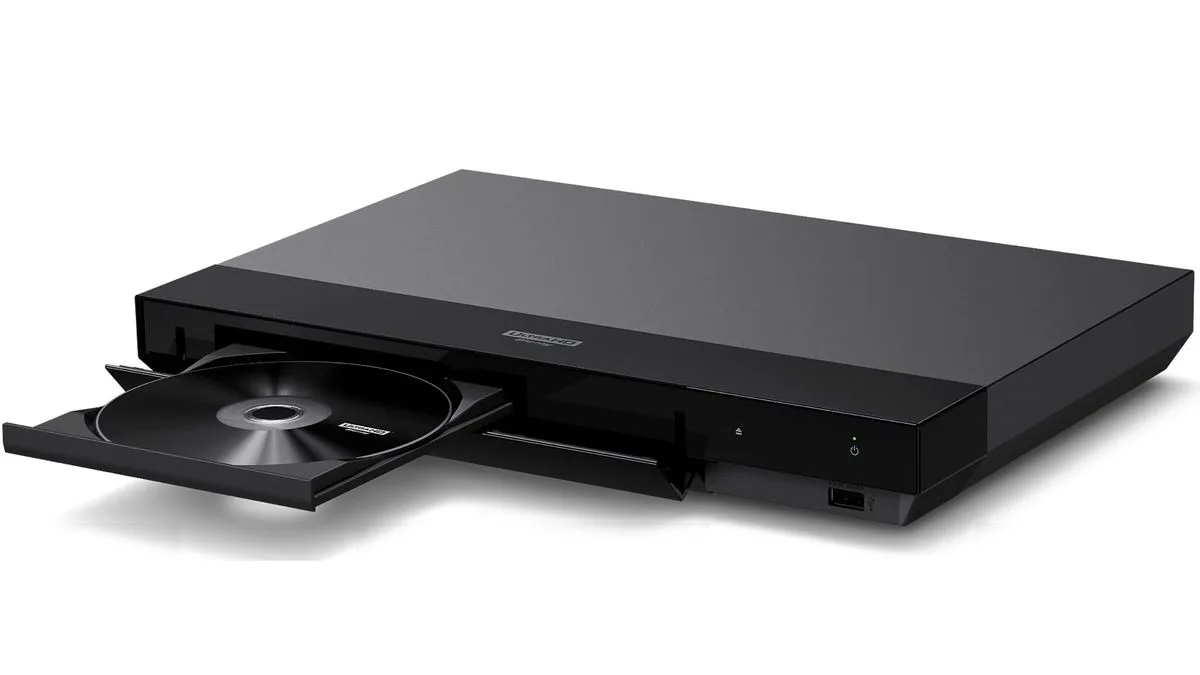
Sony UBP-X700K is a stripped back version of the UBP-X700 No Wi-Fi and no streaming features Japanese pricing suggests a price hike We think that the Sony UBP-X700 is the best cheap 4K Blu-Ray player. And now there’s a new version – the first new Sony Blu-Ray player since 2019 – with some changes that make total sense to me, and potentially some that don’t. Based on its product listings (via FlatpanelsHD.com), the new UBP-X700K drops some of the features from the current model – but the price, in Japan at least, is 25% higher than the street price of the current one. More money, fewer features? That seems strange, so we’ve put in a request to Sony asking for pricing and availability details. We’ll let you know if we get confirmation. You may like (Image credit: Sony) Sony UBP-X700K: what’s different to the UBP-X700 According to the Japanese publication Monohika, the new player is effectively a scaled-down eversion of the UBP-X700 and there are a few key differences. The big difference is that there are no wireless networking features, and that in turn means no video streaming apps, no Spotify Connect and no screen mirroring. The Video & TV SideView app is also gone, Monohika reports. Removing streaming features to make a more streamlined budget Blu-ray player sounds like a smart move to me in the age of smart TVs – it’s just not something that too many buyers today will want from their disc player. But you’d expect it to come with a lower price made to attract people to the world of physical media, and 4K Blu-ray’s benefits over streaming. The player is a typically black Sony block, and round the back there’s an Ethernet port, two HDMI ports (one audio-only) and a coaxial digital out. There’s support for HDR10 and Dolby Vision (no HDR10+, as with the regular model), Dolby Atmos and DTS:X audio, and it works with UHD Blu-Ray, standard Blu-Ray and DVDs. Sign up for breaking news, reviews, opinion, top tech deals, and more. The new Blu-Ray player will be available from April or May 2025, hopefully for an attractive price. The current model can be found for under $199 / £199 / AU$369. You might also like

Posted on

Dirty Angels Now Streaming on Lionsgate Play: Everything You Need to Know

A gripping action thriller, Dirty Angels has drawn attention for its intense narrative and powerful performances. Directed by Martin Campbell, the film follows an elite team of female soldiers on a perilous mission during the U.S. withdrawal from Afghanistan. With Eva Green leading the cast, the film delivers a tense and action-packed storyline. Released in cinemas and on-demand on December 13, 2025, it is set to arrive on Lionsgate Play for streaming on March 14, 2025.

When and Where to Watch Dirty Angels

Dirty Angels premiered in theatres and on video-on-demand on December 13, 2025. The film is scheduled for digital streaming on Lionsgate Play from March 14, 2025, making it accessible to a wider audience.

Official Trailer and Plot of Dirty Angels

The trailer for Dirty Angels teases a high-stakes rescue operation set in Afghanistan. As U.S. forces withdraw, a terrorist group seizes hostages, including the daughter of the Afghan Minister of Education and a U.S. diplomat’s child. With traditional military intervention failing, a covert unit of female operatives is deployed. Under the command of Jake (Eva Green), the team infiltrates enemy territory under the guise of medical personnel. A tense series of events unfolds as they battle betrayals, casualties, and deadly combat to complete their mission.

Cast and Crew of Dirty Angels

Eva Green leads the film as Jake, supported by Ruby Rose as Medic, Maria Bakalova as The Bomb, Rona-Lee Shimon as Mechanic, and Jojo T. Gibbs as Geek. The supporting cast includes Christopher Backus, Zoha Rahman, Laëtitia Eïdo, and Reza Brojerdi. Directed by Martin Campbell, the film is produced by Moshe Diamant and Yariv Lerner, with cinematography by David Tattersall.

Reception of Dirty Angels

The film has generated discussions across platforms, with viewers praising its action sequences and performances. It has an IMDb rating of 4.4 / 10.

For the latest tech news and reviews, follow Gadgets 360 on X, Facebook, WhatsApp, Threads and Google News. For the latest videos on gadgets and tech, subscribe to our YouTube channel. If you want to know everything about top influencers, follow our in-house Who’sThat360 on Instagram and YouTube.

Binance Sells Minority Stake to Abu Dhabi’s MGX Sovereign Wealth Fund for $2 Billion

Smallest Galaxy Ever Found: Andromeda XXXV Defies Cosmic Evolution Models

Posted on

Life on Mars? Studies Suggest Bacteria-Like Organisms Could Exist

The search for extraterrestrial life continues, with Mars remaining a primary focus due to its geological features and past evidence of water. While no living organisms have been found, compounds and minerals suggest conditions that may have once supported microbial life. Scientists are also investigating other locations, including the icy moons of Jupiter and Saturn, which are believed to contain vast subsurface oceans. The study of extremophiles—organisms thriving in extreme environments on Earth—has further expanded possibilities for where life could exist beyond our planet.

Exploring Mars and Beyond

As reported, according to research on Mars’ surface, data from NASA’s Perseverance and Curiosity rovers indicate that the planet’s past climate may have been suitable for microbial life. Despite its current barren landscape, interest remains high due to the discovery of organic molecules. Beyond Mars, celestial bodies such as Europa and Enceladus are being closely studied. These moons contain subsurface oceans beneath thick ice layers, where conditions may allow for microbial survival. Over 5,500 exoplanets have also been identified, with a select few considered potentially habitable.

Life in Extreme Environments

The possibility of life in extreme conditions gained momentum after the discovery of thermophilic bacteria in Yellowstone National Park’s hot springs. Microorganisms have since been found in highly acidic rivers, deep-sea trenches, and even within human bodies. These findings have reshaped theories about the limits of life and influenced the study of extraterrestrial habitability.

Microbial Life in the Human Stomach

Research conducted by Australian doctors Barry Marshall and Robin Warren in the 1980s led to the identification of Helicobacter pylori, a bacterium thriving in the highly acidic environment of the human stomach. Their findings, which earned them the 2005 Nobel Prize in Physiology or Medicine, demonstrated that life can persist in conditions once thought uninhabitable. The study of such microbes continues to inform the search for life in extreme environments beyond Earth.

Posted on

I saw Sony’s next-gen RGB mini-LED TV tech in action, and OLED TVs should be worried

Sony has announced a new “next-generation display system” based upon a “high density LED backlight” with individual control over the red, green and blue primary colors. The new display tech is being developed for both consumer TVs and professional displays, and will “begin mass production in 2025,” according to the company. While Sony’s official announcement cites 2025 as the launch date for its new RGB LED tech, the company confirmed it as a “2026 technology” at a recent demonstration I attended at its Tokyo headquarters. That confirmation means we will more realistically see it arrive in new TVs next year, or possibly in 2027. LCD TVs with RGB backlights aren’t exactly new – Sony developed RGB LED models as far back as 2004, and at the recent CES 2025, Samsung and TCL both had prototype mini-LED TVs with RGB backlights on display, while Hisense showed off a real RGB model it plans to release later this year. You may like But Sony’s new version promises to take things to the next level by combining an RGB backlight with the XR Backlight Master Drive tech it developed for the Sony Bravia 9 mini-LED TV, the company’s flagship model and one of the best TVs of 2024. How it differs from regular LED TVs The panel structure of a conventional QLED TV with a mini-LED backlight (see below for RGB backlight structure). (Image credit: Sony) The LED light modules in conventional LED and mini-LED TVs emit blue light that passes through filters to create full-color images. RGB LED tech, in contrast, uses LED modules with individual red, green, and blue elements, with the light funneled directly to the pixels in the LCD panel without passing through additional color filter layers. This method allows for more granular brightness and color modulation: Sony’s specifications cite 4,000 nits peak brightness – around twice what most mini-LED TVs deliver – along with 99% DCI-P3 color space coverage and 90% BT.2020 coverage. The XR Backlight Master Drive tech in Sony’s Bravia 9 TV uses a highly miniaturized 22-bit LED driver that increases the granular level of its dimming control (conventional mini-LED TVs use 10- or 12-bit drivers). For Sony’s new RGB LED tech, the backlight control has been increased to 66 bits (22 each for red, green, and blue). Sign up for breaking news, reviews, opinion, top tech deals, and more. This also enables a boost in color volume (up to four times over a standard QLED, according to Sony) – a benefit that can be seen not just in bright colors but in darker hues. Other RGB LED benefits The structure of Sony’s RGB backlit TV. (Image credit: Sony) Along with the increase in brightness, color space coverage, and color volume, Sony’s new RGB LED tech promises to expand the viewing angle of the display – a traditional limitation with LCD TVs. When viewing from off-center seats, the color filtering process used by typical LED and mini-LED TVs is prone to blooming and color shift, which reduces picture contrast and color saturation. With Sony’s new RGB LED tech, the red, green, and blue components in the backlight are routed to corresponding pixels in the LCD panel with a high-precision level of light control. There is still potential for blooming, but color shift is minimized, enabling colors to retain their purity at both on- and off-axis viewing angles. Screen size is another benefit to Sony’s tech. OLED TVs are available in sizes up to 97 inches, but it currently isn’t cost-effective to produce them in sizes above 83 inches – hence, the steep price jump from around $5,000 for an 83-inch OLED like the LG G4 to around $20,000 for the 97-inch version. Sony claims that LCD TVs using its new RGB LED tech can be scaled up to ultra-large screen sizes more cost-effectively than OLED TVs, which will allow for the development of 100-inch-plus displays that, unlike OLED, can compete price-wise with conventional mini-LED models. RGB LED in action My recent visit to Sony’s Tokyo headquarters included an extensive demonstration session with the new RGB LED tech. A prototype TV was set up on its own, and a second one was displayed next to the company’s flagship Bravia 9 – however, I wasn’t able to take any photos or videos of it, sadly. Sony’s demo largely verified its claims for its new technology. Images had striking color saturation and detail, and there was virtually no visible backlight blooming – the prototype TV was better than the Bravia 9 in this respect. Colors in darker images also maintained good saturation, and the picture contrast had the same “infinite” quality you typically see on the best OLED TVs. Equally impressive was the prototype TV’s off-axis picture quality. Colors looked equally uniform and bright when viewed at extreme angles, and contrast levels were retained. That level of performance is something you normally only see with OLED TVs, and QD-OLED models in particular, so seeing it on a mini-LED TV was an entirely new experience for me. Another aspect of the demo I found impressive was the anti-reflective screen used for Sony’s prototype TV. The Bravia 9’s X-Anti Reflection screen proved to be very effective at reducing glare from overhead lights when I tested it, but the prototype TV sitting next to the Bravia 9 in Sony’s brightly lit demo room even more effectively eliminated it. Checkmate OLED? A Sony visualization showing the color volume benefits of its new RGB LED backlight tech. (Image credit: Sony) While it’s true that the demo I saw of Sony’s new RGB LED TV prototype was the closest I’ve seen LCD tech come to rivalling OLED – something I previously stated about the Bravia 9 – I’m sure OLED still has plenty of life in it yet. The opportunity here for Sony and other companies working on TVs with RGB backlights is to boost mini-LED performance factors – specifically, color space coverage, black uniformity, contrast, and off-axis uniformity – to a level that rivals OLED TVs. If they can do that while maintaining competitive pricing, OLED will have good reason to sweat. You might also like…