
Posted on

NASA SPHEREx Mission to Map Water Ice in the Milky Way for Life’s Origins

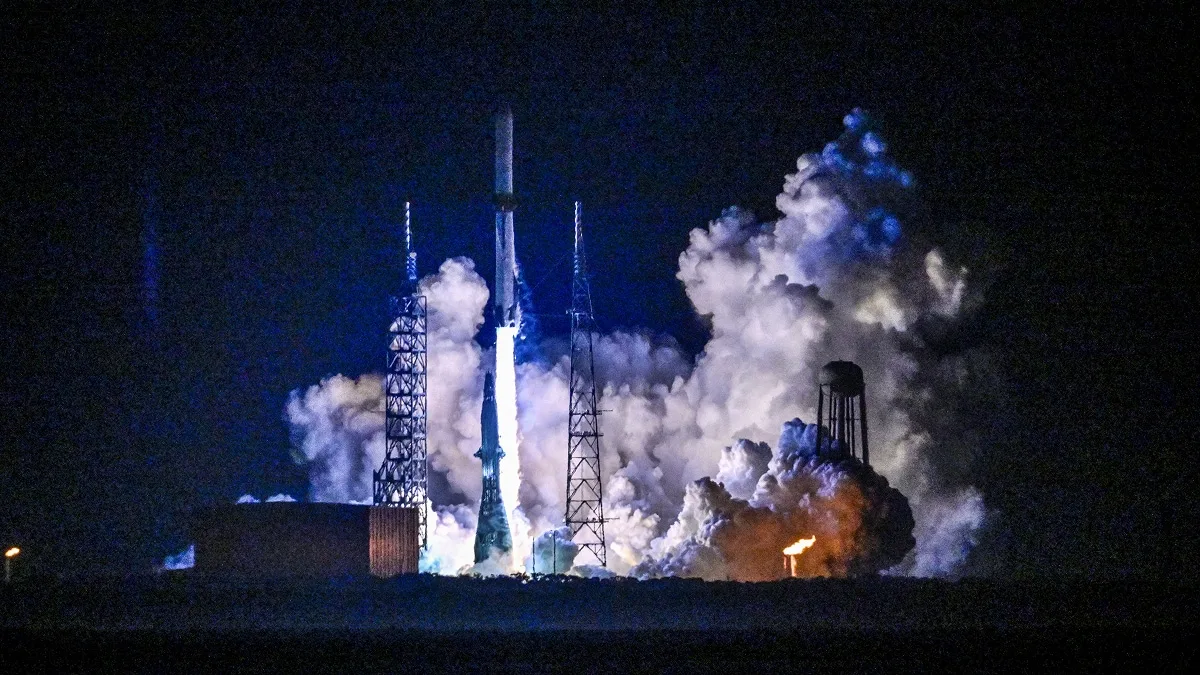
NASA’s SPHEREx mission is set to embark on an extensive survey of the Milky Way, aiming to locate water ice and other essential compounds associated with the formation of life. Slated for launch no earlier than February 27, the spacecraft will be carried into orbit aboard a SpaceX Falcon 9 rocket from Vandenberg Space Force Base in California. Once operational, it will analyse frozen elements in molecular clouds, vast regions of gas and dust where planets and stars originate. The mission seeks to understand the distribution and formation of these life-enabling substances, shedding light on their role in planetary evolution.

Mapping Molecular Clouds

According to the SPHEREx mission details, the telescope will conduct a large-scale survey of the galaxy, distinguishing itself from previous space observatories. Unlike missions such as NASA’s James Webb Space Telescope and the retired Spitzer Space Telescope, which have detected frozen compounds in targeted regions, SPHEREx will provide a comprehensive map by analysing over 9 million line-of-sight observations. By measuring how ice accumulates in different environments within molecular clouds, scientists will gain insight into how these compounds influence planetary development.

Uncovering Hidden Water Reserves

As reported by NASA, previous research, including findings from NASA’s Submillimeter Wave Astronomy Satellite (SWAS), indicated that far less gaseous water was present in molecular clouds than expected. As per reports, scientists proposed that this water was likely locked in ice on interstellar dust grains rather than existing in a gaseous state. Gary Melnick, Senior Astronomer at the Center for Astrophysics | Harvard & Smithsonian, stated in an official press release that these findings suggested deeper layers of molecular clouds could hold significant water ice reserves, protected from cosmic radiation that would otherwise break them apart.

Collaboration with Other Telescopes

SPHEREx is designed to conduct rapid, large-scale observations, making it a complementary tool for highly focused telescopes like James Webb. If the survey identifies regions of particular interest, these can be examined in greater detail by telescopes with higher spectral resolution. As stated by Melnick, Webb’s ability to observe specific targets with enhanced precision allows for a combined approach, where SPHEREx highlights key locations and Webb provides in-depth analysis.

Mission Management and Data Processing

Managed by NASA’s Jet Propulsion Laboratory, SPHEREx has been developed with contributions from multiple institutions. The telescope and spacecraft bus have been constructed by BAE Systems, while the scientific analysis will involve researchers from ten U.S. institutions, two in South Korea, and one in Taiwan. Data from the mission will be processed at the Infrared Processing and Analysis Center (IPAC) at Caltech. Once compiled, the SPHEREx dataset will be publicly accessible through the NASA/IPAC Infrared Science Archive, supporting further studies into the role of frozen compounds in planetary and stellar formation.
Posted on

Blue Origin Prepares Second New Glenn Launch, Aims for Better Landing

The second launch of Blue Origin’s New Glenn rocket is being targeted for late spring, as efforts are being made to enhance its landing capabilities. The 320-foot-tall rocket was first launched on January 16, 2025, from Florida’s Space Coast, successfully deploying a test version of the Blue Ring spacecraft into orbit. However, the booster stage failed to land on the recovery platform at sea. The company had anticipated this possibility and has since identified potential issues affecting the landing sequence. Adjustments to the booster are being made in preparation for the upcoming launch.

Landing Challenges Identified and Addressed

According to reports, the engines performed as expected during the descent, but issues in delivering fuel from the tanks prevented a successful touchdown. Blue Origin Chief Executive Officer Dave Limp stated at the 27th Annual Commercial Space Conference that a combination of factors contributed to the failed landing. While specific technical details were not disclosed, it was mentioned that modifications are being implemented on the second booster. These changes are expected to improve landing success without delaying the next flight.

Payload for the Second Flight Yet to Be Finalized

The payload for the upcoming launch has not been officially confirmed. Reports indicate that Blue Origin is considering several options, including potential commercial missions. If no suitable payload is available, the rocket may carry a mass simulator for testing purposes. Limp mentioned that the first three flights of New Glenn are regarded as developmental missions, while commercial launches are expected to begin from the fourth flight onward.

New Glenn’s Capabilities and Future Prospects

New Glenn, under development for nearly a decade, is designed to transport 50 tons of payload to low Earth orbit. Its payload fairing, measuring 23 feet in diameter, is larger than that of any operational rocket. The company aims to establish New Glenn as a competitive launch vehicle for commercial and government clients, with an emphasis on reusability and cost efficiency.

(Except for the headline, this story has not been edited by NDTV staff and is published from a press release)

Posted on

Bacteria-Based Cellulose Bandage Speeds Up Plant Healing and Growth

A bacteria-based cellulose bandage has been found to enhance plant healing and regeneration. Studies show that wounds treated with these patches heal faster, with over 80 percent recovery in a week compared to less than 20 percent in untreated plants. The cellulose also speeds up root and leaf development in plant cuttings. Researchers attribute this to plant hormones…
Posted on

UCLA Unveils SPLITTER, a Tethered Jumping Robot for Space Exploration

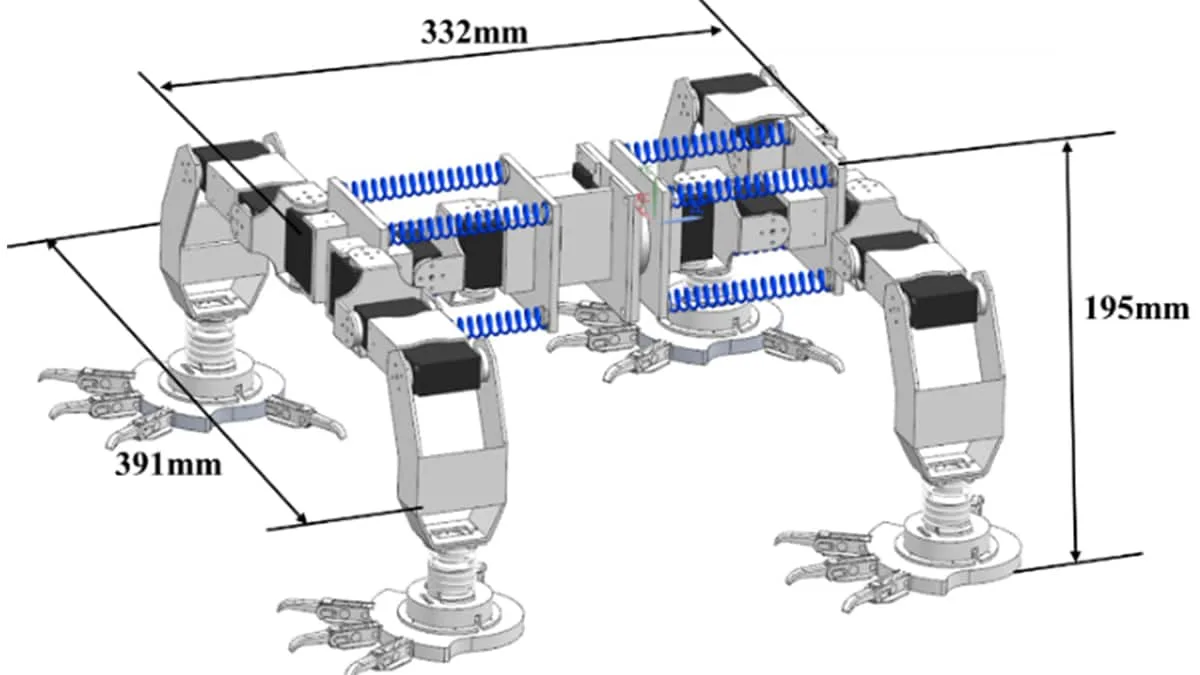
A new robotic system capable of planetary exploration through tethered jumping has been developed by researchers at the Robotics and Mechanisms Laboratory (RoMeLa) at the University of California, Los Angeles (UCLA). The robot, named SPLITTER (Space and Planetary Limbed Intelligent Tether Technology Exploration Robot), has been designed as a modular, multi-robot system composed of two quadrupedal robots connected by a tether. The system, expected to be presented at the IEEE Aerospace Conference (AeroConf) 2025, has been designed to navigate low-gravity environments such as the moon and asteroids. Reports indicate that the robotic system can perform successive jumps while collecting scientific data, providing an alternative to conventional planetary rovers and drones.

SPLITTER’s Design and Capabilities

According to the study published on the arXiv preprint server, SPLITTER consists of two Hemi-SPLITTER robots connected by a tether, forming a dumbbell-like structure. The tether enables mobility and stability during mid-air travel, eliminating the need for additional attitude control mechanisms such as gas thrusters or reaction wheels. The system has been designed to dynamically alter its inertia by adjusting limb positions and tether length, ensuring stability during flight. The development of SPLITTER was driven by the limitations of traditional planetary rovers, which are often slow and cumbersome, and the impracticality of drones due to the absence of atmospheric conditions on celestial bodies like the moon and asteroids.

Mechanism Behind SPLITTER’s Motion

Reports suggest that SPLITTER incorporates an inertial morphing mechanism based on a Model Predictive Controller (MPC) to regulate its orientation during mid-air movements. The concept is based on the Tennis Racket Theorem, also known as the Dzhanibekov effect, which describes how objects with asymmetric inertia undergo spontaneous rotational flips. Yusuke Tanaka, lead author of the study, told Tech Xplore that the technique allows aggressive stabilization of the robot’s mid-air flight through controlled inertia adjustments. It has been suggested that this method significantly enhances the efficiency of planetary exploration by ensuring stability without relying on external force mechanisms.

Potential Applications and Future Research

The research team has indicated that SPLITTER could be deployed in planetary exploration missions as a swarm of robots, allowing extensive and unstructured terrain to be efficiently traversed. The tether mechanism could also enable one unit to explore craters or caves while the other remains anchored, providing support. Dennis Hong, director of RoMeLa and principal investigator of the project, told Tech Xplore that ongoing research is focusing on improving the hardware, including new actuators and sensing mechanisms. Future studies are expected to further validate the inertial morphing mechanism through high-fidelity simulations, with the long-term goal of enhancing SPLITTER’s capabilities for real-world space applications.

For the latest tech news and reviews, follow Gadgets 360 on X, Facebook, WhatsApp, Threads and Google News. For the latest videos on gadgets and tech, subscribe to our YouTube channel. If you want to know everything about top influencers, follow our in-house Who’sThat360 on Instagram and YouTube.

Global Rocket Launches Reach Record High in 2024, With More Growth Expected in 2025

May 2024 Solar Storm Triggers Unusual Radiation Belts, Raising Space Safety Concerns

Posted on

Scientists Discover Two New Supernova Remnants in a Surprising Location

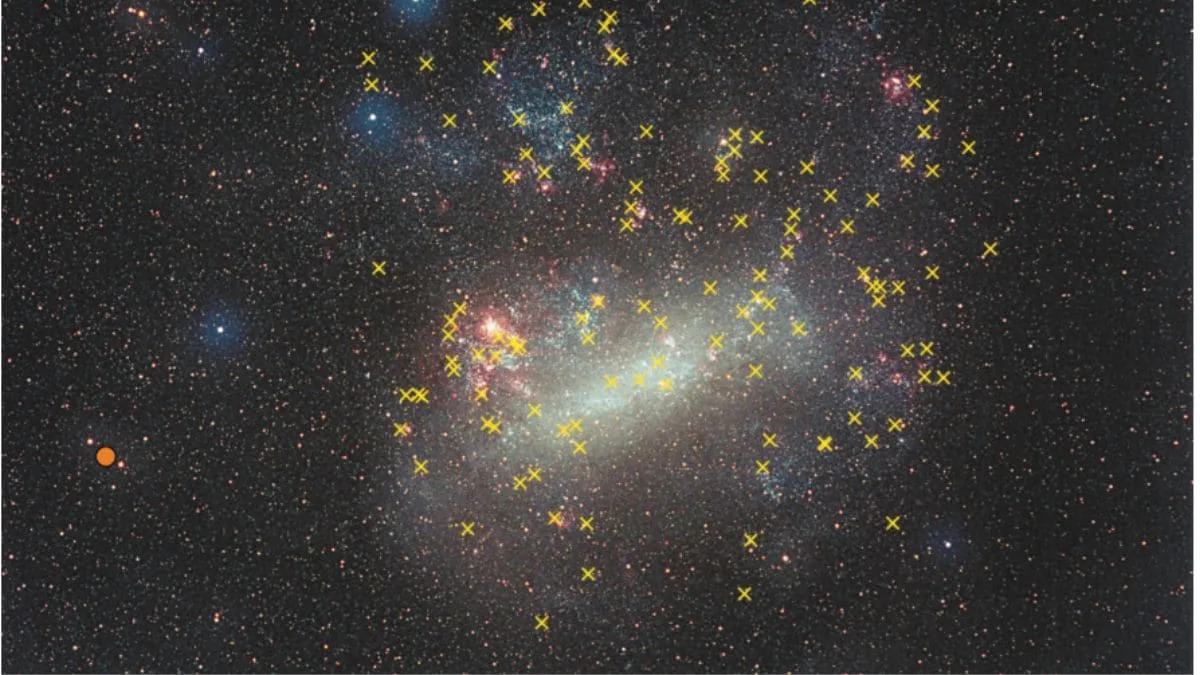
Two mysterious light sources detected on the outskirts of the Large Magellanic Cloud have been identified as previously unknown supernova remnants. The discovery was made using the European Space Agency’s X-ray observatory, XMM-Newton after observations revealed unexpected X-ray emissions. Supernova remnants are formed when massive stars explode, creating shock waves that ionise and compress surrounding interstellar matter. The detection of these remnants in an area where supernovae are rarely found has raised new questions about the distribution of ionised gas in this dwarf galaxy.

Identification of J0624-6948 and J0614-7251

According to a study published in Astronomy & Astrophysics, the two supernova remnants, J0624-6948 and J0614-7251, were observed as distinct circular structures in visible-light imaging. The newly released images from ESA show these remnants in the lower-left portion of the Large Magellanic Cloud, with J0624-6948 appearing in orange and J0614-7251 in blue. As reported by space.com, previously identified supernova remnants in the galaxy were marked with yellow crosses. The study explains that for a supernova to leave behind a remnant, the explosion must occur in a region containing ionised gas, typically found in dense star-forming areas rather than in the outskirts of a galaxy. The brightness and size of the newly detected remnants align with other confirmed cases in the Large Magellanic Cloud.

Impact on Understanding of Galactic Structures

In an official statement ESA scientists noted that these findings suggest a higher concentration of ionised gas in the Large Magellanic Cloud than previously estimated. The research proposes that interactions between the Milky Way, the Small Magellanic Cloud, and the Large Magellanic Cloud could be influencing the movement and compression of interstellar material. It is suggested that gravitational forces between these galaxies may be altering gas distribution, leading to unexpected regions of star formation and supernova activity.

For the latest tech news and reviews, follow Gadgets 360 on X, Facebook, WhatsApp, Threads and Google News. For the latest videos on gadgets and tech, subscribe to our YouTube channel. If you want to know everything about top influencers, follow our in-house Who’sThat360 on Instagram and YouTube.

Bitcoin Falls to $95,000 as Altcoins Decline Amid Unchanged US Interest Rates

Global Rocket Launches Reach Record High in 2024, With More Growth Expected in 2025

Related Stories

Posted on

May 2024 Solar Storm Triggers Unusual Radiation Belts, Raising Space Safety Concerns

A significant solar storm that occurred in May 2024 led to the formation of two temporary radiation belts around Earth, as confirmed by satellite data. The discovery was made when a dormant satellite resumed operations after months of inactivity. The storm, which was among the most intense geomagnetic disturbances since 1989, resulted in widespread auroral displays and introduced high-energy particles into the Earth’s magnetosphere. While such temporary belts have been documented before, scientists have found that one of the newly formed belts exhibited unique properties, with a composition different from previous observations. One of the belts has already dissipated, but the other remains intact, posing potential challenges for future space missions.

Temporary Radiation Belts Detected Following Intense Solar Activity

According to research published in the Journal of Geophysical Research: Space Physics, the Colorado Inner Radiation Belt Experiment (CIRBE) satellite identified the new radiation belts upon reactivation in June 2024. The spacecraft had gone silent due to a technical issue in April, missing the peak of the storm. Upon its return, data analysis revealed the existence of two additional belts situated between the pre-existing Van Allen radiation belts.

It was determined that while the first belt contained high-energy electrons, consistent with previous storm-induced radiation belts, the second belt displayed an unusual concentration of high-energy protons. This presence of protons was linked to the extreme nature of the solar storm, which had released significant bursts of charged particles into Earth’s magnetic field.

Extended Lifespan of the Newly Formed Belts

Temporary radiation belts generated by solar storms are known to persist for weeks before dispersing. However, as per the findings, the electron-dominated belt remained for three months, while the proton-rich belt is still present. David Sibeck, a heliophysicist at NASA’s Goddard Space Flight Center, stated in an interview with Space.com that these particles could stay trapped for an extended period, creating a lasting impact on Earth’s inner radiation environment.

The proton belt’s resilience is attributed to its location in a more stable region of Earth’s magnetic field, where external disturbances have less impact. In contrast, a subsequent solar storm in June 2024 caused a reduction in the electron belt, with further weakening observed in August. Despite this, the proton belt has remained largely unaffected.

Implications for Space Missions and Satellite Operations

The existence of these new radiation belts has raised concerns regarding the safety of satellites and crewed space missions. Charged particles at high energy levels can pose risks to electronic components and human health in space. Spacecraft passing through these regions, particularly those traveling to geostationary orbit or beyond, may require additional shielding to mitigate radiation exposure.

As reported, the presence of these belts could necessitate adjustments in launch plans for future missions. With prolonged radiation hazards, space agencies may need to factor in the evolving space weather conditions before deploying satellites or sending astronauts beyond Earth’s orbit.

Despite the CIRBE satellite’s crucial discovery, the same solar activity that led to the identification of the new radiation belts also caused the spacecraft’s eventual demise. The increased energy injected into the atmosphere resulted in greater drag, which led to CIRBE’s descent and disintegration in October 2024.

The impact of solar storms on Earth’s magnetosphere continues to be closely monitored, with scientists studying how these phenomena affect both planetary and technological systems.

Posted on

NASA, General Atomics Test Nuclear Fuel for Faster Mars Missions

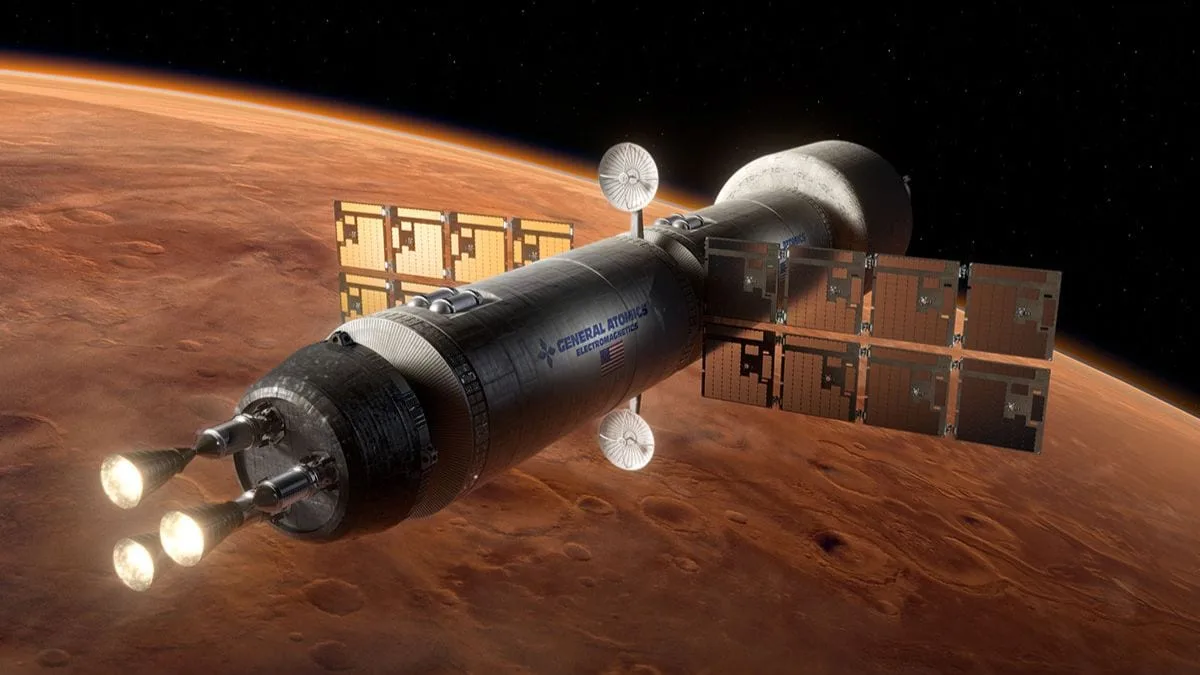
Efforts to develop nuclear thermal propulsion (NTP) for future space missions have taken a significant step forward. General Atomics Electromagnetic Systems (GA-EMS), in collaboration with NASA, has conducted tests on nuclear reactor fuel designed for space travel. The trials, held at NASA’s Marshall Space Flight Center in Alabama, assessed the fuel’s ability to withstand extreme conditions that would be encountered during deep space missions. The successful results could accelerate plans for faster, more efficient space travel, reducing transit times for crewed missions to Mars.

Successful Testing at NASA’s Marshall Space Flight Center

As reported by space.com, according to the tests conducted at NASA’s facility, the reactor fuel was subjected to six thermal cycles using hot hydrogen, rapidly heating it to 2326.6 degree Celsius. The objective was to evaluate the fuel’s resilience under extreme temperature fluctuations and exposure to hot hydrogen gas, conditions necessary for nuclear thermal propulsion. GA-EMS President Scott Forney stated in a company release that the fuel demonstrated the ability to endure these conditions, reinforcing confidence in its potential for safe and reliable space propulsion.

First-of-Its-Kind Testing of Nuclear Fuel

GA-EMS Vice President of Nuclear Technologies and Materials, Christina Back, highlighted the uniqueness of these tests in the company release. The company was reported to be the first to utilise the compact fuel element environmental test (CFEET) facility at NASA’s Marshall Space Flight Center for such trials. Fuel performance was tested at temperatures reaching 2,727 degree Celsius, with findings indicating a significant efficiency boost over conventional propulsion systems.

Potential Impact on Space Exploration

As per sources, NASA has prioritised the development of nuclear propulsion due to its potential to significantly reduce travel time to Mars. Shorter missions could lower the risks associated with long-duration spaceflight, including radiation exposure and the need for extensive life-support resources. In 2023, NASA and the Defense Advanced Research Projects Agency (DARPA) announced joint efforts to develop an NTP system, with a planned demonstration by 2027. The latest advancements in nuclear propulsion technology could play a crucial role in achieving that goal, bringing human missions to Mars closer to reality.

Posted on

Atmos Space Cargo’s Phoenix Capsule Set for First Orbital Test on SpaceX Mission

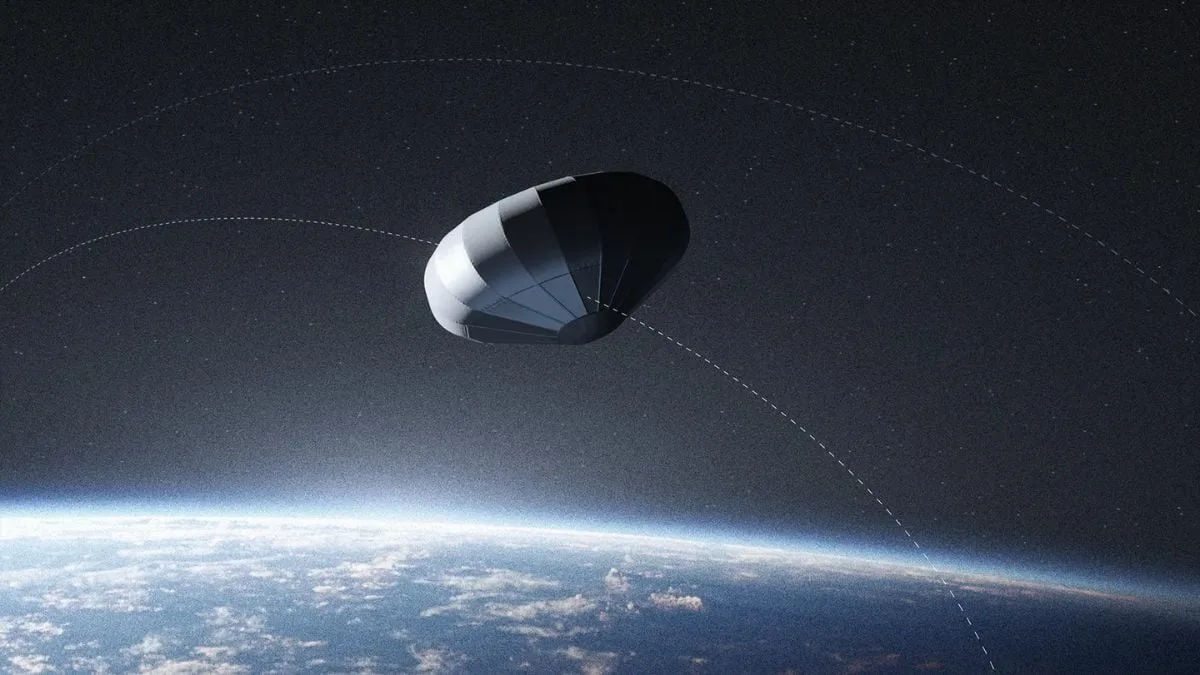
A cargo-return technology developed by Germany-based Atmos Space Cargo is set to undergo its first in-space test with an upcoming SpaceX mission. The company’s Phoenix capsule will be launched aboard the Bandwagon 3 rideshare mission, scheduled for no earlier than April. The capsule has been designed to facilitate the safe return of high-value materials from orbit, particularly benefiting the biomedical sector. The test mission aims to gather crucial data on the capsule’s subsystems, onboard payloads, and reentry performance.

Mission Objectives and Scientific Payloads

According to reports, the Phoenix capsule will carry four payloads, including a radiation detector from the German Aerospace Center (DLR) and a bioreactor from UK-based Frontier Space. The mission’s primary goals include testing Phoenix’s performance in orbit, evaluating data from customer experiments, and deploying its proprietary inflatable atmospheric decelerator (IAD) for reentry stabilisation. This technology, acting as both a heat shield and parachute, is intended to enable a controlled descent back to Earth.

Challenges in Returning Space Cargo

Industry experts highlight that while the cost and complexity of launching experiments into space have been reduced, bringing them back to Earth remains a challenge due to high costs, long turnaround times, and technical difficulties. Atmos Space Cargo has positioned Phoenix as a cost-effective and reliable solution for returning biomedical samples, microgravity-manufactured materials, and other sensitive payloads.

Future Prospects and Industry Impact

Despite expectations that Phoenix will not survive its debut mission, the collected data will contribute to future improvements. Larger iterations of the capsule are planned to carry heavier payloads, including potential returns of rocket stages. Advisory board member and former NASA Deputy Administrator Lori Garver has stated that advancements in reusable and affordable cargo return technology are critical for the future of orbital space operations. The initiative aligns with broader efforts to enhance accessibility to in-space manufacturing and research.

Posted on

Earthquake Swarm Near Santorini Triggers Emergency Response from Greek Authorities

Greek authorities have responded to an intensifying earthquake swarm near Santorini by closing schools and deploying emergency teams. The tremors, which began last week, have been growing in frequency and magnitude, raising concerns over potential stronger quakes in the region. While experts have ruled out immediate volcanic activity, the situation remains unpredictable due to the swarm’s unusual characteristics. The most powerful tremor recorded so far was a magnitude 5 earthquake, striking approximately 34 kilometres northeast of Santorini. The event occurred at 2:27 p.m. local time, as per the University of Athens’ earthquake monitoring system.

Seismic Activity Driven by Faults, Not Volcanic Unrest

According to reports, the ongoing tremors are attributed to fault movement rather than volcanic activity. Santorini, positioned on the Aegean Sea’s tectonic boundary, sits on the exposed section of a submerged volcano known as the Santorini caldera. David Pyle, Professor of Earth Sciences at the University of Oxford, told Live Science that the quakes are likely caused by fault lines shifting rather than magma activity. He described the swarm as unusual, highlighting the challenge of predicting future developments due to its underwater location.

Historical Earthquake Swarms and Regional Tectonics

The Aegean region experiences significant seismic activity due to the African plate moving beneath the Eurasian plate. Similar earthquake swarms have been recorded in the past, including a 2011-2012 event linked to magma movement beneath Santorini. However, the current swarm appears more extensive and is concentrated outside the Santorini caldera. Most tremors have been recorded between the underwater Kolumbo volcano and Anydros Island.

Kolumbo, last erupting in 1650, previously triggered a tsunami that affected nearby islands. While researchers remain uncertain about a direct link between current tectonic activity and potential volcanic unrest, ongoing monitoring continues to assess the evolving situation.

For the latest tech news and reviews, follow Gadgets 360 on X, Facebook, WhatsApp, Threads and Google News. For the latest videos on gadgets and tech, subscribe to our YouTube channel. If you want to know everything about top influencers, follow our in-house Who’sThat360 on Instagram and YouTube.

NASA’s Juno Detects Io’s Most Powerful Volcanic Eruption Yet

Dark OTT Release: Telugu Mystery Thriller Starring Jiiva and Priya Bhavani Shankar Now Streaming Online

Related Stories

Posted on

Microplastics Found in Human Brain Tissue, Study Shows Rising Levels

Tiny plastic particles have been found in human brain tissue, raising concerns over their impact on health. Scientists have detected a significant increase in microplastics and nanoplastics (MNPs) in the brain over the past decades. The particles, commonly present in air, water, and food, have now been identified within human tissue, challenging previous assumptions about the brain’s protective barriers. Researchers are working to understand the long-term consequences of this plastic infiltration.

Rising Plastic Levels in Brain Tissue

According to the study published in Nature Medicine, 91 brain samples collected from individuals who died between 1997 and 2024 were analysed. Reports indicate a 50 percent increase in MNP concentrations from 2016 to 2024, with median levels rising from 3,345 micrograms per gram to 4,917 micrograms per gram. Andrew West, a neuroscientist at Duke University, told Science News that the sheer quantity of plastic detected was unexpected, stating that he didn’t believe it until he saw all the data.

Unexpected Particle Shapes and Sources

Findings suggest that the plastic particles are not uniform. Many were thin, sharp fragments rather than the engineered beads often studied in labs. Richard Thompson, a microplastic pollution expert at the University of Plymouth, told Science News that these plastics originate from everyday products such as grocery bags and bottles. Polystyrene, frequently used in medical and food industries, was found in lower amounts compared to polyethylene.

Higher MNP levels were found in the brains of 12 individuals diagnosed with dementia, but researchers have not confirmed a direct causal link. Some scientists speculate that neurological changes associated with dementia may increase plastic accumulation. Phoebe Stapleton, a toxicologist at Rutgers University, told Nature Medicine that further research is required to understand the biological impact, stating, that the next steps will be to understand what they are doing in the brain and how the body responds to them.