
Posted on

Blue Origin’s New Shepard NS-29 Conducts First Lunar Gravity Simulation

A significant milestone in suborbital spaceflight was achieved by Blue Origin with the launch of its uncrewed NS-29 mission. The New Shepard rocket lifted off from the company’s West Texas facility on February 4 at 11 a.m. EST, following a week-long delay caused by adverse weather conditions and a technical issue in the rocket’s avionics system. The booster and capsule both returned to Earth successfully, though one of the capsule’s three parachutes did not fully deploy. Blue Origin stated during the live broadcast that the capsule was engineered to land safely with fewer than three parachutes.

Lunar Gravity Simulated for Research Payloads

According to reports, the NS-29 mission introduced a lunar gravity simulation for the first time using the New Shepard vehicle. The capsule achieved this by rotating approximately 11 times per minute for a duration of two minutes, a manoeuvre facilitated by its reaction-control thrusters. The mission carried 30 research payloads, with 29 focused on lunar-related technologies. Blue Origin outlined six key research areas, including in-situ resource utilisation, dust mitigation, advanced habitation systems, sensors and instrumentation, small spacecraft technologies, and entry, descent, and landing systems.

NASA-Supported Research Aboard the Flight

More than half of the payloads were backed by NASA’s Flight Opportunities Program. The U.S. space agency is engaged in efforts to establish a long-term human presence on and around the Moon through the Artemis programme. A NASA experiment named the Electrostatic Dust Lofting project examined how lunar dust becomes electrically charged and lifted under ultraviolet light exposure. Another NASA-supported study, the Lunar-g Combustion Investigation, explored fire behaviour under the Moon’s gravity conditions to enhance safety measures for future lunar habitats.

Future Applications of Gravity Simulation

In an X(formerly Twitter) post, Blue Origin Chief Executive Officer Dave Limp stated that this capability provides NASA and other lunar technology developers with a cost-effective method to conduct research. He added that New Shepard’s gravity simulation could be adapted for Mars and other celestial bodies, expanding its potential for future space exploration research.

Posted on

7,000-Year-Old Arrow Poison Found in South Africa, Shows Ancient Hunting Skills

A 7,000-year-old femur bone belonging to an antelope, discovered in a South African cave, has revealed the earliest confirmed use of a multi-component arrow poison. Three modified bone arrowheads were found embedded within the marrow cavity, and a recent scientific analysis has identified a mixture of plant-based toxins. This discovery provides new insight into the pharmacological knowledge and hunting practices of early humans, highlighting the complexity of their technological advancements and understanding of toxic substances.

Scientific Analysis of the Poisonous Compound

According to the reports published in The Conversation, Justin Bradfield, Associate professor at University of Johannesburg along with other researchers examined the femur using micro-CT imaging. The sediment-like substance inside the marrow cavity was found to be foreign matter rather than natural deposits. Chemical analysis confirmed the presence of digitoxin and strophanthidin, toxic cardiac glycosides that disrupt heart function. Ricinoleic acid, a derivative of ricin, was also detected, suggesting the use of multiple plant sources to create a potent poison.

Implications for Ancient Trade and Knowledge Systems

As per the research, the plants containing these toxic compounds are not naturally found near Kruger Cave, where the femur was originally discovered. No remains of these plants have been identified in previous archaeobotanical studies of the region. This suggests that early humans either travelled long distances to acquire these materials or engaged in an organised trade network for toxic plant ingredients. Such findings highlight the extensive knowledge early societies had regarding medicinal and toxic plants and their application in hunting strategies.

Historical Context of Poison Use in Hunting

Previous evidence of poison use dates back approximately 60,000 years, coinciding with the development of projectile hunting technology in Africa. While chemical verification of such early poison use remains unconfirmed, the newly analysed femur provides the first concrete proof of a deliberately mixed poison for arrows. The application of plant-based toxins to hunting weapons marks a significant evolutionary step in the efficiency of ancient hunting techniques, demonstrating a sophisticated level of planning and knowledge transfer among early human groups.

For the latest tech news and reviews, follow Gadgets 360 on X, Facebook, WhatsApp, Threads and Google News. For the latest videos on gadgets and tech, subscribe to our YouTube channel. If you want to know everything about top influencers, follow our in-house Who’sThat360 on Instagram and YouTube.

February 2025 Planet Parade: How to See Five Planets Align in the Sky

Lenskart Phonic Smart Glasses With Bluetooth Audio, Voice Assistant Support Launched in India: Price, Specifications

Posted on

Compact Neutrino Detector Successfully Identifies Antineutrinos at Nuclear Reactor

A compact neutrino detector has successfully identified antineutrinos at a nuclear power plant, marking a significant advancement in particle physics. Unlike conventional detectors that require massive infrastructure, this device weighs less than three kilograms. Despite its size, it effectively detected antineutrinos emitted from a nuclear reactor in Leibstadt, Switzerland. The experiment, which lasted 119 days, involved a detector composed of germanium crystals. Around 400 antineutrinos were recorded, aligning with theoretical predictions. Scientists believe this achievement could lead to improved testing of physics theories and potential applications in nuclear monitoring.

Study Findings and Expert Insights

According to a study submitted to arXiv on January 9, the experiment relied on a specific interaction where neutrinos and antineutrinos scatter off atomic nuclear. This phenomenon, which was first observed in 2017, enables smaller detectors to function effectively. Kate Scholberg, a neutrino physicist at Duke University, told Science News that the accomplishment is significant, as researchers have attempted similar feats for decades. She highlighted the simplicity of the interaction, comparing it to a gentle push rather than a complex nuclear reaction.

Christian Buck, a physicist at the Max Planck Institute for Nuclear Physics and co-author of the study, told Science News that this development opens a new avenue in neutrino physics. He noted that the interaction’s clean nature could help identify undiscovered particles or unexpected magnetic properties in neutrinos.

Potential Applications and Challenges

Physicists suggest that such detectors could play a role in monitoring nuclear reactors. The ability to detect antineutrinos could provide insights into reactor activity, including plutonium production, which has implications for nuclear security. However, challenges remain. Jonathan Link, a neutrino physicist at Virginia Tech, told Science News that while the technique is promising, it is still a difficult approach. The detector, despite its small size, requires shielding to eliminate background noise, limiting its portability.

This experiment also helps clarify past findings. In 2022, a similar claim of reactor antineutrinos scattering off nuclei was made, but inconsistencies with established theories led to controversy. Buck stated that the new study rules out the validity of those earlier results. With ongoing research, the field continues to evolve, potentially leading to further discoveries in particle physics.

Posted on

NASA Finalises Crew for Axiom Space’s Fourth Private Astronaut Mission in 2025

NASA and its international collaborators have finalised the crew for Axiom Space’s fourth private astronaut mission, set to launch aboard a SpaceX Dragon spacecraft no earlier than spring 2025. The mission, departing from NASA’s Kennedy Space Center in Florida, will see four astronauts spending up to 14 days aboard the International Space Station (ISS). The crew includes former NASA astronaut and Axiom Space’s director of human spaceflight Peggy Whitson as commander, ISRO astronaut Shubhanshu Shukla as pilot, and mission specialists Sławosz Uznański-Wiśniewski from the European Space Agency (ESA) and Tibor Kapu from Hungary.

Private Astronaut Missions Expand Space Access

According to NASA’s International Space Station Program Manager Dana Weigel, private astronaut missions are contributing to advancements in low Earth orbit operations. Weigel said that these missions are helping pave the way for commercial space activities while increasing accessibility to microgravity research. This mission will mark the first time an ISRO astronaut will board the ISS as part of a joint effort between NASA and the Indian space agency. It will also be the first ISS stay for astronauts from Poland and Hungary.

Axiom Space’s Growing Role in Private Spaceflight

As reported, Axiom Space has been steadily expanding its private spaceflight program since its inaugural mission in April 2022. Each mission has varied in duration, with the most recent, Axiom Mission 3, remaining docked at the ISS for 18 days in January 2024. Whitson, who also commanded Axiom Mission 2 in May 2023, highlighted the significance of international partnerships in commercial spaceflight, stating that each mission brings new opportunities for participating nations.

Future of Low Earth Orbit Operations

NASA’s long-term objective involves fostering a sustainable commercial space economy, allowing the agency to focus resources on deep space exploration. The ISS continues to serve as a key testing ground for space research and technology, supporting both government-led and private-sector initiatives.

Posted on

Ocean Warming Rate Quadruples Over Four Decades, Accelerating Climate Change

The pace of ocean warming has intensified significantly over the past four decades, with recent data highlighting a quadrupling of heat absorption rates. This shift points to an acceleration in climate change, as oceans act as the planet’s primary heat sink. Researchers warn that if fossil fuel dependency continues, warming is expected to increase at an even faster rate in the coming decades. The implications of this trend extend beyond rising sea levels, influencing extreme weather patterns and global food security.

Research Highlights Escalating Ocean Temperatures

According to a study published in Environmental Research Letters, ocean surface temperatures have been rising at an increasing rate. The research reveals that while the rate of warming stood at 0.06 degrees Celsius per decade in the 1980s, it has now escalated to 0.27 degrees Celsius per decade. Projections indicate that a similar acceleration will occur in the next 20 years, with the situation worsening if emissions remain unchecked.

Climate Change Driving Earth’s Energy Imbalance

Findings suggest that Earth’s energy imbalance—where the planet absorbs more energy than it emits—has doubled in the past two decades. Greenhouse gases such as carbon dioxide and methane are trapping heat in the atmosphere, leading to warming oceans. Study lead author Christopher Merchant, Professor of Ocean and Earth Observation at the University of Reading, told Live Science that this trend suggests climate change is advancing at a faster pace than previously anticipated.

Impacts on Weather, Sea Levels, and Food Security

Rising ocean temperatures contribute to sea level rise, extreme weather, and agricultural disruptions. The reduction in cloud cover, alongside declining ice and snow levels, is increasing heat absorption. Researchers caution that without substantial reductions in fossil fuel use, the planet will experience even more severe climate consequences.

For the latest tech news and reviews, follow Gadgets 360 on X, Facebook, WhatsApp, Threads and Google News. For the latest videos on gadgets and tech, subscribe to our YouTube channel. If you want to know everything about top influencers, follow our in-house Who’sThat360 on Instagram and YouTube.

New Study Uses Math to Decode Creativity and Idea Formation

Xiaomi 15 Ultra Colour Options, RAM and Storage Configuration Tipped

Related Stories

Posted on

New Study Uses Math to Decode Creativity and Idea Formation

A new research study has examined the mathematical principles governing creativity and innovation, shedding light on how novel ideas emerge. By analysing data across different domains, researchers have identified patterns that could refine the understanding of how individuals and societies generate new concepts. The study investigates two types of novelty—discovering an entirely new element and forming unique combinations of existing elements. The findings could be crucial in fields such as science, literature, and technology, where innovation plays a vital role in advancement.

Mathematical Framework for Creativity

According to the study published in Nature Communications, researchers introduced a framework to model how new ideas emerge. Led by Professor Vito Latora from Queen Mary University of London, the team focused on higher-order novelties—combinations of familiar elements that create something new. Speaking to Phys.org, Prof. Latora stated that the study is part of a broader effort to understand the mechanisms underlying creativity, aiming to identify factors that contribute to the success of ideas, products, and technologies.

A mathematical model called Edge-Reinforced Random Walk with Triggering (ERRWT) was developed to simulate how people discover and combine elements. Unlike traditional random walks, which assume equal probability for each step, ERRWT strengthens frequently used connections and triggers new links when novel combinations occur. This process mirrors real-world discovery, where repeated exposure to certain elements increases the likelihood of making new associations.

Analysing Patterns Across Domains

The research team applied the ERRWT model to three distinct datasets—music listening habits from Last.fm, literary texts from Project Gutenberg, and scientific publications from Semantic Scholar. The findings revealed that while individuals might have similar rates of discovering new elements, the sequences in which they arrange them differ significantly.

For music listeners, certain users developed unique listening patterns despite discovering the same number of new songs. In literature, writers frequently created new word pairings rather than introducing entirely new words. Scientific papers, particularly titles, demonstrated a higher tendency for novel word combinations compared to narrative texts.

Predicting Innovation with Heaps’ Law

The study also highlighted that the process of novelty creation follows Heaps’ law, a power-law relationship describing how new elements and combinations emerge over time. By applying this principle, researchers could predict different rates of innovation across disciplines. The results indicated that while some fields prioritise the discovery of individual elements, others focus on recombining existing ones in unique ways.

Implications for Future Research

The findings suggest that understanding how creative processes unfold could help refine strategies for fostering innovation. Prof. Latora noted that studying novelty creation is essential for identifying factors that contribute to the rise and decline of trends, products, and ideas. Future research aims to expand the model by incorporating a social component, which could provide insights into how external influences shape creative developments.

Posted on

Unusual White Streaks in Northern Lights Raise Questions About Atmospheric Phenomenon

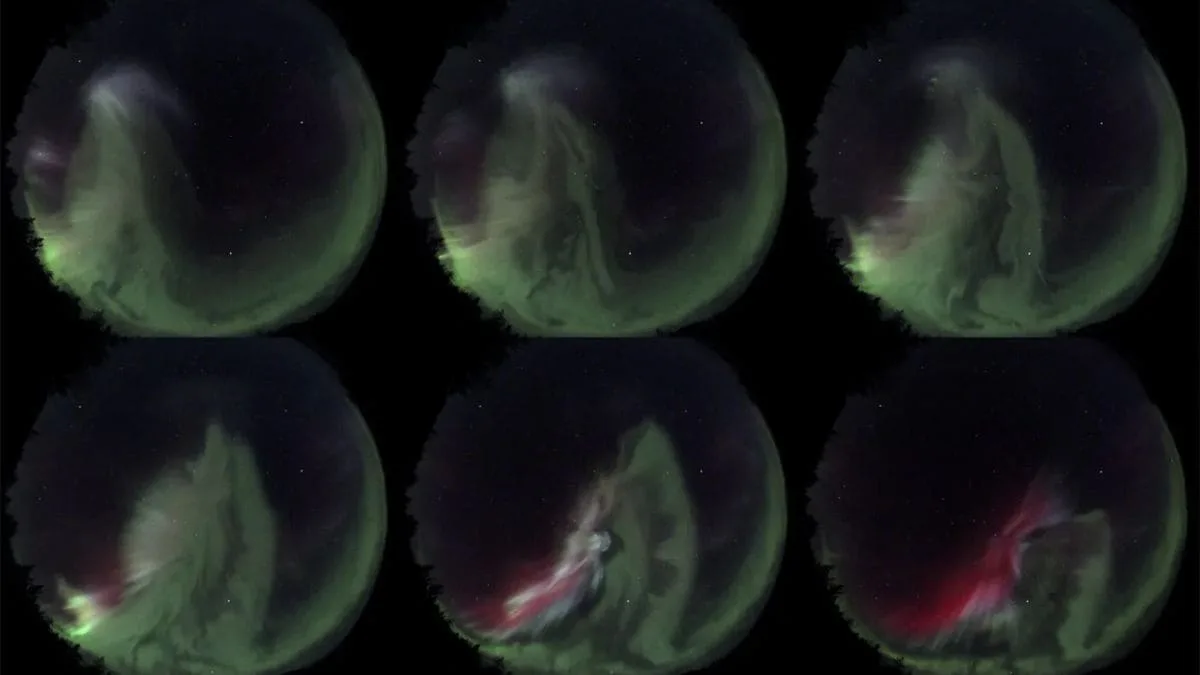
Pale white streaks have been observed weaving through the northern lights, presenting a new atmospheric puzzle. These eerie glows have been captured alongside traditional red and green auroras, but experts suggest they are not auroras themselves. Instead, they may share similarities with the purplish phenomenon known as Strong Thermal Emission Velocity Enhancement (STEVE). Scientists remain uncertain about what causes these white lights to form in specific regions. The discovery has prompted further investigation into the underlying mechanisms of these unexplained emissions.

White Glows Identified in TREx Mission Data

According to research published in Nature Communications, the white streaks were first identified by scientists at the University of Calgary using the Transition Region Explorer (TREx) mission. TREx, a network of low-light cameras monitoring Earth’s near-space environment, captured full-colour images that revealed these unexpected formations. Unlike other auroral imagers, which focus on specific wavelengths of red and green light, TREx detected broad-spectrum emissions.

Emma Spanswick, a space physicist at the University of Calgary, recalled, while talking to Science News, noticing an unusual grey-white patch in 2023 while reviewing auroral images. A thorough search of past TREx data uncovered 30 instances of these white-laced auroras in Saskatchewan from 2019 to 2023. Some of the formations extended for hundreds of kilometres, appearing either alongside existing auroras or in regions where colourful displays had faded.

Spectral analysis confirmed that these white lights result from continuum emissions, where light is emitted across multiple wavelengths. This distinguishes them from traditional auroras, which arise when charged particles excite atmospheric atoms, producing specific colours. The emission pattern closely resembles that of STEVE, a fast-moving plasma band that creates purplish streaks in the sky.

Speaking to Science News, Claire Gasque, a space physicist at the University of California, Berkeley, noted that while the patchy nature of these white lights differs from the structured arc of STEVE, they may share similar origins. Researchers are now focused on identifying the forces responsible for heating atmospheric particles to create these glows. The precise cause of the phenomenon remains unknown, leaving scientists with more questions about the complexities of auroral activity.

Posted on

First Mouse with Two Fathers Thrives into Adulthood, Marking New Scientific Milestone

A major development in stem cell science has been achieved with the creation of a bi-paternal mouse, marking a significant step in reproductive biology. Scientists have successfully engineered a mouse with two male biological parents, which managed to survive into adulthood. This research, conducted by a team of stem cell experts, has addressed longstanding barriers in unisexual mammalian reproduction by modifying specific imprinting genes. The findings, which could have implications for regenerative medicine, highlight the challenges and potential future applications of the technology.

Genetic Modifications Enable Bi-Paternal Development

According to the study published in Cell Stem Cell, led by Wei Li of the Chinese Academy of Sciences (CAS), the team focused on overcoming imprinting-related challenges that previously prevented embryos with same-sex genetic origins from developing fully. Modifications were made to 20 imprinting genes using techniques such as frameshift mutations, gene deletions, and regulatory region edits. These changes allowed some bi-paternal embryos to survive to birth and, in rare cases, reach adulthood.

Co-corresponding author Qi Zhou of CAS explained to phys.org, that imprinting genes have been identified as a key obstacle in unisexual reproduction. Despite previous attempts using ovarian organoids derived from male stem cells, imprinting abnormalities caused severe developmental defects. By directly editing these genes, the research team improved embryonic viability and the stability of pluripotent stem cells.

Survival and Reproductive Challenges Remain

As per reports, only 11.8 percent of the engineered embryos developed to birth, and those that survived exhibited developmental abnormalities, reduced lifespan, and sterility. Guan-Zheng Luo of Sun Yat-sen University, a co-corresponding author, stated that imprinting abnormalities have been confirmed as the primary factor preventing unisexual reproduction in mammals.

Despite the limitations, this approach has demonstrated the potential for refining stem cell-based therapies and improving cloning efficiency. Researchers plan to expand the study to larger mammals, though substantial challenges remain due to differences in imprinting gene patterns across species.

For the latest tech news and reviews, follow Gadgets 360 on X, Facebook, WhatsApp, Threads and Google News. For the latest videos on gadgets and tech, subscribe to our YouTube channel. If you want to know everything about top influencers, follow our in-house Who’sThat360 on Instagram and YouTube.

Massive 500,000-Mile Coronal Hole on the Sun Blasts Solar Wind Toward Earth

Huawei Could Be Developing New Smartwatch With In-Display Fingerprint Scanner

Posted on

1,200-Year-Old Pregnant Woman’s Sacrifice Unearthed in Ecuador’s Manteño Period Burial

The remains of a young pregnant woman, who lived approximately 1,200 years ago during the Manteño period in Ecuador, have been unearthed by archaeologists. Her grave contained a striking combination of artifacts and evidence of violent death, which has led researchers to suspect ritual sacrifice. The discovery was made at the Buen Suceso site, where the burial was found to include the remains of another individual’s skull and burnt offerings. The context and contents of the grave have raised significant questions about her societal role and the reasons for her tragic fate.

Details of the Study

According to a study published in Latin American Antiquity, the woman, aged 17 to 20, was in the late stages of pregnancy when she died. Fractures on her skull indicated a fatal blow to her head, while her hands and left leg had been severed post-mortem. Radiocarbon dating has placed her death between 771 and 953. Sara Juengst, a bioarchaeologist from the University of North Carolina at Charlotte, explained to Live Science that the presence of valuable trade artifacts, including Spondylus mollusk ornaments and obsidian blades, hinted at her high status within her community.

Artifacts and Interpretations

The inclusion of Spondylus shells, often linked to fertility and water, along with a crab claw placed on her abdomen, suggested ritualistic intentions. These items, along with the burnt material dated to 991-1025, indicated that the grave may have been revisited centuries after her burial. Juengst suggested that this could reflect an attempt to associate her sacrifice with environmental events like El Niño, which might have disrupted agriculture and prompted desperate measures.

Significance of the Burial

The burial has prompted discussions about women’s political and social roles in Manteño society. Juengst speculated that her power, possibly linked to her pregnancy, may have made her a target for sacrifice or elimination. Benjamin Schaefer, a bioarchaeologist at the University of Illinois Chicago, cautioned against definitive interpretations, suggesting future studies could provide deeper insights into this unique discovery.

For the latest tech news and reviews, follow Gadgets 360 on X, Facebook, WhatsApp, Threads and Google News. For the latest videos on gadgets and tech, subscribe to our YouTube channel. If you want to know everything about top influencers, follow our in-house Who’sThat360 on Instagram and YouTube.

Oppo Find X8 Ultra Tipped to Boast Flat Screen With Narrow Bezels

Data Privacy Day 2025: Top Apple Privacy Features to Enable on Your Devices

Related Stories

Posted on

Astronauts’ Vision Problems Linked to Prolonged Space Exposure, Posing Risks for Mars Missions

Astronauts returning from extended space missions are reported to experience significant changes in eye health, linked to prolonged exposure to microgravity. Researchers have identified that the altered blood flow and pressure conditions in space can lead to vision problems. These changes are primarily associated with a condition termed spaceflight-associated neuro-ocular syndrome (SANS), affecting around 70 percent of astronauts during six- to twelve-month stays on the International Space Station (ISS). This raises potential challenges for longer missions, such as a journey to Mars.

Study Identifies Key Ocular Changes

According to a study published in the IEEE Open Journal of Engineering in Medicine and Biology, three critical ocular parameters were analysed: ocular rigidity, intraocular pressure, and ocular pulse amplitude. Measurements were conducted on data from 13 astronauts, whose missions spanned 157 to 186 days. The researchers observed a 33 percent reduction in ocular rigidity, an 11 percent decrease in intraocular pressure, and a 25 percent decline in ocular pulse amplitude. These findings indicate biomechanical changes in the eye, accompanied by symptoms such as reduced eye size, optic nerve swelling, and retinal folds.

Potential Long-Term Effects

Dr Santiago Costantino, an ophthalmologist at Université de Montréal, highlighted to phys.org that microgravity alters blood flow and venous circulation in the eye, potentially leading to structural changes in the sclera and choroid. The observed changes could persist, raising concerns about the impact on missions exceeding one year. While most astronauts studied returned to normal vision after their missions, corrective lenses were sometimes necessary during recovery.

Mars Missions Pose New Risks

Experts remain cautious about the unknown implications of prolonged exposure to microgravity during extended missions like those to Mars. The research team emphasised that additional studies and preventive strategies are essential to address these risks. The findings serve as early indicators to identify astronauts at risk, paving the way for more targeted solutions to ensure the safety of space exploration’s next frontier.