Posted on

Infinix Inbook Air Pro+ Review: Affordable and Reliable

Infinix has made steady efforts to make its presence felt in the laptop segment. The brand has consistently launched laptops that cater to different segments like gaming or thin and light categories. With the launch of its Inbook Air Pro+, the company plans to disrupt the market with some value-for-money proposition. Priced at Rs. 49,990, the latest laptop from the brand comes loaded with some interesting specifications, including a slim and lightweight design, a 13th Intel Core i5 processor, an OLED display, and more. So, does it make sense to go for this laptop? Let’s find out in this in-depth review.

Infinix Inbook Air Pro+ Laptop Design: Sleek and Lightweight

  • Dimension – 315.6 x 225.6 x 15.3mm
  • Weight – 1kg
  • Colours – Silver, Brown

Infinix has made sure you get some premium-looking laptops at this price segment with the latest machine. At a time when most of the affordable laptops come with not-so-great designs, the Infinix Inbook Air Pro+ stands out with its sleek and light profile.

1 infinix inbook air pro plus

The laptop is available in two colour options: Silver and Brown.

The laptop weighs 1kg and offers 4.5mm thickness at the slimmest point, making it one lightest and thinnest laptops in this segment. The device is available in two colour options: Silver and Brown. I got the former for the review, and it sure gives a decent look, though you might find some similarities to the MacBook Air in terms of design.

The laptop shell is made using aluminium and magnesium alloy, which offers some durability. The built quality is decent enough. The lid provides a smooth texture with the brand’s logo at the centre. However, the sturdiness of the lid is not so great. First of all, you will feel some tightness when opening the lid, and the hinge does not feel that strong as the wobble issue persists here. Opening the lid, you will find a backlit keyboard and a large touchpad.

5 infinix inbook air pro plus

The Infinix Inbook Air Pro+ comes wtih some good connectivity ports.

As for the ports, the laptop offers a decent amount of ports for everyday usage. You get two USB Type-C ports and a HDMI port on the left side. On the right side, there is a USB 3.2 Gen 1 port, a 3.5mm audio jack, and a USB Type-C port. That said, the Infinix Inbook Air Pro+ does offer a sleek design language, which is surely a plus point in this price segment.

Infinix Inbook Air Pro+ Display: Smooth and Vibrant

  • Display – 14-inch OLED screen
  • Resolution – 2.8K (1800×2880 pixels)
  • Refresh Rate – 120Hz

Coming to the display, the Infinix Inbook Air Pro+ packs a decent display in a compact form factor. The device is packed with a 2.8K (1800×2880 pixel) resolution and offers a 14-inch OLED display. The colour reproduction of the device is really good, and you will enjoy watching movies on it. The saturation levels are good enough, all thanks to the OLED screen. The laptop also has a 120Hz screen refresh rate, making the animation much smoother than the standard 60Hz panels.

6 infinix inbook air pro plus

The laptop is one of the few in the segment that comes equipped with an OLED screen and 120Hz screen refresh rate.

The laptop comes loaded with up to 440 nits of peak brightness, which is good enough for the indoor work environment. However, it is not that great for outdoor conditions, primarily because of the reflective screen. So, if a light source is directly behind you, you might face some trouble using the laptop’s screen.

Infinix Inbook Air Pro+ Keyboard, Touchpad, Speakers, and Webcam

  • Keyboard – Backlit keyboard
  • Webcam -Full HD+ IR camera
  • Speakers – Quad Speakers

The Infinix Inbook Air Pro+ offers a backlit chiclet-styled keyboard. The LEDs are decent enough to give a comfortable typing experience in low-light conditions and come with two levels of brightness.

3 infinix inbook air pro plus

The laptop comes with a backlit keyboard and a large touchpad.

Coming to the performance, there is a decent key travel with some little tactile feedback. That said, the typing experience was decent enough for a short-term basis, but during prolonged sessions, you will feel a bit tired. That said, you get a dedicated CoPilot key right next to

The laptop also comes with a large touchpad slab made of glass. The overall experience is pretty average, to be honest. However, the response is good, with no rattling sound when you click. However, the right and left click is placed at the very bottom, which makes it difficult to reach. So, pairing a Bluetooth mouse could be a better alternative.

8 infinix inbook air pro plus

In terms of security, you get an IR-based camera for Windows Hello support, which is a rare thing in this price segment. The IR-based Windows Hello feature works effortlessly, even when the lights are dim in the room. The FUll HD camera is also decent for video calls, and the dual microphone captures the sound nicely. The audio output is also good on this one. The four speakers are loud enough but lack some punch on higher volumes.

Infinix Inbook Air Pro+ Software: Decent

  • Operating System – Windows 11 Pro
  • Other Features – Flashlink

The Infinix Inbook Air Pro+ runs the Windows 11 Pro operating system. The device also comes with a Copilot AI along with a dedicated Copilot button, which is now becoming a standard in the laptop segment. You can simply log in with your Microsoft account and ask multiple questions to the chatbot. The laptop also comes with a Flash LInk feature that helps with the effortless sharing of content between your mobile device and laptop.

Infinix Inbook Air Pro+ Performance: Reliable for Daily Usage

  • Chipset – Intel Core i5-1334U SoC
  • RAM – 16GB LPDDR4X
  • ROM – 512GB PCIe 3.0 SSD
  • GPU – Intel Iris Xe Graphics

The thin and light Infinix Inbook Air Pro+ is powered by the 13th Intel Core i5-1334U processor. It also packs 16GB of LPDDR4X RAM and 512GB of internal storage. Coming to the performance, the Infinix Inbook Air Pro+ is a reliable machine at this price segment. I have compiled some synthetic benchmarks to give you a glimpse of its performance.

Benchmark Infinix Inbook Air Pro+
Cinebench R23 Single Core 5310
Cinebench R23 Multi Core 1264
Geekbench 6 Single Core 2277
Geekbench 6 Multi Core 8168
PC Mark 10 5219
3DMark Night Raid 12991
3DMark CPU Profile 2933
3DMark Steel Nomad Light 997
CrystalDiskMark 3459.20 MB/s (Read)/ 2541.40 MB/s (Write)

That said, the laptop glides effortlessly during day-to-day tasks. So, whether be it scrolling on the web, watching movies, editing documents or photos, the laptop performance is stable in most cases. Even with heavy multitasking, like opening multiple tabs, playing YouTube, and writing an article on Microsoft Word, the laptop is good enough. The thermal performance is also good throughout the day, which is good.

4 infinix inbook air pro plus

The Infinix Inbook Air Pro+ is powered by 13th Intel Core i5 processor that delivers stable day-to-day performance.

However, it is not suitable for running heavy tasks like video or photo editing but works great as an office device. You can also run casual arcade games on this machine, but not expect much with recent or graphics-heavy games.

Infinix Inbook Air Pro+ Laptop Battery: Average

  • Battery Capacity – 57 Wh Lithium Polymer (Typical)
  • Fast Charging – 65W USB Type-C Adapter

The Infinix Inbook Air Pro+ comes loaded with an average battery life. The device comes with 57W power support, which might not seem extensive, but it can glide throughout the day with mild usage. However, if you are doing some heavy office work, then the laptop will deliver close to five hours of battery life. However, the fast-charging support comes in handy in this situation, and the laptop can be fully charged in under two hours.

Infinix Inbook Air Pro+ Laptop Verdict

The Infinix Inbook Air Pro+ is an interesting offering at this price point. The laptop offers a sleek and lightweight design and offers a decent display. The laptop comes with a stable performance, which is enough to glide throughout the day without much hassle. However, it does come with some share of misses. The reflective screen makes it a bit tough to see the screen in outdoor conditions, while the touchpad needs to be more precise. That said, for Rs 49,990, it is still one of the slimmest and lightest laptops available in the market that can deliver stable performance.
Posted on

I’m a home theater obsessive, and these are the Black Friday soundbar deals I recommend

Refresh 2024-11-23T21:54:04.558Z (Image credit: Amazon) The most common connection for high-quality soundbars today is HDMI ARC or HDMI eARC. This means they connect to your TV over an HDMI port, and take all your TV’s sound over this connection. What are the advantages and what are the differences between them? We have a guide to explain all, my friend. Read our in-depth HDMI ARC and HDMI eARC explainer. 2024-11-23T20:57:36.587Z (Image credit: Future) Getting a small soundbar doesn’t have to mean missing out on mod cons such as real upfiring speakers for Dolby Atmos height channels and Wi-Fi music streaming – the Bose Smart Soundbar 600 proves that. And it’s pretty inexpensive to begin with, and is even better value in today’s deals. Small size, high features – it’s very impressive, and got a glowing write-up in our Bose Smart Soundbar 600 review. Bose Smart Soundbar 600: was $499 now $399 at Best Buy 2024-11-23T20:41:11.481Z (Image credit: Future) Want the option of big, cinematic surround sound, but can’t have speakers set up behind you the whole time due to space or aesthetic preferences? Let me introduce you to the JBL Bar 1300X. It’s a great-sounding, very powerful soundbar that’s extremely wide… because the ends detach to become battery powered wireless rear speakers. Just put them behind you when you want surround sound, and attach them to the bar to recharge or when you don’t want them floating around. They form part of the bar’s sound profile when attached. JBL Bar 1300X US deal: was $1,699.99 now $899.99 at Amazon JBL Bar 1300 UK deal: was £1,299.99 now £999.99 at Amazon 2024-11-23T20:25:25.355Z (Image credit: Sonos) A key thing that people don’t always think about before buying a soundbar is whether the dimensions are a good fit for your TV. Really, I’d love to see soundbar manufacturers put suggested TV sizes on the descriptions of the soundbars. Smaller soundbars, like the Sonos Beam Gen 2 or the Ultimea Poseidon D50 are good for TVs from 32 inches to 55 inches. They won’t quite match the scale of the pictures beyond that size. There are mid-size soundbars, like the Sony HT-S2000 or the Samsung HW-Q800C that will work from 48 inches to 65 inches nicely – probably just about to 75 inches in the Samsung’s case. And then the premium soundbars – the Sonos Arc Ultra, Samsung HW-Q990D or Bose Smart Ultra Soundbar – are all designed for TVs of 55 inches and up. They’ll stick out well beyond anything smaller, which will just look odd. 2024-11-23T20:12:37.523Z (Image credit: Future) For those who want a huge, all-encompassing Dolby Atmos sound, the Samsung HW-Q990D is the five-star soundbar system to beat. It gives you 11.1.4 channels of sound spread over a big bar, two rear speakers and a meaty subwoofer – and it’s so impressive. It’s also practical – it has two HDMI 2.1 inputs, as well as a connection to your TV, so it can pass 4K 120Hz video through. That means it actually adds an HDMI port to your setup. When anyone asks what the ultimate soundbar home theater system is for a realistic price, we go straight to the Q990D. Samsung HW-Q990D US deal: was $1,997 now $1,100 at Walmart Samsung HW-Q990D UK deal: was £1,699 now £985 at Amazon 2024-11-23T19:53:29.343Z (Image credit: Future) The first thing you might be wondering when shopping for a soundbar: do I need one with a subwoofer, or will one that’s just the bar itself work for me? Basically, it comes down to the cinematic power you want. A single bar obviously takes up much less space in the room and so might be preferable for your setup overall. You can expect a soundbar like this to add more range to the sound overall, more clarity to speech because the mid-range will stand out more from other frequencies, and better width to the sound so it feels big has a difference from left to right. Some expensive models can produce pretty impressive bass. But adding a subwoofer will add far more bass, and this means you’ll get the impact of explosions, the hum of an ominous soundtrack, or the tone of a musical score all coming through much more like was intended for the movie. It’s really just about what you want from a soundbar – clarity in a compact frame, or a much bigger and more cinematic sound. 2024-11-23T19:27:28.139Z

Posted on

iOS 18.2 Adds Unified ‘Default Apps’ Section to Settings App With New Categories: Report

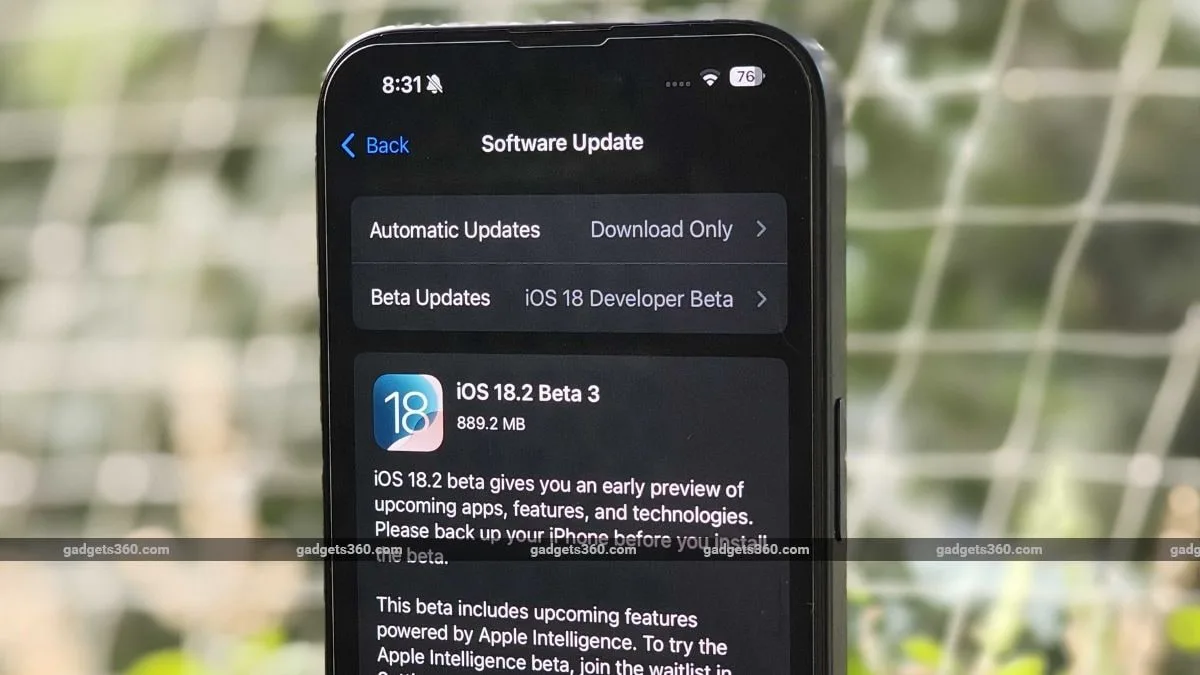
iOS 18.2 is not expected to arrive until the first week of December, but we already know several details of the upcoming update, thanks to the ongoing developer beta and public beta versions. When Apple rolls out iOS 18.2 next month, users can expect to see a new unified section that allows users to set default apps for eight or more app categories, including calling, messaging, call filtering, autofill, and applications that can be used with the iPhone’s NFC chip.

iOS 18.2 Adds Ability to Set Default Apps for More Categories

Apple has added a new ‘Default Apps’ section on a recent iOS 18.2 beta release, spotted by 9to5Mac. This is a unified section in the Settings app on iOS that allows users to choose the default app to be used when a link or clicked or a specific feature (like call filtering or autofill) is used.

As of today, the ability to choose a default browser or keyboard app is located in various sections of the settings app, making it difficult for users to locate those options. With the new Default Apps section inside the settings app, Apple has introduced at least eight new categories for default apps.

 After updating to iOS 18.2, users will be able to choose a default email, browser, calling, and messaging app, allowing users to switch away from Apple’s Mail, Safari, Phone, and Messaging apps, respectively. Similarly, they will also be able to select a default call filtering app from the new Default Apps section.

Users will also reportedly see two Default App sections that allow more than one app to be selected — Contactless App and Passwords & Codes. These can be useful if a user wants to use more than one payment app or switch between more than one keyboard on their iPhone.

According to the publication, these eight Default Apps sections will be shown to users in the US, while those in other regions might see a different number of sections. iPhone users in the European Union (EU), which has more stringent anticompetition rules, might see additional options that allow them to set default apps in more categories, but there’s no clarity on those at present.

Posted on

Oppo Reno 13 Key Specifications, Colour Options Revealed Ahead of November 25 Debut

Oppo Reno 13 series is scheduled to launch in China on November 25, and the company has been sharing details about its upcoming smartphone over the past week. The successors to the Reno 12 series will be equipped with a MediaTek Dimensity 8350 chipset and will feature up to 16GB of RAM and up to 1TB of storage, according to the company. Meanwhile, the smartphone maker has also confirmed that the Reno 13 will be available in three colour options, while the Pro model will be available in four variants.

Oppo Reno 13 Series Specifications, Colour Options

The upcoming Oppo Reno 13 will be available in Butterfly Purple, Galaxy Blue, Midnight Black colour options, according to a post by the company on Weibo, the Chinese microblogging website. The company says that the Oppo Reno Pro will be available in these three colourways as well as an exclusive Starlight Pink variant.

oppo reno 13 colours weibo Oppo Reno 13

Oppo Reno 13 series colour options
Photo Credit: Screenshot/ Weibo

The standard Reno 13 model will be available in 12GB+256GB, 12GB+512GB, 16GB+256GB, 16GB+512GB, and 16GB+1TB RAM and storage configurations. The Reno 13 Pro will also be available with up to 16GB of RAM and up to 1TB of storage, in the same variants listed above — except for the 16GB+256GB configuration.

Oppo has also confirmed some of the specifications of its upcoming midrange handsets. The smartphone maker says that the upcoming Reno 13 series will be powered by a Dimensity 8350 chipset from MediaTek. Previous benchmark results suggested the lineup would arrive with the Dimensity 8300, which means that it could be a rebranded version of the same chip.

Oppo Reno 13 specifications
Photo Credit: Weibo/ Oppo

According to Oppo, the upcoming Reno 13 lineup will sport a display with a 1.5K resolution, and the company has also teased a high brightness level. Meanwhile, Oppo has claimed that the battery on the Reno 13 series will be larger than its predecessor and will deliver reliable performance for up to five years.

More details about the handset, including its specifications and price, are expected to be announced when the Oppo Reno 13 series is launched in China on November 25. The company has yet to announce any plans to launch the Reno 13 lineup in global markets, including India. 

Affiliate links may be automatically generated – see our ethics statement for details.
Posted on

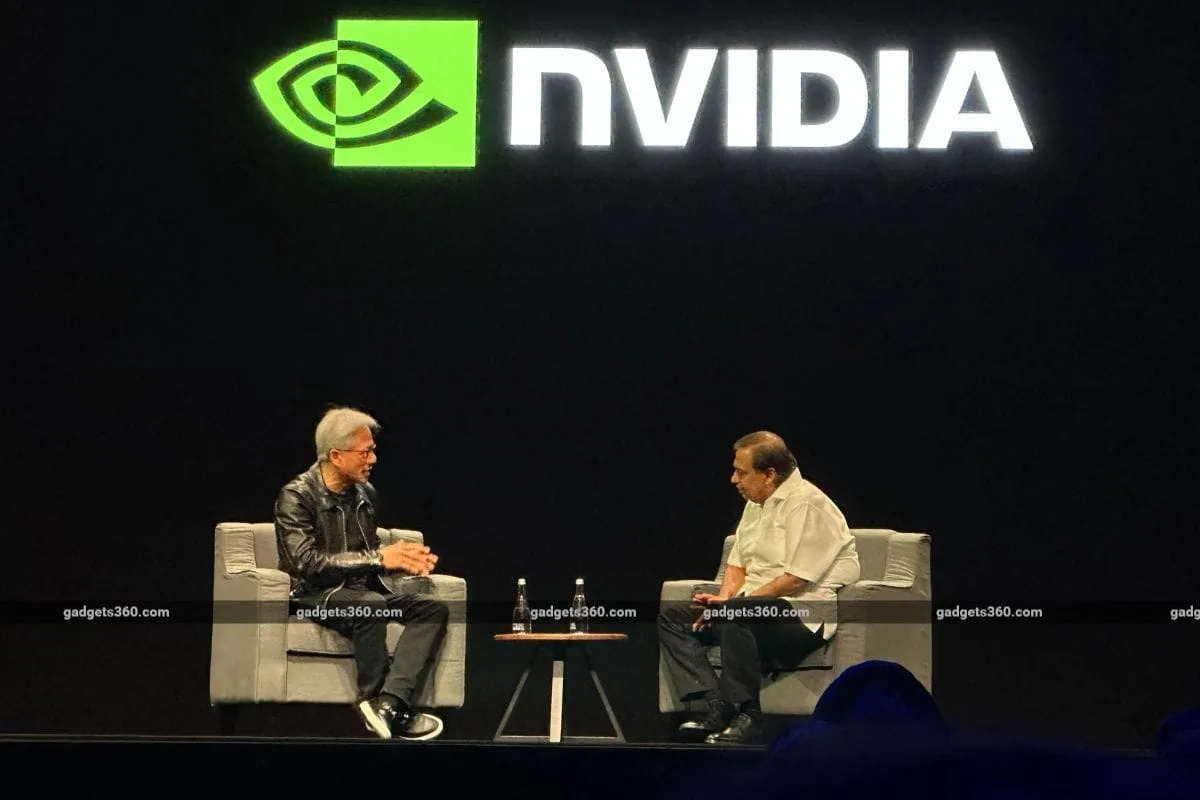
Nvidia CEO Jensen Huang Says ‘The Age of AI Has Started’

Nvidia CEO Jensen Huang said on Saturday that global collaboration and cooperation in technology will continue, even if the incoming U.S. administration imposes stricter export controls on advanced computing products.

President-elect Donald Trump, in his first term in office, imposed a series of restrictions on the sale of U.S. technology to China citing national security concerns – a policy broadly continued under incumbent President Joe Biden.

“Open science in global collaboration, cooperation across math and science has been around for a very long time. It is the foundation of social advancement and scientific advancement,” Huang told media during a visit to Hong Kong.

Global cooperation is “going to continue. I don’t know what’s going to happen in the new administration, but whatever happens, we’ll balance simultaneously compliance with laws and policies, continue to advance our technology and support and serve customers all over the world.”

Earlier on Saturday Huang told graduates and academics at the Hong Kong University of Science and Technology that “the age of AI has started” in a speech after receiving an honorary doctorate degree in engineering.

The head of the world’s leading maker of chips used for artificial intelligence applications received the award alongside actor Tony Leung, Nobel Prize for Chemistry winner Prof. Michael Levitt and Fields Medallist Prof. David Mumford.

“The age of AI has started. A new computing era that will impact every industry and every field of science,” said Huang.

He said Nvidia has “reinvented computing and sparked a new industrial revolution,” 25 years after inventing the graphics processing unit.

“AI is certainly the most important technology of our time, and potentially of all times.”

Huang, 61, also told graduates that he wished he had started his career at this time.

“The whole world is reset. You’re at the starting lines with everybody else. An industry is being reinvented. You now have the instruments, the instruments necessary to advance science in so many different fields,” Huang said.

“The greatest challenges of our time, unimaginable challenges to overcome in the past, all of a sudden seem possible to tackle.”

In the afternoon, Huang will participate in a fireside chat with the university’s Council Chairman Harry Sham, teachers and students.

© Thomson Reuters 2024

Posted on

QLED vs OLED: which is best for your TV?

Whether for streaming or watching movies on disc with one of the best 4K Blu-ray players, getting your home entertainment setup right is key, and that means having the best TV that your budget can accommodate. One of the main tech questions in TVs right now is QLED vs OLED displays, so let’s dig into the differences between the two technologies. Both offer impressive advancements in picture quality, yet they rely on very different methods to deliver that performance. In brief, QLED, which was developed by Samsung, builds on traditional LCD displays and uses quantum dots to deliver vibrant colors and high brightness, making it ideal for brighter rooms. OLED, meanwhile, is an entirely different approach that uses organic compounds to emit light directly from each pixel, allowing for unbeatable contrast and “true black” levels that are perfect for well-optimized home theater setups. Neither is completely “better” than the other, but there are pros and cons to each approach. Let’s dive in. The best TV, chosen by our reviewers for all budgets The best OLED TV: stunning sets from LG, Sony and Samsung (Image credit: TCL) QLED vs OLED: What are the key differences? We mentioned above that QLED and OLED offer competing methods on how to power a TV display. The first thing to note is that both of these technologies are a big improvement over plain old LCD TVs. Sign up to be the first to know about unmissable Black Friday deals on top tech, plus get all your favorite TechRadar content. QLED, pioneered by Samsung and adopted by other major TV brands in the past few years, builds on traditional LCD tech by adding a layer of quantum dots that enhance brightness and expand color accuracy. OLED, which stands for Organic Light Emitting Diode, takes a different approach by using organic materials to produce light at the pixel level. Due to its display technology, QLED is ideal for brightly lit spaces, such as if your living room gets a lot of sun, while OLED screens can give the viewer unrivaled contrast and deep, true blacks, which are ideal for a cinematic experience in dimly lit rooms. (Image credit: Sonos) QLED vs OLED: Key things to look for Roughly speaking, there are three key areas that separate QLED and OLED: brightness, colour accuracy, and contrast ratios. In terms of brightness, QLED displays generally outperform OLED as QLED’s reliance on LED backlighting – enhanced in some models with mini-LED technology – allows it to reach higher brightness levels. The addition of mini-LED backlighting gives certain QLED TVs a further edge by improving brightness control and reducing blooming, or a visible light halo effect, which enhances detail in bright and dark scenes. Color accuracy and contrast are also crucial to any TV viewing experience. OLED excels at producing deep blacks due to its self-emissive nature, where individual pixels can completely turn off, resulting in what is often called “infinite contrast.” QLED screens, on the other hand, leverage quantum dot technology to achieve a wider color range, making colors look vibrant even in brightly lit conditions. Viewing angles and off-axis uniformity are important factors to consider, especially if you’re watching TV from different positions around the room, and OLED has a clear advantage in this area. As each pixel emits its own light, OLED TVs maintain consistent colors and contrast even when viewed from the side. QLED can struggle with color and brightness shifts when viewed from an angle. However, advancements in panel tech and special filter layers in high-end QLED models have helped minimize this issue. Still, for the best all-around viewing experience across a range of seating positions, OLED remains the more reliable choice of the two. (Image credit: Bose) QLED: Regular LED vs. Mini-LED Traditional QLED TVs use regular LED backlighting, where LEDs illuminate the screen from behind or along the edges, which enables QLED displays to reach high brightness levels, but can also lead to “blooming”, or a halo effect where bright areas bleed into dark areas due to less precise control over individual light zones. While regular LED backlighting is good for overall brightness, this blooming effect can reduce contrast, especially in scenes with a mix of light and dark elements, and just doesn’t look good on a big TV. Mini-LED technology has brought a significant improvement to QLED’s backlighting as they are much smaller than standard LEDs, allowing for significantly more to be packed in. This increase in individual LEDs enables QLED TVs with mini-LED backlighting to have higher brightness and more dimming zones, resulting in finer control over light and dark areas on the screen. The end result is reduced blooming and improved contrast, as mini-LEDs can adjust lighting in smaller, more precise sections of a screen. While mini-LED backlighting doesn’t completely eliminate blooming like OLED with its self-emissive pixels, it narrows the performance gap, making QLED a more competitive choice for viewers who want deeper contrast in a bright room. (Image credit: TCL) QLED vs OLED: Anything else to consider? Good question. There are a few other details to consider when choosing between QLED and OLED for your next TV: response time, durability, and power consumption. OLED’s pixels respond to input almost instantaneously, giving it a fast response time that’s perfect for fast-motion content like sports and gaming, with minimal motion blur. QLED displays, although slower, have made strides in reducing motion blur, particularly in higher-end models, in recent years, and that’s been helped along by higher TV refresh rates such as 120Hz and 144Hz. When it comes to durability, QLED has the advantage since it relies on inorganic materials. QLED screens are less prone to long-term image retention or burn-in, which can affect OLED displays if static images remain on the screen for extended periods, such as when you leave a show paused. Some newer OLED models have added features to mitigate burn-in, improving their longevity. In terms of power consumption, OLED is generally more energy-efficient, especially in darker scenes where fewer pixels are active. This efficiency not only reduces energy costs but also aligns with eco-friendly practices, making OLED a solid choice for viewers conscious of environmental impact. You might also like

Posted on

WWE Raw to Stream Live on Netflix in 2025: What You Need to Know

Netflix will begin streaming WWE Raw live starting in January 2025. The anticipated debut marks a new era for WWE, with the streaming giant set to air the show every Monday night, moving away from traditional cable. This transition is expected to introduce a broader audience to WWE’s action-packed content and feature a star-studded lineup of WWE icons such as Dwayne “The Rock” Johnson, John Cena, and Roman Reigns.

In preparation for the January premiere, Netflix recently launched a high-energy promotional campaign. A sneek-peak video has been released, featuring a roster of WWE’s biggest stars in action, including Cody Rhodes, Rhea Ripley, and Liv Morgan. The video, promoted across social media, sets an exciting tone with WWE stars delivering intense performances and teases surprises for the debut episode.

Exclusive Launch Event in Los Angeles

A special live event is planned for January 6, 2025, at the Intuit Dome in Los Angeles, California, to mark WWE Raw’s streaming debut. Ticket sales for this event will begin shortly, offering fans a chance to attend this milestone in WWE’s history. The lineup for the January 6th event has not been officially announced, though speculation suggests a mix of WWE’s top talent, surprise appearances to captivate both loyal viewers and new audiences tuning in on Netflix.

Peacock Partnership Remains for WWE Archive Content

Despite this major shift, WWE will continue its relationship with Peacock for streaming exclusive events and maintaining an extensive library of WWE content. International fans, however, will have access to the live events on Netflix.

Posted on

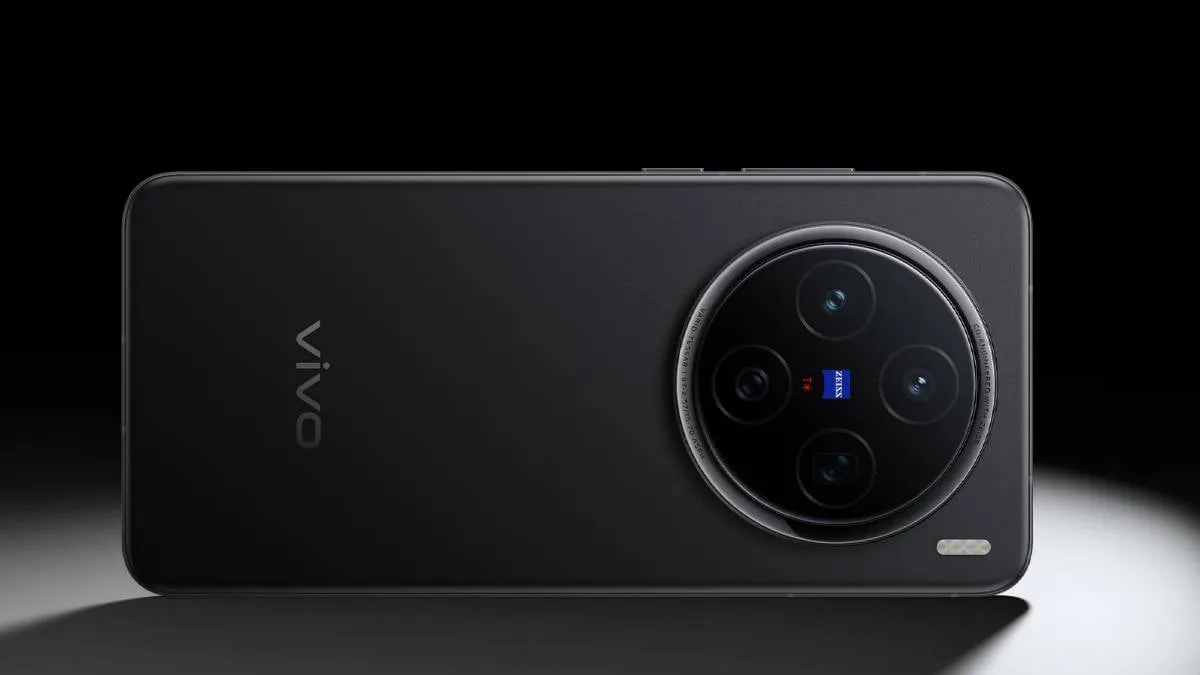
Vivo X200, Vivo X200 Pro Confirmed to Launch in Indian Market Soon: Specifications Teased

Vivo X200 series will launch soon in India, the Chinese tech band announced on X (formerly Twitter) on Friday. A dedicated microsite on the Vivo India website is teasing the design of the upcoming lineup ahead of its debut. The Vivo X200 series with three models — Vivo X200, X200 Pro, and X200 Pro Mini — was launched in China last month. The brand appears to be skipping the X200 Pro Mini for the Indian market. They run on MediaTek Dimensity 9400 SoCs and feature Zeiss-branded cameras.

Through its X handle, Vivo India announced that the Vivo X200 series will be launched in the country soon. The brand has not disclosed the exact launch date, but we previously heard that the lineup will debut by the end of this month or the beginning of December. Vivo is expected to offer more clarity about the launch in the coming days.

Vivo X200 Series Specifications

Vivo has created a dedicated landing page on its website that gives us a glimpse at the internals of the Vivo X200 and Vivo X200 Pro. The landing page doesn’t include Vivo X200 Pro Mini as of now, suggesting that it is likely to remain exclusive to the Chinese market.

The listing confirms the presence of MediaTek Dimensity 9400 SoC, Zeiss cameras, and curved displays in the Vivo X200 series. The phones are confirmed to ship with Android 15-based Funtouch OS 15. The Chinese versions run on Origin OS 5. The Vivo X200 Pro is claimed to be India’s first smartphone to feature a 200-megapixel Zeiss APO telephoto camera.

Like their Chinese counterparts, the Indian variant of Vivo X200 and Vivo X200 Pro are confirmed to house 5,800mAh and 6,000mAh batteries, respectively. The Pro model will include a V3+ imaging chip.

The Vivo X200 was launched in China in October with an initial price tag of CNY 4,300 (roughly Rs. 51,000) for the base 12GB RAM + 256GB storage configuration. Price of the Vivo X200 Pro starts at CNY 5,999 (roughly Rs. 63,000) for the same variant.

Affiliate links may be automatically generated – see our ethics statement for details.
Posted on

Nubia Watch GT With 1.43-Inch AMOLED Display, Up to 15 Days of Battery Life Launched

Nubia Watch GT was launched in China on Thursday alongside the Nubia Z70 Ultra. It is being promoted as “Nubia’s first sports health watch.” The smart wearable is equipped with several AI-backed features and is claimed to offer a battery life of up to 15 days. The smartwatch has a 1.43-inch circular AMOLED display and a metal body with a translucent, glass middle frame. It supports dual-frequency GPS navigation and comes with an IP68 rating for dust and water resistance.

Nubia Watch GT Price

Nubia Watch GT price is set in China at CNY 699 (roughly Rs. 8,100). The official images show the smartwatch in a single black and grey option. The company has yet to confirm the availability details of the newly launched smart wearable.

Notably, the Nubia Z70 Ultra, which was unveiled alongside the Nubia Watch GT, is currently available for pre-sale in China via the official Nubia e-store starting at CNY 4,599 (roughly Rs. 53,700) for the 12GB + 256GB option. It will go on sale in the country starting November 25, a day before its global launch on November 26.

Nubia Watch GT Specifications, Features

The Nubia Watch GT sports a 1.43-inch circular AMOLED display with a resolution of 466 x 466 pixels, a pixel density of 326ppi, and a screen-to-body ratio of 87 percent. It reportedly supports an always-on display feature as well. The smartwatch comes with a metal body, a translucent glass middle frame, and a crown on the right edge.

Nubia confirmed that the Watch GT comes with more than 100 preset sports modes and has AI-backed health monitoring features. The company adds that the smartwatch is equipped with Tencent’s Hunyuan AI features and supports dual-frequency GPS connectivity.

The Nubia Watch GT has an IP68 rating for dust and water resistance. It houses a 450mAh battery and is claimed to offer up to 15 days of battery life with typical usage.

For the latest tech news and reviews, follow Gadgets 360 on X, Facebook, WhatsApp, Threads and Google News. For the latest videos on gadgets and tech, subscribe to our YouTube channel. If you want to know everything about top influencers, follow our in-house Who’sThat360 on Instagram and YouTube.

Google Said to Have Cancelled Pixel Tablet 2 Development, Not Pixel Tablet 3

Posted on

If this Sonos TV streaming box report is right, it’s doomed before it ever launches

Sonos has reportedly chosen ad-focused software for its streaming box Pricing is rumored to be between $150 and $200 I’ve got a bad feeling about this Sometimes it’s hard not to respond to news stories with an exasperated sigh of “oh for goodness sake, what NOW?” And it’s definitely felt like that with Sonos this year after a year full of app issues – issues so damaging to the brand that they depth-charged the launch of the Sonos Ace headphones. And now it looks like there could be more bad news on the horizon. According to The Verge, Sonos has found the operating system for its forthcoming video streamer – a product designed, like the Apple TV 4K, Roku Ultra or Fire TV Stick 4K, to deliver the best streaming services. And that OS is coming from an advertising company. Given Sonos’s positioning as a premium brand, that suggests we could be seeing the worst of both worlds: the relatively high price of an Apple TV 4K, and the ads and audience tracking of a Fire TV. What’s the deal with Sonos’s streaming OS? Given that all of Sonos’s 2024 woes have come from its software, this seems like a strange decision. Bringing in reliable outside tech instead of doing the development in-house does make some sense given the furore around this year’s Sonos app update. But going with an unproven OS from an ad company doesn’t seem like the safest way to reassure customers that lessons have been learned – do we think people will actually trust a new software platform from Sonos when they hated the launch of the last software platform from Sonos so much. The ad company is The Trade Desk, as previously predicted by the rumor we reported on back in September, whose OS is based on the open source fork of Android. The reason for The Trade Desk’s involvement here is apparently due to its established relationships with the big streaming firms: a streaming device without the key streaming services is a streaming device that won’t sell. With our optimistic hat on, this deal could mean new cool things for your Sonos system, with new wireless streaming options from your TV to your Sonos Arc Ultra and more of the best Sonos speakers. You’d probably also have the ability to play audio from your TV to your Sonos Ace headphones in Dolby Atmos without need a soundbar, as you do currently. Sonos has filed some patents suggesting just that, with TV OS control on a phone as well as on your TV screen, content recommendations from friends, and Apple SharePlay-style collaborative viewing. Let’s hope that’s true and that the worst case scenario – annoying ads and privacy concerns, yet you’re still paying a premium for the device – doesn’t come instead. But as The Verge reports, The Trade Desk’s sales pitch for its TV OS, Ventura, is heavy on the ad side of things and light on what benefits it brings for users. You can watch The Trade Desk’s pitch in the embedded video above. Sign up to be the first to know about unmissable Black Friday deals on top tech, plus get all your favorite TechRadar content. You might also like