Posted on

Tencent T1 Reasoning Model Launched Amid Growing AI Competition in China

Chinese tech giant Tencent on Friday night launched the official version of its T1 reasoning model, stepping up competition in China’s increasingly crowded artificial intelligence sector.

The upgraded T1 model offers faster response times and enhanced capabilities for processing extended text documents, the company said in a post on its official WeChat account.

T1 can “keep the content logic clear and the text neat and clean”, the post said, while the hallucination rate is “extremely low”.

The launch comes amid heightened rivalry in China’s AI landscape following DeepSeek’sDeepSeek’s introduction of models that offer comparable or superior performance to Western systems at substantially lower costs.

Tencent had previously released a preview version of T1 through platforms, including its AI assistant application Yuanbao.

The official version will be powered by Tencent’s Turbo S foundational language model, unveiled late last month, which the company claims processes queries faster than rival DeepSeek’s R1 model.

A chart published in the post comparing the T1 model to DeepSeek R1 showed Tencent’s outperformed on some knowledge and reasoning benchmarks.

Tencent has ramped up its AI investments in recent months. On Thursday, the company announced plans to increase capital expenditure in 2025, following already aggressive AI spending throughout 2024.

© Thomson Reuters 2025

Posted on

Samsung says an OLED-beating new screen tech could come sooner than we thought – but I wouldn’t expect it in 4K TVs right away

QD-EL promises super brightness with OLED contrast Samsung, Sharp, TCL and others have shown off prototypes already Likely to make its way to compact monitors first The alphabet soup of TV technology continues to grow, with Samsung turning greater attention to QD-EL. That’s short for Quantum Dot Electroluminescent, although the tech is also variously known as NanoLED, QD-LED, EL-QLED and QDEL because life isn’t confusing enough. But whatever you call it, it’s quite exciting and Samsung is investing heavily in it. According to new reports in the Korean business press, as spotted by FlatpanelsHD, Samsung is accelerating development for QD-EL displays in order to fend off Chinese competitors. BusinessKorea says that “Samsung has set an internal target to commercialize EL-QD within a few years and is fully committed to its technological development.” Some reports are suggesting that QD-EL could be the future of TV, and they might be right. But I think Samsung is likely to be thinking more about monitors than big TVs for the time being. And that’s still pretty exciting. You may like What is QD-EL and why are people excited about it? At the moment there are two rival TV technologies: backlit LED TVs, and OLED TVs. The former are generally brighter but the latter have better darkness and contrast because OLEDs aren’t backlit. QD-EL promises to give you the best of both. Like OLED it’s self-emissive, so there’s no backlight. But because it uses quantum dot LEDs rather than organic LEDs, it promises longer life, more efficient energy usage and no burn-in. Samsung, and firms including Sharp and TCL, have shown off QD-EL prototypes at trade shows, and attendees have been really impressed. But those prototypes have been pretty small – Samsung’s one was an 18-inch display, and is at the end of the video below – and the tech is not yet ready for prime time: BusinessKorea says that Samsung is facing issues with the quantum dots’ stability and energy efficiency. Presumably rivals face similar challenges too. Samsung Display at Displayweek 2024 – YouTube Watch On So my money’s on this tech moving into monitors first, rather than larger TV screens. Sign up for breaking news, reviews, opinion, top tech deals, and more. There are two reasons why I think that. The first is that if QD-EL were close to being ready for really big displays, manufacturers would likely be showing them off already. And the second is that big displays are a big risk when you’re talking new technologies. It’s common for new emission tech to start small and only scale as manufacturers find ways to reduce the often massive wastage that comes with large panels in the early days of manufacturing something new. You lose a lot less money on material wasted from an imperfect result if your screen is 21 inches than if it’s 65 inches. Here’s a great example of that: inkjet-printed OLEDs. TCL started mass producing their panels in late 2024, and those panels are for 21.6-inch monitors. TechRadar’s Managing Editor for Entertainment, Matt Bolton, has been told that inkjet-printed OLED won’t come to TVs for years for this exact reason – it just won’t be cost efficient in the short term to risk it on big screens. I think QD-EL is really exciting, but I think it’ll be a while before it moves off the desktop and into your home theater. Although I’d be happily surprised if I’m wrong: after all, Samsung skipped the monitor stage when it launched its QD-OLED panels in 2022 and launched a range of TVs directly, and then brought the tech to monitors later. You might also like

Posted on

Swag Telugu Movie Now Streaming on Prime Video: Everything You Need to Know

Swag, was released in cinemas on October 4, 2024. It features Sree Vishnu in multiple roles. Despite high expectations and an extensive promotional campaign, the film struggled at the box office and was removed from theatres within a week. The social fantasy drama, directed by Hasith Goli, marked the comeback of actress Meera Jasmine to Telugu cinema. The film’s underperformance led to an early OTT release. Swag is now available for streaming on Amazon Prime Video.

When and Where to Watch Swag

Swag’s digital rights were acquired by Amazon Prime Video. The film began streaming on the platform on October 25, 2024.

Official Trailer and Plot of Swag

The trailer of Swag showed Sree Vishnu in five different roles. The storyline revolves around a long-lost dynasty’s hidden treasure, with multiple characters vying to claim it. The film explores themes of identity, deception and inheritance. The audience reportedly found the narrative complex and difficult to follow. The screenplay received criticism for its convoluted storytelling.

Cast and Crew of Swag

Swag was directed by Hasith Goli and produced by Vishwa Prasad under the banner of People Media Factory. Swag features a diverse ensemble cast led by Sree Vishnu, with Meera Jasmine, Daksha Nagarkar, and Ritu Varma playing key roles. Rukmini Devi and Saranya Pradeep also contribute to the film’s narrative. Other supporting cast includes Ravi Babu, Sunil, Vennela Kishore, Vadivukkarasi, Ravi Maria, Getup Srinu, Kamal Kamaraju, Vasu, Rajyalakshmi, Gangavva, Ajay and Kireeti Damaraju.

Reception of Swag

Swag did not perform well at the box office, leading to financial losses for the production house. This prompted an early deal with Amazon Prime Video, allowing the film to reach a wider audience through streaming. It currently has an IMDb rating of 7.72 / 10.

For the latest tech news and reviews, follow Gadgets 360 on X, Facebook, WhatsApp, Threads and Google News. For the latest videos on gadgets and tech, subscribe to our YouTube channel. If you want to know everything about top influencers, follow our in-house Who’sThat360 on Instagram and YouTube.

TEST OTT Release Date: When and Where to Watch R. Madhavan and Nayanthara Starrer Film Online?

Samsung Galaxy Book5 360 Is the Go-to Laptop for Galaxy Flagship Users: Here’s Why

Posted on

Netflix Announces Spirit Crossing, a ‘Cozy MMO’ Coming to Netflix Games in 2025

Netflix announced Spirit Crossing, its first Massively Multiplayer Online (MMO) co-op game, at 2025 Game Developers Conference Thursday. Developed by in-house studio Spry Fox, Spirit Crossing is a cozy life sim where players work together to gather resources and build their village. It will arrive on Netflix’s game subscription service later this year. The streaming giant also announced two other titles for Netflix Games, one of which — The Electric State: Kids Cosmo — is now available on the service.

Spirit Crossing Coming in 2025

Spirit Crossing is Netflix’s first foray into MMO co-op territory and the “biggest title to date” from Spry Fox, the streamer said in a press release.

“Prepare to adventure into a joyful world with Spirit Crossing, a massively cooperative life sim designed to encourage friendship and make the world feel a little less lonely,” the press release described the title.

According to Netflix, players will be able to journey through an “ever-changing landscape”, build and decorate their village with friends, meet new players and explore the world by gliding, climbing, building and trampolining.

An accompanying announcement trailer for Spirit Crossing showed the game’s striking art style, the rich game world, gliding and other activities.

Players can right now sign up for a closed alpha playtest for the game at playspiritcrossing.com. The game will be released on Android and iOS devices sometime later this year.

Netflix also announced The Electric State: Kid Cosmo, a tie-in with its latest original film, The Electric State. The game is an 80s-inspired puzzle adventure game that takes place before the events of the movie and tells the story of siblings Chris and Michelle. The Electric State: Kid Cosmo is available now on Netflix Games.

Finally, the company announced Steel Paws, which features an original world created by Japanese game developer Yu Suzuki, who has created iconic video game franchises like Shenmue, Virtua Fighter and Out Run. The game tasks players with a mission to take over a mysterious tower that reappears every century with the help of Buddy Robots. Steel Paws is coming to Netflix on March 25.

Posted on

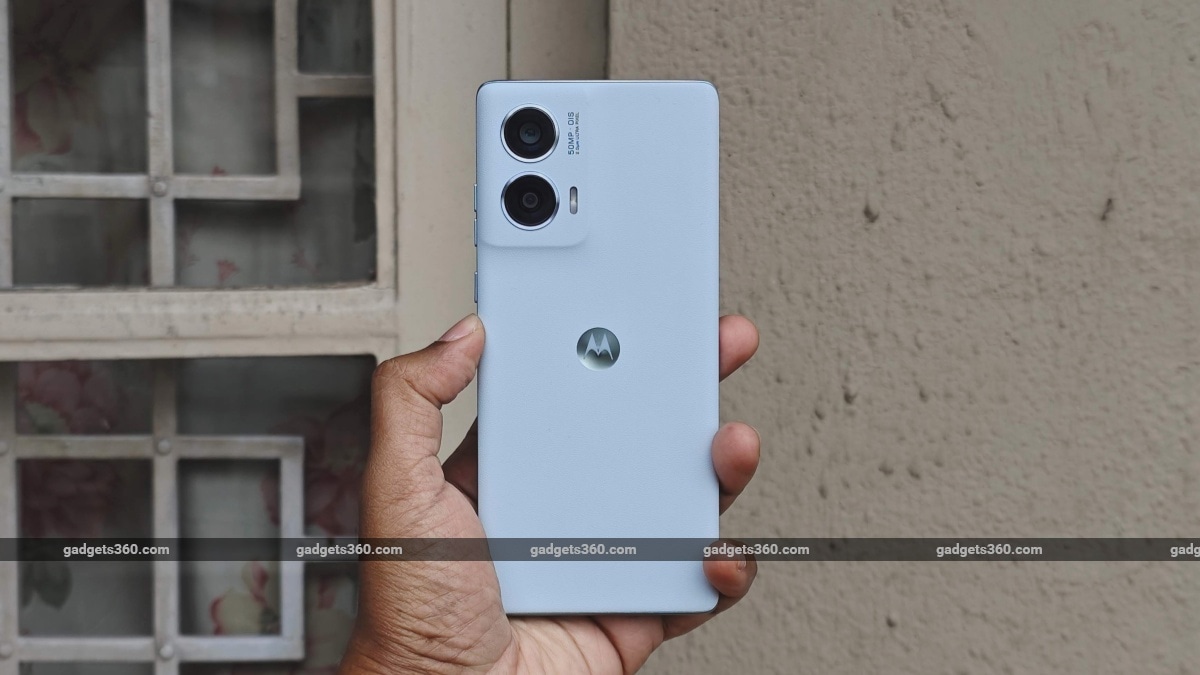
Motorola Edge 60 Fusion Design, Display Details Teased Ahead of Upcoming India Launch

Motorola Edge 60 Fusion is expected to launch soon in India. Although the company has yet to announce the launch date or confirm the moniker, official teasers about a new Edge handset have surfaced online. The new teasers suggest key design and display features of the upcoming smartphone. Design renders and colour options of the Edge 60 Fusion, as well as some expected specifications and price details have been leaked before. Notably, the preceding Motorola Edge 50 Fusion was introduced in the country in May 2024.

Motorola Edge 60 Fusion India Launch: All We Know

A live Flipkart microsite for the new Motorola Edge phone claims the handset will meet IP68 and IP69 dust and water resistance ratings. The former signifies underwater protection, while the latter implies the ability to withstand dust and high-pressure water jets.

An X post by the company teases that the handset, which is expected to be the Edge 60 Fusion, will sport a quad-curved display with “100 percent true colours.” The handset is teased to support AI-backed features as well. However, the exact supported AI tools have not yet been revealed.

As per recent leaks, the Motorola Edge 60 Fusion is expected to have a 6.7-inch quad-curved AMOLED display with a 120Hz refresh rate, a MediaTek Dimensity 7400 SoC, and a 5,500mAh battery. For optics, the handset could have a 50-megapixel Sony LYT700 primary rear sensor, a 13-megapixel secondary sensor, and a 32-megapixel selfie shooter.

Alongside the IP68 and IP69 ratings, the Motorola Edge 60 Fusion may also offer a MIL-STD-810 military-grade durability certification. 

Recently, a rumour suggested that the Motorola Edge 60 Fusion will be available in light blue, salmon (light pink), and lavender (light purple) colour options. In select global markets, the smartphone is tipped to cost EUR 350 (roughly Rs. 33,100) for the 8GB + 256GB configuration. It is expected to launch in India on April 2, and the sale may begin on April 9. The phone will be available for purchase in the country via Flipkart.

Affiliate links may be automatically generated – see our ethics statement for details.
Posted on

Brahma Anandam Now Streaming on Aha: Everything You Need to Know

Brahma Anandam, the latest Telugu-language comedy-drama directed by RVS Nikhil, features veteran comedian Brahmanandam alongside his son, Raja Goutham. The film, which received a warm reception in theatres, is now set for its digital debut. Streaming rights have been acquired by Aha, where subscribers can watch it starting, today. i.e. March 20, 2025. Early access was available for Aha Gold users. The film brings together a blend of humour and emotion, with an engaging father-son dynamic at its core.

When and Where to Watch Brahma Anandam

The comedy-drama is now available on Aha from March 20, 2025. The announcement was made by Aha on its official X (formerly Twitter) handle, confirming the exclusive digital premiere. Fans who missed the theatrical run will now have the opportunity to stream it at their convenience.

Official Trailer and Plot of Brahma Anandam

The film follows Brahma, a struggling theatre artist played by Raja Goutham. Facing financial constraints while trying to stage a play, he unexpectedly crosses paths with his estranged grandfather, Ananda Rao Murthy, portrayed by Brahmanandam. The reunion takes an interesting turn when the grandfather offers financial support on one condition—Brahma must accompany him to their ancestral village. What follows is a journey filled with comedic moments, emotions, and life-changing experiences.

Cast and Crew of Brahma Anandam

Brahmanandam takes on the role of Ananda Rao Murthy, while Raja Goutham plays the character of Brahma. The film also features Vennela Kishore as Giri, Priya Vadlamani as Tara, and Talluri Rameswari as Jyothi. Other supporting roles are played by Aishwarya Holakkal and Divija Prabhakar. Rahul Yadav Nakka has produced the film under the banner of Swadharm Entertainment.

Reception Of Brahma Anandam

Although the film did not perform well at the box office, it has earned a rating of 9.0 / 10 on IMDb making the film worth a watch.

(Disclaimer: New Delhi Television is a subsidiary of AMG Media Networks Limited, an Adani Group Company.)

For the latest tech news and reviews, follow Gadgets 360 on X, Facebook, WhatsApp, Threads and Google News. For the latest videos on gadgets and tech, subscribe to our YouTube channel. If you want to know everything about top influencers, follow our in-house Who’sThat360 on Instagram and YouTube.

A Complete Unknown OTT Release Date: When and Where to Watch Timothée Chalamet’s Biopic

Infinix Note 50X 5G Confirmed to Get 5,500mAh Battery Ahead of India Launch; Price Range Tipped

Posted on

Dubai Launches Pilot Phase of Real Estate Tokenisation Project for Web3, Real Estate Collaboration

The Dubai Land Department (DLD) is exploring real estate tokenisation to simplify property-related transactions. The government-backed agency has launched the pilot phase of its “Real Estate Tokenisation Project”, that aims for collaboration between global Web3 firms and Dubai’s real estate community. DLD estimates that by 2033, the valuation of tokenised properties could touch AED 60 billion (roughly Rs. 1,40,981 crore), making for seven percent of Dubai’s total real estate transactions. Dubai’s Virtual Assets Regulatory Authority (VARA) and the Dubai Future Foundation (DFF) are onboard with DLD to implement this pilot project.

Asset tokenisation refers to the process of converting the ownership of physical properties into blockchain-based digital tokens. Tokenising physical assets enables fractional ownership, increases liquidity, and eases trading without having to alter elements and offerings of the physical property.

Through the pilot, Dubai authorities will check how Web3 technologies can improve real estate products and market. As per government figures, real estate transactions churned AED 761 billion (roughly Rs. 17,89,345 crore) last year and are expected to keep growing.

The pilot will be overseen by Marwan Ahmed Bin Ghalita, Director General of the DLD.

Commenting on the development, he said, “This pioneering project is part of the recently launched ‘REES’ Real Estate Innovation Initiative, designed to attract diverse technology firms. It aligns with our strategy enhance property sector innovation, promote transparency and governance, and enable a wider pool of investors to participate in large-scale real estate projects in Dubai.”

Market analytics firm Mordor Intelligence estimates, the market size of tokenised assets is set to touch 2.08 trillion in 2025 and reach over $13.5 trillion in valuation by 2030. Statista projects that the real estate market will become the largest beneficiary of the tokenised assets market by 2030, grabbing nearly one third of the overall sector.

In the coming days, the DLD will be organising a workshop to educate real estate players on asset tokenisation. Top industry players from both the public and private sectors will be invited to attend the workshop and open dialogue. Details about the date and venue for the workshop haven’t been shared yet.

The topic of asset tokenisation was discussed extensively during Binance Blockchain Week held in October last year. At the time, HE Khalfan Belhoul, the CEO of the Dubai Future Foundation, had expressed optimism around exploring financial and technological advancements that come with Web3.

Some of Dubai’s most prominent property developers have also taken steps to explore Web3. In January this year, the Damac Group partnered with blockchain firm Mantra to tokenise assets in the Middle East worth at least $1 billion (roughly Rs. 8,589 crore). In 2023, Mantra had also worked with MAG Property Development to tokenise real estate assets worth $500 million (roughly Rs. 4,295 crore), starting from a residential project in Dubai.

While there are upsides to exploring asset tokenisation, there are certain challenges as well. A report by the Financial Stability Board claims that tokenisation of assets can be a threat to financial stability. Most challenges relate to liquidity risks, maturity mismatch, leverage, asset quality, and operational fragilities, which need to be addressed globally to ensure the market for tokenised assets is safe for large-scale engagement.

Posted on

Sony Tipped to be Developing New 200-Megapixel Camera Sensor for Flagship Smartphones

Sony is developing a new, bigger camera sensor that may headline upcoming flagship smartphones, according to claims by a tipster. It is expected to compete against the Samsung ISOCELL HP9, which has been integrated into smartphones such as the Vivo X200 Pro and the Samsung Galaxy S25 Ultra. The purported Sony camera sensor is tipped to function as a main camera sensor and could be used in flagship smartphones which launch later this year.

Sony’s Upcoming 200-Megapixel Camera Sensor

Tipster Digital Chat Station (translated from Chinese) shared details about the purported Sony camera sensor in a post on the Chinese social media platform Weibo. The Japanese conglomerate is said to have plans of introducing the new sensor with phones powered by upcoming flagship SoCs such as the MediaTek Dimensity 9500 and the Snapdragon 8 Elite 2. Additionally, it may also use it in one of its upcoming smartphones.

It is tipped to have a size bigger than 1/1.3-inch which suggests that it may capture more light than its potential competitor, the Samsung ISOCELL HP9. The latter follows a 1/1.4-inch optical format. At present, the Vivo X200 Pro uses the Samsung sensor as a telephoto lens while the company’s own flagship Galaxy S25 Ultra has it as the primary camera sensor.

With the development of this sensor, many original equipment manufacturers (OEMs) could finally provide an upgrade over the 50-megapixel sensor seen in several high-end smartphones recently.

However, the other details about the purported Sony sensor are yet to be revealed. Notably, the Samsung sensor promises in-sensor zoom up to 4x while maintaining the detail in photos. As per Samsung, it has end-to-end AI Remosaic which enables faster processing times, better details and colour reproduction, as well as quick shutter speed. The sensor gets hardware-independent Single Frame HDR to boost the overall HDR quality.

Posted on

I reviewed the LG C5 OLED TV for over a week, and it’s one of the best TVs of the year – but with one big reason not to buy it yet

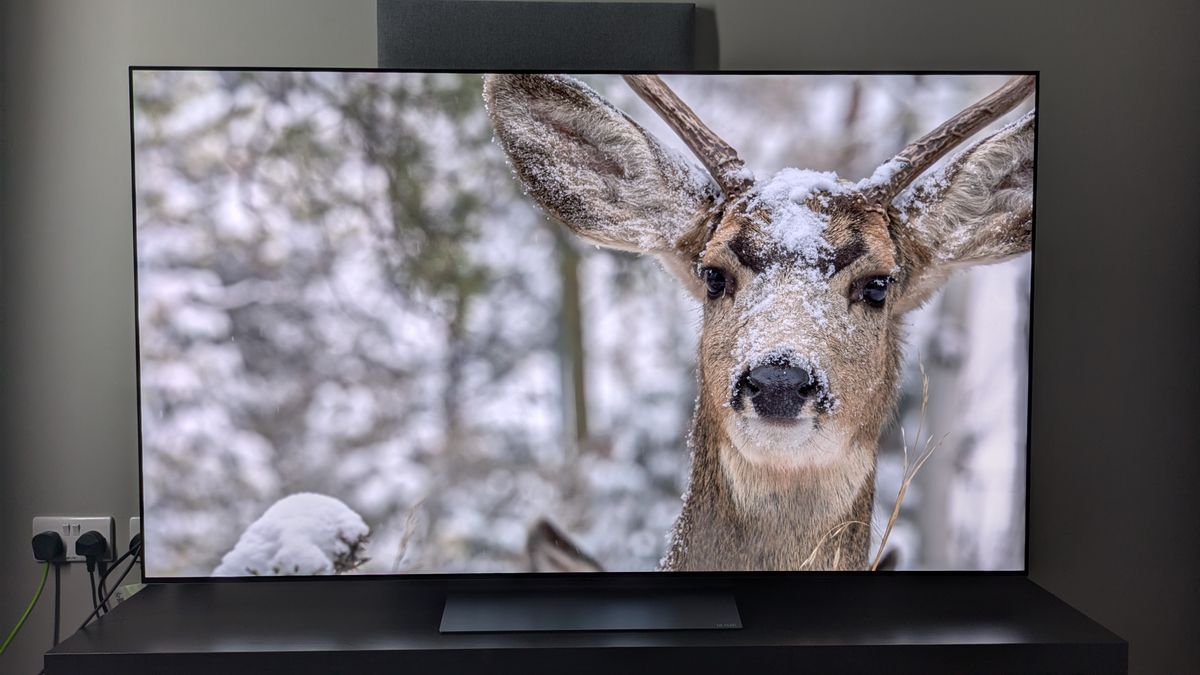
Why you can trust TechRadar We spend hours testing every product or service we review, so you can be sure you’re buying the best. Find out more about how we test. LG C5 OLED TV review: Two minute review The LG C5 is a feature-packed, mid-range OLED TV that continues the LG C-series legacy of offering real bang for your buck. Launching at $2,699.99 / £2,699.99 / AU$4,299, the 65-inch model I tested is priced exactly the same as its predecessor, the LG C4, one of the best TVs of 2024. The LG C5 comes with a host of new AI features and an Alpha 9 Gen 8 AI Processor that leads to a modest picture brightness boost over its predecessor. LG’s C-series continues to lead the way when it comes to features in a mid-range OLED, and while there are not many new additions, it carries over what made the C4 great. Picture quality is superb on the LG C5. Its vibrant, accurate color, strong contrast, and lifelike textures all combine to rival what you see on the best OLED TVs. Motion handling is good overall, but I did find some scenes where the C5 stumbled. (This was fixed with a quick trip to the picture settings.) One area where the C5 struggles is screen reflections in well-lit environments, which can impact darker images. It looks brilliant when viewed in dimmed conditions, however. You may like Sound quality has never been a strong point of LG C-series OLED TVs, and while the C5’s built-in 2.2-channel Dolby Atmos system sounds punchy and well-balanced, it won’t beat one of the best soundbars, which I’d recommend for the C5. The C5 is easily going to be one of the best gaming TVs of 2025. It has a full suite of gaming features, including 4K 144Hz, VRR, ALLM and Dolby Vision gaming, smooth and responsive performance, and a ton of cloud gaming options for those without a console. LG’s webOS 25 is the C5’s smart TV platform and alongside the previously mentioned new AI features, it continues to be one of the better interfaces on the market. Quick Cards in webOS 25 is a useful feature and LG’s Quick Menu continues to be excellent for those who like to regularly adjust picture settings. The C5’s design is basic and safe, though a faux-marbled rear panel, solid aluminum stand, and trim profile help to give it a premium appearance. LG’s new AI Magic Remote is sleeker and more modern looking than previous Magic Remote versions but is only available in select regions. LG C-series OLEDs are regularly among the best TVs when it comes to value for money. While pricey at launch, they will become more affordable over time as prices drop. It’s hard to ignore, however, that the still-available LG C4 is the better value option after numerous price drops as the C5 is only an incremental upgrade. Still, for anyone looking for a new TV, the C5 is a fantastic option. LG C5 OLED TV review: Prices & release date The LG C5 shows accurate colors (Image credit: Future) Release date: March 2025 42-inch: $1,399.99 / £1,399.99 / AU$2,199 48-inch: $1,599.99 / £1,499.99 / AU$2,499 55-inch: $1,999.99 / £1,899.99 / AU$3,299 65-inch: $2,699.99 / £2,699.99 / AU$4,299 77-inch: $3,699.99 / £3,699.99 / AU$5,999 83-inch: $5,399.99 / £5,799.99 / AU$7,999 The LG C5 was released in March 2025. It is the mid-range series in LG’s 2025 OLED TV range, sitting above the LG B5 and below the flagship LG G5 and LG M5 series. It is available in 42 to 83-inch screen sizes. Launch pricing for the LG C5 is nearly identical to that of its predecessor, the LG C4, except for the 42-inch model, which is $100 cheaper in the US. All other sizes in the US, UK and Australia have exactly the same launch price as the C4. LG C5 OLED TV review: Specs Swipe to scroll horizontally Screen type: OLED Refresh rate: 144Hz HDR support: Dolby Vision, HDR10, HLG Audio support: Dolby Atmos, DTS Smart TV: webOS 25 HDMI ports: 4x HDMI 2.1 Built-in tuner: ATSC 1.0 (US) LG C5 OLED TV review: Benchmark results LG C5 OLED TV review: Features The LG C5’s connections include 4 HDMI 2.1 ports (Image credit: Future) Alpha a9 Gen 8 AI Processor New AI features including AI Sound Wizard Four HDMI 2.1 ports with up to 144Hz support The LG C5 uses the same OLED Evo (EX) panel as its predecessor, the LG C4. It features LG’s upgraded Alpha a9 Gen 8 AI processor, which introduces new AI capabilities (more on those below) as well as a Brightness Booster that is not supported in the smaller 42- and 48-inch models. The C4 supports the Dolby Vision high dynamic range format, but not HDR10+. It also supports the Dolby Atmos and DTS:X sound formats. For audio, the C5 features the same 2.2-channel, 40W Dolby Atmos built-in speaker system as the previous C4. Its range of sound modes includes Standard, Cinema and AI Sound Pro, as well as a new AI Sound Wizard (more on that below). LG TVs are typically well-equipped for gaming and the C5 is no exception. While there are no upgrades from its predecessor, it still carries a full-suite of gaming features including 4K 144Hz, VRR (AMD FreeSync and Nvidia G-Sync), HGiG, Dolby Vision gaming and ALLM. It also features a Game Optimizer mode where settings can be adjusted, including a boost mode to reduce input lag. The LG C5 comes with a number of AI features, such as AI Search, AI Concierge and more. (Image credit: Future) The LG C5 uses the latest iteration of LG’s smart TV platform, webOS 25. This offers a plethora of AI capabilities including AI Search, an advanced search feature that looks for content based on the user’s criteria and questions; AI Concierge, where content is recommended based on a user’s viewing history; and an AI Art feature where users can create AI artworks (creating artworks cost credits that can be bought, but 100 credits are provided to start with). Alongside AI Picture Wizard, a feature that lets users create a personalized picture mode based on visual prompts, LG has introduced AI Sound Wizard, a similar feature where users react to audio clips to establish a personal sound profile. For the home screen, Quick Cards (a feature introduced in webOS 24 that lets users organize apps based on categories such as Sports, Games, etc.) has been further streamlined. Features score: 5/5 LG C5 OLED TV review: Picture quality The LG C5 delivers bold, vibrant and dynamic colors, as shown on Disney’s Elemental. (Image credit: Future) Vibrant color and strong contrast Superb detail Reflections in brighter environments The LG C5’s peak HDR brightness (measured on a 10% white window) was 1,180 nits in Filmmaker Mode and 1,198 nits in Standard mode. Those results are an increase over the LG C4, which hit 1,065 nits and 925 nits in Filmmaker and Standard modes, respectively. Fullscreen HDR brightness (measured on a 100% white pattern) was between 195-200 nits, a slight drop from its C4 predecessor. The LG C5’s upscaling of lower-resolution sources is impressive. An HD stream of Fight Club that I watched on Disney Plus got both a brightness and sharpness boost, giving the picture a 4K-like makeover. For standard-definition content (480p and below), the C5’s upscaling also managed to clean up textures, though they were still understandably on the fuzzy side. Color on the LG C5 is superb. Watching a Dolby Vision stream of Elemental on Disney Plus, colors looked vibrant and dynamic, particularly in the scenes where Ember demonstrates her glass-making abilities and dances across the shimmering minerals. Another Dolby Vision stream, of Star Wars: The Last Jedi, showcased an abundance of reds in the throne room fight scene, which were displayed with real clarity and punch. When I measured the C5’s HDR color gamut coverage, it hit 99.4% of the UHDA-P3 color space and 75.1% of BT.2020. These are both superb results and explain the C5’s excellent color. The LG C5 has superb contrast between bright and dark tones, as shown here in The Batman. (Image credit: Future) Shadow detail and contrast were also brilliant on the C5. Watching the opening crime scene investigation sequence on a 4K Blu-ray of The Batman, detail in clothing was maintained in even the darkest of scenes without compromising deep blacks. In the same sequence, the bright lamps and torches contrasted well with the dark surroundings, with an accurate balance between bright and dark tones. Also, aerial shots of Gotham displayed punchy highlights in street lamps and neon signs while still maintaining the murky, dark tones in the surrounding buildings. In the black and white scenes in Oppenheimer, shadows and highlights looked refined and authentic, with a wide range of gray tones in between. For these scenes, I turned Dynamic Tone Mapping on (it’s off by default in Filmmaker Mode), which gave white highlights a bolder, brighter look without sacrificing the balance of the gray and black tones. I found that textures and details were refined and lifelike in pretty much all my viewing on the C5. Facial features and skin tones looked accurate, particularly in close-up shots in movies such as The Batman and Top Gun: Maverick. Textures in objects and clothing were also realistic and gave pictures a real sense of depth. The LG C5’s textures and details are refined and natural. (Image credit: Future) Motion is well handled on the C5. The intense flight sequences and long panning shots in Top Gun: Maverick looked smooth with only minimal blurring. I did find that the C5 struggled in some scenes, such as a panning shot of a rocky landscape in No Time To Die, but turning on Cinematic Movement in the TruMotion picture settings helped with this. For viewing sports, I generally found Standard picture mode with TruMotion set to Natural to be the best option. With these settings active, back-and-forth action during a football game was accurately displayed. Those wanting a ‘smoother’ look can choose their own de-blur and de-judder settings, though I found it was best to keep these numbers low (around 3). One area where the LG C5 does struggle is with reflections. With overhead lights on in our testing room, screen glare was very obvious compared to the best mini-LED TVs and more premium OLEDs such as the LG G4 and Samsung S95D, and resulted in a loss of black depth and shadow detail in darker scenes. Picture quality score: 4.5/5 LG C5 OLED TV review: Sound quality The new Personalized Sound Wizard is a useful tool, but doesn’t quite beat the built-in sound presets. (Image credit: Future) 2.2-channel Dolby Atmos speaker system Clear, detailed sound but limited bass New AI Sound Wizard is hit-and-miss The LG C5’s built-in 2.2-channel, 40W speaker array supports the Dolby Atmos and DTS:X (via pass-through) sound formats, and its AI Sound Pro mode upmixes soundtracks to 11.1.2 channels – a step-up from the C4’s 9.1.2-channel upmixing. My default choice for sound modes on TVs is usually the Movie/Cinema preset. With this active, placement of screeching tires and swerving traffic during the Batmobile chase in The Batman was accurate and well connected to the action on screen. There was a decent level of bass and good rumble to the Batmobile’s engine, but it still felt restrained compared to some of the best TVs for sound, such as the Sony Bravia 8. Dolby Atmos height effects were also limited and the soundstage could have been wider. Interestingly, I found myself drawn to the TV’s AI Sound Pro mode. When activating this in the same scene of The Batman, everything was enhanced: the soundstage became wider and deeper, and bass, while still limited, was more tightly controlled. The overall sound was brighter, which some people may not like, but it felt more immersive. Still, the C5 could benefit from one of the best Dolby Atmos soundbars to complement its picture. One of the new AI features in webOS 25 is AI Sound Wizard (the audio equivalent of the AI Picture Wizard). This lets you create a personal sound mode, which is done by listening to different audio clips to select your preferred sound profile. I tested three different profiles: Balanced, Natural and Rich, and Rich and Vivid but found they were all a little flat-sounding and still preferred the AI Sound Pro and Movie presets. Still, having that level of customization available is appreciated. Sound quality score: 4/5 LG C5 OLED TV review: Design Image 1 of 2 (Image credit: Future) (Image credit: Future) Sleek, premium design Solid, decent stand New AI Magic Remote, but only for some regions The LG C5’s design is what you’d expect from a mid-range OLED TV. Its slim frame gives it a sleek look, with a trim profile and bezel-less screen that allows the picture to take center stage. The connections, including four HDMI 2.1 ports, are all easily accessible on the side of the screen – something you don’t always find in TVs from other brands. The C5 doesn’t beat the premium design of flagship OLEDs such as the Samsung S95D or the Philips OLED909, but it has a solid aluminium pedestal stand and a new AI Magic Remote (only available in select regions, including the US) that’s sleeker, with a matte finish, a less cluttered layout and new AI Home Hub and Accessibility buttons. UK users will have to settle for a slightly updated version of the old Magic Remote which looks the same (even the numbered buttons are still present) but does come with the new buttons. Design score: 4.5/5 LG C5 OLED TV review: Smart TV & menus LG’s webOS continues to be one of the best smart TV platforms on the market. (Image credit: Future) webOS 25 smart TV platform Quick Cards in home menu Extensive AI features The C5 uses LG’s webOS smart TV platform. The latest iteration, webOS 25, mainly adds a ton of AI features, including AI Search, AI Concierge, AI Art and AI Sound Wizard. There are also upgrades and improvements to the AI Chatbot introduced in webOS 24. When I posed questions to the Chatbot about improving picture brightness or sound, it provided advice on how to make those improvements. It struggled with more in-depth questions, but is still undeniably a good tool for some users. LG has taken customization and personalization a step further with the new Voice ID, which is a very useful feature for families. The C5 supports multiple profiles to make sure content recommendations and settings are personal for each user, and if Voice ID is enabled, webOs will automatically recognise who is talking and adjust to that user accordingly. Quick Cards, such as the Game one shown here, are still a great way to organise apps based on certain categories. (Image credit: Future) Elsewhere, webOS 25 retains the Quick Cards feature, which provides useful hubs for categories such as Sports, Game and Accessibility. Choosing your favorite teams in Sports will link to any live or upcoming games, scores, and related content from YouTube and other streaming sites. The home screen’s layout looks very similar to webOS 24 and while the large banner image at top is annoying, the overall layout is user-friendly. LG stands tall above the competition primarily through its Quick Menu, where settings can be quickly adjusted without moving away from the action on screen. There are plenty of picture and sound settings for those who like to experiment, and they are organized in a way that’s not too overwhelming for more casual users. Smart TV & menus score: 4.5/5 LG C5 OLED TV review: Gaming The LG C5 is a brilliant TV for gaming with responsive performance and handling with games such as Battlefield V (pictured). (Image credit: Future) Full suite of gaming features Game Optimizer menu 9.2ms input lag time The LG C5 is an excellent gaming TV. Its full suite of features include 4K 144Hz, VRR (both AMD FreeSync Premium and Nvidia G-Sync), HGiG, Dolby Vision gaming and ALLM support, all across four HDMI 2.1 ports. There is also a Game Optimizer mode where gaming settings can be adjusted, and the home menu’s Game Quick Card houses cloud-based gaming apps such as Amazon Luna and Nvidia GeForce Now as well as other gaming features and settings. Gaming performance on the C5 is superb. Playing Battlefield V on Xbox Series X, intense battle sequences that required fast movement and targeting felt smooth, resulting in a seamless gaming experience with no screen tearing or blur. The C5’s picture quality added an extra layer to the game, displaying gorgeous visuals filled with vibrant color, stunning contrast and refined detail. Gaming score: 5/5 LG C5 OLED TV review: Value Image 1 of 2 The latest LG AI Magic Remote has a design change from previous generations. But it’s only available in certain regions including the US. (Image credit: Future) UK users will have to settle for the original Magic Remote with a new AI button instead. (Image credit: Future) Feature-packed for the price Premium performance LG C4 still available for significantly cheaper LG’s C-series OLED is always tough to judge on value. On the one hand, it’s a feature-packed TV with nearly everything you could need for movies and gaming and an excellent set of smart features to match. Although we have no 2025 model prices yet for the C5’s usual mid-range Samsung, Sony and Panasonic OLED competitors, the C5 is most likely to deliver the best bang for your buck of the lot. On the other hand, while boasting a slight brightness boost and a new set of AI features, the C5 is very similar to its C4 predecessor. At the time of writing, the 65-inch C5 I tested will set you back $2,699.99 / £2,699.99 (at launch), whereas a 65-inch C4 now costs $1,499.99 / £1,499.99 – a very significant price difference. The price gap between the C4 and its C3 predecessor was easier to justify as the new model was such a step-up, but the same can’t be said for the C5. However, the C5 is undeniably an excellent TV that justifies its price. Prices are also sure to drop over the coming months, but while the C4 is still available, that’s the model we’d recommend. Once it’s gone, though, the C5 is a worthy replacement. Value score: 4/5 Should I buy the LG C5 OLED TV? (Image credit: Future) Swipe to scroll horizontally LG C5 OLED Attributes Notes Rating Features A new processor that introduces new AI features, plus all the smart and gaming features you’d need 5/5 Picture quality Excellent picture quality with high brightness for a mid-range OLED 4.5/5 Sound quality Good sound quality with plenty of AI features, but bass is underwhelming 4/5 Design Premium, solid build quality with new AI remote (but only for select regions) 4.5/5 Smart TV and menus webOS 25 comes with new AI features but maintains the great, streamlined look of webOS 24 4.5/5 Gaming Full suite of gaming features including 4K 144Hz support and four HDMI 2.1 ports 5/5 Value Delivers what it needs to for the money, but tough to justify price with the LG C4 still around 4.5/5 Buy it if… Don’t buy it if… Also Consider How I tested the LG C5 OLED TV (Image credit: Future) Tested over a week Tested using SDR and HDR sources Measurements taken using Portrait Displays’ Calman color calibration software I first began testing the LG C5 OLED TV over a couple of days with casual viewing to determine its most accurate picture and sound modes. After this, I moved on to critical viewing, using reference scenes from movies and TV shows. This included SDR sources (broadcast TV, HD streaming, DVD) and HDR (4K streaming and 4K Blu-ray). I used these to test the C5’s picture quality, looking at elements such as color, black levels, contrast, detail, motion and upscaling. I used a Panasonic DP-UB820 4K Blu-ray player when playing discs including 4K Blu-ray. I also used an Xbox Series X to test the TV’s gaming features and performance. (Image credit: Future) Moving onto objective testing, I took measurements using a colorimeter, test pattern generator and Portrait Displays’ Calman color calibration software to record measurements. I first took measurements of the C5’s brightness using both HDR and SDR white window patterns ranging in size from 1-100%. I also tested the C5’s grayscale and color accuracy, taking an average of the Delta-E values (the margin of error between the test pattern source and what’s shown on screen), looking for a result below 3. I also tested the C5’s coverage of the UHDA-P3 and BT.2020 color spaces. Finally, I used a Leo Bodnar 4K HDMI Input lag Tester to test the C5’s input lag in milliseconds. You can read an in-depth overview of how we test TVs at TechRadar at that link.


Posted on

Honor 400 Lite Design, Key Features Surface Online Via Regional Online Retail Listing

Honor 400 series, which is expected to launch in May, may include a Lite variant. While nothing is official, the Honor 400 Lite has surfaced online via an ecommerce website. The listing showcases the design and specifications of the handset. The phone has also previously appeared on certification sites. The Honor 400 series is expected to include a base variant, Honor 400 Pro, and an Ultra option. The rumoured Honor 400 Lite will likely succeed the Honor 200 Lite 5G, which launched in India in September 2024.

Honor 400 Lite Design, Key Features

The Honor 400 Lite was spotted on Connextion, a Hungarian online retailing website. The handset is listed in black, green, and grey colour options. The listing suggests that the phone will sport a 6.7-inch display and a 108-megapixel main rear camera.

Honor 400 Lite appears with a squarish rear camera module placed in the top left corner of the panel. Two camera sensors and an LED flash unit are housed within a triangular island inside the module. The display appears to be flat and has slim and uniform bezels as well as a centred, pill-shaped slot at the top for the front camera. The power button and volume rocker are seen on the right edge.

The listing further suggests that the Honor 400 Lite will likely come in an 8GB RAM and 256GB storage configuration. The handset may be priced at HUF 1,61,450 (roughly Rs. 38,100) or HUF 1,38,280 (roughly Rs. 32,600) with a discount, according to the listing.

The Honor 400 Lite with the model number ABR-NX1 was previously spotted on the Google Play Console database. The handset will likely be powered by a MediaTek Dimensity 7025 SoC paired with 8GB of RAM. It is expected to run on Android 15 out-of-the-box. The phone is said to have a display with a resolution of 1,080 x 2,412 pixels and a pixel density of 480dpi.