Posted on

Oppo Reno 13 Key Specifications, Colour Options Revealed Ahead of November 25 Debut

Oppo Reno 13 series is scheduled to launch in China on November 25, and the company has been sharing details about its upcoming smartphone over the past week. The successors to the Reno 12 series will be equipped with a MediaTek Dimensity 8350 chipset and will feature up to 16GB of RAM and up to 1TB of storage, according to the company. Meanwhile, the smartphone maker has also confirmed that the Reno 13 will be available in three colour options, while the Pro model will be available in four variants.

Oppo Reno 13 Series Specifications, Colour Options

The upcoming Oppo Reno 13 will be available in Butterfly Purple, Galaxy Blue, Midnight Black colour options, according to a post by the company on Weibo, the Chinese microblogging website. The company says that the Oppo Reno Pro will be available in these three colourways as well as an exclusive Starlight Pink variant.

oppo reno 13 colours weibo Oppo Reno 13

Oppo Reno 13 series colour options
Photo Credit: Screenshot/ Weibo

The standard Reno 13 model will be available in 12GB+256GB, 12GB+512GB, 16GB+256GB, 16GB+512GB, and 16GB+1TB RAM and storage configurations. The Reno 13 Pro will also be available with up to 16GB of RAM and up to 1TB of storage, in the same variants listed above — except for the 16GB+256GB configuration.

Oppo has also confirmed some of the specifications of its upcoming midrange handsets. The smartphone maker says that the upcoming Reno 13 series will be powered by a Dimensity 8350 chipset from MediaTek. Previous benchmark results suggested the lineup would arrive with the Dimensity 8300, which means that it could be a rebranded version of the same chip.

Oppo Reno 13 specifications
Photo Credit: Weibo/ Oppo

According to Oppo, the upcoming Reno 13 lineup will sport a display with a 1.5K resolution, and the company has also teased a high brightness level. Meanwhile, Oppo has claimed that the battery on the Reno 13 series will be larger than its predecessor and will deliver reliable performance for up to five years.

More details about the handset, including its specifications and price, are expected to be announced when the Oppo Reno 13 series is launched in China on November 25. The company has yet to announce any plans to launch the Reno 13 lineup in global markets, including India. 

Affiliate links may be automatically generated – see our ethics statement for details.
Posted on

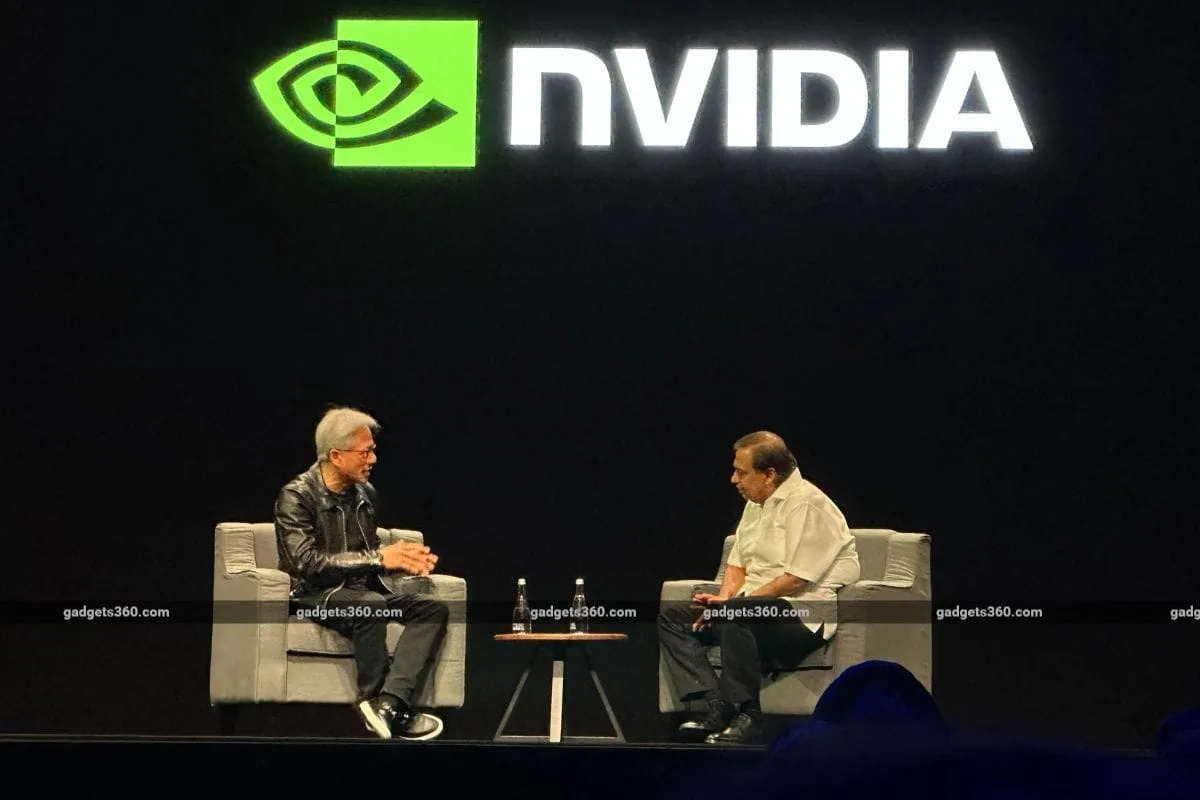
Nvidia CEO Jensen Huang Says ‘The Age of AI Has Started’

Nvidia CEO Jensen Huang said on Saturday that global collaboration and cooperation in technology will continue, even if the incoming U.S. administration imposes stricter export controls on advanced computing products.

President-elect Donald Trump, in his first term in office, imposed a series of restrictions on the sale of U.S. technology to China citing national security concerns – a policy broadly continued under incumbent President Joe Biden.

“Open science in global collaboration, cooperation across math and science has been around for a very long time. It is the foundation of social advancement and scientific advancement,” Huang told media during a visit to Hong Kong.

Global cooperation is “going to continue. I don’t know what’s going to happen in the new administration, but whatever happens, we’ll balance simultaneously compliance with laws and policies, continue to advance our technology and support and serve customers all over the world.”

Earlier on Saturday Huang told graduates and academics at the Hong Kong University of Science and Technology that “the age of AI has started” in a speech after receiving an honorary doctorate degree in engineering.

The head of the world’s leading maker of chips used for artificial intelligence applications received the award alongside actor Tony Leung, Nobel Prize for Chemistry winner Prof. Michael Levitt and Fields Medallist Prof. David Mumford.

“The age of AI has started. A new computing era that will impact every industry and every field of science,” said Huang.

He said Nvidia has “reinvented computing and sparked a new industrial revolution,” 25 years after inventing the graphics processing unit.

“AI is certainly the most important technology of our time, and potentially of all times.”

Huang, 61, also told graduates that he wished he had started his career at this time.

“The whole world is reset. You’re at the starting lines with everybody else. An industry is being reinvented. You now have the instruments, the instruments necessary to advance science in so many different fields,” Huang said.

“The greatest challenges of our time, unimaginable challenges to overcome in the past, all of a sudden seem possible to tackle.”

In the afternoon, Huang will participate in a fireside chat with the university’s Council Chairman Harry Sham, teachers and students.

© Thomson Reuters 2024

Posted on

WWE Raw to Stream Live on Netflix in 2025: What You Need to Know

Netflix will begin streaming WWE Raw live starting in January 2025. The anticipated debut marks a new era for WWE, with the streaming giant set to air the show every Monday night, moving away from traditional cable. This transition is expected to introduce a broader audience to WWE’s action-packed content and feature a star-studded lineup of WWE icons such as Dwayne “The Rock” Johnson, John Cena, and Roman Reigns.

In preparation for the January premiere, Netflix recently launched a high-energy promotional campaign. A sneek-peak video has been released, featuring a roster of WWE’s biggest stars in action, including Cody Rhodes, Rhea Ripley, and Liv Morgan. The video, promoted across social media, sets an exciting tone with WWE stars delivering intense performances and teases surprises for the debut episode.

Exclusive Launch Event in Los Angeles

A special live event is planned for January 6, 2025, at the Intuit Dome in Los Angeles, California, to mark WWE Raw’s streaming debut. Ticket sales for this event will begin shortly, offering fans a chance to attend this milestone in WWE’s history. The lineup for the January 6th event has not been officially announced, though speculation suggests a mix of WWE’s top talent, surprise appearances to captivate both loyal viewers and new audiences tuning in on Netflix.

Peacock Partnership Remains for WWE Archive Content

Despite this major shift, WWE will continue its relationship with Peacock for streaming exclusive events and maintaining an extensive library of WWE content. International fans, however, will have access to the live events on Netflix.

Posted on

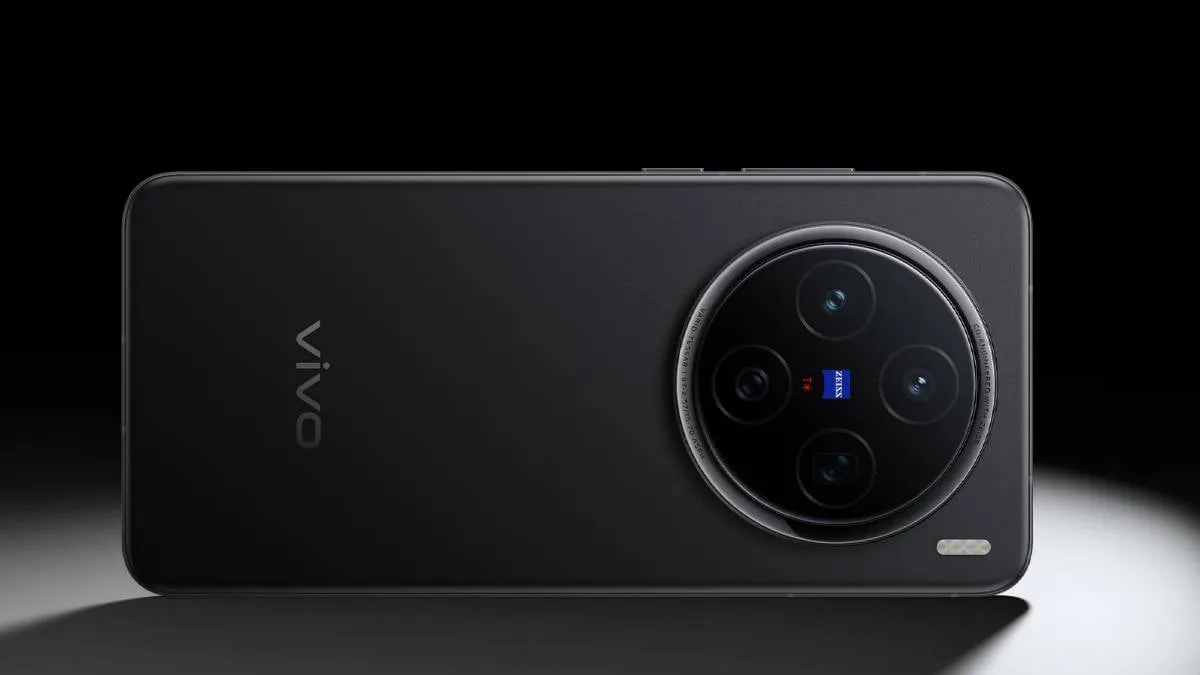
Vivo X200, Vivo X200 Pro Confirmed to Launch in Indian Market Soon: Specifications Teased

Vivo X200 series will launch soon in India, the Chinese tech band announced on X (formerly Twitter) on Friday. A dedicated microsite on the Vivo India website is teasing the design of the upcoming lineup ahead of its debut. The Vivo X200 series with three models — Vivo X200, X200 Pro, and X200 Pro Mini — was launched in China last month. The brand appears to be skipping the X200 Pro Mini for the Indian market. They run on MediaTek Dimensity 9400 SoCs and feature Zeiss-branded cameras.

Through its X handle, Vivo India announced that the Vivo X200 series will be launched in the country soon. The brand has not disclosed the exact launch date, but we previously heard that the lineup will debut by the end of this month or the beginning of December. Vivo is expected to offer more clarity about the launch in the coming days.

Vivo X200 Series Specifications

Vivo has created a dedicated landing page on its website that gives us a glimpse at the internals of the Vivo X200 and Vivo X200 Pro. The landing page doesn’t include Vivo X200 Pro Mini as of now, suggesting that it is likely to remain exclusive to the Chinese market.

The listing confirms the presence of MediaTek Dimensity 9400 SoC, Zeiss cameras, and curved displays in the Vivo X200 series. The phones are confirmed to ship with Android 15-based Funtouch OS 15. The Chinese versions run on Origin OS 5. The Vivo X200 Pro is claimed to be India’s first smartphone to feature a 200-megapixel Zeiss APO telephoto camera.

Like their Chinese counterparts, the Indian variant of Vivo X200 and Vivo X200 Pro are confirmed to house 5,800mAh and 6,000mAh batteries, respectively. The Pro model will include a V3+ imaging chip.

The Vivo X200 was launched in China in October with an initial price tag of CNY 4,300 (roughly Rs. 51,000) for the base 12GB RAM + 256GB storage configuration. Price of the Vivo X200 Pro starts at CNY 5,999 (roughly Rs. 63,000) for the same variant.

Affiliate links may be automatically generated – see our ethics statement for details.
Posted on

Nubia Watch GT With 1.43-Inch AMOLED Display, Up to 15 Days of Battery Life Launched

Nubia Watch GT was launched in China on Thursday alongside the Nubia Z70 Ultra. It is being promoted as “Nubia’s first sports health watch.” The smart wearable is equipped with several AI-backed features and is claimed to offer a battery life of up to 15 days. The smartwatch has a 1.43-inch circular AMOLED display and a metal body with a translucent, glass middle frame. It supports dual-frequency GPS navigation and comes with an IP68 rating for dust and water resistance.

Nubia Watch GT Price

Nubia Watch GT price is set in China at CNY 699 (roughly Rs. 8,100). The official images show the smartwatch in a single black and grey option. The company has yet to confirm the availability details of the newly launched smart wearable.

Notably, the Nubia Z70 Ultra, which was unveiled alongside the Nubia Watch GT, is currently available for pre-sale in China via the official Nubia e-store starting at CNY 4,599 (roughly Rs. 53,700) for the 12GB + 256GB option. It will go on sale in the country starting November 25, a day before its global launch on November 26.

Nubia Watch GT Specifications, Features

The Nubia Watch GT sports a 1.43-inch circular AMOLED display with a resolution of 466 x 466 pixels, a pixel density of 326ppi, and a screen-to-body ratio of 87 percent. It reportedly supports an always-on display feature as well. The smartwatch comes with a metal body, a translucent glass middle frame, and a crown on the right edge.

Nubia confirmed that the Watch GT comes with more than 100 preset sports modes and has AI-backed health monitoring features. The company adds that the smartwatch is equipped with Tencent’s Hunyuan AI features and supports dual-frequency GPS connectivity.

The Nubia Watch GT has an IP68 rating for dust and water resistance. It houses a 450mAh battery and is claimed to offer up to 15 days of battery life with typical usage.

For the latest tech news and reviews, follow Gadgets 360 on X, Facebook, WhatsApp, Threads and Google News. For the latest videos on gadgets and tech, subscribe to our YouTube channel. If you want to know everything about top influencers, follow our in-house Who’sThat360 on Instagram and YouTube.

Google Said to Have Cancelled Pixel Tablet 2 Development, Not Pixel Tablet 3

Posted on

Human Cell Atlas Mapping 37 Trillion Human Cells for Disease Insights

Efforts to create a comprehensive map of all human cells have taken a significant leap forward. Researchers associated with the Human Cell Atlas (HCA), a global scientific consortium, have released over 40 studies detailing critical progress in mapping the 37 trillion cells that make up the human body. These findings, published on 20 November in Nature journals, focus on cells in organs such as the lungs, skin, and brain and outline advanced computational tools for analysing vast datasets.

The project aims to profile cells from diverse populations worldwide to identify their unique functions, locations, and interactions at various stages of life. Already, data from 100 million cells sourced from over 10,000 individuals in more than 100 countries have been collected. By 2026, researchers plan to present the first draft of the atlas, with future versions expected to incorporate billions of cells.

Detailed Discoveries Across the Body

Among the recent findings is a comprehensive cellular map of the digestive system, from the oesophagus to the colon. This work, based on data from 190 individuals, uncovered a type of cell involved in inflammatory diseases like Crohn’s disease and ulcerative colitis. Professor Itai Yanai of NYU Langone Health noted that these cells likely trigger immune responses, contributing to inflammation in diseased tissues.

Other studies have shed light on early human development, including insights into skeletal formation during pregnancy and conditions like craniosynostosis. Maps comparing fetal brain development with lab-grown brain organoids also highlight the accuracy of these models, which replicate human brain activity up to the second trimester.

Implications for Medical Research

The findings have implications for drug discovery and disease understanding. Dr Aviv Regev, co-chair of the HCA, likened the work to advancements in mapping technologies, stating, “We have transitioned from basic, crude maps to something as detailed as Google Maps.” However, she acknowledged the significant work that lies ahead to complete this ambitious project.

The research has already led to groundbreaking discoveries, including the identification of a new lung cell type and insights into tissues vulnerable to COVID-19. Scientists aim to continue refining these maps, using organoids and other methods to unravel human biology and disease mechanisms.

Posted on

Prasar Bharati Launches ‘Waves’ OTT Platform with Live TV, Regional Shows, and More

Prasar Bharati, has officially launched its OTT platform, ‘Waves,’ during the 55th International Film Festival of India (IFFI) in Goa. The platform aims to provide a wide range of content, blending traditional and modern entertainment and is available on both Android and iOS. Featuring over 65 live TV channels and content in more than 12 languages, it caters to a diverse audience, with offerings ranging from classic television shows to contemporary series, across genres like infotainment, education, and gaming.

Key Features of Waves

Waves hosts a variety of content, including 65 live TV channels, video-on-demand options, free-to-play games, and e-commerce services through partnerships with ONDC, the company said in a statement. It is available in languages such as Hindi, Marathi, Tamil and Konkani, with a content mix that spans infotainment, education, and regional programming. Popular shows like Ramayan and Mahabharat are available alongside newer offerings, such as Fauji 2.0 and Kicking Balls.

Supporting Local Creators and Cultural Heritage

The platform also showcases student films and supports emerging content creators, offering a platform for young talent. Collaborations with film schools like FTII and Annapurna Film School are set to contribute to Waves’ growing content library. Live events such as Mann Ki Baat and international sports like the US Premier League Cricket Tournament are also featured. Waves further promotes cybersecurity awareness through campaigns like Cyber Alert.

Future Prospects and Expansion

In line with the Digital India initiative, Waves aims to bridge the digital divide by offering accessible content in rural areas. Through strategic partnerships with ministries and organisations, it plans to provide docudramas, historical documentaries, and regional programming, which will be available to users nationwide. This diverse and inclusive approach positions Waves as a competitive player in India’s OTT market.

Posted on

Apple iPhone 15 Pro Max vs Samsung Galaxy S23 Ultra: Which is Better?

Samsung and Apple are currently the two brands that have some great product lineups in the premium category. Although the latest iteration of their flagship products include the Galaxy S24 Ultra and iPhone 16 Pro Max, there is some curiosity among users about last year’s flagships. Yes, we are talking about the Samsung Galaxy S23 Ultra and Apple iPhone 15 Pro Max. The last year’s flagship from Samsung comes loaded with flagship-grade features and specifications, including the powerful Samsung chipset, pro-grade cameras, long-lasting battery life, impressive display, and some useful AI features.

On the other hand, the iPhone 15 Pro Max is also among the few handsets from Apple that will soon support Apple Intelligence features. So, does it make sense to buy the iPhone 15 Pro Max or go with the Galaxy S23 Ultra? In this article, we have pitted both devices against each other in this specs-based comparison. So, without further ado, let’s get started.

Apple iPhone 15 Pro Max vs Samsung Galaxy S23 Ultra: Price in India

The Apple iPhone 15 Pro Max price in India starts at Rs 1,34,900 for the base variant with 256GB of storage. The mid-variant with 512GB comes with a price tag of Rs 1,45,900, while the top-end option with 1TB storage is priced at Rs 1,54,900.

The Samsung Galaxy S23 Ultra 5G price in India currently starts at Rs 79,999 for the base variant with 12GB RAM and 256GB of internal storage. The top-end 12GB RAM + 512GB model is currently available for as low as Rs 1,14,999.

Apple iPhone 15 Pro Max vs Samsung Galaxy S23 Ultra: Design

The Apple iPhone 15 Pro Max offers a Titanium build. The handset was the first smartphone from Apple to support the Action Button that replaces the single-function switch. The iPhone 15 Pro Max also features an IP68 rating for dust and water resistance. The iPhone is available in Black Titanium, White Titanium, Blue Titanium and Natural Titanium. The iPhone 15 Pro Max measures 159.9 x 76.7 x 8.25mm and weighs 221 grams.

The Samsung Galaxy S23 Ultra features a premium design and was the first handset in the S-series to come equipped with a built-in S-Pen. The smartphone offers an armour aluminium frame and comes equipped with Corning Gorilla Glass Victus 2 protection coupled with an IP68 rating. The handset is available in Phantom Black, Green, and Cream colour options. The Galaxy S23 Ultra 5G measures 1163.4 x 78.1 x 8.9mm and weighs 234 grams.

Apple iPhone 15 Pro Max vs Samsung Galaxy S23 Ultra: Display

The iPhone 15 Pro Max is loaded with a 6.7-inch OLED Super Retina XDR display. The handset offers a resolution of 1290×2796 pixels and ProMotion technology with up to 120Hz screen refresh rate. The handset also features up to 1,000nits of peak brightness, HDR, True Tone, Dynamic Island, and Ceramic Shield protection.

The Samsung Galaxy S23 Ultra 5G packs a 6.8-inch Quad HD+ Infinity-O-Edge Dynamic AMOLED display. The screen has a resolution of 3088 x 1440 pixels and a 120Hz adaptive refresh rate. It also features up to 1,750nits of peak brightness, 240Hz touch sampling rate, and Corning Gorilla Glass Victus 2 protection.

Apple iPhone 15 Pro Max vs Samsung Galaxy S23 Ultra: Performance and OS

The Apple iPhone 15 Pro Max is powered by the Apple A17 Pro chipset. The SoC packs a 6-core GPU and 16-core Neural Engine. The Apple iPhone 15 Pro Max packs up to 512GB of internal storage. The device runs on the latest iOS 18 operating system. Moreover, Apple has already confirmed that the iPhone 15 Pro series will get Apple Intelligence.

The Samsung Galaxy S23 Ultra 5G is powered by the Qualcomm Snapdragon 8 Gen 2 processor that is specially made for the Galaxy handset. The chipset offers an Adreno 740 GPU. It also packs 12GB of LPDDR5X RAM and up to 512GB of UFS 4.0 storage.

Apple iPhone 15 Pro Max vs Samsung Galaxy S23 Ultra: Cameras

The Apple iPhone 15 Pro Max is equipped with a triple-camera setup on the rear panel. The handset packs a 48-megapixel wide-angle primary camera with sensor-shift OIS support, a 12-megapixel ultra-wide-angle lens with f/2.2 aperture, and a 12-megapixel ‘tetraprism’ periscope sensor with 5x optical zoom and 25x digital zoom. On the front, the handset is equipped with a 12-megapixel TrueDepth sensor with f/1.9 aperture.

The Samsung Galaxy S23 Ultra 5G packs a quad-camera setup. The device features a 200-megapixel ISOCELL HP2 primary sensor with OIS support, a 12-megapixel ultra-wide-angle lens with 120-degree FoV, a 10-megapixel telephoto sensor with 3x optical zoom, and a 10-megapixel periscope lens with 10x zoom, and 100x space zoom. On the front, the handset comes equipped with a 12-megapixel Dual Pixel selfie camera with f/2.2 aperture.

Apple iPhone 15 Pro Max vs Samsung Galaxy S23 Ultra: Battery

In terms of battery, the Samsung Galaxy S23 Ultra is equipped with a 5,000mAh battery. The handset features 45W fast wired charging support, 10W Qi wireless charging, and wireless powershare.

The Apple iPhone 15 Pro Max features a 4,441mAh lithium-ion battery that can deliver up to 29 hours of video playback. The handset features up to 25W fast charging support.

Apple iPhone 15 Pro Max vs Samsung Galaxy S23 Ultra: Conclusion

To conclude, both models offer some interesting features and specifications, which still make sense in 2024. The Samsung Galaxy S23 Ultra (Review) offers a premium design and brings some interesting camera features, coupled with flagship performance. The Apple iPhone 15 Pro Max (Review) offers a premium design, flagship performance, pro-grade cameras, and a good display. Moreover, it is again a great option for those who don’t want to buy the new iPhone but still want to experience the Apple Intelligence features.

Apple iPhone 15 Pro Max vs Samsung Galaxy S23 Ultra comparison

  Apple iPhone 15 Pro Max

Samsung Galaxy S23 Ultra

Key Specs
Display 6.70-inch 6.80-inch
Processor Apple A17 Pro Snapdragon 8 Gen 2
Front Camera 12-megapixel 12-megapixel
Rear Camera 48-megapixel + 12-megapixel + 12-megapixel 200-megapixel + 12-megapixel + 10-megapixel
RAM 8GB 8GB, 12GB
Storage 256GB, 512GB, 1TB 256GB, 512GB, 1TB
OS iOS 17 Android 13
Resolution 1290×2796 pixels
Battery Capacity 5000mAh
See full Comparison »

Posted on

Samsung Galaxy S25 Ultra Dummy Units Surface, Showcasing Design Tweaks With Rounded Corners

Samsung Galaxy S25 series is expected to launch in January, this time comprising four models rather than the usual three: the base Galaxy S25, Galaxy S25+, and Galaxy S25 Ultra, and a new Galaxy S25 Slim variant that may debut later. The top-of-the-line Galaxy S25 Ultra model may feature certain tweaks to its iconic boxy design, and recently surfaced dummy units of the purported handset corroborate this change. The Galaxy S25 Ultra is likely to get a more rounded appearance this time around. The leak suggests a design strategy shift compared to the existing Galaxy S24 Ultra.

Samsung Galaxy S25 Ultra Dummy Units Leak

In a post on X (formerly Twitter), tipster @Jukanlosreve shared a couple of images of the dummy units of the purported Samsung Galaxy S25 Ultra. The leak suggests that the South Korean technology conglomerate’s flagship non-foldable smartphone will undergo design changes, favouring rounded edges over flat ones. Two of the four colourways of the smartphone, including a black shade, are also showcased with the dummy units.

s25 ultra dummy Samsung Galaxy S25 Ultra

Dummy Units of the Samsung Galaxy S25 Ultra
Photo Credit: X/Jukanlosreve

This marks the second time that dummy units of the Galaxy S25 Ultra have surfaced, showcasing its tweaked design. With its purported smartphone, the company is speculated to move away from the boxy design that has become synonymous with Samsung’s Ultra models in recent years.

However, it may still have similar design elements carried over from the current models, including the placement of power and volume buttons on the right spine and an identical rear camera layout.

Samsung Galaxy S25 Ultra Specifications (Expected)

Samsung Galaxy S25 Ultra is expected to be equipped with a 6.86-inch AMOLED screen with thinner bezels than its predecessor, as per reports. The purported handset may sport a 200-megapixel primary camera, a 10-megapixel 3x telephoto camera, a 50-megapixel 5x telephoto camera, and an upgraded 50-megapixel ultrawide camera.

It is expected to be powered by Qualcomm’s new Snapdragon 8 Elite chipset, with support for up to 16GB of RAM. The phone could pack a 5,000mAh battery with support for 45W charging. A recent report indicates that the handset’s bill of materials (BoM) is at least $110 roughly Rs. 9,300) higher than its predecessor, hinting towards a price hike in select markets.

Posted on

NASA Showcases AI-Powered Computational Tools to Advance Scientific Research at SC24 Event

At the Supercomputing Conference or SC2024, NASA’s Associate Administrator for the Science Mission Directorate, Nicola Fox, detailed new computational tools intended to advance space science. NASA plans to employ a large language model across its science divisions, bolstered by foundation models tailored to Earth science, heliophysics, astrophysics, planetary science, and biological and physical sciences. This strategy was illustrated through a heliophysics foundation model, which applies extensive data from NASA’s Solar Dynamics Observatory to forecast solar wind events and track sunspot activity.

Evolution of Space Computing and the Voyager Missions

Fox recounted how NASA’s Voyager missions, launched in the 1970s, served as milestones in computing for space exploration. Operating with early semiconductor memory, these spacecraft provided unique insights, including discoveries of Jupiter’s faint ring and Saturn’s additional moons.

Although far surpassed by modern technology, the Voyager missions revealed the possibilities for future computational breakthroughs in space science. Since then, NASA’s computational requirements have expanded, with over 140 petabytes of data now stored and shared under open science policies, allowing global scientists to access and benefit from NASA’s research.

Real-Time Data and Earth Observation Advances

NASA’s Earth Information Center was presented as a prime example of federal collaboration. It integrated data on environmental changes with insights from agencies such as NOAA and the EPA.

Using data from satellite missions, Fox showcased NASA’s ability to observe natural events like wildfires in near real-time. She also noted advancements in wildfire detection from polar-orbiting satellites, allowing precise tracking of hot spots. She said that data-driven efforts like these are critical as NASA continues to enhance the monitoring of natural phenomena on Earth.

Searching for Life Beyond Earth

Towards the end, she addressed NASA’s ongoing investigations into extraterrestrial life. Recent studies of exoplanets, such as LP 791-18d, underscore this pursuit. NASA’s observatories, including the Transiting Exoplanet Survey Satellite (TESS). It has facilitated the detection of thousands of exoplanets, aiding in the search for conditions that might support life beyond Earth.

Fox concluded by highlighting the powerful role that AI and computing now play in analysing the massive datasets produced by NASA’s missions, making it possible to explore questions that were previously out of reach.