Posted on

OpenAI Faces New Copyright Case, From Global Publishers in India

Indian book publishers and their international counterparts have filed a copyright lawsuit against OpenAI in New Delhi, a representative said on Friday, the latest in a series of global cases seeking to stop the ChatGPT chatbot accessing proprietary content.

Courts across the world are hearing claims by authors, news outlets and musicians who accuse technology firms of using their copyright work to train AI services and who are seeking to have content used to train the chatbot deleted.

The New Delhi-based Federation of Indian Publishers told Reuters it had filed a case at the Delhi High Court, which is already hearing a similar lawsuit against OpenAI.

The case was filed on behalf of all the federation’s members, who include publishers like Bloomsbury, Penguin Random House, Cambridge University Press and Pan Macmillan, as well as India’s Rupa Publications and S.Chand and Co, it said.

“Our ask from the court is that they should stop (OpenAI from) accessing our copyright content,” Pranav Gupta, the federation’s general secretary said in an interview about the lawsuit, which concerns the ChatGPT tool’s book summaries.

“In case they don’t want to do licensing with us, they should delete datasets used in AI training and explain how we will be compensated. This impacts creativity,” he added.

OpenAI did not respond to a request for comment on the allegations and the lawsuit, which was filed in December but is being reported here for the first time. It has repeatedly denied such allegations, saying its AI systems make fair use of publicly available data.

OpenAI kicked off an investment, consumer and corporate frenzy in generative AI after the Nov. 2022 launch of ChatGPT. It wants to be ahead in the AI race after raising $6.6 billion last year.

The Indian book publishers’ group is seeking to join Indian news agency ANI’s lawsuit against the Microsoft-backed OpenAI, which is the most high-profile legal proceeding in the nation on this subject.

“These cases represent a pivotal moment and can potentially shape the future legal framework on AI in India. The judgment passed here will test the balance between protecting IP and promoting tech advancement,” said Siddharth Chandrashekhar, a Mumbai based lawyer.

Responding to the ANI case, OpenAI said in comments reported by Reuters this week that any order to delete training data would result in a violation of its U.S. legal obligations, and Indian judges have no right to hear a copyright case against the company as its servers are located abroad.

The federation said OpenAI offers services in India so its activities should fall under Indian laws.

Reuters, which holds a 26% interest in ANI, has said in a statement it is not involved in its business practices or operations.

OpenAI made its first India hire last year when it tapped former WhatsApp executive, Pragya Misra, to handle public policy and partnerships in the country of 1.4 billion people, where millions of new users are going online, thanks to cheap mobile data prices.

Worries Over Book Summaries

A Reuters reporter asked ChatGPT on Friday for details of the first volume of the Harry Potter series by J. K. Rowling, published by Bloomsbury. The AI tool responded with a chapter-by-chapter summary and a key events summary including the story’s climax.

It stopped short of giving the actual text, however, saying, “I cannot provide the entire text of the book, as it is copyrighted material.”

Penguin Random House in November said it has started a global initiative to include a statement on the copyright page of its titles saying “no part of this book may be used or reproduced in any manner for the purpose of training” AI technologies.

The Indian federation’s December filing, which was seen by Reuters, argues it has obtained “credible evidence/information” from its members that OpenAI used their literary works to train its ChatGPT service.

“This free tool produces book summaries, extracts, why would people buy books then?” Gupta said, referring to AI chatbots using extracts from unlicensed online copies. “This will impact our sales, all members are concerned about this.”

The federation’s plea has so far only been listed before a court registrar in New Delhi who on Jan 10 asked OpenAI to respond in the matter. A judge will now hear the case on Jan. 28.

© Thomson Reuters 2024

Posted on

Tata Electronics Acquires 60 Percent Stake in iPhone Maker Pegatron Technology India

Tata Electronics Pvt Ltd (TEPL) on Friday announced the acquisition of a controlling 60 per cent stake in Taiwanese contract manufacturer Pegatron’s India unit, cementing its position as a key player in the Indian electronics manufacturing sector.

The financial details of the transactions were not disclosed.

Pegatron India is a subsidiary of Taiwanese Pegatron Corporation, engaged in the provision of contract-based electronics manufacturing services (EMS) to global giants like Apple.

The latest deal is expected to strengthen Tata’s position as an Apple supplier and bolster its iPhone manufacturing plans.

Announcing the acquisition of a 60 per cent stake, Tata Electronics said Pegatron Technology India will undergo rebranding to reflect its new ownership structure and business direction while continuing to deliver high-quality electronics manufacturing services.

The latest move by the electronics arm of the salt-to-software conglomerate follows its acquisition of Wistron’s India operations (based in Narsapura, Karnataka) less than a year ago in March 2024.

In fact, in his New Year message to employees, Tata Sons Chairman N Chandrasekaran asserted that with global supply chains continuing to shift in India’s favour as the world’s largest businesses strike a new balance between resilience and efficiency, manufacturing has the potential to transform the country’s economy.

Chandrasekaran termed it as “a new manufacturing golden age for India”.

On Friday, Tata Electronics CEO and MD Randhir Thakur said the acquisition of a majority stake in Pegatron Technology India fits into Tata Electronics’ strategy of growing its manufacturing footprint.

“We look forward to a new era of AI, digital, and technology-led manufacturing as we bring up these new facilities and expand our operations in India,” Thakur said.

In addition to TEPL acquiring a majority stake in Pegatron Technology India, the two companies will work on integrating their teams to work seamlessly.

Tata Group has been scripting an aggressive blueprint for electronics and semiconductor manufacturing.

Tata Electronics is building India’s first Fab in Dholera, Gujarat, with a total investment of Rs 91,000 crore. In addition, another Rs 27,000 crore will be invested in a greenfield facility in Jagiroad, Assam, for the assembly and testing of semiconductor chips. Together, these facilities will produce semiconductor chips for applications across automotive, mobile devices, artificial intelligence (AI), and other key segments to serve customers globally.

Tata Group will create 5 lakh manufacturing jobs in the next five years across sectors such as semiconductor, electric vehicles, battery and related industries, Chandrasekaran said in October last year.

Tata Sons’ top honcho had asserted that India cannot achieve the goals of being a developed nation if the country cannot create manufacturing jobs.

© Thomson Reuters 2024

Posted on

India’s Gaganyaan Project: Uncrewed Crew Module Sent for Space Exploration

India’s journey toward human space exploration marked a critical step with the dispatch of the Crew Module for the first uncrewed mission under the Gaganyaan project. The module, integrated with a liquid propulsion system at the Liquid Propulsion Systems Centre (LPSC) in Bengaluru, has been sent to the Satish Dhawan Space Centre in Sriharikota. This development, achieved on 21 January 2025, is part of India’s efforts to attain human spaceflight capabilities.

Liquid Propulsion System Details

As reported by the Economic Times, according to ISRO, the Crew Module Propulsion System (CMPS) incorporates a bi-propellant Reaction Control System (RCS). This system is essential for precise three-axis control—pitch, yaw, and roll—during the descent and re-entry phases. Control operations will commence after the separation of the service module and continue until the parachute-based deceleration system is deployed. The propulsion system includes 12 thrusters, each delivering 100 Newtons of thrust, along with high-pressure gas bottles, a propellant feed mechanism, and associated fluid control components.

Assembly and Integration

The module’s development also involved the integration of the Crew Module Uprighting System (CMUS), designed by the Vikram Sarabhai Space Centre (VSSC). The module will now undergo further assembly processes, including avionics installation, electrical harnessing, and a series of checks at VSSC before its dispatch to the U R Rao Satellite Centre in Bengaluru. The final phase will focus on integrating the Crew Module with the Orbital Module.

ISRO has emphasised that the uncrewed G1 mission is a preparatory step for sending humans to space, enabling the validation of systems and technologies critical to the Gaganyaan project. With this milestone, India edges closer to joining the league of nations with human spaceflight capabilities.

Posted on

Coma Cluster’s Distance Closer Than Predicted, Amplifying Hubble Tension Crisis

The mystery surrounding the Hubble tension has intensified following new findings indicating that the Coma Cluster of galaxies is 38 million light-years closer than predicted by standard cosmological models. The Hubble tension refers to a persistent discrepancy between the universe’s expansion rate as measured in the modern era and the rate predicted based on observations of the early universe. This ongoing issue has now been described as a crisis, underscoring its potential implications for the foundations of cosmology.

Discrepancies in Measurements Highlight the Issue

According to a study, which was led by Dan Scolnic of Duke University and Adam Riess of Johns Hopkins University, type Ia supernova explosions observed in the Coma Cluster reveal that the cluster is significantly closer to Earth than models suggest. The findings, which anchor their data to Hubble Space Telescope observations, point to a calculated distance of 321 million light-years. This figure deviates from the 359 million light-years predicted by the standard model, which incorporates the Hubble–Lemaître law and observations of the cosmic microwave background (CMB).

The Hubble Tension Explained

The Hubble constant, a measure of the universe’s expansion rate, is derived through two primary methods: observations of standard candles like supernovae and Cepheid variables and analyses of the CMB radiation from the early universe. While the standard model predicts a value of 67.4 km/s/Mpc, recent measurements using standard candles suggest a rate of approximately 73.2 km/s/Mpc, highlighting the tension. Efforts by instruments like the Dark Energy Spectroscopic Instrument (DESI) aim to refine these measurements, but results remain inconclusive.

Implications for Cosmology

The study, as reported by space.com, challenges assumptions about the standard model and suggests the possibility of unknown phenomena influencing the universe’s expansion. While some theories propose an additional burst of dark energy or other early-universe processes, no definitive explanation has emerged. Researchers agree the findings deepen the mystery, raising the stakes for future studies in this area.

The results have been submitted to The Astrophysical Journal, further highlighting the critical need for understanding the root causes of the Hubble tension.

For the latest tech news and reviews, follow Gadgets 360 on X, Facebook, WhatsApp, Threads and Google News. For the latest videos on gadgets and tech, subscribe to our YouTube channel. If you want to know everything about top influencers, follow our in-house Who’sThat360 on Instagram and YouTube.

Tamil Workplace Comedy Office Now Streaming on Disney+ Hotstar: Cast, Plot, and More

Samsung Galaxy S25 Series Brings Deeper Integration With Gemini, New AI Features

Posted on

Nothing Teases Upcoming Smartphone With Dual Rear Cameras, Transparent Design

Nothing is rumoured to launch multiple new smartphones including a flagship device in the coming months as a follow up to the Nothing Phone 2. As part of its plans, the UK-based original equipment manufacturer (OEM) has yet again teased an upcoming product via its social media handle which may very well be its next smartphone. It appears to have a dual rear camera unit and a transparent design, the latter of which has become synonymous with the company in recent years.

Nothing Smartphone Teased

Through several posts on X (formerly Twitter), Nothing shared multiple design sketches of what appears to be a smartphone along with the text “WIP” which might be an acronym for work in progress. The first sketch partially showcases a phone with a transparent back panel with screws in place.

An accompanying sketch has two circles placed in a horizontal pill-shaped like structure, similar to the camera unit of the Nothing Phone 2a models. This suggests that this component could be the rear cameras of the purported phone. However, it does not show the entire rear cover, so it remains unknown if the device would get the company’s signature Glyph interface.

This development comes a day after the company rolled out another teaser of an upcoming product using an image of the Arcanine Pokémon. While it did not contain any description, it is speculated to be a teaser for the Nothing Phone 3, corroborating previous reports that the handset may bear the codename Arcanine.

A recently leaked email allegedly sent by Nothing CEO Carl Pei mentioned Nothing’s plans for 2025, which includes a “landmark” launch. Alongside, it also confirmed the moniker of the company’s upcoming flagship phone and it will indeed be known as the Nothing Phone 3. The purported device is tipped to launch in Q1 2025 as a successor to the Nothing Phone 2. The phone is said to be the first step towards offering an AI-powered platform and it would be possible through breakthrough innovations in terms of the user interface.

Posted on

China’s ‘Artificial Sun’ Breaks Nuclear Fusion Record with 1,000 Seconds of Continuous Plasma Loop

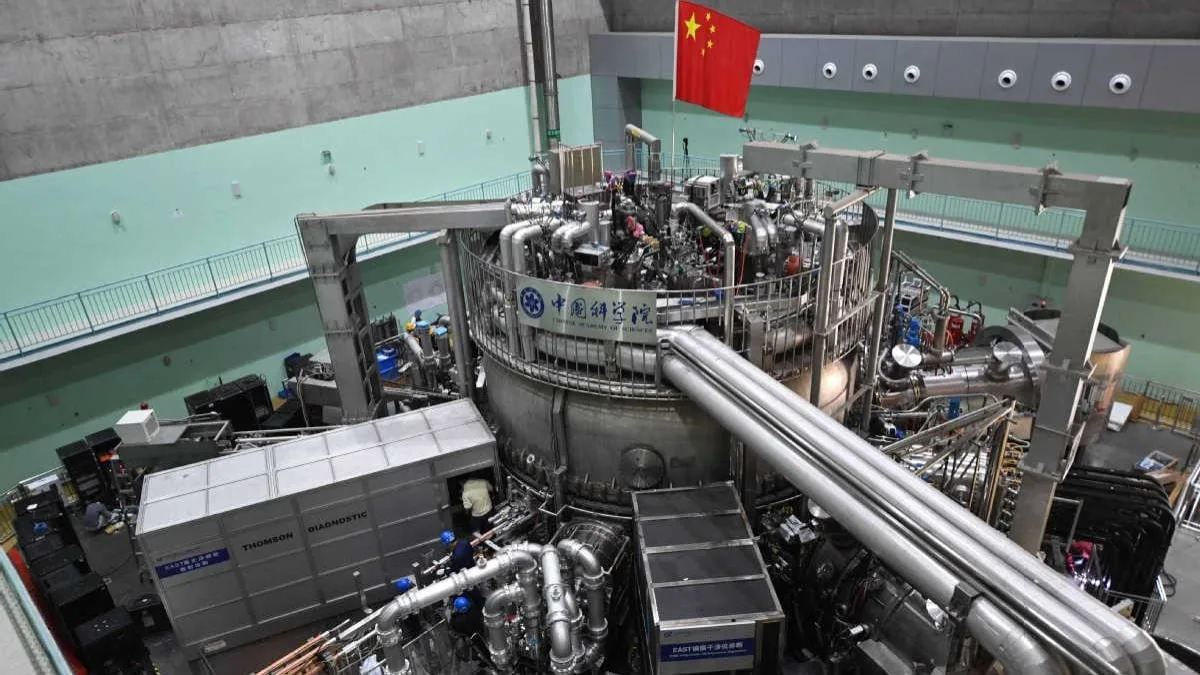
China’s Experimental Advanced Superconducting Tokamak (EAST), referred to as the “artificial sun,” has achieved a new milestone in nuclear fusion research. The reactor maintained a continuous loop of plasma for 1,066 seconds, surpassing its previous record of 403 seconds. This breakthrough, reported on January 20, 2025, represents a significant step towards realising nuclear fusion as a near-limitless clean energy source. The achievement highlights advancements in sustaining plasma, a high-energy state of matter crucial for fusion reactions.

EAST’s Latest Milestone

As reported by Live Science, according to Chinese state media, EAST operates as a magnetic confinement reactor designed to sustain plasma for extended periods. The recent success was made possible by upgrades to the reactor, including an enhanced heating system with double the power. Song Yuntao, Director of the Institute of Plasma Physics at the Chinese Academy of Sciences, described the experiment as critical for future fusion power plants. Speaking to Chinese media, he emphasised the need for stable plasma operation over thousands of seconds to achieve continuous power generation.

Understanding Fusion Reactors

Nuclear fusion mimics the sun by fusing light atoms under intense heat and pressure to form heavier ones, releasing energy in the process. Unlike the sun, where immense pressure aids the reaction, Earth-based reactors rely on extremely high temperatures. Despite the promise of abundant and clean energy, fusion reactors currently consume more energy than they produce.

Global Efforts in Fusion Technology

China is a participant in the International Thermonuclear Experimental Reactor (ITER) program, a multinational initiative aimed at advancing fusion research. ITER, located in France, is expected to begin operations in 2039 and will test sustained fusion. Data from EAST’s experiments will support ITER and other global projects.

The milestone achieved by EAST marks progress in fusion technology, though decades of research remain before its application in power generation becomes feasible.

Posted on

Earth’s Hidden ‘Ignorosphere’ Could Provide Insights into Auroras

Earth’s atmosphere, particularly its upper layers, remains one of the least understood regions of the planet. Despite extensive research on the lower atmosphere, scientists have struggled to collect reliable data on the mesosphere and higher regions. This atmospheric layer, which sits between the stratosphere and space, has earned the moniker “ignorosphere” due to its inaccessibility. The mesosphere’s remoteness has left critical gaps in knowledge about its processes and their impact on Earth’s weather, climate, and phenomena like auroras.

New Dataset Offers Insights into the Ignorosphere

According to research published in Progress in Earth and Planetary Science, a team led by Kaoru Sato, a professor of atmospheric physics at the University of Tokyo, has developed a dataset spanning 19 years. The dataset models the atmosphere up to an altitude of 110 kilometres and incorporates rare measurements from sounding rockets, radar, and lidar instruments. As stated to Space.com, Sato explained that the dataset fills crucial gaps, enabling detailed modelling of processes like gravity waves and auroras.

Implications for Space Weather and Climate Modelling

It has been noted that space weather effects, including charged particles from solar storms, often interact with the mesosphere, impacting phenomena like auroras and ozone chemistry. These interactions, according to Sato, can also generate gravity waves, which play a significant role in global energy transport but remain poorly understood due to limited data.

Addressing Atmospheric Mysteries

Unexplained phenomena such as inter-hemispheric coupling, where cloud formations in the Arctic and Antarctic appear synchronised, are being studied using this dataset. Researchers are also examining the influence of the mesosphere on the ionosphere, where solar winds ionise gases.

The dataset is expected to contribute significantly to understanding atmospheric dynamics, offering new avenues for research on processes affecting Earth’s climate and space weather interactions.

For the latest tech news and reviews, follow Gadgets 360 on X, Facebook, WhatsApp, Threads and Google News. For the latest videos on gadgets and tech, subscribe to our YouTube channel. If you want to know everything about top influencers, follow our in-house Who’sThat360 on Instagram and YouTube.

Nothing Teases Potential Nothing Phone 3; Phone 3a, Phone 3a Plus Reportedly Listed on BIS

OPPO Reno13 Series: Strengthening the Reno Legacy with Innovation and Excellence

Posted on

Samsung Teases XR Headset With Multimodal AI Capabilities, Smart Glasses at Galaxy Unpacked 2025

Samsung once again teased its upcoming extended reality (XR) headset, dubbed ‘Project Moohan’, this time at the Galaxy Unpacked 2025 event in San Jose, California on Wednesday. During the announcement, a silhouette of an XR headset graced the screen with an appearance remarkably similar to the Apple Vision Pro. While the South Korean technology conglomerate did not delve into any specifics, it reiterated that the headset will be powered by the Android XR operating system (OS), developed in collaboration with Google and Qualcomm.

Alongside the XR headset, the company teased that it might be developing another wearable in the form of smart glasses.

Samsung XR Headset, Smart Glasses Teased

At the Galaxy Unpacked 2025 event, Samsung teased that its XR headset will support multimodal artificial intelligence (AI) capabilities. With it, the company aims to change the way people “interact with the physical and digital world”. Subsequent visuals showed how users may be able to control the XR headset.

samsung xr control unpacked Samsung XR Headset

Ways to Interact With Samsung’s Upcoming XR Headset
Photo Credit: Samsung

The Samsung wearable might get eye tracking capabilities similar to the Apple Vision Pro, which leverages a network of LEDs and infrared cameras that project invisible light patterns onto each eye, enabling the wearer to select elements just by looking at them. Additionally, they may also be able to control the XR headset using hand gestures as well as speech.

While this was the extent of the Samsung XR headset teaser, the company also hinted towards the potential development of a pair smart glasses. It emphasised how multimodal AI will “change” interaction with new form factors like XR devices. The visual showed the aforementioned XR headset along with a pair of smart glasses.

First announced in December 2024, Samsung’s ‘Project Moohan’ XR headset is speculated to come with multimodal input, state-of-the-art displays, and passthrough capabilities. The company says it will also offer support for Google’s Gemini AI assistant and will have apps optimised to run on a large, virtual display. It is confirmed to be the first offering in the market to be powered by the new Android XR OS and thus, may support several of its features including Circle to Search with gesture support, web browsing via Google Chrome, immersive views using Google Maps, and live translation of text seen within the wearer’s point of view.

Posted on

Samsung Galaxy S25 Ultra With Snapdragon 8 Elite, 200-Megapixel Camera Launched in India: Price, Specifications

Samsung Galaxy S25 Ultra was launched on Wednesday as the company’s flagship model in the Galaxy S25 series of smartphones. At its Galaxy Unpacked event on Wednesday, the South Korean firm showed off the handset, which is powered by a custom Snapdragon 8 Elite for Galaxy chip, along with 12GB of RAM and up to 1TB of storage. This year’s model has an upgraded 50-megapixel ultrawide camera, and the smartphone is capable of recording Log video, just like Apple’s iPhone 15 Pro and iPhone 16 Pro models.

Like the other two models in the updated lineup, the Samsung Galaxy S25 Ultra comes with One UI 7, which is based on Android 15. It also offers support for a new Now Brief feature, which offers personalised summaries, and a new Now bar on the lock screen that surfaces important information inside a coloured pill. The company’s apps have also been updated with support for Google’s Gemini AI assistant, allowing users to interact with apps like Samsung Notes while using another app, like YouTube.

Samsung Galaxy S25 Ultra Price, Availability

Samsung Galaxy S25 Ultra price is set at $1,299 (roughly Rs. 1,12,300) for the base model with 12GB of RAM and 256GB of inbuilt storage. The handset is also available in 12GB+256GB and 12GB+512GB variants that are priced at $1,419 (roughly Rs. 1,22,700) and $1,659 (roughly Rs. 1,43,400), respectively. In India, the price of the Galaxy S25 Ultra starts at Rs. 1,29,999.

The newly unveiled Galaxy S25 Ultra will be sold in Titaniium Black, Titaniium Gray, Titaniium Silverblue, and Titaniium Whitesilver colour options. Customers can also pick up the phones from the company’s website in exclusive Titanium Jadegreen, Titanium Jetblack, and Titanium Pinkgold colourways.

samsung galaxy s25 search Samsung Galaxy S25

Searching inside apps using Galaxy AI
Photo Credit: Samsung

Preorders for the smartphone start today in the US, and Samsung says the phones will be available starting February 7.

Samsung Galaxy S25 Ultra Specifications, Features

The dual-SIM Samsung Galaxy S25 Ultra runs on Android 15, with the company’s new One UI 7 interface on top. It also comes with support for Galaxy AI features and is slated to get seven years of Android OS and security updates. The handset is equipped with a custom Snapdragon 8 Elite for Galaxy chip, accompanied by 12GB of RAM and up to 1TB of built-in storage.

Samsung has equipped the Galaxy S25 Ultra with a 6.9-inch (1,400×3,120 pixels) Dynamic AMOLED 2X screen with a 1Hz-120Hz variable refresh rate and up to 2,600nits peak brightness. The display has Corning Gorilla Armor 2 protection. Unlike its predecessor, the Samsung Galaxy S25 Ultra has slightly rounded corners.

samsung galaxy s5 ultra inline Samsung Galaxy S25 Ultra

The Galaxy S25 Ultra offers support for Samsung’s S Pen
Photo Credit: Samsung

The handset has four rear cameras, including a 200-megapixel main camera with 2x in-sensor zoom, optical image stabilisation (OIS) and an f/1.7 aperture and an updated 50-megapixel ultrawide camera with 120-degree field of view and f/1.9 aperture. It also has a 50-megapixel telephoto camera with 5x optical zoom and OIS, and a 10-megapixel telephoto camera with 3x optical zoom and OIS. On the front, the sports a 12-megapixel selfie camera with an f/2.2 aperture.

There’s support for 5G, 4G LTE, Wi-Fi 7, Bluetooth 5.4, NFC, UWB, GPS, and a USB Type-C port. The handset also supports Samsung’s S Pen stylus, and it has an IP68 rating for dust and water resistance.

Like its predecessor, the Samsung Galaxy S25 Ultra packs a 5,000mAh battery that can be charged at 45W (wired, charger sold separately). It also offers Fast Wireless Charging 2.0 (15W) and Wireless PowerShare support. It measures 162.8×77.6×8.2mm and weighs 218g.

Posted on

69-Year-Old Man with Paralysis Flies Virtual Drone Using Brain Implant

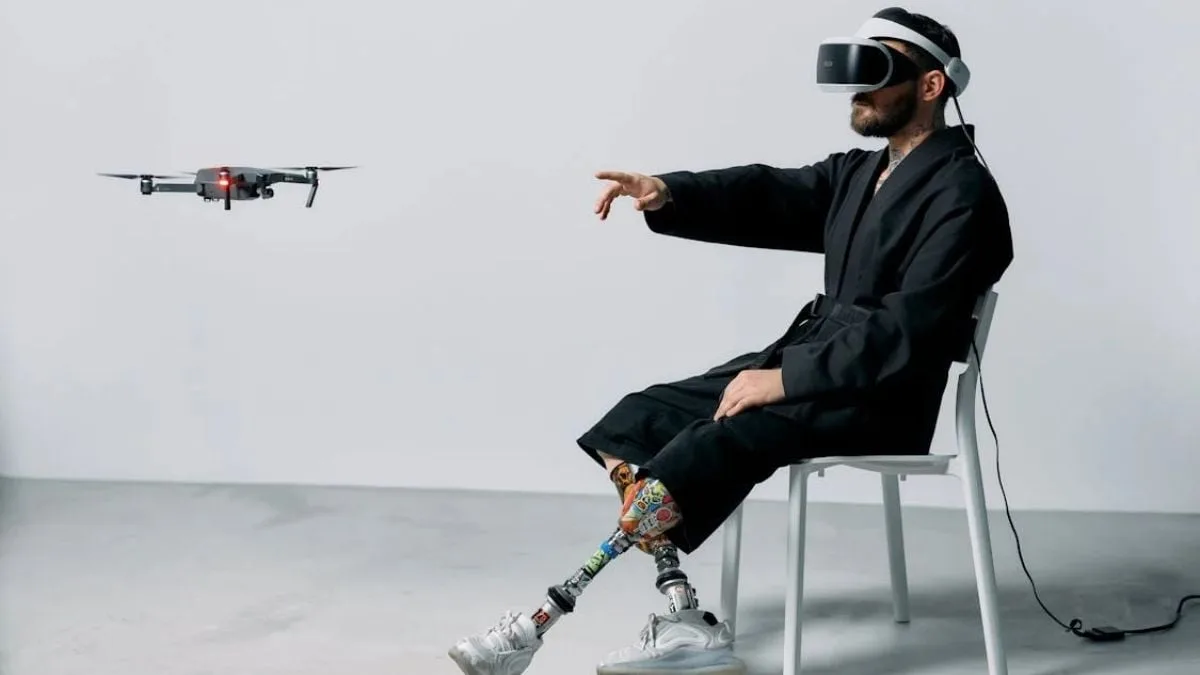
A paralysed individual, aged 69, has successfully piloted a virtual drone using a brain-computer interface (BCI) that interprets neural signals. This innovative achievement has enabled the participant to navigate a video-game obstacle course by imagining specific finger movements. The breakthrough device, which bridges brain activity and real-time control, demonstrates potential applications for assisting those with mobility challenges to engage in intricate tasks. These developments mark significant progress in the application of BCIs for enhancing motor functions.

Breakthrough Detailed in Nature Medicine

According to a study published in Nature Medicine, the man, who had been paralysed in all four limbs following a spinal cord injury, controlled the virtual drone using neural signals linked to imagined movements of specific finger groups. The research relied on electrodes implanted in the participant’s left motor cortex, which had been placed during a prior operation in 2016. Algorithms were trained to decode the brain’s signals when he visualised moving his right thumb, different finger pairs, or combinations of them.

The researchers reported that the participant initially practised synchronising imagined movements with a virtual hand displayed on a screen, achieving a high degree of accuracy by hitting up to 76 targets per minute. Subsequently, the signals were connected to the drone’s navigation system, allowing him to steer it through a virtual basketball court, manoeuvring rings with precision.

Expert Insights on Potential Applications

Matthew Willsey, a neurosurgeon at the University of Michigan and a co-author of the study, told Nature Medicine that the participant likened the experience to playing a musical instrument, requiring delicate adjustments to maintain control. Willsey noted that the research seeks to enable control of multiple movements simultaneously, potentially assisting activities such as typing or playing musical instruments.

John Downey, a BCI researcher from the University of Chicago, described the work as an important initial step in understanding hand control mechanisms. He highlighted the potential of this technology as a versatile tool for individuals with limited mobility. Researchers aim to enhance the system to decode signals for all ten fingers.