Posted on

Tecno Camon 40 Series With One-Tap Button Unveiled at MWC 2025

Tecno unveiled its Camon 40 series of smartphones at the Mobile World Congress (MWC) 2025 in Barcelona. The lineup includes the Tecno Camon 40, Camon 40 Pro, Camon 40 Pro 5G, and Camon 40 Premier 5G. The phones come with a new One-Tap Button and 50-megapixel selfie shooters. They are equipped with Tecno AI, which includes several AI-backed imaging and productivity features. The handsets are expected to be available for purchase in select global markets soon.

Tecno Camon 40 Series Unveiled

In a press release, the company confirmed that the Tecno Camon 40 series phones are equipped with MediaTek Dimensity Ultimate processors. The Tecno Camon 40 Premier 5G is powered by a MediaTek Dimensity 8350 Ultimate AI SoC. It is said to be the first ever handset to get this chipset. The series supports 12GB of RAM and 256GB of onboard storage,

The Tecno Camon 40 Premier 5G, along with the Camon 40 Pro and Camon 40 Pro 5G handsets, arrives with Corning Gorilla Glass 7i protection. They are claimed to meet the IP68 and IP69 dust and water resistance ratings. They carry TÜV Rheinland certifications and are said to offer 72-month lag-free performance. Meanwhile, the vanilla Tecno Camon 40 is said to get an IP66-rated build against dust and water ingress.

All variants of the Tecno Camon 40 series have AMOLED displays. They also carry stereo dual speaker units with Dolby Atmos audio. The top-of-the-line Premier 5G variant is backed by a 5,100mAh battery with 70W wired fast charging support. For optics, all handsets are equipped with 50-megapixel selfie shooters. The One-Tap Button paired with the AI-backed FlashSnap mode allows users to capture images instantly, without considerable lags. 

The Tecno Camon 40 Premier 5G, with a swan-neck curve design, comes with a 50-megapixel Sony LYT-701 sensor, which is said to collect 56.25 percent more light than other competing sensors, ensuring better night photography results. The handset’s camera setup includes a 50-megapixel ultrawide angle shooter and a 50-megapixel periscope telephoto camera at the back. It has a 50-megapixel front camera sensor with auto focus for selfies and video calls as well. It can capture 4K 60fps Pre-ISP videos at night or in low light conditions thanks to an “independent imaging chip.”

The AI features in the Tecno Camon 40 series phones include AI Eraser 2.0, AIGC Portrait 2.0, AI Perfect Face, AI Sharpness Plus, AI Image Extender, Universal Tone, AI Writing, and AI Translate. The Ella AI Assistant is said to help users with scheduling, navigation, and image recognition. The handsets support Google’s Circle to Search feature and an AI Call Assistant with Call Translation and Call Summary tools. 

The company has not yet revealed the price and availability details for the Tecno Camon 40 series handsets. However, their other key specifications are expected to be revealed soon.

For details of the latest launches and news from Samsung, Xiaomi, Realme, OnePlus, Oppo and other companies at the Mobile World Congress in Barcelona, visit our MWC 2025 hub.

Posted on

Apple Refreshes iPad Air With M3 Chip, 11th Generation iPad Arrives With A16 Bionic Chip

Apple launched the iPad Air (2025) on Tuesday as a refreshed version of the iPad Air that was introduced last year. The new iPad Air model is equipped with Apple’s M3 chip and is available in 11-inch and 13-inch sizes. Meanwhile, the company introduced the 11th generation iPad (2025), equipped with the A16 Bionic chip — storage now starts at 128GB for the entry-level iPad. Apple also launched a revamped Magic Keyboard for the new iPad Air with a larger trackpad and a 14-key function row and a USB Type-C port for charging.

iPad Air (2025), iPad (2025) Price in India and Availability

iPad Air (2025) price in India starts at Rs. 59,900 for the 11-inch Wi-Fi model, while the Wi-Fi + Cellular variant begins at Rs. 74,900. The 13-inch model is available in Wi-Fi and Wi-Fi + Cellular options that are priced at Rs. 79,900 and Rs. 94,900, respectively. It will be sold in Blue, Purple, Space Grey, and Starlight colour options.

On the other hand, pricing for the iPad (2025) with Wi-Fi connectivity begins at Rs. 34,900, while the Wi-Fi + Cellular variant starts at Rs. 49,900. The tablet will go on sale in Blue, Pink, Silver, and Yellow colourways.

Pre-orders for the iPad Air (2025) and iPad (2025) begin today and the tablets will do on sale on March 12. The Magic Keyboard for the iPad Air (2025) will be sold in 11-inch and 13-inch variants that cost Rs. 26,900 and Rs. 29,900, respectively. The Magic Keyboard Folio for the iPad (2025) is priced at Rs. 24,900.

iPad Air (2025) Specifications

Apple’s M3 chip is the most notable hardware upgrade introduced by the company on the iPad Air (2025). It is claimed to be around twice as fast as the M1-powered iPad Air, and runs on iPadOS 18 with support for Apple Intelligence features. The company says the M3 chip also delivers improved graphics performance with support for hardware-accelerated ray tracing, mesh shading, and dynamic caching.

ipad air 2025 apple inline ipad air 2025

iPad Air (2025) is equipped with an Apple’s M3 chip
Photo Credit: Apple

Like its predecessor that was introduced last year, the new iPad Air is equipped with a Liquid Retina LCD screen, in 11-inch (2,360×1,640 pixels) and 13-inch (2,732×2,048 pixels) display options. It has a 12-megapixel wide rear camera with an f/1.8 aperture. On the front, it is equipped with a 12-megapixel Center Stage camera with an f/2.0 aperture.

Both the 11-inch and 13-inch iPad Air (2025) versions are available in Wi-Fi and WiFi + Cellular variants. Connectivity options include Wi-Fi 6E and Bluetooth 5.3, while the Wi-Fi + Cellular options include support for GPS, 5G and 4G LTE networks. It is equipped with a three-axis gyroscope, accelerometer, barometer, ambient light sensor and a fingerprint sensor that handles Touch ID.

The iPad Air (2025) is equipped with a USB Type-C port. The 11-inch model packs a 28.93Wh battery, while the 13-inch variant has a 36.59Wh battery. Apple says the new iPad offers up to 10 hours (Wi-Fi) and 9 hours (Wi-Fi + Cellular) of battery life when watching video.

iPad (2025) Specifications

Apple’s new iPad (2025) is equipped with the A16 Bionic chip that was first introduced in September 2022. The company says that the new model will offer a 30 percent jump in performance over the previous entry-level iPad that featured an A14 Bionic processor. It also runs on iPadOS 18, but doesn’t offer support for Apple Intelligence features.

ipad 2025 apple inline ipad 2025

iPad (2025) is availalable with 128GB of storage as default
Photo Credit: Apple

Aside from the updated processor, the iPad (2025) now has 128GB of storage as default — its predecessor started at 64GB. The new model features the same 12-megapixel (f/1.8) rear camera and a 12-megapixel front-facing Center Stage camera (f/2.4) as the iPad (2022).

Similarly, the network connectivity options on the iPad (2025) are the same as the model launched three years ago. You get support for Wi-Fi 6E and Bluetooth 5.3, while the Wi-Fi + Cellular options include support for GPS, 5G and 4G LTE networks.

The iPad (2025) is equipped with a three-axis gyroscope, accelerometer, barometer, and ambient light sensor. It has a fingerprint sensor for biometric authentication. Apple says the 11th generation iPad packs a 28.93Wh battery that is claimed to offer up to 10 hours and 9 hours of battery life while watching video on the Wi-Fi and Wi-Fi + Cellular variants, respectively.

For details of the latest launches and news from Samsung, Xiaomi, Realme, OnePlus, Oppo and other companies at the Mobile World Congress in Barcelona, visit our MWC 2025 hub.

Posted on

Realme 14 Pro Lite 5G With Snapdragon 7s Gen 2 SoC, 5,200mAh Battery Launched in India: Price, Specifications

Realme 14 Pro Lite 5G was launched in India on Tuesday. The handset is equipped with a Snapdragon 7s Gen 2 chipset, a 5,200mAh battery and a HyperImage+ camera setup. It carries a 50-megapixel main camera sensor and a 32-megapixel selfie shooter. It is said to sport a Sunrise Halo design and has a shining frost glass finish. The phone joins the Realme 14 Pro 5G and Realme 14 Pro+ 5G variants, which were unveiled in the country in January.

Realme 14 Pro Lite 5G Price in India, Availability

Realme 14 Pro Lite 5G price in India starts at Rs. 21,999 for the 8GB + 128GB option, while the 256GB variant costs Rs. 23,999. It is offered in Glass Gold and Glass Purple colourways. The phone is available for purchase in the country via Flipkart and the Realme India e-store

Realme 14 Pro Lite 5G Features, Specifications

The Realme 14 Pro Lite 5G sports a 6.7-inch full-HD+ (1,080×2,412 pixels) curved OLED screen with up to 120Hz refresh rate, a 240Hz touch sampling rate, a 2,160Hz PWM dimming rate, a 2,000nits of local peak brightness level and Corning Gorilla Glass 7i protection. The phone is powered by a Snapdragon 7s Gen 2 SoC paired with 8GB RAM and up to 256GB of onboard storage. It ships with Android 14-based Realme UI 5.0.

In the camera department, the Realme 14 Pro Lite 5G gets a 50-megapixel 1/1.95-inch Sony LYT-600 with an f/1.88 aperture and optical image stabilisation (OIS) support alongside an 8-megapixel ultrawide angle shooter. The front camera has a 32-megapixel sensor for selfies and video calls. It is equipped with AI-backed imaging features like Ultra Clarity, Smart Removal and Best Face.

The Realme 14 Pro Lite 5G packs a 5,200mAh battery with 45W wired SuperVOOC charging. Connectivity options include 5G, 4G, dual-band Wi-Fi, Bluetooth 5.2, GPS, and a USB Type-C 2.0 port. For security, the phone has an in-display fingerprint sensor. The handset has an IP65-rated build for dust and splash resistance. It measures 161.34×73.91×8.23mm in size and weighs about 188g.

Affiliate links may be automatically generated – see our ethics statement for details.

For details of the latest launches and news from Samsung, Xiaomi, Realme, OnePlus, Oppo and other companies at the Mobile World Congress in Barcelona, visit our MWC 2025 hub.

Posted on

Lenovo Showcases Yoga Solar PC Concept With Back Contact Cell Technology at MWC 2025

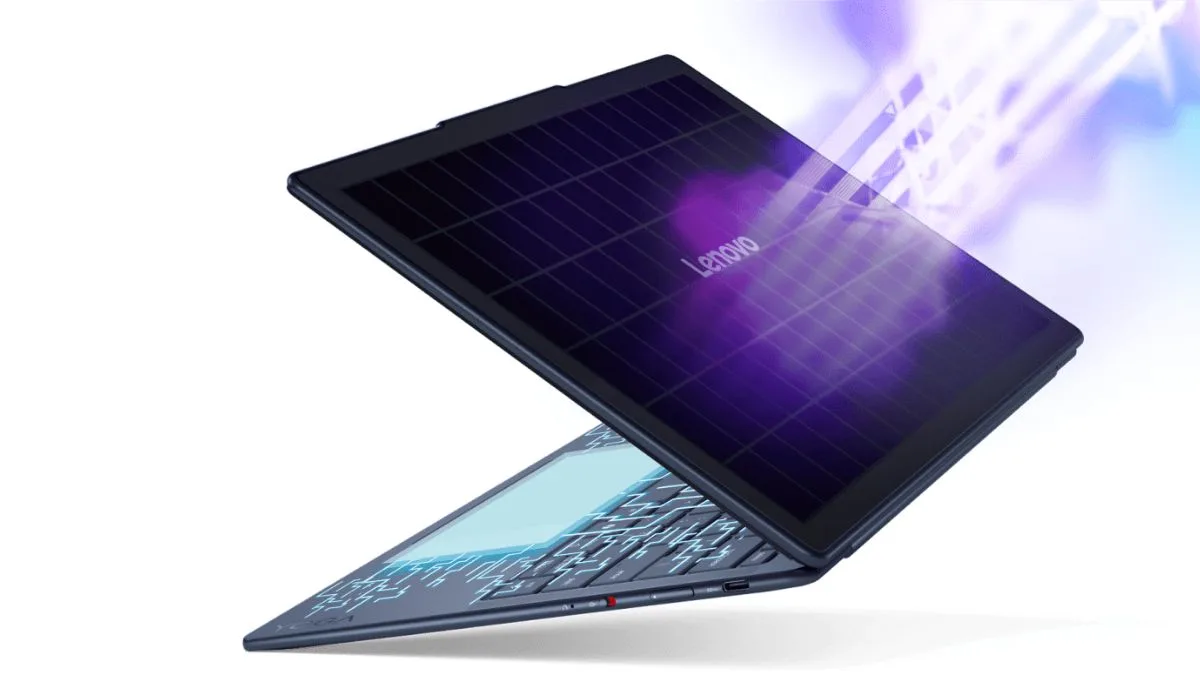
Lenovo on Monday showcased new proofs of concept devices at the Mobile World Congress (MWC) 2025 in Barcelona. Among the highlights was the Lenovo Yoga Solar PC concept, which as the name suggests, is a solar energy-powered laptop. The company has equipped it with a solar panel which has a conversion rate of 24 percent — a move geared towards bridging the gap between functionality and environmental awareness. Lenovo says this innovation reflects its vision of achieving an inherent intertwinement of innovation and renewable energy.

Lenovo’s New Yoga Solar PC Concept

Lenovo shared information about its new product showcases in a newsroom post. The company highlighted that the back cover of the Lenovo Yoga Solar PC concept laptop serves as a solar panel for capturing solar energy. It takes advantage of ‘Back Contact Cell’ technology which involves moving the mounting brackets and gridlines to the back of the solar cells for better active energy absorption. This helps the laptop to capture and convert enough sunlight in 20 minutes for an hour of video playback.

The solar panel’s current and voltage is measured by the equipped Dynamic Solar Tracking system which works in tandem with the Solar-First Energy system. As per Lenovo, this helps prioritise maximum energy-savings while ensuring system stability by adjusting the charger’s settings.

The company emphasises that the Yoga Solar PC concept can still generate power at idle even in low-light conditions. With a 15mm thickness and 1.22kg weight, Lenovo claims that this laptop is the “world’s first ultraslim” solar-powered PC.

This is the second concept showcased by the company in as many days, following the unveiling of the ThinkBook “Codename Flip” AI PC concept on March 2 at MWC 2025, one of the world’s biggest technology showcases. The aforementioned device is equipped with an 18.1-inch outward folding OLED display which can expand vertically to transition from the traditional compact 13-inch laptop form factor. The laptop comes with Workspace Split Screen functionality, which the company claims, eliminates the need of using external monitors and enables users to run multiple applications side-by-side.

For details of the latest launches and news from Samsung, Xiaomi, Realme, OnePlus, Oppo and other companies at the Mobile World Congress in Barcelona, visit our MWC 2025 hub.

Apple Confirms New MacBook Air Coming This Week; to Likely Feature an M4 Chip

Posted on

Solar System’s Journey Through Orion Complex May Have Altered Earth’s Climate

The movement of the solar system through the Orion star-forming complex around 14 million years ago may have influenced Earth’s climate, according to scientists. This dense region of space, part of the Radcliffe Wave galactic structure, could have compressed the heliosphere—the protective shield surrounding the solar system—while increasing interstellar dust reaching Earth. Researchers suggest that this influx of cosmic dust might have left traces in geological records, potentially linking galactic activity to past climate changes.

Solar System’s Passage Through the Radcliffe Wave

According to the study published in Astronomy & Astrophysics, an international research team led by the University of Vienna used data from the European Space Agency’s Gaia mission and spectroscopic observations to determine that the solar system moved through the Radcliffe Wave in the Orion constellation between 18.2 and 11.5 million years ago. The most probable period was estimated between 14.8 and 12.4 million years ago. João Alves, Professor of Astrophysics at the University of Vienna and co-author of the study, stated to Phys.org, that this research builds on prior findings regarding the Radcliffe Wave. This structure, made up of interconnected star-forming regions, includes the Orion complex, which the sun is believed to have passed through.

Potential Impact on Earth’s Climate

The study suggests that the increased presence of interstellar dust may have influenced Earth’s atmosphere. Efrem Maconi, lead author and doctoral student at the University of Vienna, said that this dust might have contained traces of radioactive elements from supernovae, which could be detected in geological records using advanced technology in the future.

The solar system’s passage aligns with the Middle Miocene Climate Transition, a period marked by a shift from a warmer, variable climate to a cooler one, leading to the development of Antarctic ice sheets. Scientists highlight that while interstellar dust could have played a role, the dominant factor in this climate change was a long-term decrease in atmospheric carbon dioxide levels.

Not Comparable to Human-Induced Climate Change

Maconi noted that while interstellar dust could have contributed to past climate shifts, the amount required for significant change would need to be much greater than current data suggests. The Middle Miocene Climate Transition unfolded over hundreds of thousands of years, unlike modern climate change, which is occurring rapidly due to human activities

For details of the latest launches and news from Samsung, Xiaomi, Realme, OnePlus, Oppo and other companies at the Mobile World Congress in Barcelona, visit our MWC 2025 hub.

Posted on

Tesla Said to Have Finalised Mumbai’s BKC for Its First Showroom Ahead of India EV Market Entry

Elon Musk’s Tesla has finalised the location for its first showroom in India, according to a report. It is said to have leased a space in Mumbai’s Bandra Kurla Complex, also known as BKC ahead of the company’s anticipated foray into India’s electric vehicle (EV) space. For years, the US-based EV maker faced hurdles related to localised factory investments, regulations, and high import taxes, factors which raised question marks over Tesla’s arrival in the country.

However, reports now suggest it could finally introduce its fleet of EVs in India as it looks to take on not only global competitors such as BYD and MG but also local players including Tata Motors and Mahindra & Mahindra.

Tesla’s First Showroom in India

According to a Times of India report, Tesla’s first showroom in India will occupy a 4,000 square feet space on the ground floor of a commercial tower in BKC. For this location, the EV maker is reportedly paying a rent of close to Rs. 900 per square feet, which translates to roughly Rs. 35 lakh per month. The property agreement is said to have a lease agreement for approximately five years.

Following the opening of its BKC showroom, the Elon Musk-owned company is expected to unveil its second one in Delhi’s Aerocity complex, the report suggests. Tesla is likely to commence sales of its EVs in the third quarter of the year starting with three major Indian cities — Bengaluru, Delhi, and Mumbai.

These plans were first reported last month following discussions between US President Donald Trump, billionaire Elon Musk and Prime Minister Narendra Modi. Prior reports suggest that the initial batch of the Tesla cars, consisting of a few thousand units, will be arriving at the Mumbai port in the coming months. The EV maker is initially expected to import EVs from its Berlin plant before potentially localising production in the forthcoming years.

Tesla is said to target a price tag of under $25,000 (roughly Rs. 22 lakh) for the first Tesla car in the country. Notably, the Tesla Model 3, with a base price of $40,000 (roughly Rs. 35 lakh), is currently the most affordable model in the company’s lineup.

For details of the latest launches and news from Samsung, Xiaomi, Realme, OnePlus, Oppo and other companies at the Mobile World Congress in Barcelona, visit our MWC 2025 hub.

Posted on

Xiaomi 15 and Xiaomi 15 Ultra First Impressions

Xiaomi has pulled the curtains from its all-new 15 series ahead of MWC 2025, which kicks off in Barcelona on Monday. The latest 15 series comprises the compact Xiaomi 15, the successor to the 14 and the big boy, 15 Ultra – the company’s ‘pinnacle’ camera smartphone. As expected, both the phones come with Leica-tuned cameras. The partnership between Xiaomi and Leica for imagery technology has entered its fourth year, and we hope to see more camera-focused premium smartphones in the future. So far, companies have developed 21 products jointly covering five regions and 100 countries.

We do not know the India pricing yet and will have to wait until March 11, when Xiaomi reveals prices for the 15 series. In Europe, the Xiaomi 15 starts at EUR 999 (roughly Rs. 91,000), and the 15 Ultra price is set at EUR 1,499 (roughly Rs. 1,36,000). Considering these are successors to the 14 series, we expect both these phones to be available in more or less the same ballpark figure.

Xiaomi 15: Brings Snapdragon Elite SoC to a compact form factor

Xiaomi 15 brings back the familiar compact form factor from its predecessor, Xiaomi 14. And, mind you, that’s one of the biggest highlights of the 15. The form factor is such that you can hold it easily in just one hand, and it’s incredibly light, as it weighs under 200 grams and measures 8.08mm thick. It sports an aerospace-grade aluminium frame that wraps around the Xiaomi 15. The smooth edges sit well in your palms, giving an incredible hand feel, and a unibody design adds to the overall character of the compact device. The camera deco is again something that will remind you of the 14. The weight distribution is also balanced, but more on that as I spend more time with the device.

xiaomi 15 DISPLAY fi xiaomi 15

Xiaomi 15 features a 6.36-inch AMOLED display with 3200nits peak brightness and 120Hz refresh rate

It gets the proper suite of features you expect from a modern-day flagship, including an IP68 rating. The 15 comes in three subtle colours this year – Black, Green, and White. I got the White one which looks elegant. The 6.36-inch screen with ultra-thin bezels offers more screen space, and it looked bright enough in the limited time I spent with the 15. The Xiaomi 15 finally gets the Ultrasonic fingerprint sensor, which seemed snappy in my initial use. Qualcomm’s Snapdragon 8 Elite powers it, so we can expect it to offer flagship-grade performance credentials. However, I will reserve any verdict regarding display and performance for the review.


Xiaomi 15 main camera samples (tap to expand)

The camera is one of the highlights of the Xiaomi 15, and it sports a triple camera setup featuring a 50-megapixel Light Fusion 900 image sensor with f/1.62 aperture and OIS, a 50-megapixel 60mm floating telephoto sensor, and a 50-megapixel ultra-wide camera with 115-degree field of view. The camera app is the same as last year, with updates like an all-new Sunset Portrait mode added this year, which looked interesting during the keynote announcement. The initial camera test gave me some amazing-looking shots.

At the front, there’s the 32-megapixel selfie sensor. The battery department probably has the biggest update as it packs a bigger battery than its predecessor, 14. The 15 packs a 5240mAh battery with 90W HyperCharge support. A more in-depth take on the camera and battery in our review.

xiaomi 15 back fi xiaomi 15

It packs a 5240mAh battery

Of course, we are in 2025 and won’t have a product launch event without AI. Xiaomi 15 packs a suite of AI features, which I will break down in my review. The best news is that Google Gemini comes integrated with Xiaomi 15, which expands the horizon for users. There’s Xiaomi HyperOS 2 based on Android 15 onboard.

Overall, the Xiaomi 15 looks like a great upgrade over the Xiaomi 14, but we will reserve our verdict for the review, so stay tuned.

Xiaomi 15 Ultra: Camera Beast

Now, jumping to the beast of a device – Xiaomi 15 Ultra, a smartphone built for professional photographers. Yes, consider this one going up against the likes of Vivo X200 Pro. The 14 Ultra was the first Ultra device from Xiaomi that went global, and now, the 15 Ultra is its successor this year. The company’s intentions are clear: not to miss the ultra-premium audience.

xiaomi 15 ultra rear fi xiaomi 15 Ultra

It comes in a single 16GB and 512GB storage model

Starting with the design, the Xiaomi 15 Ultra’s colour and design are inspired by the traditional professional camera and use materials like aerospace-grade glass fibre. It has small elements like an Ultra watermark just above the camera housing. The camera deco has been integrated into the back of the device, giving it a more seamless look and feel.

Compared to the 14 Ultra, the 15 Ultra rear camera housing is bigger, and the phone comes in Silver Chrome, White, and Black colours. I got the Silver Chrome, which feels like the best colour variant this year. The phone gets an IP68 rating.

xiaomi 15 ultra display fi xiaomi-15-ultra

It features a 6.73-inch WQHD AMOLED display with 3200nits peak brightness, 120Hz refresh rate and 522PPI pixel density

Xiaomi 15 Ultra has four-sided symmetrical curved glass for a more comfortable in-hand feel. At 229 grams, the phone is on the heavier side. It features a 6.73-inch WQHD+ AMOLED display with 3200nits peak brightness, 120Hz refresh rate, HDR10+ and Dolby Vision. In my limited time with the device, this is among the best displays I have ever seen on any Xiaomi phone. But I will reserve that submission until I can test the phone more. The hand feel of the smartphone is solid, and I was more comfortable using it without snapping a case on top. The 15 Ultra will come in a single 16GB and 512GB storage variant in India. With Snapdragon 8 Elite SoC under the hood, the 15 Ultra joins the elite club of flagship phones for performance credentials. In my initial time, the phone handled almost everything smoothly and quickly opened apps. The multitasking worked like a breeze. For the battery department, Xiaomi has fitted in a 5410mAh battery and supports 90W HyperCharge wired and 80W wireless HyperCharge. Again, I will reserve my verdict for our review.

Xiaomi 15 Ultra main camera samples (tap to expand)

Now, the fun part comes – cameras! It has a four-camera setup with a 50-megapixel primary sensor, a 200-megapixel telephoto sensor, a 50-megapixel floating telephoto sensor, and a 50-megapixel ultra-wide sensor. Of course, the 15 Ultra has a regular suite of Leica styles that enhance the overall experience. This one also gets the 1-inch sensor and f/1.63 aperture. There’s a 32-megapixel selfie camera. In my limited time with the device, the 15 Ultra looks like a fantastic successor to the 14 Ultra in terms of camera upgrades. But I will be able to break it down more in my review.

It also runs on HyperOS 2, based on Android 15. It has a suite of AI features onboard, which I will test and detail in my review, so stay tuned.

Disclosure: Xiaomi India sponsored the correspondent’s flights and hotel for the event in Barcelona.

For details of the latest launches and news from Samsung, Xiaomi, Realme, OnePlus, Oppo and other companies at the Mobile World Congress in Barcelona, visit our MWC 2025 hub.

Posted on

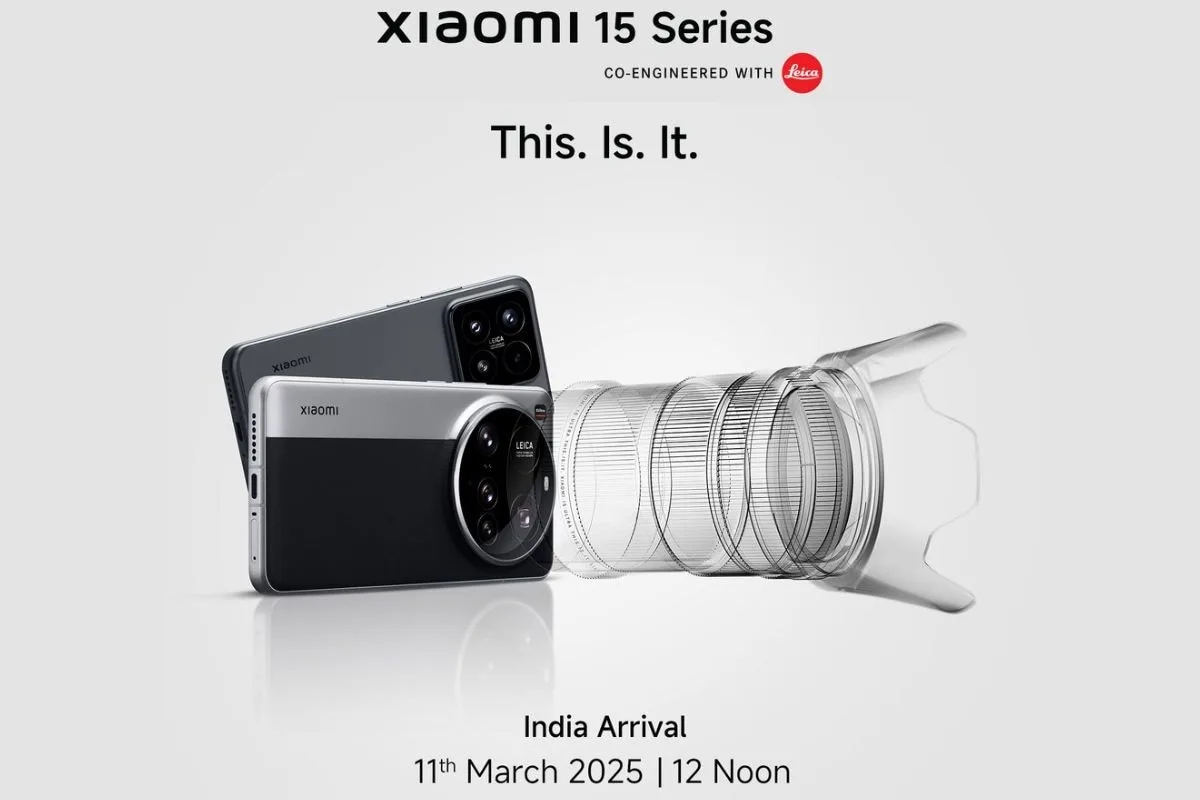
Xiaomi 15 Ultra, Xiaomi 15 India Launch Confirmed for March 11

Xiaomi 15 and the Xiaomi 15 Ultra are confirmed to launch in India later this month. The India launch date was announced just hours after the 15 series was introduced in select global markets ahead of the Mobile World Congress (MWC) 2025 in Barcelona. The standard model of the series made its debut in China in October last year alongside the Xiaomi 15 Pro, which continues to be a China-exclusive device. Meanwhile, the Xiaomi 15 Ultra was unveiled in China on February 28. 

Xiaomi 15, Xiaomi 15 Ultra India Launch Confirmed

In a post on X (formerly known as Twitter), the official handle of Xiaomi India announced that the Xiaomi 15 and Xiaomi 15 Ultra will be launched on March 11 at 12pm IST. The post also showcased the Ultra model in the Silver Chrome colour option while the standard model featured the Bright Silver colourway. 

Xiaomi 15 Global Variant’s Specifications

While the India-specific specifications of the Xiaomi 15 smartphone are rumoured to remain the same as the global variant, the company has not confirmed them so far. The global model features a 6.36-inch 8T LTPO AMOLED screen with up to 120Hz refresh rate. It is equipped with the Snapdragon 8 Elite chipset, which is paired with up to 16GB of LPDDR5X RAM and up to 1TB of UFS 4.0 in-built storage.

The smartphone sports a Leica-branded triple rear setup with a 50-megapixel sensor with optical image stabilisation (OIS), a 50-megapixel telephoto camera, and a 50-megapixel ultra-wide angle shooter. On the front, it carries a 32-megapixel camera for selfies and video calls.

It is backed by a 5,240mAh battery along with support for 90W wired fast charging as well as 50W wireless charging. The Chinese variant runs on Android 15-based HyperOS 2 operating system.

Xiaomi 15 Ultra Global Variant Specifications

Launched on Sunday in select global markets, the Xiaomi 15 Ultra features a 6.73-inch WQHD+ quad curved LTPO AMOLED screen with a 120Hz refresh rate. It is powered by the same Snapdragon 8 Elite chipset paired with up to 16GB of LPDDR5x RAM and up to 512GB UFS 4.1 in-built storage.

The global version of the Ultra model gets a quad rear camera setup, and all of them are tuned by Leica. The camera module sports a 50-megapixel primary shooter with a 1-inch type LYT-900 sensor, a 50-megapixel ultrawide sensor, a 50-megapixel Sony IMX858 telephoto camera with 3x optical zoom, and a 200-megapixel ISOCELL HP9 periscope telephoto camera with 4.3x optical zoom. For selfies and video calls, there is a 32-megapixel camera on the front.

Xiaomi 15 Ultra is backed by a 5,410mAh battery along with support for 90W wired fast charging and 80W wireless charging. It also has an IP68 rating for dust and splash resistance.

For details of the latest launches and news from Samsung, Xiaomi, Realme, OnePlus, Oppo and other companies at the Mobile World Congress in Barcelona, visit our MWC 2025 hub.

HMD Amped Buds With Qi2 Wireless Charging Case, IP54 Rating Launched at MWC 2025

Related Stories

Posted on

Xiaomi 15 Series Gets Google Gemini Integration; HyperOS 2.0 Global Rollout Timeline Revealed

Xiaomi announced a collaboration with Google on Sunday, ahead of the upcoming Mobile World Congress (MWC 2025) in Barcelona. With this collaboration, the Mountain View-based tech giant will allow its Gemini artificial intelligence (AI) chatbot to be integrated within first-party Xiaomi apps in the Xiaomi 15 series. With this, Gemini can find information and take action across several apps of the Chinese consumer tech brand. Alongside, the company also launched the Xiaomi 15 Ultra and Xiaomi 15 in global markets. 

Xiaomi Brings Gemini AI Capabilities to the Xiaomi 15 Series

In a blog post, the tech giant announced that it has partnered with Google to bring its AI services to the Xiaomi 15 series. With this collaboration, the Gemini AI chatbot is now being integrated with several Xiaomi apps including Xiaomi Notes, Xiaomi Calendar, and Xiaomi Clock. This is the first time the Chinese brand is letting a third-party AI service provider access its first-party apps.

While Xiaomi did not reveal a lot about how this integration will function, it highlighted that Gemini will now be able to access information from within these apps as well as complete several tasks in them. These tasks likely include actions such as creating a new note, calendar event, or setting an alarm. However, it is unclear whether users will also be able to use Gemini to edit or delete a note, event, or alarm.

In the footnote, Xiaomi stated that the availability of the feature might vary by device, country, and language, and that Internet connection will be required. Users of Xiaomi 15 series will likely have to use the Gemini AI assistant to access these features. These are server-based features, and an Internet connection will be required.

With this integration, Xiaomi is also expanding its AI features, which are so far limited to its camera features and the China-exclusive AI-powered Super Xiao AI assistant. The Xiaomi 15 series also gets Google’s Circle to Search, which is an AI-powered visual lookup feature.

Xiaomi Reveals HyperOS 2 Rollout Timeline

Meanwhile, in a post on X (formerly known as Twitter), the official handle of Xiaomi announced that the HyperOS 2 operating system will now be globally available out-of-the-box with the Xiaomi 15 series and give users early access to the Hyper AI suite of features. The company, however, did not delve too much into the AI features that users will get to try out. The announcement also hints at the Chinese brand’s ambition to rival Samsung’s Galaxy AI features and Oppo’s suite of in-house AI tools.

As per the post, the HyperOS 2 with HyperAI is now available in the Xiaomi 15 and Xiaomi 15 Ultra models in global markets. The company’s recently released Pad 7 and Pad 7 Pro will also get the update out-of-the-box alongside the Xiaomi Watch S4 and Redmi Watch 5. However, the Watch S4 and Watch 5 will not be getting AI features.

HyperAI will also be rolled out to the Xiaomi 14 lineup, Xiaomi Mix Flip, Redmi Note 14 Pro+ 5G, and Xiaomi Pad 6S Pro starting April.

Coming to HyperOS 2 rollout schedule, the company stated that the Xiaomi 13T Pro, Redmi Note 13 series, and Smart Band 9 Pro will get the update by the end of March.

The remaining Xiaomi 13 series, the entire Xiaomi 12 series, Mi 11 and Mi 11 Ultra, Xiaomi 11 Lite 5G NE, Redmi 13 series, Redmi Note 12 series, Redmi 12 5G, and Redmi 12 will get the update by May. In the same period, HyperOS 2 update will be released for the Xiaomi Pad 6, Redmi Pad Pro 5G, Redmi Pad Pro, Redmi Pad SE 8.7 4G, Redmi Pad SE 8.7, and Redmi Pad SE.

Additionally, the Redmi Note 14 series, Redmi A3 Pro, and Redmi 14C will get the update between March and June.

Affiliate links may be automatically generated – see our ethics statement for details.

For details of the latest launches and news from Samsung, Xiaomi, Realme, OnePlus, Oppo and other companies at the Mobile World Congress in Barcelona, visit our MWC 2025 hub.

Posted on

Samsung Galaxy A56 5G, Galaxy A36 5G and Galaxy A26 5G With 6.7-Inch AMOLED Displays, 5,000mAh Batteries Launched

Samsung Galaxy A56 5G, Galaxy A36 5G and Galaxy A26 5G were launched on Sunday, ahead of the Mobile World Congress (MWC 2025). The new Galaxy A series of smartphones are equipped with 6.7-inch Super AMOLED screens, with up to 120Hz refresh rate. All three models are available in 128GB and 256GB storage configurations. The Galaxy A56 5G, Galaxy A36 5G, and Galaxy A26 5G run on Android 15, with Samsung’s redesigned One UI 7 interface, and are slated to receive six years of OS and security updates.

Samsung Galaxy A56 5G, Galaxy A36 5G and Galaxy A26 5G Price and Availability

Samsung Galaxy A56 5G pricing starts at EUR 479 (roughly Rs. 43,500) for the base model with 8GB of RAM and 128GB of storage, while the handset is also available in a 256GB storage variant that is priced at EUR 529 (roughly Rs. 48,000). It is sold in Awesome Graphite, Awesome Lightgray, Awesome Olive and Awesome Pink colour options.

The price of the Samsung Galaxy A36 5G is set at EUR 379 and EUR 399 (roughly Rs. 36,200) for the base model with 128GB of storage, while the 256GB variant is priced at EUR 449 (roughly Rs. 40,800). The company will offer this model in Awesome Black, Awesome Lavender, Awesome Lime and Awesome White colourways.

samsung galaxy a56 5g main Samsung Galaxy A56 5G

Samsung Galaxy A56 5G
Photo Credit: Samsung

Priced at EUR 299 (roughly Rs. 27,100) for the 128GB model, the Samsung Galaxy A26 5G is the most affordable of the three models launched by the company on Sunday. It is also sold in a 256GB variant that costs EUR 369 (roughly Rs. 33,500). The Galaxy A26 5G is available in Black, Mint, Peach Pink and White shades.

Samsung Galaxy A56 5G, Galaxy A36 5G and Galaxy A26 5G Specifications

All of Samsung’s latest Galaxy A series smartphones run on Android 15-based One UI 7 and are slated to get six years of OS and security updates. The Samsung Galaxy A56 5G, Galaxy A36 5G, and Galaxy A26 5G sport a 6.7-inch Full-HD+ Super AMOLED screen with a 120Hz refresh rate.

The Samsung Galaxy A56 5G is powered by an Exynos 1580 chip, while the cheaper Galaxy A26 5G has an Exynos 1380 SoC. The Galaxy A36 5G features a Snapdragon 6 Gen 3 chip. All three handsets are equipped with up to 256GB of built-in storage. Samsung has also touted new Galaxy AI features on the phones, such as Auto Trim, Best Face, AI Select, and Read Aloud.

There’s a 50-megapixel primary camera on all three models, with optical image stabilisation and an f/1.8 aperture. The Samsung Galaxy A56 5G, Galaxy A36 5G feature a 12-megapixel and 8-megapixel ultrawide camera, respectively, along with a 5 megapixel macro camera. The Galaxy A26 5G has an 8-megapixel ultrawide camera, along with a 2-megapixel macro camera.

Both the Samsung Galaxy A56 5G and Galaxy A36 5G are equipped with a 12-megapixel selfie camera, housed in a hole punch display cutout. The Galaxy A26 5G features a 13-megapixel camera on the front, housed in a waterdrop-style display notch.

Connectivity options on all three models include 5G, 4G LTE, Wi-Fi, Bluetooth 5.3, GPS, NFC, and a USB Type-C port. Samsung has equipped the Galaxy A56 5G, Galaxy A36 5G and Galaxy A26 5G with a 5,000mAh battery. The Galaxy A56 5G and Galaxy A36 5G support 45W charging, while the Galaxy A26 can be charged at 25W. These handsets have an IP67 rating for dust and water resistance.

For details of the latest launches and news from Samsung, Xiaomi, Realme, OnePlus, Oppo and other companies at the Mobile World Congress in Barcelona, visit our MWC 2025 hub.