Posted on

Budget 2025: Tech in Focus With Framework for GCCs, New ‘Fund of Funds’ for startups, CoE for AI

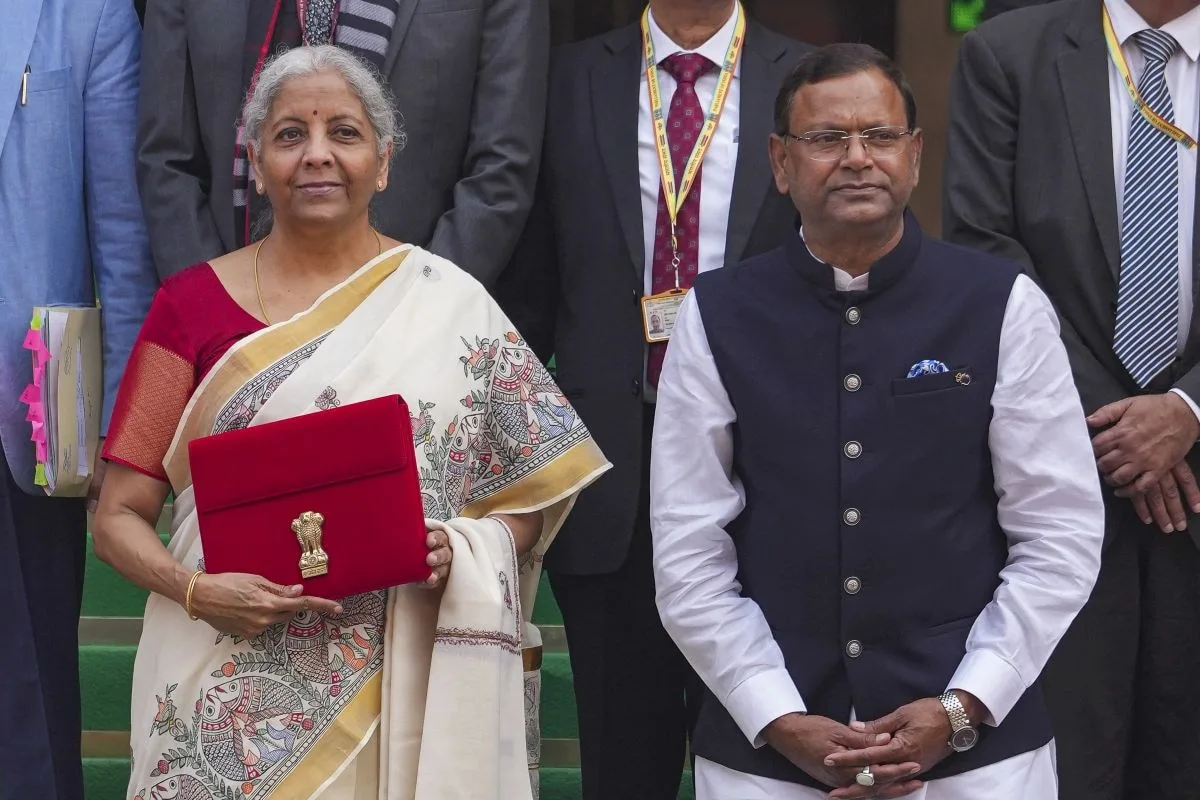
New and emerging technologies were in focus in the Union Budget, as Finance Minister Nirmala Sitharaman announced a national framework for Global Capability Centres (GCCs), Rs 500-crore Centre of Excellence in AI for education, and said a deep tech ‘Fund of Funds’ will be explored to catalyse the next generation startups.

A new Fund of Funds, with expanded scope and a fresh contribution of additional Rs 10,000 crore is also on anvil.

A national framework will be formulated as guidance to states for promoting Global Capability Centres in emerging Tier-2 cities. This will suggest measures for enhancing availability of talent and infrastructure, building byelaw reforms, and mechanisms for collaboration with industry.

“I had announced three Centres of Excellence in Artificial Intelligence for agriculture, health, and sustainable cities in 2023. Now a Centre of Excellence in Artificial Intelligence for education will be set up with a total outlay of Rs 500 crore,” Sitharaman said.

Startups have a reason for cheer also as a new ‘Fund of Funds’ with expanded scope and a fresh contribution of additional Rs 10,000 crore will be set up.

“The Alternate Investment Funds (AIFs) for startups have received commitments of more than Rs 91,000 crore. These are supported by the Fund of Funds set up with a government contribution of Rs 10,000 crore. Now, a new fund of funds, with expanded scope and a fresh contribution of another Rs 10,000 crore will be set up,” she said.

Gaja Capital Managing Partner Gopal Jain said the introduction of a new Fund of Funds for AIFs, and a Center of Excellence for AI in Education are all “promising steps” toward fostering a knowledge-driven economy.

To improve access to capital, the credit guarantee cover will be enhanced for startups, from Rs 10 crore to 20 crore, with the guarantee fee being moderated to 1 per cent for loans in 27 focus sectors key for Atmanirbhar Bharat.

Bruce Keith, Co-founder CEO, InvestorAi believes that the announcement on deep tech funds, while details are awaited, needs to be viewed through the ‘DeepSeek’ lens of what can be done with relatively small amounts of capital when provided to agile and creative teams.

“We expect the venture capital ecosystem to bring velocity and momentum into funding these enterprises,” Keith said.

It is pertinent to mention here that the India GCC landscape has been progressing over the past five years and the total number of such centres have risen to over 1,700 in FY24 with over 2,975 centres.

Jaspreet Singh, Partner and GCC Industry Leader, Grant Thornton Bharat said that the Budget’s focus on expanding talent availability and infrastructure in Tier-2 cities marks a significant step in strengthening India’s Global Capability Centre ecosystem.

“By unlocking access to a wider talent pool, including professionals who prefer to stay in their hometowns, this initiative will enhance workforce stability and retention. Improved infrastructure will further enable seamless operations, making Tier-2 cities attractive destinations for high-value global work,” Singh said.

As GCCs evolve into strategic hubs for innovation and technology, the expansion will drive inclusive growth, reduce regional disparities, and position India as a global leader in digital and business services, Singh said and noted that a well-distributed GCC network will ensure long-term resilience, scalability, and global competitiveness.

“The creation of the Deep Tech Fund of Funds will empower India’s deep-tech entrepreneurship, and fuel India’s global competitiveness in the AI race. With access to capital being a persistent challenge, the policy measures will increasing credit guarantee coverage for startups from Rs. 10 crore to Rs. 20 crore, enhancing access to capital,” said Prabhu Ram, VP – Industry Research Group (IRG), CyberMedia Research.

“India currently has the smallest talent demand-supply gap and is on track to achieve a skilled talent surplus by 2030. The expansion of IITs and the establishment of AI Centers of Excellence (CoEs) will strengthen India’s talent pool in emerging technologies, particularly AI. The PM Research Fellowship Scheme will also support innovation by offering 10,000 fellowships over the next five years at prestigious institutions like IITs, NITs, and IISc,” he added.

Posted on

WhatsApp Says Spyware Company Paragon Targeted Users in Two Dozen Countries

An official with Meta Platforms’ popular WhatsApp chat service said Israeli spyware company Paragon Solutions had targeted scores of its users, including journalists and members of civil society.

The official said on Friday that WhatsApp had sent Paragon a cease-and-desist letter following the hack. In a statement, WhatsApp said the company “will continue to protect people’s ability to communicate privately.”

Paragon declined to comment.

The WhatsApp official told Reuters it had detected an effort to hack approximately 90 users.

The official declined to say who, specifically, was targeted. But he said those targeted were based in more than two dozen countries, including several people in Europe. He said WhatsApp users were sent malicious electronic documents that required no user interaction to compromise their targets, a so-called zero-click hack that is considered particularly stealthy.

The official said WhatsApp had since disrupted the hacking effort and was referring targets to Canadian internet watchdog group Citizen Lab. The official declined to discuss how it determined that Paragon was responsible for the hack. He said law enforcement and industry partners had been informed, but declined to give details.

The FBI did not immediately return a message seeking comment.

Citizen Lab researcher John Scott-Railton said the discovery of Paragon spyware targeting WhatsApp users “is a reminder that mercenary spyware continues to proliferate and as it does, so we continue to see familiar patterns of problematic use.”

Spyware merchants such as Paragon sell high-end surveillance software to government clients and typically pitch their services as critical to fighting crime and protecting national security.

But such spy tools have repeatedly been discovered on the phones of journalists, activists, opposition politicians, and at least 50 U.S. officials, raising concerns over the unchecked proliferation of the technology.

Paragon – which was reportedly acquired by Florida-based investment group AE Industrial Partners last month – has tried to position itself publicly as one of the industry’s more responsible players.

Its website advertises “ethically based tools, teams, and insights to disrupt intractable threats,” and media reports citing people familiar with the company say Paragon only sells to governments in stable democratic countries.

Natalia Krapiva, senior tech-legal counsel at the advocacy group Access Now, said Paragon had the reputation of being a better spyware company, “but WhatsApp’s recent revelations suggest otherwise.”

“This is not just a question of some bad apples — these types of abuses (are) a feature of the commercial spyware industry.”

AE did not immediately return a message seeking comment.

© Thomson Reuters 2025

Posted on

Ocean Warming Rate Quadruples Over Four Decades, Accelerating Climate Change

The pace of ocean warming has intensified significantly over the past four decades, with recent data highlighting a quadrupling of heat absorption rates. This shift points to an acceleration in climate change, as oceans act as the planet’s primary heat sink. Researchers warn that if fossil fuel dependency continues, warming is expected to increase at an even faster rate in the coming decades. The implications of this trend extend beyond rising sea levels, influencing extreme weather patterns and global food security.

Research Highlights Escalating Ocean Temperatures

According to a study published in Environmental Research Letters, ocean surface temperatures have been rising at an increasing rate. The research reveals that while the rate of warming stood at 0.06 degrees Celsius per decade in the 1980s, it has now escalated to 0.27 degrees Celsius per decade. Projections indicate that a similar acceleration will occur in the next 20 years, with the situation worsening if emissions remain unchecked.

Climate Change Driving Earth’s Energy Imbalance

Findings suggest that Earth’s energy imbalance—where the planet absorbs more energy than it emits—has doubled in the past two decades. Greenhouse gases such as carbon dioxide and methane are trapping heat in the atmosphere, leading to warming oceans. Study lead author Christopher Merchant, Professor of Ocean and Earth Observation at the University of Reading, told Live Science that this trend suggests climate change is advancing at a faster pace than previously anticipated.

Impacts on Weather, Sea Levels, and Food Security

Rising ocean temperatures contribute to sea level rise, extreme weather, and agricultural disruptions. The reduction in cloud cover, alongside declining ice and snow levels, is increasing heat absorption. Researchers caution that without substantial reductions in fossil fuel use, the planet will experience even more severe climate consequences.

For the latest tech news and reviews, follow Gadgets 360 on X, Facebook, WhatsApp, Threads and Google News. For the latest videos on gadgets and tech, subscribe to our YouTube channel. If you want to know everything about top influencers, follow our in-house Who’sThat360 on Instagram and YouTube.

New Study Uses Math to Decode Creativity and Idea Formation

Xiaomi 15 Ultra Colour Options, RAM and Storage Configuration Tipped

Related Stories

Posted on

New Study Uses Math to Decode Creativity and Idea Formation

A new research study has examined the mathematical principles governing creativity and innovation, shedding light on how novel ideas emerge. By analysing data across different domains, researchers have identified patterns that could refine the understanding of how individuals and societies generate new concepts. The study investigates two types of novelty—discovering an entirely new element and forming unique combinations of existing elements. The findings could be crucial in fields such as science, literature, and technology, where innovation plays a vital role in advancement.

Mathematical Framework for Creativity

According to the study published in Nature Communications, researchers introduced a framework to model how new ideas emerge. Led by Professor Vito Latora from Queen Mary University of London, the team focused on higher-order novelties—combinations of familiar elements that create something new. Speaking to Phys.org, Prof. Latora stated that the study is part of a broader effort to understand the mechanisms underlying creativity, aiming to identify factors that contribute to the success of ideas, products, and technologies.

A mathematical model called Edge-Reinforced Random Walk with Triggering (ERRWT) was developed to simulate how people discover and combine elements. Unlike traditional random walks, which assume equal probability for each step, ERRWT strengthens frequently used connections and triggers new links when novel combinations occur. This process mirrors real-world discovery, where repeated exposure to certain elements increases the likelihood of making new associations.

Analysing Patterns Across Domains

The research team applied the ERRWT model to three distinct datasets—music listening habits from Last.fm, literary texts from Project Gutenberg, and scientific publications from Semantic Scholar. The findings revealed that while individuals might have similar rates of discovering new elements, the sequences in which they arrange them differ significantly.

For music listeners, certain users developed unique listening patterns despite discovering the same number of new songs. In literature, writers frequently created new word pairings rather than introducing entirely new words. Scientific papers, particularly titles, demonstrated a higher tendency for novel word combinations compared to narrative texts.

Predicting Innovation with Heaps’ Law

The study also highlighted that the process of novelty creation follows Heaps’ law, a power-law relationship describing how new elements and combinations emerge over time. By applying this principle, researchers could predict different rates of innovation across disciplines. The results indicated that while some fields prioritise the discovery of individual elements, others focus on recombining existing ones in unique ways.

Implications for Future Research

The findings suggest that understanding how creative processes unfold could help refine strategies for fostering innovation. Prof. Latora noted that studying novelty creation is essential for identifying factors that contribute to the rise and decline of trends, products, and ideas. Future research aims to expand the model by incorporating a social component, which could provide insights into how external influences shape creative developments.

Posted on

Unusual White Streaks in Northern Lights Raise Questions About Atmospheric Phenomenon

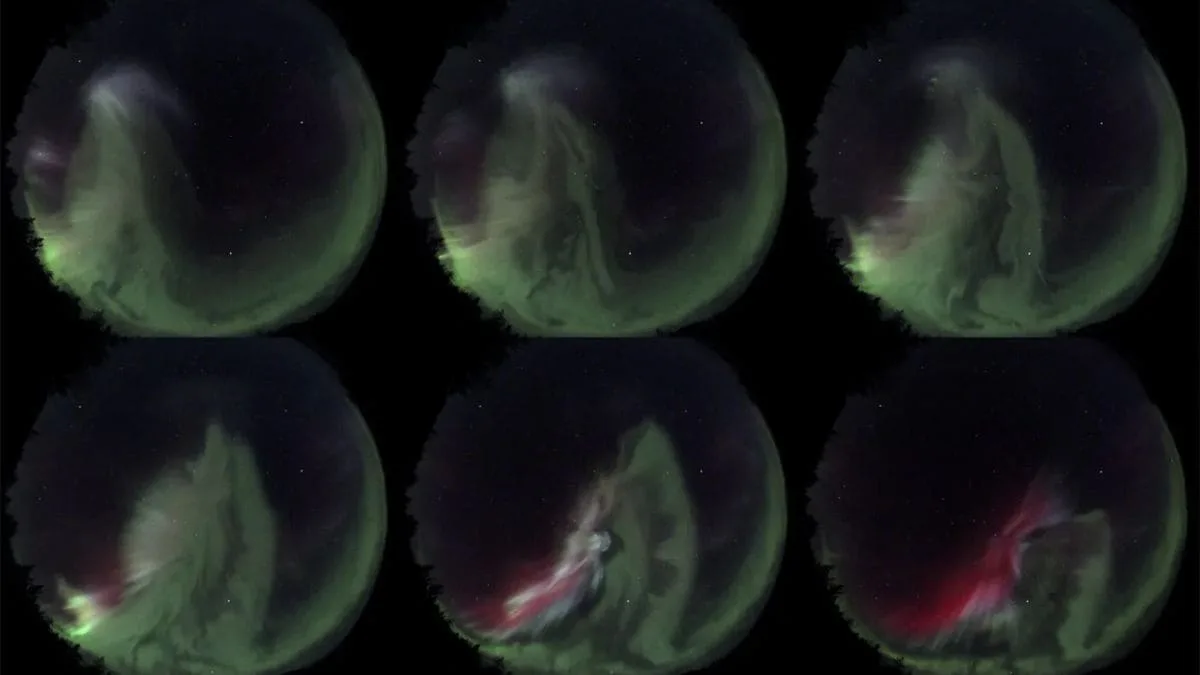
Pale white streaks have been observed weaving through the northern lights, presenting a new atmospheric puzzle. These eerie glows have been captured alongside traditional red and green auroras, but experts suggest they are not auroras themselves. Instead, they may share similarities with the purplish phenomenon known as Strong Thermal Emission Velocity Enhancement (STEVE). Scientists remain uncertain about what causes these white lights to form in specific regions. The discovery has prompted further investigation into the underlying mechanisms of these unexplained emissions.

White Glows Identified in TREx Mission Data

According to research published in Nature Communications, the white streaks were first identified by scientists at the University of Calgary using the Transition Region Explorer (TREx) mission. TREx, a network of low-light cameras monitoring Earth’s near-space environment, captured full-colour images that revealed these unexpected formations. Unlike other auroral imagers, which focus on specific wavelengths of red and green light, TREx detected broad-spectrum emissions.

Emma Spanswick, a space physicist at the University of Calgary, recalled, while talking to Science News, noticing an unusual grey-white patch in 2023 while reviewing auroral images. A thorough search of past TREx data uncovered 30 instances of these white-laced auroras in Saskatchewan from 2019 to 2023. Some of the formations extended for hundreds of kilometres, appearing either alongside existing auroras or in regions where colourful displays had faded.

Spectral analysis confirmed that these white lights result from continuum emissions, where light is emitted across multiple wavelengths. This distinguishes them from traditional auroras, which arise when charged particles excite atmospheric atoms, producing specific colours. The emission pattern closely resembles that of STEVE, a fast-moving plasma band that creates purplish streaks in the sky.

Speaking to Science News, Claire Gasque, a space physicist at the University of California, Berkeley, noted that while the patchy nature of these white lights differs from the structured arc of STEVE, they may share similar origins. Researchers are now focused on identifying the forces responsible for heating atmospheric particles to create these glows. The precise cause of the phenomenon remains unknown, leaving scientists with more questions about the complexities of auroral activity.

Posted on

Honor Pad X9a Allegedly Spotted on TDRA Website, Launch Could Be Imminent

Honor unveiled its Honor Pad X8a tablet with Snapdragon 680 SoC and 8,300mAh battery in India in September last year. The Chinese tech brand appears to be gearing up to release the Honor Pad X9a as a successor to last year’s model. While details for the Honor Pad X9a are yet to be revealed formally, the tablet has purportedly been spotted on the Telecommunications and Digital Government Regulatory Authority (TDRA) website. The listing indicates the Wi-Fi-only variant of the tablet and suggests that a launch could be imminent.

The unannounced Honor Pad X9a is said to have appeared (via GizmoChina) on the TDRA website with model number ELN2-W29. The Wi-Fi-only variant of the tablet reportedly passed through the certification platform. Besides the name and model number, the listing doesn’t include any other details about the upcoming Honor tablet.

Honor is likely to bring the Pad X9a with upgrades over the Honor Pad X8a. The latter arrived in India in September last year with a price tag of Rs. 12,999 for the sole 4GB RAM + 128GB storage option. It is offered in a Space Grey shade.

Honor Pad X8a Specifications

The Honor Pad X8a runs on Android 14-based MagicOS 8.0 and has an 11-inch full-HD (1,200×1,920 pixels) screen with a 90Hz refresh rate, and 4,000 nits of peak brightness level. The screen has low blue light certification and flicker-free certifications from TÜV Rheinland. It runs on a 6nm octa-core Snapdragon 680 chipset with 4GB of RAM and 128GB of onboard storage. It carries a 5-megapixel rear camera and a 5-megapixel selfie shooter. It includes a quad-speaker unit backed by Hi-Res Audio certifications.

Honor has packed an 8,300mAh battery in the Honor Pad X8a. It supports split screen feature and offers connectivity features like Wi-Fi, Bluetooth, OTG and more.

For the latest tech news and reviews, follow Gadgets 360 on X, Facebook, WhatsApp, Threads and Google News. For the latest videos on gadgets and tech, subscribe to our YouTube channel. If you want to know everything about top influencers, follow our in-house Who’sThat360 on Instagram and YouTube.

Samsung to Bring Galaxy S25 Ultra’s Motion Photo, Other Camera Features to Older Galaxy Models: Report

5 Things to Know About Apple’s Performance in India From CEO Tim Cook’s Q4 Results Call

Posted on

First Mouse with Two Fathers Thrives into Adulthood, Marking New Scientific Milestone

A major development in stem cell science has been achieved with the creation of a bi-paternal mouse, marking a significant step in reproductive biology. Scientists have successfully engineered a mouse with two male biological parents, which managed to survive into adulthood. This research, conducted by a team of stem cell experts, has addressed longstanding barriers in unisexual mammalian reproduction by modifying specific imprinting genes. The findings, which could have implications for regenerative medicine, highlight the challenges and potential future applications of the technology.

Genetic Modifications Enable Bi-Paternal Development

According to the study published in Cell Stem Cell, led by Wei Li of the Chinese Academy of Sciences (CAS), the team focused on overcoming imprinting-related challenges that previously prevented embryos with same-sex genetic origins from developing fully. Modifications were made to 20 imprinting genes using techniques such as frameshift mutations, gene deletions, and regulatory region edits. These changes allowed some bi-paternal embryos to survive to birth and, in rare cases, reach adulthood.

Co-corresponding author Qi Zhou of CAS explained to phys.org, that imprinting genes have been identified as a key obstacle in unisexual reproduction. Despite previous attempts using ovarian organoids derived from male stem cells, imprinting abnormalities caused severe developmental defects. By directly editing these genes, the research team improved embryonic viability and the stability of pluripotent stem cells.

Survival and Reproductive Challenges Remain

As per reports, only 11.8 percent of the engineered embryos developed to birth, and those that survived exhibited developmental abnormalities, reduced lifespan, and sterility. Guan-Zheng Luo of Sun Yat-sen University, a co-corresponding author, stated that imprinting abnormalities have been confirmed as the primary factor preventing unisexual reproduction in mammals.

Despite the limitations, this approach has demonstrated the potential for refining stem cell-based therapies and improving cloning efficiency. Researchers plan to expand the study to larger mammals, though substantial challenges remain due to differences in imprinting gene patterns across species.

For the latest tech news and reviews, follow Gadgets 360 on X, Facebook, WhatsApp, Threads and Google News. For the latest videos on gadgets and tech, subscribe to our YouTube channel. If you want to know everything about top influencers, follow our in-house Who’sThat360 on Instagram and YouTube.

Massive 500,000-Mile Coronal Hole on the Sun Blasts Solar Wind Toward Earth

Huawei Could Be Developing New Smartwatch With In-Display Fingerprint Scanner

Posted on

Microsoft Adds DeepSeek-R1 AI Model to Its Azure AI Foundry and GitHub

Microsoft added support for the recently released DeepSeek-R1 artificial intelligence (AI) model to its Azure AI Foundry and GitHub on Wednesday. The reasoning-focused AI model can now be accessed via these platforms. The Redmond-based tech giant also highlighted that it has conducted rigorous safety evaluations to ensure that the model is safe to use for both individual and commercial purposes. Additionally, the company is also bringing distilled versions of the R1 model to Copilot+ PC users via the AI Toolkit.

Microsoft Brings DeepSeek-R1 to Azure AI Foundry, GitHub

In a blog post, the tech giant announced that the DeepSeek-R1 AI model is now available in the model catalogue of Azure AI Foundry and GitHub. Notably, Azure AI Foundry is an enterprise-focused platform where developers can build, evaluate, and develop generative AI applications and custom copilots.

Making the announcement, Microsoft’s Corporate Vice President of AI Platform, Asha Sharma said, “One of the key advantages of using DeepSeek R1 or any other model on Azure AI Foundry is the speed at which developers can experiment, iterate, and integrate AI into their workflows.”

The post also highlighted that the company conducted red teaming and safety evaluations on the R1 model, including automated assessment of model behaviour as well as extensive security reviews. Microsoft stated that it has ensured to mitigate potential risks. Azure AI Foundry also provides additional safety via its Content Safety filtering system and the Safety Evaluation System.

To use DeepSeek-R1, users can search for it in the model catalogue. After spotting it, they will have to open the model card and click on deploy. This will provide the user with the inference application programming interface (API) required to run the model.

Distilled DeepSeek-R1 Coming to Copilot+ PCs Users

In a separate post, Microsoft announced that it is bringing optimised versions of DeepSeek-R1 to Copilot+ PCs. These distilled versions will first arrive on the Snapdragon X-powered devices and later will be added to the Intel Core Ultra 200V chipset and others. The first model release will be the DeepSeek-R1-Distill-Qwen-1.5B model which can be accessed via the AI Toolkit. The 7B and 14B variants will be added later.

Posted on

Budget 2025: Crypto Industry Seeks Digital Asset Innovation, Simple Tax Structure and More

The government is set to present the Union Budget for the next financial year on February 1. With only a couple of days until the next budget is revealed, members of India’s Web3 sector have revealed some of the changes to policy and taxation that they are hoping to see during the coming year. In addition to calling for revised crypto tax rates, crypto firms have urged the government to prioritise measures that ensure India remains competitive with other countries, particularly in the realm of emerging technologies.

Introduction of Crypto Regulation

Neither India nor the US have formulated rules or regulations to govern the burgeoning crypto sector. Leaders of crypto firms claim that India has a unique opportunity to launch itself as a business-for-blockchain hub with one of the largest pools of developers in the world.

“The US will take aggressive strides in crypto regulation. India, in the coming budget, should talk about prioritising investments to improve our digital infrastructure, expand blockchain research, and introduce clear policies to regulate the sectors of emerging technologies like blockchain, crypto, and Artificial Intelligence (AI),” Unocoin Co-Founder Sathvik Vishwanath told Gadgets 360.

Vishwanath also said that if the government aligns its approach on Web3 with global trends and focusses on digital asset innovation, the country will be competitive with other nations that are also working on the same technologies.

In the US, the Securities and Exchange Commission (SEC) has set up a special Task Force to accelerate work on crypto-related legislation. The UK plans to finalise its crypto rules by 2026.  India, meanwhile, does not have any specific timeline by which it is likely to get its comprehensive crypto rules.

Tax Reforms

Cryptocurrency earnings are taxed at 30 percent in India, and a one percent tax deducted at source (TDS) is levied on each transaction. The government introduced these taxes on April 1, 2022. The crypto sector has repeatedly urged the authorities to revise and reduce these tax rates to help the sector grow.

“Currently, high taxes and TDS law in India have pushed investments pouring into the Web3 sector to other countries like the UAE. This has led to domestic innovation being hindered. Budget 2025 must come with tax rate revisions and permission for loss offsets,” said Sonu Jain, Chief Risk and Compliance Officer at 9Point Capital.

Last year, Finance Minister Nirmala Sitharaman announced the abolishment of angel tax for all classes of investors. This rule levied taxes on investments from wealthy individuals who pour their own capital into startup businesses. It is worth noting that last year’s budget speech did not include any mentions of crypto or blockchain.

“If the Finance Minister focuses on smart taxes rules and blockchain development, it could have a big impact on India’s global position in the crypto sector, which is presently valued at over $3 trillion,” said Thangapandi Durai, CEO of Madurai, Tamil Nadu-based Koinpark crypto exchange.

Posted on

1,200-Year-Old Pregnant Woman’s Sacrifice Unearthed in Ecuador’s Manteño Period Burial

The remains of a young pregnant woman, who lived approximately 1,200 years ago during the Manteño period in Ecuador, have been unearthed by archaeologists. Her grave contained a striking combination of artifacts and evidence of violent death, which has led researchers to suspect ritual sacrifice. The discovery was made at the Buen Suceso site, where the burial was found to include the remains of another individual’s skull and burnt offerings. The context and contents of the grave have raised significant questions about her societal role and the reasons for her tragic fate.

Details of the Study

According to a study published in Latin American Antiquity, the woman, aged 17 to 20, was in the late stages of pregnancy when she died. Fractures on her skull indicated a fatal blow to her head, while her hands and left leg had been severed post-mortem. Radiocarbon dating has placed her death between 771 and 953. Sara Juengst, a bioarchaeologist from the University of North Carolina at Charlotte, explained to Live Science that the presence of valuable trade artifacts, including Spondylus mollusk ornaments and obsidian blades, hinted at her high status within her community.

Artifacts and Interpretations

The inclusion of Spondylus shells, often linked to fertility and water, along with a crab claw placed on her abdomen, suggested ritualistic intentions. These items, along with the burnt material dated to 991-1025, indicated that the grave may have been revisited centuries after her burial. Juengst suggested that this could reflect an attempt to associate her sacrifice with environmental events like El Niño, which might have disrupted agriculture and prompted desperate measures.

Significance of the Burial

The burial has prompted discussions about women’s political and social roles in Manteño society. Juengst speculated that her power, possibly linked to her pregnancy, may have made her a target for sacrifice or elimination. Benjamin Schaefer, a bioarchaeologist at the University of Illinois Chicago, cautioned against definitive interpretations, suggesting future studies could provide deeper insights into this unique discovery.

For the latest tech news and reviews, follow Gadgets 360 on X, Facebook, WhatsApp, Threads and Google News. For the latest videos on gadgets and tech, subscribe to our YouTube channel. If you want to know everything about top influencers, follow our in-house Who’sThat360 on Instagram and YouTube.

Oppo Find X8 Ultra Tipped to Boast Flat Screen With Narrow Bezels

Data Privacy Day 2025: Top Apple Privacy Features to Enable on Your Devices

Related Stories