

Posted on

Scientists Discover Two New Supernova Remnants in a Surprising Location

Two mysterious light sources detected on the outskirts of the Large Magellanic Cloud have been identified as previously unknown supernova remnants. The discovery was made using the European Space Agency’s X-ray observatory, XMM-Newton after observations revealed unexpected X-ray emissions. Supernova remnants are formed when massive stars explode, creating shock waves that ionise and compress surrounding interstellar matter. The detection of these remnants in an area where supernovae are rarely found has raised new questions about the distribution of ionised gas in this dwarf galaxy.

Identification of J0624-6948 and J0614-7251

According to a study published in Astronomy & Astrophysics, the two supernova remnants, J0624-6948 and J0614-7251, were observed as distinct circular structures in visible-light imaging. The newly released images from ESA show these remnants in the lower-left portion of the Large Magellanic Cloud, with J0624-6948 appearing in orange and J0614-7251 in blue. As reported by space.com, previously identified supernova remnants in the galaxy were marked with yellow crosses. The study explains that for a supernova to leave behind a remnant, the explosion must occur in a region containing ionised gas, typically found in dense star-forming areas rather than in the outskirts of a galaxy. The brightness and size of the newly detected remnants align with other confirmed cases in the Large Magellanic Cloud.

Impact on Understanding of Galactic Structures

In an official statement ESA scientists noted that these findings suggest a higher concentration of ionised gas in the Large Magellanic Cloud than previously estimated. The research proposes that interactions between the Milky Way, the Small Magellanic Cloud, and the Large Magellanic Cloud could be influencing the movement and compression of interstellar material. It is suggested that gravitational forces between these galaxies may be altering gas distribution, leading to unexpected regions of star formation and supernova activity.

For the latest tech news and reviews, follow Gadgets 360 on X, Facebook, WhatsApp, Threads and Google News. For the latest videos on gadgets and tech, subscribe to our YouTube channel. If you want to know everything about top influencers, follow our in-house Who’sThat360 on Instagram and YouTube.

Bitcoin Falls to $95,000 as Altcoins Decline Amid Unchanged US Interest Rates

Global Rocket Launches Reach Record High in 2024, With More Growth Expected in 2025

Related Stories

Posted on

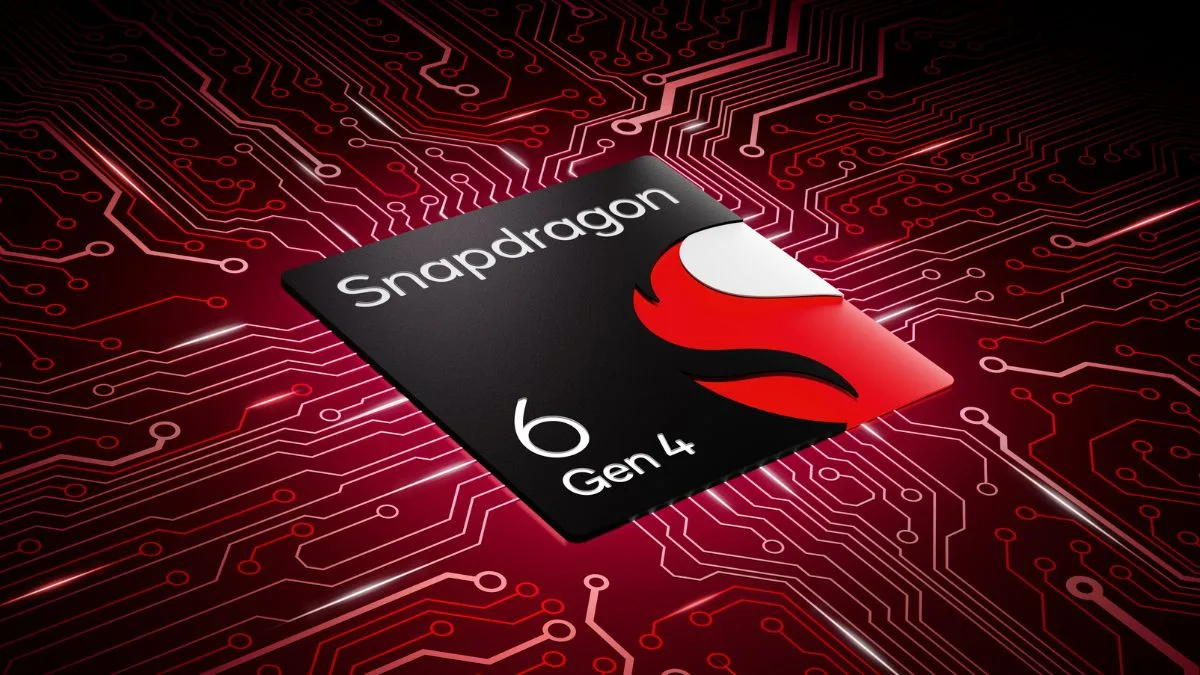
Snapdragon 6 Gen 4 Chipset With Enhancements for Gaming, Generative AI Unveiled

Snapdragon 6 Gen 4 chipset was unveiled by Qualcomm on Wednesday, with significant upgrades compared to the previous generation. The company’s newest mobile processor is aimed at offering enhanced capabilities and optimised performance for affordable smartphones. The mobile platform also becomes the first in the series to get support for generative artificial intelligence (AI) capabilities and Snapdragon Game Super Resolution’s gaming scene upscaling. The chip maker has also added enhancements to improve low-light photography, better wireless audio sharing via Bluetooth, and faster 5G connectivity across more networks.

Snapdragon 6 Gen 4 Chipset Unveiled

In a press release, the chip maker unveiled the Snapdragon 6 Gen 4 mobile platform. The chipset is the first in the series to be fabricated on the Taiwan Semiconductor Manufacturing Company’s (TSMC) 4nm process technology. In the past, Qualcomm has used a 4nm node from Samsung.

The processor also becomes the first in the series to get ARMv9-based CPU cores and features the Cortex-A720 as the prime core clocked at 2.3GHz. Additionally, there are three A720 performance cores with a clock speed of 2.2GHz, and four Cortex-A520 efficiency cores clocked at 2.3GHz. Notably, the mobile platform gets a Kyro series CPU, Adreno GPU, and the Qualcomm Hexagon neural processing unit (NPU) for AI inference.

Qualcomm’s Snapdragon 6 Gen 4 SoC is claimed to offer 11 percent higher CPU performance, 29 percent faster graphics rendering, and 12 percent improved power optimisation. Notably, the company did not share any details about the Adreno GPU.

Coming to features, the new chipset comes with the Qualcomm AI Engine which brings INT4 support for the first time in the series. It will allow faster AI processing for devices while optimising the models to fit the limited amount of RAM.

For cameras, the Snapdragon 6 Gen 4 processor sports triple 12-bit ISPs that will support sensors up to 200-megapixel. It will also support 4K HDR video recording at 30fps. Other supported formats include HDR10, HLG, and 10-bit HEIF.

Snapdragon 6 Gen 4 can support up to full-HD+ (1080+) resolution with up to 144Hz refresh rate. Qualcomm highlighted that the new chipset supports up to 16GB of LPDDR5 RAM with a speed of 3,200Mhz. It also offers UFS 3.1 support for storage. The 5G modem supports sub-6GHz and mmWave with downlink speeds of up to 2.9Gbps. The mobile platform also supports Wi-Fi 6E (802.11ax), Bluetooth 5.4 with aptX Adaptive, triple frequency positioning for GPS receivers, and USB Type-C 3.1 connectivity.

Realme, Oppo, and Honor are expected to announce smartphones with the Snapdragon 6 Gen 4 SoC in the coming months.

For the latest tech news and reviews, follow Gadgets 360 on X, Facebook, WhatsApp, Threads and Google News. For the latest videos on gadgets and tech, subscribe to our YouTube channel. If you want to know everything about top influencers, follow our in-house Who’sThat360 on Instagram and YouTube.

Senua’s Saga: Hellblade 2 Said to Arrive on PS5 Soon, Could Be Announced at State of Play

Galaxy F06 5G Is Samsung’s First Sub-Rs. 10,000 5G Smartphone and Packs Segment-First Features

Posted on

May 2024 Solar Storm Triggers Unusual Radiation Belts, Raising Space Safety Concerns

A significant solar storm that occurred in May 2024 led to the formation of two temporary radiation belts around Earth, as confirmed by satellite data. The discovery was made when a dormant satellite resumed operations after months of inactivity. The storm, which was among the most intense geomagnetic disturbances since 1989, resulted in widespread auroral displays and introduced high-energy particles into the Earth’s magnetosphere. While such temporary belts have been documented before, scientists have found that one of the newly formed belts exhibited unique properties, with a composition different from previous observations. One of the belts has already dissipated, but the other remains intact, posing potential challenges for future space missions.

Temporary Radiation Belts Detected Following Intense Solar Activity

According to research published in the Journal of Geophysical Research: Space Physics, the Colorado Inner Radiation Belt Experiment (CIRBE) satellite identified the new radiation belts upon reactivation in June 2024. The spacecraft had gone silent due to a technical issue in April, missing the peak of the storm. Upon its return, data analysis revealed the existence of two additional belts situated between the pre-existing Van Allen radiation belts.

It was determined that while the first belt contained high-energy electrons, consistent with previous storm-induced radiation belts, the second belt displayed an unusual concentration of high-energy protons. This presence of protons was linked to the extreme nature of the solar storm, which had released significant bursts of charged particles into Earth’s magnetic field.

Extended Lifespan of the Newly Formed Belts

Temporary radiation belts generated by solar storms are known to persist for weeks before dispersing. However, as per the findings, the electron-dominated belt remained for three months, while the proton-rich belt is still present. David Sibeck, a heliophysicist at NASA’s Goddard Space Flight Center, stated in an interview with Space.com that these particles could stay trapped for an extended period, creating a lasting impact on Earth’s inner radiation environment.

The proton belt’s resilience is attributed to its location in a more stable region of Earth’s magnetic field, where external disturbances have less impact. In contrast, a subsequent solar storm in June 2024 caused a reduction in the electron belt, with further weakening observed in August. Despite this, the proton belt has remained largely unaffected.

Implications for Space Missions and Satellite Operations

The existence of these new radiation belts has raised concerns regarding the safety of satellites and crewed space missions. Charged particles at high energy levels can pose risks to electronic components and human health in space. Spacecraft passing through these regions, particularly those traveling to geostationary orbit or beyond, may require additional shielding to mitigate radiation exposure.

As reported, the presence of these belts could necessitate adjustments in launch plans for future missions. With prolonged radiation hazards, space agencies may need to factor in the evolving space weather conditions before deploying satellites or sending astronauts beyond Earth’s orbit.

Despite the CIRBE satellite’s crucial discovery, the same solar activity that led to the identification of the new radiation belts also caused the spacecraft’s eventual demise. The increased energy injected into the atmosphere resulted in greater drag, which led to CIRBE’s descent and disintegration in October 2024.

The impact of solar storms on Earth’s magnetosphere continues to be closely monitored, with scientists studying how these phenomena affect both planetary and technological systems.

Posted on

Vodafone Idea (Vi) 5G Roundup: Rollout Date, List of Available Cities, 5G Speeds, and More

Vodafone Idea (Vi) is all set to roll out its long-awaited 5G services in India. The telecom operator has finally announced that it will roll out 5G services in the country in the next few months, starting with major metropolitan cities like Delhi, Bangalore, and more. The latest move is set to bring the telecom operator back to competition with its bigger rivals, Reliance Jio and Bharti Airtel. So, if you are wondering when the operator will introduce its 5G services in the country, you have come to the right place. In this article, we will be talking in depth about the Vi 5G services, its rollout date, list of available cities, expected pricing, and more. So, without further ado, let’s get started. 

Vi 5G Rollout in India Details

Vodafone Idea (Vi), in its quarterly report for the third quarter of the financial year 2024-25, revealed that it is planning to roll out its 5G services in the country. The company has confirmed that it will begin the rollout of its 5G services in April 2025, though the exact date of the rollout is not known at the time of writing. “We are driving investments, and the velocity of capex deployment is set to accelerate in the coming quarters. Concurrently, the phased rollout of 5G services is underway, targeting key geographies,” said company CEO Akshaya Moondra in a statement.

Interestingly, in December 2024, the telecom operator rolled out its 5G services in 17 circles across India, though it was not part of the commercial rollout. The company clarified that it had rolled out the 5G connectivity as per the Minimum Rollout Obligation set by the Government. Finally, the brand has confirmed that it will begin the 5G rollout in the next few months. 

Vi 5G: List of Available Cities

Vi has revealed that it will be rolling out its 5G services in select cities across the country, with more to follow in the near future. As per the brand, the Vi 5G connectivity will be first available in Delhi, Chandigarh, Bengaluru, and Patna. The operator has not revealed any other cities in this phase. 

Vi 5G Speed

Although the exact 5G speed is yet to be out after commercial rollout, the brand has run several 5G trials in different locations, giving us some insight into the potential 5G speeds on the Vi network. To start with, in May 2022, the company achieved a top download speed of 5.92Gbps during the 5G trials in Pune, while it got 1.2Gbps of speed at MG Road Metro Station in Bengaluru. Similarly, the brand was able to achieve around 1Gbps of download speed in different trials that took place in multiple cities across the country. 

Vi 5G Spectrum

Vodafone Idea (VI) acquired 50 MHz spectrum in a 3,300 MHz band across 17 circles each for Rs 15,137.75 crore through auctions that were held in 2022. That said, it is reported that the telecom operator might use a mix of 3.5GHz (C-band) and 1,800MHz spectrum for its initial 5G rollouts. That said, we might get more information closer to the launch timelines. 

Vi 5G: Expected Prices of Plans

The brand has also revealed that it plans to introduce cheaper 5G plans than Jio and Airtel. The company has confirmed that the plans may be up to 15 percent cheaper at entry levels compared to other telcos, meaning that we might see another price war between the telecom operators once the Vi 5G network is rolled out. 

Posted on

Google Pixel 9a Leaked Renders Suggest New Rear Camera Design, Four Colour Options

Google Pixel 9a is expected to arrive in the markets by next month. Over the past few weeks, several leaks and reports have hinted at key features of the handset. Recently, images of the official covers for the purported smartphone surfaced online. Now, renders of the phone itself have leaked, showing the complete design and expected colour options. The anticipated Google Pixel 9a, tipped to come with a Tensor G4 SoC, will succeed the Pixel 8a, which was unveiled in May 2024. 

Google Pixel 9a Leaked Renders

An Android Headlines report has shared leaked design renders of the anticipated Google Pixel 9a. The phone appears in four colour options including Iris, Obsidian, Peony and Porcelain. It is seen with a flat rear camera module, flush with the rear panel of the handset. This is a notable departure from the visor-like camera island on the preceding Pixel 8a.google pixel 9a android headlines inline pixel 9a

The Google Pixel 9a is said to measure 154 x 73 x 8.9mm in size. This is larger than the existing version and a bigger battery is claimed to be the reason behind the size upgrade. It is expected to house a 5,100mAh battery, the largest in a Pixel phone yet. The upcoming handset is tipped to maintain the 23W wired and 7.5W wireless charging support, the same as the Pixel 8a.

Previous reports have suggested that the Google Pixel 9a will likely get a Tensor G4 SoC alongside a Titan M2 security chip. Pre-orders for the handset are tipped to begin on March 19 and it is expected to go on sale on March 26. The price of the phone is said to start at $499 (roughly Rs. 42,000) for the 128GB storage option.

For optics, the Google Pixel 9a is expected to carry a 48-megapixel primary rear sensor alongside a 13-megapixel ultra-wide Sony IMX712 sensor. The front camera is expected to use a 13-megapixel sensor as well. The phone may come with an IP68 rating for dust and water resistance.

Posted on

Powerbeats Pro 2 With Heart Rate Monitor, Up to 45 Hours Total Battery Life Launched in India

Beats launched the Powerbeats Pro 2 in India on Tuesday. The earphones are equipped with active noise cancellation (ANC) including transparency modes as well as features like personalised spatial audio with dynamic head tracking, and voice Isolation support. The case supports Qi wireless charging and gets a USB Type-C port. The earphones are claimed to offer up to 45 hours of battery life with the case. The earphones come with the Apple H2 chipset, a heart rate monitor, and offer an IPX4 rating.

Powerbeats Pro 2 Price in India, Availability

Powerbeats Pro 2 price in India is set at Rs. 29,900. They are currently available for purchase in the country via the official website and will go on sale via other channels starting February 13. They are offered in four colour options including Electric Orange, Hyper Purple, Jet Black, and Quick Sand.

Powerbeats Pro 2 Specifications, Features

The Powerbeats Pro 2 earphones are equipped with dual-element dynamic diaphragm transducers, which are claimed to offer high-quality sound. They support adaptive ANC including a transparency mode as well as adaptive EQ features. They come with support for spatial audio with dynamic head tracking technology. 

Powerbeats Pro 2 feature three mics on each earphone including a dedicated voice microphone. They are equipped with optical sensors for in-ear detection and heart-rate monitoring, along with an accelerometer and gyroscope.

The heart rate monitoring feature in the Powerbeats Pro 2 is said to help athletes track their performance in real-time. The company explains that it uses LED optical sensors that pulse over 100 times per second to measure blood flow and the data can then be shared with any compatible fitness apps instantly. At launch, it will work with apps like Runna, Nike Run Club, Open, Ladder, Slopes, and YaoYao in India.

Beats claims that the Powerbeats Pro 2 offer seamless pairing for both Apple and Android users with Bluetooth 5.3 connectivity. With Apple devices, they support one-touch pairing, automatic switching, Audio Sharing, hands-free Siri, and Find My. Meanwhile, Android users can access these features through the Beats App. Users can control music with on-ear buttons and a tactile volume rocker that’s available on the earbuds. You can also get hands-free Siri access with a ‘Hey Sir’ or ‘Siri’ command.

The Powerbeats Pro 2 are backed by Apple’s H2 chip and are claimed to provide up to 10 hours of playback time, and a total of 45 hours with the charging case. A quick five-minute charge is said to offer up to 90 minutes of playback time. The case supports Qi wireless charging, has a USB Type-C port, and is said to be 33 percent smaller than the predecessor. 

Beats offers five ear tips in the box, from XS to XL. Each earphone weighs 8.7g, while the case weighs 69g. The earphones come with an IPX4 rating for splash resistance. 

Posted on

Motorola Razr+ 2025 Design, Key Features Leaked; May Arrive as Razr 60 Ultra in Select Markets

Motorola Razr+ 2025 may launch soon. The company has yet to officially confirm the clamshell foldable but details about it have surfaced online. A report has shared leaked design renders of the handset as well as some expected key features like battery and display sizes. The phone is tipped to launch as the Motorola Razr 60 Ultra in select markets. It is expected to succeed the Razr 50 Ultra, which was launched in India in July 2024 with a Snapdragon 8s Gen 3 SoC.

Motorola Razr+ 2025 Design, Features (Expected)

The Motorola Razr+ 2025 carries the codename “Orion,” according to a report by Android Headlines. The report added that the phone is expected to launch “very, very soon” but did not specify a timeline. Notably, the Razr 2024 series was launched in June of that year. In countries outside the US, the phone may launch with the moniker Motorola Razr 60 Ultra.

motorola razr plus 2025 android headlines inline  Motorola Razr 2025

Motorola Razr+ 2025 seen in with faux leather stitched back panel
Photo Credit: Android Headlines

Design-wise, the Motorola Razr+ 2025 appears in a dark green shade and appears to have a faux leather stitched rear panel. It has glossy rails, which could be aluminium. The cover screen and dual cameras appear largely similar to the predecessor. 

Motorola is expected to offer a 6.9-inch main display on the Moto Razr+ 2025, similar to the preceding handset. It will likely be powered by a Snapdragon 8 Elite SoC. However, the report was unable to specify if this would be the octa-core or a 7-core version. 

The Motorola Razr+ 2025 is expected to support 12GB of RAM and 256GB of onboard storage. It will likely house a 4,000mAh battery, similar to the existing handset. The report added that the smartphone could sport a wide and a telephoto lens.

The Motorola Razr 50 Ultra sports a 4-inch LTPO pOLED panel cover panel. It is powered by a Snapdragon 8s Gen 3 chipset, paired with up to 12GB of LPDDR5X RAM and 512GB UFS 4.0 storage. For optics, it has a 50-megapixel primary sensor alongside a 50-megapixel telephoto shooter with 2x optical zoom at the back and a 32-megapixel front camera sensor. The handset comes with support for 45W wired, 15W wireless and 5W reverse charging support.

For the latest tech news and reviews, follow Gadgets 360 on X, Facebook, WhatsApp, Threads and Google News. For the latest videos on gadgets and tech, subscribe to our YouTube channel. If you want to know everything about top influencers, follow our in-house Who’sThat360 on Instagram and YouTube.

OnePlus 13R Receives AI Live Translation and Camera Upgrades With Latest Update

Posted on

Vivo T4x 5G India Launch Timeline, Price Range, Colour Options, Battery Size Leaked

Vivo T4x 5G was previously spotted on the Bureau of Indian Standards (BIS) website, suggesting its imminent launch in the country. Now, a report has shared the expected launch timeline and hinted at some of its key features. The possible price range, colour options, and likely design elements have also been tipped. The Vivo T4x 5G is said to succeed the Vivo T3x 5G, which was launched in the country in April 2024 with a Snapdragon 6 Gen 1 SoC.

Vivo T4x 5G India Launch Timeline, Price Range, Key Features (Expected)

The Vivo T4x 5G will likely launch in India in March 2025, according to a MySmartPrice report. An exact date has not yet been suggested. The report added that the purported handset is expected to be priced within Rs. 15,000, similar to the preceding model. 

According to the report, the Vivo T4x 5G could pack a 6,500mAh battery, which is said to be the largest in its segment. The existing Vivo T3x 5G carries a 6,000mAh battery. The report added that the phone will likely be offered in India in Pronto Purple and Marine Blue colourways.

The design of the Vivo T4x 5G is expected to include a Dynamic Light feature, which lights up differently to indicate different notifications. No other details about the handset have been suggested yet but we can expect to learn more over the next few days. 

Notably, the price of the Vivo T3x 5G was slashed earlier this year. It is available at Rs. 12,499, Rs. 13,999 and Rs. 15,499 for the 4GB + 128GB, 6GB + 128GB, and 8GB + 128GB, respectively. The phone launched at Rs. 13,499, Rs. 14,999, and Rs. 16,499 for the 4GB, 6GB and 8GB variants, respectively. The handset is offered in Crimson Bliss, Celestial Green, and Sapphire Blue colour options.

Affiliate links may be automatically generated – see our ethics statement for details.
Posted on

NASA, General Atomics Test Nuclear Fuel for Faster Mars Missions

Efforts to develop nuclear thermal propulsion (NTP) for future space missions have taken a significant step forward. General Atomics Electromagnetic Systems (GA-EMS), in collaboration with NASA, has conducted tests on nuclear reactor fuel designed for space travel. The trials, held at NASA’s Marshall Space Flight Center in Alabama, assessed the fuel’s ability to withstand extreme conditions that would be encountered during deep space missions. The successful results could accelerate plans for faster, more efficient space travel, reducing transit times for crewed missions to Mars.

Successful Testing at NASA’s Marshall Space Flight Center

As reported by space.com, according to the tests conducted at NASA’s facility, the reactor fuel was subjected to six thermal cycles using hot hydrogen, rapidly heating it to 2326.6 degree Celsius. The objective was to evaluate the fuel’s resilience under extreme temperature fluctuations and exposure to hot hydrogen gas, conditions necessary for nuclear thermal propulsion. GA-EMS President Scott Forney stated in a company release that the fuel demonstrated the ability to endure these conditions, reinforcing confidence in its potential for safe and reliable space propulsion.

First-of-Its-Kind Testing of Nuclear Fuel

GA-EMS Vice President of Nuclear Technologies and Materials, Christina Back, highlighted the uniqueness of these tests in the company release. The company was reported to be the first to utilise the compact fuel element environmental test (CFEET) facility at NASA’s Marshall Space Flight Center for such trials. Fuel performance was tested at temperatures reaching 2,727 degree Celsius, with findings indicating a significant efficiency boost over conventional propulsion systems.

Potential Impact on Space Exploration

As per sources, NASA has prioritised the development of nuclear propulsion due to its potential to significantly reduce travel time to Mars. Shorter missions could lower the risks associated with long-duration spaceflight, including radiation exposure and the need for extensive life-support resources. In 2023, NASA and the Defense Advanced Research Projects Agency (DARPA) announced joint efforts to develop an NTP system, with a planned demonstration by 2027. The latest advancements in nuclear propulsion technology could play a crucial role in achieving that goal, bringing human missions to Mars closer to reality.

Posted on

Samsung Galaxy S26 Series May Use Exynos SoCs as Foundry Achieves More Than 30 Percent Yield: Report

Samsung just launched it’s Galaxy S25 series with all three models going on sale in India. The smartphones are priced from Rs. 80,999 and offer Qualcomm’s latest Snapdragon 8 Elite processors in all markets. This was a noticeable shift from the Galaxy S24 series, which went with Samsung’s own Exynos 2400 SoC last year for all models except for its flagship Galaxy S24 Ultra. However, Samsung may reportedly switch back to its Exynos chips for its next-gen Galaxy S26 series.

A report by the Korean publication The Bell has pointed out that Samsung Electronics has witnessed success with its Exynos 2600 SoC yield. The Exynos 2600 SoC’s current success stems from its 30 percent yield, outperforming the Exynos 2500 SoC, which was never released. While achieving a 30 percent success rate is a big deal, we did see a similar report last year with the Exynos 2500 SoC, but as things panned out, Samsung clearly wasn’t in a position to roll them out with the Galaxy S25 series this year, opting for Qualcomm’s chipset instead.

The source points out that the chip division is now planning for mass production in the fourth quarter of this year. However, this is provided Samsung can achieve a 60 percent success rate (or yield) with for its 2nm chipset. A 60 percent yield is usually the requirement before a chipset can enter mass production.

The report also goes on to clarify that Samsung Electonics’ failure to deliver a better yield was the reason why Samsung opted for Qualcomm’s chipset in its latest Galaxy S25 series this year. Samsung had switched over to using its own Exynos 2400 SoC with its Galaxy S24 and Galaxy S24 Plus models last year.

As per the latest reports, Samsung’s Galaxy S26 series is set to debut around the same time its Galaxy S25 series was announced this year. Among the many upgrades, Samsung is said to finally switch to newer silicon carbon batteries, better cameras and even an under-display camera for its Galaxy S26 Ultra model.