Posted on

Is the Wheel of Ghosts an Ancient Observatory? New Study Suggests Otherwise

The ancient Rujm el-Hiri site, situated in the Golan Heights and often referred to as the “Wheel of Ghosts,” has been re-evaluated, with its long-standing identification as an astronomical observatory coming under scrutiny. Researchers have determined that geodynamic changes over millions of years have altered the site’s orientation, raising questions about its original purpose. These findings, derived from advanced geophysical and remote sensing techniques, provide a new perspective on this enigmatic archaeological structure.

Geophysical Insights Challenge Established Theories

According to the study published in Remote Sensing, geodynamic movements averaging 8–15 millimetres per year over 150 million years shifted the site’s alignment significantly. Researchers from Tel Aviv University and Ben-Gurion University, led by Dr Olga Khabarova and Prof Lev Eppelbaum, concluded that the structure’s current orientation does not match celestial patterns, contradicting earlier interpretations of its function. The entrances and radial walls, when reconstructed to their original positions, were shown to lack alignment with solstices, equinoxes, or other astronomical markers.

Advanced Techniques Reveal Archaeological Landscape

As reported by SciTech Daily, the researchers employed geomagnetic analysis and satellite technology to document the surrounding archaeological features within a 30-kilometre radius of the Sea of Galilee. Unique circular structures, some up to 90 metres in diameter, were identified alongside burial mounds and round enclosures. These findings suggest agricultural and herding purposes rather than purely ceremonial or observational roles.

A Broader Perspective on Rujm el-Hiri’s Role

Dr Michal Birkenfeld of Ben-Gurion University emphasised in his statement to SciTech Daily that this reassessment enriches understanding of ancient life in the Golan Heights. The research team noted that the study reopens debates about the site’s purpose while highlighting its integration into a broader archaeological landscape. By questioning past assumptions, the study encourages further exploration of how ancient communities interacted with their environment.

Catch the latest from the Consumer Electronics Show on Gadgets 360, at our CES 2025 hub.

Hide N Seek OTT Release Date: When and Where to Watch This Telugu Thriller Online?

Oppo Reno 13 5G Series Price in India Tipped Ahead of January 9 Launch

Posted on

Crystal-Based Cooling Technology Could Offer Sustainable Solution for Fridges and Air Conditioners

A novel crystal-based technology has been identified as a potential solution for sustainable cooling systems. Current refrigeration and air conditioning devices rely on liquid-based systems to absorb heat through evaporation and condensation. While effective, these fluids contribute significantly to greenhouse gas emissions when leaked, intensifying global warming. Efforts to counteract this environmental impact have led to the development of an alternative cooling mechanism based on plastic crystals, which possess a unique molecular structure capable of transforming under pressure.

How the Technology Works

According to researchers at Deakin University, plastic crystals exhibit a transformative ability when subjected to extreme pressure. Their molecular orientation shifts from a disordered state to a structured grid, absorbing heat as the pressure is released. This heat absorption process facilitates cooling, providing a climate-friendly alternative to traditional refrigerants.

Unlike earlier materials, which required high ambient temperatures for similar transitions, the newly developed crystals operate effectively between -37 degree Celsius and 10 degree Celsius. This range aligns with typical household refrigeration and freezing needs, presenting a significant step forward in sustainable cooling technologies.

Challenges in Implementation

According to a New Scientist report, high-pressure requirements, equivalent to conditions thousands of metres underwater, remain a major hurdle for practical application. Dr. Jenny Pringle, a lead researcher in the study, acknowledged this limitation and emphasised the need for further development to address these constraints.

Concerns have also been raised by experts about the long-term performance of these crystals. Bing Li, affiliated with the Chinese Academy of Sciences, pointed out the potential reduction in heat absorption capacity over time due to molecular strain, while expressing optimism about future advancements.

Potential Impact

David Boldrin from the University of Glasgow told the publication about the significant potential of this innovation, suggesting that it could help decarbonise the cooling industry. While the technology remains confined to laboratory settings, its success could herald a substantial reduction in the environmental footprint of refrigeration systems.

Experts remain hopeful that continued research will overcome current obstacles, bringing this promising solution closer to widespread adoption.

Posted on

New Study Uncovers Vital Ocean Processes for Carbon Storage and Climate Regulation

Organic carbon preservation in ocean sediments, a phenomenon critical to the Earth’s carbon cycle, has been illuminated by new research. The study explores mechanisms that prevent organic carbon from breaking down, a process vital for climate regulation. Preserved carbon, over time, can transform into fossil fuels, locking away carbon dioxide—a leading contributor to climate change. These findings offer insights into the Earth’s natural systems that regulate carbon levels and influence the formation of oil and gas reserves.

Study Identifies Key Carbon Preservation Mechanisms

According to a study led by scientists from The University of Manchester and the University of Leeds and published in the journal Nature Geoscience, two primary processes—sorption and molecular transformation—are crucial for carbon storage in ocean sediments.

Sorption involves the uptake of carbon by mineral surfaces, while molecular transformation converts small, reactive molecules into larger, stable forms. The study used a comprehensive model, integrating real-world sediment data, to identify these processes as dominant contributors to carbon preservation.

AI Provides Deeper Insights into Carbon Storage

Artificial intelligence (AI) was utilised to enhance the study’s model, enabling accurate predictions of carbon storage efficiency. Dr. Peyman Babakhani, a lead researcher, highlighted that AI helped clarify complex environmental processes. The research revealed that carbon preservation in sediments is nearly three times higher than earlier estimates, aligning closely with observed data.

Implications for Climate Change Mitigation

The findings underline the importance of sorption and molecular transformation in protecting organic matter from degradation and facilitating its burial in deeper sediment layers. This preserved carbon can eventually become fossil fuels, effectively keeping carbon dioxide from entering the atmosphere. These insights could influence climate change strategies, such as ocean fertilisation, aimed at enhancing natural carbon storage mechanisms.

By shedding light on these processes, the study opens pathways for managing carbon emissions and leveraging the ocean’s role in the global carbon cycle.

Posted on

First-Ever Female Burial with Weapons, Believed to Be a Warrior, Discovered in Hungary

The first confirmed case of a female burial with weapons from the 10th century in the Carpathian Basin, Hungary, has been uncovered. Skeletal remains and grave goods, including weaponry, were identified at the Sárrétudvari-Hízóföld cemetery. This discovery, described by experts, challenges prior assumptions about societal roles during the Hungarian Conquest period, a time marked by mounted archers and frequent conflicts. Although evidence of weapons was present, researchers approached conclusions cautiously, ensuring findings were grounded in detailed analysis.

Archaeological Findings and Methodology

The study was led by Dr. Balázs Tihanyi and his colleagues, published in PLOS ONE. As reported by Phys.org, the burial contained a silver penannular hair ring, bell buttons, a bead necklace, and archery-related items such as an arrowhead, quiver parts, and an antler bow plate. Genetic and morphological tests confirmed the individual, referred to as SH-63, was female, despite the poor preservation of skeletal remains.

Dr. Balázs Tihanyi, leader of the research team, told the publication that the combination of grave goods in SH-63’s burial was unique within the cemetery, blending typically male and female items.

Challenges in Determining Warrior Status

The presence of weapons did not lead to assumptions about SH-63’s status as a warrior. Researchers noted that being part of a warrior class involved specific societal roles, and physical evidence alone is insufficient for confirmation.

Indicators such as joint changes and trauma were identified, possibly suggesting activities like horse riding or weapon use. However, it was emphasised that these signs could also result from daily life unrelated to warfare.

Historical Implications

It was reported that this discovery provides a glimpse into the complexity of life in 10th-century Hungary, with SH-63’s burial raising questions about gender roles and social structures of the time. Further investigations are planned to compare this case with others from the same period, aiming to deepen understanding of the era’s societal dynamics.

Posted on

SpaceX’s Starship to Deploy Mock Starlink Satellites in Flight 7 Test

Elon Musk’s SpaceX said on Friday its upcoming Starship test flight would include the rocket’s first attempt to deploy payloads in space by releasing 10 model Starlink satellites, a key demonstration for Starship’s potential in the satellite launch market.

“While in space, Starship will deploy 10 Starlink simulators, similar in size and weight to next-generation Starlink satellites as the first exercise of a satellite deploy mission,” SpaceX said in a blog post on its website.

The Starship flight from SpaceX’s sprawling Boca Chica, Texas facilities, tentatively planned for later this month, will mark the seventh demonstration in a test-to-failure style of rocket development where the company tests new upgrades with each flight.

In October, Starship’s “Super Heavy” first stage booster returned to its launch pad’s giant mechanical arms for the first time, a milestone for its fully reusable design.

The rocket’s sixth test flight in November, attended by U.S. President-elect Donald Trump, achieved similar mission objectives – besides the landing of Super Heavy, which was forced to target a water landing on the Gulf of Mexico because of a launchpad problem.

Starship is the centerpiece of SpaceX’s future satellite launch business – an area it currently dominates with its partially reusable Falcon 9 – as well as Musk’s dreams to colonize Mars.

The rocket’s power, stronger than the Saturn V rocket that sent Apollo astronauts to the moon in the last century, is key for launching huge batches of satellites into low-Earth orbit and is expected to rapidly expand the company’s Starlink satellite internet network.

SpaceX is under contract with NASA to land U.S. astronauts on the moon later this decade using Starship.

Musk, SpaceX’s founder and CEO, has become a close ally of Trump who has made getting to Mars a more prominent goal for the incoming administration.

© Thomson Reuters 2024

(This story has not been edited by NDTV staff and is auto-generated from a syndicated feed.)

Posted on

Astronomers Seek Binary Supermassive Black Holes in Galactic Centers

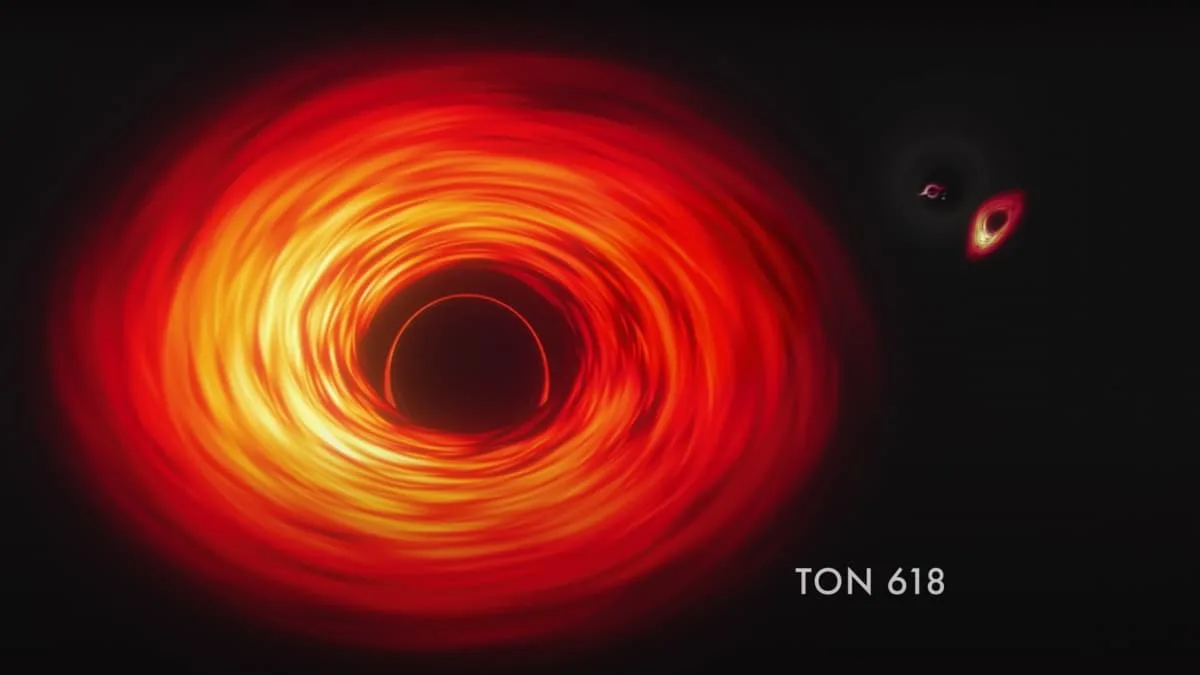
Supermassive black holes are believed to exist at the centre of most galaxies, including our Milky Way. However, in certain cases, two such black holes are thought to orbit one another, forming binary systems. These gravitationally bound pairs could provide significant insights into the dynamics of galaxy formation and the behaviour of space-time. Detecting them, however, presents challenges due to their nature, as they cannot be observed directly using traditional telescopes.

Gravitational Waves and Galactic Collisions

According to research, as reported by The Conversation, binary black holes can form when galaxies merge. During such collisions, the black holes from the merging galaxies are brought closer by gravitational forces. Eventually, they may create a binary system before combining into one larger black hole over millions of years.

These systems emit gravitational waves, ripples in space-time predicted by Albert Einstein’s theory of general relativity. Observatories like the Laser Interferometer Gravitational-Wave Observatory (LIGO) detect these waves, though pinpointing individual binaries remains elusive.

Evidence from Active Galactic Nuclei

Researchers have identified a potential binary black hole system in an active galaxy, PG 1553+153, as reported by The Conversation. Observations have revealed periodic light variations approximately every 2.2 years, which could indicate the presence of two orbiting black holes.

Active galactic nuclei, which emit immense energy due to gas accretion, often display such cyclical patterns. These patterns, however, might also result from other phenomena like jet wobbles, requiring further investigation.

Historical Data and Findings

As reported by The Conversation, they used archival data spanning over a century, a secondary 20-year light variation pattern was identified in PG 1553+153. This additional evidence supports the binary black hole hypothesis, suggesting the system includes two black holes with masses in a 2.5:1 ratio. Final confirmation, however, may depend on advancements in pulsar timing arrays to detect specific gravitational waves.

The study highlights how historical data and modern simulations contribute to understanding complex cosmic events. The findings advance knowledge of galactic evolution and black hole behaviour, with future technological improvements expected to refine these discoveries.

Posted on

Ancient Battle Site Between Alexander the Great and Ancient Persians Discovered in Turkey

The site of Alexander the Great’s decisive Battle of the Granicus against the Persian Empire appears to have been uncovered in northwest Turkey. Archaeologists have pinpointed the location roughly 10 kilometres north of Biga, where the famed confrontation occurred in 334 B.C. This victory allowed Alexander to establish a critical foothold in Persian territory, marking a pivotal moment in his campaign and reshaping the trajectory of ancient history. Evidence unearthed at the site includes remains of the ancient city of Hermaion, believed to have been Alexander’s final encampment before the battle.

Findings Based on Historical and Scientific Evidence

According to a report by Live Science, the team led by Reyhan Körpe, an archaeology professor at Çanakkale Onsekiz Mart University, carried out extensive research to validate the battlefield’s location. Historical records describing the terrain were compared with modern geomorphological studies. These studies revealed that the Granicus River’s path has remained largely unchanged since ancient times, while nearby marshy areas were ruled out as potential sites for the battle.

Further supporting the discovery were findings from Hermaion, including graves unearthed by local farmers in 2024. Among these, human bones discovered on a hillside believed to have housed Persian Greek mercenaries were examined. While the absence of grave markers suggests an informal burial, tests are ongoing to determine the age and cause of death of the remains.

Next Steps in Excavation

Plans for geophysical surveys and detailed digs have been announced to explore the site’s deeper layers and provide more insights into this historic confrontation. The team’s work offers a glimpse into Alexander’s military strategy and the broader impact of his campaigns on ancient civilisations.

For the latest tech news and reviews, follow Gadgets 360 on X, Facebook, WhatsApp, Threads and Google News. For the latest videos on gadgets and tech, subscribe to our YouTube channel. If you want to know everything about top influencers, follow our in-house Who’sThat360 on Instagram and YouTube.

Apple to Pay $95 Million to Settle Siri Privacy Lawsuit

Samsung Bespoke Smart Refrigerators Will Soon Recommend Groceries to Order on Instacart

Related Stories

Posted on

Astronomers Uncover New Details of CIZA0107 Galaxy Cluster Merger with VLA

An international team of astronomers has studied a nearby galaxy cluster merger, offering new insights into the processes of galactic collisions. Observations of CIZA J0107.7+5408, a post-core passage binary cluster merger, were carried out using the Very Large Array (VLA). These findings have shed light on the intricate dynamics of merging galaxy clusters, which are key to understanding phenomena such as cosmic ray acceleration, the properties of dark matter, and the behavior of matter under extreme conditions.

Complex Dynamics of CIZA J0107.7+5408

According to the study published on the preprint server arXiv, CIZA J0107.7+5408 (CIZA0107) is located at a redshift of approximately 0.1 and consists of two subclusters with optical density peaks offset from their X-ray emission peaks. Led by Emma Schwartzmann of the U.S. Naval Research Laboratory, the research aimed to image the diffuse radio emission in this system, constrain its integrated spectrum, and analyze the spectral index distribution.

The team utilized observations between 240–470 MHz and 2.0–4.0 GHz. The analysis confirmed the disturbed nature of the cluster, which features a merger axis in the northeast-southwest direction. Diffuse radio emission spanning about 1.6 million light-years was detected in each subcluster. Additionally, regions of ultra-steep spectral emission were identified northwest and southeast of the southwestern subcluster’s radio emission peak.

Spectral and Structural Findings

The research highlighted that both subclusters exhibit a spectral index of around -1.3. Ultra-steep spectral slopes of approximately -2.2 and -2.9 were recorded in the northwestern and southeastern regions, respectively. A sharp radio edge associated with the southwestern subcluster was observed at 340 MHz but was absent at 3.0 GHz, where emission extended beyond the X-ray shock front.

The study suggested that CIZA0107 may host a double halo structure or that the observed emission originates from relics projected onto the cluster’s central regions. These findings enhance understanding of galaxy cluster mergers and their role in cosmic evolution

Posted on

Top 5 Black Hole Discoveries of 2024: Plasma Jet, Intermediate Black Hole, and More

Black holes, known for their unmatched gravitational force and mysterious characteristics, remain a focal point of scientific exploration. This year brought remarkable discoveries, advancing the understanding of black holes’ role in shaping galaxies and their enigmatic behaviours. From the detection of an intermediate black hole to uncovering plasma jets spanning millions of light-years, these findings have captured global attention.

Below is a detailed account of these significant developments as reported by Live Science.

A black hole candidate located in the IRS 13 star cluster, near the Milky Way’s central supermassive black hole Sagittarius A*, could represent a rare “missing link.” Scientists believe confirming its existence would provide crucial insights into how smaller black holes evolve into their supermassive counterparts.

Plasma Jets Stretching Across the Cosmos

A black hole named Porphyrion was discovered ejecting plasma jets that span an astonishing 23 million light-years. Equivalent to 140 Milky Way galaxies laid end to end, these jets are among the largest structures ever observed and highlight black holes’ extraordinary ability to shape their cosmic environment.

Heartbeat Signals Decoded

Researchers have unravelled the mystery behind periodic light pulses detected in X-ray flares emitted by black holes. The signals, resembling a heartbeat, are thought to result from shock waves travelling through material consumed by the black hole, providing a glimpse into the physics of their feeding process.

Sagittarius A’s Unusual Spin Explained*

The Milky Way’s central black hole, Sagittarius A*, exhibits a peculiar rotational axis. Observations by the Event Horizon Telescope suggest this odd spin resulted from a massive collision between two black holes, offering evidence of such events in galactic centres.

Dormant Black Hole Awakens

Astronomers observed a previously dormant black hole springing back to life, likely due to new material being drawn in. While such reactivations are rare, they provide a rare opportunity to study how black holes transition between states of activity.

Posted on

ISRO’s Spadex Mission to Demonstrate Satellite Docking on December 30

The Indian Space Research Organisation (ISRO) is set to close the year with the Spadex mission, scheduled for launch at 9:58 pm on December 30 from the Sriharikota spaceport. This mission involves two satellites, SDX01 (Chaser) and SDX02 (Target), aimed at demonstrating docking capabilities in orbit. By showcasing the alignment, connection, and power transfer between these satellites, the mission is expected to pave the way for future endeavours, including the Chandrayaan-4 and the proposed Bharatiya Antariksh Station.

Mission Details and Objectives

According to reports, the Polar Satellite Launch Vehicle (PSLV-C60) will place the 220-kg satellites into a 470-km circular orbit. The satellites will begin by separating to a distance of 10–20 km using relative velocity adjustments provided by the rocket. The Target satellite’s propulsion system will then maintain this distance to prevent further drift, marking the start of what is referred to as the “far rendezvous.” Gradual approaches by the Chaser satellite will follow, reducing the gap in calculated stages until docking is achieved.

Once docked, the satellites will demonstrate electrical power transfer and joint spacecraft control. Following separation, both satellites will operate their respective payloads, which are designed to function for two years.

Technological Highlights and Payloads

The Spadex mission is reported to employ innovative technologies, including docking mechanisms and advanced sensors, ensuring precision during the docking process. A relative orbit determination and propagation system, based on navigation constellations, is also part of this mission. The Chaser satellite features a high-resolution miniature surveillance camera, while the Target satellite carries a multispectral payload for monitoring vegetation and natural resources. A radiation monitor onboard the Target will collect space radiation data for analysis.

Additional Experiments

As per several reports, the rocket’s final stage will host experiments involving 24 payloads, including a robotic arm for debris capture and a study on seed germination and plant growth. The mission marks a significant leap in demonstrating small satellite docking, a challenging feat requiring precise control and coordination.