
Posted on

Researchers Find Evidence of the Oldest Alphabetic Writing in Human History in Syria

Archaeologists from Johns Hopkins University have unearthed what is believed to be the earliest example of alphabetic writing during an excavation in Syria. The inscriptions were found on small, clay cylinders within a tomb at Tell Umm-el Marra, an ancient urban centre in western Syria. The writing has been dated to approximately 2400 BCE, pushing back the origins of alphabetic systems by 500 years. This discovery raises new questions about the evolution of written communication and its impact on early societies.

Discovery Details and Artefacts

The clay cylinders, found in a tomb alongside pottery, jewellery, and weapons, are thought to have served as labels or identifiers. Dr Glenn Schwartz, a professor of archaeology at Johns Hopkins University, who led the 16-year excavation, noted that the perforated cylinders might have been attached to objects or vessels to convey information. Without the means to decipher the symbols, the exact purpose remains speculative.

The discovery was made in one of the best-preserved tombs at the site, which also contained six skeletons and an array of Early Bronze Age artefacts. Carbon-14 dating techniques confirmed the age of the tomb and its contents.

Impact on Understanding of Alphabet Origins

Previously, it was widely believed that the alphabet was first developed around 1900 BCE in Egypt. However, these new findings suggest that alphabetic systems may have originated earlier and in a different region. According to Dr Schwartz, this evidence challenges long-held assumptions about how and where alphabets emerged, indicating that societies in Syria were experimenting with innovative communication technologies earlier than previously understood.

Details of the findings will be presented by Dr Schwartz at the Annual Meeting of the American Society of Overseas Research, offering further insights into the role of alphabetic writing in the development of early urban civilisations.
Posted on

Human Cell Atlas Mapping 37 Trillion Human Cells for Disease Insights

Efforts to create a comprehensive map of all human cells have taken a significant leap forward. Researchers associated with the Human Cell Atlas (HCA), a global scientific consortium, have released over 40 studies detailing critical progress in mapping the 37 trillion cells that make up the human body. These findings, published on 20 November in Nature journals, focus on cells in organs such as the lungs, skin, and brain and outline advanced computational tools for analysing vast datasets.

The project aims to profile cells from diverse populations worldwide to identify their unique functions, locations, and interactions at various stages of life. Already, data from 100 million cells sourced from over 10,000 individuals in more than 100 countries have been collected. By 2026, researchers plan to present the first draft of the atlas, with future versions expected to incorporate billions of cells.

Detailed Discoveries Across the Body

Among the recent findings is a comprehensive cellular map of the digestive system, from the oesophagus to the colon. This work, based on data from 190 individuals, uncovered a type of cell involved in inflammatory diseases like Crohn’s disease and ulcerative colitis. Professor Itai Yanai of NYU Langone Health noted that these cells likely trigger immune responses, contributing to inflammation in diseased tissues.

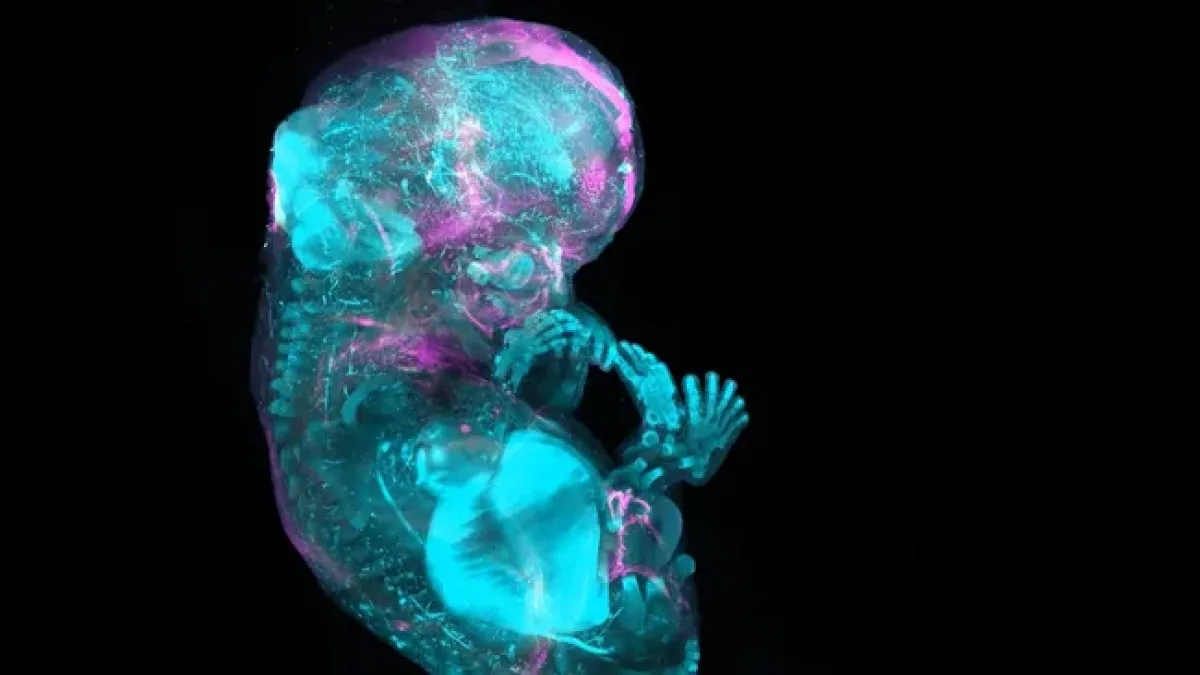
Other studies have shed light on early human development, including insights into skeletal formation during pregnancy and conditions like craniosynostosis. Maps comparing fetal brain development with lab-grown brain organoids also highlight the accuracy of these models, which replicate human brain activity up to the second trimester.

Implications for Medical Research

The findings have implications for drug discovery and disease understanding. Dr Aviv Regev, co-chair of the HCA, likened the work to advancements in mapping technologies, stating, “We have transitioned from basic, crude maps to something as detailed as Google Maps.” However, she acknowledged the significant work that lies ahead to complete this ambitious project.

The research has already led to groundbreaking discoveries, including the identification of a new lung cell type and insights into tissues vulnerable to COVID-19. Scientists aim to continue refining these maps, using organoids and other methods to unravel human biology and disease mechanisms.

Posted on

NASA Showcases AI-Powered Computational Tools to Advance Scientific Research at SC24 Event

At the Supercomputing Conference or SC2024, NASA’s Associate Administrator for the Science Mission Directorate, Nicola Fox, detailed new computational tools intended to advance space science. NASA plans to employ a large language model across its science divisions, bolstered by foundation models tailored to Earth science, heliophysics, astrophysics, planetary science, and biological and physical sciences. This strategy was illustrated through a heliophysics foundation model, which applies extensive data from NASA’s Solar Dynamics Observatory to forecast solar wind events and track sunspot activity.

Evolution of Space Computing and the Voyager Missions

Fox recounted how NASA’s Voyager missions, launched in the 1970s, served as milestones in computing for space exploration. Operating with early semiconductor memory, these spacecraft provided unique insights, including discoveries of Jupiter’s faint ring and Saturn’s additional moons.

Although far surpassed by modern technology, the Voyager missions revealed the possibilities for future computational breakthroughs in space science. Since then, NASA’s computational requirements have expanded, with over 140 petabytes of data now stored and shared under open science policies, allowing global scientists to access and benefit from NASA’s research.

Real-Time Data and Earth Observation Advances

NASA’s Earth Information Center was presented as a prime example of federal collaboration. It integrated data on environmental changes with insights from agencies such as NOAA and the EPA.

Using data from satellite missions, Fox showcased NASA’s ability to observe natural events like wildfires in near real-time. She also noted advancements in wildfire detection from polar-orbiting satellites, allowing precise tracking of hot spots. She said that data-driven efforts like these are critical as NASA continues to enhance the monitoring of natural phenomena on Earth.

Searching for Life Beyond Earth

Towards the end, she addressed NASA’s ongoing investigations into extraterrestrial life. Recent studies of exoplanets, such as LP 791-18d, underscore this pursuit. NASA’s observatories, including the Transiting Exoplanet Survey Satellite (TESS). It has facilitated the detection of thousands of exoplanets, aiding in the search for conditions that might support life beyond Earth.

Fox concluded by highlighting the powerful role that AI and computing now play in analysing the massive datasets produced by NASA’s missions, making it possible to explore questions that were previously out of reach.

Posted on

Ancient 2,600-Year-Old Inscription in Turkey Finally Decoded: Here’s What it Means?

A 2,600-year-old inscription engraved on a monument in Turkey, known as Arslan Kaya or “lion rock,” has been deciphered, according to research by Professor Mark Munn of Pennsylvania State University. This ancient carving, which has endured significant damage from weathering and looting, contains references to Materan, a goddess revered by the Phrygians, an ancient civilisation that thrived in the region between 1200 and 600 B.C. Materan, often simply called “the Mother,” was central to Phrygian religious beliefs.

Monument Details and Historical Significance

The Arslan Kaya monument is decorated with images of lions and sphinxes, which were symbols of strength and protection in Phrygian culture. The name Materan, deciphered through careful analysis of the damaged inscription, appears alongside a depiction of the goddess. Materan was later venerated by other cultures, known as “Mother of the Gods” by the Greeks and as “Magna Mater” or “Great Mother” by the Romans.

At the time the inscription was created, the region was under the influence of the Lydian kingdom, which also held Materan in high regard. The inscription, believed to have been part of a longer text, may have detailed the commissioning party and explained the goddess’s significance.

Challenges in Deciphering the Inscription

The text has been the subject of scholarly debate for over a century. Munn utilised detailed photographs and historical records to piece together its meaning, noting that optimal lighting on April 25, 2024, played a crucial role in capturing the monument’s details.

Rostyslav Oreshko, a lecturer at the Practical School of Advanced Studies in France, told LiveScience that Munn’s work affirms earlier readings from the 19th century, which identified the name Materan. Despite this, Oreshko emphasised that the study solidifies previous interpretations rather than offering entirely new insights.

The deciphered inscription sheds light on the enduring cultural significance of Materan and highlights the Phrygians’ influence on subsequent civilisations.

Posted on

Solitary Dolphin in Baltic Sea Talks to Himself, Researchers Think it’s a Sign of Loneliness

A bottlenose dolphin residing alone in the Baltic Sea has been documented producing thousands of vocalisations, potentially as a result of loneliness. Known locally as Delle, this dolphin was first noticed in the Svendborgsund channel near Funen Island, Denmark, in 2019. Bottlenose dolphins typically thrive in social pods, but no other dolphins have been seen in the area.

The University of Southern Denmark deployed underwater recorders to monitor the impact of Delle’s presence on local harbour porpoises. Unexpectedly, 10,833 sounds were recorded over 69 days between December 8, 2022, and February 14, 2023. Dr Olga Filatova, cetacean biologist and lead researcher, reported hearing an extensive range of sounds, including whistles and tonal noises. These sounds are often associated with social interactions among dolphins, yet Delle was entirely alone.

Unpacking the Recordings

Among the captured vocalisations were 2,291 whistles and 2,288 burst-pulses—clicks often linked to aggression or excitement. Delle also produced three distinctive whistles resembling “signature whistles”, unique sounds used by dolphins as individual identifiers. These findings, detailed in the journal Bioacoustics on October 31, led researchers to initially speculate that multiple dolphins might be present. However, Delle’s solitary state ruled out such assumptions.

Possible Explanations for the Vocalisations

The sounds may indicate attempts to connect with others or might simply reflect involuntary expressions linked to emotions, similar to humans laughing while alone. Dr Filatova suggested it is unlikely that Delle was calling other dolphins, as his years in the area would have revealed the absence of companions.

The study highlights a gap in understanding solitary dolphins’ behaviour. Thea Taylor, Managing Director of the Sussex Dolphin Project, noted the potential for these findings to provide insights into dolphin emotions and behaviour, stressing that solitary individuals remain under-researched.
Delle’s case underscores the complexity of dolphin communication, with researchers aiming to uncover the motivations behind such vocal patterns in isolated circumstances.

Posted on

123 Bodies Found in England’s Ancient Leicester Cathedral: What You Need to Know

An excavation near Leicester Cathedral has led to the discovery of a burial pit containing the remains of 123 individuals. The find, described as one of the largest mass graves from the period, dates back over 800 years to the early 12th century. Despite the scale of the burial, no evidence of violence was found, leaving researchers questioning whether famine or disease was responsible for the deaths.

The team, led by Mathew Morris, Project Officer at the University of Leicester Archaeological Services, concluded that the pit was filled rapidly in three successive deposits. Morris, in an interview published by The Guardian, stated that the bodies appear to have been brought in cartloads and dropped into the shaft within a short period. He estimated the buried individuals represented about 5 percent of Leicester’s medieval population.

Clues in Historical Records and Radiocarbon Dating

As per the report by the publication, tnitial speculation linked the burial to the Black Death. However, radiocarbon testing placed the deaths in the 12th century, predating the plague by over a century. Morris told the publication that that this raises significant questions as there is no clear record of what caused the widespread fatalities.

Historical accounts mention severe famines and pestilences in England between the 10th and 12th centuries, offering potential explanations. The discovery aligns with descriptions of repeated outbreaks of disease and hunger.

Ongoing Investigations and Genetic Analysis

Samples have been sent to the Francis Crick Institute in London to identify pathogens that might explain the mass deaths. The absence of clothing remnants suggests deliberate preparation of the bodies, with burial practices hinting at civic organisation even during times of crisis. The burial pit was discovered during work for a heritage learning centre, which followed the unearthing of Richard III’s remains in 2012. This excavation has revealed nearly 1,200 burials spanning over eight centuries, offering a unique glimpse into Leicester’s past.

For the latest tech news and reviews, follow Gadgets 360 on X, Facebook, WhatsApp, Threads and Google News. For the latest videos on gadgets and tech, subscribe to our YouTube channel. If you want to know everything about top influencers, follow our in-house Who’sThat360 on Instagram and YouTube.

Tata Said to Seal Deal with Pegatron for iPhone Plant in Tamil Nadu

Realme GT 7 Pro Pre-Booking Begins Ahead of India Launch on November 26: Check Benefits

Posted on

New Biosensor in Seatbelts Tracks Driver Stress and Health Levels

A breakthrough in biosensor technology could enable the real-time monitoring of stress and alertness in drivers and pilots. Developed by researchers from the National University of Singapore and Tsinghua University, the device, integrated into seatbelts, tracks heartbeat and respiration without needing direct contact with the skin. This innovation, detailed in Nature Electronics, promises to enhance safety in vehicles and aircraft by reliably gathering cardiopulmonary data even in dynamic environments.

The device incorporates metamaterials, which are advanced engineered materials, to optimise signal transmission. Conductive threads in a comb-shaped pattern are embroidered into the seatbelt, allowing radio waves to interact with the user’s body. Xi Tian, co-author of the study, explained that this design helps minimise environmental interference, such as vibrations from moving vehicles, while maintaining sensitivity to physiological signals. A processing system was implemented to ensure that the collected data remains consistent and reliable during motion.

Real-World Testing Highlights Reliability

Tests carried out in a car and an airline cabin simulator revealed the biosensor’s ability to conform to the user’s body and detect physiological signals in challenging conditions. It maintained accuracy during a 1.5-hour vehicle route in Singapore and identified heart rate variations in an aircraft setting, enabling sleep-wake detection. Tian highlighted that these results demonstrate the device’s potential for consistent health monitoring across varied environments.

Future Applications and Advancements

Further research aims to refine the technology for mass production, with a focus on compact and cost-effective designs. Tian stated that collaborations with automotive manufacturers are planned to validate the system in real-world applications. The development of algorithms to interpret data for fatigue and stress assessments is also in progress. This biosensor could become an essential feature in transport, helping prevent accidents by ensuring drivers and pilots remain alert.

For the latest tech news and reviews, follow Gadgets 360 on X, Facebook, WhatsApp, Threads and Google News. For the latest videos on gadgets and tech, subscribe to our YouTube channel. If you want to know everything about top influencers, follow our in-house Who’sThat360 on Instagram and YouTube.

CoinSwitch SmartInvest  Service With Investment Strategies for New Crypto Investors Launched

Tecno Pop 9 4G India Launch Date Set for November 22; Design, Colourways, Key Features Revealed

Related Stories

Posted on

Saber-Toothed Kitten Preserved for 37,000 Years Found in Siberian Ice

A 37,000-year-old saber-toothed kitten, preserved in near-perfect condition, has been unearthed in the Siberian permafrost, shedding light on an extinct predator. The discovery was made in 2020 near the Badyarikha River, north of the Arctic Circle. The frozen remains, which include the head, forelimbs, and upper body, belong to the species Homotherium latidens. This late Pleistocene creature, estimated to have lived 35,500–37,000 years ago, offers an unprecedented glimpse into its anatomy and appearance.

Radiocarbon dating and dental analysis conducted by researchers indicate that the cub was around three weeks old at the time of its death. The baby incisors emerging in its jaw served as a key clue. Scientists believe its life was cut short by an abrupt event that left its body frozen in pristine condition.

Detailed Preservation Reveals Unique Features

The kitten’s body, covered with soft brown fur, retains intact whiskers on its lips and well-preserved footpads, alongside sharp claws. Researchers have emphasised the significance of these soft tissues in understanding the anatomy of saber-toothed cats, details that fossilised skeletons have long failed to reveal.

Dr Andrey Lopatin, a palaeontologist from the Russian Academy of Sciences and lead author of the study published in Scientific Reports, noted that the cub’s stout neck is double the thickness of that seen in modern lions. Its muscular build and broad feet suggest adaptations for snowy environments, offering evidence of behavioural traits similar to today’s big cats.

Insights into Evolutionary Distinctiveness

Although Homotherium shared similarities with modern lions, its shorter body, longer legs, and unique proportions were observed even in this juvenile specimen. Dr Lopatin highlighted that this anatomical structure hints at the predator’s ability to hunt in cold, harsh climates.

This discovery broadens our knowledge about Homotherium and also provides a rare, tangible connection to prehistoric ecosystems.

Posted on

NASA Partners with Microsoft For Earth Copilot AI to Simplify Access to Complex Earth Data

A new artificial intelligence (AI) tool, Earth Copilot, has been introduced by NASA in collaboration with Microsoft to make Earth-related scientific data more accessible. Designed to summarise NASA’s extensive geospatial information, the AI-powered chatbot aims to simplify complex datasets and answer user queries with ease. By addressing questions like the environmental impact of events or changes in air quality, the tool seeks to bridge the gap between NASA’s vast database and users who may lack technical expertise.

Democratising Earth Science Data

The initiative is part of NASA’s effort to expand access to its data. According to Tyler Bryson, Corporate Vice President for Health and Public Sector Industries at Microsoft, many users struggle to utilise NASA’s database due to its technical nature. Extracting insights often requires specialised knowledge of geospatial analysis and data formats. By integrating AI into NASA’s data repository, Earth Copilot reduces the time needed to derive insights from scientific information, making the data more accessible in seconds.

Testing and Integration

Currently, Earth Copilot is in a testing phase, with NASA scientists and researchers evaluating its performance. Following this assessment, NASA plans to integrate the tool into its Visualisation, Exploration, and Data Analysis (VEDA) platform. VEDA already offers public access to some of NASA’s datasets, and Earth Copilot could enhance its usability for non-specialist users.

Potential Benefits

Earth Copilot is expected to transform how users interact with Earth science data by simplifying the process of analysis. The tool has been designed to answer complex questions, such as the effects of natural disasters or global events, using NASA’s comprehensive database. Its development aligns with the agency’s goal of enhancing public understanding of Earth’s systems and providing timely, accurate insights for decision-making.

While still limited to internal testing, Earth Copilot represents a promising step towards making Earth science data universally accessible.

Posted on

Father and Daughter Decode Mysterious Signal From Space: What Does It Mean?

A simulated extraterrestrial message sent from Mars to Earth in 2023 was decoded in June by Ken Chaffin and his daughter, Keli Chaffin, through nearly a year of persistent efforts. Created as part of “A Sign in Space” project by the SETI Institute, the message displays five formations of amino acids, though its meaning remains unclear. Daniela de Paulis, SETI’s artist-in-residence and a licensed radio operator, designed the project with other international scientists and artists to explore what an alien signal might resemble.

Signal Reception and Decoding Process

In May 2023, the ExoMars Trace Gas Orbiter transmitted a signal intended to simulate an alien message. This was captured by three Earth-based observatories: the Allen Telescope Array in California, the Robert C. Byrd Green Bank Telescope in West Virginia, and the Medicina Radio Astronomical Station in Italy. Released online, the raw data allowed citizen scientists worldwide to engage in decoding efforts through a community forum. Decoding required the Chaffins to use cellular automata algorithms on what appeared to be a “starmap” of white pixels, eventually revealing clusters representing amino acids.

Interpreting the Message

The Chaffins’ discovery is confirmed by the project team to represent amino acids, essential molecules in life forms. However, no interpretation has been provided for why these particular configurations might have been chosen. De Paulis and her team maintain that understanding the message’s intent is left to those examining it, in part to mimic a real-life scenario of receiving an alien transmission without guidance.

Open Interpretation and Ongoing Exploration

This simulation invites global citizen scientists to theorise about the message’s significance. Speculations range from life-forming compounds assembling in space to a simple extraterrestrial greeting. De Paulis plans to document public interpretations in a forthcoming book, recognising the difficulty in reaching a universal consensus on its meaning. Ken and Keli Chaffin, while uncertain about the precise intent, have voiced enthusiasm over their role in exploring this unique cosmic message.

For the latest tech news and reviews, follow Gadgets 360 on X, Facebook, WhatsApp, Threads and Google News. For the latest videos on gadgets and tech, subscribe to our YouTube channel. If you want to know everything about top influencers, follow our in-house Who’sThat360 on Instagram and YouTube.

Vivo Y300 5G India Launch Date Announced; Rear Design, Colours Revealed

New Telugu Movies OTT Releases This Week: Devara, Maa Nanna Super, Janaka Aithe Ganaka, and More