
The best projectors are the ideal way to get the biggest possible image with the least amount of fuss. Whether you’re looking for a premium 4K projector for a home theater, a more portable one that can be temporarily set up on a coffee table for gaming or watching sports, or a battery-powered model that can be toted outdoors for backyard movie nights, there’s a projector out there that will suit your needs. Our guide to the best projectors includes several different types, but the main two mainly used for home theater are ‘long throw’ and ‘ultra short throw (UST)’ projectors. These typically get paired with a projection screen permanently mounted on a wall, though there are many different screen options available, including retractable ones that can be hidden away when not in use. Beyond long throw and UST models, there are ‘short throw’ projectors designed for non-permanent and portable setups. Projector capabilities vary widely, with different models providing different image resolutions – up to 8K – brightness levels, and high dynamic range support. Projector features are also all over the map, with some providing just a basic video display, and others offering built-in streaming apps and smart features like voice control that you’ll find on the best TVs, along with potent built-in speakers. We review new projectors to find the best ones as they arrive, putting them through a rigorous testing process that involves viewing in a range of lighting conditions from daylight viewing to full darkness. We also record peak brightness, contrast ratio, and color gamut coverage, so you’ll know how the projector measures up to the manufacturer’s specifications. We’ve then rounded up the best of all kinds here – but if you’re looking for specifically the best 4K projector, the best ultra short throw projector, the best portable projector, or the best outdoor projector, you can dig further into those option in those guides. Written by Written by Al Griffin Senior Editor, Home Entertainment I’m TechRadar’s Senior Editor for Home Entertainment, and I have nearly three decades of journalism experience, including a long time covering home theater tech. I’m an ISF-trained video calibrator and have written countless equipment reviews ranging from speakers to high-end TVs and projectors. I’m an admitted movie fanatic, and spend much of my free time holed up in my home theater – and these projectors have to stand up to that experience. Recent updates November 20, 2024Best Projectors buyer’s guide launched. The best projectors 2024 Why you can trust TechRadar We spend hours testing every product or service we review, so you can be sure you’re buying the best. Find out more about how we test. The best projector for home theater Image 1 of 3 (Image credit: Future / Mark Knapp) (Image credit: Future / Mark Knapp) (Image credit: Future / Mark Knapp) The best projector for home theater fans Specifications Projection system: Laser 3LCD Resolution: 3840 x 2160 Brightness: 2,500 lumens Projection size: 50 to 130 inches Video inputs: 2x HDMI 2.1 (1 with eARC) Dimensions: 20.5 x 7.6 x 17.6 inches (W x H x D) Reasons to buy + Fantastic image quality + Flexible installation options + Great games and films Reasons to avoid – Pricey – No built-in streaming – No built-in speakers The Epson LS12000’s $4,999 / £4,499 / AU$8,999 price might seem initially high, but this long throw model is a relative bargain when it comes to projectors designed for traditional home theater setups, a world where flagship models from Sony and JVC can run you three times that amount or more. This 3LCD model’s laser light engine pumps out a specified 2,700 lumens brightness, and since this is Epson, a company well-known for its reliable specs, you can count on that being accurate. The HDR10, HDR10+, and HLG high dynamic range formats are supported, and it has a powered lens cover that opens when powered up and shuts when turned off, a useful feature for keeping the optical path clean and dust-free. In our review, we stated that the “Epson Pro Cinema LS12000 provides a staggeringly brilliant image that hardly cares whether we’re watching in the daytime, but will reward us greatly for watching at night with the lights off.” The projector’s excellent contrast and precise rendering of blacks allowed it to sail through tough challenges like The Batman, where we found that “even in a dark scene, the details on Batman’s and Catwoman’s black outfits are discernible.” The LS12000 is a champion for movies, but it’s also well suited for gaming, featuring multiple HDMI 2.1 ports with 4K 120Hz support for next-gen consoles. There’s no built-in smart interface for streaming or built-in speakers to speak of – which is typical for this type of projector – but those are elements you can add to the Epson LS12000 when building out your personal movie palace at home. And if that’s what you’re doing, we think this really hits the sweet spot. Read the full Epson Pro Cinema LS12000 review The best budget 4K projector Image 1 of 5 An affordable, ultra-compact 4K projector Specifications Projection system: DLP Resolution: 3840 x 2160 Brightness: 500 ANSI lumens Projection size: 50 to 120 inches Video inputs: HDMI, USB-C (display, power) Dimensions: 3.1 x 5.3 x 5.3 inches (W x H x D) Reasons to buy + Sleek design + 4K resolution + WebOS smart TV platform Reasons to avoid – Average brightness – No battery option- – Weak audio quality The LG CineBeam Q proves that super-compact portable projectors don’t have to have inferior picture quality. They can be reasonably bright, and even provide 4K resolution for a seamless, yet sharp picture when blown up to a big size – up to 120 inches in the CineBeam Q’s case. One other thing the LG CineBeam Q proves is that a projector can look good. With its aluminum body and swiveling carrying handle, LG’s portable comes off like an art object you’d want to have sitting out on a shelf or coffee table. Inside, the CineBeam Q is powered by a sophisticated RGB laser DLP light engine and its built-in webOS streaming platform is essentially the same one found in the company’s OLED TVs. When we tested the LG CineBeam Q, we found its specified 500 ANSI lumen brightness provided a sufficiently punchy image with the lights dimmed. Its color accuracy was excellent, and coverage of both the UHDA-P3 and BT.2020 color gamuts exceeded that of more expensive home theater projectors, let alone portable ones. Its measured input lag of 56ms was typical for a projector that’s not designed for gaming, but games, along with movies and sports, looked great due to the CineBeam Q’s excellent motion handling.At $1,299 / £1,299 / AU$2,499, the LG CineBeam Q is pricey for a portable projector, but affordable for a 4K projector. When you consider all it brings to the table – literally – that equals out to a pretty good value, especially if you catch it on sale. Read the full LG CineBeam Q review The best ultra short throw projector Image 1 of 5 The best ultra short throw projector Specifications Projection system: 3-laser DLP Resolution: 4K Brightness: 3000 lumens Projection size: 80 to 150 inches Video inputs: 3 x HDMI 2.1 (1 with eARC) Dimensions (W x H x D): 21.7 x 4.8 x 11.7 inches (W x H x D) Reasons to buy + Bright, color-rich picture + 240Hz mode for gaming + Flexible setup Reasons to avoid – Somewhat expensive – Limited Dolby Atmos impact The Hisense PX3-Pro is an ultra short throw projector from a company that has consistently pushed the UST envelope, offering a wide range of models that provide better features and performance with each generation. At $3,499 / £2,499 the PX3-Pro is affordably priced for a UST, and it’s capable of beaming images up to 150 inches with an impressive 3,000 lumens specified brightness. A key PX3-Pro feature is its tri-chroma DLP light engine, which generates bright, pictures with “simply astounding color,” as we noted in our Hisense PX3-Pro review. It also has comprehensive HDR support, covering the Dolby Vision and HDR10+ formats – something typically not found in projectors. This capability “made the latest seasons of The Rings of Power in HDR10+ and The Avengers: Endgame in Dolby Vision both look fantastic.” The PX3-Pro’s 50W built-in Harman Kardon-designed speakers, which can “get loud enough to match the size of the pictures,” also impressed us when we tested it. The PX3-Pro’s Google TV smart TV interface is a superior option to the more basic Android TV system built into many projectors, and importantly, it features a Netflix app for streaming. Support for both 4K 120Hz and 1080p 240Hz input also makes the PX3-Pro a great choice for gaming, and it has an appealing retro-futuristic design that will make it stand out in your living room in a good way. If you’re looking to go the UST projector route for your home theater, this is the model we’d recommend. Read the full Hisense PX3-Pro review The best portable projector Image 1 of 6 A fun and flexible portable projector Specifications Projection system: DLP Resolution: 1920 x 1080 Brightness: 230 lumens (ANSI) Projection size: 30 to 100 inches Video inputs: HDMI (micro) Dimensions: 4 x 6.8 x 3.7 inches (W x H x D) Reasons to buy + Compact design + Menus easy to navigate + Built-in cloud gaming Reasons to avoid – Low brightness – Only has Micro-HDMI input – Pricey for a 1080p portable Samsung’s The Freestyle 2nd Gen is in many ways the ultimate portable projector. It’s incredibly compact, but can project images as large as 100 inches (and as small as 30 inches). It features the same Tizen smart TV platform as Samsung TVs, and that includes Samsung Gaming Hub for cloud-based gaming from apps like Xbox and Nvidia GeForce Now. Samsung also offers a range of accessories for The Freestyle 2nd Gen that can give you battery power for outdoor viewing and even an option to plug it into a ceiling light fixture. And when you’re not using it as a projector, it can serve as a wireless speaker for music streaming. When we reviewed The Freestyle 2nd Gen, we found it to be significantly less bright than a typical projector used for home theater, but that wasn’t completely unexpected given the Samsung’s small size and 230 lumens brightness specification. But picture quality isn’t the main point with The Freestyle 2nd Gen. This is a projector that lets you easily beam a big video image anywhere you go, and The Freestyle 2nd Gen’s automatic keystone and focus features make sure the image looks perfectly square (or rectangular, to be exact) as soon as you set it up. At $799 / £649, The Freestyle 2nd Gen is pricey for a 1080p-resolution portable projector, though it can regularly be found for less during seasonal sales events. What gives Samsung’s portable added value is its high level of flexibility, ease of setup, and superior built-in smart TV interface, all of which combine to make The Freestyle 2nd Gen an easy sell. Read the full Samsung The Freestyle 2nd Gen review The best projector for outdoors Image 1 of 5 The best projector for outdoor movie nights Specifications Projection system: LED DLP Resolution: 1080p Brightness: 1,000 lumens Projection size: 30-200 inches Video inputs: HDMI Dimensions (W x H x D): 1.97 x 10.2 x 6.3 inches (W x H x D) Reasons to buy + Bright for a portable + Great battery life + Rugged build quality Reasons to avoid – Average picture quality – Mono audio – Dated smart TV platform Looking for a projector that’s not just portable, but road-worthy? With its rugged case and carrying handle, the Anker Nebula Mars 3 looks more like a lantern than a projector. Anker’s portable beamer actually features a flashlight along with its video projection capability, and its built-in battery can last for over two hours – so long enough for a movie – at full power before needing to be recharged. The Anker Nebula Mars 3’s built-in battery, of course, makes it a perfect option for backyard – or campsite – movie nights where the projector’s LED DLP light engine will illuminate a portable screen of up to 200 inches with a specified 1,000 lumens brightness. It uses the Android TV platform for streaming and has automatic focus, keystone, and framing adjustments that proved very effective in our testing. When we reviewed the Nebula Mars 3, we found it to have “a good-looking picture, but not an exceptional one.” Resolution is limited to 1080p HD, colors lack the vibrance of similar projectors with an RGB laser light engine, and shadowy scenes come across with limited black detail. The built-in sound is powerful for a portable projector, however, but in this case, it’s limited to mono. It may not be the best overall portable projector, and at $1,099 / £999 / AU$1,199) it’s not the cheapest, but if you’re looking to take a projector outside, the Nebula Mars 3 with its built-in battery and rugged build quality – and flashlight! – is the best option we’ve found. Grab it by the handle and hit the great outdoors. Read the full Anker Nebula Mars 3 review The best projector for gaming Image 1 of 5 A great all-around projector for gaming Specifications Projection system: LED / DLP Resolution: 3840 x 2160 Brightness: 2,000 lumens Projection size: 30 to 150 inches Video inputs: 2x HDMI 2.0 (1x eARC, 1x internal), USB-A, USB-C Dimensions: 8.3 x 7.1 x 7.7 inches (W x H x D) Reasons to buy + Bright, detailed image + Great with gaming and movies + Easy to set up Reasons to avoid – Limited ports – Limited picture adjustments – Placement can be tricky The BenQ X300G is a relatively affordable ($1,799 / £1,399 / AU$2,799) 4K projector that performs equally well for gaming and movies. But the main reason the X300G is our best projector for gaming is because it can display 1080p images at a 240Hz refresh rate and offers up butter-smooth gameplay. With a specified 2,000 lumens, the X300G’s LED DLP light engine has average brightness for a projector at this price. This short throw model has a compact design that lets you easily set it up on a coffee table and put it away when not in use, and it has rubber feet for a sturdy grip and a threaded hole for a tripod mount. Android TV is used for streaming and there are both automatic and manual focus and keystone adjustments. When we tested the X300G, we found that it was “plenty bright for a dim room and excels in the dark, where it can readily produce a gorgeous, large image.” Those characteristics bode well for a dual gaming-and-movies projector, and the built-in speakers in our estimation “do a decent job, pumping out plenty of sound in the small rooms this projector is ideal for.” You’ll pay quite a bit more to get a 4K projector with the BenQ X300G’s gaming features and prowess, and not all of them will be as compact and portable. By combining the best of several worlds into a reasonably cheap all-in-one package, the X300G is a no-brainer option for gaming. Read the full BenQ X300G review How to choose the best projector Choosing the best projector for you will depend on how and where you plan to use it. If you’re looking to set up a home theater for watching movies on a separate projection screen with an elaborate Dolby Atmos speaker rig, or perhaps even one of the best Dolby Atmos soundbars, you’re going to want a long throw 4K laser projector. These typically get mounted on the ceiling or a high shelf at the back of the room and are designed for viewing in dim or completely dark environments. Long throw projectors don’t always have the highest brightness (between 2,000 and 3,000 lumens is a typical specification) but generally do provide the highest contrast ratio (the difference between the deepest black and the brightest white in an image) and best high dynamic range handling. If you’re looking for a big image and don’t mind using a projection screen but don’t want a projector hanging from the ceiling, an ultra short throw (UST) projector will be the ticket. These projectors typically get installed a foot or so from a wall where they can beam an up to 150-inch image. The best UST projectors use an RGB laser light engine that lets them deliver both high brightness and extended color gamut coverage (with some models handling not just the full UHDA-P3 color space but the larger BT.2020 one as well). Unlike long throw projectors, UST models usually feature powerful built-in speakers – with Dolby Atmos support, in some cases – and a smart TV interface for streaming, so they provide an all-one-solution home theater solution. If you want a projector that can temporarily be set up on a coffee table for gaming or watching the occasional movie, then a short throw projector will be the best option. The best of these provide brightness levels that match long throw models, along with 4K resolution and extended color gamut coverage. Some short throw projectors are also specifically designed for gaming, with features such as a game mode with low input lag and 4K 120Hz (and in some cases, 1080p 240Hz support). While it can be argued that any projector is a portable projector, there are compact models with carrying handles that are designed to be toted from place to place. These generally have lower brightness than other projector types, and most lack 4K and HDR support. Most have built-in streaming capability and built-in speakers, along with a Bluetooth output for linking up with one of the best wireless speakers for even better sound. If you want to use a portable projector outdoors, models with either a built-in battery or a battery pack option will let you quickly get up and running for a backyard movie night without having to run an extension cord to the projector. How big an image can I get with a projector? Some projectors designed for home use let you project an image up to 200 inches diagonal. Getting such a big, cinema-size image is the main reason why home theater enthusiasts prefer projectors to TVs, which max out at around 100 inches for the largest models. While projectors can go seriously big, a typical screen size range is 100-120 inches. Some UST projectors have a lens that’s fixed to beam a specific image size – usually either 100 or 120 inches – while others allow for a custom image size. Premium projector models also provide features that let you pair them with ultra-wide 2.35:1 “Cinemascope” screens, which have the same aspect ratio as the screens used in movie theaters. This setup has the benefit of eliminating black letterbox bars at the top and bottom of the image when viewing Scope ratio movies – something regular TVs cannot do. Do I need to use a screen with a projector? A dedicated projection screen is recommended for getting the best performance from your projector, even with a portable model. Better projector screens are designed to reflect light towards you optimally to enhance visibility. You’ll encounter a bewildering array of options when shopping online for a screen, however, so check out our five things to consider when shopping for a projector screen guide to learn more about screen types and how to select the best one for your projector setup. Do projectors need regular lamp replacements? Just a few years ago, the answer to this question would have been yes, but newer projectors now almost exclusively use LEDs or lasers instead of lamps. These new light engine types are designed to last for the life of the projector, which is typically in the 20,000 to 30,000-hour range. What downsides are there to using a projector compared to a big-screen TV? The big downside of a projector compared to a TV is brightness: while the best mini-LED TVs can produce a peak brightness of up to 2,000 nits or higher, even the best projectors designed for home viewing max out at 200-300 nits. They compensate for this to a degree by using HDR tone mapping to scale brightness levels in high dynamic range sources so you don’t lose picture detail in highlights. But you’ll find the best way to get a satisfyingly bright picture with a projector is to dim the room lights or, better yet, view in a completely dark environment – like at a movie theater. Because the image you’re seeing with a projector is reflected light that’s bounced off of a screen surface, contrast is also limited compared to TVs, which can dynamically dim or completely turn off their pixels (OLED) or backlight zones (QLED and mini-LED). The best projectors provide features that help to dynamically boost contrast, with some models like the Epson LS12000 featured in this guide capable of delivering TV-like contrast. Gaming on projectors can be a fantastic experience, with the ultra-large image immersing you in virtual worlds more effectively than the best 65-inch TVs could ever manage. The downside to gaming on projectors is that most don’t provide 4K 120Hz support, and input lag tends to be higher than what you get with the best gaming TVs. There are exceptions here, such as the Epson LS12000, which does provide HDMI 2.1 ports with 4K 120Hz support, and the BenQ X300G, which supports 1080p at 240Hz. If you’re looking for a simplified AV setup, the lack of built-in streaming and good-quality built-in speakers on some projectors will prove frustrating. In this case, you’ll want to look at UST projectors or more robust short throw models, both of which provide a built-in smart interface for streaming and higher-performance built-in speakers. Finally, there’s the issue of fan noise to consider. While TVs run completely quiet, projectors can generate a fair amount of fan noise, especially when they are being pushed to a maximum brightness level. The good news here is that movie and TV show soundtracks can easily mask most of this noise, so it shouldn’t be an issue unless you’re specifically listening for it. How we test the best projectors At TechRadar, we test projectors in a range of lighting conditions, from bright rooms to dim and completely dark environments. We also test the projector with a suitable projection screen – a low-gain matte white screen for long throw models, and an ambient light-rejecting screen for UST models. Both video test patterns and reference movie clips are used to evaluate the projector’s performance in displaying bright, high-contrast images and saturated colors. We’ll test for picture detail, noise reduction processing and motion handling, and if the projector has substantial built-in speakers, we’ll also evaluate its ability to play movie soundtracks and TV dialogue clearly and dynamically. When measurements are provided, we’ll report on the projector’s peak brightness with HDR and SDR sources, contrast ratio, and color gamut coverage. We’ll also provide an average Delta E (the level of difference between the ‘perfect’ test pattern source and what is shown on-screen) for the projector’s color and grayscale. For projectors with a smart TV interface, we’ll evaluate its ease of use and the variety of streaming apps on offer. We’ll also test its performance for gaming, measuring input lag and evaluating the smoothness of gameplay using an Xbox Series X or PS5 gaming console. The latest updates to this guide November 20, 2024Best Projectors buyer’s guide launched.
Category: Home Theater
Auto Added by WPeMatico
Anker Nebula Mars 3 review: A powerful and truly portable projector
Anker Nebula Mars 3: two-minute review If you’ve been looking for a projector you can wow your friends with, the Anker Nebula Mars 3 might be the one. Despite looking like a monster-sized flashlight, the Nebula Mars 3 is a portable projector designed for use both on the go and at home. To that end, it has a built-in battery that lets it operate at full brightness for upwards of two hours, plus the Android TV smart TV platform for streaming and fairly beefy speakers, though they regrettably play in mono. It’s well constructed, and works effectively, letting you set it down and get up and running quickly. Where the Anker Nebula Mars 3 really impresses is its brightness, which knocks it out of the park compared to most other battery powered examples of the best portable projectors. It’s not enough to challenge daylight, but it’ll sizzle at night. At just over $1,000, it has competition, and you can also find 4K models around that price, though few have the portability on offer here. You can also get better color from triple-laser options like the LG CineBeam Q or JMGO N1S Pro, albeit at a lower brightness for the LG and no on-the-go use for the JMGO. If you’re planning to do most of your viewing at home, it’s probably worth getting a projector that skips the battery and puts more effort into picture quality. But if you want a robust all-in-one theater you can tote anywhere, the Anker Nebula Mars 3 is a commendable option. Anker Nebula Mars 3 review: price and release date Release date: July 2023 Price: $1,099 (around £850 / AU$1,645) The Anker Nebula Mars 3 launched in 2023 and is now readily available in the US for $1,099. It can occasionally be found for less, however, and was $50 off at the time of writing. The Nebula Mars 3 features a sliding lens door and is IPX3 water resistant (Image credit: Future) Anker Nebula Mars 3 review: Specs Swipe to scroll horizontally Screen sizes supported: 30-200 inches Brightness (specified): 1,000 lumens HDR support: NA Optical technology: LED DLP Smart TV: Android TV Connections: HDMI, USB-A, USB-C, 3.5mm audio out, DC power in Dimensions: 10.2 x 1.97 x 6.3 inches (H x W x D) Weight: 9.9 pounds The Nebula Mars 3’s rear-panel ports cover and flashlight feature (Image credit: Future) Anker Nebula Mars 3 review: design and features Built for portability and durability Convenient on-device controls Built-in speakers and Android TV operating system The Anker Nebula Mars 3 follows Anker’s Nebula series design language, bearing considerable resemblance to the Nebula Cosmos 4K SE projector. That said, there are considerable differences that make the Nebula Mars 3 stand out. This model is built for more of a rough-and-tumble, on-the-go lifestyle. It features a hardened case that can withstand half-meter drops and has IPX3 water resistance. The front has a sliding lens cover and the rear includes a rubber cover over the ports. A sizable, hard handle stretches across the top of the projector, extending from the front to the back. While it includes a remote control, the handle also has built-in controls for volume and navigation of the projector’s onboard operating system. Neither of these control options is quite perfect though, as the remote is fairly limited in what you can access with a single press and the built-in buttons lack many of the typical controls for navigating the projector’s Android TV smart TV interface. A key part of the portable nature of the Anker Nebula Mars 3 is its ability to operate outdoors. To that end, the projector integrates a beefy battery geared up to run for anywhere from 2 hours at full blast to 5 hours in a dimmer Eco mode. To help you keep track of power, the handle has a ring of lights that display battery level. The projector can also double as a Bluetooth speaker or a flashlight. A three-speaker built-in audio system resides near the front. It can pump out a good deal of sound, though only in mono and the dynamics are fairly weak. Meanwhile, an LED light bar sits along the rear, stretching out above a large exhaust vent and below the port cover. Since the Anker Nebula Mars 3 isn’t designed to have a permanent home, it has a small, adjustable stand underneath to help angle it up at projection surfaces wherever it’s ultimately set up. It also features a quick and effective system for automatically adjusting image focus, keystone, and framing. The projector’s Android TV 11 smart TV system is a little dated, but still effective as a streaming platform. Like many other projectors, though, it doesn’t get the Play Store version of Netflix, instead relying on a sideloaded version that offers a generally sub-par experience. If you’re off the grid and don’t have internet, the projector has a USB-A port and supports local media playback. To upgrade the audio experience, you can wire it up to external powered speakers using the AUX port or wirelessly pair it to a Bluetooth speaker. Design and features score: 4/5 The Android TV platform is used by the Nebula Mars 3 for streaming (Image credit: Future) Anker Nebula Mars 3 review: picture quality Good, but not exceptional picture Decent color and detail Enough battery power for a 2-hour-plus movie The Anker Nebula Mars 3 features an LED DLP projection system rated for 1,000 lumens and 1080p resolution. That’s about what should be expected from a projector sitting at around $1,000. Anker’s battery powered portable has a good-looking picture, but not an exceptional one. It isn’t the type of projector you’ll want if you’re viewing in a bright room, since its 1,000 lumens just aren’t enough to handle much ambient light. You might get by if you’re watching bright cartoons, but you really should be viewing with it in a dark space, and that extends to the outdoors as well. Controlling ambient lighting outdoors is even more difficult than indoors, and if you’re expecting a good viewing experience with lots of urban lighting present, you’ll be disappointed. That said, if you’re in a more rural area without much light pollution, the Anker Nebula Mars 3 should provide ample brightness after sunset. The color you’ll get from the Anker Nebula Mars 3 is decent, but no match for triple-laser portable projectors like the LG CineBeam Q. It doesn’t feel utterly lacking or poorly managed, and a show like Ru Paul’s Drag Race still had plenty of visual spark when I viewed it. Colors have modest vibrance, but just don’t get the same level of pop I’ve seen from HDR-capable projectors reaching toward 100% coverage of the UHDA-P3 color space. The same is true of its resolution. At a projected image size of around 65 inches, the projector’s 1080p image looks reasonably crisp, but go far above that and you will seeing more softness unless you sit further back. A larger image will also show an artifact of the projector’s DLP chip, which shows up as noticeable dithering (an effect like writhing small dots) when displaying dark colors over a large portion of the screen. The projector has a motion smoothing setting buried slightly in the settings menu under the label MEMC that is set to on by default. While it can smooth out certain motions, it creates all sorts of distracting effects, especially in action sequences like those in Gladiator. It’s worth turning off, which results in more natural motion. Many of the image trade-offs are a result of Anker needing to squeeze a battery in for the $1,099 price. And the battery makes it worth it. At full brightness, the Nebula Mars 3 was able to run for the entirety of a two-hour movie at 50% volume with a little over 20% charge to spare, which let it go for nearly 30 minutes longer. Annoyingly, if you’re nearing the end of your movie or show and the battery power starts to get low, your experience will be thoroughly interrupted by several low-battery warnings in a window that occupies a large portion of the display. Picture quality score: 3/5 A remote control is included, and there are also controls located on the projector’s handle (Image credit: Future) Anker Nebula Mars 3 review: value Great for portable use Brighter than other compact portables Better options for picture quality, but not portability The Anker Nebula Mars 3 is an interesting package. It’s not a great home theater projector for the money, as there are far more appealing options available in the same ballpark. But it’s an overall decent projector and a powerful portable one. The Nebula Mars 3 is quick to set up, and can run for hours at a time. It’s a knockout next to something like the Samsung The Freestyle 2nd Gen, which has a portable setup with an optional battery pack but isn’t nearly as bright. A competent projector you can bring anywhere and easily get up and running is something special, and the Anker Nebula Mars 3 nails the concept. It’s built to withstand surprises and has clever elements (like the lens cover and waterproofing) that let you easily grab it and go without worrying about a protective case. Value score: 4/5 The carrying handle control buttons (Image credit: Future) Swipe to scroll horizontally Anker Nebula Mars 3 Attributes Notes Rating Design and features The Anker Nebula Mars 3 has a projection system, Android TV, speakers, a built-in battery, and a light. That’s a lot to get in one package. 4/5 Picture quality & performance A decent projector, but far from a brilliant one. It doesn’t look killer at extra-large sizes, and the color saturation is modest. 3/5 Value Strikes a special value with its portability and is a serious threat against other portable options, with a big battery, loud speakers, robust design, and good brightness. 4/5 Should I buy the Anker Nebula Mars 3? (Image credit: Future) Buy it if… Don’t buy it if… Also consider… Swipe to scroll horizontally Comparison: portable projectors Header Cell – Column 0 Anker Nebula Mars 3 Samsung The Freestyle 2nd Gen LG CineBeam Q Xgimi Horizon Ultra Price: $1,099 $799 $1,299 $1,699 Screen sizes supported: 30 to 200 inches 30 to 100 inches 50 to 120 inches 40 to 200 inches Brightness (specified): 1,000 lumens 230 ANSI lumens 500 ANSI lumens 2,300 ISO lumens HDR support NA NA HDR10, HLG HDR10, HLG, Dolby Vision Optical technology: LED DLP LED DLP RGB laser DLP LED+laser DLP Smart TV: Android TV Tizen webOS Android TV Connections: 1x HDMI, 1x 3.5mm Micro-HDMI, USB-C (power) HDMI, USB type-C (display, power) 2 x HDMI (1 with eARC) (Image credit: Future) How I tested the Anker Nebula Mars 3 Tested at home in multiple, real-world viewing conditions Presented the display with a variety of media and formats I have tested numerous projectors and displays over the last half-decade I tested the Anker Nebula Mars 3 at home, in real-world conditions. This saw it faced with ambient light coming in from numerous windows, in-room lighting, as well as ambient noise that both the projector and speaker systems had to overcome. The projector was tested both against a bare, white wall and an Akia Screens CineWhite screen. It was presented with streamed content, both HDR and non-HDR. My testing evaluates the projector’s performance with respect to its price and competition from other models I and colleagues at TechRadar have tested. I have been testing projectors since 2021 and displays for even longer. First reviewed: November, 2024
3 new 4K Blu-ray discs you should add to your collection in November 2024
We here at TechRadar love 4K Blu-ray – the best way to see your favorite movies and TV shows with the highest picture and audio quality – so much so that we’ve created a new regular feature to share the Blu-ray Bounty. To start, we have a trio of 4K Blu-ray discs that will make excellent additions to your existing 4K Blu-ray collection, or even launch you on your 4K Blu-ray journey. When played on one of the best 4K Blu-ray players, these movies will look great on the best TVs, and sound great through one of the best soundbars. For this roundup, we won’t be reviewing the movies themselves; we’re just commenting on the picture and audio quality. This month’s three movies are Double Indemnity, Kingdom of the Planet of the Apes, and Power of the Dog – a classic noir, a modern action blockbuster and a somber, but beautiful drama, so three completely different movies to get us started! For testing, the movies were played on a Panasonic DP-UB820 4K Blu-ray player connected to a Panasonic MZ1500 OLED TV and Samsung HW-Q990C soundbar, predecessor to the Samsung HW-Q990D, one of the best Dolby Atmos soundbars. Double Indemnity (The Criterion Collection) Image 1 of 3 (Image credit: Future) (Image credit: Future) (Image credit: Future) Double Indemnity (1944) directed by Billy Wilder, is a classic noir that many argue helped define not only the genre but modern filmmaking in general. It tells the story of an insurance man (Fred MacMurray) who conspires with a woman (Barbara Stanwyck) to murder her husband in order to capitalize on his life insurance using a Double Indemnity clause. Double Indemnity looks stunning in 4K with Dolby Vision, with textures taking on a realistic look. The Criterion Collection’s black and white 4K restoration does a fantastic job defining the film’s light and dark tones, with plenty of gray ones in between. There’s a good amount of film grain present, which movie fans will appreciate, though it’s worth noting that some grain has been cleaned up. Double Indemnity is a great example of a 4K release of a classic movie done right, and it looked fantastic on the Panasonic MZ1500 OLED TV. The soundtrack is monaural – no Dolby Atmos here. Still, the sound has been cleaned up nicely, with clear dialogue and a good balance between the melodramatic, horn-heavy score and other sound effects. Sign up for breaking news, reviews, opinion, top tech deals, and more. Power of the Dog (The Criterion Collection) Image 1 of 3 (Image credit: Future) (Image credit: Future) (Image credit: Future) Power of the Dog (2021), directed by Jane Campion, is a Western drama that tells the story of a pair of ranch owners and brothers Phil (Benedict Cumberbatch) and George (Jessie Plemons) who navigate life after George brings home a new wife, Rose (Kirsten Dunst), and her son. Gorgeous landscapes and natural environments are used throughout the movie, and the wide open spaces, mountains and valleys look simply breathtaking. Criterion’s 4K Dolby Vision treatment brings out plenty of detail in not only these landscapes but also the characters’ facial features, and there is strong contrast in the film’s many night scenes. On the MZ1500 OLED, every aspect of the film’s picture looked incredible. Power of the Dog’s Dolby Atmos soundtrack gives the mournful, string-heavy score a real sense of space and weight. Scenes in nature sounded expansive, with the bird cries, crackling branches, and gravel placed accurately throughout and clearly heard in the Samsung HW-Q990C’s rear speakers. Kingdom of the Planet of the Apes (Disney / Buena Vista) Image 1 of 3 (Image credit: Future) (Image credit: Future) (Image credit: Future) Kingdom of the Planet of the Apes (2024) is the fourth installment in the rebooted Planet of the Apes franchise – following on from Rise, Dawn, and War of the Planet of the Apes, respectively. With the apes now fully in control of the planet, a young ape (Owen Teague) discovers truths that make him question everything he has ever known about the ape world. Kingdom of the Planet of the Apes’ greatest strength lies not in its visuals, but its sound design. Featuring a Dolby Atmos mix, this movie is the definition of an action blockbuster, with a thunderous score, crunching battle scenes and lively, open-sounding environments. From an eagle swooping through large landscapes in the movie’s opening, to the bruising fight scenes between the warring clans of apes, this movie is a perfect test for your sound system. Visually, Kingdom of the Planet of the Apes features beautiful natural environments and pretty good CGI creations of the different apes and monkeys throughout the movie. The 4K Dolby Vision transfer is detailed and dynamic-looking and it will show off what your TV and 4K Blu-ray player are capable of. Want to grab the equipment we used for testing? Check out links to that equipment below. In some cases, we’ve provided alternatives that are more current or available in your region. You might also like
Anker Nebula Cosmos 4K SE review: this well-priced 4K smart projector just rocketed its way to the top of my wishlist
Anker
Nebula
Cosmos
4K
SE:
two-minute
review
The
Anker
Nebula
Cosmos
4K
SE
is
a
laser
and
LED
smart
projector
capable
of
projecting
4K
Dolby-Vision-enhanced
imagery
up
to
200
inches.
It
was
first
released
in
the
US,
followed
by
the
UK
in
August
and
September
2024
for
a
list
price
of
$1,299.99
/
£1,299.99.
It’s
cheaper
than
its
predecessor,
the
Anker
Nebula
Cosmos
4K,
which
has
an
extra
400
ANSI
lumens
of
brightness,
and
a
full
laser
light
source,
compared
to
the
4K
SEs
laser
and
LED
HybridBeam.
The
Nebula
Cosmos
4K
SE
has
plenty
to
boast
about
though,
with
Google
TV
built-in,
offering
effortless
access
to
popular
streaming
apps
like
Netflix
and
Disney+,
and
many
other
useful
apps,
as
one
would
expect
from
Google.
There’s
decent
support
for
external
content
too,
with
HDMI
and
USB-C
ports
making
it
simple
to
connect
a
disc
drive
or
laptop.
The
Nebula
Cosmos
4K
SE
has
a
stated
brightness
of
1,800
ANSI
lumens
–
this
is
some
way
short
of
most
of
the
best
4K
projectors.
Our
testing
didn’t
provide
results
to
get
excited
about,
with
measurements
taken
including
122
nits
peak
brightness,
which
wasn’t
radically
different
from
the
BenQ
v5000i,
and
grayscale
accuracy
of
8,
plus
a
color
accuracy
of
3.4.
Coverage
of
the
UHDA-P3
color
gamut
came
in
at
88.9%,
with
BT.2020
reading
76.3%.
The
input
lag
measured
up,
with
35ms
of
lag
in
Game
Mode
Standard,
and
18.5ms
in
Game
Mode
Extreme.
(Image
credit:
Future)
Real-time
autofocus,
auto
keystone
correction,
and
auto
screen
fit
worked
well
when
projected
onto
small
targets,
but
I
found
I
had
to
manually
alter
the
four
keystone
points
to
get
the
image
to
sit
centrally
(just
about)
on
my
100-inch
screen.
I
could
only
watch
at
60
inches,
as
I
lacked
the
space
to
have
the
projector
the
required
7.8ft
/
2.4
meters
away
from
the
screen.
If
you
have
your
heart
set
on
getting
the
full
movie
theatre
experience
without
having
to
shell
out
on
a
house
extension,
I’d
recommend
taking
a
look
at
our
pick
of
the
Best
ultra
short
throw
projectors
instead.
When
it
comes
to
the
performance
of
the
contrast
and
brightness
when
watching
content,
darker
scenes
in
movies
and
TV
shows
with
a
dark
aesthetic
were
plagued
by
pixelated
grays
where
darker
areas
would
otherwise
be
visible
while
watching
on
a
TV.
This
isn’t
entirely
uncommon
for
projectors,
as
producing
dense
blacks
is
naturally
difficult
given
how
the
image
is
generated,
but
I
can’t
say
that
it
didn’t
subtract
from
the
otherwise
fabulous
viewing
experience.
Scenes
in
Damsel
and
Prometheus
in
particular
showcased
the
Cosmos
4K
SE’s
ability
to
deliver
stunningly
vivid
color
and
intricate
details,
no
doubt
thanks
to
the
addition
of
Dolby
Vision.
This,
along
with
the
two
built-in
15-watt
Dolby-Audio-enabled
speakers
made
watching
movies
and
series
with
this
projector
a
satisfyingly
immersive
experience.
You
can
read
further
details
about
this
in
the
Picture
Quality
section
below.
In
a
nutshell,
provided
you
have
the
space
to
achieve
the
screen
size
you
want,
you’re
happy
watching
content
in
little
more
than
a
dim
light,
and
you
have
the
space
to
place
this
chonky
example
of
a
portable
projector,
I’d
highly
recommend
the
Nebula
Cosmos
4K
SE.
(Image
credit:
Future)
Anker
Nebula
Cosmos
4K
SE
review:
price
and
availability
List
price:
$1,299.99
/
£1,299.99
Available
in
the
US
and
the
UK
Released
in
August
/
September
2024
The
Nebula
Cosmos
4K
SE
became
available
in
the
US
in
August
2024,
followed
by
the
UK
in
September
2024,
at
a
list
price
of
$1,299.99
/
£1,299.99.
Apart
from
the
Amazon
Prime
Day
sales,
when
it
dropped
to
$999
/
£999,
which
Anker
matched
on
the
Nebula
website,
the
cost
of
the
Nebula
Cosmos
4K
SE
looks
to
have
remained
at
its
usual
price.
At
the
time
of
writing,
the
Cosmos
4K
SE
is
not
available
in
Australia.
While
unlikely
to
be
a
spontaneous
purchase
at
this
price,
the
Nebula
Cosmos
4K
SE
is
still
miles
cheaper
than
all
but
one
in
our
choice
of
the
best
4K
projectors.
Anker
Nebula
Cosmos
4K
SE
review:
specs
Swipe
to
scroll
horizontally
Screen
sizes
supported
20
–
200
inches
Brightness
(specified)
1,800
ANSI
Lumens
HDR
support
Yes,
Dolby
Vision
Optical
technology
HybridBeam
(Laser+LED)DLP
0.47-inch
DMD
4K
Yes
Speaker
15W
×2
(Dolby
Audio)
OS
Google
TV
Connections
Bluetooth,
HDMI
2.1(eARC),
HDMI
2.1,
USB-A,
AUX,
AC-in
Dimensions
10.4
x
8.7
x
6.5
inches
/
264
x
221
x
165mm
Weight
9.9
lb
/
4.5kg
Anker
Nebula
Cosmos
4K
SE
review:
design
and
features
Google
TV
built-in
Large
but
technically
portable
Efficient
auto-correction
and
calibration
features
The
Nebula
Cosmos
4K
SE
just
about
classes
as
portable,
though
it
is
a
bit
of
a
chonk,
weighing
in
at
4.5kg
/9.9lb,
and
with
dimensions
of
10.4
x
8.7
x
6.5
inches
/
264
x
221
x
165mm.
I
was
able
to
pick
it
up
and
carry
it
about,
but
I
had
to
be
careful
about
it.
It
would
be
even
more
of
a
hassle
if
it
wasn’t
for
the
helpful,
and
comfortable
silicone
inbuilt
handle
that
protrudes
from
the
top
of
the
projector
body.
This
projector
is
solely
mains-powered,
with
no
built-in
battery
or
compatible
battery
pack.
So
while
you
might
be
able
to
carry
it
outside,
you’ll
need
to
have
access
to
a
suitable
power
outlet
for
al
fresco
viewing.
The
Nebula
Cosmos
4K
SE
uses
its
HybridBeam,
which
is
a
combo
of
laser
and
LED,
to
generate
images
with
up
to
a
specified
1,800
ANSI
lumens
of
brightness.
The
auto
screen
adjustment,
auto
keystone,
and
autofocus
features
did
a
great
job
of
projecting
images
that
were
rectangular
and
crisp
for
the
most
part,
especially
when
projecting
onto
smaller
targets,
which
for
me
in
particular
was
the
wall
space
next
to
my
bed.
However,
I
found
I
was
limited
to
just
60
inches
when
trying
to
watch
on
my
100-inch
screen.
This
forced
me
to
make
use
of
the
four-point
manual
keystone
correction,
as
the
Cosmos
4K
SE
insisted
on
fixing
the
60-inch
projection
to
the
upper-left
corner
of
the
screen
each
time,
which
looked
all
kinds
of
wrong.
After
some
investigating,
I
learned
that
the
4K
SE
needs
to
be
at
least
7.8
feet
/
2.4
meters
away
from
the
target
to
project
at
90
inches
or
above.
I
was
using
the
projector
in
quite
a
large
room,
so
this
seems
fairly
limiting.
(Image
credit:
Future)
Anker
claims
that
it’s
possible
to
watch
a
60-inch
projection
in
a
well-lit
room
with
windows
and
indirect
daylight,
but
unfortunately,
I
must
disagree.
The
issues
I’ve
already
mentioned
regarding
the
contrast
and
black
density
were
when
watching
in
darkness.
When
I
tried
to
watch
with
additional
light
sources
any
stronger
than
the
colorful
LED
strips
behind
my
TV,
this
contrast
issue
got
worse,
and
anything
more
than
very
dim
sunlight
made
it
very
difficult
to
see
most
of
what
was
going
on
in
whatever
I
was
watching.
Having
a
light
source
in
the
room
also
plays
havoc
with
the
Wall
Color
Calibration
feature,
which
is
intended
to
alter
the
coloring
of
the
projection
so
that
it
still
looks
correct
regardless
of
the
color
of
the
wall
you’re
projecting
against.
I
tested
this
out
in
our
TechRadar
music
room,
which
is
painted
a
deep
teal
color.
When
I
tried
this
with
some
indirect
sunlight
coming
from
the
small
window
far
over
to
the
right
on
the
same
wall
I
was
projecting
onto,
the
“color
corrected”
image
had
an
off-putting
blue
tint
to
it.
When
I
repeated
the
calibration
with
the
lights
off,
it
worked
perfectly,
and
I
was
really
impressed.
(Image
credit:
Future)
I
found
the
Nebula
Cosmos
4K
SE
easy
to
control
thanks
to
the
backlit
remote
control’s
handy
voice
assistant
feature,
as
I
could
ask
Google
to
whisk
me
straight
to
the
content
I
wanted.
The
Nebula
Connect
app
also
worked
well
as
a
remote
control,
too.
I
love
that
the
Nebula
Cosmos
4K
SE
comes
with
Google
TV
built-in,
as
in
my
experience
it
has
proven
to
be
the
most
efficient
Android
TV
OS
by
far.
As
expected,
it
provides
access
to
all
of
the
popular
streaming
apps
like
Netflix,
Disney
Plus,
Prime
Video,
and
Apple
TV,
plus
easy
access
to
YouTube,
naturally.
It’s
simple
to
access
content
from
external
sources
too,
thanks
to
the
USB-C
input
and
the
two
HDMI
ports,
one
of
which
is
a
HDMI
2.1
(eARC),
supporting
4K
visuals
at
60
hertz,
with
lossless
transmission.
When
it
comes
to
audio
output,
the
Nebula
Cosmos
4K
SE
has
two
built-in
15-watt
speakers
enabled
with
Dolby
Audio.
I
didn’t
observe
any
issues
with
the
sound
quality
during
my
testing,
I
was
very
satisfied
with
the
quality.
I
would
have
picked
up
quite
quickly
if
there
were
any
issues
that
a
typical
user
would
notice
–
I’ve
tested
a
lot
of
Bluetooth
speakers
in
my
time
so
I
will
spot
from
a
mile
off
poor
clarity
or
if
the
bass
and
treble
are
below
par.
Design
score:
4/5
Anker
Nebula
Cosmos
4K
SE
review:
picture
quality
Beautifully
vivid
color
Disappointing
lack
of
contrast
Immersive
cinematic
experience
When
I
got
my
hands
on
the
Cosmos
4K
SE,
I
was
really
excited
to
try
it
out.
I’d
previously
tested
the
Nebula
Mars
3
Air
back
in
my
freelancing
days,
which
I
loved,
so
I
was
expecting
big
things
from
the
4K
SE.
After
letting
it
warm
up
for
an
hour,
myself
and
my
colleague
James
conducted
tests
to
evaluate
the
projector’s
capabilities.
The
peak
brightness,
when
viewing
in
Movie
Mode
and
measured
on
a
white
10%
window
pattern,
was
122
nits
in
SDR,
which
isn’t
far
off
the
peak
brightness
reading
we
got
for
the
more
expensive
BenQ
v5000i,
and
119
in
HDR,
surpassing
the
reading
we
got
for
the
BenQ.
The
color
performance
figures
that
resulted
from
our
testing
didn’t
blow
me
away,
but
at
this
price
and
for
casual
viewing,
I
can
forgive
the
Cosmos
4K
SE
for
this.
The
projector
achieved
a
Grayscale
accuracy
of
8,
and
a
3.4
for
color
accuracy,
which
was
just
a
whisker
off
our
target
level
of
3.
Coverage
of
the
BT.2020
scored
76.3%,
and
the
UHDA-P3
color
gamut
coverage
was
also
nothing
to
shout
about
at
88.9%
meaning
that,
although
the
colors
were
satisfyingly
vivid,
they
weren’t
as
rich
and
varied
as
those
projected
by
the
LG
CineBeam
Q,
which
gave
an
impressive
reading
of
98.7%.
These
test
figures
were
obtained
while
viewing
in
HDR
Movie
Mode.
The
input
lag
in
Game
Mode
Standard
was
35ms,
and
in
Gaming
Mode
Extreme
was
18.5ms,
which
supports
Anker’s
claims
of
the
4K
SE
being
low
latency
with
under
19ms
of
lag
and
should
satisfy
the
majority
of
casual
gamers.
(Image
credit:
Future)
In
terms
of
the
brightness
and
contrast
when
viewing
there
were
mixed
results.
In
lighter
scenes,
the
whites
and
colors
were
satisfyingly
bright
and
dazzling,
but
the
handling
of
the
contrast
in
dark
scenes
left
a
lot
to
be
desired.
The
first
film
I
watched
on
the
Cosmos
4K
SE
was
Damsel
on
Netflix,
starring
Millie
Bobby
Brown.
I
can
easily
jump
straight
into
all
the
positives,
as
I
was
stunned
by
the
beautiful
imagery
that
the
projector
delivered,
but
I’ll
get
the
negative
out
of
the
way
first.
It
was
clear
fairly
early
on
that
there
was
a
contrast
issue.
When
the
main
character
Elodie
enters
a
dark
cave,
all
detail
is
lost
around
her,
with
stonework
being
replaced
with
grey
pixelated
sections.
Achieving
a
quality
deep
black
can
prove
difficult
for
projectors,
especially
those
that
don’t
possess
full
laser
optical
technology
–
with
a
238:1
contrast
ratio
reading
from
the
Cosmos
4K
SE,
it’s
hardly
surprising
that
it
didn’t
perform
brilliantly
in
this
area.
Aside
from
this,
there
were
so
many
scenes
that
took
advantage
of
the
projector’s
strengths,
likely
due
to
the
presence
of
Dolby
Vision.
The
scenes
involving
the
luminescent
grubs
and
the
crystal
caves
were
visually
stunning,
with
the
vivid
colors
and
clarity
making
Damsel
a
delight
to
watch.
During
the
opening
sequence
of
Prometheus,
the
level
of
brightness
was
impressive,
as
was
the
color
density.
The
delicate
details
on
the
spaceship
as
it
came
in
to
land
were
visible
and
clear,
as
were
the
pores
and
veins
on
the
Engineer’s
face.
The
level
of
intricacy
in
the
DNA
scenes
when
the
strands
were
getting
affected
by
the
black
pathogen
highly
impressed
me
too.
The
scene
that
really
caught
my
attention,
though,
was
when
David
has
a
drop
of
Chemical
A0-3959X.91
on
the
tip
of
his
finger.
The
close-up
shots
of
this
were
visually
stunning,
so
much
so
that
I
started
to
calculate
quite
how
I
could
incorporate
a
projector
screen
into
my
living
room
on
a
permanent
basis.
Despite
the
darker
scenes
in
Maleficent
and
Damsel
noticeably
lacking
contrast,
similar
scenes
appear
to
be
handled
better
in
Prometheus;
they
still
weren’t
perfect,
but
darker
details
were
more
visible.
(Image
credit:
Future)
Despite
my
undeniable
admiration
of
the
Nebula
Cosmos
4K
SE,
I
wouldn’t
recommend
it
to
anyone
who
regularly
enjoys
programs
with
a
darker
aesthetic.
Series
like
Marvel’s
Daredevil
take
a
real
hit
due
to
the
lack
of
good
contrast,
making
the
scenes
appear
grainy
and
low-quality.
In
Avengers:
Age
of
Ultron,
playback
was
smooth
during
intense
fight
scenes,
with
the
images
remaining
crisp
and
high
quality,
despite
the
fast
movement.
The
detail
is
fantastic
once
again,
with
the
intricate
weave
of
the
fabric
of
Hawk
Eye’s
suit
clearly
visible.
Despite
my
undeniable
admiration
of
the
Nebula
Cosmos
4K
SE,
I
wouldn’t
recommend
it
to
anyone
who
regularly
enjoys
programs
with
a
darker
aesthetic,
even
when
watching
in
the
dark.
Series
such
as
Marvel’s
Daredevil
take
a
real
hit
due
to
the
lack
of
good
contrast,
making
the
scenes
appear
grainy
and
low-quality,
which
is
a
real
shame
considering
the
projector’s
fabulous
performance
in
other
areas.
Picture
quality
score:
4/5
Anker
Nebula
Cosmos
4K
SE
review:
value
Good
picture
quality
for
the
price
Delivers
a
satisfying
at-home
cinema
experience
Uses
Laser
and
LED
hybrid
optical
technology
At
$1,299.99
/
£1,299.99,
the
Nebula
Cosmos
4K
SE
is
$400
/
£400
cheaper
than
the
previous
model,
the
Nebula
Cosmos
4K,
despite
the
4K
SE
having
a
large
projection
range,
Google
TV
built
in,
and
Dolby
Vision.
This
price
difference
is
likely
due
to
the
400
additional
ANSI
lumens
and,
more
importantly,
due
to
the
original
4K
utilizing
a
laser
light
source,
compared
to
the
4K
SE’s
laser
and
LED
HybridBeam,
which
could
explain
its
lackluster
brightness.
Overall,
the
viewing
experience
was
fantastic
when
in
a
dimly
lit
room,
and
the
sound
quality
was
spot
on.
It
was
like
having
a
pop-up
cinema,
with
beautifully
vivid
colors
and
no
problems
with
fast-paced
scenes.
The
downsides
can’t
be
ignored,
however,
with
a
lack
of
contrast
in
some
darker
scenes
when
watching
in
the
dark,
and
a
distractingly
bad
lack
of
contrast
and
brightness
issues
when
watching
in
the
light,
despite
viewing
at
the
projection
size
that
Anker
claims
would
be
visible
in
a
well-lit
environment.
While
it’s
pretty
chunky,
and
not
exactly
an
attractive
addition
to
the
decor
unless
it’s
situated
in
a
casual
TV
and
gaming
den,
it
feels
suitably
robust
for
the
price.
While
the
size
and
weight
initially
made
me
question
its
apparent
portability,
this
weight
pales
in
comparison
to
other
4K
projectors
such
as
the
Samsung
The
Premiere
9,
and
the
carry
handle
definitely
makes
moving
it
about
a
simpler
task.
If
the
Nebula
Cosmos
4K
SE
might
upset
your
Feng
Shui,
then
fear
not,
as
more
attractive
alternatives
are
available,
such
as
the
LG
CineBeam
Q,
which
you
can
learn
a
little
more
about
in
the
Also
Consider
section
below.
Value
score:
4/5
(Image
credit:
Future)
Should
I
buy
the
Anker
Nebula
Cosmos
4K
SE?
Buy
it
if
Don’t
buy
it
if
Anker
Nebula
Cosmos
4K
SE
review:
also
consider
Swipe
to
scroll
horizontally
Header
Cell
–
Column
0
Anker
Nebula
Cosmos
4K
SE
Anker
Nebula
Cosmos
Laser
4K
Hisense
PX3-Pro
LG
CineBeam
Q
Price
$1,299.99
/
£1,299.99
$1,999.99
/
£1,799.99
$3,499
/
£2,499
$1,299
/
£1,299
/
AU$2,499
Screen
sizes
supported
20
–
200
inches
60
–
150
inches
80-150
inches
50
–120
inches
Brightness
(specified)
1,800
ANSI
Lumens
2,200
ANSI
Lumens
3,000
ANSI
Lumens
500
ANSI
lumens
HDR
support
Yes,
Dolby
Vision
Yes
Yes,
Dolby
Vision
Yes
Optical
technology
HybridBeam
(Laser+LED)DLP
0.47″
DMD
Laser
DLP
3-laser
DLP
RGB
laser
DLP
4K
Yes
Yes
Yes
Yes
Speaker
15W
×2
(Dolby
Audio)
10W
×2
+
5W
×2
(Dolby
Atmos)
Dolby
Atmos
and
IMAX
Enhanced
for
DTS
3-watt
mono
speaker
OS
Google
TV
Android
TV
10.0
(dongle)
Google
TV
WebOS
Connections
Bluetooth,
HDMI
2.1(eARC),
HDMI
2.1,
USB-A,
AUX,
AC-in
Bluetooth,
HDMI
2.0
(ARC),
USB-A,
AUX,
AC-in
2
x
HDMI
2.1,
HDMI
2.0
(eARC),
2
x
USB-A,
optical
digital
audio
out,
3.5mm
audio
out,
Ethernet
Bluetooth,
HDMI,
USB-C
(display,
power)
Dimensions
10.4
x
8.7
x
6.5
inches
/
264
x
221
x
165mm
10.4
x
8.7
x
6.5
inches
/
264
x
221
x
165
mm
21.7
x
11.7
x
4.8
inches
/
550
x
300
x
122mm
5.3
x
3.1
x
5.3
inches
/
135
x
79
x
135mm
Weight
9.9
lb
/
4.5
kg
10.7
lb
/
4.9
kg
19.8
lb
/
9
kg
3.3
pounds
/
1.5
kg
How
I
tested
the
Anker
Nebula
Cosmos
4K
SE
Tested
at
home
and
in
the
TechRadar
music
and
TV
testing
rooms
Tested
in
different
lighting
conditions
Measurements
were
made
using
Calman
color
calibration
software
I
got
the
Anker
Nebula
Cosmos
4K
SE
setup
and
had
an
explore
around
the
available
features,
apps,
and
settings.
I
tried
out
the
various
display
presets
to
determine
the
most
satisfying
option
for
casual
viewing.
I
watched
several
films,
series,
and
online
content
to
establish
how
well
the
projector
handled
the
different
aesthetics.
I
tested
the
visibility
of
the
projection
by
watching
in
total
darkness,
minimal
lighting,
and
daylight.
My
colleague,
TV
expert
James,
and
I,
measured
the
white
balance
(grayscale),
gamma,
and
color
point
accuracy
using
Portrait
Displays’
Calman
color
calibration
software.
The
results
provided
Delta-E
values
(the
margin
of
error
between
the
test
pattern
source
and
what’s
shown
on-screen)
for
each
category,
providing
us
with
figures
to
assess
the
projector’s
overall
accuracy.
We
also
ran
tests
to
obtain
measurements
of
the
peak
light
output
in
both
standard
and
high
dynamic
range
modes,
and
measured
the
coverage
of
DCI-P3
and
BT.2020
color
space,
to
obtain
readings
that
determine
how
well
the
projector
can
render
the
extended
color
range.
Finally,
we
measured
the
contrast
ratio,
determining
the
brightest
white
to
the
darkest
black
that
the
projector
is
capable
of
displaying,
and
the
input
lag,
which
is
an
important
reading
if
you’re
looking
for
a
gaming
projector
in
particular.
Read
more
about
how
we
test.
First
reviewed
October
2024
Sony UBP-X700 review: a brilliant budget player that’s great for Dolby Vision
Sony
UPB-X700
review:
One
minute
review
The
Sony
UBP-X700
is
an
affordable
4K
Blu-ray
player
($199
/£199
/
AU$369
at
the
time
of
writing
six
years
on
from
its
release)
that
supports
Dolby
Vision
HDR
and
Dolby
Atmos
and
DTS:X
soundtracks.
It
also
supports
a
wide
range
of
media,
including
3D
Blu-ray
discs,
SACDs,
DVDs
and
CDs
and
has
Wi-Fi
for
streaming
from
apps
such
as
Netflix
and
Prime
Video.
Performance-wise,
the
Sony
UBP-X700
is
an
all-around
brilliant
player.
It
doesn’t
quite
manage
the
jack-of-all-trades
excellence
of
the
Panasonic
DP-UB820,
but
it
delivers
superb
4K
images
with
punchy
color,
accurate
and
refined
textures
and
contrast
up
there
with
the
best
4K
Blu-ray
players,
especially
when
fed
Dolby
Vision
discs.
Upscaling
is
generally
effective
–
more
on
Blu-ray
rather
than
on
the
lower-resolution
DVD
format
–
and
while
it
does
enhance
certain
colors
and
applies
some
artificial
cleaning
to
film
grain,
the
UBP-X700
still
offers
excellent
image
reproduction,
especially
compared
to
the
Panasonic
DP-UB154
–
a
solid,
similarly
priced
player.
The
UBP-X700
effectively
handles
Dolby
Atmos
soundtracks
and
has
balanced
and
accurate
sound
reproduction.
CD
playback
is
also
effective.
The
UBP-X700’s
interface
is
easy
enough
to
navigate,
although
a
little
on
the
plain
side.
A
good
number
of
settings
for
video
and
audio
are
provided.
Design-wise,
the
UBP-X700
is
compact,
making
it
ideal
for
smaller
spaces,
though
its
physical
design
is
plain
–
an
LED
display
with
playback
info
would
have
been
welcome
–
and
its
remote
feels
very
dated.
It’s
tough
to
argue
against
the
value
of
the
UBP-X700
as
it’s
an
overall
fantastic
performer
for
an
affordable
price.
Pairing
this
with
one
of
the
best
TVs,
particularly
one
of
the
best
OLED
TVs
such
as
the
Samsung
S95D
or
LG
C4,
will
lead
to
a
match
made
in
heaven.
The
Sony
UBP-X700’s
home
page
is
a
little
on
the
plain
side
(Image
credit:
Future)
Sony
UBP-X700
review:
Prices
&
release
date
Release
date:
January
2018
Prices:
$199
/
£199
/
AU$369
The
Sony
UBP-X700
is
a
mid-range
model
in
Sony’s
4K
Blu-ray
player
lineup,
sitting
below
the
Sony
UBPX-800MKII.
At
the
time
of
its
release
in
2018,
the
UPBX700
was
priced
at
$249
/
£249
/
AU$399.
Several
years
on
prices
have
dropped
overall,
with
the
UBP-X700
sitting
at
roughly
$199
/
£199
/
AU$369
at
the
time
of
writing,
though
it
has
previously
sold
for
as
low
as
$149
/
£149
/
AU$225.
Sony
UBP-X700
review:
Specs
Swipe
to
scroll
horizontally
HDR
support
Dolby
Vision,
HDR10
Audio
support
Dolby
Atmos,
Dolby
TrueHD,
DTS:X,
DTS-HD
Music
support
CD,
Hi-res
audio
playback
including
DSD,
ALAC,
FLAC
Connectivity
Coaxial
Audio
Output
(s):
1
(Rear),
Ethernet
Connection
(s):
1
(Rear),
HDMI
Output
(s):
2
(Rear),
USB
Input
(s):
1
(Front)
Dimensions
(W
X
H
X
D):
12.5
x
1.7
x
8.5
(inches)
/
320
x
45
x
217
(mm)
Weight
3lbs
/
1.4kg
The
Sony
UBP-X700
offers
a
good
number
of
connections,
including
dual
HDMI
and
coaxial
digital
audio
outputs
(Image
credit:
Future)
Sony
UBP-X700
review:
Features
Dolby
Vision
HDR
support
Dolby
Atmos
and
DTS:X
support
Built-in
Wi-Fi
and
streaming
capability
The
Sony
UBP-X700
supports
4K
Blu-ray,
regular
Blu-ray,
DVD
and
3D
disc
playback.
It
also
plays
not
only
audio
CDs
but
SACDs
–
a
disc
format
the
more
premium
Panasonic
DP-UB820
and
many
other
4K
Blu-ray
players
don’t
support.
The
UBP-X700
supports
the
Dolby
Vision
and
HDR10
high
dynamic
range
formats,
but
not
HDR10+.
For
comparison,
the
cheaper
Panasonic
DP-UB150
supports
HDR10+,
but
not
Dolby
Vision,
while
the
pricier
Panasonic
DP-UB820
supports
both
Dolby
Vision
and
HDR10+.
For
audio,
the
UPBX700
supports
Dolby
Atmos
and
DTS:X
soundtracks
(bitstream
only)
and
can
decode
Dolby
TrueHD
and
DTS-HD
soundtracks.
There
is
also
support
for
High-res
audio
file
formats
including
ALAC,
DSD
and
FLAC.
The
UBP-X700
isn’t
as
well
stocked
with
connections
as
more
premium
4K
Blu-ray
players
such
as
the
DP-UB820,
but
has
two
HDMI
ports
–
one
for
video
and
audio
and
one
audio-only
–
as
well
as
a
coaxial
digital
audio
output.
There
is
also
an
Ethernet
port
and
a
front
USB
port.
Built-in
Wi-Fi
allows
access
to
streaming
services
including
Netflix,
Prime
Video
and
YouTube,
and
there’s
BBC
iPlayer
for
UK
customers.
In
terms
of
performance,
navigation
was
easy
enough
without
any
stutter
or
slowdown.
A
good
number
of
settings
are
provided
for
both
picture
and
sound,
including
a
4K
upscaling
setting
with
three
different
modes,
a
Digital
Music
Enhancer,
audio
dynamic
range
control
and
more.
One
frustration
I
had
involved
the
player’s
Dolby
Vision
menu
setting.
With
Dolby
Vision
turned
on,
the
UBP-X700
indicated
it
was
displaying
Dolby
Vision
movies
even
when
it
wasn’t
–
even
leaving
it
on
when
watching
regular
Blu-ray
discs
without
HDR.
I
could
see
no
obvious
related
picture
issues,
but
it
was
still
frustrating
having
to
turn
this
on
and
off
as
there
are
some
SDR-specific
picture
settings
to
improve
quality
which
are
locked
when
Dolby
Vision
HDR
is
activated.
If
you
regularly
switch
between
4K
and
standard
Blu-ray/DVDs,
that’s
something
worth
bearing
in
mind.
Features
score:
4.5
/
5
The
Sony
UBP-X700’s
color
display
is
fantastic,
filled
with
vibrancy
as
shown
here
on
La
La
Land
(Image
credit:
Future)
Sony
UBP-X700
review:
Performance
Short
disc
load
time
Bold,
vibrant
colors
Effective
4K
upscaling
The
UBP-X700
demonstrated
surprisingly
short
load
time
for
a
cheaper
4K
Blu-ray
player.
Loading
a
disc
into
the
disc
tray
to
seeing
the
first
logos
on
screen
took
roughly
30
seconds
–
some
5-10
seconds
faster
than
the
Panasonic
DP-UB820
and
nearly
30
seconds
faster
than
the
Panasonic
DP-UB154.
For
testing,
the
UBP-X700
was
connected
to
a
Panasonic
MZ1500
OLED
TV.
Starting
with
4K
Blu-rays,
the
UBP-X700
demonstrated
excellent
picture
quality.
In
La
La
Land
(HDR10
format)
colors
were
bright
and
vibrant,
with
plenty
of
dynamic
punch
throughout.
Colors
with
the
Sony
had
a
more
vivid
look
than
with
the
Panasonic
UB820
and
UB150,
both
of
which
had
a
more
natural,
subdued
appearance.
This
isn’t
to
say
colors
were
oversaturated
on
the
UPBX700,
but
they
definitely
had
a
glossier
look
than
on
the
Panasonic
players.
I
did
notice
during
the
‘A
Lovely
Night’
scene
in
La
La
Land
that
the
UBP-X700
favored
a
cooler
color
palette,
accentuating
the
blues
and
purples
of
the
night
sky
in
the
background.
The
colors
were
still
accurate
and
crisp,
but
it’s
worth
noting.
Moving
on
to
The
Batman
on
4K
Blu-ray
in
Dolby
Vision,
the
UBP-X700
demonstrated
superb
black
levels
and
contrast,
with
the
opening
crime
scene
showcasing
a
great
balance
between
the
lights
in
the
room
and
hallways
and
the
darkened
floors
and
walls.
Shadow
detail
was
also
excellent,
with
details
in
clothing
maintained
even
in
the
darkest
shots.
Moving
onto
standard
Blu-ray,
I
used
the
same
scene
from
The
Batman
to
test
the
effectiveness
of
the
UBP-X700’s
upscaling.
Although
it
was
not
as
good
as
the
Panasonic
UB820,
the
UPBX700
still
did
an
impressive
job.
Textures
were
a
touch
softer
and
contrast
wasn’t
quite
as
good
as
you’d
find
on
more
premium
players,
but
the
Sony’s
upscaling
did
improve
the
overall
sharpness
of
the
picture.
The
UBP-X700
even
did
a
decent
upscaling
job
with
a
DVD
of
The
Amazing
Spider-Man,
improving
textures
and
colors.
It
was
more
effective
here
than
the
Panasonic
UB154
but
not
as
effective
as
the
Panasonic
UB820.
I
also
analyzed
how
much
film
grain
the
UBP-X700
left
intact
with
older
movies.
Watching
a
Blu-ray
of
Thief,
particularly
shots
at
dawn
in
the
opening,
the
UBP-X700
did
maintain
some
grain
but
there
was
less
present
compared
to
the
same
scene
played
through
the
Panasonic
UB820.
I
also
found
this
to
be
the
case
when
watching
4K
Blu-rays
of
The
Batman
and
La
La
Land.
Film
purists
may
want
to
make
note
of
this.
For
audio,
I
had
no
issue
playing
Dolby
Atmos
soundtracks
through
the
UBP-X700.
I
also
tested
a
CD
in
the
UPB-X700
and
found
no
issues
with
stutter
or
load
times.
Performance
score:
4.5
/
5
The
Sony
UBP-X700
has
short
loading
times
of
under
30
seconds
from
when
the
disc
is
inserted
to
first
logos
appearing
on
screen
(Image
credit:
Future)
Sony
UBP-X700
review:
Design
Very
light
and
compact
No
front
LED
display
Old-school,
cheap
remote
The
UBP-X700
is
a
lightweight
and
compact
player
compared
to
the
wider
and
deeper
Panasonic
UB820
and
UB154,
making
it
more
versatile
for
smaller
spaces.
It
feels
less
premium
and
uses
cheaper
materials
than
players
such
as
the
UB820,
but
looks
and
feels
sturdy
enough
for
the
price.
One
thing
to
note
is
there
is
no
front
LED
display
to
notify
of
timing
while
watching
a
movie,
a
feature
found
on
the
Panasonic
UB820.
Timing
and
other
info
can
be
shown
on
your
TV
by
pressing
the
info
button
on
the
remote,
however.
The
UPBX700
features
two
HDMI
ports
and
a
coaxial
digital
audio
output
alongside
an
Ethernet
and
a
front
USB
port.
This
is
a
respectable
number
of
connections
and
while
it
doesn’t
match
up
to
more
premium
players,
it’s
more
than
found
on
the
budget
Panasonic
UB154.
The
small
supplied
remote
feels
a
little
dated
and
cheap.
While
I
wasn’t
expecting
a
premium
remote,
I
found
the
smaller
buttons
to
be
a
little
more
difficult
to
use
compared
to
those
found
on
Panasonic
player
remotes.
Design
score:
4
/
5
The
Sony
UBP-X700
has
a
small,
cheap-feeling
remote
(Image
credit:
Future)
Sony
UBP-X700
review:
Value
While
the
Sony
UBP-X700
isn’t
going
to
beat
the
workhorse-like
Panasonic
DP-UB820,
it
does
offer
great
performance
and
a
good
number
of
features
including
Wi-Fi
for
streaming,
which
is
a
rare
feature
in
an
affordable
player.
At
$199
/
£199
/
AU$369
–
even
dropping
as
low
as
$149
/
£149
/
AU$369
–
the
UBP-X700
is
great
value
for
money
and
while
it
lacks
the
full
HDR
support
of
the
Panasonic
DP-UB820,
Dolby
Vision
is
an
excellent
feature
in
a
cheaper
player.
Value
score:
4.5
/
5
Contrast
in
the
Sony
UBP-X700’s
picture
is
also
very
rich
(Image
credit:
Future)
Should
you
buy
the
Sony
UBP-X700?
Buy
it
if…
Don’t
buy
if
it…
Also
consider
Swipe
to
scroll
horizontally
Row
0
–
Cell
0
Sony
UBP-X700
Panasonic
DP-UB820
Panasonic
DP-UB150/154
Reavon
UBR-X100
Price
$239/£219/AU$319
$499/£349/AU$769
$199/£149/AU$299
$799/£799/AU$1,399
HDR
support
Dolby
Vision,
HDR10
Dolby
Vision,
HDR10+,
HDR10,
HLG
HDR10+,
HDR10,
HLG
Dolby
Vision,
HDR10+,
HDR10,
HLG
Audio
support
Dolby
Atmos,
Dolby
TrueHD,
DTS:X
Dolby
TrueHD,
Dolby
Atmos,
DTS:X,
DTS-HD
Master
Audio
Dolby
Atmos,
Dolby
TreuHD,
DTS:X,
DTS:HD
MA
Dolby
Atmos,
Dolby
TreuHD,
DTS:X,
DTS:HD
MA
Connectivity
2x
HDMI,
1x
USB,
1x
optical
output,
2x
HDMI
output
(1x
Audio,
1x
Audio/Video),
Digital
optical
output,
Analogue
audio
LR
output,
Analogue
Audio
7.1
ch
output,
Wi-Fi,
LAN,
2x
USB
1x
HDMI,
1x
LAN,
1x
USB
(2.0)
2x
HDMI,
2x
USB,
1x
optical
output,
1x
coaxial
output,
The
Sony
UBP-X700’s
settings
menu
(Image
credit:
Future)
How
I
tested
the
Sony
UBP-X700
Tested
using
a
variety
of
discs
formats
including
4K
Blu-ray,
Blu-ray
and
DVD
Tested
with
Panasonic
MZ1500
OLED
TV
To
test
the
Sony
UBP-X700,
I
connected
it
to
the
Panasonic
MZ1500
OLED
TV,
which
supports
Dolby
Vision.
For
picture
quality
testing,
I
primarily
used
reference
scenes
from
4K
Blu-ray
discs
I
use
for
testing
TVs
such
as
The
Batman,
La
La
Land,
Top
Gun:
Maverick
and
more.
I
also
used
a
Blu-ray
version
of
Thief
to
test
the
UBP-X700’s
film
grain
accuracy.
I
used
standard
Blu-rays
and
DVDs
to
test
the
UBP-X700’s
upscaling
ability
and
a
CD
to
test
the
UBP-X700’s
audio
playback.
I
also
tested
the
UBP-X700’s
software
by
navigating
through
different
menus,
testing
response
times,
and
exploring
the
level
of
settings.
I
also
streamed
content
via
Netflix
and
BBC
iPlayer
to
test
the
UBP-X700’s
streaming
capabilities.
I tried JBL’s new Dolby Atmos and Xbox-friendly AV receivers and Stage 2 speakers, and it’s high-end sound without the high-end price
Not
surprisingly,
the
entrances
to
New
York
City’s
music
recording
studios
are
almost
always
unmarked.
That
was
the
case
on
October
16,
2024
when
I
visited
Republic
Studios,
in
the
city’s
Chelsea
district,
for
the
launch
of
JBL’s
Modern
Audio
AV
receivers
(AVRs)
and
Stage
2
speakers.
Luckily
for
me,
next
to
Republic’s
front
door
on
the
day
of
my
arrival
was
a
large
“JBL”
sign
decked
out
in
the
company’s
trademark
burnt
orange
color.
The
Modern
Audio
AVRs
and
Stage
2
speakers
are
not
aimed
at
deep-pocketed
high-end
audio
enthusiasts.
Rather,
they
target
the
latest
generation
of
music
and
movie
lovers,
many
of
whom
haven’t
upgraded
from
the
best
wireless
speakers,
best
headphones,
and
best
soundbars
due
to
the
cost
and
complexity
of
getting
better
sound.
Suggested
retail
pricing
for
the
Modern
Audio
AVRs,
five
models
in
all,
ranges
from
$399
(around
£310
/
AU$600)
to
$1,599
(around
£1,230
/
AU$2,420).
The
eight
different
Stage
2
speaker
models
range
in
price
from
$299
(around
£230
/
AU$450)
to
$1,195
(around
£920
/
AU$1,800)
per
pair.
This
means
that
$1,700
can
buy
a
complete
5.1-channel
audio
system.
Both
product
lines
are
available
in
Espresso
(black),
which
many
will
find
appealing
for
a
darkened
TV
room,
and
a
modern,
clean-looking
Latte
(white).
(Image
credit:
Howard
Kneller)
Entering
through
the
studio’s
reception,
I
found
myself
in
a
very
large
open
room
containing
stylish
lounge
and
bar
areas.
I
later
learned
that
the
room
is
used
by
Republic’s
staff
and
its
guests
for
parties,
music
release
events,
live
performances
by
artists
like
the
Jonas
Brothers,
and
creative
meetings.
I
was
then
escorted
along
with
several
other
press
members
into
a
large
theater
where
we
were
shown
a
video
presentation
and
heard
from
JBL,
Dolby
Laboratories,
and
Republic
Studios
representatives
about
the
Modern
Audio
AVRs
and
Stage
2
speakers.
A
generous
selection
of
both
product
lines
was
set
up
in
the
theater
and
elsewhere
in
the
studio
for
two-channel
and
multi-channel
Dolby
Atmos
demos,
which
I
will
discuss
momentarily.
(Image
credit:
Howard
Kneller)
Modern
Audio
AV
receivers
The
Modern
Audio
lineup
are
the
first
JBL-branded
AVRs
and
they
emphasize
simplicity
and
style.
Their
faceplates
have
full-color
displays
and
a
clean,
minimalist,
Apple-esque
industrial
design
that
is
said
to
provide
only
what
the
customer
wants
–
controls
for
volume,
input,
and
surround
sound
mode.
They
are
not
made
to
connect
to
other
audio-only
components,
but
rather
devices
such
as
one
of
the
best
TVs
and
gaming
consoles
via
HDMI
connections.
Each
AVR
features
built-in
“EZ-Set
EQ”
app-based
calibration
to
optimize
the
sound
to
the
user’s
room
and
the
top
two
models
are
also
Dirac
Live
ready.
Each
AVR
also
integrates
with
IoT
smart
home
products
such
as
lighting
and
window
shades.
Further,
the
AVRs
are
said
to
be
easy
to
operate
and
connect
to
a
Wi-Fi
network
and
Bluetooth
devices
quickly
and
with
no
fuss.
Their
remote
controls
are
said
to
be
simple
and
non-imposing.
And
in
a
feature
that’s
inspired
by
some
gaming
devices,
the
two
upper-level
AVRs
sport
color-changeable
LED
lighting
under
their
chassis.
Sign
up
for
breaking
news,
reviews,
opinion,
top
tech
deals,
and
more.
As
you
go
up
the
Modern
Audio
AVR
line,
you
get,
among
other
things,
higher
performance,
increased
power
to
accommodate
larger
rooms,
more
audio
channels,
and
the
ability
to
decode
Dolby
Atmos
and
DTS:X
immersive
audio
formats.
Stage
2
speakers
The
eight
Stage
2
speaker
models
consist
of
floorstanders,
bookshelves,
and
subwoofers
(two
of
each
type),
a
center
channel,
and
an
Atmos-enabled
height
module.
Optional
stands
for
the
bookshelf
models
retail
at
$249
per
pair.
The
design
and
construction
of
the
Stage
2
speakers
display
lots
of
technological
know-how.
To
enhance
efficiency,
dynamics,
and
off-axis
response,
the
bookshelves
and
towers
feature
anodized
aluminum
tweeters
in
a
newly
designed
horn
waveguide.
Each
of
the
line’s
speakers
has
Polycellulose
ribbed
woofer
cones
for
what
is
said
to
be
deep,
accurate,
room-filling
bass.
Finally,
premium
inductors,
capacitors,
and
other
components
in
the
speakers’
crossovers
are
also
said
to
improve
performance.
For
the
Stage
2
speakers,
the
higher-end
models
allow
for
increased
performance,
often
in
the
bass
and
upper
bass
frequencies,
and
the
ability
to
work
well
in
larger
rooms.
(Image
credit:
Howard
Kneller)
Stereo
demos
The
focus
of
the
Modern
AVR
and
Stage
2
gear
in
the
theater
was
on
two-channel
audio,
with
a
JBL
Spinner
BT
($399)
Bluetooth-enabled
turntable
pressed
into
action
for
the
occasion.
Various
model
configurations
were
demoed,
but
regardless
of
configuration,
the
takeaway
was
that
these
days,
upgraded
sound
is
not
out
of
reach
for
the
younger
generation.
With
tracks
from
artists
such
as
the
Beatles,
Shaed,
Rihanna,
Lizzo,
Owl
City,
and
Ariana
Grande,
instruments
were
cleanly
delineated
from
each
other
with
plenty
of
air
between
them.
The
noise
floor
was
low,
electronic
instruments
and
sounds
were
crisp
and
punchy,
and
acoustic
ones
were
warm
and
tonally
on
the
mark.
Bass
notes
sounded
extended
and
deep.
Take
for,
example,
Rihanna’s
Love
the
Way
You
Like
(Piano
version),
where
the
singer’s
voice
was
silky
and
without
fatiguing
sibilance.
On
Lizzo’s
About
Dam
Time,
the
bass
notes
were
deep,
tuneful,
and
had
my
head
bobbing
up
and
down.
Bluetooth
performance
from
the
Spinner
BT
‘table
was
very
satisfying.
(Image
credit:
Howard
Kneller)
Home
theater
demos
We
then
headed
through
one
of
the
recording
studios
towards
Republic’s
artist’s
lounge
for
multi-channel
Dolby
Atmos
demos
in
a
Modern
AVR/Stage
2
speaker
channel
system.
On
the
way
there,
we
passed
striking
music-related
art
and
an
incredible
selection
of
guitars
hanging
on
the
studio’s
walls.
With
a
scene
from
the
movie
Ghostbusters:
Afterlife,
the
sounds
of
pounding
thunder
and
a
truck
smashing
through
a
gate,
repeatedly
flipping
over
in
a
wooden
area
and
smashing
through
trees,
were
detailed,
clean,
and
impactful.
With
Top
Gun:
Maverick,
the
gunfire
and
missile
strikes
were
just
as
visceral.
Even
the
sound
of
air
rushing
around
the
planes
while
they
traveled
at
Mach
speed
was
detailed
and
convincing.
Audio
for
the
modern
era
They
say
that
the
high-end
audio
business
is
doomed
as
the
younger
generation
is
unwilling
to
upgrade
their
home
audio
gear
due
to
the
costs
and
inconveniences
of
separate
components.
With
the
Modern
AVRs
and
Stage
2
Speakers,
JBL
has
made
getting
better
sound
painless,
both
for
consumers
and
their
wallets.
Since
these
products
are
from
a
single
brand,
they
will
almost
certainly
work
well
together
and
deliver
great-sounding
music.
For
movie
and
gaming
fans,
just
add
a
video
source
or
console
and
you’re
good
to
go.
You
might
also
like…
Forget 4K Blu-ray for Alien: Romulus – get it on VHS instead, physical media fans
One
of
the
things
I
really
love
about
Alien
and
its
sequels
is
their
distinctly
low-tech
take
on
high
technology:
this
was
a
universe
of
interstellar
travel,
cryogenic
freezing
and
other
wonders
run
on
1970s
computer
tech
with
big
clacky
buttons
and
green-hued
CRT
displays,
a
design
decision
that
was
also
carried
across
to
the
Alien
Isolation
video
game.
So
it’s
nice
to
see
that
Alien:
Romulus
is
committed
to
the
retro-futurist
vibe
too
–
so
much
so
that
it’ll
be
released
on
“fully
functioning
VHS
tape”
in
December
with
a
4:3
aspect
ratio
and
a
vintage-style
sleeve.
The
news
comes
via
The
Verge,
which
hasn’t
been
able
to
confirm
how
many
copies
of
the
tape
there
will
be
or
how
much
it’s
going
to
cost.
It’s
clearly
intended
to
be
a
collector’s
item
rather
than
something
you’ll
watch
more
than
once,
if
at
all.
(Image
credit:
20th
Century
Studios
/
Disney)
How
to
watch
Alien:
Romulus
if
you
don’t
buy
the
VHS
The
age
of
the
VHS
officially
ended
in
2008
when
JVC
stopped
making
VHS
players,
but
it
went
into
steep
decline
in
the
1990s
when
DVD
and
later,
Blu-Ray
came
along.
It’s
the
format
I
watched
the
original
Alien
on,
and
Aliens
too,
so
it’s
really
nice
to
see
Romulus
going
onto
the
format
too.
If
you’d
prefer
to
watch
the
latest
Alien
movie
with
more
current
home
theater
tech,
it’s
obviously
going
to
look
much
better
in
its
4K
UHD
steelbook
physical
release
on
one
of
the
best
4K
Blu-ray
players
–
this
is
due
for
released
on
3
December
2024,
along
with
the
VHS
version
(and
DVD
and
regular
Blu-ray).
It’ll
also
obviously
look
better
on
streaming
–
the
date
hasn’t
yet
been
announced
for
it
to
arrive
on
Hulu/Disney
Plus,
but
late
November
or
early
December
seems
likely,
possibly
alongside
the
physical
releases.
But
it’s
not
about
what
it
looks
best
on,
it’s
about
what
it
looks
most
atmospheric
on.
What
could
be
more
atmospheric
than
starting
this
movie
with
the
clunk
of
the
video
cassette
player
taking
this
movie
in.
Sign
up
for
breaking
news,
reviews,
opinion,
top
tech
deals,
and
more.
You
might
also
like…
The new Xbox Series X offers a cheaper version without the 4K Blu-ray player disc drive – could we be seeing the loss of another Trojan horse for cinephiles?
The
release
of
a
cheaper,
discless
Xbox
Series
X
model
is
another
small
blow
to
4K
Blu-ray
and
its
future
accessibility
to
a
wider
audience.
With
the
new
digital
edition
serving
as
the
cheapest
entry
into
the
lineup,
there’s
a
good
chance
it’ll
become
the
most
popular
model,
meaning
that’s
fewer
people
who
will
stumble
upon
the
discovery
that
physical
media
offers
far
higher
quality
than
streaming
and
become
converts.
The
latest
version
of
the
Xbox
Series
X
–
the
1TB
Digital
Edition
–
has
been
released
and
is
priced
at
$450/£430
–
roughly
$50/£50
cheaper
than
the
standard
model.
The
Digital
Edition
comes
without
a
disc
drive
whereas
the
‘standard’
model
–
which
may
not
be
one
of
the
best
4K
Blu-ray
players
for
pure
quality,
but
does
a
good
job
–
has
one
built-in.
With
this
new
Xbox
Series
X
Digital
Edition
being
released
at
a
cheaper
price,
and
it
will
most
likely
see
discounts
and
price
drops
over
Black
Friday,
this
could
lean
people
towards
opting
for
it
over
the
disc
model
–
and
this
would
be
bad
news
for
4K
Blu-ray.
During
its
release
announcement
in
June,
Microsoft
said
the
three
new
models
–
which
include
the
Xbox
Series
X
Digital,
Xbox
Series
S
with
1TB
storage
and
the
Xbox
Series
X
Galaxy
Edition
2TB
–
would
“join
its
current
lineup”,
suggesting
that
Xbox
Series
X
disc
model
will
remain
an
option,
but
with
a
cheaper,
discless
model
available,
will
the
disc
version
suffer?
The
PS5
already
took
the
approach
of
having
a
cheaper
discless
model,
and
then
dropped
the
built-in
disc
drive
totally
on
the
PS5
Slim
and
new
PS5
Pro.
Now
that
Microsoft
is
seemingly
moving
towards
going
discless
–
though
we’ve
no
idea
what
the
future
holds
for
the
next
console
generation
yet
–
it’s
another
avenue
where
4K
Blu-ray
has
taken
a
hit,
because
these
consoles
provide
a
chance
to
test
the
format
without
splashing
out
on
expensive
player.
It’s
worth
noting
there
are
optional
disc
drives
for
an
extra
$99/£99
for
the
PS5,
but
this
obviously
only
will
be
bought
by
more
hardcore
physical
media
believers
anyway,
so
doesn’t
help
with
the
casual
buyer.
More
4K
Blu-ray
woes
While
the
Panasonic
DP-UB820
(pictured)
is
a
better
standalone
4K
Blu-ray
player,
the
Xbox
Series
X
and
PS5
offer
4K
Blu-ray
playback
to
a
wider
audience.
(Image
credit:
Future)
Both
the
PS5
and
Xbox
Series
X
are
an
excellent
alternative
to
a
standalone
4K
Blu-ray
player
and
although
they
don’t
offer
the
same
level
of
features
as
said
regular
4K
Blu-ray
players,
such
as
the
Panasonic
DP-UB820
which
offers
Dolby
Vision
playback
on
4K
Blu-ray
discs
(the
consoles
don’t),
they
do
provide
access
to
4K
Blu-ray
playback
for
a
wider
ranging
and
more
casual
audience
than
just
the
dedicated
home
theater
fan.
Sign
up
for
breaking
news,
reviews,
opinion,
top
tech
deals,
and
more.
People
buying
elite
consoles
will
often
have
a
good-quality
TV
because
they
want
the
latest
features
–
the
best
gaming
TVs
tend
to
look
great
as
well
as
supporting
4K
120Hz
–
and
a
good
sound
option
to
immerse
themselves
in
games.
One
day,
they
might
try
a
4K
Blu-ray
since
they
already
have
the
tech
built
into
their
consoles,
and
discover
the
better
picture
quality,
and
the
even
more
clearly
better
sound.
Maybe
that
leads
them
pick
up
more
4K
Blu-rays,
helping
to
keep
the
industry
in
good
health.
But
if
they
don’t
have
the
disc
drive
because
they
wanted,
very
reasonably,
to
save
a
bit
more
cash,
then
they’ll
never
make
this
discovery.
The
world
of
4K
Blu-ray
has
been
tumultuous
in
the
last
12
months,
with
signs
pointing
towards
its
death.
Disney
and
Best
Buy
made
the
move
to
stop
selling
4K
Blu-ray,
although
Sony
has
since
come
in
and
taken
over
4K
Blu-ray
distribution
on
Disney’s
behalf,
and
many
retailers
signalled
a
decrease
in
physical
media
sales,
with
customers
moving
towards
the
best
streaming
services
such
as
Netflix
instead.
But,
things
have
taken
a
turn.
The
efforts
of
companies
such
as
Arrow
Video,
Criterion
Collection
and
more
have
aimed
to
stop
4K
Blu-ray
from
dying
despite
Disney
and
Best
Buy’s
efforts
and
there’s
been
more
positive
news
in
recent
months
with
2
major
stores
in
the
US
agreeing
to
stock
more
4K
Blu-ray
and
a
major
UK
retailer
saying
4K
Blu-ray
sales
are
on
the
rise
as
the
price
of
streaming
sites
across
the
board
continue
to
rise.
After
lots
of
good
news
and
hard
work
by
4K
Blu-ray
publishers,
this
move
away
from
disc
drives
in
its
consoles
as
standard
by
Sony
Microsoft
could
not
have
come
at
a
worse
time.
Not
everyone
has
the
money,
space
or
even
a
need
for
a
dedicated
4K
Blu-ray
player,
and
games
consoles
provided
an
avenue
for
casual
4K
Blu-ray
collectors
to
own
and
play
their
favorite
movies.
Fingers
crossed
that
this
isn’t
the
death
knell
for
4K
Blu-ray
in
consoles,
because
that
really
would
be
a
blow
to
the
future
of
people
getting
into
discs.
You
might
also
like
Hisense’s small 4K laser projector can go up to 300 inches, plus has 120Hz support and JBL sound
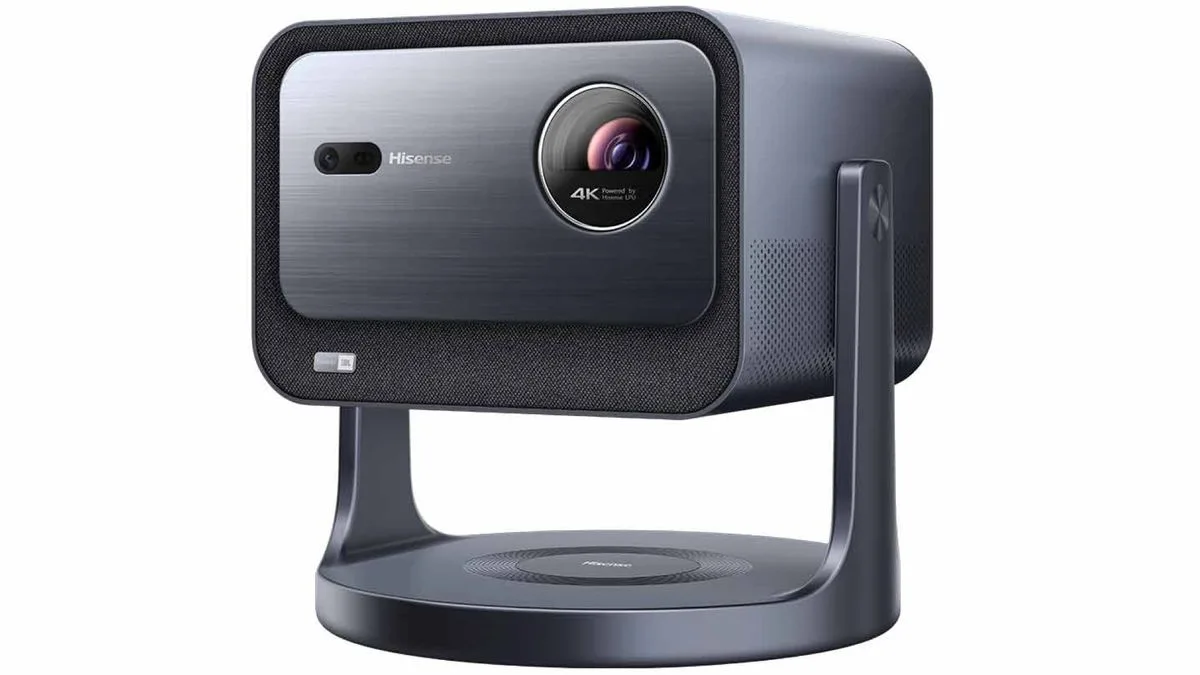
Hisense
is
launching
an
entry
level
version
of
its
C2
Ultra
4K
short-throw
projector.
The
new
Hisense
C2
lacks
some
of
the
more
powerful
bits
of
its
Ultra
sibling,
but
it
comes
in
at
a
considerably
lower
price
and
includes
many
of
the
most
important
features.
The
C2
hasn’t
launched
globally
yet
but
the
full
specification
has
been
published
along
with
marketing
materials
by
a
German
retailer,
as
spotted
by
Notebookcheck.
The
C2
has
a
triple-laser
light
system
just
like
its
more
expensive
sibling,
and
the
brightness
is
2,000
ANSI
lumens
– impressive
for
a
laser
projector,
although
the
C2
Ultra
is
even
brighter.
The
contrast
ratio
is
1,700:1
and
there’s
support
for
HDR10,
HDR10+,
HLG
and
Dolby
Vision.
Hisense
C2
4K
projector:
key
features
and
pricing
The
C2
doesn’t
have
the
zoom
lens
of
the
Ultra,
so
it’s
got
a
fixed
projection
ratio
of
1.2:1.
That
enables
you
to
project
an
image
from
65
inches
to
300
inches,
and
there’s
motorized
focus
adjustment
and
automatic
keystone
correction
to
deliver
images
in
the
right
proportions.
The
quoted
refresh
rate
is
60Hz
at
4K,
but
you
can
double
that
to
120Hz
for
gaming
if
you
drop
down
to
2K/1080p
resolution;
4K
is
delivered
using
a
technique
called
pixel
shifting.
Instead
of
projecting
a
true
4K
image,
pixel
shifting
outputs
multiple
1920
x
1080
images
that
overlap
to
give
the
impression
of
4K.
It’s
been
common
as
a
technique
among
the
best
4K
projectors
for
a
long
time,
although
it’s
often
known
by
different
names:
Epson
calls
it
4K
Enhancement,
BenQ
prefers
XPR
and
JVC
calls
it
E-Shift.
The
big
benefit
here
is
simple:
it
makes
4K
projection
possible
for
a
fraction
of
the
expense,
though
purists
far
prefer
‘native’
4K
resolution
–
and
also,
this
projector
isn’t
that
cheap.
There
are
two
HDMI
inputs
here,
one
with
ALLM
for
games
consoles,
and
there
are
twin
USB
3.0
plus
ethernet
and
a
headphone
jack.
There’s
also
an
integrated
sound
system
by
JBL
with
a
total
output
of
20W.
You
can
stream
with
the
built-in
apps
for
now
and
AirPlay
support
will
be
available
soon
via
a
software
update.
We
don’t
know
global
pricing
yet
but
the
German
listing
has
a
price
tag
of
€1,999,
which
is
roughly
$2,200
/
£1,700
/
AU$3,200.
You
might
also
like
Sign
up
for
breaking
news,
reviews,
opinion,
top
tech
deals,
and
more.
This box can send Dolby Atmos over power lines, for easier home theater setup
There
are
many
terrible
things
in
this
world,
and
I
think
we
can
all
agree
that
running
speaker
cables
is
one
of
the
worst.
That’s
one
of
the
reasons
why
the
best
soundbars
now
have
wireless
subwoofers
and
sometimes
wireless
surround
speakers
too,
but
many
of
those
options
are
manufacturer-specific
and
some
wireless
connections
are
laggy
or
lossy.
US
firm
Fasetto
thinks
it
has
a
better
option:
Dolby
Atmos
via
your
home’s
power
lines.
Its
Audio
Cu
system
delivers
audio
without
lengthy
cabling,
and
it’s
just
been
certified
for
Dolby
Atmos.
Audio
Cu
works
in
much
the
same
way
as
powerline
networking
devices
do:
it
sends
signals
over
the
in-wall
wiring
in
your
home.
Audio
signals
are
sent
from
a
transmitter
attached
to
your
TV
or
AV
receiver,
decoded
by
boxes
that
receive
the
signals,
and
then
sent
to
your
speakers
as
normal.
The
system
supports
surround
sound
setups
up
to
7.1.2
with
Dolby
Atmos
and
should
work
with
any
speakers
with
the
familiar
black
and
red
wiring
terminals.
That’s
the
good
news.
Now
for
the
potentially
not-so-good.
How
much
does
wireless
surround
sound
cost?
We
don’t
know
the
price
yet,
but
it
isn’t
likely
to
be
cheap.
We
know
that
you’ll
need
an
Audio
Cu
receiver
for
each
speaker
as
well
as
the
main
Audio
Cu
transmitter
you’ll
attach
to
one
of
the
best
TVs
or
an
audio
source;
each
receiver
will
need
to
be
its
own
amplifier
as
well
as
a
receiver,
and
of
course
that
ups
the
cost
somewhat.
As
the
technology
is
largely
the
same
as
powerline
networking,
a
look
at
the
best
powerline
adapters
gives
some
indication
of
what
the
prices
will
be
at
a
minimum.
Is
it
worth
it?
According
to
the
firm,
latency
is
down
to
less
than
20
milliseconds,
there’s
virtually
no
packet
loss,
and
the
signals
are
not
affected
by
interference,
which
can
be
an
issue
with
over-the-air
wireless
connections.
A
single
transmitter
can
handle
up
to
10
channels
of
audio,
and
if
you
have
a
mansion
you
can
run
up
to
six
transmitters
in
separate
setups
in
the
same
home,
with
a
max
of
32
audio
channels
in
total.
You
don’t
need
an
AV
receiver
(though
if
you
have
one
of
the
best
4K
projectors,
you
may
well
be
using
one
anyway),
and
all
the
EQ
and
configuration
is
done
in
the
iOS
or
Android
app.
You’ll
also
be
able
to
control
the
volume
via
your
TV
or
projector.
According
to
Fasetto,
“The
future
of
home
audio
connectivity
has
arrived
with
AUDIO
Cu”
and
the
firm
is
“the
only
company
that
has
overcome
all
the
obstacles
of
moving
data
cleanly
over
power
lines
in
all
environments”.
If
the
system
is
as
good
as
it
sounds,
it
could
be
an
interesting
option
for
people
who
want
a
home
theater
setup
without
installing
cables
or
running
them
across
the
floor.
You
can
find
out
more
on
the
Fasetto
website.
Sign
up
for
breaking
news,
reviews,
opinion,
top
tech
deals,
and
more.
You
might
also
like