Ofcom is investigating four companies, operating a total of 34 porn sites, over whether they are complying with its new age check requirements.
The regulator said on Friday more than 6,000 sites allowing pornography and other adult content would start using “highly effective” tools to verify or estimate whether users were over or under the age of 18.
But Ofcom says some sites may be ignoring its new rules – designed to stop children stumbling across porn or other content deemed harmful by lawmakers.
It has opened formal probes into 8579 LLC, AVS Group Ltd, Kick Online Entertainment S.A. and Trendio Ltd, which it says have more than nine million monthly visitors combined across their sites.
“These companies have been prioritised based on the risk of harm posed by the services they operate and their user numbers,” Ofcom said in a press release on Thursday.
The regulator is already investigating a range of platforms over similar suspicions.
It previously opened probes into online message board 4chan and porn provider First Time Videos LLC in June.
“We expect to make further enforcement announcements in the coming weeks and months,” the regulator said.
Technology Secretary Peter Kyle welcomed the announcement and said it “goes to the very heart of what the Online Safety Act is here to do”.
“These laws have nothing to do with censorship or policing adults seeking to access legal content,” he said.
“Those who suggest otherwise are playing politics with child safety and have no practical alternatives for protecting our children from content they should never see – content that can cause lasting, even fatal, damage.”
Age checks online
Since age verification requirements took effect on Friday, people in the UK have been asked to confirm their age across a range of different platforms including social media platforms Reddit and X.
Spotify confirmed to the BBC on Wednesday that it may prompt people in the UK, among other locations including Australia, to confirm their age if accessing music videos rated 18+ by uploaders.
The sweeping rules have prompted a backlash from some who see the requirements as an overreach or potential privacy concern.
More than 400,000 people have now signed a petition calling for the repeal of the Online Safety Act – the law requiring age checks to stop children encountering adult content.
The government said in response it has no plans to withdraw the law.
Some have also criticised the effectiveness of Ofcom’s implementation of UK age check requirements, and their potential circumvention using virtual private networks.
Apps providing free VPNs – which allow people to disguise their location online, in order to access the web from a different location – topped free app download charts on Apple’s App Store after the rules came into effect on Friday.
Ofcom has defended the measures as no “silver bullet” but said they will help make the internet safer for children by reducing the chance of them “stumbling across porn”.
Messaging has been turned off on the women’s dating safety app Tea, following a hack which has exposed thousands of images, posts and comments.
In a new statement the company said: “As part of our ongoing investigation into the cybersecurity incident involving the Tea App, we have recently learned that some direct messages (DMs) were accessed as part of the initial incident.”
The app, which allows women to do background checks on men they might date, first said it had been hacked in late July.
It’s a US-based women-only app with 1.6 million users, who have been told to expect further updates as more information becomes available.
“Our team remains fully engaged in strengthening the Tea App’s security, and we look forward to sharing more about those enhancements soon,” the company said.
“In the meantime, we are working to identify any users whose personal information was involved and will be offering free identity protection services to those individuals.”
A report from tech publication 404 Media claims some of the exposed messages include sensitive conversations around abortions and infidelity.
“Conversations could include names, details of past relationships, or other private material, opening the door to blackmail or emotional harm,” cybersecurity expert Rachael Percival told the BBC.
She said Tea users should accept free identity protection from the company as soon as it’s offered.
“It may include credit monitoring, fraud alerts, and identity theft insurance,” she said.
Images hacked
Kevin Marriott, senior manager of at cybersecurity firm Immersive, said Tea’s update will be “concerning for users who have shared personal details, addresses, and meet-up locations”.
“The fact that criminals potentially have both images and the associated account’s direct messages should raise the level of concern among users.”
Mr Marriott said users should remain vigilant as they wait to see what hackers plan to do with the stolen information.
Tea lets women check whether potential partners are married or registered sex offenders as well as run reverse image searches to protect against “catfishing”, where people use fake online identities.
One of the most controversial aspects of Tea is that it allows women to share information on men they have dated to “avoid red flags” – potentially abusive behaviours – but also highlight those with “green flag” qualities.
It previously revealed that hackers had accessed 72,000 images submitted by its users.
Some included images of women holding photo identification for verification purposes, which Tea’s own privacy policy promises are “deleted immediately” after authentication.
Tea said the breach affected members who signed up before February 2024.
The app has recently experienced a surge in popularity – as well as criticism from some who claim it is anti-men.
EE is introducing new phone plans next month which it says will restrict the internet for teens – so long as they don’t use wi-fi.
Its new Sim-only mobile plans will filter the web at different levels depending on the age of the child using it, with three separate tiers of protections.
The plans will also have other features such as reduced internet speeds for younger teens to “limit streaming”, as well as protecting against scam calls.
But EE can only control what is accessed by using mobile data using its network – meaning it cannot filter content accessed via wi-fi, which is operated separately.
The mobile network operator, which has 25m customers, says it is the UK’s first major network to introduce smartphone plans for under-18s.
Firms operating mobile networks in the UK are already required by the regulator Ofcom to ensure only adults can access adult content while using their network.
They do this by filtering and blocking access to websites deemed 18+ according to the British Board of Film Classification.
This can mean attempting to visit a platform such as a porn site using a 4G or 5G connection, rather than wi-fi, can result in the page not displaying.
Users are typically required to verify that they are an adult – and the account holder – through a credit card check or by logging into their account online to change their settings.
What are the plans?
Despite EE’s content restrictions not applying to content viewed using wi-fi, the firm believes its new plans still provide teen smartphone users and parents with more protections.
Its Sim-only plans will be available for use on all smartphones and start from £7 per month, when launched in August.
EE’s three tiers offer different levels of protections depending on the age of the user, with its “protected” plan for pre-teens having “strict” controls while its “guided” and “trusted” plans for older teens having “moderate” controls for web access.
Each of the plans also has protections against receiving scam calls.
“As the UK’s best network for families, we understand that while smartphones offer many benefits to people, there are also very real risks and challenges, especially for young people,” said Claire Gillies, head of the consumer division of BT, which owns EE.
“As a parent of a teenager, I too have had to balance the benefits and challenges that come with giving our children their first smartphone.”
‘Like mum in the old days’
EE’s new mobile plans will add to the dozens of safety features at app-level, website-level and device-level designed to help parents protect their children from harmful content.
But many adults report feeling confused and overwhelmed by them.
EE ambassador and TV presenter Konnie Huq said at a launch event for the new plans she felt “like her mum in the old days” – who she recalled struggling to work the family’s TV remote controls.
Meta, which owns Instagram and WhatsApp, says take-up of its numerous parental controls is relatively low.
Technology analyst Paolo Pescatore told the BBC that EE’s plans are “a huge step in the right direction” but implementation of such controls “is no easy feat”.
“Unfortunately, some users struggle to get a phone signal and are forced to rely on wi-fi,” he said.
“Making these initiatives more technology-agnostic will remove some of the complexities and make them easier to access.”
In-store chats
As well as its different plans for children, EE is offering in-store appointments for families to receive guidance about using smartphones safely.
It will also launch a resource it says can help parents navigate conversations with children about owning a phone.
“Many parents tell us that they are overwhelmed when it comes to online safety for their children, and don’t know where to start,” said Carolyn Bunting MBE, head of children’s safety charity Internet Matters.
She said they were “positive steps to support families” and told the BBC the plans could be more effective than banning teens from platforms altogether.
“If we just ban kids there is no impetus for the tech companies to create safe spaces,” she Ms Bunting.
It comes amid a broader shift towards tech companies making it more difficult for children to stumble upon harmful or explicit content.
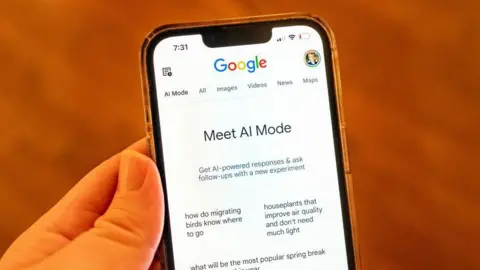
Google is rolling out a new tool in the UK that will generate results using artificial intelligence (AI), in a significant shake-up to the world’s most popular search engine.
Instead of a list of search results showing links to other websites in blue type, people who choose “AI Mode” will be given an answer written in a conversational style, containing far fewer links to other pages.
The new search tool will not replace Google’s existing search platform, which processes billions of queries every day.
But experts predict such tools will increasingly incorporate AI, a shift that is concerning organisations, firms and publishers, which rely on search traffic.
People are increasingly turning to AI chatbots such as ChatGPT instead of traditional search engines to find quick, simple answers to questions, even though they are not always accurate.
Google itself already includes a brief AI-generated “overview” in the listed results for some searches.
And the new tool, which uses Google’s Gemini AI platform to generate its answers, has already been launched in the US and India.
It is being rolled out in the UK over the next few days.
For now, AI Mode will be optional and will appear both as a tab and an option within the search box itself.
Complicated queries
The tech giant said it was responding to changes in the way people use its search engine to ask more complicated questions.
“About two years ago, if you spilled coffee on your carpet, you would have [searched for] ‘clean carpet stain’,” said Google’s product manager for search, Hema Budaraju.
“That’s how you would have probably keyworded your way through.
“Now, my query is likely to be, ‘I spilled coffee on my Berber carpet, I’m looking for a cleaner that is pet friendly’.”
Getty Images
The BBC was unable to test the tool with its own questions during the demo because the tool had not yet been activated in the UK.
But Google provided a demo using the example of someone searching for suitable places to take a young family strawberry picking.
However, the answers it provided seemed to be spread over a wide geographical area. It featured a handful of links to businesses, including their locations on a map, but they came lower down in the response, compared to a traditional Google search.
Clicking links
Businesses, from retailers to news publishers, currently rely on web traffic funnelled their way from Google’s search results. Firms can pay for prime spots on the results lists, as a form of advertising.
A shift towards AI-generated responses, containing fewer direct links, could up-end that model.
Ms Budaraju said the firm had not yet finalised how advertising revenue for AI Mode would work, or whether firms would be able to pay to be included in the response.
But it is already concerning some businesses, who say people are less likely to click through to their websites via the links contained in an AI summary.
Ms Budaraju disagreed with this characterisation.
“I would say that I think people are going to use these technologies to unlock newer information-seeking journeys,” she said.
“These kind of questions didn’t happen before, and now you made it really possible for people to express anything a lot more naturally.”
The Daily Mail claims the number of people who click its links from Google search results has fallen by around 50% on both desktop and mobile traffic since Google introduced its AI Overview feature.
And a recent study by the Pew Research Centre suggested that people only clicked a link once in every 100 searches when there was an AI summary at the top of the page. Google argues the research methodology in that study was flawed.
News model
Rosa Curling, director of the campaign group Foxglove which commissioned the research, said she was concerned what the increased use of AI might mean for news organisations.
Although AI-generated summaries are often inaccurate, people weren’t clicking through to the original news items they were based on, she said, undermining the business models of news organisations.
“What the AI summary now does is makes sure that the readers’ eyes stay on the Google web page,” she said.
“And the advertising revenue of those news outlets is being massively impacted.”
Google said it already generates more than two billion AI Overview boxes every day in more than 40 languages, although not in the EU, where legislation procludes it.
There are also significant concerns about the environmental impact of increased AI use. Running AI requires huge data centres that use a lot of power and clean water.
Ms Budaraju said Google remained committed to sustainability.
“We are constantly, as Google and as Search, evolving sustainable ways to serve technology,” she said.
A dating safety app that allows women to do background checks on men and anonymously share “red flag” behaviour has been hacked, exposing thousands of members’ images, posts and comments.
Tea Dating Advice, a US-based women-only app with 1.6 million users, said there had been “unauthorised access” to 72,000 images submitted by women.
Some included images of women holding photo identification for verification purposes, which Tea’s own privacy policy promises are “deleted immediately” after authentication.
Tea said the breach affected members who signed up before February 2024. It added it had “acted fast” and was “working with some of the most trusted cyber security experts”.
The app has recently experienced a surge in popularity – as well as criticism from some who claim it is anti-men.
Tea lets women check whether potential partners are married or registered sex offenders as well as run reverse image searches to protect against “catfishing”, where people use fake online identities.
But one of the most controversial aspects of Tea is that it allows women to share information on men they have dated to “avoid red flags” but also highlight those with “green flag” qualities.
The company said the breached photos “can in no way be linked to posts within Tea”.
The firm blocks screenshots so that posts are not shared outside the app.
But on Friday it also admitted that an additional 59,000 images from the app showing posts, comments and direct messages from over two years ago were accessed.
Tea said: “We’re taking every step to protect this community – now and always.”
BBC News has contacted Tea for comment.
The company was set up in November 2022 by Sean Cook, a software engineer who said he was inspired to create Tea after witnessing his mother’s online dating experiences.
He told Medium in May: “I was shocked by how easy it was for catfish, scammers and criminals to take advantage of women on dating apps and how little traditional dating apps do to protect users.”
However, some men – and women – have challenged these types of groups claiming that they put men at risk of invasion of privacy and defamation.
Earlier this year, an individual named Nikko D’Ambrosio took legal action against Facebook’s owner Meta because of a number of statements made about him in a chat group called “Are We Dating the Same Guy”.
The lawsuit was thrown out by a federal judge in Illinois.
Around 6,000 sites allowing porn in the UK will start checking if users are over 18 on Friday, according to the media regulator Ofcom.
Dame Melanie Dawes, its chief executive, told the BBC “we are starting to see not just words but action from the technology industry” to improve child safety online.
She told BBC Radio Four’s Today programme that “no other country had pulled off” such measures, nor gained commitments from so many platforms, including Elon Musk’s X, around age verification.
But the BBC understands at least one major porn site operating in the UK does not seem to be requiring age checks as of Friday morning.
And experts remain sceptical about the effectiveness of Ofcom’s age checks and how easy it may be for people, particularly children, to circumvent them.
Ofcom said on Thursday that more platforms, including Discord, X (formerly Twitter), social media app Bluesky and dating app Grindr, had agreed to bring in age checks.
The regulator had already received commitments from sites such as Pornhub – the UK’s most visited porn website – and social media platform Reddit.
Requirements to verify age on Reddit appear to have taken effect across a wide range of its individual, topic-based subreddits, such as those dedicated to discussions about alcohol.
The Technology Secretary Peter Kyle told BBC Newsbeat the UK’s new rules apply “common sense” to regulating the internet.
“We’re very used to proving our age in lots of different areas of life at the moment, and it makes sense that we do so more assertively when it comes to online activity,” he said.
“I think people actually think it’s pretty weird that you are age checked when you want to buy a can of Monster, but you’re not age checked when you access certain material online.”
The UK’s new online safety rules, explained:
Chris Sherwood, chief executive of children’s charity the NSPCC, said Friday’s new rules mean services “can no longer evade their duty for protecting children”.
He added it was “high time for tech companies to step up” and prevent children encountering harmful content on their platforms.
“Children, and their parents, must not solely bear the responsibility of keeping themselves safe online,” he said.
For Prof Elena Martellozzo, professor of child sexual exploitation and abuse research at the University of Edinburgh, the rules send a message to the tech industry that “child safety and child protection are not optional”.
“Failing to act is no longer excusable under the guise of technical complexity or business models,” she added.
‘More to be done’
Not all believe Ofcom’s rules go far enough to protect children as intended, however.
The Molly Rose Foundation, a charity founded by the family of Molly Russell – who took her own life at the age of 14 after seeing harmful content online – has said stronger legislation is needed to better protect children.
Andy Burrows, the charity’s chief executive, said Ofcom has prioritised “the business needs of big tech over children’s safety”, with thresholds for requirements and estimated costs for changes falling short of what is needed to force the largest companies to take action.
Derek Ray-Hill, interim head of the Internet Watch Foundation, meanwhile welcomed the new rules for sites allowing porn but said “there is still more to be done”.
He said platform operators should be considering how to make them safer by design and “doing everything they can to make sure we are building an internet that is safe for everyone”.
Others have have expressed concern that people may seek ways to circumvent so-called age gates on porn sites – potentially pushing them towards less regulated spaces with more dangerous and explicit sexual material.
“A lot of the porn out there is incredibly derogative to women and there’s a lot of violence and aggression,” said Reed Amber Thomas-Litman, a sex worker and educator.
“Of course people, not just kids or young adults, are going to mimic that.”
She told Newsbeat providing information about porn as part of the sex education curriculum could “help young adults understand it is a fantasy, it is not reality”.
Age checks could also negatively impact people who do not feel comfortable sharing their identity, such as LGBTQ+ people, she said.
“If you have to hand over your ID, that means you have no protection where that information is going,” she said.
“It could go to third party companies and who knows what they’ll do with that information.”
Many of the sites which operate age verification services say they do not retain ID, videos or images required for them to carry out age checks for any longer than necessary.
A network outage affecting thousands of EE and BT customers has been resolved, a spokesperson has said.
Customers reported they were unable to make or receive calls as the mobile phone and landline networks faced an outage.
Some customers reported issues with making 999 calls, but the government said these had “now been restored”.
A spokesperson from BT, which owns EE, apologised for the outage and said it has “resolved the problem and the service is running as normal”.
The spokesperson said late on Thursday the issue happened “following a technical fault impacting voice services on our network earlier today”.
Outages tracker Downdetector, which relies on self-reported user data, showed over 2,500 EE customers experiencing outages at 14:00 BST, with many also reporting issues with other networks.
Vodafone and Three confirmed to the BBC that they did not have network issues.
Other networks had seen spikes in reports of outages on Downdetector – but these were likely to be customers from networks unable to connect to EE or BT phone numbers.
Social media users had been posting about a loss of services of both EE and BT mobile and landline services.
999 calls
BT said customers should use 999 as normal.
However, on Thursday afternoon, Devon and Somerset Fire and Rescue Services posted on social media to say there was “a fault with the mobile phone network, including 999 calls”.
But they posted an update at 15:01 BST on X to say 999 calls had returned to normal.
South Western Ambulance Service then posted on X to confirm there was an issue.
The Department of Science, Innovation and Technology said the outage had “impacted some customers’ ability to make and receive calls between EE and other networks.
“EE and BT digital voice calls to 999 have now been restored.”
A spokesperson added: “Communications providers have statutory obligations to ensure their networks and services are appropriately resilient.”
Customer impact
EE and BT customer service phone lines were currently down for much of Thursday afternoon.
One customer posted on an EE forum to say they could not access the help line to arrange an “urgent refund,” while another was unable to get through on behalf of their elderly parents, who made an order with EE.
The UK communications regulator Ofcom said it was in contact with BT “to establish the scale and cause of the problem as soon as possible”.
“Mobile networks and landlines are vital to reach essential and emergency services, it’s important for customers to be reconnected as soon as possible – and kept up to date with developments,” said Ernest Doku, Uswitch mobiles expert.
“If your landline stops working, you will be entitled to compensation if it has not been fixed within two days, but make sure to report the issue to your provider as soon as it happens,” he said.
The issue may have also impacted some customers of mobile phone operators which “piggyback” on EE’s network, with 1pMobile saying it was aware of some issues “affecting a small number of customers”.
“We apologise for any inconvenience caused and the EE network engineers are working on the issue currently,” it said.
Lyca Mobile and Spusu have been contacted for comment.
BT Group has more than 30 million customers in the UK and made £20.4bn revenue in the last financial year.
Apple and Google may be required to change the way they operate some of their mobile services in the UK, according to proposed decisions by the UK’s competition regulator.
The Competition and Markets Authority (CMA) is investigating the tech giants over their app stores, browsers and operating systems.
“Around 90-100% of UK mobile devices running on Apple or Google’s mobile platforms,” the CMA said, adding this means the firms “hold an effective duopoly”.
Apple said it is concerned the ruling would negatively impact its customers in the UK, while Google called the decision “both disappointing and unwarranted”.
A law which came in last year means the regulator can demand changes at a firm if it is found to hold too much market power.
The proposed decision would designate Apple and Google as having “strategic market status”.
The companies have a month to make their cases to the CMA, before a final decision will be made in October.
If it is finalised, the companies may have to make changes to their services in a way that the regulator says promotes competition and gives more choice to consumers.
The CMA is focusing on the companies’ app stores, including how prominent Apple and Google’s own apps are compared with rival apps.
CMA Chief Executive Sarah Cardell said the proposals “would enable UK app developers to remain at the forefront of global innovation while ensuring UK consumers receive a world-class experience”.
What do Apple and Google say?
“We’re concerned the rules the UK is now considering would undermine the privacy and security protections that our users have come to expect, hamper our ability to innovate, and force us to give away our technology for free to foreign competitors,” an Apple spokesperson said.
“We will continue to engage with the regulator to make sure they fully understand these risks.”
Google’s Senior Director of Competition Oliver Bethell said it was “crucial that any new regulation is evidence-based, proportionate and does not become a roadblock to growth in the UK.”
He added the Android operating system, Chrome browser and Play app store “enable great choice, security and innovation for users”.
“We remain committed to constructive engagement with the CMA for the duration of this process,” he added.
Android and Blink, the engine which powers the Chrome browser, are open source, which means developers can use their underlying code for free.
Google’s view is this enables greater competition and allows for cheaper products to be made.
Consumer rights group Which? welcomed the probe from the regulator.
“While these companies have driven innovation, their dominance is now causing real harm to consumers and to the businesses that depend on them,” said Rocio Concha, director of policy and advocacy.
Worldwide regulation
Apple and Google, along with other tech giants, are subject to a number of competition and regulation investigations in the UK, EU and US, under new laws introduced recently in each region.
The EU’s enforcement arm accused it of breaching the law by restricting the ability of app developers to promote alternative marketplaces to App Store users.
The company is fighting similar allegations concerning payment options in its App Store in the US.
CMA boss Sarah Cardell said while there were “tremendous benefits” to Google search – which accounts for more than 90% of UK searches – its probe suggested there may be ways to make the sector more open and competitive.
The watchdog said it was not accusing Google of anti-competitive practices but would set out a “roadmap” of changes it could make to its business ahead of a final decision in October.
OpenAI, the firm behind ChatGPT, has signed a deal to use artificial intelligence (AI) to increase productivity in the UK’s public services, the government has announced.
The agreement signed by the firm and the science department could give OpenAI access to government data and see its software used in education, defence, security, and the justice system.
Technology Secretary Peter Kyle said that “AI will be fundamental in driving change” in the UK and “driving economic growth”.
But digital privacy campaigners said the partnership showed “this government’s credulous approach to big tech’s increasingly dodgy sales pitch”.
The agreement says the UK and OpenAI may develop an “information sharing programme” and will “develop safeguards that protect the public and uphold democratic values”.
It also says they will explore investment in AI infrastructure, which usually involves building or expanding data centres – large banks of computer servers which power AI.
And OpenAI will expand its London office, which it says currently employs more than 100 people.
The commitment is a statement of intent, rather than a legally-binding deal, which sets out the goals of a partnership between the UK government and OpenAI.
OpenAI chief executive Sam Altman said the plan would “deliver prosperity for all”.
The collaboration could potentially free up “highly skilled public servants to focus on the difficult one-in-a-million situations that AI might struggle to address,” said Dr Gordon Fletcher, associate dean for research and innovation at the University of Salford.
But he said the challenge was whether it could “really be done transparently and ethically, with minimal data drawn from the public”.
Digital rights campaign group Foxglove called the agreement “hopelessly vague”.
Co-executive Director Martha Dark said the “treasure trove of public data” the government holds “would be of enormous commercial value to OpenAI in helping to train the next incarnation of ChatGPT”.
“Peter Kyle seems bizarrely determined to put the big tech fox in charge of the henhouse when it comes to UK sovereignty,” she said.
Peter Kyle dined with Sam Altman in March and April of this year, according to transparency data released by the government.
In a recent podcast interview with former Downing Street adviser Jimmy McLoughlin, Kyle said he has to deal with “global companies which are innovating on a scale the British state cannot match”.
At the time, Tim Flagg, chief operating officer of UKAI – a trade body representing British AI businesses – said the proposals took a “narrow view” of the sector’s contributors and focus too much on big tech.
The UK government has made clear it is open to US AI investment, having struck similar deals with OpenAI’s rivals Google and Anthropic earlier this year.
It said its OpenAI deal “could mean that world-changing AI tech is developed in the UK, driving discoveries that will deliver growth”.
It already uses OpenAI models in a set of AI-powered tools designed to increase productivity in the civil service, dubbed “Humphrey”.
Generative AI software like OpenAI’s ChatGPT can produce text, images, videos, and music from prompts by users.
The technology does this based on data from books, photos, film footage, and songs, raising questions about potential copyright infringement or whether data has been used with permission.
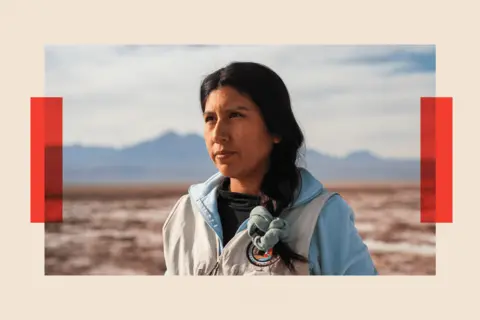
Raquel Celina Rodriguez watches her step as she walks across the Vega de Tilopozo in Chile’s Atacama salt flats.
It’s a wetland, known for its groundwater springs, but the plain is now dry and cracked with holes she explains were once pools.
“Before, the Vega was all green,” she says. “You couldn’t see the animals through the grass. Now everything is dry.” She gestures to some grazing llamas.
For generations, her family raised sheep here. As the climate changed, and rain stopped falling, less grass made that much harder.
But it worsened when “they” started taking the water, she explains.
Ben Derico/BBC
“They” are lithium companies. Beneath the salt flats of the Atacama Desert lie the world’s largest reserves of lithium, a soft, silvery-white metal that is an essential component of the batteries that power electric cars, laptops and solar energy storage.
As the world transitions to more renewable energy sources, the demand for it has soared.
In 2021, about 95,000 tonnes of lithium was consumed globally – by 2024 it had more than doubled to 205,000 tonnes, according to the International Energy Agency (IEA).
By 2040 it’s predicted to rise to more than 900,000 tonnes.
Most of the increase will be driven by demand for electric car batteries, the IEA says.
Locals say environmental costs to them have risen too.
So, this soaring demand has raised the question: is the world’s race to decarbonise unintentionally stoking another environmental problem?
Flora, flamingos and shrinking lagoons
Chile is the second-largest producer of lithium globally after Australia. In 2023, the government launched a National Lithium Strategy to ramp up production through partly nationalising the industry and encouraging private investment.
Its finance minister previously said the increase in production could be by up to 70% by 2030, although the mining ministry says no target has been set.
This year, a major milestone to that is set to be reached.
Ben Derico/BBC
A planned joint enterprise between SQM and Chile’s state mining company Codelco has just secured regulatory approval for a quota to extract at least 2.5 million metric tonnes of lithium metal equivalent per year and boost production until 2060.
Chile’s government has framed the plans as part of the global fight against climate change and a source of state income.
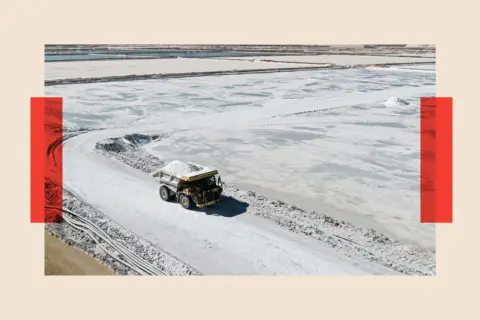
Mining companies predominantly extract lithium by pumping brine from beneath Chile’s salt flats to evaporation pools on the surface.
The process extracts vast amounts of water in this already drought-prone region.
Ben Derico/BBC
Faviola Gonzalez is a biologist from the local indigenous community working in the Los Flamencos National Reserve, in the middle of the Atacama Desert, home to vast salt flats, marshes and lagoons and some 185 species of birds. She has monitored how the local environment is changing.
“The lagoons here are smaller now,” she says. “We’ve seen a decrease in the reproduction of flamingos.”
She said lithium mining impacts microorganisms that birds feed on in these waters, so the whole food chain is affected.
She points to a spot where, for the first time in 14 years, flamingo chicks hatched this year. She attributes the “small reproductive success” to a slight reduction in water extraction in 2021, but says, “It’s small.”
“Before there were many. Now, only a few.”
The underground water from the Andes, rich in minerals, is “very old” and replenishes slowly.
“If we are extracting a lot of water and little is entering, there is little to recharge the Salar de Atacama,” she explains.
Lucas Aguayo Araos/Anadolu Agency via Getty Images
Damage to flora has also been found in some areas. On property in the salt flats, mined by the Chilean company SQM, almost one-third of the native “algarrobo” (or carob) trees had started dying as early as 2013 due to the impacts of mining, according to a report published in 2022 by the US-based National Resources Defense Council.
But the issue extends beyond Chile too. In a report for the US-based National Resources Defense Council in 2022, James J. A. Blair, an assistant professor at California State Polytechnic University, wrote that lithium mining is “contributing to conditions of ecological exhaustion”, and “may decrease freshwater availability for flora and fauna as well as humans”.
He did, however, say that it is difficult to find “definitive” evidence on this topic.
Mitigating the damage
Environmental damage is of course inevitable when it comes to mining. “It’s hard to imagine any kind of mining that does not have a negative impact,” says Karen Smith Stegen, a political science professor in Germany, who studies the impacts of lithium mining across the world.
The issue is that mining companies can take steps to mitigate that damage. “What [mining companies] should have done from the very beginning was to involve these communities,” she says.
For example, before pumping lithium from underground, companies could carry out “social impact assessments” – reviews which take into account the broad impact their work will have on water, wildlife, and communities.
Getty Images
For their part, mining companies now say they are listening. The Chilean firm SQM is one of the main players.
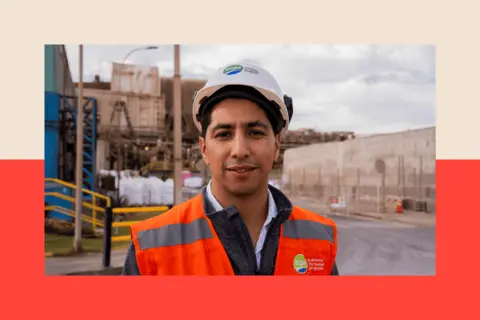
At one of their plants in Antofagasta, Valentín Barrera, Deputy Manager of Sustainability at SQM Lithium, says the firm is working closely with communities to “understand their concerns” and carrying out environmental impact assessments.
He feels strongly that in Chile and globally “we need more lithium for the energy transition.”
He adds that the firm is piloting new technologies. If successful, the idea is to roll these out in their Salar de Atacama plants.
These include both extracting lithium directly from brine, without evaporation pools, and technologies to capture evaporated water and re-inject it into the land.
“We are doing several pilots to understand which one works better in order to increase production but reduce at least 50% of the current brine extraction,” he said.
Ben Derico/BBC
He says the pilot in Antofagasta has recovered “more than one million cubic metres” of water. “Starting in 2031, we are going to start this transition.”
But the locals I spoke to are sceptical. “We believe the Salar de Atacama is like an experiment,” Faviola argues.
She says it’s unknown how the salt flats could “resist” this new technology and the reinjection of water and fears they are being used as a “natural laboratory.”
Sara Plaza, whose family also raised animals in the same community as Raquel, is anxious about the changes she has seen in her lifetime.
She remembers water levels dropping from as early as 2005 but says “the mining companies never stopped extracting.”
Ben Derico/BBC
Sara becomes tearful when she speaks about the future.
“The salt flats produce lithium, but one day it will end. Mining will end. And what are the people here going to do? Without water, without agriculture. What are they going to live on?”
“Maybe I won’t see it because of my age, but our children, our grandchildren will.”
She believes mining companies have extracted too much water from an ecosystem already struggling from climate change.
“It’s very painful,” she adds. “The companies give the community a little money, but I’d prefer no money.
“I’d prefer to live off nature and have water to live.”
The impact of water shortages
Sergio Cubillos is head of the association for the Peine community, where Sara and Raquel live.
He says Peine has been forced to change “our entire drinking water system, electrical system, water treatment system” because of water shortages.
“There is the issue of climate change, that it doesn’t rain anymore, but the main impact has been caused by extractive mining,” he says.
He says since it started in the 1980s, companies have extracted millions of cubic metres of water and brine – hundreds of litres per second.
“Decisions are made in Santiago, in the capital, very far from here,” he adds.
He believes that if the President wants to fight climate change, like he said when he ran for office, he needs to involve “the indigenous people who have existed for millennia in these landscapes.”
Lucas Aguayo Araos/Anadolu via Getty Images
Sergio understands that lithium is very important for transitioning to renewable energy but says his community should not be the “bargaining chip” in these developments.
His community has secured some economic benefits and oversight with companies but is worried about plans to ramp up production.
He says while seeking technologies to reduce the impact on water is welcome that “can’t be done sitting at a desk in Santiago, but rather here in the territory.”
Ben Derico/BBC
Chile’s government stresses there has been “ongoing dialogue with indigenous communities” and they have been consulted over the new Codelco-SQM joint venture’s contracts to address concerns around water issues, new technologies and contributions to the communities.
It says increasing production capacity will be based on incorporating new technologies to minimise the environmental and social impact and that the high “value” of lithium due to its role in the global energy transition could provide “opportunities” for the country’s economic development.
Sergio though worries about their area being a “pilot project” and says if the impact of new technology is negative, “We will put all our strength into stopping the activity that could end with Peine being forgotten.”
A small part of a global dilemma
The Salar de Atacama is a case study for a global dilemma. Climate change is causing droughts and weather changes. But one of the world’s current solutions is – according to locals – exacerbating this.
There is a common argument from people who support lithium mining: that even if it damages the environment, it brings huge benefits via jobs and cash.
Daniel Jimenez, from lithium consultancy iLiMarkets, in Santiago, takes this argument a step further.
He claims that environmental damage has been exaggerated by communities who want a pay-out.
Lucas Aguayo Araos/Anadolu Agency via Getty Images
“This is about money,” he argues. “Companies have poured a lot of money into improving roads, schools – but the claims of communities really go back to the fact they want money.”
But Prof Stegen is unconvinced. “Mining companies always like to say, ‘There are more jobs, you’re going to get more money’,” she says.
“Well, that’s not particularly what a lot of indigenous communities want. It actually can be disruptive if it changes the structure of their own traditional economy [and] it affects their housing costs.
“The jobs are not the be all and end all for what these communities want.”
Ben Derico/BBC
In Chile, those I spoke to didn’t talk about wanting more money. Nor are they opposed to measures to tackle climate change. Their main question is why they are paying the price.
“I think for the cities maybe lithium is good,” Raquel says. “But it also harms us. We don’t live the life we used to live here.”
Faviola does not think electrifying alone is the solution to climate change.
“We all must reduce our emissions,” she says. “In developed countries like the US and Europe the energy expenditure of people is much greater than here in South America, among us indigenous people.”
“Who are the electric cars going to be for? Europeans, Americans, not us. Our carbon footprint is much smaller.”
“But it’s our water that’s being taken. Our sacred birds that are disappearing.”
Top image credit: Getty Images. Additional reporting: George Wright
More from InDepth
BBC InDepth is the home on the website and app for the best analysis, with fresh perspectives that challenge assumptions and deep reporting on the biggest issues of the day. And we showcase thought-provoking content from across BBC Sounds and iPlayer too. You can send us your feedback on the InDepth section by clicking on the button below.


 Getty Images