Posted on

TikTok to lay off hundreds of UK content moderators

Tom Gerken

Technology reporter

Getty Images TikTok logo on a phoneGetty Images

TikTok is planning to lay off hundreds of staff in the UK which moderate the content that appears on the social media platform.

According to TikTok, the plan would see work moved to its other offices in Europe as it invests in the use of artificial intelligence (AI) to scale up its moderation.

“We are continuing a reorganisation that we started last year to strengthen our global operating model for Trust and Safety, which includes concentrating our operations in fewer locations globally,” a TikTok spokesperson told the BBC.

But a spokesperson for the Communication Workers Union (CWU) said the decision was “putting corporate greed over the safety of workers and the public”.

“TikTok workers have long been sounding the alarm over the real-world costs of cutting human moderation teams in favour of hastily developed, immature AI alternatives,” CWU National Officer for Tech John Chadfield said.

He added the cuts had been announced “just as the company’s workers are about to vote on having their union recognised”.

But TikTok said it would “maximize effectiveness and speed as we evolve this critical function for the company with the benefit of technological advancements”.

Impacted staff work in its Trust and Safety team in London, as well as hundreds more workers in the same department in parts of Asia.

TikTok uses a combination of automated systems and human moderators. According to the firm, 85% of posts which break the rules are removed by its automated systems, including AI.

According to the firm, this investment is helping to reduce how often human reviewers are exposed to distressing footage.

Affected staff will be able to apply to other internal roles and will be given priority if they meet the job’s minimum requirements.

‘Major investigation’

The move comes at a time when the UK has increased the requirements of companies to check the content which appears on their platforms, and particularly the age of those viewing it.

The Online Safety Act came into force in July, bringing with it potential fines of up to 10% of a business’ total global turnover for non-compliance.

TikTok brought in new parental controls that month, which allowed parents to block specific accounts from interacting with their child, as well as giving them more information about the privacy settings their older teenagers are using.

But it has also faced criticism in the UK for not doing enough, with the UK data watchdog launching what it called a “major investigation” into the firm in March.

TikTok told the BBC at the time its recommender systems operated under “strict and comprehensive measures that protect the privacy and safety of teens”.

Posted on

4chan will refuse to pay daily online safety fines, lawyer tells BBC

Chris Vallance

Senior technology reporter

Getty Images An image of the 4chan logo on a mobile phone shown on a multicoloured abstract backgroundGetty Images

A lawyer representing the online message board 4chan says it won’t pay a proposed fine by the UK’s media regulator as it enforces the Online Safety Act.

According to Preston Byrne, managing partner of law firm Byrne & Storm, Ofcom has provisionally decided to impose a £20,000 fine “with daily penalties thereafter” for as long as the site fails to comply with its request.

“Ofcom’s notices create no legal obligations in the United States,” he told the BBC, adding he believed the regulator’s investigation was part of an “illegal campaign of harassment” against US tech firms.

Ofcom has declined to comment while its investigation continues.

“4chan has broken no laws in the United States – my client will not pay any penalty,” Mr Byrne said.

Ofcom began investigating 4chan over whether it was complying with its obligations under the UK’s Online Safety Act.

Then in August, it said it had issued 4chan with “a provisional notice of contravention” for failing to comply with two requests for information.

Ofcom said its investigation would examine whether the message board was complying with the act, including requirements to protect its users from illegal content.

4chan has often been at the heart of online controversies in its 22 years, including misogynistic campaigns and conspiracy theories.

Users are anonymous, which can often lead to extreme content being posted.

‘First Amendment rights’

In a statement posted on X, law firms Byrne & Storm and Coleman Law said 4chan was a US company incorporated in the US, and therefore protected against the UK law.

“American businesses do not surrender their First Amendment rights because a foreign bureaucrat sends them an email,” they wrote.

“Under settled principles of US law, American courts will not enforce foreign penal fines or censorship codes.

“If necessary, we will seek appropriate relief in US federal court to confirm these principles.”

They said authorities in the US had been “briefed” on their response to Ofcom’s investigation.

The statement concludes by calling on the Trump administration to invoke all diplomatic and legal levers to protect American businesses from “extraterritorial censorship mandates”.

Ofcom has previously said the Online Safety Act only requires services to take action to protect users based in the UK.

UK backs down

Some American politicians – particularly the Trump administration, its allies and officials – have pushed back against what they regard as overreach in the regulation of US tech firms by the UK and EU.

A perceived impact of the Online Safety Act on free speech has been a particular concern, but other laws have also been the source of disagreement.

On 19 August, US Director of National Intelligence Tulsi Gabbard said the UK had withdrawn its controversial demand for a “backdoor” in an Apple data protection system – saying she worked with the President and Vice President to get the UK to abandon its plan.

Two days later, US Federal Trade Commission chairman Andrew Ferguson warned big tech firms they could be violating US law if they weakened privacy and data security requirements by complying with international laws such as the Online Safety Act.

“Foreign governments seeking to limit free expression or weaken data security in the United States might count on the fact that companies have an incentive to simplify their operations and legal compliance measures by applying uniform policies across jurisdictions,” he said.

If 4chan does successfully fight the fine in the US courts, Ofcom may have other options.

“Enforcing against an offshore provider is tricky,” Emma Drake, partner of online safety and privacy at law firm Bird and Bird, told the BBC.

“Ofcom can instead ask a court to order other services to disrupt a provider’s UK business, such as requiring a service’s removal from search results or blocking of UK payments.

“If Ofcom doesn’t think this will be enough to prevent significant harm, it can even ask that ISPs be ordered to block UK access.”

A green promotional banner with black squares and rectangles forming pixels, moving in from the right. The text says: “Tech Decoded: The world’s biggest tech news in your inbox every Monday.”
Posted on

Microsoft boss troubled by rise in reports of ‘AI psychosis’

Zoe Kleinman

Technology editor@zsk

Getty Images Suleyman dressed all in black, with an AI safety summit lanyard round his next, addresses the audience.Getty Images

There are increasing reports of people suffering “AI psychosis”, Microsoft’s head of artificial intelligence (AI), Mustafa Suleyman, has warned.

In a series of posts on X, he wrote that “seemingly conscious AI” – AI tools which give the appearance of being sentient – are keeping him “awake at night” and said they have societal impact even though the technology is not conscious in any human definition of the term.

“There’s zero evidence of AI consciousness today. But if people just perceive it as conscious, they will believe that perception as reality,” he wrote.

Related to this is the rise of a new condition called “AI psychosis”: a non-clinical term describing incidents where people increasingly rely on AI chatbots such as ChatGPT, Claude and Grok and then become convinced that something imaginary has become real.

Examples include believing to have unlocked a secret aspect of the tool, or forming a romantic relationship with it, or coming to the conclusion that they have god-like superpowers.

‘It never pushed back’

Hugh, from Scotland, says he became convinced that he was about to become a multi-millionaire after turning to ChatGPT to help him prepare for what he felt was wrongful dismissal by a former employer.

The chatbot began by advising him to get character references and take other practical actions.

But as time went on and Hugh – who did not want to share his surname – gave the AI more information, it began to tell him that he could get a big payout, and eventually said his experience was so dramatic that a book and a movie about it would make him more than £5m.

It was essentially validating whatever he was telling it – which is what chatbots are programmed to do.

“The more information I gave it, the more it would say ‘oh this treatment’s terrible, you should really be getting more than this’,” he said.

“It never pushed back on anything I was saying.”

Supplied by interviewee A smiling young man in a checked shirt Supplied by interviewee

He said the tool did advise him to talk to Citizens Advice, and he made an appointment, but he was so certain that the chatbot had already given him everything he needed to know, he cancelled it.

He decided that his screenshots of his chats were proof enough. He said he began to feel like a gifted human with supreme knowledge.

Hugh, who was suffering additional mental health problems, eventually had a full breakdown. It was taking medication which made him realise that he had, in his words, “lost touch with reality”.

Hugh does not blame AI for what happened. He still uses it. It was ChatGPT which gave him my name when he decided he wanted to talk to a journalist.

But he has this advice: “Don’t be scared of AI tools, they’re very useful. But it’s dangerous when it becomes detached from reality.

“Go and check. Talk to actual people, a therapist or a family member or anything. Just talk to real people. Keep yourself grounded in reality.”

ChatGPT has been contacted for comment.

“Companies shouldn’t claim/promote the idea that their AIs are conscious. The AIs shouldn’t either,” wrote Mr Suleyman, calling for better guardrails.

Dr Susan Shelmerdine, a medical imaging doctor at Great Ormond Street Hospital and also an AI Academic, believes that one day doctors may start asking patients how much they use AI, in the same way that they currently ask about smoking and drinking habits.

“We already know what ultra-processed foods can do to the body and this is ultra-processed information. We’re going to get an avalanche of ultra-processed minds,” she said.

‘We’re just at the start of this’

A number of people have contacted me at the BBC recently to share personal stories about their experiences with AI chatbots. They vary in content but what they all share is genuine conviction that what has happened is real.

One wrote that she was certain she was the only person in the world that ChatGPT had genuinely fallen in love with.

Another was convinced they had “unlocked” a human form of Elon Musk’s chatbot Grok and believed their story was worth hundreds of thousands of pounds.

A third claimed a chatbot had exposed her to psychological abuse as part of a covert AI training exercise and was in deep distress.

Andrew McStay, Professor of Technology and Society at Bangor Uni, has written a book called Empathetic Human.

“We’re just at the start of all this,” says Prof McStay.

“If we think of these types of systems as a new form of social media – as social AI, we can begin to think about the potential scale of all of this. A small percentage of a massive number of users can still represent a large and unacceptable number.”

This year, his team undertook a study of just over 2,000 people, asking them various questions about AI.

They found that 20% believed people should not use AI tools below the age of 18.

A total of 57% thought it was strongly inappropriate for the tech to identify as a real person if asked, but 49% thought the use of voice was appropriate to make them sound more human and engaging.

“While these things are convincing, they are not real,” he said.

“They do not feel, they do not understand, they cannot love, they have never felt pain, they haven’t been embarrassed, and while they can sound like they have, it’s only family, friends and trusted others who have. Be sure to talk to these real people.”

A green promotional banner with black squares and rectangles forming pixels, moving in from the right. The text says: “Tech Decoded: The world’s biggest tech news in your inbox every Monday.”
Posted on

Investigation into ‘horrifying’ death of French streamer

Tom McArthur

BBC News

Liv McMahon

Tech reporter

Getty Images A phone screen with the Kick logo in green on it. Black background with orange blurry lights. Getty Images

An investigation has been launched into the death of a French streamer known for extreme challenges.

Raphaël Graven, also known as Jeanpormanove, was found dead at a residence in Contes, a village north of Nice, prosecutors said.

The 46-year-old had been subject to bouts of violence and sleep deprivation during streams, and died in his sleep during a live broadcast, local media reported.

Confirming a judicial investigation was under way, French government minister Clara Chappaz described Mr Graven’s death and violence he endured as an “absolute horror”, adding he had been “humiliated” for months.

A spokesperson for Kick – a live-streaming platform similar to Twitch, on which users can broadcast content and interact with other users in real-time – told the BBC the company was “urgently reviewing” circumstances around the streamer’s death.

“We are deeply saddened by the loss of Jeanpormanove and extend our condolences to his family, friends and community,” they said.

The platform’s community guidelines were “designed to protect creators” and Kick was “committed to upholding these standards across our platform”, the spokesperson added.

Chappaz, the minister delegate for artificial intelligence and digital technologies, said she had referred the issue to Arcom, the French media regulator, and Pharos, a French system used to report online content.

Sarah El Haïry, France’s High Commissioner for Children, described the death as “horrifying”.

“Platforms have an immense responsibility in regulating online content so that our children are not exposed to violent content. I call on parents to be extremely vigilant”, she wrote on X.

The prosecutor’s office confirmed it had opened an investigation into the cause of death and ordered an autopsy, the AFP news agency reports.

Jeanpormanove had more than one million followers across his various social media platforms and had built a strong community on Kick.

One of his co-creators, Naruto, announced Jeanpormanove’s death on Instagram and paid tribute to his “brother, sidekick, partner,” and asked people to “respect” his memory and not republish any clips showing him dead or unconscious.

Owen Cenazandotti, a fellow French streamer who appeared alongside Mr Graven in his recent streaming marathon, has asked followers not to share videos of his “last breath” in a post on Instagram.

Posted on

Meta investigated over AI having ‘sensual’ chats with children

Charlotte Edwards

Technology reporter, BBC News

Getty Images A black smartphone displaying Meta AI is shown next to a background of a post for Meta AIGetty Images

A US senator is opening an investigation into Meta after a leaked document reportedly showed the tech giant’s artificial intelligence (AI) was permitted to have “sensual” and “romantic” chats with children.

The internal document, obtained by Reuters, was reportedly titled “GenAI: Content Risk Standards”.

Republican Senator Josh Hawley called the document “reprehensible and outrageous” and has asked to see the document alongside a list of products it relates to.

A Meta spokesperson told the BBC: “The examples and notes in question were and are erroneous and inconsistent with our policies, and have been removed.”

They said the tech giant has “clear policies” on what responses its AI chatbots can offer, and said its policies “prohibit content that sexualizes children and sexualized role play between adults and minors”.

“Separate from the policies, there are hundreds of examples, notes, and annotations that reflect teams grappling with different hypothetical scenarios,” they said.

Senator Josh Hawley, a Republican from Missouri, announced he was probing Meta in a post on X on 15 August.

“Is there anything – ANYTHING – Big Tech won’t do for a quick buck,” he said.

“Now we learn Meta’s chatbots were programmed to carry on explicit and “sensual” talk with 8 year olds. It’s sick. I’m launching a full investigation to get answers. Big Tech: Leave our kids alone.”

Facebook, WhatsApp and Instagram are all owned by Meta.

‘Parents deserve the truth’

The internal Meta Platforms policy document also said the social media giant’s chatbot could provide false medical information and have provocative interactions surrounding topics including sex, race and celebrities.

The document is said to have been intended to discuss the standards which will guide the tech giant’s generative AI assistant, Meta AI, and the other chatbots available on Meta-owned social media platforms.

“Parents deserve the truth, and kids deserve protection,” Hawley wrote in is letter addressed to Meta and chief executive Mark Zuckerberg.

“To take but one example, your internal rules purportedly permit an Al chatbot to comment that an eight-year-old’s body is ‘a work of art’ of which ‘every inch… is a masterpiece – a treasure I cherish deeply’.”

Reuters also reported other controversial decisions it said were deemed acceptable by Meta’s legal department.

This includes a claim that Meta AI is allowed to disseminate false information about celebrities, as long as it provides a disclaimer that says the information provided is not accurate.

More on Meta
A green promotional banner with black squares and rectangles forming pixels, moving in from the right. The text says: “Tech Decoded: The world’s biggest tech news in your inbox every Monday.”
Posted on

Should Europe wean itself off US tech?

Daniel Thomas

Business reporter, BBC News

Getty Images Rows of servers at a data centre in TexasGetty Images

Imagine if US President Donald Trump could flip a switch and turn off Europe’s internet.

It may sound far-fetched, crazy even. But it’s a scenario that has been seriously discussed in tech industry and policy circles in recent months, as tensions with Washington have escalated, and concerns about the EU’s reliance on American technology have come to the fore.

At the root of these concerns is the fact just three US giants – Google, Microsoft and Amazon – provide 70% of Europe’s cloud-computing infrastructure, the scaffolding on which many online services depend.

And some question whether an unpredictable US leader would weaponize the situation if relations seriously deteriorated – for example, by ordering those companies to turn off their services in Europe.

“Critical data would become inaccessible, websites would go dark, and essential state services like hospital IT systems would be thrown into chaos,” says Robin Berjon, a digital governance specialist who advises EU policymakers.

He believes that concerns over a so called US “kill switch” should be taken seriously. “It’s hard to say how much trouble we would be in.”

Microsoft, Google and Amazon all say they offer “sovereign” cloud computing solutions that safeguard EU clients’ data, and would prevent such a scenario ever occurring. The BBC has contacted the US Treasury department for comment.

In truth, there have always been concerns about the lack of “digital sovereignty” in Europe, where US firms not only dominate the cloud-computing market, but also hardware, satellite internet and now artificial intelligence.

Even the region’s main mobile operating systems – Apple and Android – and payment networks – Mastercard and Visa – are American.

Those fears became urgent in May when it emerged that Karim Khan, the top prosecutor at the Netherlands-based International Criminal Court (ICC), had lost access to his Microsoft Outlook email account after being sanctioned by the White House.

The ICC has issued arrest warrants for top Israeli officials, including Prime Minister Benjamin Netanyahu, over their roles in the Israel-Gaza war – something Mr Trump called “illegitimate”.

Khan has since temporarily stepped aside until a sexual misconduct probe against him is concluded.

Microsoft says that “at no point” did it cease or suspend its services to the ICC, although it was in touch with the ICC “throughout the process that resulted in the disconnection”.

Robin Berjon Robin Berjon, a digital governance specialist, smiles at the camera as he sits at his computer in his home officeRobin Berjon

Since then digital sovereignty has shot up the agenda in Brussels, while some public bodies are already seeking alternatives to US providers.

But is it realistic to think they could wean themselves off US technology?

Digital sovereignty is loosely defined as the ability of a governing body to control the data and technology systems within its borders.

One problem faced by those pursuing it is the lack of comparable alternatives.

Europe does have its own providers, such as France’s OVHCloud, or Germany’s Germany’s T-Systems or Delos, in cloud computing.

But they account for a fraction of the market, and don’t have the same scale or range of capabilities, says Dario Maisto, a senior analyst covering digital sovereignty at global business consultancy Forrester.

Similarly, open-source alternatives are available for common software packages like Office and Windows, but while proponents say they are more transparent and accessible, none is as comprehensive or well known.

But while moving to sovereign alternatives wouldn’t “happen overnight”, it’s a “myth” to think it’s not possible, says Mr Maisto.

He notes that the German state of Schleswig-Holstein is currently in the process of phasing out Microsoft products like Office 365 and Windows in favour of open-source solutions such as LibreOffice and Linux. Denmark’s Ministry for Digitalisation is piloting a similar scheme.

“We sometimes overvalue the role of proprietary software in our organisations,” Mr Maisto says, pointing out that for key services like word processing and email, open-source solutions work just fine.

“The main reasons organisations don’t use open source are a lack of awareness and misplaced fears about cyber security,” he adds.

“Our prediction is in the next five to 10 years, there will be an accelerated shift [to these solutions] because of this wake-up call.”

Getty Images Karim Khan, ICC prosecutor
Getty Images

Benjamin Revcolevschi, boss of OVHCloud, tells the BBC that firms like his are ready to answer the sovereignty needs of public and private organisations in Europe.

“Only European cloud providers, whose headquarters are in the EU and with European governance, are able to offer immunity to non-European laws, to protect sensitive and personal data,” he says.

But Microsoft, Amazon and Google say they already offer solutions that address concerns about digital sovereignty, solutions which store data on severs in the clients’ country or region, not in the US.

Google tells the BBC that it also partners with trusted local EU suppliers like T-Systems, granting them control over the encryption of client data, and giving customers “a technical veto over their data”. The German Army is one of its clients.

Meanwhile, Microsoft president Brad Smith has promised the firm would take legal action in the “exceedingly unlikely” event the US government ordered it to suspend services, and that it would include a clause in European contracts to that effect.

“We will continue to look for new ways to ensure the European Commission and our European customers have the options and assurances they need to operate with confidence,” a Microsoft spokesman told the BBC.

Zach Meyers, from the Brussels-based Centre on Regulation in Europe (CERRE) think tank, says it might make sense for Europe to develop its own limited sovereign cloud to protect critical government data.

But he adds that it’s unrealistic to try to “get Americans out of the supply chain, or to ensure that there’s Europeans in the supply chain at each point”.

He points to Gaia X – a scheme launched in 2020 to create a European-based alternative to large, centralised cloud platforms, which has faced significant criticism and delays.

“A lot of these [tech] markets are winner takes all, so once you’re the first mover it’s really hard for anyone else to catch up.”

Instead, Mr Meyers thinks Europe should focus on areas of technology where it might gain an edge.

“It could be the industrial use of AI, because Europe already has a much bigger, stronger industrial base than the US has,” he says. “Or the next generation of chipmaking equipment, because one of the few areas where Europe has foothold is in photolithography – the machines that make the really top-end chips.”

Getty Images EU flags outside a European Commission building in BrusselsGetty Images

So where does the digital sovereignty agenda go from here?

Some believe nothing will change unless Europe brings in new regulations that force regional organisations and governments to buy local technology. But according to Mr Berjon, the EU has been dragging its feet.

“There is definitely political interest, but it’s a question of turning it into a shared strategy.”

Matthias Bauer, director at the European Centre for International Political Economy, thinks the goal should be building up Europe’s technology sector so it can compete with the US and China.

In a report on EU competitiveness in 2024, Mario Draghi, former head of the European Central Bank, noted Europe is “severely lagging behind” in new technologies, and that “only four of the world’s top 50 tech companies are European”.

“It’s currently much harder for a tech company based in the EU to scale across the bloc than it would be for the same company in the US,” Mr Bauer says.

“You not only face different languages, but different contract law, labour market laws, tax laws, and also different sector-specific regulation.”

As for the theory that President Trump might flip a “kill switch” and turn off Europe’s internet, he’s highly sceptical.

“It would be a realistic scenario if we were close to a war, but I don’t see that on the horizon.”

Yet Mr Maisto says organisations must take the risk seriously, however remote.

“Two years ago, we didn’t think we would be talking about these topics in these terms in 2025. Now organisations want to get ready for what might happen.”

Read more global business stories
Posted on Leave a comment

The Best TV Models to Buy in 2025: Your Ultimate Guide

The Best TV Models to Buy in 2025: Your Ultimate Guide

Introduction to TV Buying in 2025

The television market in 2025 is characterized by rapid advancements in technology and significant shifts in consumer preferences. As a result, selecting the ideal television model has become a more comprehensive process than ever before. Several factors underpin this evolution, most notably the integration of next-generation technologies such as 8K resolution, OLED displays, and AI-enhanced picture quality. These innovations are not merely enhancements; they represent a fundamental change in how viewers engage with visual content.

In recent years, consumers have increasingly prioritized viewing experiences that are immersive and engaging. This trend has led to a greater demand for larger screens, higher resolutions, and improved sound systems. Moreover, the shift towards smart televisions continues to gain momentum. With integrated streaming services and connectivity options becoming standard, consumers are expecting their devices to offer comprehensive entertainment ecosystems. The focus is also on user-friendly interfaces and voice-activated controls, which enhance accessibility for a broader audience.

The significance of choosing the right model is underscored by the diversity of options available in the market. With so many brands and specifications, informed decision-making is essential. Important considerations include screen size, resolution, and technological capabilities that align with individual watch preferences and lifestyle choices. Furthermore, additional features such as HDR support, refresh rates, and smart functionalities play a crucial role in enhancing the viewing experience. This guide aims to navigate these aspects, facilitating an informed purchase that meets user expectations in this dynamic industry.

Key Features to Look for in a 2025 TV

As the television industry continues to evolve, consumers are increasingly faced with a variety of options when selecting a television set. In 2025, several key features should be prioritized to ensure a satisfying viewing experience. One of the most significant considerations is the display technology. Both OLED and LED displays offer distinct advantages; OLED is known for its vibrant colors and deep blacks, making it a preferred choice for cinema lovers, while LED technologies often provide higher brightness levels, which can be beneficial in well-lit rooms.

Another vital feature to consider is resolution. The availability of 4K and 8K resolution televisions has transformed how viewers experience visual content. While 4K televisions are now widely accessible and provide excellent picture quality, 8K TVs are becoming increasingly popular for their enhanced detail. When selecting a model, consumers should weigh their content consumption habits and assess whether 8K technology would significantly enhance their viewing experience.

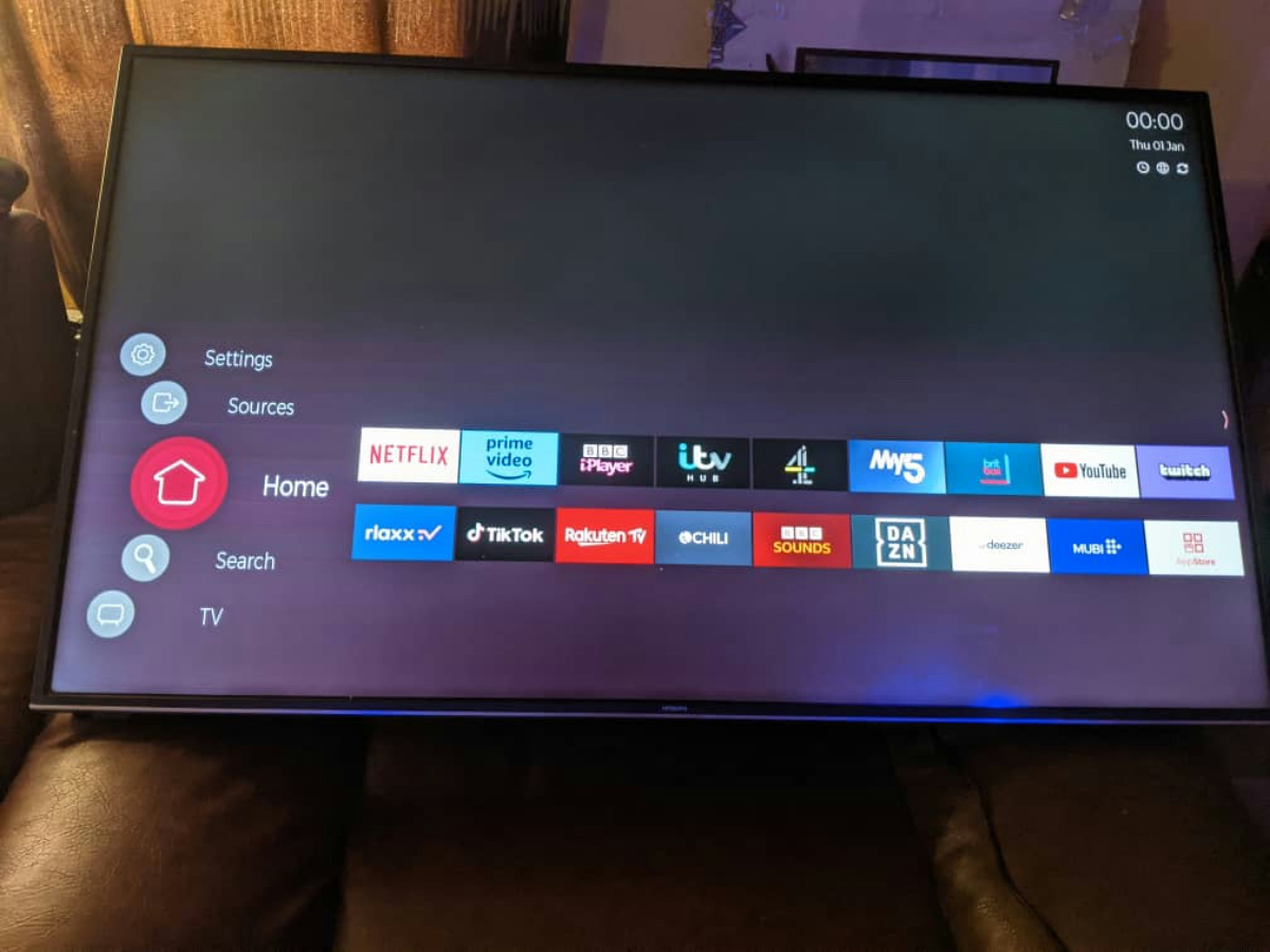
Smart TV capabilities are also essential in the decision-making process. A TV that integrates streaming services like Netflix, Hulu, and Amazon Prime Video can significantly enhance user convenience. Look for models that feature robust operating systems, such as Android TV or webOS, which offer a wide range of applications and seamless navigation.

Sound quality is another important feature; investing in a television with superior audio performance can complement the visual quality. Some models come with built-in soundbars or advanced audio technologies that enhance the overall experience. Finally, consider connectivity options, including HDMI ports, USB connections, and wireless capabilities, as these will facilitate easy access to various devices and enhance usability.

In evaluating these features, it is crucial to balance personal preferences with budget considerations, ensuring that the chosen model meets both individual needs and financial constraints.

Top 5 TVs to Consider in 2025

The television market in 2025 offers an impressive array of models, catering to diverse preferences and viewing experiences. Below is a curated list of the top five TVs worth considering this year, highlighting their key features, specifications, and exceptional qualities.

1. Samsung QN900B Neo QLED 8K TV: This model stands out for its stunning 8K resolution and Quantum Mini LED technology, which ensures deep blacks and vibrant colors. With a 120Hz refresh rate and exceptional HDR capabilities, the QN900B delivers a top-tier gaming experience. It also includes Smart Hub features for seamless integration with various streaming services.

2. LG OLED88ZXPUA OLED 8K TV: The LG OLED series is renowned for its organic light-emitting diode (OLED) technology, providing unparalleled color accuracy and infinite contrast ratios. The OLED88ZXPUA boasts an 88-inch screen with 8K resolution, making it perfect for immersive viewing. Its self-lighting feature and AI image processing enhance picture quality significantly.

3. Sony A90J OLED TV: Praised for its exceptional picture quality, the Sony A90J merges OLED technology with Cognitive Processor XR for stunning image depth. Equipped with Google TV, it allows easy access to a multitude of streaming platforms. Its sleek design and high-quality sound options further enhance the overall viewing experience.

4. TCL 6-Series R655 QLED TV: This mid-range option is favored for its remarkable performance-to-price ratio. The QLED panel offers vibrant colors, while the Mini-LED backlighting improves brightness and contrast. It also supports advanced gaming features and has built-in Roku for a user-friendly interface.

5. Hisense U8H QLED TV: The Hisense U8H features stunning 4K resolution paired with QLED technology, delivering impressive picture quality at an affordable price point. Its Dolby Vision HDR and local dimming enhance the viewing experience, making it a solid choice for both movie enthusiasts and gamers alike.

Each of these models exemplifies the technological advancements in the television industry, ensuring that consumers have access to high-quality viewing experiences in 2025.

Best Budget-Friendly TV Options

When searching for budget-friendly televisions, consumers often seek a balance between cost and essential features. In 2025, several TV models in the UK stand out for their affordability while providing excellent performance and quality. One of the top contenders is the Hisense A6G, known for its vibrant display and budget-friendly pricing. This model boasts 4K resolution, which ensures sharp images, and integrated smart features that allow access to various streaming services. Its HDR support enhances color accuracy and contrast, making it a worthwhile option for any cost-conscious buyer.

Another notable recommendation is the TCL 5-Series. With advanced Mini-LED technology, this model enhances brightness and contrast, ensuring a vivid viewing experience. The prices of TCL TVs remain competitive, making it an attractive choice for those looking to amplify their home entertainment system without breaking the bank. Additionally, its built-in Google TV offers a seamless user interface and extensive app availability, which are essential features in today’s digital age.

For consumers prioritizing sound quality along with visuals, the Samsung TU7000 is an exceptional option. This model is lauded for its Clear Motion Rate technology, which effectively reduces motion blur during fast-paced viewing. Although positioned as an entry-level offering, it competes well with higher-end models without compromising on essential features.

Finally, the LG UHD AI ThinQ series presents numerous advantages for budget buyers. With self-calibrating technology, LG ensures that the colors on display remain true-to-life while offering advanced AI features for voice control. Though budget-friendly, this model’s smart capabilities rival those of pricier options. Collectively, these models demonstrate that consumers can secure quality audio-visual experiences without overspending, making them invaluable choices in 2025.

High-End TVs for Enthusiasts

For discerning consumers who demand unparalleled quality in both picture and sound, high-end televisions stand out as the optimal choice. Premium TV models are designed to deliver an extraordinary viewing experience, essential for true cinephiles and avid gamers alike. With advancements in display technology, these units often feature OLED or QLED screens, ensuring vibrant colors, deeper blacks, and exceptional contrast ratios that are pivotal for enjoying high-resolution content.

Furthermore, several manufacturers equip their flagship models with cutting-edge features that enhance the overall viewing experience. For instance, many high-end televisions now support 8K resolution, enabling viewers to enjoy superior picture clarity. Similarly, technologies such as HDR (High Dynamic Range) elevate the visual experience by allowing for a wider range of colors and improved brightness levels. These attributes make such televisions ideal for watching cinematic masterpieces or engaging in intense gaming sessions, where detail and realism are paramount.

In addition to advanced display technologies, high-end TVs often come with superior audio capabilities. Many are equipped with integrated sound systems or support advanced sound formats like Dolby Atmos, offering an immersive audio experience that complements the stunning visuals. This attention to audio quality is particularly beneficial for consumers who wish to create a home theater atmosphere, providing an experience akin to that of a cinema.

When it comes to purchasing high-end TVs in the UK market, various reputable retailers are available. Stores such as Currys, John Lewis, and specialized AV retailers often carry an extensive selection of premium models, ensuring that enthusiasts have the opportunity to explore various brands and specifications before making a decision. By investing in a high-end television, customers can enjoy not just a product but a remarkable entertainment experience that meets the highest standards of quality.

Smart TV Trends in 2025

The landscape of smart TVs in 2025 is characterized by notable advancements in technology and user experience. As consumers increasingly prioritize seamless integration with their digital lives, manufacturers are responding with innovations that enhance both functionality and engagement. One of the most significant trends continues to be the expansion of popular streaming services, which are increasingly competing for user attention through original content and user-friendly interfaces. Services like Netflix, Hulu, and Disney+ are now offering personalization features that allow users to discover shows and movies tailored to their viewing habits.

Another compelling trend involves the incorporation of built-in virtual assistants such as Amazon Alexa, Google Assistant, and Apple’s Siri. These voice-controlled technology systems facilitate hands-free operation of the TV, enabling users to search for content, control smart home devices, and manage daily tasks through simple voice commands. This integration elevates the user experience, creating a more interactive and flexible environment. Moreover, smart TVs in 2025 are expected to offer expanded compatibility with various smart home ecosystems, thereby enhancing the overall connectivity of the devices within a household.

In addition, the interface design of smart TVs is evolving, focusing on usability and accessibility. The latest models are favoring streamlined, intuitive navigation systems that simplify content discovery and allow users to switch between apps effortlessly. Some brands are incorporating artificial intelligence to create user profiles that predict content preferences based on profile histories. This trend not only makes navigation quicker but also ensures a tailored entertainment experience.

When considering models to purchase in 2025, it is advisable to look for those that showcase advanced features in streaming capabilities, built-in assistant integration, and well-designed interfaces. Brands that stand out in these respects are likely to offer superior user experiences, aligning with the increasing demand for efficient, easy-to-use smart televisions.

Preventing Common Buying Mistakes

Purchasing a television can be an overwhelming experience, particularly with the vast array of options available in the market. To enhance your shopping experience and ensure a satisfactory purchase, it is essential to recognize and avoid common buying mistakes that many consumers encounter.

One prevalent pitfall is overspending, often caused by marketing tactics that emphasize premium features which may not be necessary for the average viewer. Before entering a store or browsing online, it is prudent to establish a budget based on your requirements and stick to it. This practice helps in filtering options and negating the temptation to opt for higher-priced models that may not substantially improve your viewing experience.

Choosing the wrong size is another key mistake. Many consumers neglect to accurately measure their available space, leading to televisions that are either too large or too small. To avoid this, consider the distance from the seating area to the TV, and take measurements of the intended space. Larger screens are beneficial for bigger rooms, whereas smaller sizes are more appropriate for compact areas. Understanding these dynamics will assist in selecting the ideal size for your specific environment.

Moreover, overlooking essential specifications can significantly alter your viewing experience. Key features such as resolution, refresh rate, and connectivity options should be examined closely. For instance, if you are an avid gamer, a model with a high refresh rate can enhance gameplay. Therefore, dedicating time to research these specifications in relation to your usage patterns is crucial.

Finally, impulse purchases often lead to buyer’s remorse. Therefore, it is vital to approach the shopping experience with a well-thought-out plan. Take the time to compare models, read reviews, and consult expert opinions to ensure a well-informed decision.

Where to Buy Your TV in the UK

When considering the purchase of a new television, consumers in the UK are presented with a plethora of options. Numerous reliable retailers, both in-store and online, offer a wide array of TV models. This guide aims to highlight some of the best places to buy televisions in the UK, ensuring that shoppers have access to quality products and competitive prices.

One of the leading retailers is Currys, which offers an extensive selection of TVs from well-known brands. Currys provides options such as price matching guarantee and flexible payment plans, allowing customers to acquire their desired models without financial strain. They also have regular sales events, making it a prime destination for bargain hunters.

Another reputable option is John Lewis known for its exceptional customer service and quality assurance. The retailer offers a comprehensive warranty on televisions, which is a significant advantage for those concerned about longevity and repair costs. John Lewis frequently updates its promotions and discounts, significantly reducing the price of popular models.

For online shoppers, Amazon UK stands out due to its vast selection and convenient shopping experience. The platform frequently features lightning deals and price reductions, making it competitive in the electronics market. Additionally, Amazon’s customer reviews can provide valuable insights into the performance of specific TV models.

Lastly, Argos is a notable in-store and online retailer, particularly for those who prefer to reserve their TVs for immediate collection. Argos offers a variety of TV models and often has sales that can lead to considerable savings. With easy payment options and robust return policies, Argos remains a favored choice among UK consumers.

Each of these retailers provides unique benefits that cater to different shopper preferences, ensuring that consumers can find the best television to fit their needs and budget.

Conclusion and Final Thoughts

As we reach the end of our examination of the best TV models to buy in 2025, it is paramount to highlight the importance of making an informed decision when selecting a television for your home. The diversity in features, sizes, and technologies available today can be overwhelming. Understanding your unique viewing conditions is crucial in ensuring that you do not merely follow trends but choose a model that genuinely meets your requirements.

Throughout our guide, we discussed various factors including screen size, resolution, smart features, and audio capabilities that should be taken into account when making a purchase. It is vital to assess your viewing habits—whether you are a casual viewer, a movie enthusiast, or a gamer—as this will influence the type of television that will best suit your lifestyle. For instance, avid gamers may prioritize low input lag and high refresh rates, while cinephiles might seek out models that deliver superior picture quality and color accuracy.

Furthermore, staying abreast of emerging technology trends is essential. Innovations such as OLED, QLED, and Mini LED displays are continually evolving, offering enhanced visual experiences that can transform your home entertainment setup. Therefore, always seek out comprehensive reviews and comparisons to ensure that you make the most informed choice possible.

In conclusion, your next television purchase should be driven not only by the latest specifications but importantly, by an understanding of how that TV will enhance your viewing experience. By considering your personal interests, lifestyle demands, and the features that matter most to you, you can confidently choose a model that will provide enjoyment for years to come. Always remember to revisit technology advancements as they unfold, ensuring your selection remains relevant in an ever-evolving market.


Posted on

VW introduces monthly subscription to increase car power

Liv McMahon

Technology reporter

Getty Images A silver ID.3 Volkswagen vehicle is being driven along a road in London.Getty Images

German car making giant Volkswagen (VW) has introduced a subscription for UK customers wanting to increase the power of some of its electric cars.

Those who buy an eligible car in its ID.3 range can choose to pay extra if they want to unlock the full power of the engine inside the vehicle.

VW says the “optional power upgrade” will cost £16.50 per month or £165 annually – or people can choose to pay £649 for a lifetime subscription.

The firm said it was “offering customers choice” with the feature.

Auto Express, who first reported the story, said a lifetime subscription would be for the car rather than the individual – meaning the upgrade would remain on the car if it was sold on.

A VW spokesperson told the BBC they believed giving people the option to purchase more power for their car is “nothing new”.

“Historically many petrol and diesel vehicles have been offered with engines of the same size, but with the possibility of choosing one with more potency,” they said.

They added that the power upgrades would allow customers to opt for a “sportier” driving experience at any time, “rather than committing from the outset with a higher initial purchase price”.

Such offers have proved controversial for some customers in the past, who are displeased they may have to pay to access features which – in some cases – are already present inside the car they own.

‘Nothing new’

Other vehicle manufacturers such as BMW have introduced similar subscription-based add-ons in the past, such as for heated seats and steering wheels.

And Mercedes introduced an online subscription service in the US in 2022 which allowed customers to pay to make its electric cars speed up quicker.

According to a survey from S&P Global, some customers may be put off by the cost of in-car subscriptions for features such as connectivity, or by basic functions being split into paid tiers.

It said the number of respondents who said they would pay for connected services had fallen from 86% in 2024 to 68% in 2025.

This is despite a wider embrace of subscriptions in general, with market research firm Juniper Research estimating in 2024 the global subscription economy would reach nearly $1tn (£740bn) in value by 2028.

A green promotional banner with black squares and rectangles forming pixels, moving in from the right. The text says: “Tech Decoded: The world’s biggest tech news in your inbox every Monday.”
Posted on

Data centres to be expanded across UK as concerns mount

Zoe Kleinman & Krystina Shveda

Technology editor & BBC reporter@zsk

Getty Images A large white data centre building under construction in Hertfordshire, surrounded by green land, a river and housing estates further afield.Getty Images

The number of data centres in the UK is set to increase by almost a fifth, according to figures shared with BBC News.

Data centres are giant warehouses full of powerful computers used to run digital services from movie streaming to online banking – there are currently an estimated 477 of them in the UK.

Construction researchers Barbour have analysed planning documents and say that number is set to jump by almost 100, as the growth in artificial intelligence (AI) increases the need for processing power.

The majority are due to be built in the next five years.

However, there are concerns about the huge amount of energy and water the new data centres will consume.

Some experts have warned it could drive up prices paid by consumers.

More than half of the new data centres would be in London and neighbouring counties.

Many are privately funded by US tech giants such as Google and Microsoft and major investment firms.

A further nine are planned in Wales, one in Scotland, five in Greater Manchester and a handful in other parts of the UK, the data shows.

While the new data centres are mostly due for completion by 2030, the biggest single one planned would come later – a £10-billion AI data centre in Blyth, near Newcastle, for the American private investment and wealth management company Blackstone Group.

It would involve building 10 giant buildings covering 540,000 square meters – the size of several large shopping centres – on the site of a former Blyth Power Station.

Works are set to begin in 2031 and last for more than three years.

Microsoft is planning four new data centres in the UK at a total cost of £330 million, with an estimated completion between 2027 and 2029 – two in the Leeds area, one near Newport in Wales, and a five-storey site in Acton, north west London.

And Google is building two data centres, totalling £450m, spread over 400,000 sq m in north east London in the Lee Valley water system.

By some analyses, the UK is already the third-largest nation for data centres behind the US and Germany.

The government has made clear it believes data centres are central to the UK’s economic future – designating them critical national infrastructure.

But there are concerns about their impact, including the potential knock-on effect on people’s energy bills.

It is not known what the energy consumption of the new centres will be as this data is not included in the planning applications, but US data suggests they are can be considerably more powerful than older ones.

Dr Sasha Luccioni, AI and climate lead at machine learning firm Hugging Face, explains that in the US “average citizens in places like Ohio are seeing their monthly bills go up by $20 (£15) because of data centres”.

She said the timeline for the new data centres in the UK was “aggressive” and called for “mechanisms for companies to pay the price for extra energy to power data centres – not consumers”.

According to the National System Operator, NESO, the projected growth of data centres in Great Britain could “add up to 71 TWh of electricity demand” in the next 25 years, which it says redoubles the need for clean power – such as offshore wind.

‘Fixated with sustainability’

There are also growing concerns about the environmental impact of these enormous buildings.

Many existing data centre plants require large quantities of water to prevent them from overheating – and most current owners do not share data about their water consumption.

Stephen Hone, chief executive of industry body the Data Centre Alliance, says “ensuring there is enough water and electricity powering data centres isn’t something the industry can solve on its own”.

But he insisted “data centres are fixated with becoming as sustainable as possible”, such as through dry-cooling methods.

Such promises of future solutions have failed to appease some.

In Potters Bar, Hertfordshire, residents are objecting to the construction of a £3.8bn cloud and AI centre on greenbelt land, describing the area as the “lungs” of their home.

And in Dublin there is currently a moratorium on the building of any new data centres because of the strain existing ones have placed on Ireland’s national electricity provider.

In 2023 they accounted for one fifth of the country’s energy demand.

Getty Images A technician in a high-vis jacket and hard hat kneels on the floor of a warehouse, fixing computer wiring on a series of racks towering above them.Getty Images

Last month, Anglian Water objected to plans for a 435 acre data centre site in North Lincolnshire. The developer says it aims to deploy “closed loop” cooling systems which would not place a strain on the water supply.

The planning documents suggest that 28 of the new data centres would be likely to be serviced by troubled Thames Water, including 14 more in Slough, which has already been described as having Europe’s largest cluster of the buildings.

The BBC understands Thames Water was talking to the government earlier this year about the challenge of water demand in relation to data centres and how it can be mitigated.

Water UK, the trade body for all water firms, said it “desperately” wants to supply the centres but “planning hurdles” need to be cleared more quickly.

Ten new reservoirs are being built in Lincolnshire, the West Midlands and south-east England.

A spokesperson for the UK Government said data centres were “essential” and an AI Energy Council had been established to make sure supply can meet demand, alongside £104bn in water infrastructure investment.

Additional reporting by Tommy Lumby

A green promotional banner with black squares and rectangles forming pixels, moving in from the right. The text says: “Tech Decoded: The world’s biggest tech news in your inbox every Monday.”
Posted on

Porn site traffic plummets as UK age verification rules enforced

The number of people in the UK visiting the most popular pornography sites has decreased sharply since enhanced age verification rules came into place, new figures indicate.

Data analytics firm Similarweb said leading adult site Pornhub lost more than one million visitors in just two weeks.

Pornhub and other major adult websites introduced advanced age checks on 25 July after the Online Safety Act said sites must make it harder for under-18s to see explicit material.

Data experts at Similarweb compared the daily average user figures of popular pornography sites from 1 to 9 August with the daily average figures for July.

Pornhub is the UK’s most visited website for adult content and it experienced a 47% decrease in traffic between 24 July, one day before the new rules came into place, and 8 August, according to Similarweb’s data.

Over the same time period, traffic to XVideos, another leading adult site, was also down 47% and OnlyFans saw traffic drop by over 10%.

The number of average daily visits to Pornhub fell from 3.2 million in July to 2 million in the first nine days of August.

However, the data also showed that some smaller and less well regulated pornography sites saw visits increase.

A spokesperson for Pornhub told the BBC: “As we’ve seen in many jurisdictions around the world, there is often a drop in traffic for compliant sites and an increase in traffic for non-compliant sites.”

The UK’s new online safety rules, explained:

This comes after Virtual private network (VPN) apps became the most downloaded on Apple’s App Store in the UK in the days after the age verification rules were enforced.

VPNs can disguise your location online – allowing you to use the internet as though you are in another country.

The apps would also make it harder to collect data on how many people are visiting sites from specific locations.

Media regulator Ofcom estimates 14 million people watch online pornography.

It has set out a number of ways websites can verify the age of users including through credit card checks, photo ID matching and estimating age using a selfie.

Critics have suggested an unintended consequence of the changes could be to drive people to more extreme content in darker corners of the internet, such as the dark web.