Posted on

The Hisense U7N is one of the best budget TVs I’ve ever tested, and it’s just dropped to a record-low price at Amazon

The Hisense U7N cemented itself as one of the top TVs of 2024, thanks to its packed feature set and affordable price. Now, that price has gotten even better. The 55-inch Hisense U7N has dropped to a record-low of £599 (was £799) at Amazon. For one of the best TVs on the market, that’s an excellent price. If you’re in the US, there’s a deal for you, too. The 65-inch Hisense U7N is available for $698 (it was $998) at Amazon.That’s not quite a record low, but it’s incredibly close! In my Hisense U7N review, I praised it for its good overall picture quality, with effective local dimming, vibrant colors and surprisingly good black levels. The U7N easily outperforms its price and sets itself as one of the best mini-LED TVs you can buy. It’s also no slouch when it comes to gaming, with 4K 144Hz, Dolby Vision, VRR and ALLM all supported. Plus, its low input lag will impress most gamers. This is one of the best gaming TVs if you’re on a budget.

Posted on

Samsung is being weirdly cagey about supporting Netflix’s big HDR upgrade that’s basically custom-made for its TVs

Remember last week, when Netflix added HDR10+ support in a move that looked like great news for Samsung TV owners? Well, I assumed that this would be an instant win for the best Samsung TVs across the board, but it seems that’s not the case – and Samsung is surprisingly cagey about which of its existing TVs will see the benefit, and when. Samsung released a statement saying that all of its 2025 TVs, including the Samsung S95F OLED TV, will support Netflix’s HDR10+ implementation, as will its 2024 and 2025 HDR computer monitors – but no one owns the 2025 TVs yet, so what about current TVs? Samsung says there will be “support for additional models in the future”, but hasn’t offered any further information so far. I’ve asked Samsung if it’s able to share any more specific information for users of these TVs, and will update if I hear back. My guess is that Samsung will actually bring support fairly broadly, and fairly quickly – but this cagey announcement feels like dropping the ball just seconds away from a touchdown. The Samsung S95D, our TV of the Year 2024, may or may not get Netflix’s HDR10+ support… (Image credit: Future) HDR10+ is a more advanced kind of HDR, with scene-by-scene metadata, like Dolby Vision. In theory, it can help TVs better ‘tone map’ the levels of HDR brightness onto the capabilities of the TV’s screen, meaning more detail is retained in the brightest and darkest areas of the image, even if your TV isn’t great at going especially bright or dark. Samsung’s TVs support HDR10+, and don’t support Dolby Vision – it’s the only maker of the best TVs that has rejected Dolby’s HDR format. And this has been a frustration, because Dolby Vision HDR is the advanced format used by most of the best streaming services. The lack of Dolby Vision is the big complaint we hear from people when we post about Samsung TVs, and having HDR10+ support on the biggest streamers (Prime Video also supports it) helps mitigate that – so I would’ve expected Samsung to embrace this instantly. In fact, I just assumed Samsung would have everything prepped in advance for it, given how tied the company is to HDR10+ as a format. Sign up for breaking news, reviews, opinion, top tech deals, and more. But that’s been changing over time, and Netflix supporting HDR10+ felt like a key shift to offer all Samsung TVs an instant boost… but only once Samsung supports it. When Samsung confirms that it’s supporting the Netflix update on more TVs, we’ll let you know straight away, Samsung TV owners. You might also like…

Posted on

Sony launches two new budget soundbars – one with Dolby Atmos and DTS:X, and one with big surround-sound for cheap

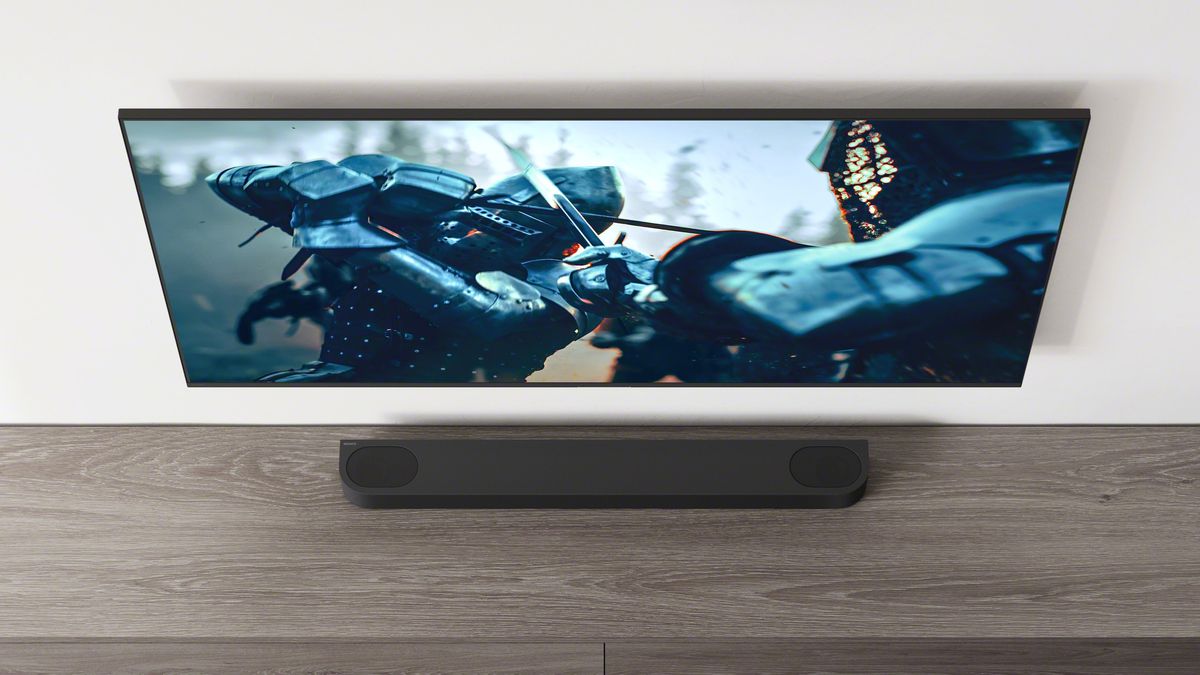
Sony has announced its 2025 home audio lineup, and the new offerings include a 3.1.2-channel soundbar, a 5.1-channel soundbar system, and wireless surround speakers. The new models join Sony’s existing home audio lineup, which is led by the Bravia Theater Quad wireless Dolby Atmos speaker system, and Sony Bravia Theater Bar 9 and Sony Bravia Theater Bar 8 soundbars. Also continuing in 2025 are the A3000 Dolby Atmos soundbar and S-series HT-2000, S400, and S100F soundbars. The SW5 and SW3 and RS5 and RS35 wireless surround speakers will also carry over into 2025. Pricing and availability for the new Sony soundbars and speakers have not yet been announced. Bravia Theater Bar 6 (Image credit: sony) The Sony Bravia Theater Bar 6 is a 3.1.2-channel Dolby Atmos soundbar with a dedicated center speaker plus upfiring speakers to convey height effects in Atmos soundtracks. It comes with a wireless subwoofer and supports DTS:X. Proprietary sound-enhancing features in the Theater Bar 6 include S-Force Pro Front Surround and Vertical Surround Engine. It also supports Sony’s Voice Zoom 3 feature when used with a compatible Sony Bravia TV, along with Bluetooth streaming for music. Bravia Theater System 6 (Image credit: sony) The Sony Bravia Theater System 6 is a 5.1-channel system powered by 1,000 watts. It’s comprised of a soundbar, wireless subwoofer, and two surround sound speakers that connect to a wireless amp. Sign up for breaking news, reviews, opinion, top tech deals, and more. According to Sony, the Theater System 6 supports Dolby Atmos and DTS:X and features Multi Stereo processing for an immersive music experience. Like the Theater Bar 6, it has S-Force Pro Front Surround and Vertical Surround Engine, along with Sony’s Voice Zoom 3 feature when paired with a compatible Sony Bravia TV. Bluetooth wireless support is also onboard. Bravia Theater Rear 8 (Image credit: sony) The Theater Rear 8 is an upgraded wireless surround sound speaker option for the company’s various soundbars. It has a rounded design that matches the form factor of the company’s Theater Bar 8 and 9 soundbars, along with a new fabric grille. A four-channel amplifier in the Theater Rear 8 provides a power boost over the current RS3S wireless surround speaker. Like that model, it also supports Sony’s 360 Spatial Sound Mapping for a more immersive surround sound experience. We look forward to getting our hands on the new Sony audio lineup soon, to see how it compares to our current list of the best soundbars. You might also like…

Posted on

I tested Samsung’s new top mini-LED 4K TV, and the Glare-Free screen tech makes a big difference

The Samsung QN90F is the company’s flagship 4K mini-LED TV series for 2025, and it carries the torch of its Samsung QN90D predecessor by delivering an incredibly bright picture. But high brightness isn’t the only notable feature of the QN90F series – it also features Samsung’s Glare-Free screen tech, which has been ported from last year’s Samsung S95D OLED to a wider range of the company’s TVs in 2025, including the 8K Samsung QN990F mini-LED. The high brightness delivered by the Samsung QN90F is one feature that makes it great for daytime viewing, and it’s a capability that helped land the QN90F as the best for sports option in our best TVs guide. You may like But an anti-reflection screen coating is another thing that helps with daytime viewing, or viewing in rooms with bright overhead lights, so the new QN90F’s one-two punch of brightness and glare rejection should fully seal it as a perfect TV for sports. Samsung recently invited me to its New Jersey testing facility to spend hands-on time with the QN90F and other new TVs, and I was able to take a full suite of measurements and also do some subjective viewing tests. I’ll dive into those details momentarily, but let’s first look at the wide range of features supported by the Samsung QN90F. AI Upscaling Pro comes to 4K The QN90F series offers screen sizes from 43 inches to 115 inches. This makes the QN90F Samsung’s most flexible TV when it comes to accommodating a range of screen size needs, and the 115-inch model is also the largest mini-LED TV Samsung makes. Samsung’s US pricing for the QN90F series ranges from $1,399 for the 43-inch model to $14,999 for the 98-inch model, with the 65-inch version I tested selling for $2,699. Happily, these prices are the same as last year’s QN90D series at launch. Sign up for breaking news, reviews, opinion, top tech deals, and more. QN90F series sets come with the company’s upgraded NQ4 AI Gen3 processor along with AI Upscaling Pro, a new feature previously limited to the company’s 8K TVs. This brings with it an improved version of Auto HDR Remastering Pro, which applies HDR to regular high-definition, standard dynamic range programs, plus an AI-based color enhancer and depth-based stereoscopy enhancer feature. The QN90F also has a new Clear Face Restoration feature that removes noise from faces in close-up shots without eliminating detail, and it gains the AI Motion Enhancer feature found in last year’s 8K flagship Samsung QN900D. AI Motion Enhancer combines a ball-tracking algorithm with an onboard picture database to fill in any visual gaps of a ball (or puck) in motion when watching fast-action sports, and having reviewed the QN900D, I can confirm that it does that job incredibly well. The Samsung QN90F has an super-slim profile for a mini-LED TV (Image credit: Future) Other AI-based magic tricks performed by the QN90F series include Live Translate and Generative Wallpaper features. Live Translate generates subtitles (English only supported at launch) for programs that lack them on broadcast TV channels. Generative Wallpaper lets you add custom creations to the TV’s existing library of still and motion graphic screensavers using voice-based prompts. Another eye candy option for the QN90F series is the Samsung Art Store for displaying a wide range of contemporary and classic artworks (subscription required), a feature that was previously limited to Samsung’s The Frame TVs. Samsung TVs are known for their gaming chops and the QN90F series expands upon that with 165Hz support for PC gaming. The TV has an incredibly slim design, with a 12.9mm thin panel. Despite this, it harbors a 4.2.2-channel, 60W built-in speaker array, and also features Samsung’s OTS+ processing for accurate positioning of dialogue and effects. The Samsung QN90F’s pedestal stand (Image credit: Future) Hands-on with the QN90F My measurements of the QN90F indicated that the TV’s overall brightness was lower than its QN90D predecessor. It hit 1,915 nits peak HDR brightness (10% window) and 597 nits fullscreen brightness in Filmmaker Mode, and in Standard mode measured 1,334 nits peak and 680 nits for fullscreen. Those are still very impressive results and ones we’ve come to expect from the best mini-LED TVs. Color space coverage for the QN90F measured 93.5% for UHDA-P3 and 76.3% for BT.2020. That UHDA-P3 result is similar to what I measured on last year’s Samsung QN90D, though the BT.2020 one is notably higher. Input lag on the QN90F measured with a Leo Bodnar HDMI Input Lag Tester at 4K 60Hz was 9.5ms in Game mode – a typical result for Samsung TVs, which regularly rank among the best gaming TVs. The QN90F showed only minimal halo effects on backlight blooming torture tests (Image credit: Future) While I conducted measurements in Filmmaker Mode on the QN90F during my hands-on testing, I used Movie mode for most of my subjective viewing. That was mainly because Movie provided a brighter and more punchy-looking picture than Filmmaker Mode. The picture in Movie mode also held up much better when viewing darker content with overhead lights on, The same images in Filmmaker Mode looked flat and devoid of shadow detail – a situation I suspect is due to the TV’s Glare-Free screen, since I noted the same issue when viewing with the Samsung QN990F mini-LED and Samsung S95F OLED, both of which also feature Glare-Free tech. With the lights dimmed, the QN90F’s picture displayed excellent contrast and detail, with bold, rich colors. Backlight blooming was also impressively minimal, with high contrast images showing virtually no halo effects on black backgrounds. The QN90F’s image lost a degree of contrast when viewed off-axis (Image credit: Future) Not everything was perfect: there was some contrast fade when viewing from an extreme off-center seat, and a quick look at a reference scene from the James Bond film No Time to Die revealed a degree of judder and motion blur, both of which could be reduced using the custom settings in the Motion Clarity menu. But otherwise, the QN90F met my picture quality expectations for a flagship Samsung mini-LED TV. Between Glare-Free tech, AI Upscaling Pro, and other AI picture processing features, the Samsung QN90F is a strong upgrade over last year’s QN90D, which was itself a fantastic TV. Other new features like the Samsung Art Store and 165Hz support make it that much more compelling. I look forward to getting a QN90F in for a more comprehensive review, but from my initial hands-on test, it’s looking to be the flagship 4K mini-LED TV that I expected. You might also like…

Posted on

LG removes DTS audio from its 2025 TVs – here’s what that means in practice

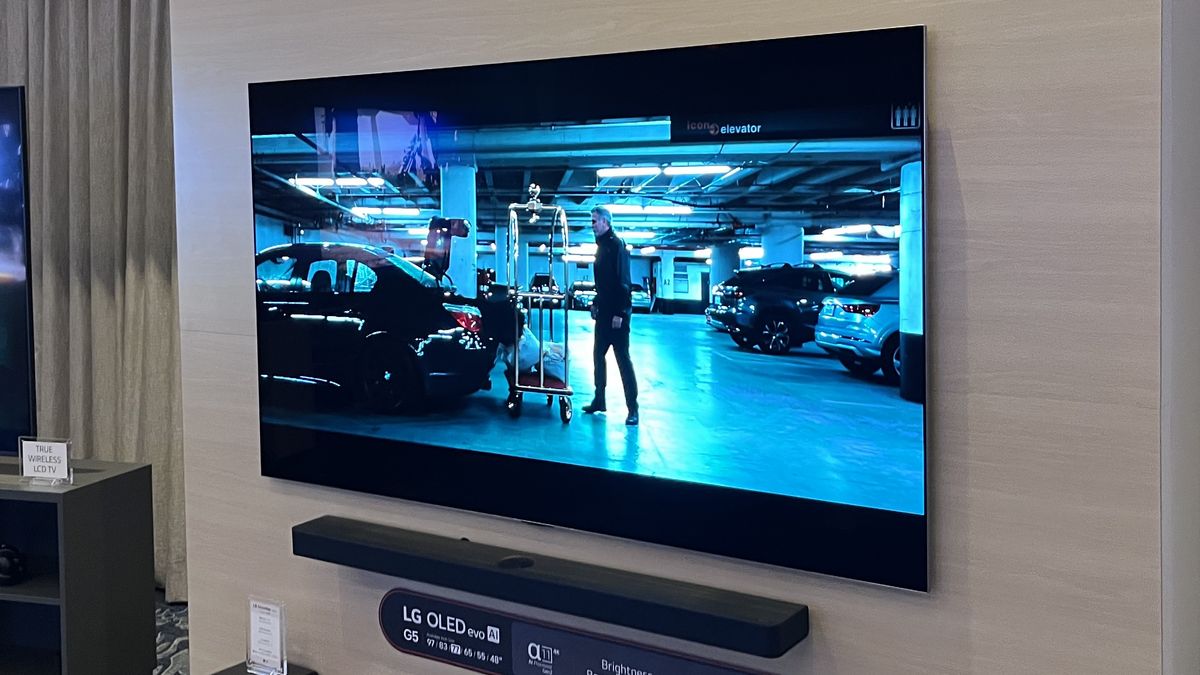
DTS support seems to have been removed from 2025 LG TVs Almost all streaming services are Dolby, not DTS Your AV streamer or soundbar may have a DTS decoder History appears to be repeating: LG has removed DTS support from its 2025 OLED TVs, including the LG C5, just like it did in 2020. Noticed by TV reviewer Vincent Teoh (via FlatpanelsHD) reports, the EDID information on the LG G5 – the information that tells audio and video sources what formats a TV supports – doesn’t include DTS audio. When LG brought DTS back in 2023, we said that it was good news for home theater lovers, as it would give them support for content that didn’t use Dolby Atmos. But it seems that according to LG’s internal data, there weren’t many such users or much of that content being played on LG TVs: Dolby was by far the most-used surround sound format. That’s largely because Dolby and Atmos is the preferred format of the best streaming services. The one notable DTS exception, the IMAX Enhanced streamed by Disney+, wasn’t supported on LG TVs due to its particular variation on the format. The 2025 models will be Dolby-only – but that doesn’t mean you can’t still enjoy DTS soundtracks. If DTS is a dealbreaker, there are tons of C4 and G4 OLEDs still available – and for amazing prices now. (Image credit: Future) How to get around the lack of DTS on 2025 LG TVs The issue here is all about decoding. DTS is a compressed audio format, and that means you need a device that can uncompress it and send it to one of the best soundbars, or your home theater speakers. If your TV is removed from the equation, then it doesn’t matter if it’s supports DTS, though. Sign up for breaking news, reviews, opinion, top tech deals, and more. If your TV can’t decode DTS, you may have other devices that can. So if your source device is connected to an AV receiver that’s DTS-compatible, then you don’t need to worry whether your TV has DTS: the decoding happens on your receiver, not on your TV. With soundbars it’s a little more complex, because you’ll need a soundbar that supports HDMI passthrough as well as DTS so that the soundbar can handle the audio and send the video to the TV. Many models don’t offer that connectivity, though most high-end or mid-range models from Sony, Samsung and LG do. You can can connect one of the best 4K Blu-ray players or other DTS source directly to the soundbar’s HDMI input and then connect the TV to the other port, and the soundbar will take and decode the DTS audio. If that’s not an option, there’s one more thing you can do: if your LG TV (or any other TV) doesn’t have the ability to decode DTS, but your 4K Blu-ray players does, then you can usually set the player to decode the DTS and to output uncompressed audio. Try setting your player’s audio output format to LPCM, often labelled Linear PCM. This format can be passed through the TV to your soundbar in surround sound without any concerns about format at all, though you’d lose the spatial sound of DTS:X. It’s a shame that LG has dropped this format, and we’re not sure that LG TVs likely adding Eclipsa Audio in the future will really make up for it. However, for the next few months, LG’s 2024 TVs will remain on-sale, including the LG C4 and LG G4, and are arguably better value than its 2025 models – doubly so if you want DTS support… You might also like

Posted on

Should you buy a new TV in 2025?

Buying a new TV in 2025 could be an exciting upgrade – or an unnecessary expense, depending on what you’re looking for and your current TV setup. This year’s biggest TV brands like Samsung and LG are rolling out cutting-edge innovations, with CES 2025 showcasing next-gen OLED panels, improved mini-LED backlighting, and AI picture processing. Samsung, LG, Sony, TCL, and others are leading the charge with brighter OLEDs and better contrast in mini-LED models. Micro-LED tech is inching closer to mainstream adoption, and 8K TVs are getting more sophisticated, even if content remains scarce. But should you rush to upgrade, or will 2024’s best TVs serve you just as well for a lower price? To answer the question, let’s explore the most significant TV advancements set for 2025, what’s worth upgrading for, and who should consider buying a new set this year. The biggest upgrades to expect in 2025 LG’s G5 OLED TV uses a new four-stack display panel that yields even higher brightness than its predecessor (Image credit: LG) Every year, TV makers push the boundaries of display technology, and 2025 is no exception. CES 2025 gave us a glimpse of what’s to come, with major brands unveiling significant advancements across OLED, mini-LED, AI processing, and even next-generation micro-LED and RGB LED tech. One of the biggest areas of innovation is OLED, the leading-edge display tech for most TV buyers. LG’s new G5 OLED introduces a four-layer tandem structure designed to boost brightness while maintaining OLED’s signature deep blacks and rich colours, addressing concerns around dim OLED panels in bright rooms. Mini-LED TVs are also levelling up. Samsung’s new flagship models for 2025 such as the 4K Samsung QN90F and 8K Samsung QN990F bring new picture enhancements like Glare-Free screen tech (a feature previously limited to the Samsung S95D OLED that will continue in the new Samsung S95F OLED), along with a new Wirless One Connect Box for the 8K model. Even the new Samsung The Frame Pro, announced at CES, now features mini-LEDs, bringing sharper contrast, deeper blacks, and improved brightness to its popular art-inspired TV. Sign up for breaking news, reviews, opinion, top tech deals, and more. TCL and Hisense are similarly refining mini-LED backlighting, with higher dimming zones and more precise control over brightness, helping close the gap between mini-LED and OLED and offering a more affordable alternative for buyers. The RGB LED backlighting tech in Hisense’s forthcoming 116-inch UX Trichroma TV brings the benefits of enhanced brightness, color depth, and off-axis picture uniformity (Image credit: Hisense) Meanwhile, RGB LED backlighting tech is making waves. Hisense’s 116-inch UX Trichroma TV introduces a new way of producing colour, using dedicated red, green, and blue LEDs rather than traditional white or blue backlights filtered through colour layers, which achieves a stunning 97% of the BT.2020 colour space, alongside an eye-watering peak brightness of 10,000 nits. The result? Even more vivid, lifelike images with unparalleled brightness, making this one of the most exciting display advancements on the horizon. TVs aren’t just about better picture quality: AI-powered processing is becoming an increasingly important part of the experience. Samsung’s latest TVs incorporate AI in new ways, from advanced upscaling that makes lower-resolution content look sharper to motion enhancement that makes fast-motion sports look incredibly clear and solid.Finally, gaming-focused features are becoming more prominent. More TV models support higher refresh rates (up to 240Hz in some cases), providing smoother, more responsive gameplay, and enhanced cloud-gaming options. What’s out there right now? The LG C4 remains TechRadar’s choice of best TV for most people even as new models arrive to challenge its throne (Image credit: Future) While 2025’s TV innovations are exciting, last year’s models are still some of the best TVs on the market – and with big price drops on select models. The flagship TVs of 2024, including top-tier OLEDs and high-performance Mini-LED models, continue to deliver outstanding picture quality, gaming features, and smart TV capabilities that won’t feel outdated anytime soon. Take LG’s C4 OLED, for example. As one of the best OLED TVs of 2024, it offers deep blacks, excellent colour accuracy, and great gaming support, with 120Hz refresh rates, VRR, and low input lag. The high-end LG G4 OLED pushed brightness levels even higher, closing the gap between OLED and mini-LED in well-lit rooms. For those looking for high brightness and contrast without OLED’s potential burn-in concerns, mini-LED TVs like the Samsung QN90D or TCL’s QM8 were among the top picks last year, offering deep black levels, impressive HDR performance, and thousands of local dimming zones for precise contrast control. Even Hisense’s U8N, a more affordable mini-LED model, delivered fantastic peak brightness and colour accuracy, making it one of the best value-for-money TVs of 2024, and it’s still available in 2025. Meanwhile, 2024 also saw major improvements in mid-range TVs. For example, Roku launched its first high-end Roku Pro Series, bringing mini-LED technology and Dolby Vision support to an affordable price bracket. What’s missing from 2025 TVs? Hisense’s first micro-LED TV is expected to arrive in 2025 and should be available through regular consumer retail channels (Image credit: Future) While 2025’s TV advancements look impressive, there are still a few key areas where TV tech hasn’t quite reached its full potential. Some of the most exciting innovations, like micro-LED, true 8K content, and major OLED breakthroughs that would bring down prices, are still in their early stages, making them more of a glimpse into the future rather than a reason to upgrade right now. Micro-LED remains the holy grail of display tech, offering OLED-level blacks with extreme brightness and no burn-in risk. But pricing is still prohibitive. Meanwhile, 8K resolution continues to struggle with a lack of native content, and OLED advancements like PHOLED (higher efficiency) and dual-layer OLED (brighter panels) aren’t widely available yet. For all the buzz around next-gen innovations, game-changing TV tech is still a few years away. That means 2025’s models bring solid refinements, but they don’t necessarily make last year’s best TVs feel outdated. So, who should buy a TV in 2025? Not everyone needs to upgrade their TV this year, but for some, 2025’s advancements could make a strong case for upgrading. Whether you should buy now depends on your current setup, viewing habits, and what you want from a new TV, among other factors. Those who should: If you’re coming from an older TV, especially one from 2017 or earlier, you’ll see a huge jump in picture quality, brightness, and smart features. Modern OLED and mini-LED panels offer better contrast, higher peak brightness, and excellent HDR performance, making content more immersive. Gamers should also consider upgrading, as 2025’s TVs bring higher refresh rates (up to a whopping 240Hz), ultra-low input lag, and improved VRR support. Whether you’re gaming on PlayStation 5, Xbox Series X, or a high-end PC, the latest models deliver smoother gameplay and more responsive controls, especially in fast-paced titles. If you want the absolute best OLED or mini-LED TV, 2025’s models are refining these technologies further. LG’s G5 OLED is brighter and more energy-efficient, while Samsung and TCL’s latest Mini-LED sets offer deeper black levels and more precise contrast control. Those who shouldn’t: If you already own a high-end 2023 or 2024 TV, the improvements in 2025 aren’t radical enough to justify an upgrade for many people. Last year’s LG C4, Samsung S95D, and Hisense U8N still offer excellent brightness, contrast, and gaming performance – and they’re now available at discounted prices. Unless you’re chasing the absolute best, you can safely hold onto your current TV for another couple of years. Micro-LED and 8K aren’t fully ready yet, so if you were waiting for these to go mainstream, you might want to wait until 2026 or beyond. Right now, micro-LED TVs remain far too expensive, and 8K content is still scarce, meaning even the best 8K TVs are mostly relying on AI upscaling rather than native content. Hisense’s U8N is one of the best TVs of 2024 and is now selling at a deep discount (Image credit: Future) So, to summarise, if your TV is over six or seven years old, you’ll see meaningful benefits from upgrading in 2025. Gamers, home cinema enthusiasts, and those chasing the latest display tech will also find compelling reasons to buy now. But if you have a recent high-end TV, the improvements in this year’s models aren’t necessarily drastic enough to justify the extra cost, especially when last year’s best models are now available for less. You might also like…

Posted on

3 discs to add to your 4K Blu-ray collection in March 2025

Welcome to the March 2025 edition of the Blu-ray Bounty, where we’ll be looking at three 4K discs released in March 2025 that you could add to your (hopefully) growing collection. If this is your first time here, you can read past entries of the Blu-ray Bounty here. This is where we at TechRadar get to indulge in our love of 4K Blu-ray by exploring the latest releases in the 4K world. 4K Blu-ray is the best way to experience movies on your home theater, as combining one of the best 4K Blu-ray players, best TVs and best soundbars into one entertainment powerhouse package can give you the cinema experience at home. Plus, it’s our favorite way to test TVs and soundbars here at TechRadar! In our last Blu-ray Bounty in February 2025, we looked at The Last Voyage of the Demeter, Winchester 73’ and Punch Drunk Love as three titles that could make great additions to any collection. This month, I’ve picked Wicked, Constantine and Gladiator II. I’m sticking with my trusty setup of the Panasonic DP-UB820 4K Blu-ray player, Panasonic MZ1500 OLED TV and Samsung HW-Q990C Dolby Atmos soundbar to put these discs through their paces. As always, I’m not reviewing the movies themselves; I’m just highlighting new options with some visual and/or audio qualities to show off the power of 4K Blu-ray. Wicked Image 1 of 4 (Image credit: Future) (Image credit: Future) (Image credit: Future) (Image credit: Future) The movie adaptation of one of the world’s most popular stage musicals, Wicked is a prequel to The Wizard of Oz. It follows the story of how Elphaba (Cynthia Erivo) and Glinda (Ariana Grande) (the wicked witch and good witch respectively in The Wizard of Oz) came to meet one another and forge an unlikely friendship. Sign up for breaking news, reviews, opinion, top tech deals, and more. Wicked is of course a musical so sound is critical. Thankfully, it uses every ounce of its Dolby Atmos soundtrack. Soaring, powerful vocals from both Grande and Erivo are crystal clear, and balanced well with the uplifting score, which when given a proper soundbar or sound system to play through will be a real showcase. Interesting movement in the sound is presented in every musical number with excellent accuracy. It’s a seriously engaging Atmos soundtrack that even manages to capture the surround effects with serious detail. Musical fans with a home theater system; take note. Visually, Wicked is a veritable feast for the eyes. With Dolby Vision HDR support, it’s a visually striking movie with gorgeous, bright and dynamic colors that really benefit from that Dolby Vision touch. Pink and green play a critical role in the movie and thankfully, are presented in a stunning manner. From Glinda’s sickly-sweet pink outfits to Elphaba’s green skin and the dazzling greens of the Emerald City, colors somehow are both accurate and shockingly punchy. Even in darker scenes, however, black levels and contrast are authentic and balanced. Put this movie on one of the best OLED TVs or one of the best mini-LED TVs. Constantine Image 1 of 3 (Image credit: Future) (Image credit: Future) (Image credit: Future) Somewhat of a cult ‘comic book’ movie, 2005’s Constantine follows the exploits of John Constantine (Keanu Reeves), based on the DC Comics character of the same name, who is a demon-hunting exorcist with otherworldly powers, finds himself tasked by Detective Angela (Rachel Weisz) to investigate her twin sister’s mysterious death. There’s no getting around the fact that Constantine has a very distinct color palette, with the grimy browns and reds of hell and the pale, beige whites in the skies being the predominant colors. Still, this 4K HDR release presents these colors with real accuracy and plenty of detail. It’s also a high-contrast movie, with plenty of dark scenes, blending with minimal light. Black levels, contrast and shadow detail are all excellent throughout the movie and textures, especially skin tones, are presented with a true-to-source look. Audio-wise, Constantine’s Dolby Atmos soundtrack captures all the gusto you could hope for in an action movie. The often pounding score is suitably tense and immersive, but speech and other effects aren’t lost in the mix. Any shootouts or fight sequences carry plenty of heft, with bass giving thumping sound effects a nice boost and the direction of sound is connected well with the action on screen. Gladiator II Image 1 of 3 (Image credit: Future) (Image credit: Future) (Image credit: Future) The sequel to Ridley Scott’s action-blockbuster epic, Gladiator II is the story of Lucius (Paul Mescal), son of Maximus Decimus Meridius (Gladiator’s protagonist), who after years of life in exile is captured to fight in the Colosseum in Rome. The movie also features Denzel Washington, Pedro Pascal, Joseph Quinn and more. Gladiator II’s greatest strength lies in its Dolby Atmos soundtrack. Engaging, immersive and downright meaty, every combat sequence has real punch. Slicing swords are presented with superb detail and the action and sound are always working in tandem. In the chaotic opening battle, arrows whistle through the air and feel like they’re either raining down or swooping past. The rousing score is nicely mixed with the other elements of the soundtrack, never overpowering speech or other effects. In terms of visuals, Gladiator II has a very brown-and-beige heavy color scheme. While these are presented accurately, it’s moments when the gold of the throne and outfits of the emperors or the reds of the Roman headpieces add that extra visual punch. Scenes in dark rooms with torchlight show great contrast and black levels and textures are realistic, with every bit of sweat, blood and mud on characters’ faces looking authentic. Looking to get a similar setup to ours? Below, we’ve listed the closest available models to what we use (our TV and soundbar are a couple of years old). You might also like

Posted on

The Samsung QN90D mini-LED is our favorite TV for sports, and it’s hit its lowest-ever price in Amazon’s Spring Sale

Spring has finally sprung, and that means it’s time for Amazon’s Spring Sale, with deals galore popping up on the best TVs, including many of the top models TechRadar reviewed in 2024. When scanning the Spring Sale, my attention immediately went to this 75-inch Samsung QN90D for $1,599.99 at Amazon deal. That’s a 31% discount and a fantastic deal on Samsung’s best mini-LED TV. It’s also a record-low price for Samsung’s flagship mini-LED TV. • Shop Amazon’s full Spring Sale The QN90D is our favorite TV for sports owing to its super-bright picture and low-reflection screen. Its picture also looks uniformly great over a wide range of angles, making it a perfect option for viewing with groups. Today’s best Samsung QN90D mini-LED TV deal In our Samsung QN90D review, we gushed over its sleek, premium design. This is a remarkably thin TV that’s weighted by a sturdy aluminum pedestal stand. Despite its thinness, the QN90D delivers impressively powerful sound from its built-in 4.2.2-channel speaker array. AI features like Adaptive Sound Pro and Active Voice Amplifier Pro analyze scenes and adjust audio and dialogue, making sure that everything sounds clear, no matter what you’re watching. The QN90D is also a powerhouse for gaming, with support for 4K 120Hz (and up to 144Hz for PC gamers), VRR (including AMD FreeSync Premium Pro), and ALLM. Samsung’s Gaming Hub is, of course, onboard, which lets you easily access cloud-based gaming apps such as Xbox, Luna, Nvidia Geforce Now, and more. The QN90D’s picture quality is about as good as it gets with mini-LED TVs, and that’s something to consider when watching on a big 75-inch screen. With a picture that large, you don’t want to see any imperfections, and the QN90D’s picture is close to perfect. Amazon Big Spring Sale – quick links

Posted on

These 11 TV deals in the Amazon Spring Sale are as good as anything I see on Black Friday

Spring isn’t usually one of the most popular times to buy a new TV; many of the best deals are saved for later in the year during Prime Day and Black Friday. However, with the recent launch of several new TVs from the likes of Samsung, LG, and more, there are some significant discounts up for grabs in the Amazon Spring Sale. I’ve looked through this week’s sale and picked out the best deals I recommend in both the US and UK. My top picks include everything from cheap, entry-level TVs to premium displays for movie buffs and gamers looking for the best picture quality for less. Let’s start with my favorite TV deal in the US: this Hisense U6N 65-inch Mini-LED TV for $498 (was $734.04). It’s one of the cheapest Mini-LED TVs available right now and a bargain at under $500. The display tech produces a sharp, bright and vivid picture that excels no matter what you throw at it. The U6N is also a great pairing with the latest games consoles if you need a quality, budget-friendly TV. For those in the UK, you should check out this LG C4 55-inch 4K OLED TV for £899.98 (was £1,199). That’s a record-low price for what we think is the best TV you can buy, thanks to its stunning OLED panel that boasts a sharp, detailed and rich image that will show off movies, TV shows, and games in incredible and smooth 4K quality. There are a handful of other top TV deals from the Amazon Spring Sale I think are worth checking out below. Just remember that the sale ends on March 31. Amazon Spring Sale TV deals in the US Amazon Spring Sale TV deals in the UK

Posted on

Hisense announces 2025 mini-LED TV lineup, with screen sizes up to 100 inches – and a surprising smart TV switch

Hisense has announced its 2025 ULED mini-LED lineup, with all-new models across its U9, U8, U7, and U6 series TVs. Hisense has been responsible for some of the best mini-LED TVs we’ve seen in recent years, and the company manages to keep its prices low, even for top-tier models. Last year’s Hisense U8N currently ranks as the mid-range pick in our best TVs guide, and the Hisense U7N and Hisense U6N are also among our best budget TV picks. The new models announced today range in size from 55 to 100 inches, and are “powered by next-generation AI processing that works effortlessly behind the scenes to deliver smarter, more intuitive picture enhancements—without the need for manual adjustment,” according to the company. The new top series, the U9, uses the company’s Hi-View AI Engine X processor, which is derived from its high-end ULED X lineup. Two other series, the U8 and U7, use a Hi-View AI Engine Pro processor. According to Hisense, both processors “automatically fine-tune contrast, color accuracy, and motion clarity in real-time, ensuring lifelike images and fluid motion across all content types.” Google TV will remain the smart TV platform for the U9, U8, and U7 series, while, in a surprising change, the entry-level U6N series will use Amazon’s Fire TV platform. The 2025 Hisense ULED TVs are scheduled for availability later this year. Pricing has not yet been announced. Sign up for breaking news, reviews, opinion, top tech deals, and more. U9 Series The new U9N series expands upon 2024’s Hisense U9N with a new 65-inch model to accompany the 75- and 85-inch screen sizes. Its advanced chipset is packed with AI picture-enhancing features, including AI 4K Upscaler, AI Super Resolution, AI Noise Reduction, AI LocalDimming, AI HDR Upscaler, and AI Depth Enhancer. Other picture-improving features of the U9 series include an Ultra LR panel to reduce screen reflections and an ultra-wide viewing angle to retain contrast over a wider seating range. Dolby Vision IQ, HDR10+, IMAX Enhanced, and Filmmaker Mode are all supported. For gaming, the U9 series has been upgraded to a 165Hz native refresh rate and supports FreeSync Premium Pro. A 4.1.2-channel built-in speaker array conveys Dolby Atmos soundtracks, with a 5.1.2-channel array used on the 75- and 85-inch models. U8 Series (Image credit: Hisense) Available in 55- to 100-inch screen sizes, the U8 series uses the company’s Hi-View AI Engine Pro processor, which taps AI to automatically optimize picture settings in real-time. According to Hisense, U8 series TVs can deliver brightness levels up to 5,000 nits and have expanded local dimming zones for 2025. Dolby Vision IQ and HDR10+ are supported here, plus the TVs are IMAX Enhanced certified. Gaming support will get a boost on the new U8 series with a native 165Hz refresh rate. Audio, too, will get a boost from the U8N series’ 2.1.2-channel built-in Dolby Atmos speaker array up to 4.1.2 channels. U7 Series (Image credit: Hisense) The Hisense U7N series was among our favorite budget TV options in 2024, and the new U7N will keep its budget status with models available for under $1,000. Screen sizes for the U7N series will range from 55 to 100 inches, and the TVs will feature an AGLR-Antiglare low reflection panel that “ensures glare-free visuals from any seat in the house,” according to Hisense. Despite being budget TVs, the U7N series is packed with gaming features, including 165Hz, Game Booster 288Hz, Dolby Vision gaming, and FreeSync Premium Pro support. The U7N series TVs also feature a built-in 2.1.2-channel, 60W speaker array. U6 Series (Image credit: Hisense) The entry-level series in the new mini-LED lineup is the Hisense U6N, which is available in 55- to 100-inch screen sizes. As mentioned earlier, this series uses Amazon’s Fire TV smart interface instead of Google TV, and the sets come with an Alexa Voice Remote. Otherwise, the U6 series TVs have a 2.1-channel speaker array with a built-in subwoofer. Gaming support includes a 144Hz native refresh rate and FreeSync Premium. You might also like