Posted on

Apple to Invest Up to $1.5 Billion in Globalstar for Satellite Coverage Expansion

Apple will invest up to $1.5 billion in Globalstar to fund the expansion of its iPhone communication services, the satellite provider said in a regulatory filing on Friday.

Shares of Globalstar jumped over 30%, while Apple was down around 1.4% a day after it forecast tepid quarterly revenue growth.

Under the funding agreement, Apple will commit $1.1 billion in cash and also purchase 20% equity in Globalstar for $400 million. The satellite company said it will use a portion of the funds to pay down debt.

The move is another in a line of partnerships between space firms and mobile service providers looking to provide satellite-based connectivity to customers in regions with limited network access.

Globalstar also said it will allocate 85% of its network capacity to Apple. The deal is expected to close on Tuesday.

The iPhone maker partnered with Globalstar in 2022 for a feature that would allow Apple users to send emergency messages from remote areas.

© Thomson Reuters 2024

(This story has not been edited by NDTV staff and is auto-generated from a syndicated feed.)

For the latest tech news and reviews, follow Gadgets 360 on X, Facebook, WhatsApp, Threads and Google News. For the latest videos on gadgets and tech, subscribe to our YouTube channel. If you want to know everything about top influencers, follow our in-house Who’sThat360 on Instagram and YouTube.

Walt Disney Forms Business Unit to Coordinate Use of AI, Augmented Reality

Related Stories

Posted on

Apple Offers Modest Growth Outlook After iPhone Sales Help Beat Profit Expectations

Apple’s AI-enhanced iPhone made a strong start, pushing quarterly sales ahead of Wall Street expectations, but a modest revenue forecast raised questions about whether that momentum will hold over the holiday sales season.

A decline in China sales during the fourth quarter also concerned some analysts and investors, helping send shares down 1.4% in after-hours trade, despite surprisingly large overall profit and revenue in that period.

Chief Financial Officer Luca Maestri told analysts during a conference call that Apple expects overall revenue to “grow low to mid single digits” during its fiscal first quarter, which ends in December. Analysts had expected revenue growth of 6.65% to $127.53 billion during the quarter, according to LSEG data.

Apple did say it expects double-digit growth in its services business in its first quarter, leading some analysts to ask executives during a call if overall hardware revenue might decline.

Executives did not address that question, or give any indication of how the iPhone might fare, including in China, where Apple’s new AI features are not available. Apple has not said when they will be available.

Prior to management’s call with analysts, Tom Forte, an analyst at Maxim Group, attributed Apple’s share drop to fourth-quarter China sales coming in below expectations.

“We see the potential for sustained weakness in China,” he said.

Apple said overall fourth-quarter sales were $94.93 billion, ahead of Wall Street targets of $94.58 billion, according to LSEG. Earnings of $1.64 per share, excluding a massive one-time tax charge in the European Union, topped analyst expectations of $1.60 per share.

Fourth-quarter sales of Apple’s iPhone, the company’s main product, were up 5.5% to $46.22 billion, compared with analyst estimates of $45.47 billion. Other product lines missed expectations.

Apple’s fourth quarter ended Sept. 28, meaning it reflects only a few days of sales of its iPhone 16 series that went on sale Sept. 20. Apple Chief Executive Tim Cook told Reuters that iPhone 16 sales grew faster than iPhone 15 sales did a year earlier, with both phones on sale for the same number of days in the fourth quarter.

Cook also said Apple customers are downloading a new version of its iPhone operating system with what it calls Apple Intelligence features at twice the rate they had the year before.

“We’ve had great feedback from customers and developers already,” Cook said. “We’re off to a good start.”

AI Strategy

The rollout of Apple’s artificial-intelligence strategy, which it revealed this year, hinges on how well its new phones sell.

Rather than introduce AI in a standalone app or service, Apple has sprinkled Apple Intelligence throughout its most recent operating systems as new features, such as the ability to help re-write an email in a more professional tone. Those features will mostly be available on iPhone 16 models, which feature more powerful computing chips, although the pro versions of the iPhone 15 both work with Apple Intelligence.

While some of those Apple Intelligence features arrived this week, others have been delayed, which has led some Wall Street analysts to wonder whether consumers will be slower to upgrade their devices this year while flagship software features trickle out.

Apple’s rivals Microsoft and Meta both said this week they expect continued increases in spending to support their AI strategies. Apple said payments for property and equipment – a measure of its capital expenditures – were up $2.91 billion from the previous quarter to $9.45 billion.

Apple’s lower spending comes in part because it uses third-party data centers for some AI work. Some aspects of Apple Intelligence do rely on Apple’s own data centers, but the company is using its own in-house chips to power those features.

“There would be some (financial) benefit to us by using our own silicon, obviously, but that’s not the reason we’re doing it. We’re doing it because we can provide the same standard of privacy and security that we can provide on device,” Cook said.

Sales in Apple’s services business, which includes iCloud storage and Apple Music, were $24.97 billion, compared with analyst expectations of $25.28 billion, according to LSEG. Mac and iPad sales were $7.74 billion and $6.95 billion, respectively, compared to estimates of $7.82 billion and $7.09 billion, according to LSEG data.

Sales in Apple’s home and wearables business, which includes its Apple Watch and AirPods devices, fell to $9.04 billion, compared with estimates of $9.2 billion, according to LSEG.

Earnings per share were 97 cents including the charge related to a one-time multi-billion-euro European tax payment.

© Thomson Reuters 2024

(This story has not been edited by NDTV staff and is auto-generated from a syndicated feed.)

Posted on

Samsung Galaxy S25 Slim to Debut in 2025, Could Rival Purported iPhone 17 Air: Report

Apple could shake up its iPhone lineup next year by introducing a new iPhone 17 Slim (or Air) model, according to recent reports. While it’s currently unclear whether Apple will replace its Plus model with a new ‘Slim’ model, a South Korean publication reports that Samsung is also considering the launch of a ‘slim’ Galaxy S25 handset. This purported Galaxy S25 Slim model is likely to be released in limited numbers, according to the report. The Galaxy S series typically includes a standard and Plus model, as well as an Ultra variant.

Samsung Might Have a New Galaxy S25 Phone in the Works

An ETNews report (in Korean) citing industry sources states that Samsung is planning to unveil a slim model as a follow-up to the Galaxy S25 series, which is expected to arrive in early 2025. Like the recently launched Galaxy Z Fold Special Edition, this Galaxy S25 version will reportedly have a thin build. It could be released a few months after the Galaxy S25 series, according to the publication.

Samsung is reportedly considering a limited release for the purported Galaxy S25 Slim model, and will gauge the market’s response. The report states that if the handset receives a positive response from customers, then Samsung might change the Galaxy S26 series lineup, which is not expected to debut until 2026.

If these claims are accurate, the shift to a slimmer form factor would be the most notable design change Samsung has made to its Galaxy S family in the last four years. The South Korean brand’s Galaxy S series usually comprises a standard model alongside Plus and Ultra variants.

Meanwhile, Apple’s thinner phone is expected to debut sometime in the second half of 2025 as the iPhone 17 Slim — or iPhone 17 Air — as per recent reports. This handset could rival Samsung’s purported slim Galaxy S25 model.

Samsung has already confirmed that its Galaxy S25 series will be launched in the first half of next year, presumably in January. The trio is said to run on Snapdragon 8 Elite chipset and is likely to ship with Galaxy AI features. A recent leak suggests that the Galaxy S25 and Galaxy S25 Ultra will arrive in four colourways while the Plus variant will be sold in five shades. They will reportedly sport low-temperature polycrystalline oxide (LTPO) OLED panels built by Samsung Display using M13 organic materials.

For the latest tech news and reviews, follow Gadgets 360 on X, Facebook, WhatsApp, Threads and Google News. For the latest videos on gadgets and tech, subscribe to our YouTube channel. If you want to know everything about top influencers, follow our in-house Who’sThat360 on Instagram and YouTube.

Honor Magic 7, Magic 7 Pro Confirmed to Launch Globally Soon

Posted on

Xiaomi HyperOS 2 With HyperCore Technology, AI Capabilities Announced: Compatible Models, Features


Xiaomi
 has
announced HyperOS
2


the
latest
operating
system
(OS)
for
Xiaomi
devices
such
as
smartphones,
smartwatches
and
smart
TVs.
It
builds
upon
the
success
of

HyperOS
,
which
was
unveiled
in
October
2023.
This
new
OS
features
the
Chinese
smartphone
maker’s
HyperCore
technology
that
is
claimed
to
bring
improvements
in
terms
of
performance,
graphics,
network,
and
safety.
It
also
leverages
artificial
intelligence
(AI)
for
tasks
such
as
wallpaper
generation,
turning
rough
sketches
into
related
images
and
translation
in
real-time.

Xiaomi
HyperOS
2
Release
Date,
Compatible
Models

Xiaomi

says

HyperOS
2
will
be
introduced
out-of-the-box
in
its
latest
devices
such
as
the
flagship
Xiaomi
15
series,
Pad
7
series,
Watch
S4
lineup,
Xiaomi
TV
S
Pro
Mini
LED
2025
Series,
Redmi
Smart
TV
X
2025
Series,
and
the
Mi
Band
9
Pro.
It
will
also
be
introduced
on
the
Xiaomi
14
series
and
older
smartphones,
smart
TVs
and
wearable
devices
in
the
coming
weeks
and
months,
as
per
the
company.

In
November,
the
update
will
be
seeded
to
the
Xiaomi
14
series, Xiaomi
Mix
Fold
4,
Xiaomi
Mix
Flip,
Redmi
K70
lineup,
and
the
Xiaomi
Pad
6S
Pro 12.4.
In
December,
the Xiaomi
13
series, Xiaomi
Mix
Fold
3,
Xiaomi
Civi
4
Pro,
Redmi
K60
series, Redmi
Turbo
3, Redmi
Note
14
series, Xiaomi
Pad
6
Max
14,
Pad
6
Pro,
and
the
Redmi
Pad
Pro
lineup
will
get
the
HyperOS
2
update.
Finally,
in
the
first
of
2025,
the
updates
will
be
released
for
the Xiaomi
12S
and
Xiaomi
12
series, Xiaomi
Mix
Fold
2,
Xiaomi
Civi
3,
Civi
2,
Redmi
K50
lineup, Redmi
Note
13
series,
Redmi
Note
12
series,
Redmi
14R
5G,
14C,
Redmi
13R
5G,
13C
5G,
Redmi
12
5G,
12R,
Xiaomi
Pad
6,
and
the Xiaomi
Pad
5
Pro
12.4.

HyperOS
2
Features

According
to
Xiaomi,
HyperOS
2
carries
three
new
core
technologies:
HyperCore,
HyperConnect,
and
HyperAI.
The
first
is
a
self-developed
underlying
kernel
technology
platform
supported
by
new
dynamic
memory
and
Storage
2.0.
The
company
says
it
features
a
proprietary
microarchitecture
scheduler
which
can
reduce
the
idle
time
of
the
CPU
by
19
percent.
On
smartphones,
it
results
in
up
to
54.9
percent
faster
app
launch
speeds,
as
per
the
company.

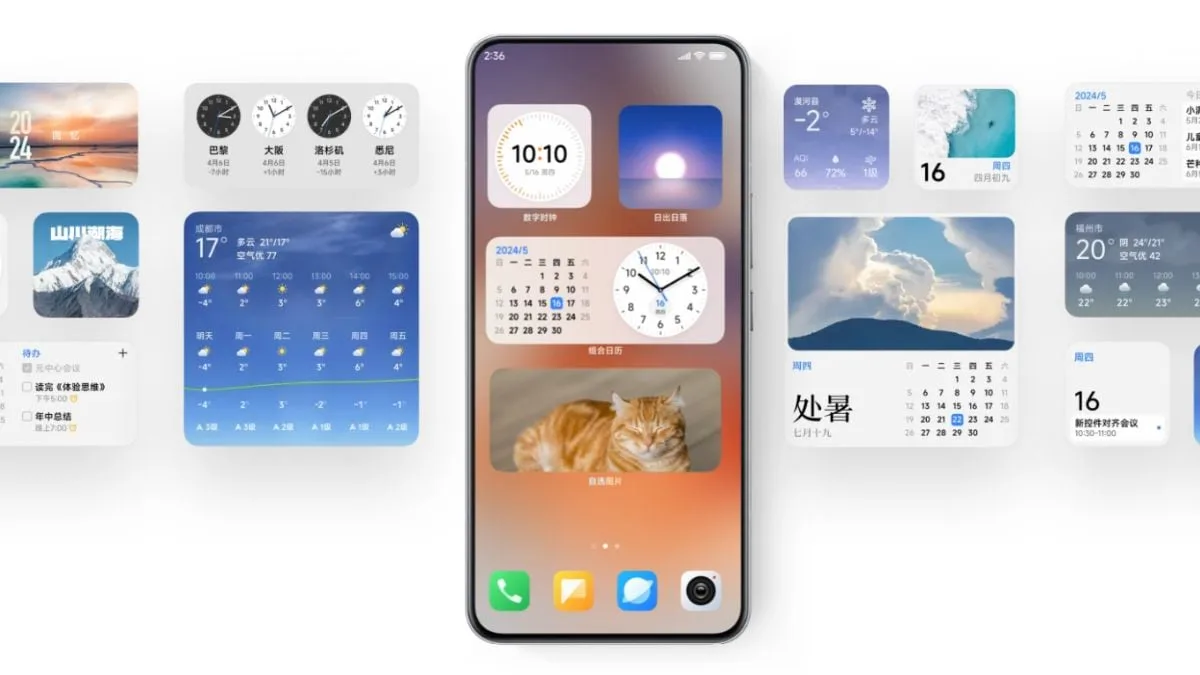
Xiaomi’s
latest
OS
update
brings
visual
changes
across
the
board.
It
includes
a
revamped
desktop
layout
with
more
customisation
options,
smoother
transitions
with
dynamic
effects,
and
3D
real-time
weather
simulation
effects.
HyperOS
2
also
introduces
HyperConnect
which
enables
improved
connection
with
other
devices
in
the
Xiaomi
ecosystem.
It
supports
dual-camera
streaming
between
smartphones
and
tablets.
Additionally,
the
update
introduces
Xiaomi
Interconnectivity
Services
which
Apple
users
can
take
advantage
of
to
access
files,
photos
and
other
content
on
Xiaomi
devices.

Another
notable
highlight
of
the
update
is
the
vast
range
of
AI
features
onboard
courtesy
of
the
HyperAI
suite.
It
uses
AI
to
generate
personalised
lock
screen
wallpapers,
writing
tools
which
can
generate,
summarise
and
fine-tune
the
text,
speaker
identification
and
transcription
in
calls
and
recordings.
HyperOS
2
also
bundles
an
AI
Magic
Painting
feature
that
can
regenerate
images
with
enhancements.
The
company
also
introduces
a
new
AI-powered
system
that
is
claimed
to
protect
users
against
deepfake
fraud.

Posted on

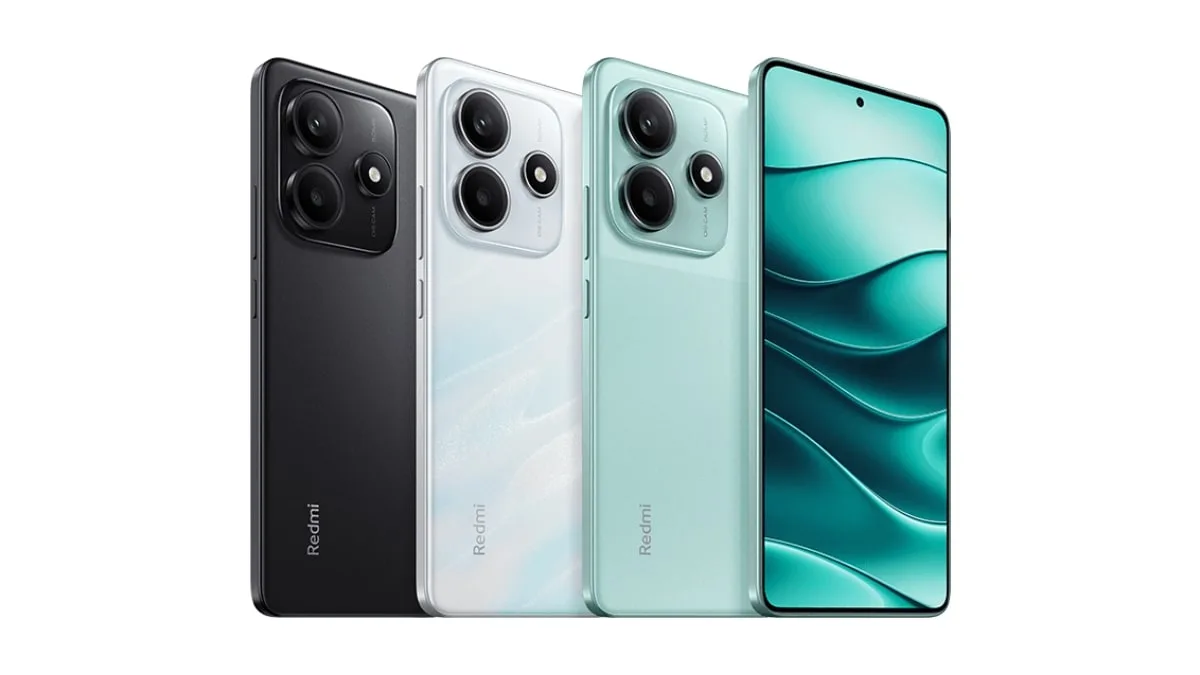
Redmi Note 14 Series India Launch Tipped to Take Place in Late December or Early January

Redmi
Note
14

series

was

unveiled

in
China
in
September.
The
lineup
includes
a
base,
a
Pro,
and
a
Pro+
variant.
Although
nothing
has
been
officially
announced
yet,
the
handsets
are
expected
to
make
their
global
debut
soon.
The
international
versions
may
come
with
slightly
different
features
from
their
Chinese
counterparts.
The
vanilla Redmi
Note
14
5G
 was reportedly
spotted
on
Indonesia’s SDPPI
certification
site. A
tipster
has
now
hinted
at
the
India
launch
timeline
of
the
Redmi
Note
14
series. 

Redmi
Note
14
Series
India
Launch
(Expected)

The
Redmi
Note
14
will
launch
in
India
in
either
the
last
week
of
December
or
the
first
week
of
January,
according
to
an
X

post

by
tipster Abhishek
Yadav
(@yabhishekhd).
Meanwhile,
the
sale
is
said
to
start
between
January
10
and
January
15.

While
the
tipster
does
not
mention
the
word
“series”,
the
attached
images
show
the
specifications
for
all
three
handsets
in
the
lineup.
This
suggests
that
Redmi
could
launch
the Redmi
Note
14
Pro+
 and Redmi
Note
14
Pro
 
in
India
as
well.
The
tipster
adds
that
the
Indian
variants
will
come
with
slight
changes
over
the
existing
Chinese
versions. 

Redmi
Note
14
Series
Features

The
Redmi
Note
14
is
powered
by
a
MediaTek
Dimensity
7025
Ultra
chipset paired
with
up
to
12GB
of
LPDDR4X
RAM.
Meanwhile,
the
Redmi
Note
14
Pro
and
Note
14
Pro+
carry
the
MediaTek
Dimensity
7300
Ultra
and Snapdragon
7s
Gen
3
SoCs,
respectively.
The
Pro+
variant
supports
up
to
16GB
of
RAM,
and
all
three
handsets
ship
with
Android
14-based
HyperOS.
The
Pro
models
have
6.67-inch
120Hz
1.5K
displays,
while
the
base
model
gets
a
6.67-inch
full-HD+
AMOLED
screen.

For
optics,
the
base
Redmi
Note
14
gets
a
50-megapixel
dual
rear
camera
unit
and
a
16-megapixel
front
camera
sensor.
The
triple
rear
camera
unit
of
the
Redmi
Note
14
Pro
includes
a
50-megapixel
main
Sony
LYT-600
sensor,
an
8-megapixel
ultra-wide-angle
shooter,
and
a
2-megapixel
macro
camera.

The
triple
rear
camera
system
of
the
Note
14
Pro,
on
the
other
hand,
has a
50-megapixel
main
sensor,
an
8-megapixel
ultra
wide-angle
sensor,
and
a
50-megapixel
portrait
telephoto
camera.
The
Pro
models
carry
20-megapixel
selfie
shooters.

The
Redmi
Note
14
is
backed
by
a
5,110mAh
battery
with
45W
fast
charging
support,
while
the
Pro
variant
carries
a 5,500mAh
cell
with
similar
charging.
The
Redmi
Note
14
Pro+
has
a
6,200mAh
battery
with
90W
fast
charging
support. 

Posted on

Huawei Mate XT Ultimate Design Could be Easily Susceptible to Scratches, Durability Test Suggests


Huawei
Mate
XT
Ultimate
Design

was
launched
by
the
company
in
September
as
the
world’s
first
mass-market
triple
foldable
smartphone,
although
it
is
only
available
in
China
(as
of
now).
It
comes
with
three
screens
that
can
be
folded
in
a
Z-style
manner.
However,
a
recent
durability
test
of
the
smartphone
carried
out
by
a
popular
YouTuber
suggests
that
the
displays
might
be
more
susceptible
to
scratching
compared
to
standard
smartphones,
or
even
regular
foldable
models.

Huawei
Mate
XT
Ultimate
Design
Durability
Test

Before
delving
into
the
durability
test
of
Huawei’s
triple
foldable
smartphone,
YouTuber
Zack
Nelson,
popularly
known
by
his
alias
JerryRigEverything,

carried

its
unboxing.
Being
one
of
the
most
expensive
production
smartphones
globally
at
a
starting
price
of
CNY
19,999
(roughly
Rs.
2,36,700),
the
Huawei
Mate
XT
Ultimate
Design
comes
with
a
lot
of
goodies
including
a
carbon
fibre
case,
a
66W
power
adapter
with
two
USB
Type-C
cables,
an
88W-rated
car
charger,
and
a
pair
of
Huawei
FreeBuds
5.

In
terms
of
durability,
the
Huawei
Mate
XT
Ultimate
Design
appears
to
start
showing
scratches
at
level
two
on
the
Mohs
hardness
scale
and
has
deeper
grooves
at
level
3
with
a
razor
blade.
While
this
is
bound
to
happen
due
to
the
laminated
structure
of
the
foldable
soft-plastic
screen,
the
test
also
revealed
it
was
highly
prone
to
being
easily
scratched
by
even
fingernails.
The
scratches
caused
by
the
fingernails
appear
more
prominently
once
the
screen
is
turned
off.

While
the
scratches
caused
by
the
razor
blade
aren’t
any
different
from
the
durability
of
other
foldable
smartphones,
such
as
the

Samsung
Galaxy
Z
Fold
6
,
which
got
scratches
at
similar
levels,
the
scratches
caused
by
the
fingernails
on
the
Mate
XT
Ultimate
Design
appear
more
prominently
once
the
screen
is
turned
off.

Being
a
tri-fold
smartphone,
the
hinge
mechanism
is
said
to
be
another
weak
point
of
the
Mate
XT
Ultimate
Design.
While
folding
the
screens
in
the
wrong
way
brings
up
a
warning,
the
smartphone
was
bent
by
the
YouTuber
without
too
much
effort,
suggesting
that
owning
such
an
eloquent
device
might
require
extra
care.
Meanwhile,
one
of
the
folded
edges
of
the
screen
is
always
exposed
to
the
elements
when
fully
folded. 

Posted on

Xiaomi 15 Pro to Come With 5X Periscope Camera, 6,100mAh Battery; Key Specifications Confirmed


Xiaomi
15

series
is
expected
to
launch
in
China
tomorrow
(Tuesday)
as
the
company’s
next-generation
flagship
phones,
comprised
of
two
models

Xiaomi
15
and
Xiaomi
15
Pro.
The
smartphone
lineup
is
confirmed
to
be
the
world’s
first
handsets
powered
by
Qualcomm’s
new
Snapdragon
8
Elite
chipset.
Ahead
of
their
impending
debut,
a
company
official
has
confirmed
several
specifications
of
both
devices,
including
the
presence
of
a
5X
telephoto
camera
and
6,100mAh
battery
on
the
Xiaomi
15
Pro.

Xiaomi
15
Series
Specifications
Confirmed

In
multiple

posts
 on
the
Chinese
social
media
platform
Weibo,
Xiaomi
highlighted
that
the
Xiaomi
15
Pro
will
be
equipped
with
a
6,100mAh
battery
with
an
energy
density
of
850Wh/L

a
38
percent
improvement
over
the
Xiaomi
14
Pro,
which
features
a
4,880mAh
battery
capacity.

Additionally,
the
purported
handset
will
be
equipped
with
a
2K
micro-curved
screen
which
uses
customised
luminous
M9
material,
with
1.38mm
bezels
and
a
peak
brightness
of
3,200
nits.
The
light-emitting
material
is
said
to
reduce
overall
power
consumption
by
10
percent.
The
Xiaomi
15
Pro
model
will
also
benefit
from
the
10X
lossless
zoom
feature
courtesy
of
the
5X
periscope
camera.
The
camera
unit
on
both
phones
is
again
confirmed
to
carry
the
Leica
branding,
teasers
suggest.

Both
the
Xiaomi
15
and
Xiaomi
15
Pro
will
be
powered
by
the

Snapdragon
8
Elite

chipset
paired
with
the
company’s
HyperCore
technology.
This
combination
is
claimed
to
deliver
a
45
percent
performance
improvement
over
its
predecessor
while
also
reducing
power
consumption
by
52
percent.
The
company
also
teased
the
power
figures
while
playing
a
large-scale
turn-based
3D
game
for
a
period
of
11
hours
in
2K
resolution.
As
per
the
official,
the
Xiaomi
15
series
will
be
able
to
maintain
a
frame
rate
of
59.4
frames
per
second
(fps)
while
maintaining
a
temperature
of
42.1
degrees
Celsius.

For
the
latest

tech
news

and

reviews
,
follow
Gadgets
360
on

X
,

Facebook
,

WhatsApp
,

Threads

and

Google
News
.
For
the
latest
videos
on
gadgets
and
tech,
subscribe
to
our

YouTube
channel
.
If
you
want
to
know
everything
about
top
influencers,
follow
our
in-house

Who’sThat360

on

Instagram

and

YouTube
.

China
Achieves
New
World
Record
with
42-Tesla
Resistive
Magnet
Technology

Related
Stories

Posted on

Infinix Zero 40 5G Review: Mid-Range Hero?


Infinix

should
stop
using
the
Zero
moniker
for
their
phones
because,
honestly,
their
phones
are
not
what
they
used
to
be.
The
new

Infinix
Zero
40
5G

is
not
a
zero.
The
phone,
at
a
starting
price
of
Rs.
27,999,
offers
a
lot
of
features.
Infinix
also
claims
that
the
Zero
40
5G
is
the
first
phone
in
its
segment
to
offer
4K
60fps
video
recording
on
both
front
and
rear
cameras
and
to
feature
a
50-megapixel
ultrawide
rear
camera.
It’s
also
the
first
Infinix
phone
to
launch
with
Infinix
AI.

The
company
heavily
emphasises
the
phone’s
video
recording
features,
stabilisation,
and
its
potential
as
an
ideal
device
for
vlogging—I’ve
never
heard
the
word
“vlog”
mentioned
so
many
times
in
a
product
briefing.
So,
is
the
Infinix
Zero
40
5G
any
good?
Do
all
of
these
segment-firsts
make
it
a
hero?
You’ll
have
to
read
the
full
review
to
find
out.

Infinix
Zero
40
Design:
Stylish

  • Dimensions

    164.31×74.47×7.9mm
  • Weight

    195g
  • Colours

    Moving
    Titanium,
    Violet
    Garden,
    Rock
    Black

Infinix
has
done
a
very
good
job
in
terms
of
design.
The
phone
features
curved
sides
and
flat
top
and
bottom
edges,
making
it
comfortable
to
hold
and
easy
to
use
one-handed.
The
phone
is
available
in
three
colour
options,
and
we
got
the
Violet
Garden
variant.
The
rear
panel
has
a
two-tone
finish
and
the
word
‘Zero’
etched
at
the
bottom
right
corner.
It’s
a
nice
phone
to
look
at,
especially
in
the
Violet
colour
option.


infinix zero 40 5g review2 InfinixZero405G Infinix

The
curved
edges
make
the
phone
slimmer
than
it
actually
is

The
back
is
dominated
by
a
large
circular
camera
module,
accented
with
a
focus
ring-like
design.
The
curved
edges
make
the
phone
feel
slimmer
than
it
really
is.
The
left
side
is
clean,
while
the
power
and
volume
buttons
are
placed
on
the
right.
At
the
bottom,
you’ll
find
the
USB
Type-C
port,
a
loudspeaker,
a
microphone,
and
a
SIM
card
tray.
The
top
houses
an
IR
blaster,
another
microphone,
and
a
speaker
grille.
Infinix
has
also
provided
an
IP54
rating
for
added
protection,
which
is
a
nice
touch.

Infinix
Zero
40
Display:
Big
with
a
little
bit
of
curve

  • Size
    and
    type

    6.78-inch,
    full-HD+,
    Curved
    AMOLED
  • Refresh
    rate

    Up
    to
    144Hz
  • Protection

    Corning
    Gorilla
    Glass
    5

The
Infinix
Zero
40
5G
features
a
curved
display
with
slim,
uniform
bezels,
resulting
in
an
impressive
93.4
percent
screen-to-body
ratio.
The
panel
is
of
the
LTPS
variety,
which
means
that
although
it
offers
a
144Hz
refresh
rate,
it
cannot
go
all
the
way
down
to
1Hz.
You
can,
however,
choose
between
auto,
60,
120,
and
144Hz.
The
display
also
offers
a
360Hz
touch
sampling
rate
and
2,304Hz
PWM
frequency.


infinix zero 40 5g review1 InfinixZero405G Infinix

Running
the
screen
at
144Hz
will
drain
the
battery
much
faster

In
terms
of
colour,
you
get
a
10-bit
panel
with
100
percent
DCI-P3
colour
gamut
coverage.
There
are
also
two
colour
modes
available
on
the
phone

Original
and
Bright-coloured.
I’d
recommend
sticking
to
the
former.
You
also
get
TUV
Rheinland
Eye
Care
certification
and
an
Eye
care
mode.
As
for
brightness,
the
phone
gets
plenty
bright
indoors
(1,300
nits
peak),
but
it
can
be
a
bit
dull
under
direct
sunlight.

For
watching
movies,
gaming,
and
any
kind
of
content
consumption,
the
screen
is
great.
It’s
big,
colourful,
bright
(indoors),
and
offers
a
super
fast
refresh
rate.
There’s
also
Widevine
L1
certification
so
that
you
can
use
all
your
streaming
services.

Infinix
has
included
an
in-display
fingerprint
scanner
on
the
phone.
Despite
being
placed
lower
down
on
the
screen,
it
worked
accurately
and
was
fast.

Infinix
Zero
40
Software:
AI
this
and
AI
that

  • OS

    Android
    14
  • UI

    XOS
    14.5
  • Latest
    security
    patch

    August
    5,
    2024

The
phone
runs
Android
14-based
XOS
14.5
out
of
the
box.
As
expected,
it
includes
a
fair
amount
of
pre-installed
apps,
but
fortunately,
most
can
be
uninstalled.
The
user
interface
is
fairly
clean,
with
smooth
animations.

Infinix
has
also
included
an
edge
control
feature
that
lets
you
take
advantage
of
the
curved
screen
and
quickly
access
your
favourite
apps.
There’s
an
IR
Control
option
in
the
Quick
setting
and
within
the
Welife
app
to
control
other
devices
using
its
infrared
blaster.
The
phone
boasts
a
“Works
with
GoPro”
certification,
but
all
it
means
is
that
you
can
control
a
GoPro
action
camera
using
the
GoPro
Quik
app—a
feature
that
virtually
any
smartphone
is
capable
of.


infinix zero 40 5g review ai features InfinixZero405G Infinix

The
AI
eraser
does
a
decent
job

The
Zero
40
5G
has
many
AI
features
as
part
of
the
Infinix
AI
suite.
You
get
an
AI
Eraser
in
the
Gallery
app
that
works
pretty
well
for
removing
objects
from
photos,
though
its
performance
can
be
inconsistent.
Sometimes,
I
could
remove
an
object
with
a
single
attempt,
but
other
times,
it
took
multiple
tries
to
achieve
the
desired
result.

Other
AI-powered
features
include
Smart
Cut-out,
which
allows
you
to
cut
out
objects
from
photos
easily,
and
AI
Vlog,
which
can
automatically
create
a
vlog
using
up
to
20
clips
from
your
gallery.
Additionally,
Smart
Search
lets
you
find
pictures
in
the
Gallery
app
by
simply
typing
a
text
description.

There’s
an
AI
Wallpaper
Generator
that
creates
images
based
on
your
photos
or
text
input,
though
I
couldn’t
test
this
feature
due
to
a
recurring
“server
is
being
upgraded”
error.
The
Infinix
Folax
voice
assistant
is
also
built-in
and
capable
of
answering
questions,
translating
text,
controlling
basic
phone
functions,
and
more.


infinix zero 40 5g review ai eraser InfinixZero405G Infinix

Some
of
the
AI
features
didn’t
work

While
it’s
nice
to
have
all
the
above-mentioned
AI
features,
Infinix
has
a
lot
of
work
to
do,
as
some
of
them,
including
the
wallpaper
generator,
refused
to
work
for
me.

In
terms
of
software
support,
Infinix
has
promised
2
years
of
Android
OS
updates
and
3
years
of
security
patches.

Infinix
Zero
40
Performance:
Good
enough

  • Chipset

    MediaTek
    Dimensity
    8200
    Ultimate
  • RAM

    12GB
    LPDDR5x
  • Storage

    Up
    to
    512GB
    UFS
    3.1

The
MediaTek
Dimensity
8200
Ultimate
chipset
is
quite
capable
and
easily
handles
day-to-day
tasks.
Multitasking
is
a
breeze,e
too.
It
even
fares
well
in
gaming
and
doesn’t
produce
a
lot
of
heat
when
under
heavy
use.
The
phone
has
12GB
RAM
and
256GB
or
512GB
storage.
There
is
also
a
virtual
RAM
expansion
feature,
and
you
get
a
microSD
card
slot
to
add
more
storage.


infinix zero 40 5g review3 InfinixZero405G Infinix

The
phone
is
good
for
gaming

Regular
performance
is
pretty
good,
and
I
didn’t
really
face
any
lag
while
running
multiple
apps,
using
the
camera,
or
performing
various
day-to-day
tasks.
We
ran
our
usual
set
of
benchmarks
on
the
phone,
and
it
performed
similarly
to
other
phones
in
the
segment.


Benchmark

Infinix
Zero
40

Nothing
Phone
2a
Plus

Motorola
Edge
50
Pro

iQOO
Z9s
Pro
Geekbench
6
Single

1096
1204 1142 1136
Geekbench
6
Multi

3601
2658 3124 3091
AnTuTu
v10

956927
762,955 818,387 814328
PCMark
Work
3.0

15466
12663 13,730 10460
3DM
Slingshot
Extreme
OpenGL

Maxed
Out
Maxed
Out
Maxed
Out
Maxed
Out
3DM
Slingshot

Maxed
Out
7243 8393 8255
3DM
Wild
Life

6362
4779 5394 5287
3DM
Wild
Life
Unlimited

6454
5038 5457 5428
GFXBench
T-Rex

144
60 116 119
GFXBench
Manhattan
3.1

92
58 61 74
GFXBench
Car
Chase

52
35 32 40

Gaming
on
the
phone
is
fun,
thanks
mainly
to
the
large
screen
with
144Hz
refresh
rate.
I
ran
BGMI,
Asphalt
Legends
Unite,
and
Genshin
Impact
on
the
phone
and
was
able
to
play
all
of
them
without
much
lag.
In
BGMI
and
Asphalt
Legends
Unit,
I
was
able
to
play
with
the
highest
available
graphics.
However,
with
Genshin
Impact,
I
couldn’t
play
with
the
highest
settings,
and
I
also
found
that
the
phone
would
heat
up
after
just
15-20
minutes.
I
also
noticed
this
heating
when
using
the
rear
camera
for
4K
video
recording.


infinix zero 40 5g review 8 InfinixZero405G Infinix

The
phone
does
heat
up
when
running
heavy
games

The
Infinix
Zero
40
5G
delivers
good
call
quality
and
audio
performance.
It
features
a
dual
stereo
speaker
setup
with
“Sound
by
JBL,”
along
with
support
for
DTS
Hi-RES
Audio
and
Hi-Res
Audio
Wireless.
Calls
came
through
clearly,
both
through
the
microphone
and
ear
speaker.
The
dual
speakers
provide
good
stereo
separation
and
are
loud
and
clear
but
fall
short
in
bass.

Infinix
Zero
40
Cameras:
Decent

  • Rear
    main

    108-megapixel
    wide,
    OIS
  • Secondary

    50-megapixel
    ultra-wide,
    120-degree
    FoV
  • Front

    50-megapixel
    wide

Infinix
is
heavily
marketing
the
Zero
40
5G
video
recording
capabilities
and
even
calling
it
a
vlogging
phone.
As
per
the
brand,
it’s
the
first
phone
in
the
segment
to
offer
4k
60fps
recording
on
the
primary,
ultra-wide,
and
front
camera.


infinix zero 40 5g review4 InfinixZero405G Infinix

The
phone
supports
4K
60fps
recording
across
three
cameras

In
my
testing,
while
you
get
4K
60fps
across
all
three
cameras,
there’s
no
stabilisation
supported
in
this
mode.
However,
the
video
performance
is
just
about
average.
While
there
are
good
levels
of
detail
in
4K
resolution
on
all
three
supported
cameras,
the
dynamic
range,
colours,
focus
shifting,
and
stabilisation
are
average.
There
are
two
levels
of
stabilisation
available
on
the
phone

Ultra
Steady
and
Ultra
Steady
Pro.
If
you’re
shooting
using
4K
resolution
on
any
of
the
cameras,
you
can
only
use
Ultra
Steady
at
30fps.
And
the
stabilisation
here
isn’t
excellent.
The
Ultra
Steady
Pro
does
offer
slightly
better
stabilisation,
but
it
only
works
in
1080p.
However,
no
Ultra
Steady
Pro
stabilisation
is
available
on
the
front
camera
in
any
resolution.
You
also
get
some
Vlog
filters
on
the
front
camera
in
the
video,
but
they’re
passable
and
don’t
shoot
in
4K.

Now,
let’s
talk
about
still
photography.
The
photos
taken
in
daylight
conditions
offer
good
details
across
both
main
and
ultrawide
cameras.
Even
HDR
performance
is
pretty
good
for
a
phone
at
this
price
point.
You
will
find
colour
inaccuracies
between
the
two
cameras
though,
and
there’s
also
some
over-saturation
going
on.


Top
to
bottom:
3
x
Main
Camera;
3
x
Ultrawide
[Tap
to
Expand]

Photos
taken
using
the
primary
rear
camera
in
lowlight
conditions
bring
in
some
noise,
but
it’s
definitely
usable.
Ultrawide
camera
performance
in
the
dark
is
average
at
best,
has
more
noise
than
the
main,
and
is
once
again
plagued
by
colour
inaccuracy.


Top
to
Bottom:
2
x
Main
camera;
2
x
Ultrawide

There’s
also
a
3x
mode,
but
it’s
only
a
zoomed-in
crop,
and
is
mostly
a
miss.
Portrait
photos
are
average,
with
the
bokeh
looking
fake
most
of
the
time.

Infinix
Zero
40
Battery:
Average

  • Capacity

    5,000mAh
  • Fast
    charging

    45W
    wired,
    20W
    wireless
  • Charger

    Included, MagCase

Infinix
has
equipped
the
Zero
40
5G
with
a
sizable
5,000mAh
battery,
but
it’s
average
in
terms
of
battery
life.
While
it
lasted
over
a
day
with
regular
use,
it
underperformed
in
our
HD
video
loop
test.
With
the
brightness
at
50
percent
and
the
refresh
rate
set
to
144Hz,
the
battery
drained
in
just
about
14
hours.
However,
you
can
extend
the
battery
life
by
enabling
adaptive
brightness
and
switching
the
refresh
rate
to
120Hz.


infinix zero 40 5g review6 InfinixZero405G Infinix

You
get
a
MagCase
in
the
box

Charging
the
phone
is
fast,
thanks
to
the
included
45W
charger.
A
full
charge
from
0
to
100
percent
took
about
1
hour
and
10
minutes,
which
is
decent.
The
phone
also
supports
wireless
charging
at
20W.

Infinix
Zero
40
Verdict

The
Infinix
Zero
40
5G
is
a
good
choice
if
you’re
on
the
lookout
for
a
mid-range
phone
that
offers
good
design,
a
good
set
of
cameras
that
you’ll
mostly
use
in
the
day,
good
gaming
performance,
decent
battery
life,
and
a
nice
big
curved
display
with
fast
refresh
rate.
If
you’re
looking
for
a
phone
for
vlogging,
this
is
not
the
one.

In
terms
of
alternatives
in
the
same
price
range,
you
can
try
the

Motorola
Edge
50
Pro

(Review),

iQOO
Z9s
Pro

(Review),
or
the

Nothing
Phone
2a
Plus

(Review).
All
of
these
have
their
own
advantages
and
disadvantages,
so
we’d
recommend
reading
the
reviews
before
making
a
decision.

Posted on

OnePlus 13 Display Features Revealed Ahead of October 31 Launch Date

OnePlus
13
will
be
launched
by
the
company
in
China
on
October
31,
and
the
company’s
upcoming
smartphone
is
confirmed
to
debut
with
Qualcomm’s
new
Snapdragon
8
Elite
chip
and
a
display
produced
by
BOE.
With
only
days
left
until
the
smartphone
is
unveiled,
OnePlus
has
started
to
reveal
details
of
the
smartphone’s
display
features.
The
upcoming
OnePlus
13
will
run
on
ColorOS
15,
which
is
based
on
Android
15.
The
smartphone
maker
has
also
announced
that
the
phone
will
arrive
in
three
colourways.

OnePlus
13
Display
Features
Revealed

Ahead
of
the
debut
of
the
OnePlus
13,
the
company
has
shared
details
of
its
display
features.
It
will
be
equipped
with
a
second-generation
Oriental
X2
8T
LTPO
AMOLED
display
from
BOE,
with
a
120Hz
refresh
rate
and
HDR10+
and
Dolby
Vision,
according
to
one
of
several
images

posted

to
Weibo,
the
Chinese
microblogging
platform.


OnePlus
13
teasers
shared
by
the
company

Photo
Credit:
Weibo/
OnePlus

The
images
shared
by
OnePlus
also

reveal

that
the
display
will
have
DisplayMate
A++
and
TUV
Rheinland
Intelligent
Eye
Protection
4.0
certifications.
It
will
also
offer

DC
dimming
support

along
with
an
anti-flicker
technology
for
eye
protection.

OnePlus
has
also

teased

features
like
Rain
Touch
2.0
(allowing
the
display
to
be
used
while
it
is
wet)
while
another
image
suggests
it
will
also
work
while
a
user
is
wearing
gloves,
while
another
poster
shows
the
phone’s
display
will
arrive
with
gaming
related
touch
optimisations.

OnePlus
13
Specifications
(Expected)

The
upcoming
OnePlus
13
will
be
equipped

with
a
Snapdragon
8
Elite
chip
,
along
with
up
to
24GB
of
RAM
and
up
to
1TB
of
storage.
The
smartphone
maker
has
also
confirmed
that
the
handset
will
run
on
Android
15,
with
ColorOS
15
(it
will
run
on
OxygenOS
15
in
global
markets).
In
a
recent
benchmark
score
posted
by
the
company,
the
handset
scored

over
three
million
points

on
the
AnTuTu
benchmark
test.

It
is
also
confirmed
to
arrive
with
a
triple
rear
camera
setup
tuned
by
Hasselblad,
comprising
a
50-megapixel
Sony
LYT-808
primary
camera
and
optical
image
stabilisation,
a
50-megapixel
periscope
telephoto
camera,
and
a
50-megapixel
ultrawide
camera
with
a
120-degree
field
of
view.
It
will
also
feature
the
same
image
processing
algorithm
as
the

Oppo
Find
X8

series.


Affiliate
links
may
be
automatically
generated

see
our

ethics
statement

for
details.
Posted on

Poco C75 With 50-Megapixel Rear Camera, MediaTek Helio G81 Ultra SoC Launched: Price, Specifications


Poco
C75

has
been
launched
globally
as
an
affordable
smartphone
from
the
Xiaomi
subsidiary.
It
is
a
rebranded
version
of
the
Redmi
14C
which
was
unveiled
by
the
company
in
August,
and
shares
several
specifications
with
that
handset.
The
Poco
C75
is
equipped
with
a
MediaTek
Helio
G8
Ultra
chipset,
paired
with
up
to
8GB
of
RAM
and
up
to
256GB
of
storage.
The
handset
has
a
50-megapixel
rear
camera
and
packs
a
5,160mAh
battery
with
support
for
18W
charging.
It
runs
on
Android
14,
with
Xiaomi’s
HyperOS
skin
on
top.

Poco
C75
Price,
Availability

Poco
C75
pricing
starts
at
$109
(roughly
Rs.
9,170)
for
the
6GB+128GB
RAM
and
storage
configuration.
The
handset
is
also
available
in
an
8GB+256GB
variant
that
is
priced
at
$129
(roughly
Rs.
10,900).

It’s
worth
noting
that,
Poco’s

post

on
X
(formerly
Twitter)
states
that
these
are
‘early
bird’
prices,
which
indicates
that
they
could
revised
by
the
company
at
a
later
date.
The
Poco
C75
is
available
in
Black,
Gold,
and
Green
colourways.

Poco
C75
Specifications,
Features

The
Poco
C75
is
a
dual-SIM
(Nano+Nano)
smartphone
that
runs
on
Android
14-based
HyperOS,
Xiaomi’s
custom
interface
that
succeeded
MIUI
14.
It
sports
a
6.88-inch
HD+
(720×1,640
pixels)
LCD
screen
with
a
120Hz
refresh
rate
and
a
peak
brightness
level
of
600nits.
It
is
powered
by
a
Helio
G81
Ultra
SoC
from
MediaTek,
paired
with
up
to
8GB
of
RAM.


poco c75 inline Poco C75

Poco
C75
colour
options

Photo
Credit:
Poco

There’s
a
50-megapixel
rear
camera
on
the
Poco
C75
with
an
f/1.8
aperture,
which
can
be
used
to
capture
images
and
videos.
The
company
has
also
equipped
the
handset
with
an
unspecified
auxiliary
lens.
On
the
front,
the
handset
features
a
13-megapixel
selfie
camera
with
an
f/2.0
aperture.

Poco’s
new
smartphone
is
available
with
up
to
256GB
of
inbuilt
storage.
Connectivity
options
on
the
handset
include
4G
LTE,
dual-band
Wi-Fi,
Bluetooth
5.4,
GPS,
NFC,
a
3.5mm
headphone
jack,
and
a
USB
Type-C
port.
It
is
also
equipped
with
an
ambient
light
sensor,
accelerometer,
e-compass,
and
a
virtual
proximity
sensor.

The
Poco
C75
packs
a
5,160mAh
battery
with
support
for
18W
charging,
but
the
phone
doesn’t
ship
with
a
charger.
The
phone
also
has
a
side-mounted
fingerprint
scanner.
Besides,
it
measures
171.88×77.8×8.22mm
and
weighs
204g.