TikTok is preventing users searching for “skinnytok” – a hashtag which critics say directs people towards content which “idolises extreme thinness.”
Content associated with the hashtag includes videos showing people’s work-out routines or what they eat in a day.
TikTok said it had “blocked search results for #skinnytok since it has become linked to unhealthy weight loss content.”
People using the hashtag will now be redirected to mental health support resources instead.
Tom Quinn, from the eating disorder charity, Beat, welcomed the move saying “skinnytok” and related content could have “devastating” impacts on “struggling” people.
However, he stressed there was more to do.
“We know that users will very often find workarounds to content blocks and there will still be damaging content which isn’t shared under the “skinnytok” umbrella, which TikTok and other social media platforms must now address,” he told BBC News.
It says the hashtag includes content such as low-calorie recipes which on the face of it appear to promote healthy lifestyle advice.
But the organisation says, in reality, it “glorifies thinness and vilifies weight gain” and “promotes disordered eating behaviours.”
The trend has caused particular alarm in France, where experts have warned of how social media can push vulnerable young people towards developing eating disorders.
“The patients are completely indoctrinated — and my 45-minute weekly consultation is no match for spending hours every day on TikTok,” the nutritionist Carole Copti told the AFP news agency.
The blocking of the hashtag has been celebrated by France’s digital minister, who wrote on social media that “skinnytok is over” thanks to lobbying by European politicians.
In its statement, TikTok said it regularly reviewed its safety measures to “address evolving risks”.
“We continue to restrict videos from teen accounts and provide health experts and information in TikTok Search,” it added.
It is not the first time TikTok has been forced to take action over content which raised body image concerns.
The House of Lords has dealt a fourth defeat to the government over its plans to allow tech companies to use copyrighted material to train their models.
The Lords, who are looking for more protections for artists from AI, rejected the latest amendment to the Data (Use and Access) Bill on Monday.
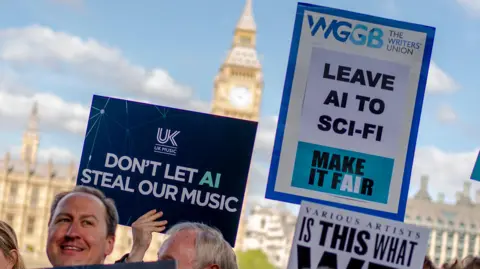
Peers backed calls for greater transparency after musicians such as Sir Elton John warned of the threat to creative industries.
It will now be returned to the Commons where it could be discussed as soon as Tuesday – though that has not been confirmed.
Defiant peers again voted 242 to 116 to a change to the legislation that would introduce transparency requirements, aimed at ensuring copyright holders are able to see when their work has been used and by whom.
This is despite similar measures being repeatedly rejected by MPs in the Commons, where the Government has a majority.
It’s highly unusual that neither side has backed down by now or shown any sign of compromise; in fact if anything support for those opposing the government is growing rather than tailing off.
This is “uncharted territory”, one source in the peers’ camp told me.
The argument is over how best to balance the demands of two huge industries: the tech and creative sectors.
More specifically, it’s about the fairest way to allow AI developers access to creative content in order to make better AI tools – without undermining the livelihoods of the people who make that content in the first place.
What’s sparked it is the Data (Use and Access) Bill.
This proposed legislation was broadly expected to finish its long journey through parliament this week and sail off into the law books.
Instead, it is currently stuck in limbo, ping-ponging between the House of Lords and the House of Commons.
A government consultation proposesAI developers should have access to all content unless its individual owners choose to opt out.
But 242 members of the House of Lords disagree with the bill in its current form.
They think AI firms should be forced to disclose which copyrighted material they use to train their tools, with a view to licensing it.
Sir Nick Clegg, former president of global affairs at Meta, is among those broadly in support of the government’s plans on AI and copyright. He has argued that asking permission from all copyright holders would “kill the AI industry in this country”.
Those against include Baroness Beeban Kidron, a crossbench peer and former film director, best known for making films such as Bridget Jones: The Edge of Reason.
She says ministers would be “knowingly throwing UK designers, artists, authors, musicians, media and nascent AI companies under the bus” if they don’t move to protect their output from what she describes as “state sanctioned theft” from a UK industry worth £124bn.
She’s asking for an amendment to the bill which would include Technology Secretary Peter Kyle giving a report to the House of Commons about the impact of the new law on the creative industries within 15 months of the Bill becoming law.
Getty Images
Mr Kyle also appears to have changed his views about UK copyright law.
He said copyright law was once “very certain”, but is now “not fit for purpose”.
Perhaps to an extent both those things are true.
The Department for Science, Innovation and Technology say that they’re carrying out a wider consultation on these issues and will not consider changes to the Bill unless they’re completely satisfied that they work for creators.
If the “ping pong” between the two Houses continues, there’s a small chance the entire bill could be shelved; I’m told it’s unlikely but not impossible.
If it does, some other important elements would go along with it, simply because they are part of the same bill.
It also includes proposed rules on the rights of bereaved parents to access their children’s data if they die, changes to allow NHS trusts to share patient data more easily, and even a 3D underground map of the UK’s pipes and cables, aimed at improving the efficiency of roadworks (I told you it was a big bill).
There is no easy answer.
How did we get here?
Here’s how it all started.
Initially, before AI exploded into our lives, AI developers scraped enormous quantities of content from the internet, arguing that it was in the public domain already and therefore freely available.
We are talking about big, mainly US, tech firms here doing the scraping, and not paying for anything they hoovered up.
Then, they used that data to train the same AI tools now used by millions to write copy, create pictures and videos in seconds.
These tools can also mimic popular musicians, writers, artists.
For example, a recent viral trend saw people merrily sharing AI images generated in the style of the Japanese animation firm Studio Ghibli.
The founder of that studio meanwhile, had once described the use of AI in animation as “an insult to life itself”. Needless to say, he was not a fan.
There has been a massive backlash from many content creators and owners including household names like Sir Elton John, Sir Paul McCartney and Dua Lipa.
They have argued that taking their work in this way, without consent, credit or payment, amounted to theft. And that artists are now losing work because AI tools can churn out similar content freely and quickly instead.
He argued that the government was on course to “rob young people of their legacy and their income”, and described the current administration as “absolute losers”.
Others though point out that material made by the likes of Sir Elton is available worldwide.
And if you make it too hard for AI companies to access it in the UK they’ll simply do it elsewhere instead, taking much needed investment and job opportunities with them.
Brits will be glad to see the back of soaring temperatures according to Google Trends, with searches for ‘when is the heatwave going to end’ shooting up by 1,100%.
According to surveys, almost 90% of people name traveling among their hobbies and desires. We leave familiar places with great pleasure to absorb the culture of other places, enjoy new surroundings, and feel the adrenaline from traveling.
Fraud is rapidly increasing in the travel industry, threatening airlines, hotels, and booking sites. Companies must protect their customers or face the damages.
World Sustainable Travel & Hospitality Awards (‘WSTHA’) has announced that its inaugural ceremony will take place at the historic Cahal Pech Archaeological Reserve in Belize, the official host destination. Leaders in sustainable tourism will gather for the VIP reception on 27 September 2024 when the winners will be unveiled.
The region’s hospitality and tourism industry is checking into tech in a big way. From revolutionising the guest experience to smart energy management systems, innovation today is the key to the industry’s success of tomorrow – and beyond.
Technology and innovation will be under the spotlight at Future Hospitality Summit – FHS World, with a host of dedicated presentations, debates and features, including the semi-finals of the UN Tourism Women In Tech Start Up competition. With just two weeks before the region’s largest, most influential industry event gets under way, industry leaders share their thoughts on how tech is driving the sector forward.